Your 2026 development project could be derailed by a single highway authority objection before the first brick is even laid. With the London Plan 2026 mandating car-free developments in high-connectivity areas and Active Travel England now acting as a rigorous statutory consultee, the margin for technical error has vanished. Engaging a specialist transport planning consultant is the most effective way to transform these regulatory hurdles into a clear path toward planning consent.
We recognize that navigating the shift between Transport Statements and full Assessments often feels like a moving target, especially when inaccurate traffic data leads to expensive design revisions. This guide provides the technical clarity you need to secure a successful planning submission. You’ll discover how to utilize precise Swept Path Analysis and Parking Surveys to optimize your site layout for vehicle access. We will also examine how to maintain clear communication with local councils to ensure your project meets every statutory benchmark without unnecessary delays. By the end of this article, you’ll have a blueprint for managing the full lifecycle of your development’s transport requirements with total confidence.
Key Takeaways
- Learn how a specialist transport planning consultant serves as the technical link between your site design and regulatory approval to ensure policy compliance.
- Identify the specific thresholds for Transport Statements versus Assessments to ensure your application meets the latest 2026 statutory requirements.
- Discover how Swept Path Analysis and accurate Parking Surveys provide the precise data needed to prove your site’s operational viability to highway authorities.
- Master strategic negotiation techniques for pre-application meetings to proactively address potential objections before they lead to formal refusals.
- Compare specialist consultancies against multi-disciplinary firms to determine which procurement route offers the best precision and reliability for your development.
What Does a Transport Planning Consultant Actually Do?
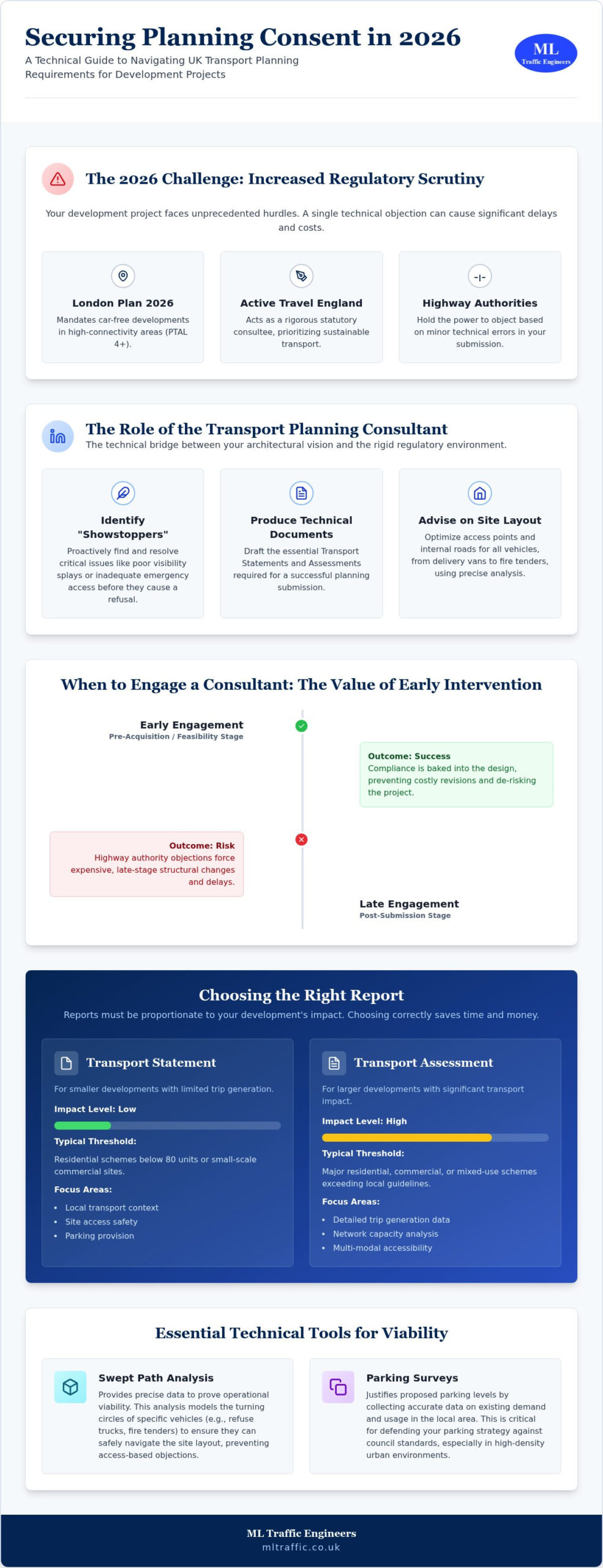
A transport planning consultant serves as the technical bridge between a developer’s architectural vision and the rigid regulatory environment of UK highway authorities. This role involves far more than simply drafting reports. It requires a deep understanding of how a proposed development interacts with the existing transport network. We manage this relationship from the initial feasibility stage through to final planning consent, ensuring every vehicle and pedestrian movement is accounted for and safe.
In 2026, the complexity of this role has increased significantly. New statutory guidance and the elevated role of Active Travel England mean that developments must now prioritize sustainable transport modes over traditional car-led designs. A consultant ensures your project aligns with these modern benchmarks while maintaining the operational efficiency your site requires. You can learn more about our specific approach on our what we do page.
The Core Responsibilities of a Consultancy
Precision is a functional necessity in this industry. We begin by identifying potential “showstoppers” during the due diligence phase. These are technical constraints, such as inadequate visibility splays or restricted access for emergency vehicles, that could lead to an immediate refusal. By addressing these early, we protect your investment from avoidable risks.
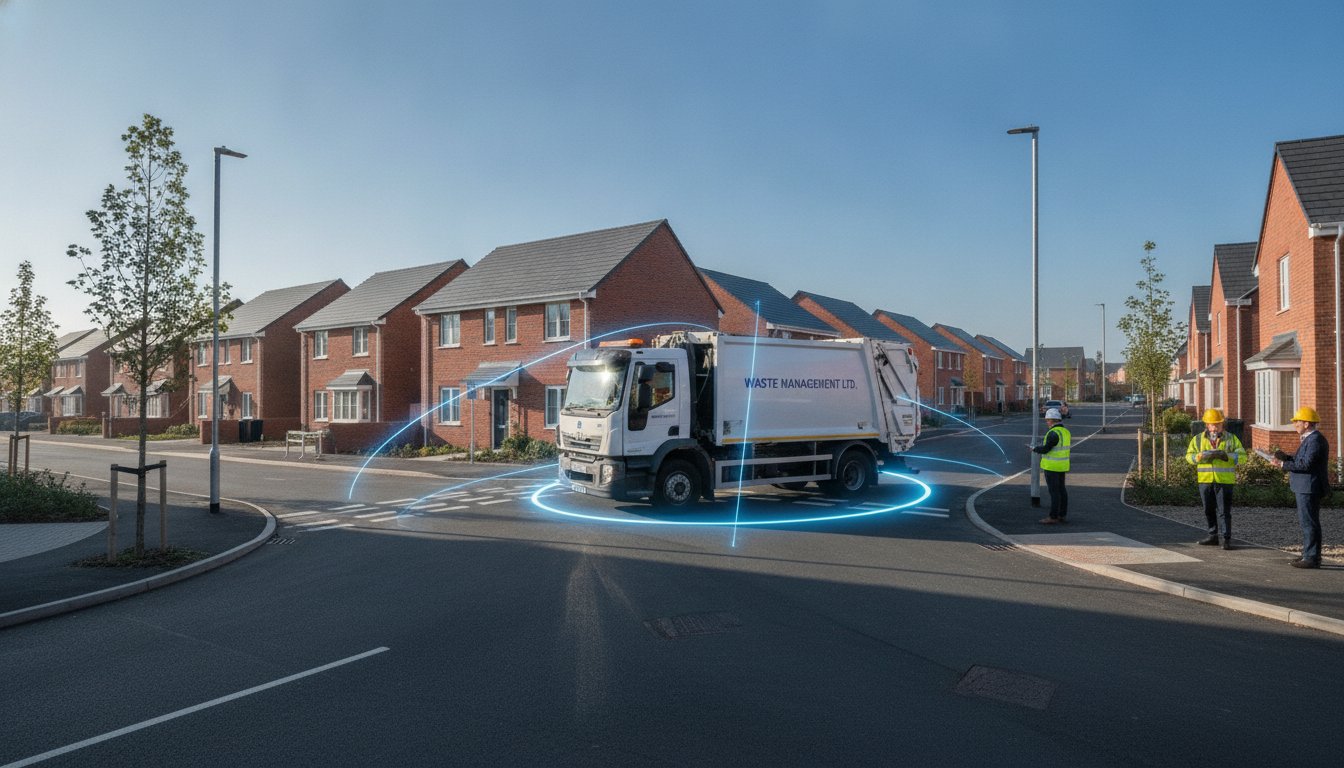
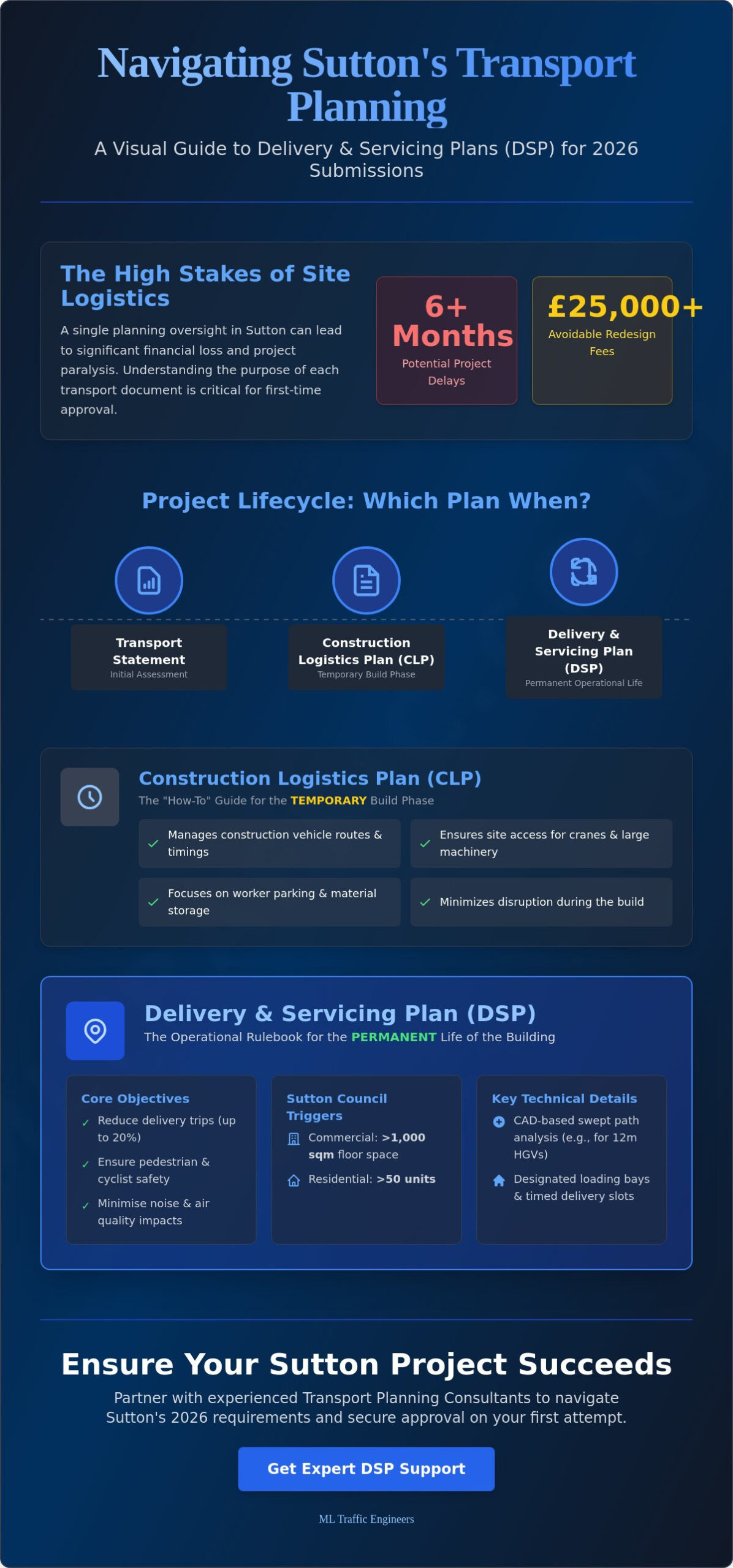
Our work is rooted in the technical discipline of transportation planning, which provides the framework for analyzing trip generation and network impact. We produce the essential technical documentation required for planning submissions, including Transport Statements and Assessments. Beyond the paperwork, we advise on site layout. This includes optimizing vehicle access points and ensuring that internal roads accommodate the specific turning circles of refuse vehicles and fire tenders through detailed analysis.
When Should You Engage a Consultant?
Early engagement is the most effective way to prevent costly redesigns. Waiting until after a planning application is submitted often results in highway authority objections that force expensive structural changes. Engaging a transport planning consultant during the pre-acquisition or feasibility stage allows you to bake compliance into the initial design.
Consultants also play a critical role in site promotion. We help developers demonstrate the transport viability of land parcels to secure their inclusion in local plans. Additionally, “Change of Use” applications frequently trigger transport requirements. Even if the physical building remains unchanged, a shift from office to residential use can significantly alter traffic patterns, requiring professional validation to satisfy council planners.
Statutory Requirements: Transport Statements vs. Assessments
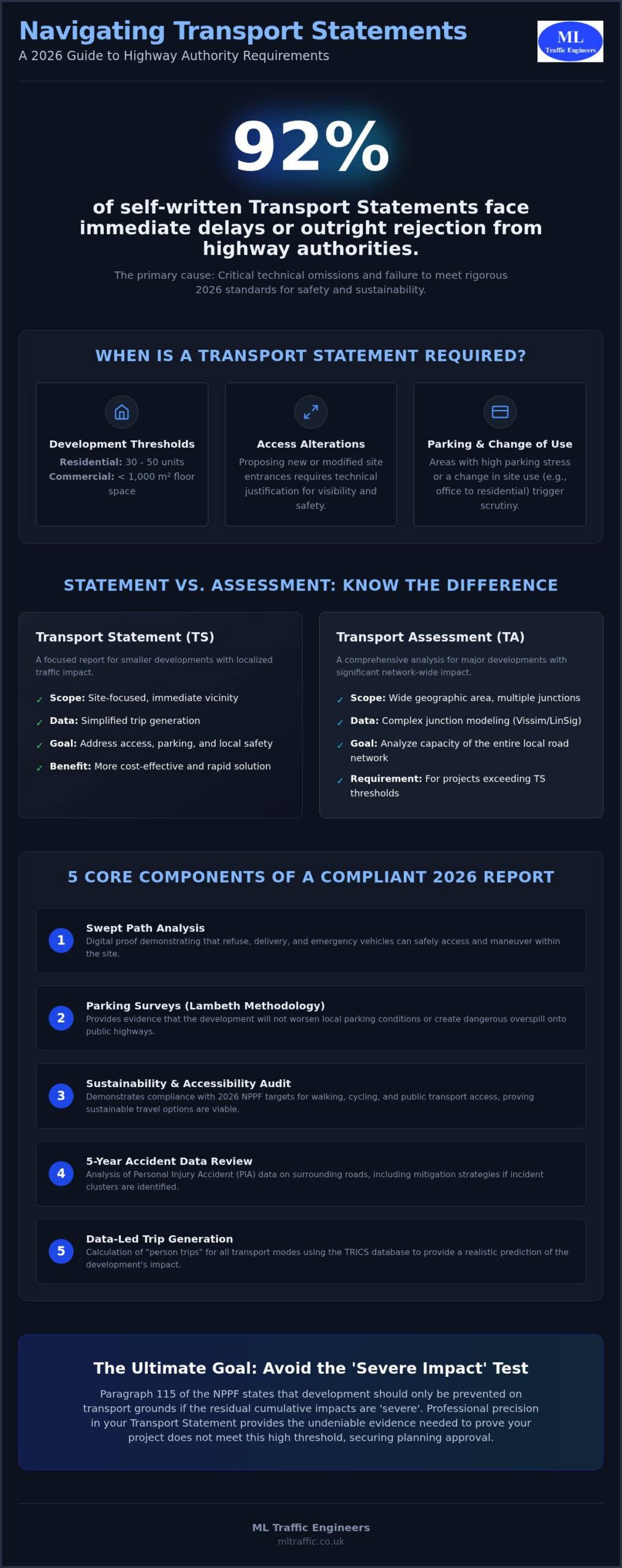
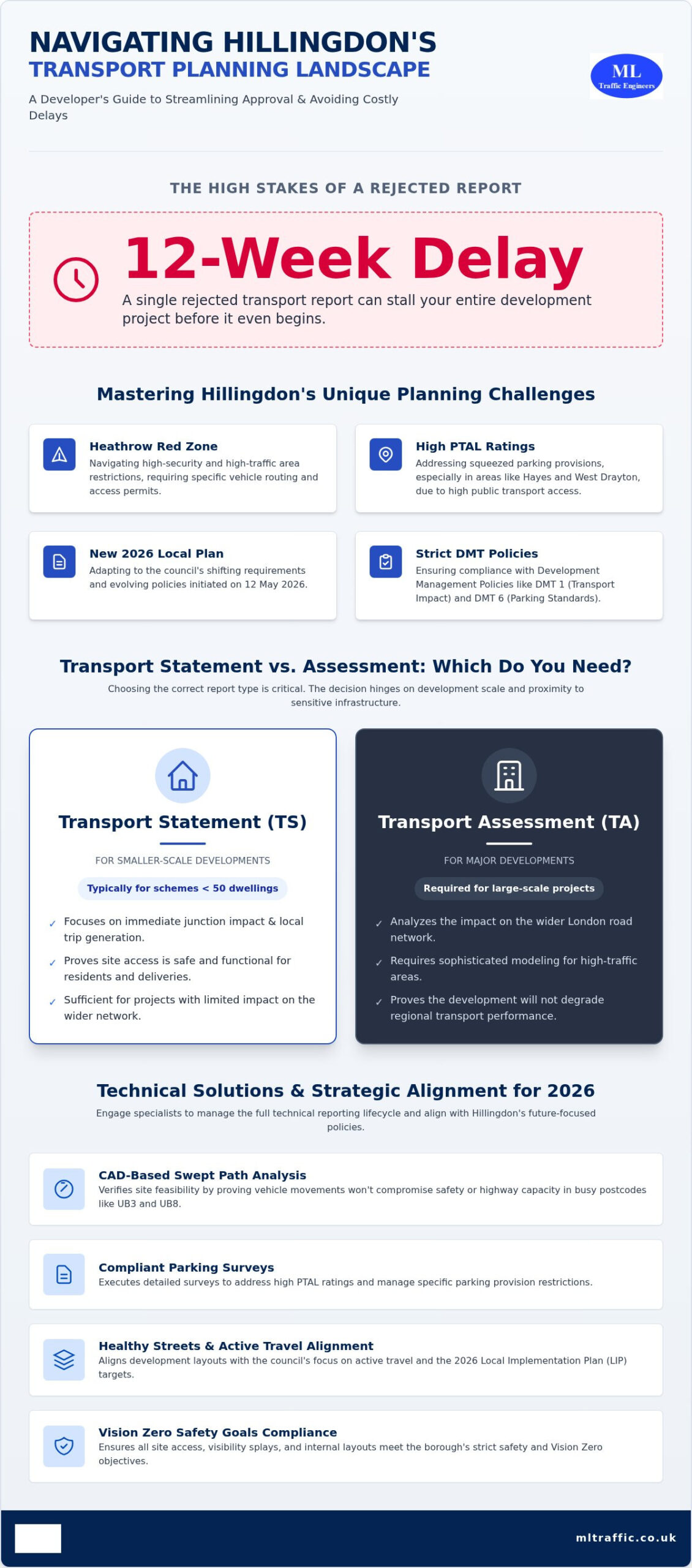
Developers often struggle to identify the exact level of reporting required for a planning submission. The Statutory Requirements set a baseline, but the National Planning Policy Framework (NPPF) in 2026 emphasizes that reports must be proportionate to the development’s impact. A transport planning consultant ensures you don’t over-invest in a full Assessment when a Statement suffices, or worse, face a refusal for providing insufficient data. While national guidelines provide a framework, local borough requirements frequently override them. For instance, the London Plan 2026 mandates car-free developments in areas with a Public Transport Accessibility Level (PTAL) of 4 or higher, a requirement that often necessitates more granular data than national standards suggest.
What is a Transport Statement?
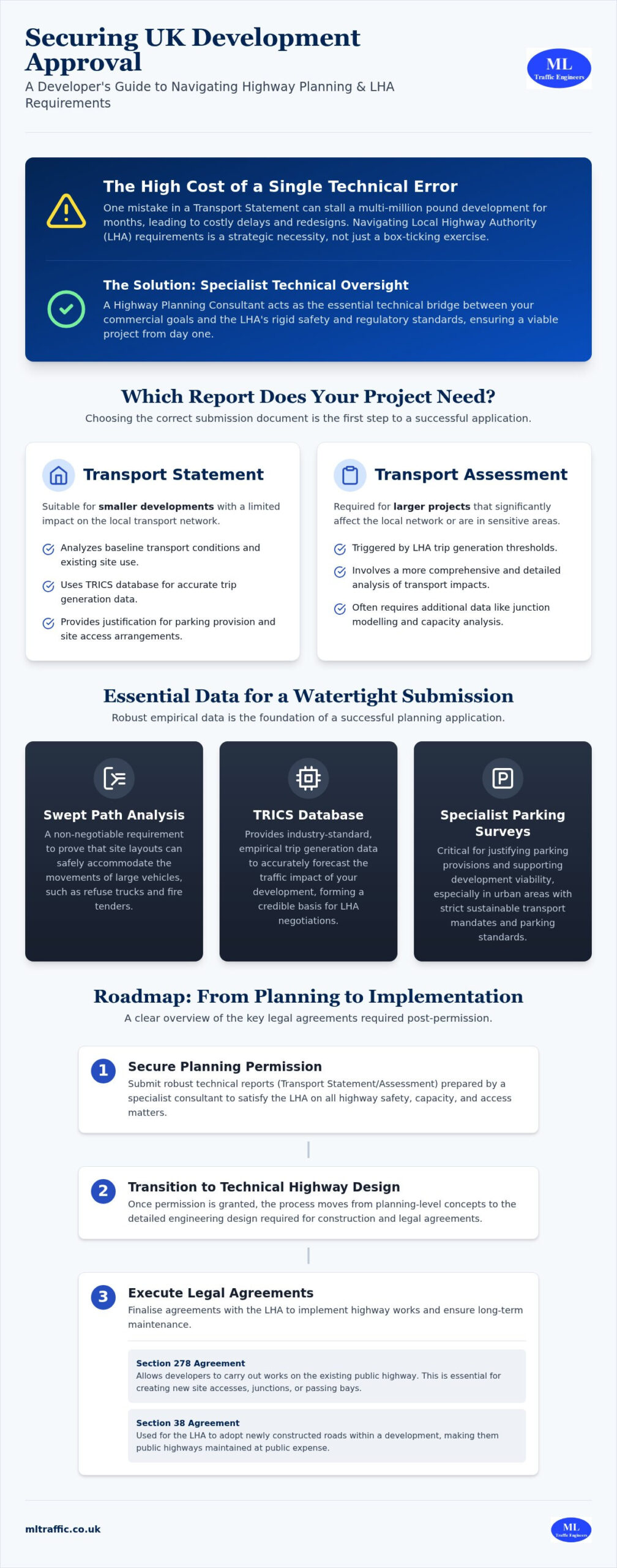
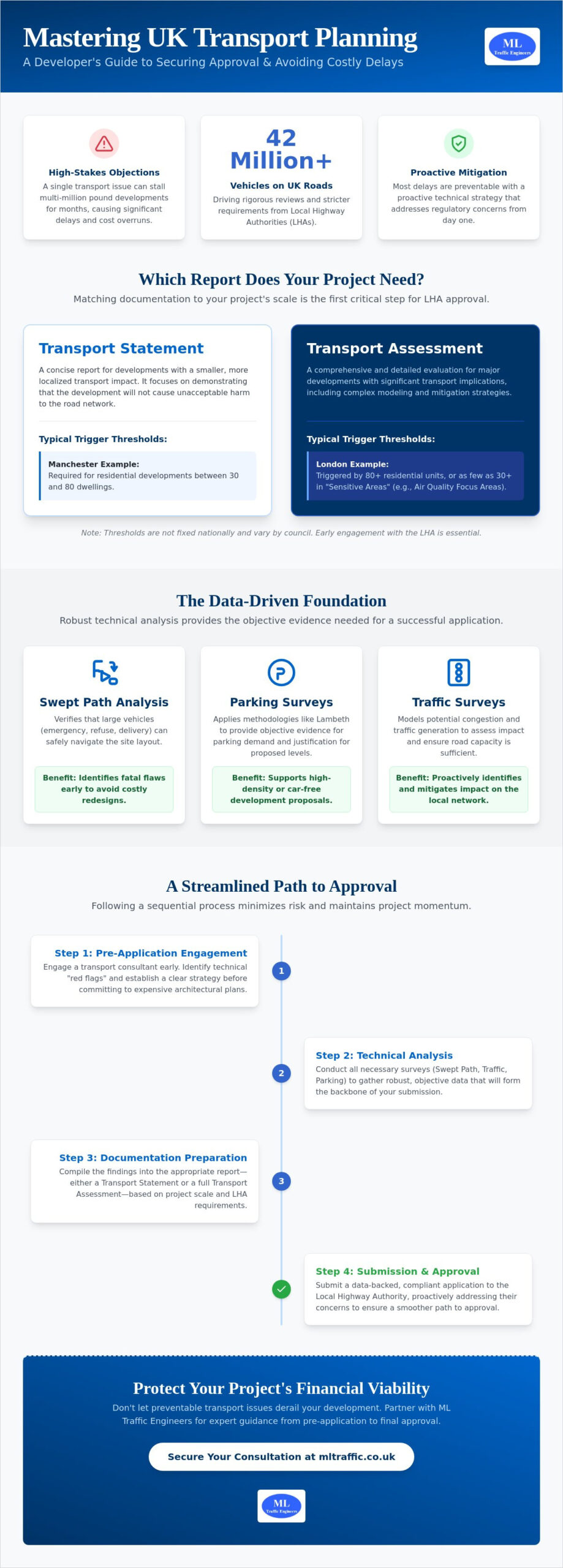
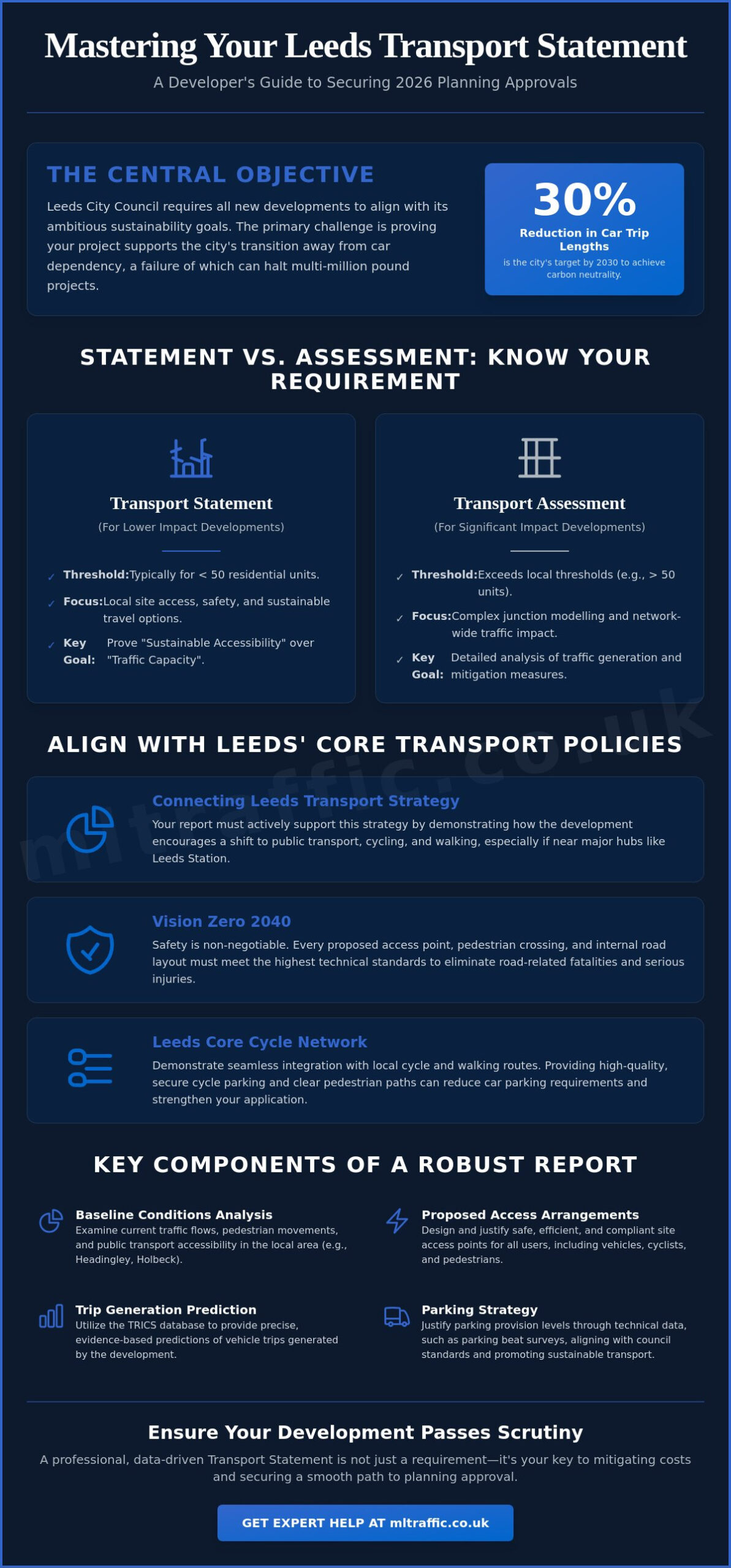
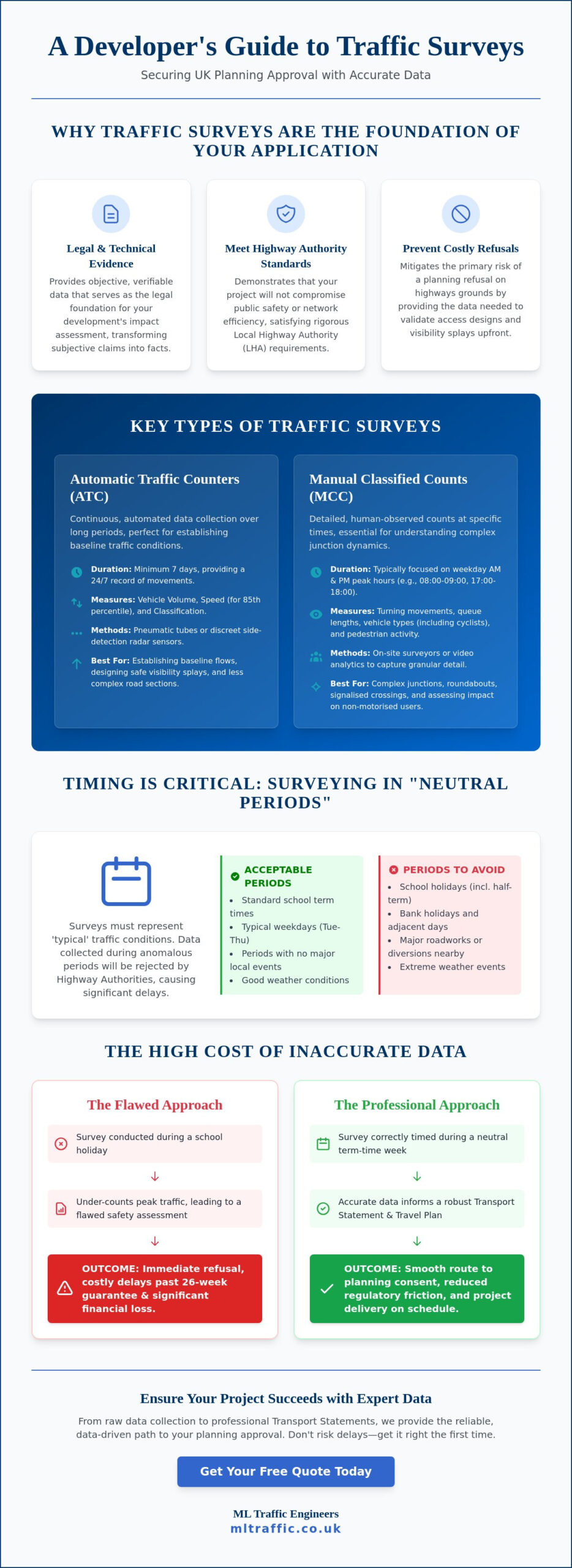
A Transport Statement is the standard requirement for smaller developments with limited trip generation. Typical use cases include residential schemes below 80 units or small-scale commercial sites. This document focuses on the local transport context, site access safety, and parking provision. It’s your first line of defense against highway authority objections. It proves that the existing network can absorb the minor changes your project introduces without compromising safety. For specific insights into the capital’s unique requirements, see our Transport Statement London guide.
What is a Transport Assessment?
When a project reaches a certain scale, such as 80 or more residential units or commercial floorspace exceeding 2,500 sq m, it triggers a full Transport Assessment. This is a comprehensive technical document. It includes multi-modal trip analysis and junction modelling to predict impacts during peak hours. Unlike a Statement, an Assessment must demonstrate how the developer will mitigate negative impacts on the wider network. Understanding the difference in scope between these two documents is vital for accurate budgeting and project timelines.
Local authorities in 2026 are increasingly evidence-led. Some councils have lowered their thresholds to just 30-40 units in sensitive areas to manage local congestion more tightly. This patchwork of regulations makes the expertise of a transport planning consultant indispensable. We navigate these local nuances so your submission remains compliant with both the NPPF and specific borough policies. If you’re unsure which category your project falls into, reviewing our planning resources can help clarify your technical requirements before you commit to a design.
Technical Tools: Swept Path Analysis and Parking Surveys
Data accuracy serves as the foundation of a successful planning application. In the current regulatory climate, highway authorities no longer accept “best guess” estimates for site functionality. They demand hard evidence. A transport planning consultant utilizes sophisticated technical tools to prove that a development is operationally viable. By moving from anecdotal claims to empirical data, we eliminate the ambiguity that often leads to planning refusals or expensive design revisions. This commitment to precision is a core standard within a professional transport planning consultancy, ensuring that every submission meets the rigorous benchmarks set by the Chartered Institution of Highways & Transportation.
The Importance of Swept Path Analysis
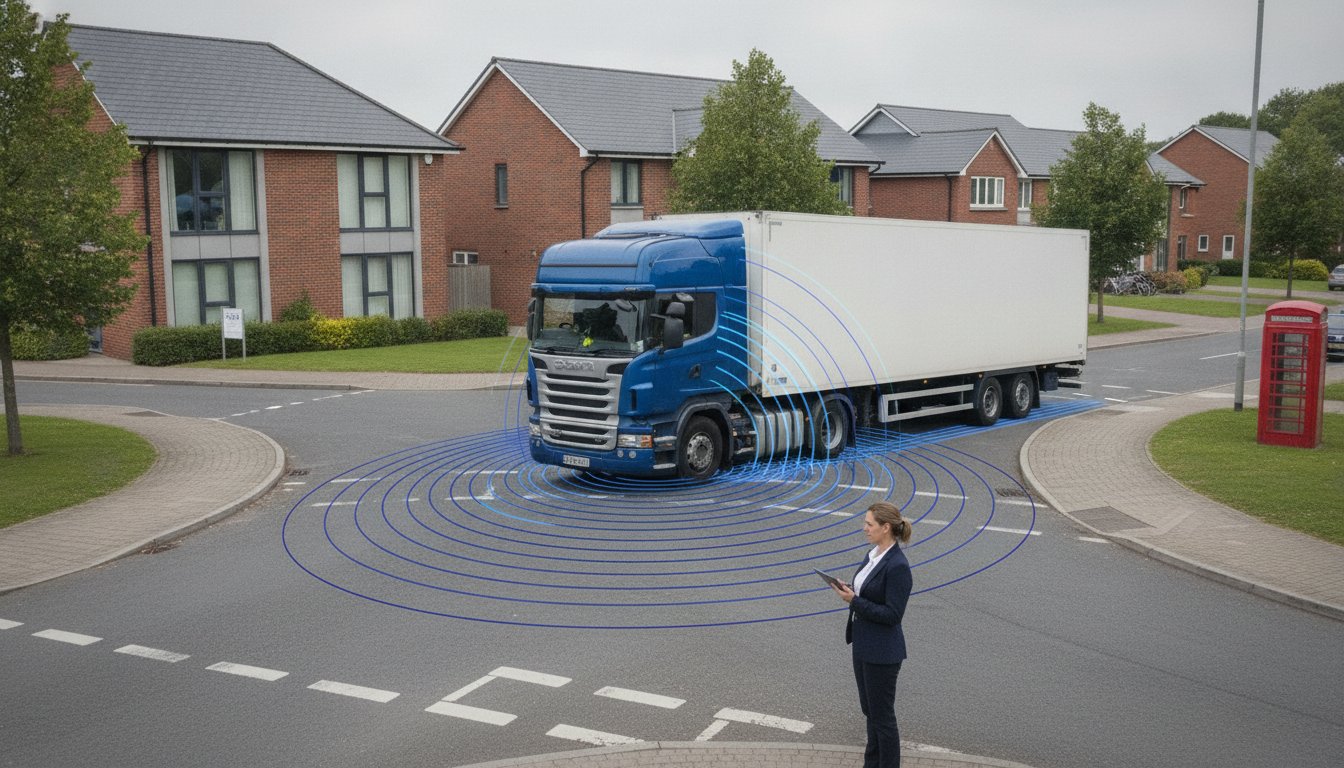
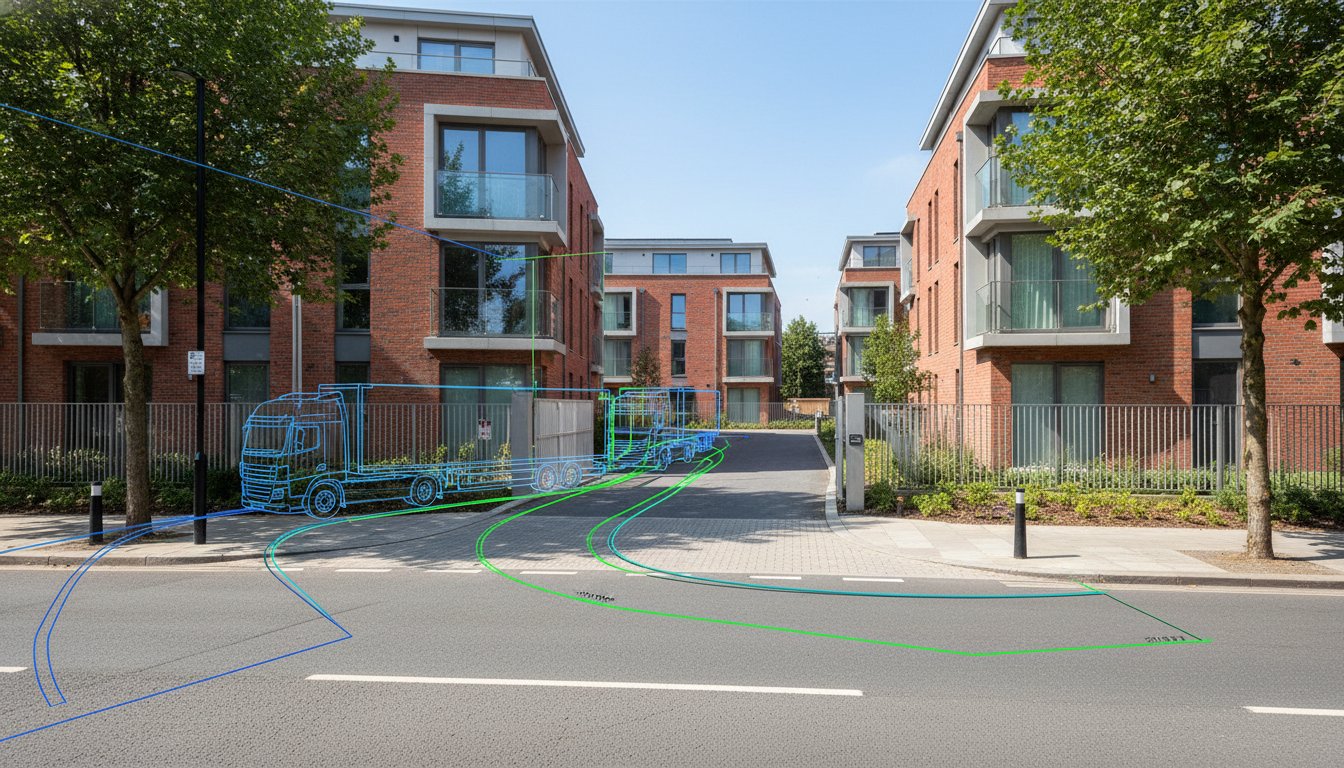
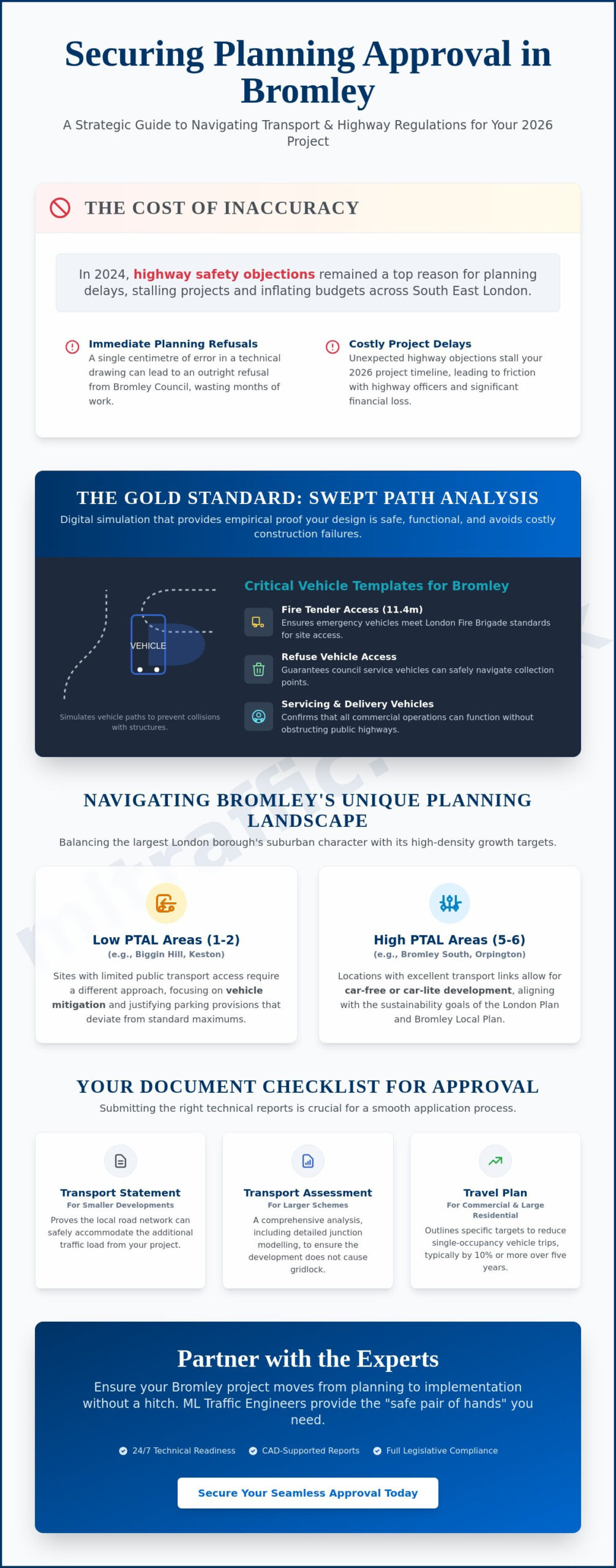
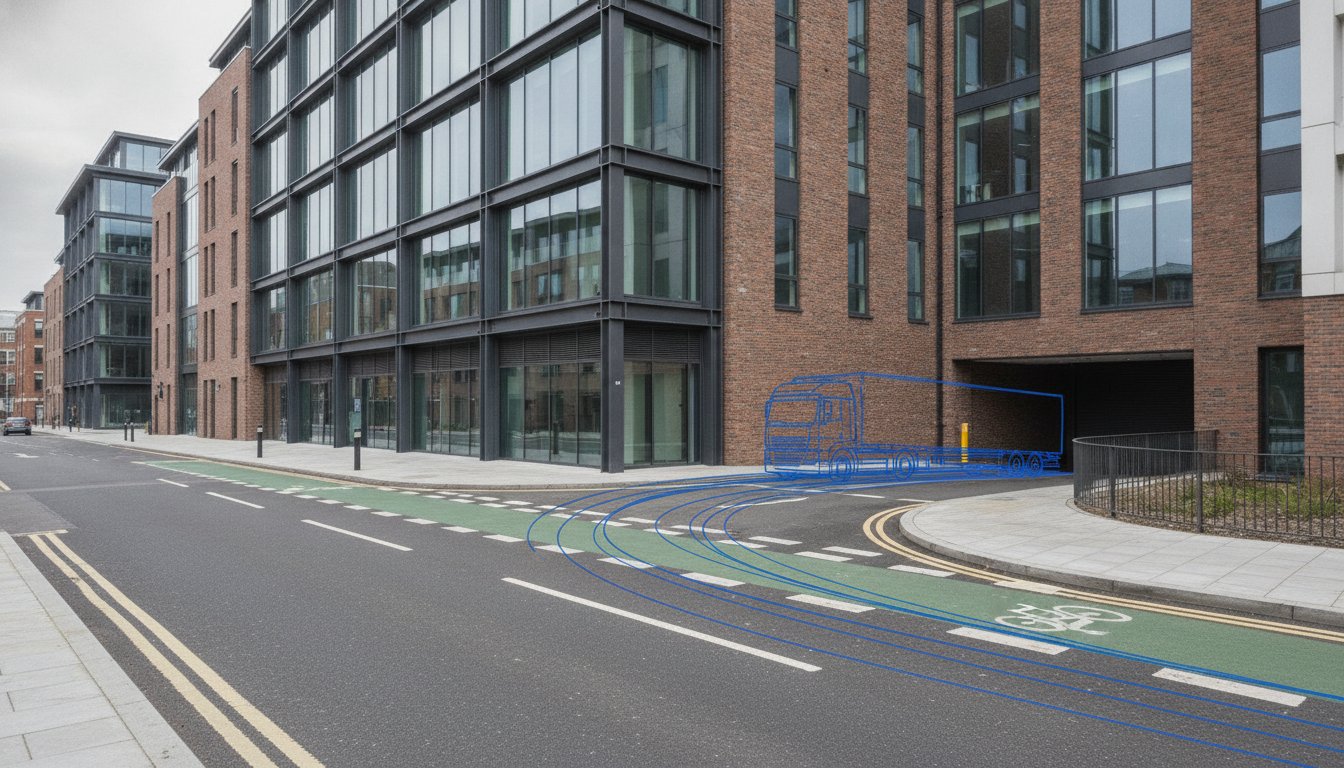
Proving that fire tenders and refuse vehicles can safely enter, turn, and exit your site is a non-negotiable requirement. Statutory consultees will object to any layout that appears restrictive. We use industry-standard software, including the latest AutoTURN Pro 2026, to conduct detailed Swept Path Analysis (SPA). This process involves overlaying digital vehicle templates onto your site plans to track the exact path of a vehicle’s body and wheels. It’s a functional necessity for satisfying emergency services and local waste management teams. For a deeper dive into how this technology protects your project, refer to our Practical Guide to Swept Path Analysis.
Parking Surveys and the Lambeth Methodology
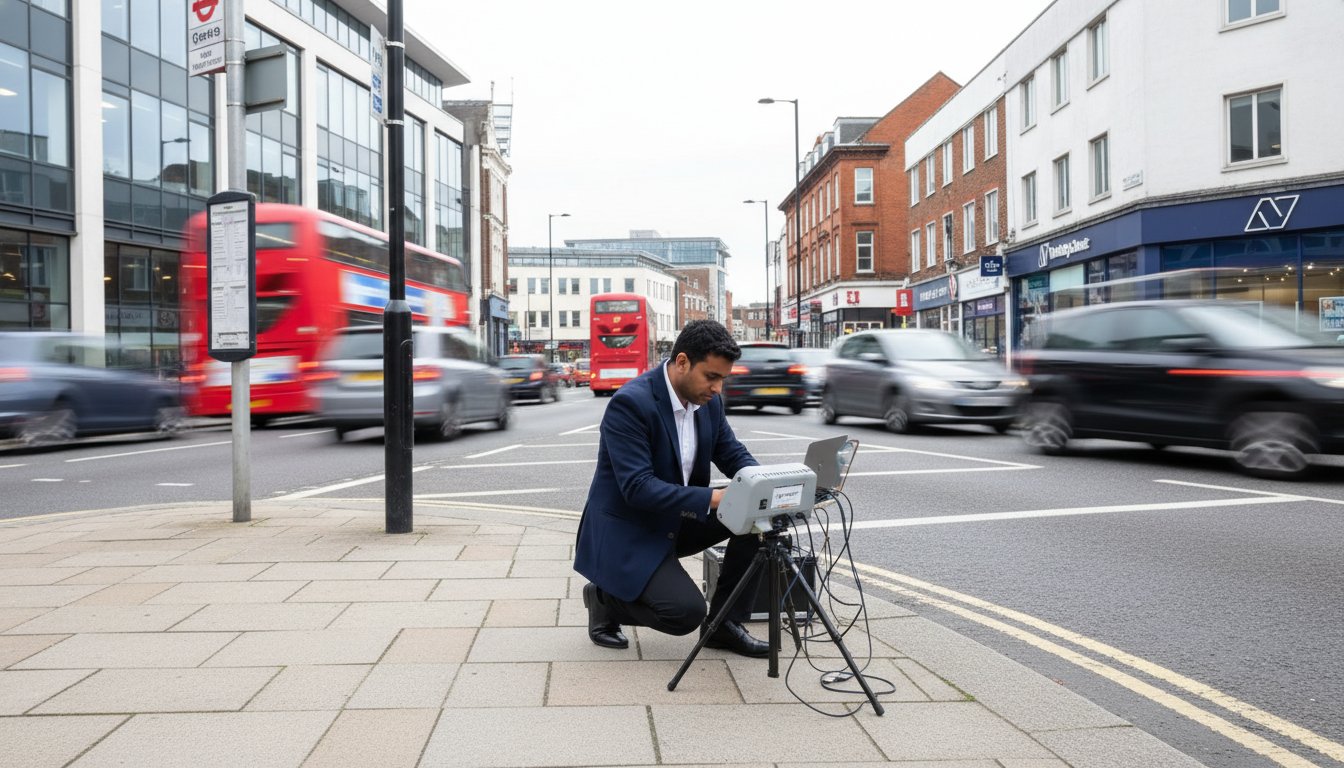
Parking provision is often the most contentious element of an urban development. With the London Plan 2026 mandating car-free schemes in areas with high Public Transport Accessibility Levels (PTAL), developers must justify lower parking ratios with granular data. We conduct Parking Surveys to assess existing “parking stress” on the surrounding streets. This involves using the Lambeth Methodology, a widely accepted standard that requires surveys to be conducted within a 200-metre radius of the site. These observations typically occur between 1:00 AM and 5:30 AM on weekday nights to capture the peak period of residential parking demand.
The resulting data allows a transport planning consultant to negotiate effectively against maximum parking standards. If we can prove there is sufficient capacity on-street to accommodate any residual demand, the highway authority is far more likely to accept a reduced-parking or car-free proposal. This evidence-led approach turns potential layout constraints into development opportunities, ensuring your site remains both compliant and commercially viable.
Strategic Negotiation: Dealing with Highway Authorities
Securing planning permission requires more than technical data; it demands strategic negotiation with highway authorities. A transport planning consultant acts as your advocate, translating complex traffic modelling into a persuasive case for development. While technical accuracy is non-negotiable, the ability to navigate local political and logistical priorities often determines a project’s success. This involves managing the delicate balance between a developer’s commercial goals and the council’s statutory duties regarding safety and network capacity.
Objections require a tactical response. Rather than simply disputing a highway officer’s concerns, we provide technical solutions that mitigate impact without compromising site viability. If a project reaches a planning appeal, the consultant serves as an expert witness. This role requires absolute precision to defend the transport strategy under rigorous cross-examination. Developers can strengthen their position early by using our Travel Plan services to demonstrate a commitment to sustainable transport.
Navigating Pre-Application Advice
The pre-application process is the most valuable investment a developer can make. It provides an informal platform to secure early buy-in from highway officers before the design is finalized. We use this stage to identify potential mitigation measures that could otherwise become deal-breakers during the formal consultation period. A clear, professional technical note submitted at this stage sets the tone for future discussions. It establishes a baseline of trust and ensures the highway authority understands the technical merits of the proposal from day one.
The Reality of Section 278 Agreements
Section 278 (S278) agreements are necessary when a development requires physical changes to the existing public highway. This might include new site access, junction improvements, or pedestrian crossings. Managing the logistical pressure of S278 technical approvals is a critical part of the project lifecycle. We ensure every design detail complies with local authority standards to avoid costly delays during the construction phase. Failure to meet these standards can halt progress on-site, making expert oversight essential.
Negotiating Section 106 contributions also requires a firm grasp of local infrastructure priorities. We ensure any financial requests for transport improvements are fair, evidence-based, and directly related to the development’s impact. If you need assistance navigating these complex legal and technical frameworks, contact our team of experts to discuss your project requirements.
Selecting a Transport Planning Consultancy in 2026
Selecting the right transport planning consultant is one of the most critical procurement decisions in the early stages of your development. While large, multi-disciplinary firms offer a broad range of services, they often lack the agility and specialized focus required for complex local negotiations. In 2026, where precision in technical data is a functional necessity, working with a specialist ensures that your project remains a priority rather than just another entry in a corporate ledger. We manage the full project lifecycle, from initial feasibility to final planning consent, providing the unwavering reliability you need to meet strict statutory deadlines.
Why Specialist Expertise Matters
Specialist firms like ML Traffic Engineers UK prioritize technical authority and a client-focused approach. This specialization is vital when navigating the patchwork of local transport priorities created by recent devolution. During the procurement process, you should ask potential partners about their in-house survey capabilities and the specific software versions they use, such as AutoTURN Pro 2026, to ensure their data meets modern standards. Key benefits of the specialist route include:
- Direct access to senior experts: You work directly with experienced engineers rather than junior staff, ensuring high-level oversight on every report.
- Regional knowledge: Specialists maintain a deep understanding of specific council preferences and localized highway authority requirements.
- Cost-efficiency: You invest in technical expertise and precision results rather than paying for massive corporate overheads and administrative layers.
Next Steps for Your Development
Preparing your project for a successful submission starts with a clear technical roadmap. If you have a site layout ready, ensure it is in a CAD-compatible format to facilitate an immediate Swept Path Analysis review. This allows us to identify and correct access issues before they become formal objections from statutory consultees. For developers at the pre-acquisition stage, contacting a transport planning consultant for a feasibility assessment can reveal hidden highway constraints that might impact the commercial viability of a site.
To move forward with your application, you can request a quote for a Transport Statement or Assessment by providing your site plan and a brief description of the proposed use. We recommend early engagement to bake compliance into your design from the outset. You can explore our planning resources or contact ML Traffic Engineers UK directly to begin your feasibility assessment and secure the technical foundation of your 2026 planning success.
Secure Your Development’s Future in 2026
Navigating the 2026 planning landscape requires more than just meeting basic requirements. It demands a technical strategy built on precision data and proactive negotiation. By integrating detailed Swept Path Analysis and evidence-led Parking Surveys early in your project lifecycle, you eliminate the technical ambiguities that often lead to highway authority objections. Engaging a specialist transport planning consultant serves as your technical advocate, ensuring your site layout is optimized for both regulatory compliance and commercial efficiency.
ML Traffic Engineers UK has provided this level of expert support since 2014. With over a decade of planning success across London and the wider UK, we specialize in high-precision Transport Statements and Assessments. We manage the logistical and regulatory pressures of your project so you can focus on the build. Our team is ready to provide the technical authority your application needs to succeed. Contact ML Traffic Engineers UK for a Transport Planning Quote today to discuss your site’s specific requirements. Your path to a successful planning submission starts with accurate data and dependable expertise.
Frequently Asked Questions
What is the difference between a transport statement and a transport assessment?
The primary difference lies in the scale of the development and its predicted impact on the transport network. A Transport Statement is for smaller projects with limited trip generation, while a Transport Assessment is required for larger schemes that could significantly affect local junctions. National guidelines generally set the threshold for an Assessment at developments exceeding 80 residential units or 2,500 square metres of commercial space. Assessments require detailed junction modelling, whereas Statements focus on site access.
How much does a transport planning consultant cost in the UK?
Costs vary based on project complexity and the depth of technical data required. A professional transport planning consultant provides bespoke quotes depending on whether you need a simple Statement or a comprehensive Assessment with junction modelling. Factors influencing the fee include the number of site visits, the complexity of the Swept Path Analysis, and the specific requirements of the local highway authority. Always request a project-specific fee proposal to ensure technical accuracy and budgeting precision.
When is a Swept Path Analysis required for a planning application?
When is a Swept Path Analysis required for a planning application?
Swept Path Analysis is required whenever a development layout must accommodate specific vehicle types, such as refuse trucks, fire tenders, or heavy goods vehicles. Local authorities mandate this technical evidence to ensure that vehicles can enter, turn, and exit the site without overrunning curbs or impacting pedestrian safety. It is a functional necessity for residential mews, tight urban commercial sites, and industrial logistics hubs where space is restricted and operational safety is non-negotiable. To complement safe site design, professional instruction from RIGHT-GEAR Driver Training helps drivers master the precision needed to navigate these complex layouts.
You may need a Travel Plan if your development exceeds local borough thresholds, which are often lower than national standards in urban areas. While small schemes might only require a Travel Plan Statement, councils increasingly demand these documents to encourage walking, cycling, and public transport use. In 2026, with Active Travel England acting as a statutory consultee, even minor residential projects often include travel planning to satisfy modern sustainability and policy requirements.
How long does it take to produce a Transport Statement?
Producing a Transport Statement generally takes between two and four weeks, provided all site plans and traffic data are readily available. This timeline includes the initial site assessment, local policy review, and the drafting of technical findings. If specialized surveys or complex Swept Path Analysis are required, the process may take longer. Early engagement with a transport planning consultant ensures that these technical documents are ready well before your project’s planning submission deadline.
Can a transport consultant help if the council has already objected?
Yes, we can assist by providing technical evidence to address and resolve specific highway authority objections. We analyze the council’s feedback and use tools like junction modelling or parking surveys to prove that the development’s impact is acceptable. If the objection stems from access concerns, we can redesign the layout using Swept Path Analysis to satisfy safety standards. This tactical approach often turns a potential refusal into a conditional approval for the developer.
What is a Section 278 agreement and why do I need one?
A Section 278 (S278) agreement is a legal contract between a developer and the local highway authority for works involving the public highway. You need one if your project requires physical changes to existing roads, such as installing a new site entrance, pedestrian crossing, or junction improvement. The agreement ensures that all works meet the council’s technical standards and are safely executed. We manage the technical approval process to prevent logistical delays during construction.
How does a parking survey help if my site has no on-site parking?
A parking survey proves that the surrounding street network has sufficient capacity to accommodate any potential overspill from a car-free or low-parking development. By using the Lambeth Methodology, we measure parking stress within a 200-metre radius during peak residential hours. This empirical data justifies your parking strategy to the highway authority, demonstrating that the development won’t lead to dangerous levels of congestion or restricted access for emergency services or local residents.

Disclaimer
The content on mltraffic.co.uk, including all technical articles, guides, and resources, is provided for general informational and educational purposes only. It is not intended to constitute professional advice in traffic engineering, transportation planning, development approvals, or any other technical or legal field.
While ML Traffic Engineers makes every reasonable effort to ensure the accuracy, completeness, and timeliness of the information published, we do not provide any warranties or representations (express or implied) regarding its reliability, suitability, or availability for any particular purpose. Any reliance you place on the content is strictly at your own risk.
In no event shall ML Traffic Engineers, its directors, employees, authors, or affiliates be liable for any direct, indirect, incidental, special, consequential, or punitive damages (including, without limitation, loss of profits, data, or business opportunities) arising out of or in connection with the use of, or inability to use, any information provided on this website.
The articles and guides on this site are not a substitute for engaging a qualified, professional traffic engineer to assess your specific project requirements. For tailored advice, compliance assessments, or traffic engineering services, please contact a competent professional.
This disclaimer may be updated from time to time without notice. By accessing or using this website, you agree to be bound by the most current version of this disclaimer.