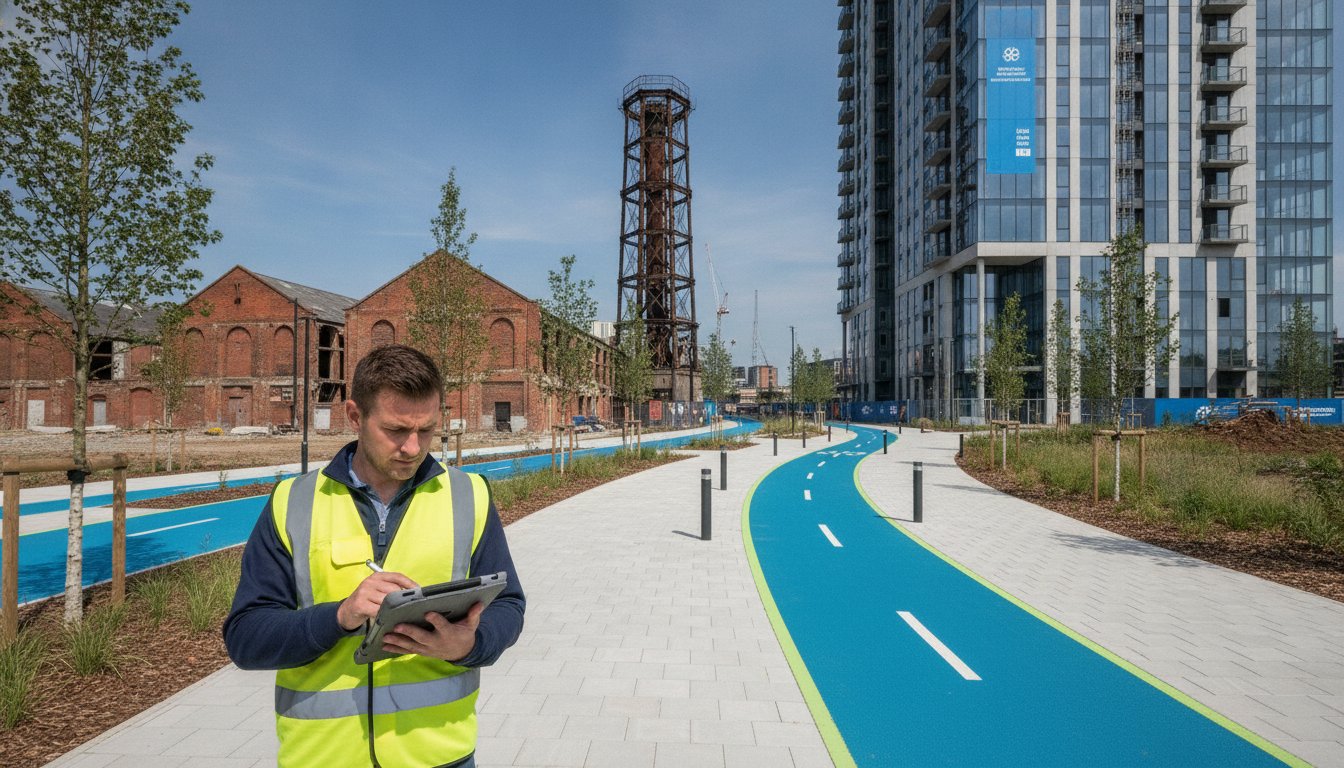
Did you know that 42% of minor development applications in London face immediate delays at the validation stage due to insufficient highway data? This bottleneck often stems from the complexity of drafting a robust transport statement for brownfield development that satisfies both national mandates and local borough requirements. In 2026, the pressure to deliver high-density housing on urban sites is immense, yet the technical hurdles regarding traffic mitigation and new Active Travel England standards have never been higher.
It’s frustrating to see viable regeneration schemes stalled by conflicting policies or a failure to justify density through movement fluidity. You likely recognise that securing permission for high-density schemes requires more than just meeting basic thresholds; it demands a precise, data-driven strategy. This guide ensures you master the technical requirements and statutory frameworks needed to secure planning approval for even the most complex brownfield projects. We provide a clear roadmap for Section 106 and 278 negotiations, showing you how to optimise site layouts and satisfy the current “vision-led” approach to transport planning while maintaining compliance with the latest NPPF reforms.
Key Takeaways
- Navigate the latest NPPF updates and the “brownfield presumption” to effectively justify high-density regeneration in 2026.
- Master the technical requirements of a transport statement for brownfield development to ensure your project meets Active Travel England’s stringent connectivity standards.
- Optimise site layouts by integrating pedestrian priority zones and sustainable infrastructure that satisfy borough-specific parking and transport targets.
- Utilise precise TRICS analysis and comprehensive Traffic Surveys to provide the robust evidence needed for successful Section 106 and 278 negotiations.
- Reduce the risk of planning delays by adopting a proactive, vision-led approach to highway authority liaison from the pre-application stage.
Strategic Importance of Transport Planning for Brownfield Development
In 2026, the success of urban regeneration hinges on movement. A comprehensive transport statement for brownfield development acts as more than a box-ticking exercise for the local planning authority. It’s a strategic blueprint that justifies high-density schemes on land that was previously used for industrial or commercial purposes. If you’re asking What is a brownfield site? in a planning context, it’s often a location where existing infrastructure is already strained. This requires a sophisticated technical approach to mitigate traffic impacts without compromising the site’s commercial viability.
The industry has moved decisively away from the traditional “predict and provide” model. Planning authorities now demand a “decide and provide” or “vision-led” approach. This means developers must proactively decide on a sustainable transport outcome and provide the infrastructure to support it. This shift makes transport the make-or-break factor for regeneration approval. Without a robust strategy, local authorities frequently refuse applications based on perceived congestion or safety risks in already dense urban centres. Precision in your data collection is the only way to counteract these objections.
Unlocking Site Potential Through Movement
Effective transport planning identifies physical constraints before they become costly design errors. For example, Public Transport Accessibility Level (PTAL) scores directly dictate the maximum developable density in many UK cities. High-density residential blocks require excellent connectivity to justify lower parking ratios. By integrating mixed-use requirements into a single cohesive strategy, you can maximise the developable area while ensuring the site remains functional for deliveries, emergency services, and residents. We often use Swept Path Analysis at the inception stage to identify tight turning circles or access issues that could stall a project later.
Economic and Social ROI of Transport Integration
The technical precision of a transport statement for brownfield development ensures that Section 106 and 278 negotiations remain focused on viable, cost-effective improvements. Investing in strategic transport integration yields significant economic returns. Enhanced connectivity increases land value and makes a development more attractive to commercial tenants and residents alike. By meeting 15-minute city criteria, where essential services are accessible within a short walk or cycle, you satisfy modern urban planning goals that prioritise social well-being. Early-stage traffic modelling helps reduce long-term infrastructure costs by identifying the most efficient ways to manage vehicle movements without over-engineering the local road network.
Navigating the 2026 Statutory Framework and Policy Compliance
Securing planning permission in 2026 requires a precise understanding of the shifting legislative landscape. The National Planning Policy Framework (NPPF) now places “substantial weight” on the value of using suitable brownfield land within settlements. For the UK’s 20 largest towns and cities, a “brownfield presumption” is in effect. This makes it significantly harder for local authorities to refuse housing applications on these sites if they fail to meet house-building targets. However, this presumption doesn’t bypass transport requirements. A transport statement for brownfield development remains the primary technical document used to prove that a high-density scheme won’t negatively impact the local highway network.
Local Plan requirements have become increasingly specific, with many boroughs now setting rigorous 2026 transport targets that prioritise active travel over private vehicle use. Active Travel England (ATE) now acts as a statutory consultee on a wider range of applications, applying strict design standards for cycling and walking infrastructure. When entering Section 106 and Section 278 negotiations, having accurate, site-specific data is your strongest lever. It prevents local authorities from requesting disproportionate financial contributions for off-site highway works. This strategic focus on sustainable transport solutions for brownfield sites aligns with modern urban planning principles, ensuring that regeneration projects contribute positively to both local communities and broader environmental goals.
Transport Assessments vs. Transport Statements
Identifying the correct level of reporting is vital to avoid validation delays. Generally, a transport statement is required for developments generating between 30 and 50 vehicle movements during peak hours. If your regeneration project exceeds these thresholds, you’ll likely need a more detailed Transport Assessment. These reports must address the cumulative impact of your project, considering how new residents or commercial tenants affect the wider urban highway network already operating near capacity. If you’re unsure which report your site requires, reviewing our technical services can help clarify the necessary scope of work.
The Role of Travel Plans in Mitigation
For constrained brownfield sites, Travel Plans are indispensable tools for reducing perceived traffic impacts. These documents outline a long-term management strategy to encourage sustainable travel patterns among site users. Council officers increasingly look for “Framework Travel Plans” for phased regeneration schemes, which provide a flexible structure for future occupiers. By committing to clear monitoring and management strategies, you can often justify lower parking provisions, which in turn maximises your developable floor area and improves the project’s overall viability.
Prioritising Sustainable Connectivity and Active Travel
In 2026, the design of urban regeneration projects must strictly adhere to the Hierarchy of Road Users. This principle places pedestrians and cyclists at the top of the design priority list, followed by public transport and shared mobility. A technical transport statement for brownfield development must reflect this hierarchy to pass scrutiny from Active Travel England and local highway authorities. Urban centres have seen a 30% increase in light van movements over the last five years, making the physical separation of service vehicles from vulnerable road users a functional necessity for site safety.
Successful site layouts now integrate high-quality, secure cycle storage and pedestrian priority zones as standard features. This isn’t merely a design preference; it’s a requirement to meet modern sustainability targets and local plan density requirements. Modern regeneration car parks must also feature comprehensive EV charging infrastructure. Local borough plans increasingly mandate that every residential space or a high percentage of commercial spaces include active charging points. Reducing car dependency is the primary goal, but you must achieve this without compromising the site’s accessibility for those with mobility issues or essential service needs.
Maximising Public Transport Integration
Brownfield sites are frequently located in PTAL-rich areas. High Public Transport Accessibility Levels allow you to justify lower parking ratios, which directly increases your developable floor area and project ROI. According to UK Government Guidance on Transport Assessments, developers should prioritise sites with existing high-quality transport links to minimize environmental impact. In London and other major cities, the trend is moving toward car-free developments. You might be required to co-fund public transport improvements through planning obligations if existing hubs are near capacity. Ensuring that the journey from a train station or bus stop to your site is safe and intuitive is a key part of the technical justification for high-density schemes.
Designing for Active Travel Compliance
Meeting LTN 1/20 standards for cycle infrastructure is now a non-negotiable foundation for urban projects. Your site layout must provide safe, well-lit pedestrian routes that encourage a genuine modal shift away from private cars. A robust transport statement for brownfield development uses empirical data from Traffic Surveys to prove that car-free or low-car developments are viable in specific urban contexts. These surveys provide the evidence needed to satisfy council officers that your project won’t lead to overspill parking on adjacent streets. By designing for inclusivity and safety from the inception, you reduce the risk of costly redesigns during the planning process.
Technical Analysis Tools: Securing Approval for Constrained Sites
Technical analysis provides the empirical foundation for a robust transport statement for brownfield development. Without precise data, regeneration projects on constrained sites often fail at the first hurdle of planning validation. We use the TRICS database to model trip generation for complex mixed-use developments. This tool allows us to predict how new residents, workers, and visitors will interact with the local highway network. By comparing this data with existing site usage, we often demonstrate a negligible net increase in traffic. This evidence is vital for justifying high-density schemes in areas where the highway network is already operating near capacity.
Justifying parking provision is equally critical for site viability. We rely on empirical survey data rather than arbitrary standards to determine the necessary parking levels. This approach is essential for sites where space is at a premium and every square metre counts toward the project’s bottom line. Accurate data collection reduces project risk and provides a clear roadmap for highway authority negotiations. Precision here ensures that you aren’t forced to provide more parking than the site requires, which preserves valuable developable area.
Swept Path Analysis for Constrained Sites
In tight urban environments, Swept Path Analysis is a non-negotiable requirement for fire tender and refuse access. We use AutoTurn software to simulate the movement of large vehicles, ensuring that they can navigate tight junctions and site entrances without conflict. This technical validation prevents costly design revisions by identifying access issues at the pre-application stage. Validating vehicle movements early ensures your site layout is functional, safe, and fully compliant with the latest highway authority standards.
Parking and Traffic Surveys
To justify car-free or car-capped developments, we conduct detailed parking stress surveys. In London, this frequently involves applying the Lambeth Methodology to assess overnight parking availability on adjacent streets. These surveys provide the evidence needed to satisfy council officers that your project won’t result in parking overspill. Additionally, we use traffic counts to model junction capacity. This data helps us identify potential congestion levels and propose mitigation strategies that keep the highway network moving efficiently. If you need precise technical data to support your planning application, our team can provide the comprehensive traffic surveys required for your site.
Unlocking Regeneration Success with ML Traffic Engineers UK
Specialised transport planning reduces project risk and mitigates the threat of costly planning delays. At ML Traffic Engineers UK, we recognise that a transport statement for brownfield development is a high-stakes document that requires absolute precision. We act as your technical partner throughout the full project lifecycle, managing the regulatory pressures that often stall urban schemes. Our team provides a reassuring presence, delivering an all-encompassing service that allows you to focus on site delivery while we handle the intricate highway requirements. You don’t have to navigate these technical hurdles alone.
We adopt a proactive approach to highway authority liaison, often securing pre-application advice to resolve potential conflicts early. This readiness ensures that our technical reporting, from basic statements to complex analysis, aligns with local expectations. ML Traffic Engineers UK supports developers across England with data-driven solutions that justify density and movement fluidity. By engaging with us early, you gain an expert partner dedicated to providing a clear, technical roadmap for your regeneration goals. Our constant availability ensures that your project remains a priority from inception to completion.
Why Technical Precision Matters
Expert, evidence-based reporting is the only way to avoid a refusal on transport grounds. Our experience with high-density urban regeneration ensures your transport statement for brownfield development is robust enough to withstand planning committee scrutiny. We provide tailored strategies that meet both commercial and planning objectives, ensuring your site remains viable. We understand the unique constraints of constrained sites and provide the technical authority needed to satisfy strict regulatory standards. Every report we produce acts as a non-negotiable foundation for your project’s success.
Next Steps for Your Planning Application
Securing the right support is the first step toward a successful submission. You can obtain a Transport Statement quote for your project to clarify the technical scope and requirements. In the 2026 planning cycle, it’s vital to allow sufficient time for Traffic Surveys and report preparation to ensure all data is current. Contact ML Traffic Engineers UK for a preliminary site access and feasibility review to ensure your regeneration project remains on track and compliant with all standards.
Accelerating Your Regeneration Project Approval
Securing a successful outcome in 2026 requires more than just meeting minimum standards; it demands a vision-led approach that prioritises movement fluidity. As discussed, your transport statement for brownfield development is the cornerstone of this process, providing the technical evidence needed to justify high-density urban schemes. By addressing site-specific constraints through early data collection and strategic modelling, you reduce the risk of validation delays and ensure your project satisfies the current “brownfield presumption” mandates.
ML Traffic Engineers UK provides the specialised technical authority required to navigate these complex regulatory environments. Our team acts as a dependable partner, offering everything from expert Swept Path Analysis to detailed Traffic Surveys that secure planning approvals for constrained sites. We take pride in our precision and adherence to industry benchmarks, ensuring that your regeneration goals are met with unwavering reliability. Contact ML Traffic Engineers UK for Expert Transport Planning Support to initiate your site’s feasibility review. Let our expertise simplify your planning journey and unlock the full potential of your urban development.
Frequently Asked Questions
Why is transport planning critical for urban regeneration?
Transport planning is the make-or-break factor for regeneration because it manages the logistical pressures of constrained sites. It allows developers to justify building density by demonstrating that the existing infrastructure can absorb new trip generation. Without this technical justification, local authorities often refuse applications based on perceived highway safety or congestion risks in already crowded urban centres.
What is the difference between a Transport Statement and a Transport Assessment?
The primary difference lies in the scale of the development and its projected traffic impact. A transport statement for brownfield development is typically required for smaller schemes generating between 30 and 50 vehicle movements during peak hours. Larger, more complex projects require a full Transport Assessment, which involves detailed junction modelling and a wider study area of the highway network.
How does PTAL affect my regeneration project density?
PTAL scores directly determine the maximum allowable density for residential and commercial developments in many UK cities. A high PTAL score signifies excellent access to public transport hubs, allowing you to justify lower parking ratios. This shift enables developers to maximise the developable area of the site, turning what would have been car parking into high-value floor space.
Is Swept Path Analysis mandatory for regeneration planning applications?
While not always a statutory requirement for every minor application, it’s a functional necessity for site validation. Local authorities require proof that fire tenders and refuse vehicles can safely enter and exit the site. We use AutoTurn software to simulate these movements, ensuring your site layout is safe and compliant before you submit for final planning approval.
How do I justify a car-free development in a city centre?
You justify car-free developments by providing empirical evidence from parking stress surveys and demonstrating high public transport accessibility. Using the Lambeth Methodology, we prove that the development won’t result in overspill parking on surrounding streets. This data-led approach satisfies council officers that the site’s proximity to transit hubs makes private vehicle ownership unnecessary for future occupants.
What role does Active Travel England play in regeneration projects?
Active Travel England acts as a statutory consultee on major planning applications to ensure new developments prioritise walking and cycling. They enforce strict design standards, such as LTN 1/20, which require high-quality cycle infrastructure. Their involvement ensures that regeneration projects contribute to a sustainable urban environment by reducing car dependency through safe and inclusive pedestrian routes.
How much does a transport planning report cost for a regeneration scheme?
Costs for transport documentation vary significantly based on the project’s scale, the specific borough requirements, and the complexity of the technical analysis needed. While industry averages for professional reports in major cities exist, you should check with a specialist consultant for a site-specific quote. Factors like the need for overnight parking surveys or complex junction modelling will influence the final technical fee.
Can a Travel Plan help secure planning permission for a high-density site?
Yes, a Travel Plan is a powerful mitigation tool that helps secure permission by committing to long-term sustainable travel management. It outlines specific measures to encourage walking, cycling, and public transport use among site users. By reducing the projected vehicle trip generation, a Travel Plan makes high-density schemes more acceptable to highway authorities and planning committees.

Disclaimer
The content on mltraffic.co.uk, including all technical articles, guides, and resources, is provided for general informational and educational purposes only. It is not intended to constitute professional advice in traffic engineering, transportation planning, development approvals, or any other technical or legal field.
While ML Traffic Engineers makes every reasonable effort to ensure the accuracy, completeness, and timeliness of the information published, we do not provide any warranties or representations (express or implied) regarding its reliability, suitability, or availability for any particular purpose. Any reliance you place on the content is strictly at your own risk.
In no event shall ML Traffic Engineers, its directors, employees, authors, or affiliates be liable for any direct, indirect, incidental, special, consequential, or punitive damages (including, without limitation, loss of profits, data, or business opportunities) arising out of or in connection with the use of, or inability to use, any information provided on this website.
The articles and guides on this site are not a substitute for engaging a qualified, professional traffic engineer to assess your specific project requirements. For tailored advice, compliance assessments, or traffic engineering services, please contact a competent professional.
This disclaimer may be updated from time to time without notice. By accessing or using this website, you agree to be bound by the most current version of this disclaimer.