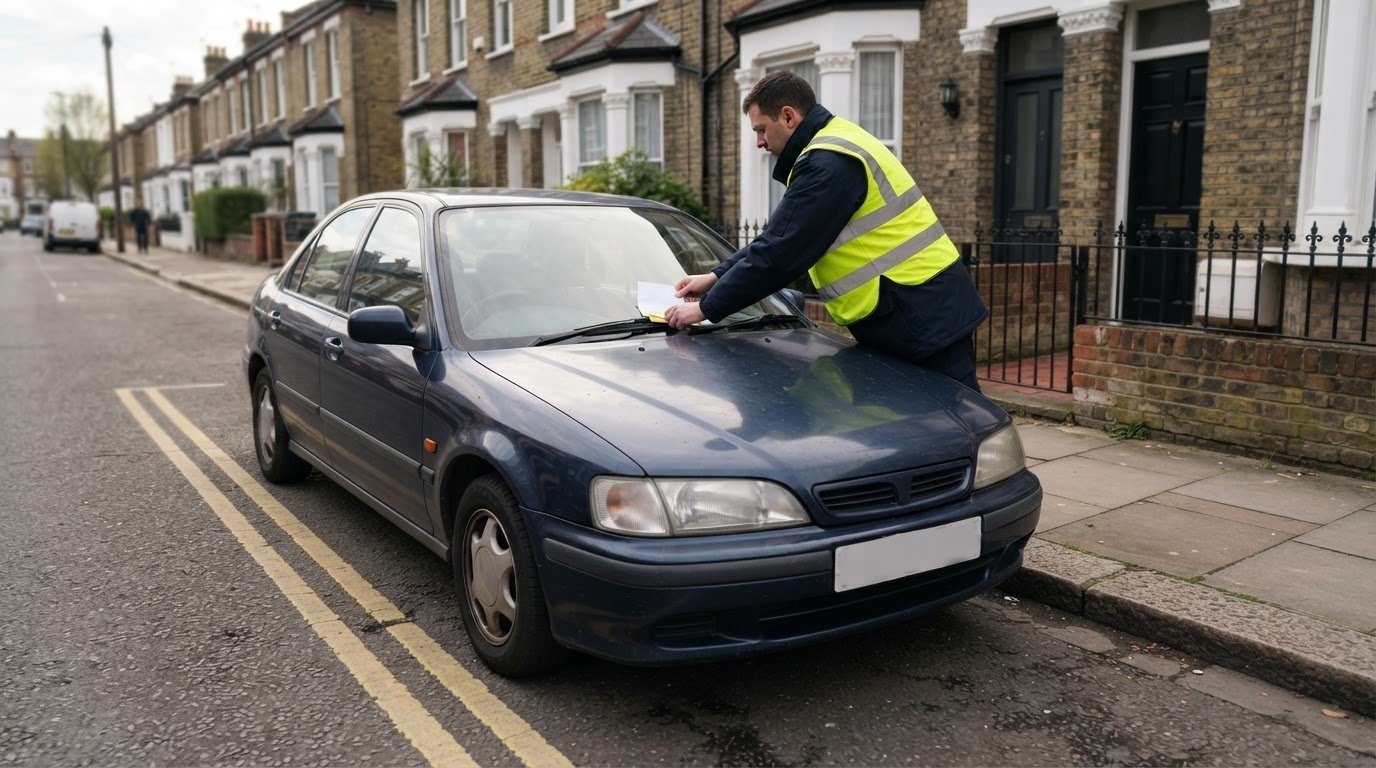
A parking restriction is more than a sign: a Traffic Regulation Order (TRO) gives the rule its legal basis. If you’re asking what a traffic regulation order is, it’s a legal order that allows highway authorities to regulate traffic on roads, including parking and vehicle movements. TROs can be temporary, experimental or permanent, and the type determines how the measure is introduced and reviewed.
It’s easy to focus on the restriction itself, but the process behind it matters too. A proposed order may involve consultation and advertising, while enforcement depends on the order being made and its terms taking effect. This guide explains how TROs affect parking, how authorities make permanent and temporary orders, what experimental orders are for and how restrictions are enforced. It also explains how transport planning evidence, such as parking and traffic surveys, can inform decisions about road changes.
Key Takeaways
- Understand how a Traffic Regulation Order gives legal effect to restrictions on parking, access and movement on roads.
- Learn how parking controls can address specific road-use issues and what restrictions may mean for drivers.
- See how consultation, consideration of representations and formal decisions shape the process for making an order.
- Compare permanent, temporary and experimental orders, including how a trial scheme can be assessed before a longer-term decision.
- Find out how the made order and its start date affect enforcement, and where transport evidence can support development planning.
What is a Traffic Regulation Order (TRO)?
A Traffic Regulation Order is a legal instrument that lets a traffic authority regulate how roads are used. It can set parking controls, speed limits, turning restrictions, one-way rules and limits on vehicle access.
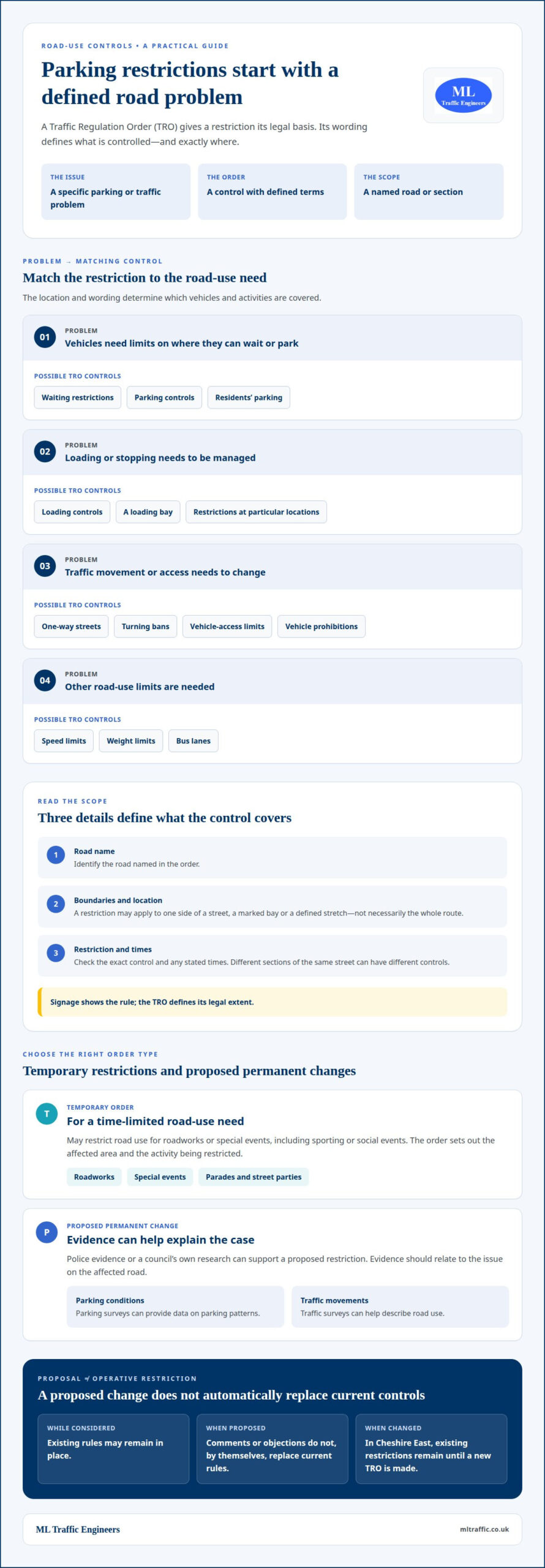
The proposed rules apply to a named road or section of a road, rather than changing road use in the abstract. A council designs a restriction around a defined issue, such as parking or traffic movement, then publishes the proposal so affected people can respond.
Consultation and public engagement
Consultation gives statutory consultees and the public an opportunity to comment on a proposed order before the council decides what to do. The council may seek views from police, local councils, transport organisations, residents and businesses; Gloucestershire County Council’s formal TRO consultation period is at least 21 days. Informal engagement can help shape a proposal before formal notices and objections begin. The Department for Transport published a consultation in 2022 proposing standard-format digital TRO data, then the Government published the first part of its response in January 2024.
Laws governing traffic orders
In England and Wales, the Road Traffic Regulation Act 1984, as amended, provides for traffic authorities to control road traffic on highways. Scotland’s permanent-order procedure is set out in The Secretary of State’s Traffic Orders (Procedure)(Scotland) Regulations 1987. These legal frameworks matter because the authority must use the applicable process, not simply put up a sign and declare a new rule. For a specific road in Northern Ireland, identify the relevant published order and responsible authority, as the applicable legal framework is not the same as the Great Britain framework.
To view an order for a particular street, search the relevant council’s traffic order or road notices pages using the road name and restriction type. The published notice should identify the proposed limits, affected section and how to submit comments. A site notice in the affected area or a local newspaper notice may also direct readers to the order documents. For a London development proposal, this guide to transport assessments in London explains how transport evidence relates to planning applications.
Formal consultation is the stage for written representations and objections. After it closes, the local authority considers the responses and decides whether to proceed as advertised, modify the proposal or abandon it. A significant change may require further consultation, so the final restriction can differ from the original proposal.
Anyone challenging an order’s validity or any of its provisions must apply to the High Court within six weeks of the order being made. An amendment or revocation follows a decision by the responsible traffic authority and may require a further order and consultation. The proposed change, affected road limits and grounds for objection all matter when assessing its practical effects.
Parking restrictions
A TRO can regulate parking and other traffic on a specific road or section of the network. The restriction’s location and wording determine which vehicles and activities it covers.
Restrictions on roads and parking
Road traffic regulation can control where vehicles stop, park, load or travel. A TRO may introduce waiting restrictions, loading controls, one-way streets, speed limits, turning bans, weight limits, vehicle prohibitions or bus lanes. These measures affect different road users, so the exact limits and times stated in the order matter. For drivers, a restriction may apply to one side of a street, a marked bay or a defined stretch of road, rather than the whole route.
Parking controls can distinguish between waiting, loading and designated parking. An order may create a loading bay, restrict parking at particular locations or establish residents’ parking. It can also regulate access, vehicle movements and turning. Read the road name, boundaries and restriction together: a sign may show the rule, while the TRO defines its legal extent. Different sections of the same street can have different controls.
Temporary restrictions and supporting evidence
Temporary TROs can restrict road use for roadworks or special events, including sporting or social events. On Scotland’s trunk roads and motorways, temporary and permanent orders under the Road Traffic Regulation Act 1984 can restrict or prohibit traffic for safety reasons. The reason for the restriction and the road affected shape what the order covers. Event restrictions can also manage traffic for parades and street parties.
For proposed permanent changes, police evidence or a council’s own research can support the case for a restriction. Evidence should relate to the issue being addressed, such as parking conditions or traffic movements on the affected road. Parking survey services can provide data relevant to parking patterns, while traffic surveys can help describe road use. This information can help explain why a specific restriction is proposed.
Existing controls do not automatically disappear while a council considers a replacement. In Cheshire East, existing restrictions remain in place until a new TRO is made. This distinction matters for residents, businesses and drivers: a proposed change is not the same as an operative restriction. Objections or comments on a proposal do not, by themselves, replace the current rules.
For a roadworks or event restriction, the temporary order sets out the affected area and the activity being restricted. For a permanent change, the authority considers the evidence, proposal and responses before deciding whether to proceed. A clear description of the road limits helps people understand whether a parking space, access point or route falls within the proposed controls. Read the order’s wording as well as any street notices.
Enforcement of traffic regulation orders
A TRO sets the legal restriction, while enforcement depends on the order’s terms and implementation. The responsible authority, police or civil enforcement officers may have different roles on the street.
Implementing an order
Implementation puts the approved scheme into effect, including any site works needed to make its limits clear. Signs and road markings communicate the restriction to drivers, while the order defines the rule and affected section. Leicestershire County Council states that site works needed to enforce an order are separate from its TRO fee.
Physical changes matter because enforcement must correspond with the restriction actually made. If a street scheme prohibits a turn, limits vehicle access or changes parking, signs and markings need to show where the rule applies. Leicestershire County Council also advises that site works are not included in the order fee. Planning for both the legal order and its implementation helps clarify what is required before enforcement begins.
Making and enforcing orders
Making an order establishes the legal basis for enforcement; it does not mean every restriction is enforced by the same body. In Gloucestershire, the police enforce moving traffic offences, including speed limits, banned turns, weight limits and prohibitions on driving. The county council enforces parking restrictions under its powers in the Traffic Management Act 2004. The offence type therefore affects who acts.
In Barnsley, a TRO is formally sealed and advertised as a made order with a start date before enforcement may be carried out. Across the UK, a TRO becomes enforceable from the date it is advertised. The notice and start date therefore matter: a proposed scheme alone is not an operative restriction. Drivers should follow the signs and restriction in force.
Enforcement officers rely on the order’s scope, not just a broad description of the scheme. The road section, vehicle type, restriction and operative date determine whether conduct falls within the rule. For example, a weight restriction applies to the vehicles and road limits covered by the order, while a parking control applies at the locations it identifies. Clear implementation helps road users understand these boundaries.
Enforcement responsibilities can differ across a county. Civil enforcement officers may enforce parking controls, while police deal with moving traffic offences such as banned turns. The TRO provides the written basis for the restriction, and street markings communicate its practical application. If the scheme changes, its legal terms and implementation must align so enforcement reflects the current order.
Before treating a restriction as enforceable, distinguish the proposal from the made order and its start date. A notice can explain when a scheme begins and which road section it covers. This sequence connects the legal decision to signs, site works and enforcement, helping residents, businesses and drivers understand which rule applies to their vehicles.
Procedure for making Traffic Regulation Orders
Local highway authorities make orders to manage traffic in their areas. They consult affected people, publish proposals, consider representations and decide whether a scheme should proceed.
Police and relevant county, district, borough, town or parish councils may be consulted, alongside residents and other affected road users. Proposed orders are advertised in the local press and displayed where the changes would take effect. These steps give people the opportunity to understand the proposed limits and submit comments or objections.
The process commonly moves through these stages:
- Design: The authority defines the road section, restriction and reason for the proposed order.
- Consultation: It seeks views from relevant bodies and people who may be affected.
- Public notice: It advertises the proposal and displays notices in the affected area.
- Decision: It considers representations and chooses whether to proceed, modify the scheme or abandon it.
- Making the order: The authority completes the formal process before the restriction takes effect.
People can send objections or supporting comments on a proposed order during the advertised period. The authority must consider those representations before deciding the proposal’s effect. A change after consultation may require further consultation or another advertisement. In Cheshire East, a changed proposal may need to be advertised again. If objections remain in Barnsley, an officer decision report goes to cabinet, which can approve the proposal, change it or abandon it.
Scotland has a specific procedure for permanent traffic orders. The Secretary of State’s Traffic Orders (Procedure)(Scotland) Regulations 1987 set out that procedure, while road orders are promoted under the Roads (Scotland) Act 1984. In the United Kingdom, the Secretary of State or Welsh Ministers may also need to consent before an order is made. These distinctions matter because the relevant authority must follow the procedure applying to that road and proposal.
Timescales depend on the scheme’s complexity, objections and required decisions. In Leicestershire, processing an order can take from 6 months to 2 years, depending on the scheme. Across the UK, making, updating or amending an order usually takes several months, with longer periods for complex or contentious proposals. Cheshire East says agreeing an order can take a year or more from application. Early planning helps align the order process with the wider project schedule.
Minor schemes in Leicestershire still follow the legal procedures used for other orders. A short or localised restriction does not remove the need for the relevant stages. The proposal must define the affected highway clearly, allow views to be considered and reach a formal decision. This process gives the resulting order a clear legal basis and helps affected road users understand the change.
Temporary and permanent traffic regulation orders
The main distinction is how long a restriction is intended to operate and whether the authority needs to test it first. Permanent orders establish continuing controls; temporary orders address a defined short-term need, while experimental orders let councils assess a change in practice. The choice affects how the proposal is assessed, how people experience the restriction and what decision follows.
A permanent order may address an ongoing issue, such as congestion, road safety or parking provision. Cheshire East uses permanent orders for these purposes, including controls on speed, access, turning, residents’ parking and bus lanes. The proposed restriction must fit the road and the problem being addressed. Its boundaries and terms define which part of the network, traffic movements or parking arrangements will change.
Temporary orders are used for restrictions needed for roadworks or special events. They can control or prohibit an activity on the highway, allowing a temporary change to manage a specific situation. The Road Traffic Regulation Act 1984 is associated with temporary and permanent restrictions, including safety measures on Scotland’s trunk roads and motorways. A temporary arrangement should be understood through its stated purpose, affected road and operating period.
An experimental order serves a different purpose: it allows a council to trial street changes, collect feedback and performance data, then adjust the scheme before deciding whether to make it permanent. This can help reveal how a measure affects access and traffic movement after implementation. Barnsley Metropolitan Borough Council states that an Experimental Traffic Regulation Order can last a maximum of 18 months. At the end, the scheme may be made permanent, changed or stopped; making it permanent or changing it requires an extra order.
A trial period can make experimental orders useful when a transport measure needs to be assessed in real conditions. Essex County Council’s Old Road, Harlow proposal, for example, is to be assessed for benefits and impacts before a decision about permanent closure. Feedback and observed effects can inform that decision. An experimental order is not simply a permanent restriction with a different label: its purpose is to test the arrangement and assess its consequences.
For a development affected by proposed street changes, transport evidence can help explain how access and movement interact with the scheme. Explore London transport assessment guidance when considering those planning implications. The key takeaway is to distinguish a short-term restriction, a trial and a continuing control. Each has a different purpose, and the order’s terms show which applies.
ML Traffic Engineers UK: Transport Statements
ML Traffic Engineers UK supports development planning with transport documentation and analysis. If a proposed traffic restriction may affect site access, parking or vehicle movements, a Transport Statement can explain the transport implications of a development. For more complex proposals, a Transport Assessment can provide a broader analysis of transport effects.
Parking Surveys can document existing parking conditions, while Swept Path Analysis can assess vehicle movements around a site. These services are relevant when planning decisions depend on clear evidence about access, parking or traffic impacts. They support transport planning but do not replace the highway authority’s statutory process for making a Traffic Regulation Order.
To discuss transport planning support for a development, contact ML Traffic Engineers UK.
Move your development planning forward
Understanding what a Traffic Regulation Order means is a useful starting point; the next step is assessing how a proposed development interacts with its transport setting. Access arrangements, vehicle movements and parking conditions can all shape the evidence needed to support planning decisions. Addressing these considerations early can help keep transport requirements visible as a project develops.
ML Traffic Engineers UK prepares Transport Statements and Parking Surveys, and provides Swept Path Analysis to assess vehicle movements around a site. These services help present relevant transport information for development proposals, while a Transport Assessment can address broader transport considerations. The right evidence depends on the proposal and the questions raised by its planning context.
If your project needs transport planning input, contact ML Traffic Engineers UK to discuss your requirements. Clear evidence can help you plan the next stage with confidence.
Frequently Asked Questions
How are objections resolved?
The authority considers objections and supporting comments before deciding on a proposal. It can proceed as advertised, modify the scheme or abandon it. For example, an objection about access could lead the authority to reconsider the affected road section or restriction. If it changes the proposal, further consultation or advertisement may be needed. The outcome depends on the representations and the authority’s decision, not simply on the number of objections.
How can TROs improve cycling and walking?
TROs can restrict through-traffic in residential areas, including through low-traffic neighbourhood measures. This can reduce motor vehicle movements on selected streets and limit the effects of passing traffic on walking or cycling routes. The order controls road use; it does not itself build cycle lanes or footways. Its effect depends on the restrictions chosen, the roads covered and how the scheme manages access for residents and other permitted users.
How does the TRO process work?
A traffic authority defines the proposed restriction and the road section it covers, then consults relevant organisations and affected people. It advertises the proposal and gathers comments or objections during the stated period. The authority considers those responses and decides whether to proceed, change the proposal or stop it. If made, the order sets the legal terms of the restriction, including the roads and movements it applies to.
What is a TRO?
TRO stands for Traffic Regulation Order, a legal document controlling how a road or part of a road can be used. It can cover a specific parking bay, a turning movement or access along a defined street section. The order’s wording identifies the restriction and its limits. This detail distinguishes the legal rule from a general traffic proposal or an informal request to change road use.
What is a traffic regulation order (TRO) in the UK?
In the UK, a TRO is a legal order used by traffic authorities to regulate road use. In London, these orders are known as Traffic Management Orders. Orders can address controls such as parking, loading, speed or vehicle movements. The responsible authority and applicable procedure depend on the location, so the road named in the order is essential to understanding which rules apply.
What steps are involved in making a permanent, experimental or temporary TRO?
Authorities define the restriction, consult affected groups, publish the proposal and consider representations before making a decision. A permanent order establishes an ongoing control. A temporary order addresses a short-term need, such as roadworks or an event. An experimental order tests a street change using feedback and performance data; the authority can then decide whether to make it permanent, alter it or stop it. The order type determines the purpose and the next decision.
How can I object to or comment on a proposed traffic regulation order, and what are the deadlines?
Submit comments or objections in writing using the method and address stated on the proposal notice. Explain the road section concerned, the effect you expect and any relevant reasons for your view. The notice sets the deadline for that proposal. Gloucestershire County Council’s formal TRO consultation period is at least 21 days. Other councils’ advertised periods can differ, so use the deadline published for the specific order.
How are traffic regulation orders signed and enforced, and what happens if signs are missing?
Signs and road markings communicate a restriction on the street, while the order defines its legal scope. Enforcement responsibilities depend on the offence: parking controls and moving traffic offences can involve different enforcement bodies. If a sign appears to be missing or unclear, record the road location and restriction, then report the issue to the relevant authority. A missing sign does not by itself establish that the order has been cancelled or determine its legal effect in that situation.

Disclaimer
The content on mltraffic.co.uk, including all technical articles, guides, and resources, is provided for general informational and educational purposes only. It is not intended to constitute professional advice in traffic engineering, transportation planning, development approvals, or any other technical or legal field.
While ML Traffic Engineers makes every reasonable effort to ensure the accuracy, completeness, and timeliness of the information published, we do not provide any warranties or representations (express or implied) regarding its reliability, suitability, or availability for any particular purpose. Any reliance you place on the content is strictly at your own risk.
In no event shall ML Traffic Engineers, its directors, employees, authors, or affiliates be liable for any direct, indirect, incidental, special, consequential, or punitive damages (including, without limitation, loss of profits, data, or business opportunities) arising out of or in connection with the use of, or inability to use, any information provided on this website.
The articles and guides on this site are not a substitute for engaging a qualified, professional traffic engineer to assess your specific project requirements. For tailored advice, compliance assessments, or traffic engineering services, please contact a competent professional.
This disclaimer may be updated from time to time without notice. By accessing or using this website, you agree to be bound by the most current version of this disclaimer.