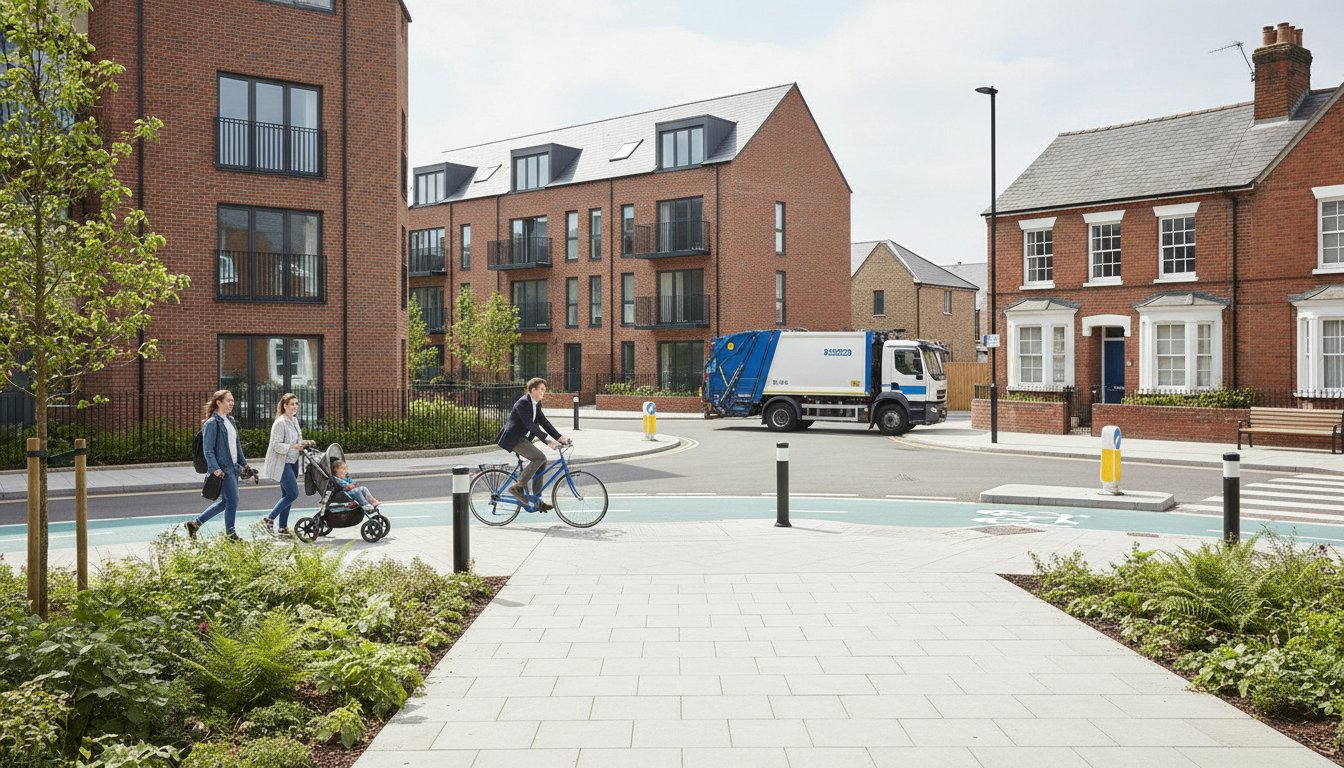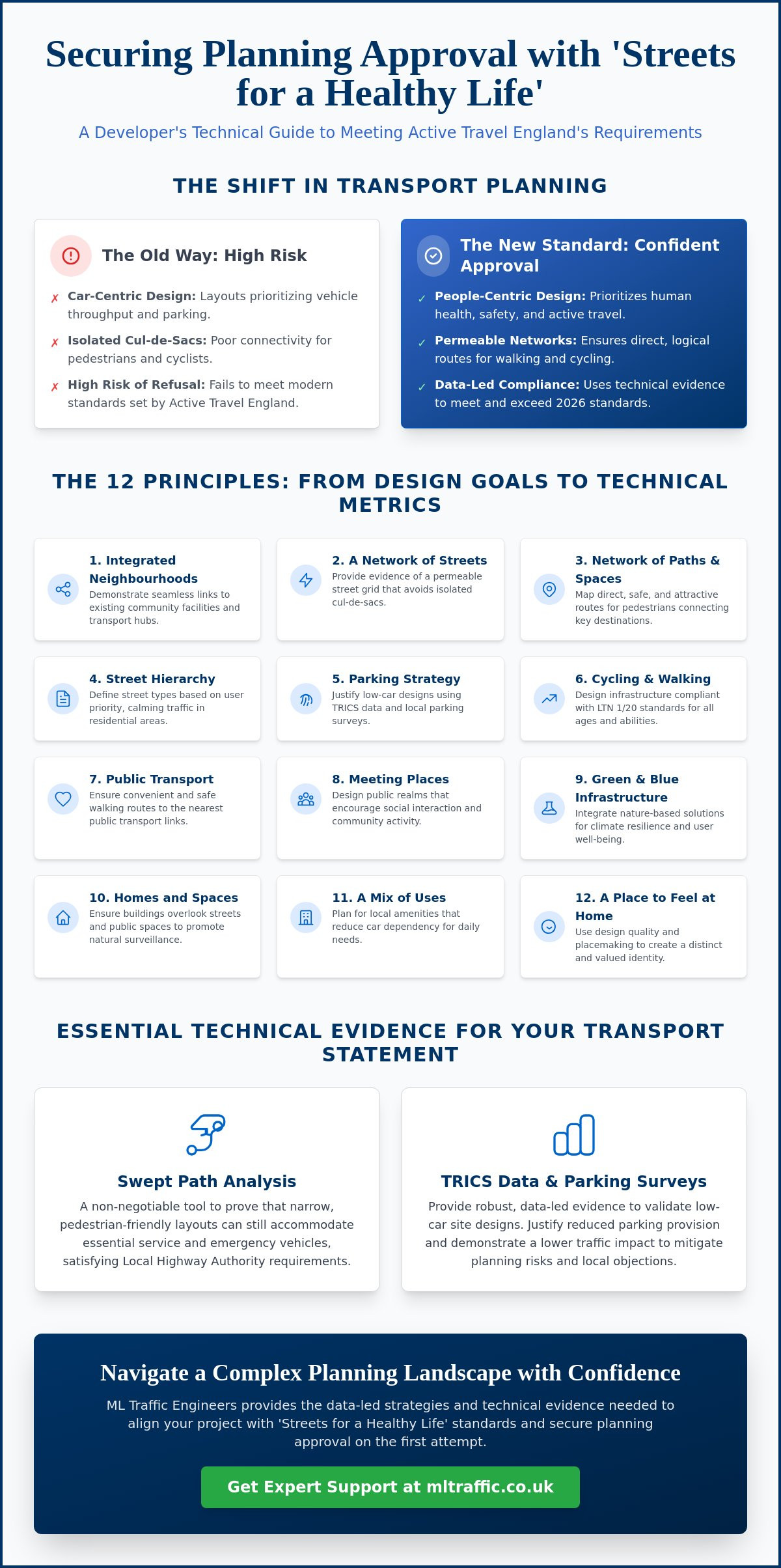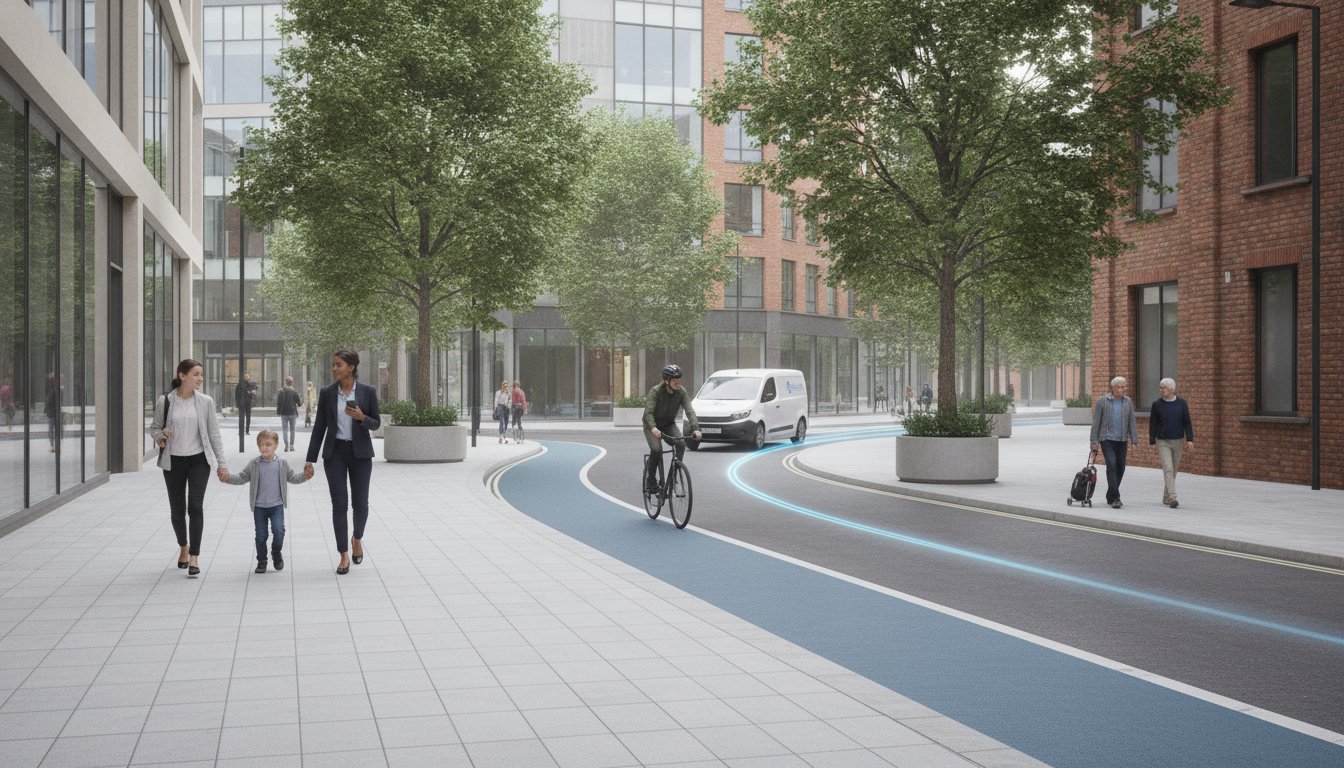
A recent survey of English Local Highway Authorities revealed that 71% still categorize roads based on traffic flow rather than the “Movement and Place” approach championed by modern guidance. This reliance on outdated metrics often leads to costly planning delays and direct conflict with current active travel standards. We understand the pressure of balancing technical vehicle requirements with the increasing demand for high-quality public spaces. It’s often difficult to quantify placemaking in a way that satisfies both a highways engineer and a planning officer during a rigorous technical review.
This article shows you how to master the healthy streets approach highways engineering and placemaking to secure rapid approvals for your projects. You’ll learn how to integrate the 10 Healthy Streets indicators into your technical reports without compromising on safety or essential vehicle access. We provide a clear, sequential path to aligning your infrastructure designs with the 2026 regulatory environment, ensuring your Transport Statements and Travel Plans stand up to scrutiny. We will examine how to bridge the gap between engineering precision and human-centered design to deliver compliant, future-proof infrastructure.
Key Takeaways
- Understand the 10 Healthy Streets Indicators and how they serve as the technical foundation for human-centered urban design in 2026.
- Learn to use Swept Path Analysis to reconcile narrow, high-quality placemaking with the essential access requirements of emergency and service vehicles.
- Discover how to integrate the healthy streets approach highways engineering and placemaking into your Transport Statements to satisfy rigorous local authority standards.
- Master strategies for balancing parking requirements in car-lite developments by utilizing robust Travel Plans and high PTAL accessibility.
- Follow a proven, sequential audit process to score your proposals against the Healthy Streets Check for Designers and secure faster planning approvals.
What is the Healthy Streets Approach in 2026 Highways Engineering?
The Healthy Streets Approach is an evidence-based framework created by Lucy Saunders to prioritize the human experience in urban design. It moves away from the traditional focus on vehicle throughput and instead evaluates the success of a street based on ten specific indicators of health and well-being. By adopting this method, developers and local authorities ensure that public spaces are inclusive, safe, and sustainable. This approach aligns closely with the principles of Complete Streets, which advocate for infrastructure that serves all users regardless of their mode of transport.
To better understand this concept, watch this helpful video:
2026 represents a critical tipping point for highways engineering in England. The mandate from Active Travel England has shifted from optional guidance to a hard requirement for planning approvals. Historically, engineers focused on “Level of Service” for vehicles, often at the expense of pedestrians. Today, the role of a highways engineer involves translating qualitative indicators into quantitative, buildable designs that satisfy both safety regulations and placemaking goals. This evolution ensures that the healthy streets approach highways engineering and placemaking is integrated into every stage of the project lifecycle.
The 10 Indicators as Engineering Benchmarks
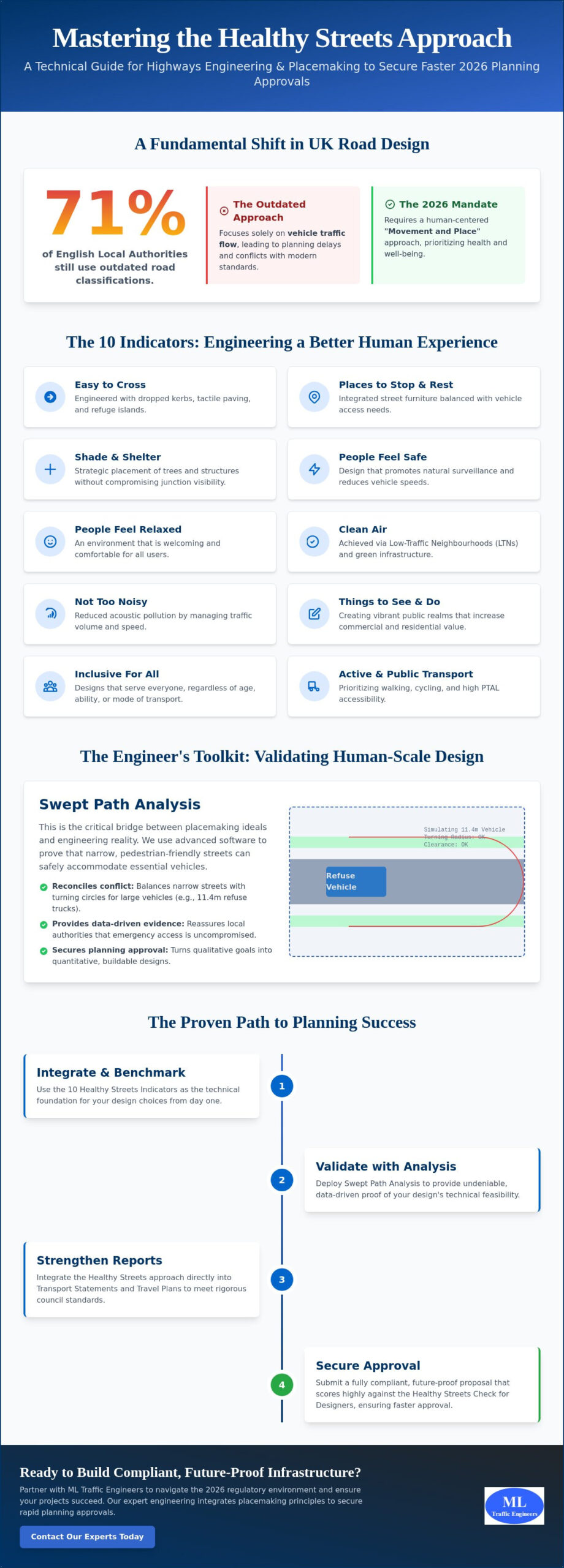
We use the 10 Healthy Streets indicators as technical benchmarks to validate design choices. For example, “Easy to Cross” isn’t just a feeling; it’s the implementation of dropped kerbs, tactile paving, and refuge islands positioned along pedestrian desire lines. “Shade and Shelter” requires the integration of trees and street furniture, but these must be carefully engineered to maintain visibility splays at junctions. Finally, “Clean Air” and “Not too noisy” are achieved through the strategic design of low-traffic neighbourhoods (LTNs) that reduce nitrogen dioxide levels and acoustic pollution, encouraging people to spend more time outdoors.
Placemaking vs. Traditional Traffic Management
Traditional management prioritizes the movement of cars above all else. In contrast, placemaking focuses on the “Level of Service” for people. High-quality public realms increase the commercial and residential value of a development by creating places where people actually want to live and work. This transition is essential for securing a successful Transport Assessment in modern planning environments. The Healthy Streets Approach is the functional union of public health objectives and civil engineering precision.
Technical Integration: Swept Path Analysis and Healthy Streets
Designing narrow, human-scale streets is a primary objective of the Healthy Streets framework. It fosters a sense of community and safety by reducing the dominance of motor vehicles. However, this design preference presents a significant hurdle for highways engineers who must ensure that life-safety vehicles and essential services can still navigate the site. Balancing “Places to Stop and Rest” with the required turning circles for an 11.4m refuse vehicle requires more than just a creative eye. It demands rigorous technical validation to ensure the layout is functional.
At ML Traffic Engineers UK, our team uses advanced Swept Path Analysis to bridge this gap. This software allows us to simulate vehicle movements within tight, human-centric layouts before any construction begins. We can demonstrate that even with reduced carriageway widths, emergency access remains uncompromised. This data-driven evidence is crucial for securing planning approvals. It reassures local authorities that the healthy streets approach highways engineering and placemaking is feasible in practice, not just in theory. Providing this level of technical certainty reduces the risk of costly design revisions during the planning process.
Optimising Kerb Radii for Pedestrians and HGVs
Tight kerb radii are a staple of the Healthy Streets philosophy. They force drivers to slow down and significantly reduce the distance pedestrians must travel to cross the road. But large vehicles struggle with these sharp turns. To solve this, we implement technical workarounds like overrun areas or mountable kerbs. These features allow the rear wheels of larger vehicles to safely traverse a designated area without endangering pedestrians or damaging the footway. This approach ensures full compliance with the Manual for Streets while maintaining the high-quality public realm outlined in the Healthy High Streets guidance.
Visibility Splays in a Greener Streetscape
Integrating street trees and Sustainable Drainage Systems (SuDS) is vital for the “People Feel Safe” indicator. Trees provide natural cooling and psychological comfort. However, they can easily obstruct visibility splays at junctions. We address this by engineering “Vertical Deflection” into the road surface. By using speed tables and raised junctions, we can legally and safely reduce the required visibility splay lengths because vehicle speeds are physically constrained to 20mph or less. If you are struggling to fit green infrastructure into a constrained site, our team can provide a technical Swept Path Analysis to find the optimal balance between greenery and safety.
Navigating the Planning Process: Transport Statements and Assessments
Planning success in 2026 hinges on your ability to validate design choices against public health outcomes. A standard Transport Statement is no longer just about vehicle capacity and parking numbers. It must now feature a comprehensive Healthy Streets assessment. This is especially critical for projects within Greater London, where Transport for London’s Healthy Streets Approach serves as the mandatory framework for evaluating new infrastructure. We manage this entire process, ensuring your technical documentation aligns with the latest statutory requirements.
We use detailed Traffic Surveys to provide the empirical data required for these assessments. By quantifying existing pedestrian movements and vehicle speeds, we create a robust baseline for the “People Choose to Walk and Cycle” metric. This evidence-based strategy ensures that your proposal meets the expectations of both TfL and Active Travel England during the pre-application stage. Integrating the healthy streets approach highways engineering and placemaking early in your project lifecycle prevents the costly delays often associated with non-compliance and redesign requests.
The Healthy Streets Check for Designers
The Healthy Streets Check for Designers is a spreadsheet-based tool that scores a development from 0 to 100 based on the 10 indicators. Our engineers conduct a thorough audit of your site to identify “Quick Wins” that can boost a failing score. These often include simple adjustments to street lighting, the addition of seating, or improving the legibility of signage. A higher score provides the evidence-based justification needed to secure highway authority approval. We provide the technical narrative to explain how your design choices directly improve the score, making the case for your development undeniable.
Securing S278 and S38 Agreements
One of the biggest challenges is ensuring that Healthy Streets principles survive the transition from a planning concept to a detailed design. During the S278 and S38 negotiation phases, Local Highway Authorities may prioritize maintenance ease over placemaking features like street trees or non-standard paving. We act as your technical advocate during this adoption process. We bridge the gap between high-level vision and adoptable standards, ensuring the healthy streets approach highways engineering and placemaking remains intact. For more details on this transition, see our Highway Design S278 & S38 Guide.
Balancing Parking Requirements with the Healthy Streets Approach
The most common concern we hear from developers is the perceived conflict between parking provision and the Healthy Streets indicators. If you prioritize street-level placemaking, where do the vehicles go? In urban centers with high Public Transport Accessibility Levels (PTAL), the healthy streets approach highways engineering and placemaking often dictates a shift toward car-lite or car-free developments. This transition isn’t about ignoring vehicle needs but about managing them with technical precision. We help you design layouts that prioritize people while still providing essential access for Blue Badge holders and emergency services.
Justifying Reduced Parking to Planning Committees
Our team conducts comprehensive Parking Surveys to provide empirical evidence of parking over-provision in the surrounding area. This data is vital for convincing planning committees that a reduced parking ratio won’t negatively impact local street capacity. We pair this data with bespoke Travel Plans that outline clear incentives for walking, cycling, and public transport use. A robust Travel Plan acts as a technical commitment to sustainable transport that directly justifies a reduction in on-site parking density. This dual approach of data and strategy is the most effective way to overcome local authority resistance to low-parking developments.
Loading and Servicing in Healthy Streets
Loading and servicing require careful engineering to avoid disrupting the pedestrian experience. We design multi-functional loading bays that can transition into public seating or additional footway width during off-peak hours. Integrating e-cargo bike hubs into the placemaking strategy also helps meet “Clean Air” targets by reducing the number of heavy goods vehicles in the immediate vicinity. To ensure the “Not Too Noisy” indicator is met, we often recommend timed delivery restrictions within the final Transport Assessment. If you need to reconcile your parking strategy with local authority expectations, contact us for a professional Parking Survey today.
The ML Traffic Engineers UK Approach: Expert Engineering for Healthy Streets
Professional highways engineering is the essential bridge between a creative placemaking vision and a legal planning permit. Without technical validation, even the most inspired designs will fail the scrutiny of a local highway authority. ML Traffic Engineers UK provides the technical rigor required to ensure the healthy streets approach highways engineering and placemaking is successfully implemented and approved. Our role is to reduce the logistical and regulatory pressures on your team by managing the full project lifecycle from inception to completion.
Our process is logical and sequential, starting with an initial Healthy Streets audit to establish a clear baseline score. We then move into technical design, using advanced Swept Path Analysis to verify that the proposed layout functions for all vehicle types. This empirical data forms the core of our final Transport Assessment submission. We handle complex negotiations with TfL and local boroughs, acting as a technical shield for our clients during the pre-application phase. This ensures that the design principles agreed upon early in the process are not diluted during later stages of the planning journey.
Future-proofing your development is a necessity in the 2026 regulatory environment. We ensure your project adheres to the latest standards, including the January 2026 London Congestion Charge updates and the stricter Direct Vision Standard (DVS) for HGVs. ML Traffic Engineers UK understands these intricate regional regulations so you don’t have to. We take pride in our precision and adherence to standards, positioning ourselves as a reliable partner that values your time and project deadlines. This proactive approach ensures your infrastructure is ready for the transition to zero-emission zones and increased active travel mandates.
Why Choose ML Traffic Engineers UK?
We offer a unique combination of technical SPA expertise and qualitative placemaking insight. Our track record includes securing approvals for high-stakes projects across London and the South East. We provide comprehensive support from the earliest pre-app meetings through to the completion of Section 278 and Section 38 agreements. Our engineers are highly organized experts who prioritize safety and precision in every report. By choosing ML Traffic Engineers UK, you gain a partner that views its role as a vital guardian of public safety and professional integrity.
Get Started on Your Healthy Streets Project
Ready to secure your planning approval with a compliant design? You can book a preliminary design review with our London-based team to identify potential issues before they become costly delays. We provide competitive quotes for Healthy Streets compliant Transport Statements and full assessments. Our team is available to provide expert advice on how to integrate the healthy streets approach highways engineering and placemaking into your next scheme. Contact ML Traffic Engineers UK today to discuss your project requirements and receive a tailored service proposal.
Future-Proof Your Infrastructure Proposals
Mastering the healthy streets approach highways engineering and placemaking is now a functional necessity for securing planning approvals in England. Success relies on your ability to reconcile human-centered design with the rigorous technical requirements discussed throughout this guide. By utilizing advanced Swept Path Analysis and data-driven Transport Statements, you can provide the evidence-based justification that local authorities demand. These strategies ensure your project remains compliant with the evolving 2026 standards set by TfL and Active Travel England.
ML Traffic Engineers UK provides the technical authority required to mitigate logistical and regulatory pressures. With over 10 years of experience navigating UK planning regulations, our team delivers the precision needed for complex London transport planning. We utilize expert Swept Path Analysis and tailored Transport Assessments to ensure your project meets every benchmark. Secure your planning approval with a Healthy Streets compliant Transport Statement from ML Traffic Engineers UK today. We are ready to assist you in creating safer, more inclusive environments.
Frequently Asked Questions
What are the 10 indicators of the Healthy Streets Approach?
The ten indicators are a set of evidence-based criteria used to measure the human experience of a street environment. They include: Everyone feels welcome, People choose to walk and cycle, People feel safe, Easy to cross, and Things to see and do. The remaining five are Places to stop and rest, Shade and shelter, Clean air, Not too noisy, and People feel relaxed. These indicators provide a holistic framework for evaluating how well a street design supports public health and well-being.
Is a Healthy Streets Check mandatory for planning in London?
A Healthy Streets Check is mandatory for all referable planning applications in London according to the Mayor’s Transport Strategy. Smaller developments may also require a check depending on the specific requirements of the local borough. This assessment ensures that new infrastructure aligns with the healthy streets approach highways engineering and placemaking goals. We recommend checking with the specific local authority early in the pre-application stage to confirm the level of detail required for your submission.
How does the Healthy Streets Approach affect parking standards?
This approach typically leads to a reduction in on-site parking provision to prioritize active travel and high-quality public space. In areas with high public transport accessibility, developers are often required to implement car-lite or car-free schemes. While this reduces car dominance, it necessitates a robust strategy for Blue Badge holders and essential deliveries. We use detailed Parking Surveys to justify these reductions by proving that the local street capacity can accommodate the shift without negative impacts.
Can I use Swept Path Analysis to justify narrower street designs?
Swept Path Analysis is a vital tool for validating that narrower, human-scale streets remain functional for larger vehicles. By simulating the movements of fire tenders and refuse trucks, we provide the technical evidence that local highway authorities need to approve reduced carriageway widths. This ensures that the design maintains safety standards while achieving the desired placemaking aesthetic. It’s the most effective way to prove that a constrained layout won’t compromise essential services or emergency response times.
What is the difference between placemaking and highways engineering?
How much does a Healthy Streets Check for Designers cost?
The cost of a Healthy Streets Check depends on the scale and complexity of the proposed development. Factors such as the number of junctions to be assessed and the level of baseline data required will influence the final fee. We provide tailored quotes for these assessments as part of our comprehensive Transport Statement and Assessment services. Contact our London-based team for a specific project proposal that meets your regulatory requirements and project deadlines.
How do I improve my Healthy Streets score if it is currently low?
Improving a low score often involves implementing “quick wins” like adding street furniture, improving lighting, or increasing the number of trees. You can also boost scores by reducing vehicle speeds through vertical deflection or tightening kerb radii to make streets easier to cross. Our engineers conduct detailed audits to identify exactly where a design is failing and provide technical solutions to raise the score. Small adjustments to the healthy streets approach highways engineering and placemaking can lead to significant improvements in the final assessment.
Does the Healthy Streets Approach apply to private developments or just public roads?
The approach applies to any development that impacts the public realm or creates new street environments. While it’s a core requirement for public highway projects, private developers must also adhere to these principles to secure planning approval in most urban areas. This ensures that new residential and commercial schemes integrate seamlessly with the surrounding urban fabric. Whether you’re designing a private courtyard or a new public link, the indicators remain the benchmark for a successful, healthy design.

Disclaimer
The content on mltraffic.co.uk, including all technical articles, guides, and resources, is provided for general informational and educational purposes only. It is not intended to constitute professional advice in traffic engineering, transportation planning, development approvals, or any other technical or legal field.
While ML Traffic Engineers makes every reasonable effort to ensure the accuracy, completeness, and timeliness of the information published, we do not provide any warranties or representations (express or implied) regarding its reliability, suitability, or availability for any particular purpose. Any reliance you place on the content is strictly at your own risk.
In no event shall ML Traffic Engineers, its directors, employees, authors, or affiliates be liable for any direct, indirect, incidental, special, consequential, or punitive damages (including, without limitation, loss of profits, data, or business opportunities) arising out of or in connection with the use of, or inability to use, any information provided on this website.
The articles and guides on this site are not a substitute for engaging a qualified, professional traffic engineer to assess your specific project requirements. For tailored advice, compliance assessments, or traffic engineering services, please contact a competent professional.
This disclaimer may be updated from time to time without notice. By accessing or using this website, you agree to be bound by the most current version of this disclaimer.