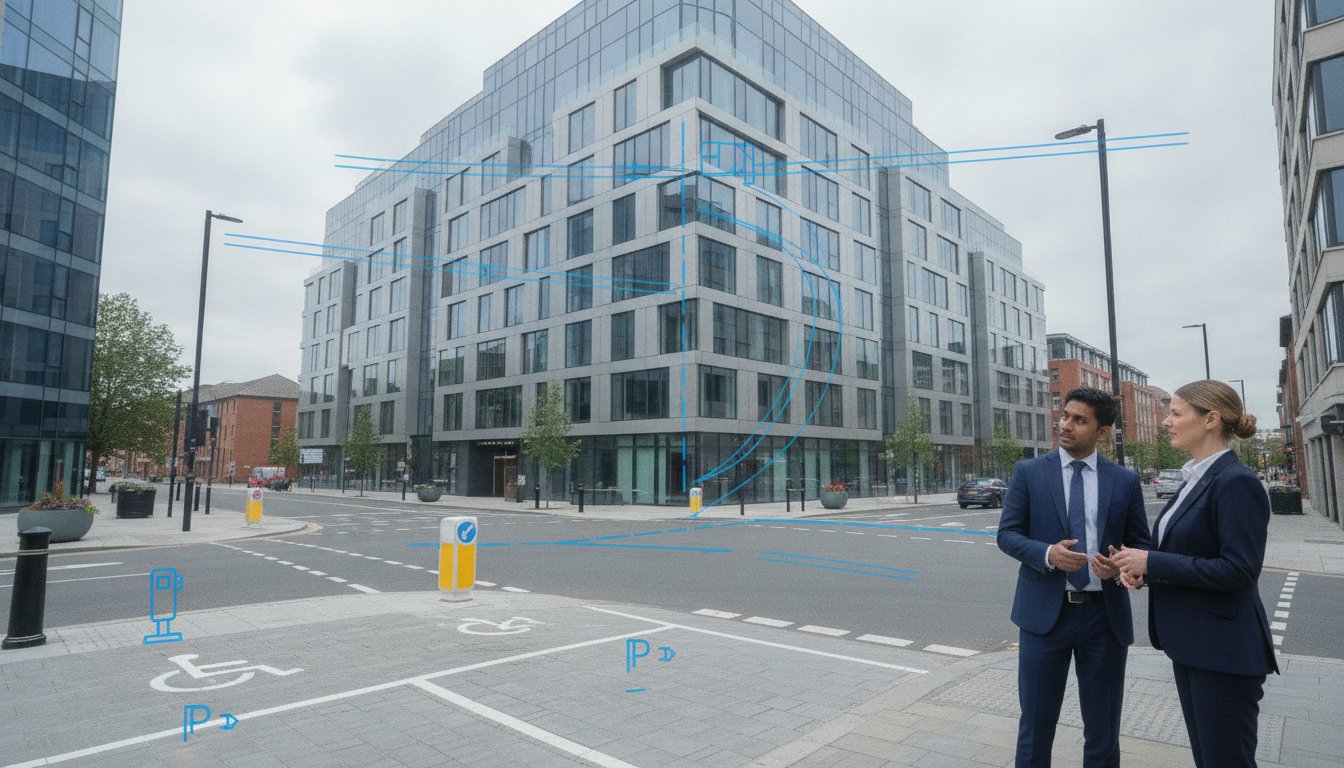
A single miscalculated trip forecast in your hotel transport assessment can delay your project by six months or more. In the high-stakes environment of 2026 planning, highway authorities no longer accept generic data for complex tourist developments. You’re likely already dealing with the pressure of seasonal demand spikes and the intricate requirements of a transport assessment for mixed-use development. We understand that these regulatory hurdles feel like moving targets, especially when inaccurate forecasting leads to costly design changes at the eleventh hour.
This guide ensures your submission is validated on the first attempt by mastering the latest technical requirements and planning triggers. You’ll gain clear guidance on optimizing parking and servicing requirements while ensuring your site access passes the strictest council scrutiny. We’ll examine the specific TRICS database modelling needed for 2026 and provide a step-by-step breakdown of how to handle the logistical complexities of modern hotel infrastructure. From initial swept path analysis to final travel plan implementation, this is your roadmap to securing planning permission without the stress of unexpected objections.
Key Takeaways
- Understand how 2026 planning regulations demand a precise, hotel-specific approach to quantifying travel impacts to avoid project delays.
- Identify the technical triggers for a transport assessment for mixed-use development to ensure your project satisfies complex multi-modal highway requirements.
- Master the use of the TRICS database to accurately forecast seasonal demand and guest arrival patterns, preventing design changes caused by inaccurate trip forecasting.
- Navigate the latest mandates for Blue Badge provision and EV charging to align your parking strategy with local highway authority standards.
- Learn how to utilize robust Travel Plans and active travel facilities to mitigate trip generation and secure a validated submission on your first attempt.
The Role of a Tourist Hotel Transport Assessment in 2026 Planning
A Transport Assessment is a technical study that quantifies the travel impact of a proposed development. For hotel projects in 2026, this document is the primary evidence used by Local Highway Authorities to decide on validation. It moves beyond simple trip counting. It integrates the core principles of transportation planning to ensure the site operates safely and efficiently. Unlike previous years, current standards require developers to model how guest experience flows interact with local infrastructure. This is particularly vital when conducting a transport assessment for mixed-use development, as the interaction between hotel guests and other site users creates unique logistical pressures. Our expert team ensures that your assessment provides a validated defense against planning delays.
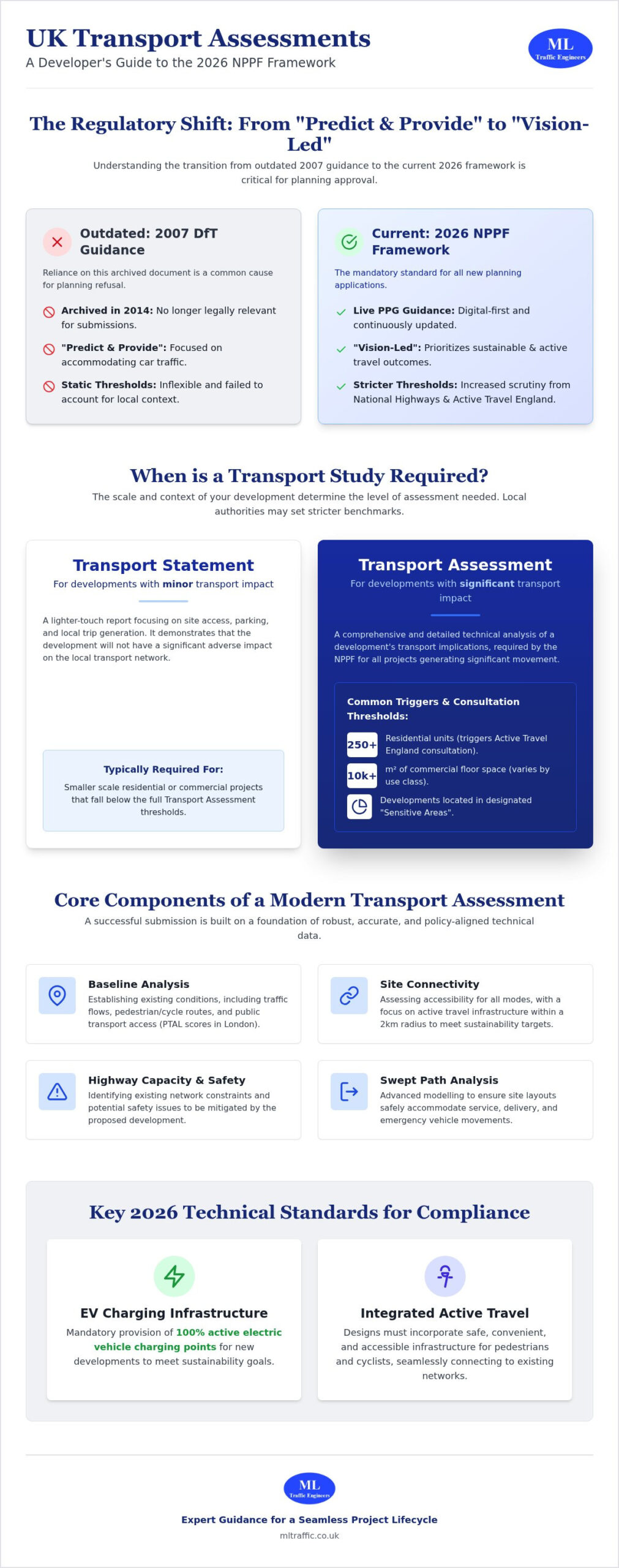
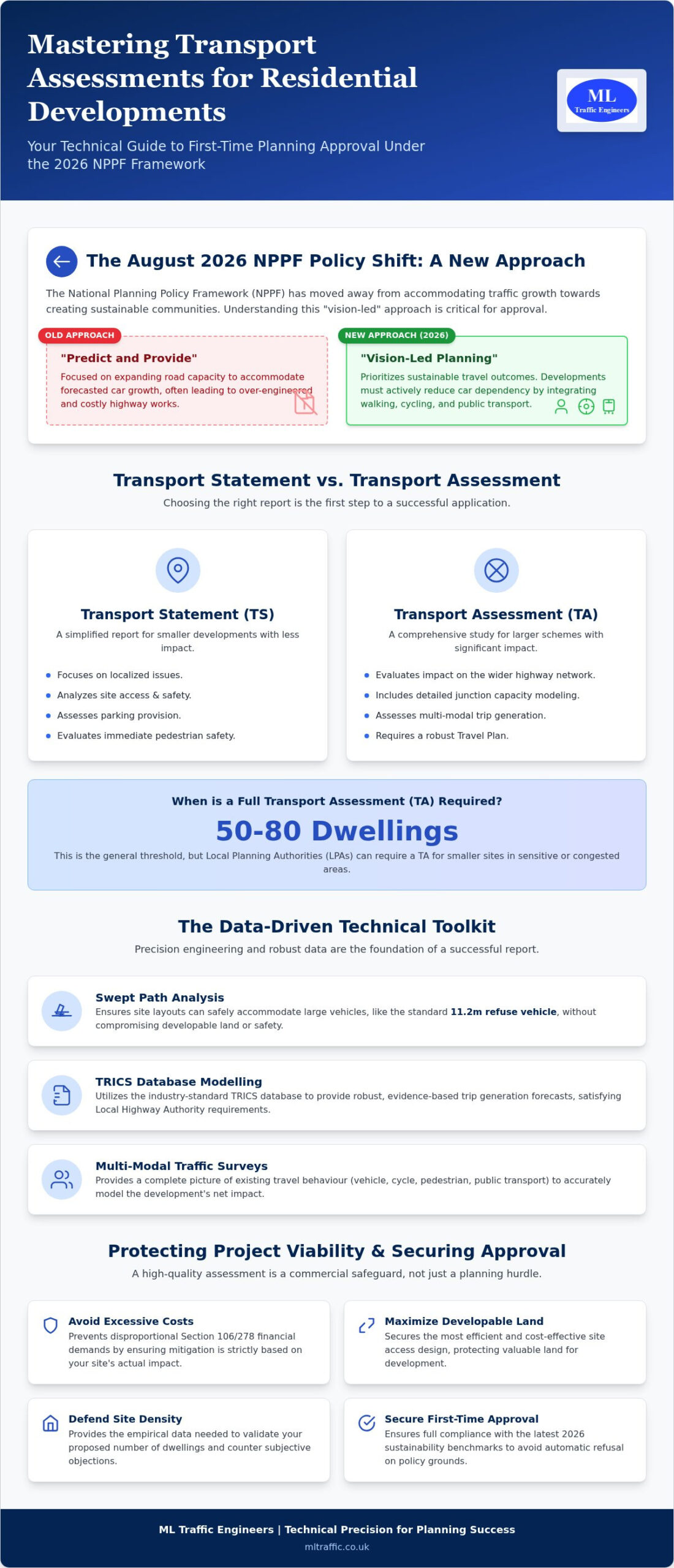
Distinguishing between a Transport Statement and a full Transport Assessment is a critical first step for any developer. While a Statement is often sufficient for smaller extensions or low-impact sites, a full Assessment is a deep dive into capacity and safety. It’s your primary technical tool for negotiating with highway officers during the scoping phase. Without this data, your application risks being rejected before it even reaches the committee stage. We provide the technical authority needed to reduce regulatory pressure on your team while ensuring every statutory requirement is satisfied.
When is a Full Transport Assessment Required?
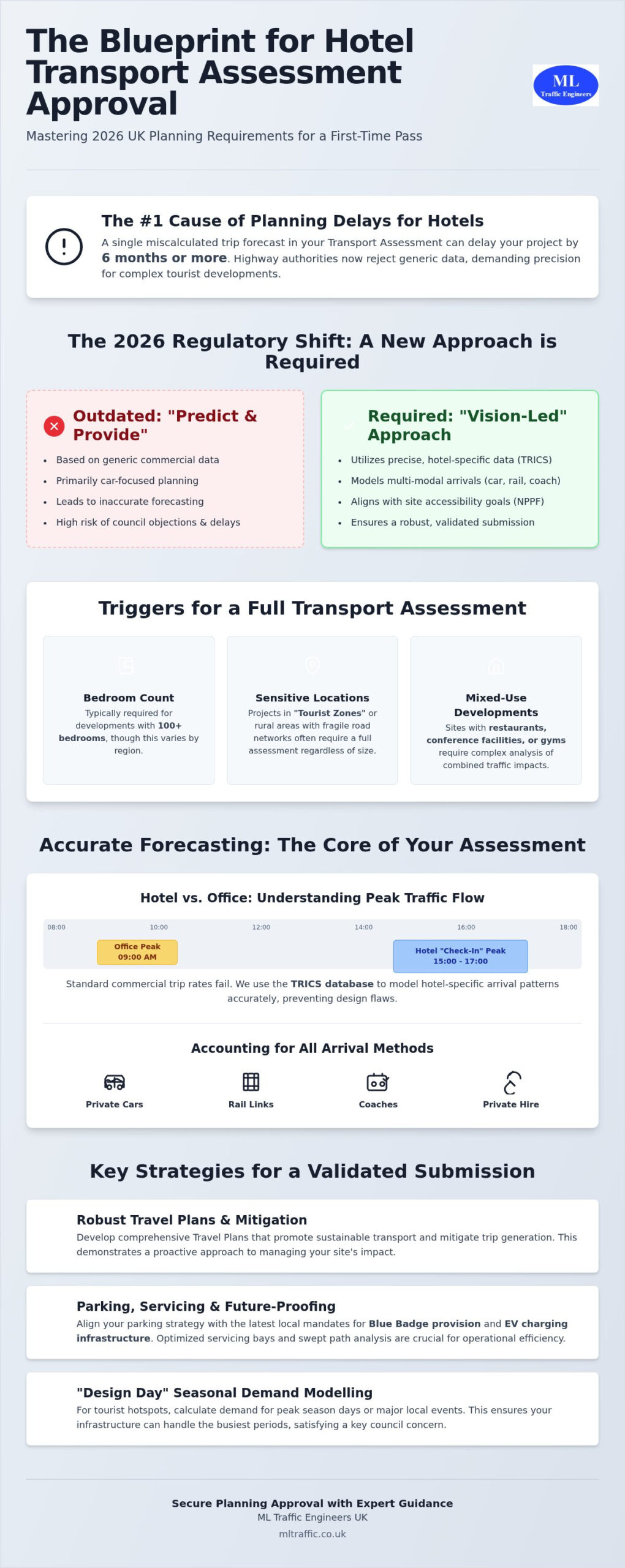
Local policies in England determine if you need a full assessment or a simpler Transport Statement. Primary triggers include bedroom count and total floor area. Most authorities set a threshold of 100 bedrooms, but this varies by region. Projects in sensitive “Tourist Zones” or rural areas often require a full assessment regardless of size due to the fragile nature of the surrounding road network. When managing a transport assessment for mixed-use development, you must also account for secondary uses like onsite restaurants or conference facilities. Precision here prevents unexpected planning objections that could derail your timeline.
Regulatory Shifts and Policy Alignment
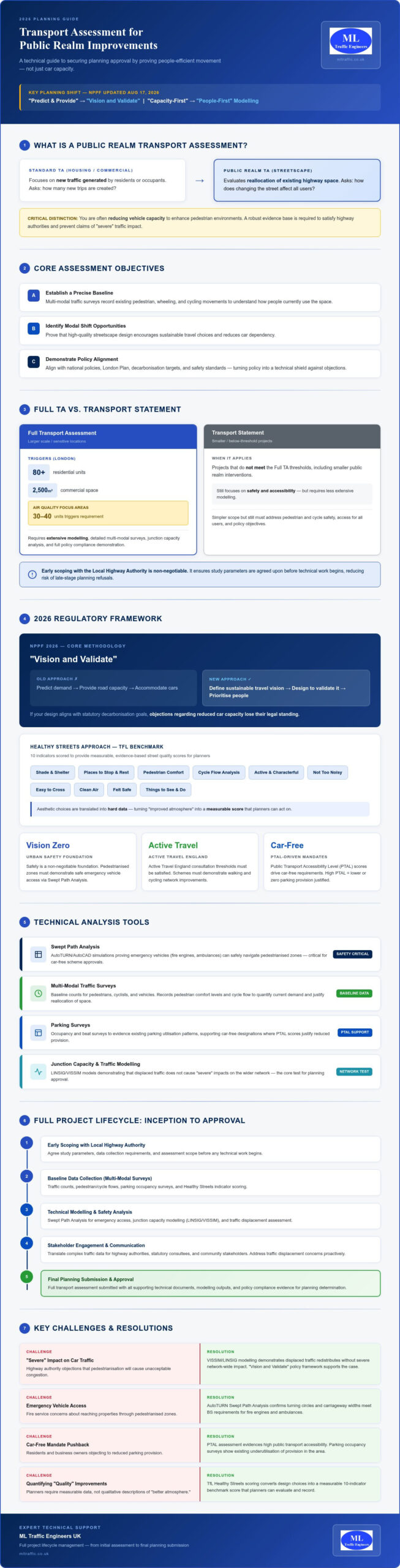
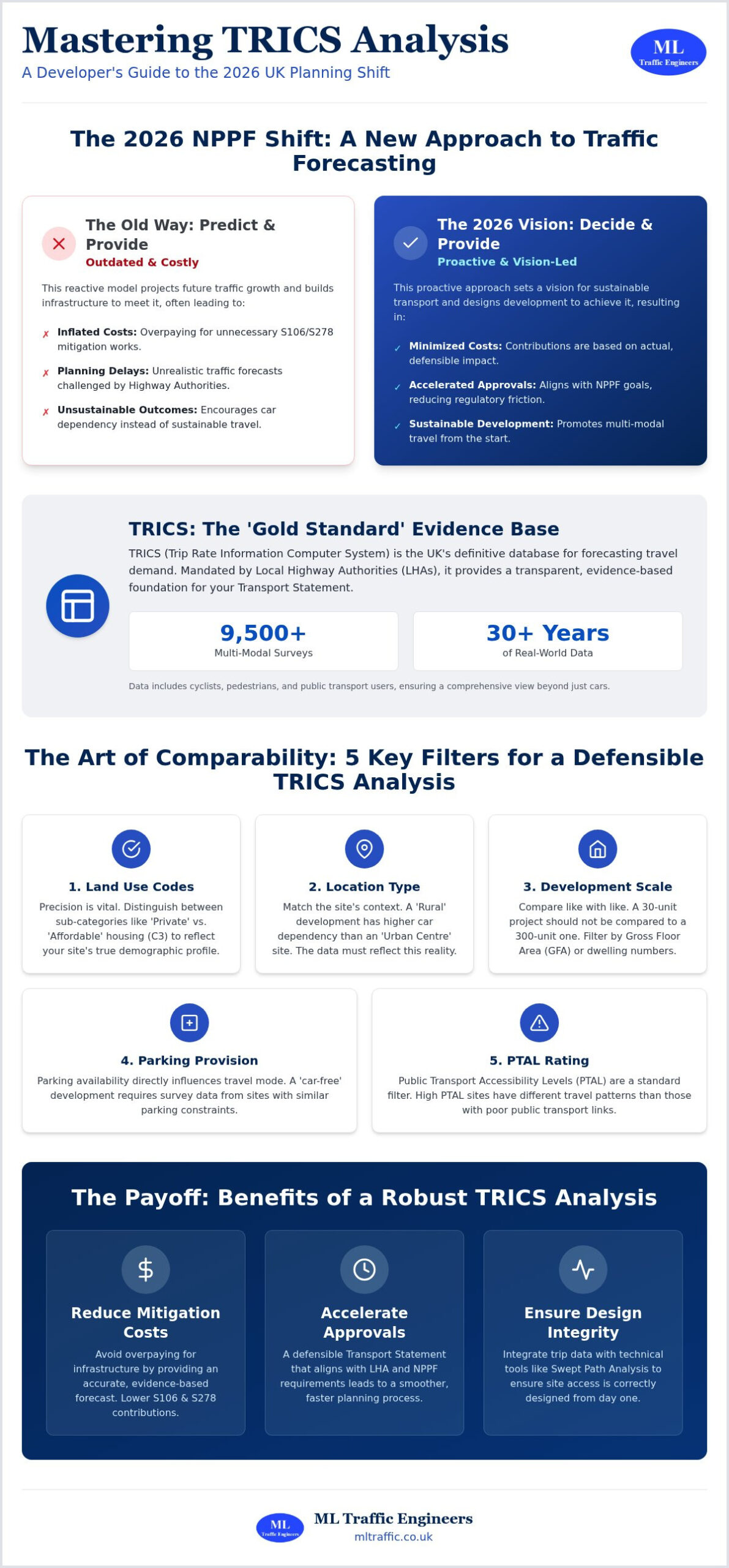
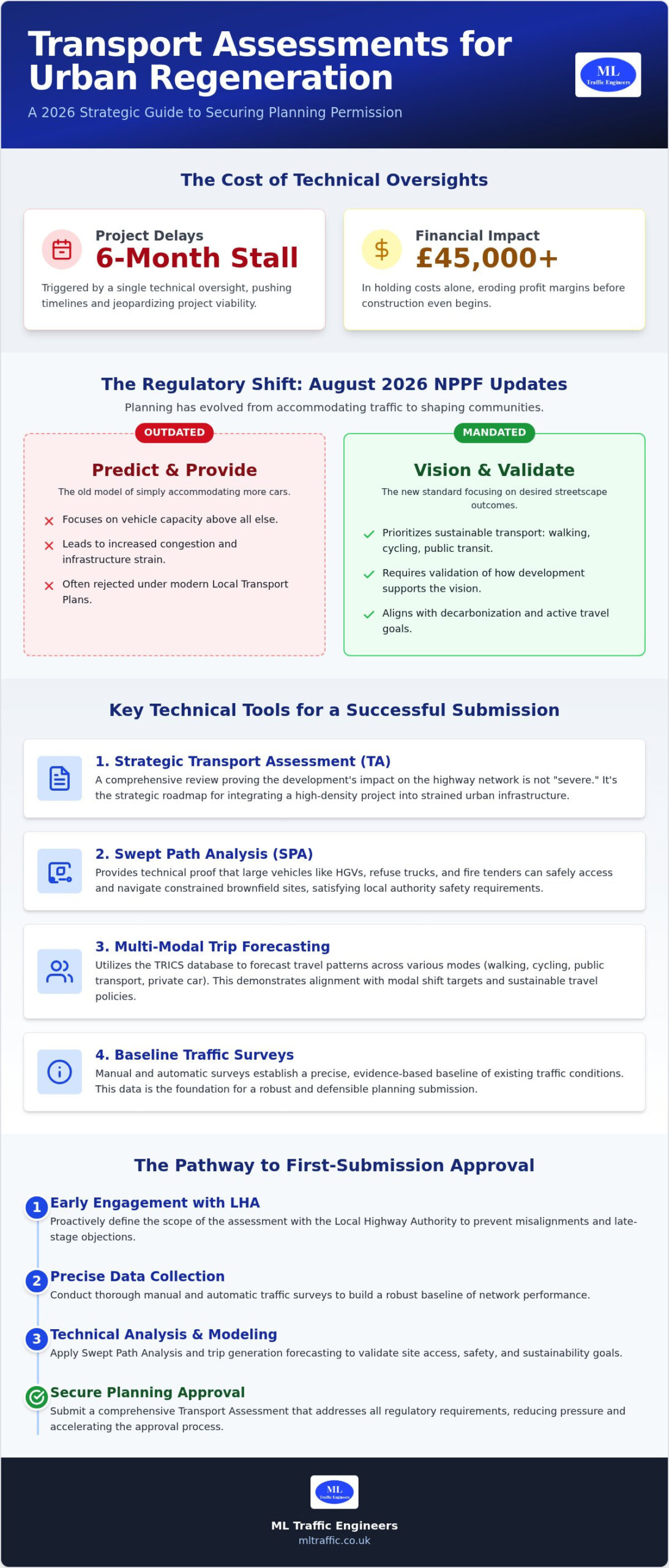
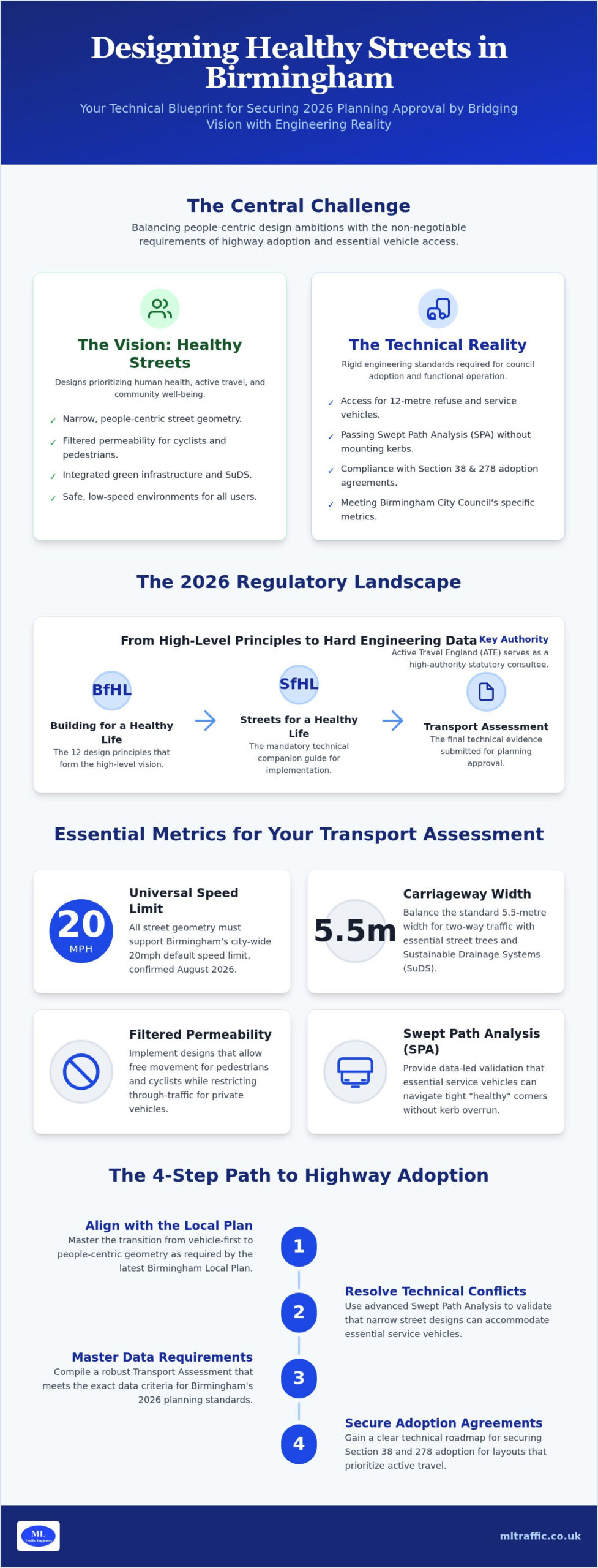
Planning success in 2026 hinges on aligning with the latest National Planning Policy Framework (NPPF) updates. The industry has shifted to a “Vision-Led” approach over the outdated “Predict and Provide” model. You don’t just plan for cars; you plan for the site’s desired outcome and accessibility goals. ML Traffic Engineers UK manages this full project lifecycle, ensuring every technical report adheres to these benchmarks. We understand local borough validation lists for hotel-specific requirements so that your submission is robust from day one. Learn more about our support on our what we do page.
Technical Scoping: Trip Generation and Seasonal Demand Forecasting
Precision in trip generation is the technical foundation of a successful transport assessment for mixed-use development. Standard commercial trip rates often fail to capture the unique arrival patterns associated with hospitality. While an office might see a sharp peak at 09:00, hotels experience a staggered “Check-in Peak” typically occurring between 15:00 and 17:00. We utilize the current TRICS database version for 2026 modelling to extract hotel-specific rates that reflect these nuances. This technical accuracy ensures that your modelling reflects reality rather than generic assumptions that could lead to costly design changes during the application process.
You must also factor in multi-modal arrivals to provide a comprehensive impact study. Guests don’t just arrive by car; they utilize rail links, coaches, and private hire vehicles. Modelling these diverse transport modes is essential for understanding the full pressure on local infrastructure in England. If your project includes an onsite restaurant or gym, the complexities of a transport assessment for mixed-use development increase significantly. ML Traffic Engineers UK manages these intricate calculations so your design remains optimized for both guest experience and council requirements. Our approach prioritizes clarity to reduce the logistical pressure on your planning team.
Seasonal Peak Modelling for Tourist Destinations
Tourist hotspots require “Design Day” demand calculations to account for summer peaks or major local events. Seasonal demand in 2026 modelling standards is defined as the quantifiable surge in trip generation during peak tourist periods that exceeds the baseline annual average. These surges directly impact junction capacity assessments. We use industry-standard software like Junctions9 and LinSig to prove that your site can handle these temporary spikes without compromising local safety. This level of detail is a non-negotiable foundation for developments in high-demand regions.
Refining Data with Local Traffic Surveys
Sometimes TRICS data alone is insufficient to satisfy a skeptical highway authority. In these cases, bespoke Traffic Surveys are essential to refine the data. We analyze local modal splits to justify lower parking ratios, which can free up valuable site space for additional guest rooms. By providing real-time data from the surrounding network, we build a robust case for your development’s viability. If you need to validate your site’s access with precision, ML Traffic Engineers UK can conduct comprehensive traffic surveys to strengthen your planning submission and ensure your project moves forward without delay.
Solving the Parking and Servicing Puzzle for Hotel Developments
Balancing guest parking with operational requirements requires technical precision. Local authorities often push for lower parking ratios to encourage sustainable travel, but hotel operators need enough space to remain functional. When you’re preparing a transport assessment for mixed-use development, this balance becomes even more complex. You’re not just managing hotel guests; you’re coordinating shared parking and servicing for retail or leisure components within the same footprint. We ensure your strategy meets 2026 mandates for Blue Badge provision and Electric Vehicle (EV) charging while protecting your site’s commercial viability.
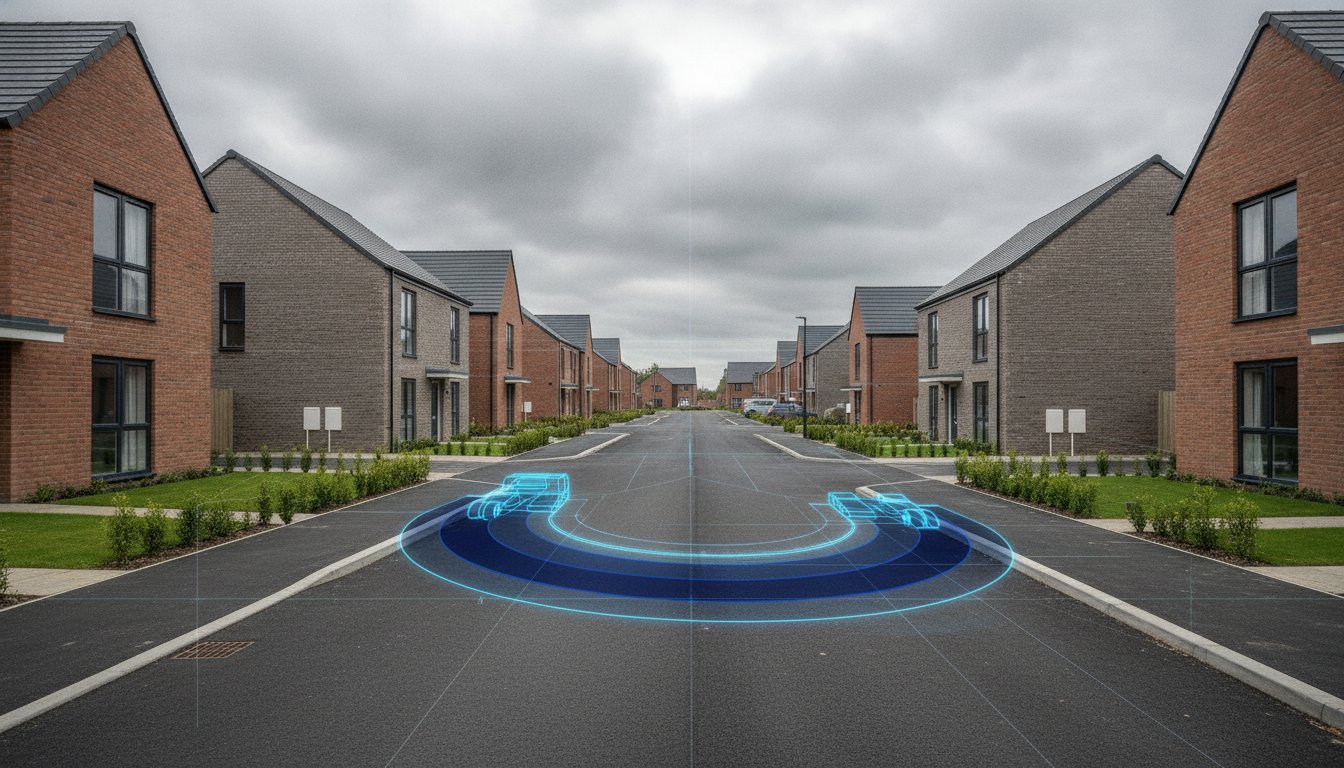
Coach activity is a frequent sticking point for highway authorities, especially in tourist hotspots. Large hotels must demonstrate safe drop-off zones and manageable dwell times for 15-meter vehicles. Without a clear plan for overnight parking or turning circles, you risk significant planning objections. This is where Swept Path Analysis becomes a functional necessity. It proves that the largest vehicles expected on-site can navigate the layout without striking curbs or blocking emergency access. We provide the technical authority needed to ensure your site layout is optimized from the inception of the project.
Servicing and Delivery Logistics
Refuse collection and laundry deliveries are high-frequency movements that require dedicated space. We model these movements to ensure internal site layouts accommodate 12m+ rigid vehicles comfortably. If a vehicle has to reverse out onto a main road, the council will likely reject the scheme. Check our ML Traffic’s Swept Path Analysis Guide for technical layout advice. We provide the precision needed to keep your project on track and avoid design changes later.
Mitigating Kerbside Impact
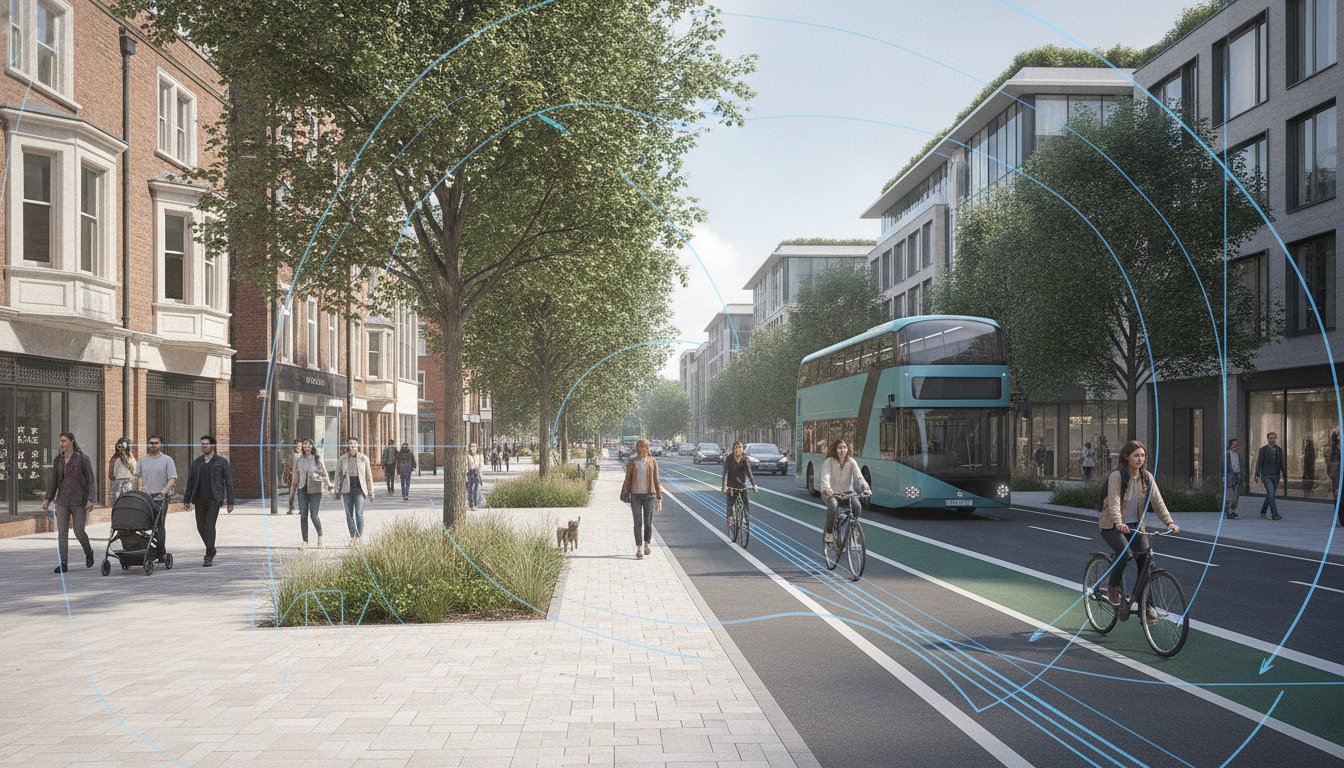
The rise of private hire services like Uber has shifted the focus toward Pick-up and Drop-off (PUDO) demand. If your hotel lacks a dedicated PUDO bay, guests will use the public highway, causing congestion and safety risks. Highway authorities are increasingly concerned about overspill parking in local streets. Integrating these logistical solutions into your transport assessment for mixed-use development demonstrates that you’ve considered the full lifecycle of the building. We focus on pedestrian safety and public realm improvements to ensure your hotel threshold is regulatorily sound.
Sustainable Travel and Travel Plan Integration
A robust Travel Plan acts as more than a regulatory requirement. It functions as a powerful mitigation tool that directly reduces the high trip generation figures often associated with large-scale hospitality. When you’re managing a transport assessment for mixed-use development, the Travel Plan coordinates the disparate needs of hotel guests, retail shoppers, and leisure visitors into a cohesive strategy. By demonstrating a credible shift toward non-car modes, we help you negotiate lower parking requirements and reduce the need for expensive highway capacity improvements. This technical precision ensures your project remains financially viable while meeting strict council sustainability targets.
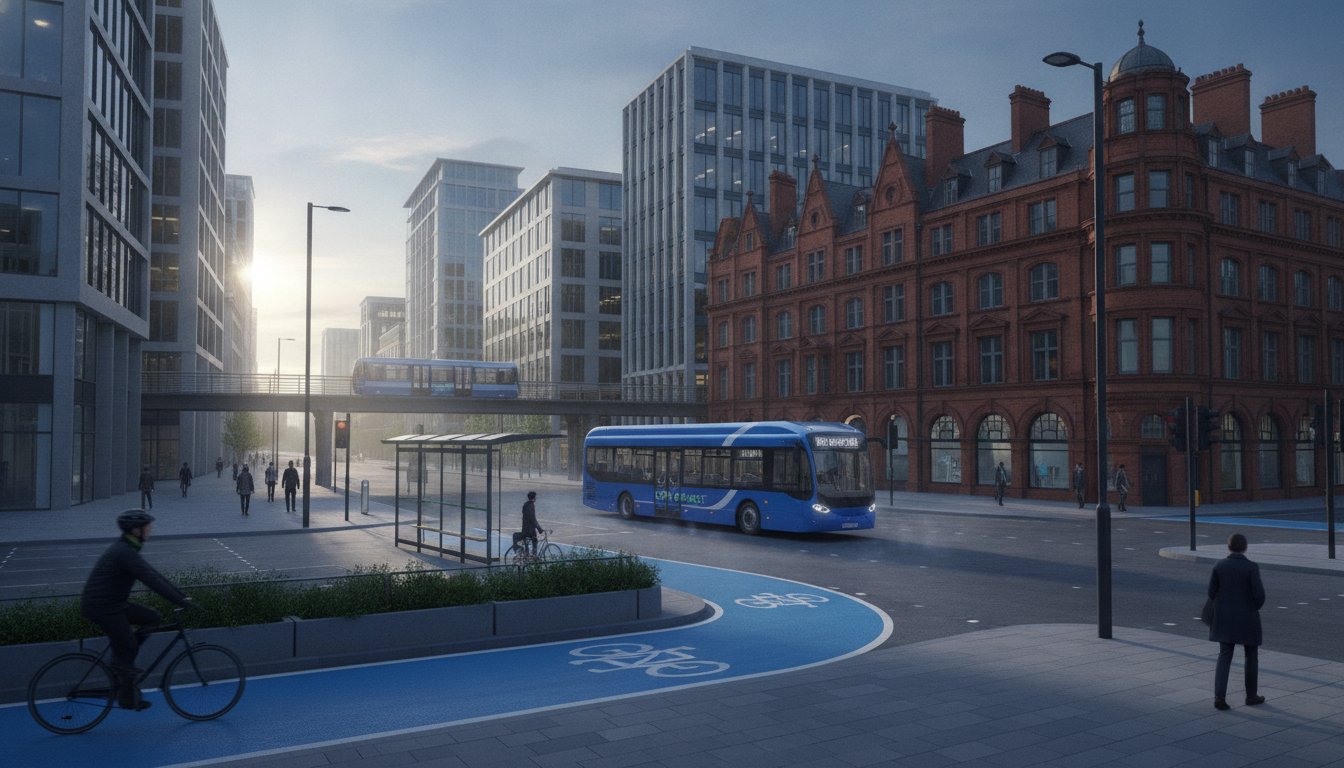
Urban hotels benefit significantly from high Public Transport Accessibility Level (PTAL) ratings. A high score allows for “car-lite” or even “car-free” designs, which simplifies the technical reporting process. However, the plan must also address the specific needs of employees. Staff Travel Plans are essential for 24-hour operations where shift patterns don’t always align with standard transit hours. We focus on providing actionable solutions like secure cycle parking and guest facilities that exceed baseline standards. Integrating these elements into your transport assessment for mixed-use development shows the council a commitment to long-term operational sustainability.
Accessibility and Connectivity Audits
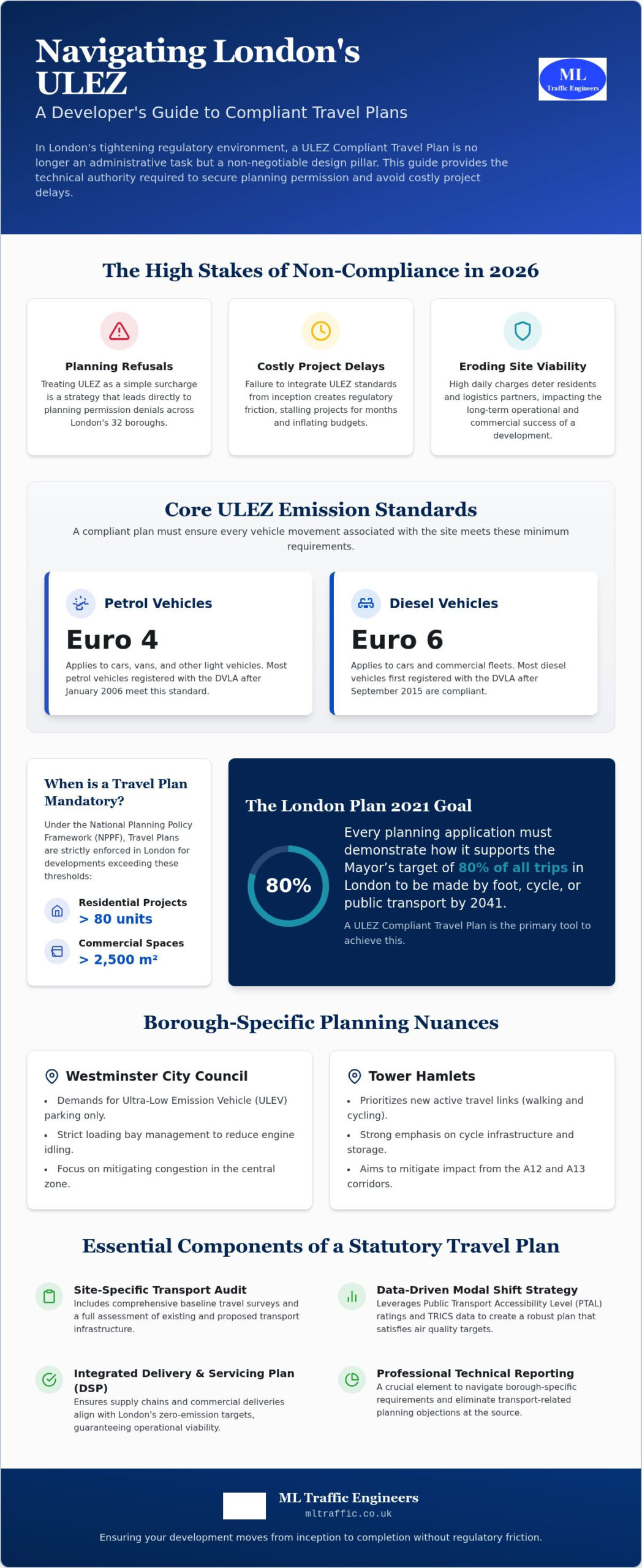
We conduct thorough audits to assess the “last mile” journey from local transit hubs to your site. This involves identifying infrastructure gaps in the local pedestrian and cycle network that could hinder guest arrivals. For projects within the capital, refer to our London Travel Plans Guide for urban-specific strategy. Addressing these connectivity issues early prevents highway authorities from raising late-stage objections regarding site safety and accessibility.
Implementing Mitigation Measures
Negotiating Section 106 or S278 contributions is a standard part of the planning lifecycle. We use these agreements as leverage to secure approval by proposing targeted highway improvements or car club integrations. Shuttle bus services can also act as a vital link for sites with lower PTAL scores. If you need to understand monitoring requirements and long-term compliance, our Travel Plan Consultants provide the expert support needed to strengthen your application. Contact our team today to ensure your sustainable travel strategy passes council scrutiny and supports your project’s success.
Securing Planning Approval with ML Traffic Engineers UK
Technical authority is the primary defense against planning delays. In 2026, highway authorities in England expect a level of detail that goes beyond basic compliance. When submitting a transport assessment for mixed-use development, even a small technical omission can lead to a formal objection. We reduce this regulatory pressure by delivering reports that are validated on the first attempt. ML Traffic Engineers UK manages every stage of the technical reporting process, ensuring that all data collection and analysis meet the strict industry benchmarks expected by council officers.
Effective negotiation with Local Highway Authorities begins long before the final submission. We prioritize pre-application advice to establish a clear technical framework with the council. This proactive communication ensures that the scope of the assessment is agreed upon early, which prevents the unpredictable nature of late-stage feedback. As a dependable partner, ML Traffic Engineers UK understands the nuances of regional regulations across the country. Our role is to act as a vital guardian of professional standards, providing an all-encompassing service that allows you to focus on the commercial success of the development.
Common Highway Authority Objections
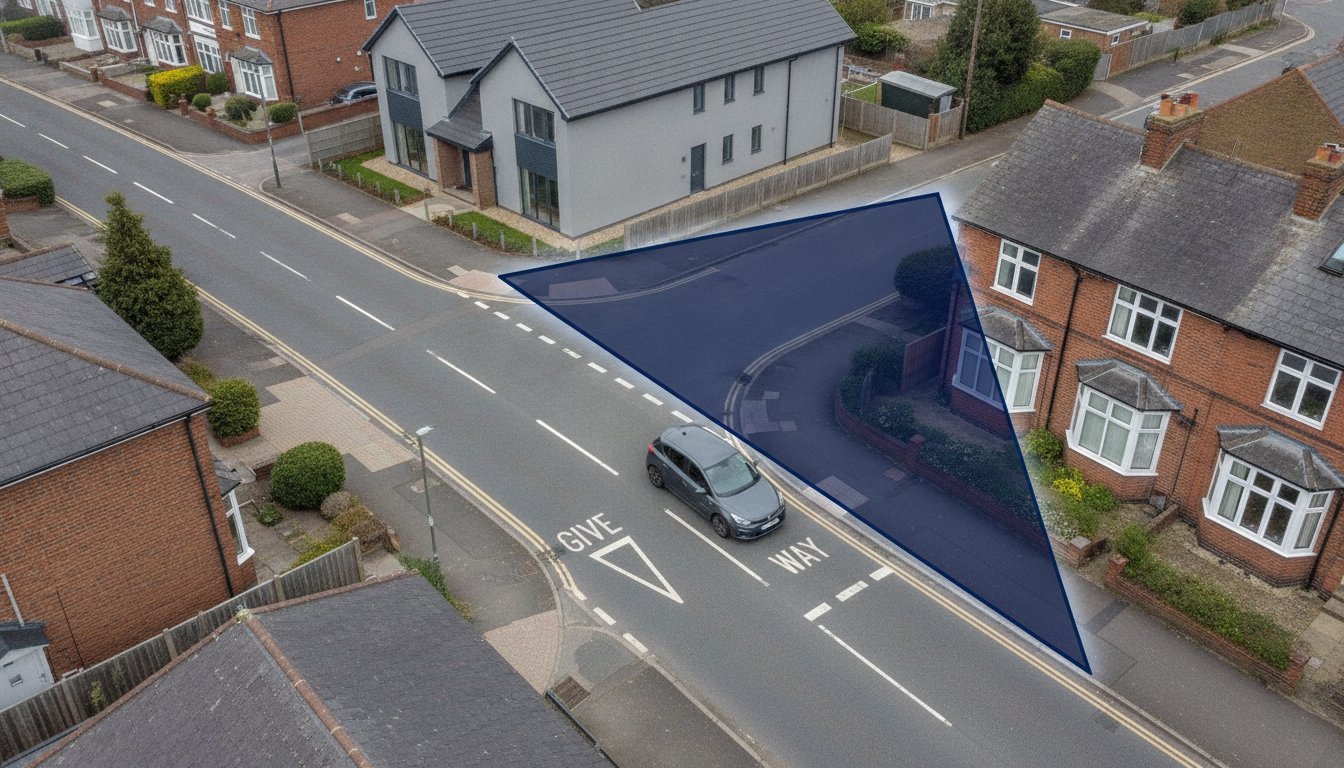
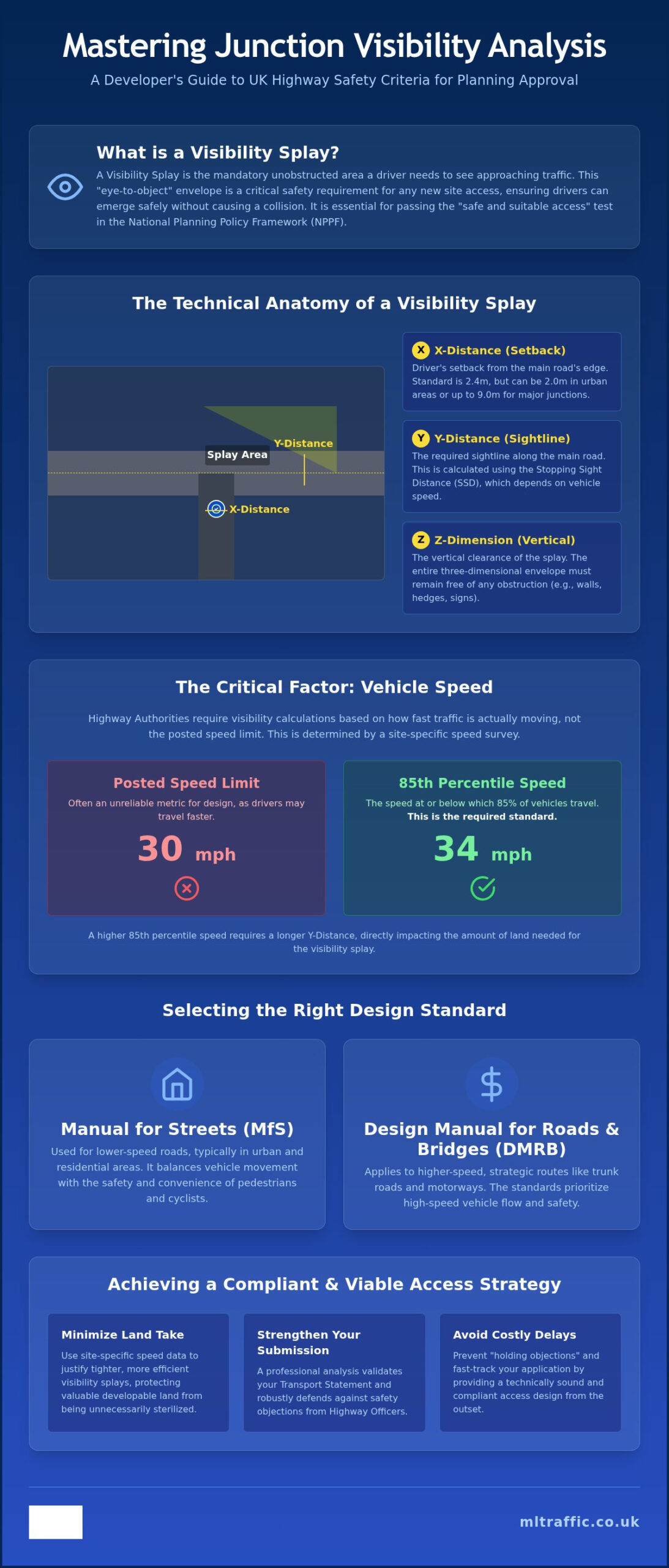
Highway authorities often issue objections based on unrealistic trip forecasting or inadequate information regarding site access. We address these risks by defending visibility splays and road safety requirements with empirical data. ML Traffic Engineers UK pre-empts common council objections through early scoping and rigorous internal auditing of every technical report. This readiness ensures your application remains resilient against technical challenges throughout the planning lifecycle.
Your Partner for 2026 Planning Success
Our extensive track record in tourist-led projects ensures that your application is in expert hands. If you’re ready to secure planning permission for your next project, you can request a Transport Assessment Quote today. The next steps involve a comprehensive site feasibility study and formal scoping with the authority to define the technical path forward. Trust ML Traffic Engineers UK to deliver the precision and reliability your project requires for 2026 planning success.
Advancing Your Hotel Project to Planning Approval
Securing 2026 planning permission requires a technical strategy that addresses the specific logistical challenges of the hospitality sector. You’ve seen how accurate trip generation and seasonal demand forecasting form the bedrock of a validated submission. By utilizing precise Swept Path Analysis and robust Travel Plans, you can navigate local authority scrutiny and optimize your site’s internal layout. When managing a transport assessment for mixed-use development, balancing complex operational needs with regulatory compliance is essential for avoiding costly project delays.
ML Traffic Engineers brings over a decade of expertise to your project. Founded in 2014, we are specialists in technical reporting, TRICS database analysis, and parking surveys. Our proven success with highway authorities across England ensures your application is handled with the precision and reliability required in today’s high-stakes regulatory environment. We manage the full lifecycle of your transport requirements so you can focus on the broader vision of your development.
Contact ML Traffic Engineers for a Professional Transport Assessment Quote. We look forward to helping you achieve a successful planning outcome for your next hotel development.
Frequently Asked Questions
What is the difference between a Transport Statement and a Transport Assessment for a hotel?
A Transport Statement is a concise report for smaller developments with limited traffic impact. A Transport Assessment is a comprehensive study required for larger hotels or a transport assessment for mixed-use development where multi-modal impacts are significant. Authorities typically use bedroom count or floor area thresholds to decide which is necessary. While a Statement focuses on local safety, an Assessment provides a deep dive into junction capacity and network modelling.
Do I need a Travel Plan for a small boutique hotel development?
Yes, boutique hotels often require a Travel Plan if they’re located in areas with strict sustainability targets or low public transport accessibility. Even if your bedroom count is low, local councils may mandate a Travel Plan to encourage staff and guests to use active travel. This document supports your planning application by demonstrating a commitment to reducing car dependency and mitigating the site’s environmental footprint through actionable travel strategies.
How does TRICS data help in predicting hotel traffic in 2026?
TRICS data provides the industry-standard evidence base for predicting trip generation for your development. In 2026, using the most recent database version is essential to reflect current travel trends and multi-modal shifts. It allows us to compare your proposed hotel against similar operational sites across England. This data ensures your forecasting is realistic and helps prevent objections from highway authorities regarding inaccurate or outdated traffic predictions during the scoping phase.
Can I use residential parking standards for my hotel development?
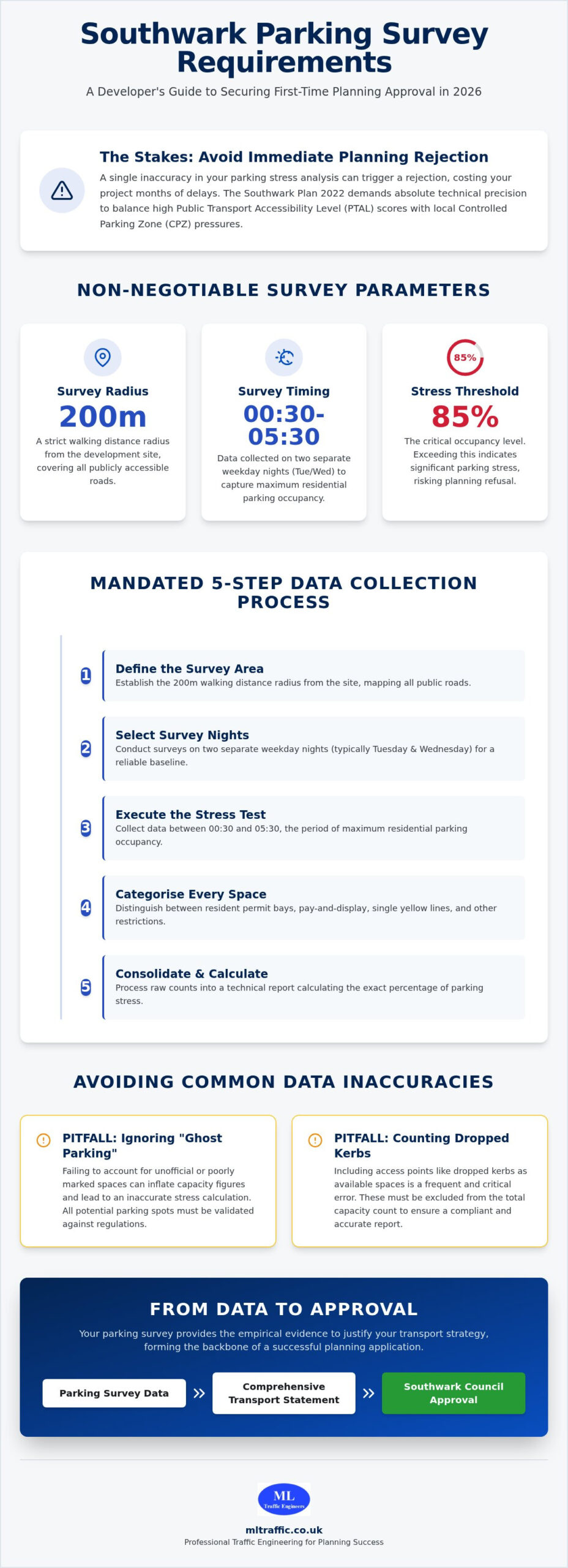
You cannot use residential parking standards for a hotel project. Hotels have unique operational requirements, including 24-hour staff shift patterns and high guest turnover during check-in peaks. When preparing a transport assessment for mixed-use development, we use commercial standards and parking surveys to justify the specific needs of your site. This evidence-led approach ensures you provide enough space for functionality without over-providing parking that councils might reject as unsustainable.
What is Swept Path Analysis and why is it required for hotel planning?
Swept Path Analysis is the digital modelling of vehicle movements using specialized software to prove that large vehicles can navigate your site. It’s required for hotel planning to demonstrate that refuse trucks, laundry deliveries, and coaches can enter and exit in a forward gear. This analysis ensures your internal layout is safe and functional, preventing late-stage design changes that could delay your planning approval or cause operational issues once the hotel is built.
How does seasonal demand affect my transport assessment?
Seasonal demand requires you to model traffic during peak tourist periods rather than just an average day. If your hotel is in a popular destination, the highway authority will want to see “Design Day” demand to ensure local junctions don’t fail during the summer months. We use traffic surveys and historic data to justify how your site will manage these periodic surges without compromising the safety or efficiency of the local road network.
What happens if the highway authority objects to my transport assessment?
If an authority objects, it usually indicates they require more technical evidence or a change in site design. We respond by reviewing the specific concerns, such as trip rates or visibility splay issues, and providing technical rebuttals or revised modelling. In many cases, implementing a more robust Travel Plan or adjusting the parking strategy can resolve these objections and keep the planning process moving forward toward a positive committee decision.
How much does a tourist hotel transport assessment cost in 2026?
The cost of a hotel transport assessment in 2026 varies depending on the project’s scale, location, and the complexity of the required modelling. Factors like the need for bespoke traffic surveys or detailed junction capacity analysis will influence the final fee. Because every site has unique constraints and regional requirements, we recommend contacting our team for a tailored quote that reflects the specific technical reporting needs of your development.

Disclaimer
The content on mltraffic.co.uk, including all technical articles, guides, and resources, is provided for general informational and educational purposes only. It is not intended to constitute professional advice in traffic engineering, transportation planning, development approvals, or any other technical or legal field.
While ML Traffic Engineers makes every reasonable effort to ensure the accuracy, completeness, and timeliness of the information published, we do not provide any warranties or representations (express or implied) regarding its reliability, suitability, or availability for any particular purpose. Any reliance you place on the content is strictly at your own risk.
In no event shall ML Traffic Engineers, its directors, employees, authors, or affiliates be liable for any direct, indirect, incidental, special, consequential, or punitive damages (including, without limitation, loss of profits, data, or business opportunities) arising out of or in connection with the use of, or inability to use, any information provided on this website.
The articles and guides on this site are not a substitute for engaging a qualified, professional traffic engineer to assess your specific project requirements. For tailored advice, compliance assessments, or traffic engineering services, please contact a competent professional.
This disclaimer may be updated from time to time without notice. By accessing or using this website, you agree to be bound by the most current version of this disclaimer.