Tag: S278 agreements

  • Transport Planning Consultants in Lewisham: A Developer’s 2026 Guide

    Transport Planning Consultants in Lewisham: A Developer’s 2026 Guide

    A single parking space in a Lewisham development can represent the difference between a project’s green light and a total rejection from the council. You likely recognize that securing approval in 2026 requires more than just a basic site plan; it demands a technical strategy that addresses the borough’s unique constraints. Partnering with expert Transport Planning Consultants Lewisham ensures your project survives the scrutiny of strict parking standards and low PTAL ratings in areas like Deptford or Catford.

    We understand that narrow Victorian street access often complicates emergency vehicle tracking and site logistics. You’re probably already feeling the pressure of balancing high-density housing targets with Lewisham’s uncompromising safety requirements. This guide provides a clear roadmap to secure your development’s approval. We’ll show you how to optimize site layouts for vehicle access and navigate the intricacies of s278 and s38 agreements with precision. From initial CAD designs to final implementation, we’ll cover the essential steps to turn regulatory burdens into a successful planning outcome.

    Key Takeaways

    • Align your site with the London Plan 2026 and Lewisham Local Plan to navigate “car-lite” requirements and ensure regulatory compliance.
    • Partner with expert Transport Planning Consultants Lewisham to streamline the planning process and secure rapid project approval through technical authority.
    • Master the technical data needed for success, from high-accuracy Swept Path Analysis to the mandatory Lambeth Methodology for parking surveys.
    • Differentiate between Transport Statements and Assessments to provide the precise documentation Lewisham Highways demands for commercial and residential sites.
    • Discover how early pre-application engagement provides a “safe pair of hands,” mitigating regulatory risks and accelerating your development’s timeline.

    Why You Need a Transport Consultancy in Lewisham

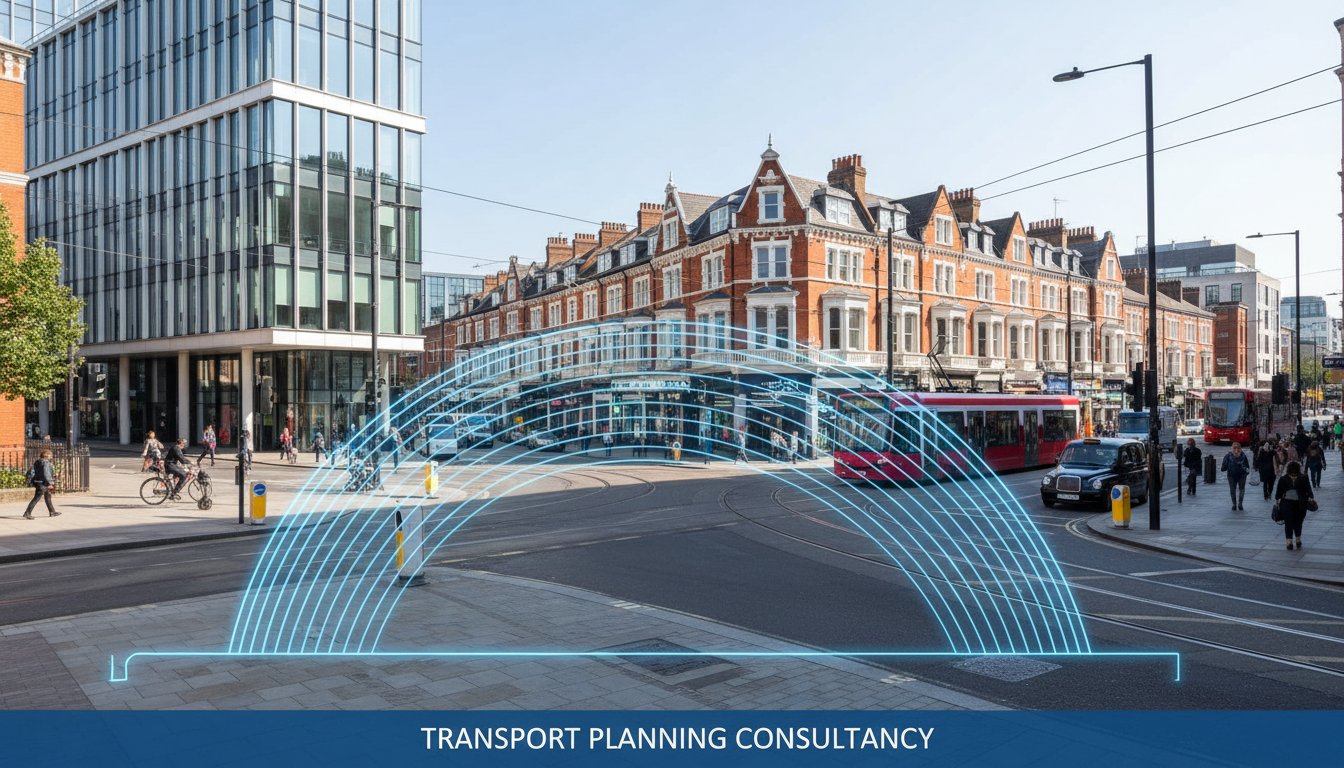
    In the complex planning environment of South East London, Transport Planning Consultants Lewisham act as the technical bridge between a developer’s vision and the Borough’s strict regulatory requirements. Securing planning permission in 2026 requires more than just a site plan; it demands a deep understanding of transport planning models that prioritize sustainable travel over private vehicle use. The London Plan 2021 has accelerated the shift toward “Car-Free” and “Car-Lite” schemes, making it nearly impossible to gain approval for traditional parking-heavy developments in areas like Deptford or Catford.

    Without precise data to mitigate risks, developers face immediate project refusals or expensive, late-stage redesigns that erode profit margins. Professional consultants provide the empirical evidence needed to satisfy Lewisham Council that a new scheme won’t paralyze the local road network. This involves detailed trip generation analysis and robust mitigation strategies that address the concerns of both planning officers and local residents.

    Lewisham’s Unique Transport Geography

    Lewisham presents a fragmented transport landscape. You have high-capacity hubs like Lewisham Gateway, boasting a PTAL of 6b, contrasted with isolated zones in the south of the borough where connectivity is poor. Navigating the constraints of the A2, A20, and the South Circular (A205) is a primary hurdle for any logistics or construction plan. Local knowledge of the Lewisham Council planning department is a strategic advantage. It allows consultants to anticipate specific concerns regarding local junctions and air quality long before a formal application is submitted. This proactive approach prevents the 12 to 18-month delays often seen when transport issues are treated as an afterthought.

    The Impact of PTAL Ratings on Your Development

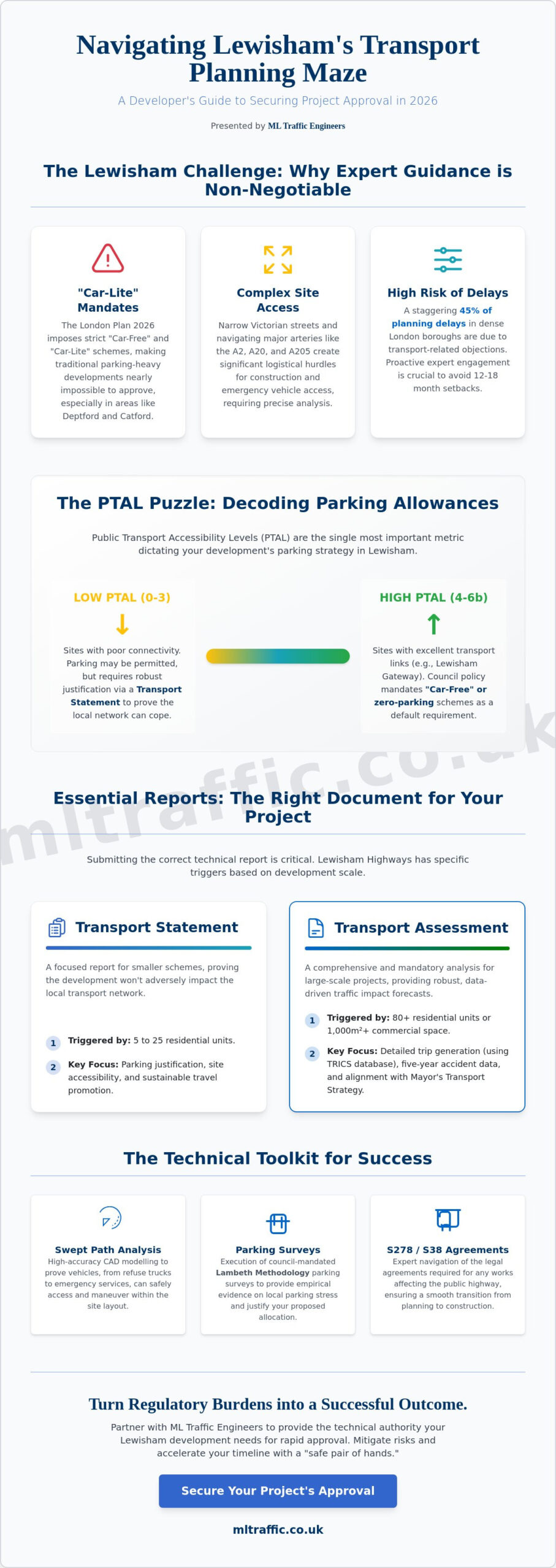
    Public Transport Accessibility Levels (PTAL) are the baseline for every development in London. In Lewisham, your PTAL score dictates the maximum number of parking spaces you’re allowed to provide. High PTAL scores often mandate zero parking, while lower scores require a nuanced approach to satisfy Council members. For sites with low connectivity, we deploy a Transport Statement to justify the viability of the project. These documents use technical evidence to prove that the local network can handle the additional pressure. Ignoring these metrics leads to significant friction; a 2023 industry report suggested that transport-related objections cause up to 45% of planning delays in high-density London boroughs. Working with experienced Transport Planning Consultants Lewisham ensures your PTAL strategy is optimized from day one.

    Essential Transport Reports for Lewisham Planning Success

    Securing planning permission in Lewisham requires a data-led approach to site accessibility and traffic impact. Transport Planning Consultants Lewisham must provide precise documentation to satisfy the London Borough of Lewisham’s highways officers. These reports aren’t just paperwork; they’re the technical foundation for your development’s viability. If your project involves flat conversions in London, you’ll likely need a Transport Statement to address increased density and parking pressure.

    Transport Statements vs. Assessments

    The scale of your development determines the depth of reporting required. Lewisham Council typically triggers a Transport Statement for smaller residential schemes between 5 and 25 units. For projects exceeding 80 residential units or commercial spaces over 1,000 square meters, a full Transport Assessment is mandatory. We use the TRICS database to provide accurate trip generation forecasts for South East London sites, ensuring your traffic impact predictions are robust. These documents must analyze five-year accident data and demonstrate alignment with the Mayor’s Transport Strategy to ensure compliance with London-wide safety and health targets. Every report includes a policy compliance audit to prove the site supports the Healthy Streets approach.

    Travel Plans: Encouraging Sustainable Shift

    Large-scale residential and commercial projects require a comprehensive Travel Plan. This document isn’t a static report but a long-term commitment to reducing single-occupancy vehicle trips. Lewisham strictly enforces cycle parking standards, often requiring one space per bedroom for residential units. Electric vehicle (EV) charging infrastructure is also a priority; current regulations demand 20% active and 80% passive charging provision for new parking spaces. Technical notes are vital tools when officers raise specific objections regarding local road capacity or junction safety. They allow for a focused response that avoids the delays of a full report revision. Our team provides comprehensive support to ensure every technical detail meets the 2026 regulatory standards. We manage the monitoring and management phases, providing the 24/7 reliability needed to keep your project moving toward implementation.

    Precise data prevents planning delays. Transport Planning Consultants Lewisham use these reports to mitigate risks before they become costly objections. By integrating technical notes early, developers can address specific highway concerns without restarting the entire consultation process. This proactive management ensures that your 2026 project timeline remains intact despite the complex regulatory environment in South East London.

    Transport Planning Consultants in Lewisham: A Developer’s 2026 Guide

    Technical Data: Parking Surveys and Swept Path Analysis

    Success in Lewisham’s planning environment depends on raw, indisputable data. Lewisham Council rarely accepts anecdotal evidence regarding parking or access. They demand technical rigor. As experienced Transport Planning Consultants Lewisham, we provide the specific datasets required to clear highways objections and secure planning permission for complex developments.

    Our team conducts comprehensive traffic counts and pedestrian flow analysis, particularly in high-density areas like Lewisham Town Centre and Catford. We deploy sensors and manual counters to capture real-time movement patterns. This data ensures that your development’s entrance doesn’t conflict with the borough’s vision for safer, more accessible streets as outlined in Lewisham’s Transport Strategy 2019-2041. Precision at this stage prevents costly design revisions during the Section 278 agreement process.

    Parking Stress Surveys in Lewisham

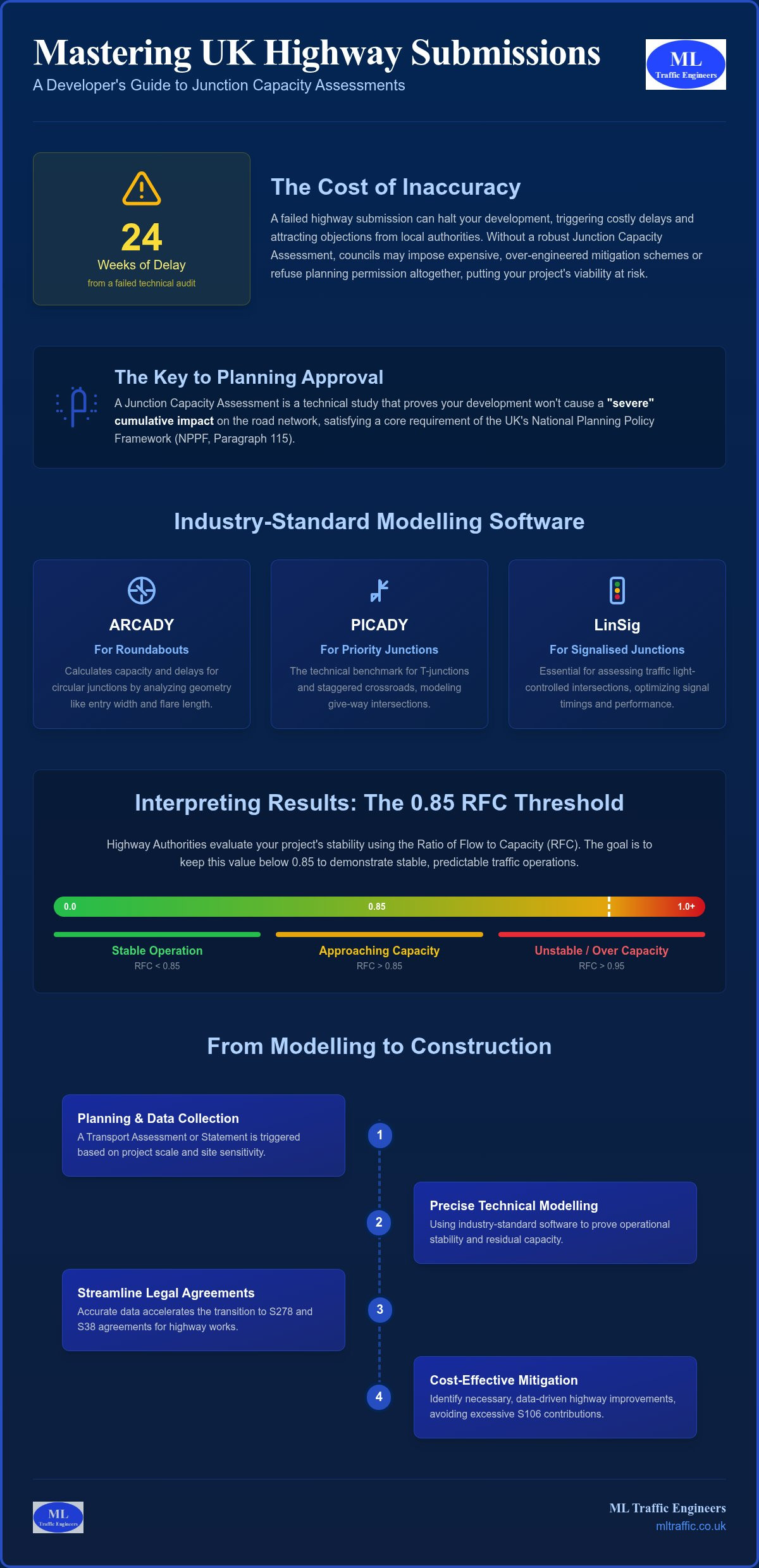
    Developers hire Transport Planning Consultants Lewisham to conduct surveys that adhere strictly to the “Lambeth Methodology.” We perform these overnight surveys between 00:30 and 05:30 on two separate weekday nights to capture peak residential parking demand. Our surveyors map every available legal parking space within a 200-meter walking distance of the site. This is essential for developments in Brockley or Blackheath where Controlled Parking Zones (CPZs) are already at high capacity.

    Robust data can overturn “lack of parking” objections from local residents or council members. If we prove that existing parking stress is below 85%, it demonstrates that the local road network can absorb potential overspill. We don’t just collect numbers; we provide the analytical context that highways officers need to approve your application. Our 24/7 data collection teams are ready to deploy at short notice to meet tight submission deadlines.

    Swept Path Analysis for Site Access

    Site feasibility often hinges on whether a vehicle can actually get in and out without mounting the pavement or hitting street furniture. We use advanced CAD software to perform Swept Path Analysis (SPA). This simulates the turning circles of specific vehicles, including 10.7-meter refuse trucks and heavy delivery vans. It’s a non-negotiable requirement for Lewisham Highways officers who must ensure that new developments don’t lead to blocked roads or dangerous reversing maneuvers.

    The “Fire Tender” challenge is particularly acute on Lewisham’s narrow residential streets. We simulate the exact movements of a 7.7-meter fire engine to guarantee emergency access at all times. Our team optimizes tight site entrances to ensure compliance with safety standards while maximizing the developable area of your site. You can view our full range of Swept Path Analysis Services to see how we secure planning approval for complex London sites.

    Securing planning permission in 2026 requires a precise alignment with the London Plan 2026 and the updated Lewisham Local Plan. Developers often face delays because they underestimate the complexity of multi-agency requirements. If your project sits adjacent to the Transport for London Road Network (TLRN), such as the A205 South Circular or the A21, you must manage dual layers of scrutiny from both Lewisham Council and TfL. Transport Planning Consultants Lewisham act as the vital bridge in these negotiations, ensuring that technical submissions satisfy both local and regional highway authorities simultaneously.

    Early engagement is a non-negotiable step for successful project delivery. Pre-application meetings with Lewisham Highways allow for the early identification of potential “showstoppers,” such as restrictive access points or inadequate space for delivery vehicles. This proactive approach helps in defining Section 106 transport contributions and Community Infrastructure Levy (CIL) requirements long before the final planning committee meets. We provide the technical authority needed to justify your site’s impact, preventing costly redesigns during the later stages of the planning cycle.

    Lewisham Local Plan 2026: What Developers Need to Know

    The 2026 Local Plan places a heavy emphasis on “Vision Zero” and active travel. Every new development must demonstrate how it reduces car dependency and improves air quality for the borough’s 300,000 residents. You’ll need to provide robust evidence of how your site supports cycling infrastructure and pedestrian safety. A compliant road safety audit is an essential component of this evidence, ensuring your highway design meets GG 119 standards and satisfies TfL’s rigorous safety requirements. Logistics are equally scrutinized. With the Ultra Low Emission Zone (ULEZ) standards now firmly embedded in London’s infrastructure, your construction logistics plan must account for compliant vehicle movements. For a detailed breakdown of these requirements, refer to our London ULEZ and Construction Guide to ensure your fleet remains compliant and avoids heavy daily charges. Commercial and mixed-use schemes must also address how goods vehicles will access the site post-construction; a robust delivery and servicing plan London developers submit to TfL is increasingly scrutinized as a standalone document that can determine whether your application proceeds or stalls.

    Highway Design and Legal Agreements

    Once planning is granted, the focus shifts to the technical execution of highway works. Any modifications to the public road network require formal S278 or S38 agreements. These legal contracts ensure that all works meet Lewisham’s specific adoptable standards for materials and safety. Precision is essential here. Our team handles the CAD designs and technical specifications required to gain technical approval from council engineers. We manage the entire lifecycle of these agreements, from initial design to the final certificate of completion.

    • Bespoke CAD design for complex urban junctions.
    • Full compliance with Chapter 8 safety standards.
    • 24/7 support for emergency road works and utility connections.
    • Seamless integration of temporary traffic signals during construction phases.

    We operate as a safe pair of hands, taking the regulatory burden off your shoulders. Explore our full range of services by visiting ML Traffic What We Do to see how we streamline the highway adoption process.

    Contact our team today for a comprehensive transport planning consultation to secure your Lewisham project’s success.

    Choosing ML Traffic Engineers for Your Lewisham Project

    ML Traffic Engineers provides the technical precision and regulatory insight required to secure planning consents in South East London. As experienced Transport Planning Consultants Lewisham, we act as a safe pair of hands for developers, managing everything from minor residential conversions to major mixed-use schemes. Our team understands that 2026 planning requirements demand more than just data collection. They require a proactive approach to road safety and environmental impact that satisfies both the local authority and the community.

    We maintain 24/7 availability for urgent data collection and survey requirements. If a local authority requests a last-minute parking survey or traffic count, we deploy our teams immediately to ensure your project timeline remains intact. This readiness stems from our commitment to alleviating the logistical burdens that often stall development. We handle the complexities of UK road regulations so you don’t have to.

    Our Local Expertise in South East London

    Our track record includes successful approvals across Lewisham and Catford, where we’ve navigated the specific challenges of the South Circular and local Controlled Parking Zones (CPZs). We’ve also applied this expertise in neighboring boroughs, as detailed in our guide for Croydon. Developers working across North London face similar regulatory complexity, and our guide for Transport Planning Consultants Haringey outlines how high-density PTAL 6 sites require the same data-driven approach to avoid TfL objections and Section 106 delays. For developers with sites in East London, our guide for Transport Planning Consultants Tower Hamlets explains how the borough’s New Local Plan 2023–2038 and active travel requirements demand the same rigorous technical approach to PTAL ratings and CIL compliance. We don’t just present raw data; we translate complex traffic figures into persuasive arguments that align with the London Plan. You can contact us today for a comprehensive Project Type Review to assess your specific site requirements.

    The ML Traffic Advantage

    Speed and accuracy define our service. We deliver Transport Statements and Parking Surveys with rapid turnaround times to keep your application moving through the planning portal. Our reporting is cost-effective because we focus strictly on the evidence necessary for approval, avoiding unnecessary filler that complicates the process. When you choose us as your Transport Planning Consultants Lewisham, you gain a partner dedicated to professional integrity.

    • Chapter 8 compliance is a non-negotiable standard for all our on-site survey work.
    • CAD design capabilities allow for precise swept path analysis and site layout optimization.
    • 24/7 emergency response ensures we’re ready when site conditions or council requirements change unexpectedly.

    We take pride in our role as a total managed solution provider. By handling the intricate details of traffic management and planning policy, we allow you to focus on the broader goals of your development. Our consultancy isn’t just a service. It’s a commitment to safety and precision that ensures your project moves from the drawing board to the construction phase without regulatory delays.

    Secure Your Lewisham Development Approval for 2026

    Navigating Lewisham’s 2026 planning landscape requires more than standard documentation. Developers must integrate precise technical data, including parking surveys and swept path analysis, to meet the borough’s evolving highways requirements. Success depends on total compliance with TfL policies and local frameworks. ML Traffic Engineers provides over 10 years of London planning experience to ensure your project meets every regulatory benchmark. We offer 24/7 technical survey support, delivering the high-stakes precision necessary for legal and physical safety. As expert Transport Planning Consultants Lewisham, we manage the lifecycle from initial CAD design to final implementation. Our team acts as a safe pair of hands, handling complex road regulations so you don’t have to. We’re ready to help you move forward with confidence and secure the permissions your development needs. Get a free consultation for your Lewisham development from ML Traffic Engineers. Your project’s success starts with technical precision and unwavering reliability.

    Frequently Asked Questions

    Do I need a transport statement for a small development in Lewisham?

    Yes, Lewisham Council typically requires a Transport Statement for residential developments of 5 to 49 units. Smaller schemes under 5 units might still require one if the site has specific access constraints or sits in a Controlled Parking Zone (CPZ). Our Transport Planning Consultants Lewisham team ensures these documents meet the latest 2026 London Plan standards to prevent planning delays.

    What is the Lambeth Methodology for parking surveys, and why does Lewisham use it?

    The Lambeth Methodology is the industry standard for parking stress surveys, requiring two overnight snapshots between 00:30 and 05:30 on weekday nights. Lewisham Council adopts this framework because it provides a consistent 200-meter radius assessment of kerbside capacity. This data proves whether a development can safely absorb overspill parking without impacting local residents or emergency vehicle access.

    How does a low PTAL rating affect my Lewisham planning application?

    A low Public Transport Access Level (PTAL) score of 0 to 2 indicates poor connectivity, which often triggers a requirement for higher on-site parking provision. Lewisham planners use PTAL data to determine if your site supports car-free living or requires a robust Travel Plan. We analyze the 2026 TfL connectivity data to mitigate low scores through improved cycling infrastructure or car club contributions.

    Can a transport consultant help with a car-free development in a CPZ?

    Yes, we specialize in securing car-free agreements by demonstrating that the development won’t increase local parking stress. In Lewisham, this often involves a Section 106 agreement that prevents residents from applying for on-street permits. Our Transport Planning Consultants Lewisham experts provide the technical evidence needed to satisfy Council officers that the local infrastructure supports a zero-parking model.

    What is Swept Path Analysis, and is it required for my site?

    Swept Path Analysis uses CAD software to simulate the movement of specific vehicles, such as an 11.4-meter refuse truck, through your site layout. Lewisham Council requires this for any development involving new access points or tight turning circles. It’s a non-negotiable safety requirement to ensure emergency services and delivery vehicles can enter and exit the site in a forward gear.

    How much does a transport consultancy report cost for a Lewisham project?

    Fees for transport reports depend on the project scale and the specific requirements set by the Lewisham Council Highways department. A basic Transport Statement for a minor development involves different technical inputs than a full Transport Assessment for a major 50-plus unit scheme. We provide bespoke quotes based on the 2026 scope of works required to achieve planning compliance without hidden costs.

    How long does it take to complete a parking survey in London?

    A standard parking survey takes approximately 7 to 10 working days to complete from the initial site visit to the final report delivery. This timeline accounts for the two separate overnight observations required by the Lambeth Methodology. We maintain a 24/7 operational readiness to deploy surveyors quickly, ensuring your planning submission stays on track with accurate, real-time data.

    What happens if Lewisham Council Highways object to my transport assessment?

    If the Highways department objects, we enter a formal negotiation phase to address their specific technical concerns. This often involves refining the site access design or updating the Travel Plan with additional mitigation measures. Our team acts as your technical advocate, using data-driven evidence to resolve objections and secure a positive recommendation for your planning committee.

    Michael Lee

    Article by

    Michael Lee

    Transport planner with over 35 years’ experience.

    Disclaimer

    The content on mltraffic.co.uk, including all technical articles, guides, and resources, is provided for general informational and educational purposes only. It is not intended to constitute professional advice in traffic engineering, transportation planning, development approvals, or any other technical or legal field.
    While ML Traffic Engineers makes every reasonable effort to ensure the accuracy, completeness, and timeliness of the information published, we do not provide any warranties or representations (express or implied) regarding its reliability, suitability, or availability for any particular purpose. Any reliance you place on the content is strictly at your own risk.
    In no event shall ML Traffic Engineers, its directors, employees, authors, or affiliates be liable for any direct, indirect, incidental, special, consequential, or punitive damages (including, without limitation, loss of profits, data, or business opportunities) arising out of or in connection with the use of, or inability to use, any information provided on this website.
    The articles and guides on this site are not a substitute for engaging a qualified, professional traffic engineer to assess your specific project requirements. For tailored advice, compliance assessments, or traffic engineering services, please contact a competent professional.
    This disclaimer may be updated from time to time without notice. By accessing or using this website, you agree to be bound by the most current version of this disclaimer.
  • Transport Planning Consultants Croydon: A Developer’s Guide to 2026 Approvals

    Transport Planning Consultants Croydon: A Developer’s Guide to 2026 Approvals

    How many Croydon residential schemes will stall in 2026 simply because a site access plan failed to meet the latest safety standards? You likely recognise that highway authority objections are the single biggest threat to your project timeline, frequently forcing expensive, late-stage redesigns that eat into your development margins. Securing planning permission in this borough requires more than just a basic layout; it demands technical precision from the outset. By engaging specialist transport planning consultants Croydon developers can transform these regulatory hurdles into a clear path for approval through rigorous CAD design and data-led strategy.

    We understand that confusion over PTAL ratings and parking minimums often creates unnecessary friction with local planners. This guide provides the expert insights you need to deliver a robust Transport Statement that stands up to council scrutiny. You’ll learn how to optimise your site layout for vehicle access and establish a seamless route toward S278 or S106 agreements. We’ll show you how technical excellence ensures your project moves from the initial planning phase to implementation without the typical delays that currently impact major London applications.

    Key Takeaways

    • Navigate the 2026 Croydon Local Plan updates with technical precision to ensure your development meets the latest regulatory benchmarks.
    • Identify the exact technical requirements for your site, using transport planning consultants Croydon to produce robust Transport Assessments and Travel Plans.
    • Solve complex site access hurdles using Swept Path Analysis to prove your design accommodates large vehicles on Croydon’s Victorian street networks.
    • Leverage advanced CAD design and TRICS database software to provide the data-driven evidence necessary for securing rapid planning permission.
    • Discover the critical criteria for selecting a technical partner with a proven track record of navigating the London Borough of Croydon’s planning process.

    Table of Contents

    Transport planning consultants Croydon act as the technical bridge between a developer’s vision and the London Borough of Croydon’s strict regulatory requirements. They don’t just draft reports; they manage the entire transportation planning process to ensure compliance with the Croydon Local Plan. Since the 2018 plan’s inception, and with the 2026 updates currently being integrated into planning policy, the scrutiny on new applications has intensified. Developers need a partner who understands how these policy shifts affect site viability and project timelines.


    Croydon’s geography dictates wildly different requirements for planning applications. A scheme in East Croydon, where Public Transport Accessibility Levels (PTAL) reach 6a or 6b, requires a different transport statement than a project in Purley. While East Croydon focuses on car-free residential units, Purley developments often must manage the logistical constraints of the A23. Early engagement with the council’s highway team is vital. It prevents expensive redesigns by identifying potential roadblocks before the formal submission. Our team provides comprehensive support to ensure your project meets every local safety and accessibility standard.

    Understanding Croydon’s Unique Transport Constraints

    Developers must navigate the “Sustainable Transport Corridor” requirements along the A23. This involves balancing high-density residential goals in PTAL 6 zones with the borough’s car-free aspirations. We provide bespoke solutions that address these constraints while protecting local commercial needs. Key constraints include:

    • Strict parking ratios in low PTAL areas like Coulsdon.
    • Cycle storage requirements that often exceed baseline London Plan minimums.
    • Complex delivery and servicing plans for constrained town centre sites.

    The Consequences of Poor Transport Planning

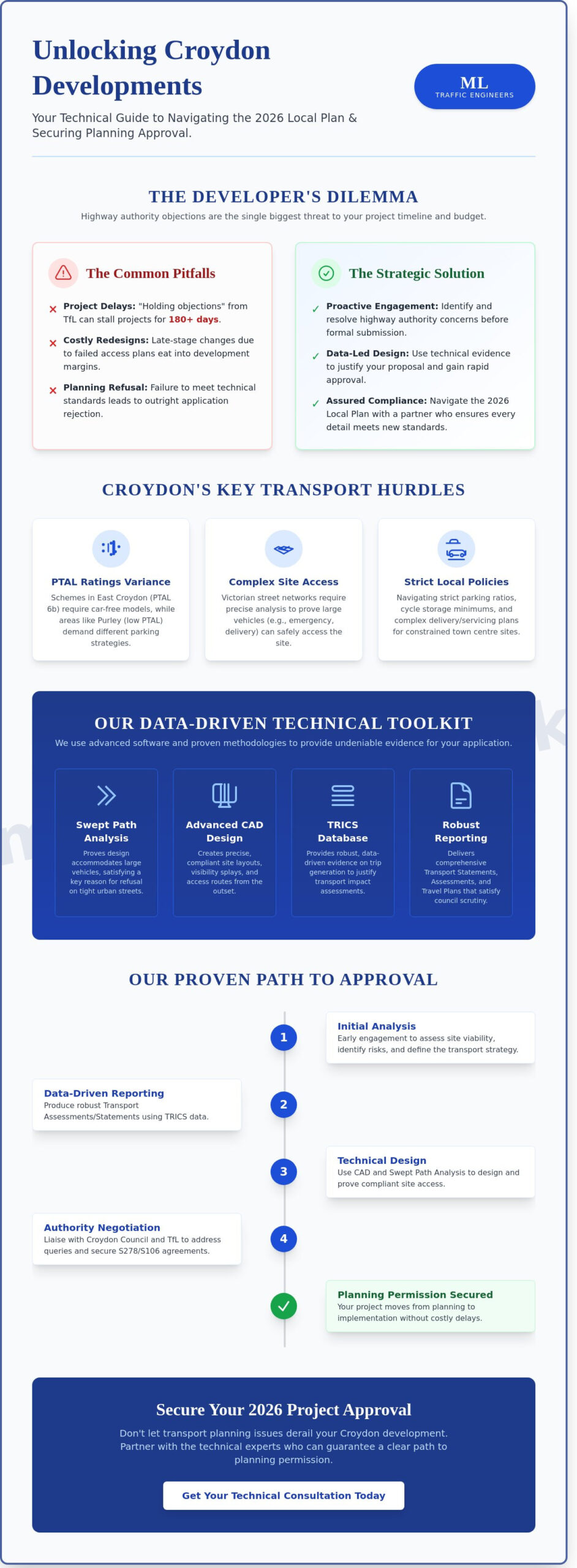
    Inadequate planning often leads to “holding objections” from Transport for London (TfL). These objections can delay a project by 180 days or more. Common reasons for refusal in South London include poor visibility splays and insufficient swept path analysis for emergency vehicles. A proactive approach saves time and ensures your project maintains its 2026 delivery schedule. We take pride in precision, ensuring every CAD design and multi-way system meets the highest safety standards. Our 24/7 readiness means we address regulatory queries immediately, keeping your consultation period on track. Using experienced transport planning consultants Croydon ensures that technical hurdles don’t become financial burdens.

    Essential Technical Reports for Croydon Developments: From Statements to Assessments

    Planning success in Croydon hinges on technical precision. As the borough intensifies its urban core, the requirements for highway impact evidence have become more stringent. Expert transport planning consultants Croydon provide the data-driven reports needed to satisfy the London Plan and local borough requirements. These documents serve as the legal and technical foundation for your planning application, ensuring that proposed developments don’t compromise road safety or network capacity.

    Transport Statements vs. Assessments

    Determining which report your project requires depends on the scale of the development and its projected trip generation. For smaller schemes, typically residential projects between 10 and 49 units or minor commercial builds, a Transport Statement is usually sufficient. This document focuses on local impact, site access, and parking provision. If your project exceeds 80 residential units or involves significant retail or industrial space, Croydon Council will demand a full Transport Assessment. This is a more rigorous document involving junction modelling and wider network impact studies. These reports must align with the professional standards set by the Chartered Institution of Highways & Transportation to maintain credibility during the consultation phase. For larger schemes, our guide on Transport Assessments outlines the specific modelling required for 2026 approvals.

    The Importance of Data-Driven Parking Surveys

    Parking is a primary flashpoint for Croydon planning committees. For urban infill projects, we utilise the Lambeth Methodology to conduct overnight parking stress tests. Our teams survey all available on-street spaces within a 200-metre walking distance of the site. This data is collected between 01:00 and 05:00 on two separate weekday nights to establish a baseline of parking demand. If you’re proposing a car-free development in a high PTAL (Public Transport Accessibility Level) area, these surveys are the only way to prove that any overspill won’t cripple local streets. We also ensure layouts meet the latest standards for disabled bays and electric vehicle (EV) charging infrastructure, which now requires a mix of active and passive provision to future-proof the site. Developers undertaking smaller residential conversions should also review the specific requirements for a flat conversions transport statement informed by PTAL ratings and parking surveys, as the same data-driven principles apply at every scale.

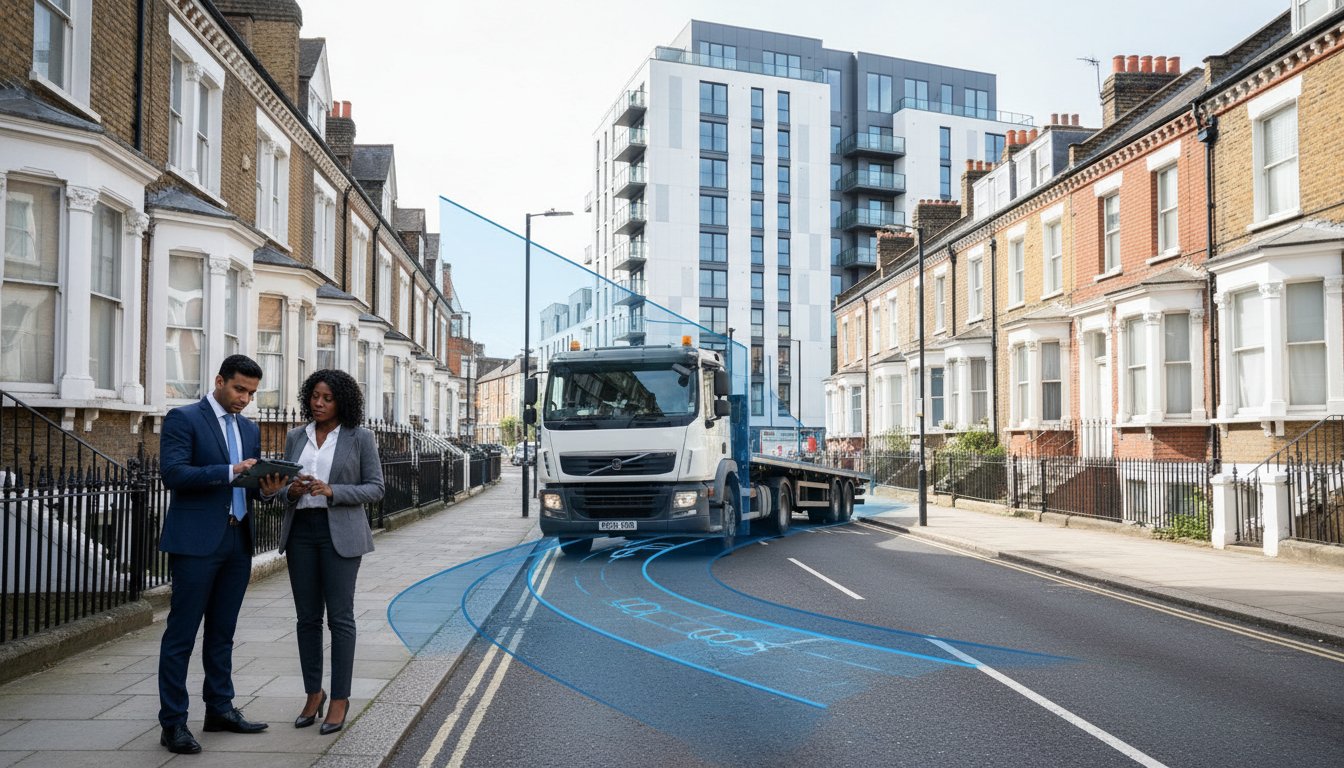
    Feasibility is further proven through Swept Path Analysis services. We use CAD-based simulations to demonstrate that refuse vehicles and fire tenders can safely enter and exit the site in a forward gear. This technical proof prevents costly design revisions later in the process. To mitigate environmental impacts, a Travel Plan is also integrated. This outlines specific measures to encourage cycling and walking, helping your project meet the borough’s sustainability targets. A comprehensive road safety audit is also a critical component of the technical evidence package, ensuring your access design meets GG 119 compliance standards before submission. For town centre and mixed-use schemes, a robust delivery and servicing plan london developers must submit alongside their Transport Assessment is increasingly scrutinised by TfL to ensure loading bay scheduling and vehicle swept paths meet 2026 Vision Zero standards. If you need to verify your site’s accessibility, we can provide comprehensive transport planning support to secure your 2026 approval.

    Transport Planning Consultants Croydon: A Developer’s Guide to 2026 Approvals

    Evaluating Transport Planning Consultants: Key Criteria for Croydon Projects

    Selecting the right transport planning consultants Croydon determines whether a project achieves planning consent or remains stuck in a cycle of council revisions. Developers must verify a consultant’s specific track record with the London Borough of Croydon (LBC). The council’s requirements for the Croydon Local Plan 2018, and the subsequent 2024 updates, are stringent. A consultant who has already successfully negotiated Highway Authority objections on the Purley Way or within the Croydon Opportunity Area brings a level of insight that generic firms lack.

    Technical proficiency is the foundation of any successful application. Your chosen partner must utilize the latest TRICS (Trip Rate Information Computer System) database software, ideally version 7.11 or newer, to provide accurate trip generation data. They should also demonstrate mastery of CAD design for swept path analysis. This ensures that refuse vehicles and emergency services can navigate your site safely, which is a primary concern for LBC planning officers.

    Operational readiness sets elite consultants apart from the competition. In the fast-moving construction sector, a delay of 48 hours can disrupt an entire supply chain. You need a consultant who operates with 24/7 readiness to address urgent queries from highways inspectors or site managers. They must provide a bespoke solution that prioritizes project ROI by streamlining traffic management layouts and reducing unnecessary hardware hire.

    The Difference Between Generalists and Specialists

    Large multi-disciplinary firms often treat transport planning as a secondary service, which leads to generic reports. These documents frequently miss the nuances of Croydon’s specific red route restrictions or residential parking permit zones. Independent specialists offer much faster turnaround times, often providing initial feasibility assessments within 5 to 10 working days. Always verify that the firm holds professional accreditation with the Chartered Institution of Highways and Transportation (CIHT) and maintains Professional Indemnity insurance of at least £5 million. Developers with sites across South London’s neighbouring boroughs should also consider how transport planning consultants in Lewisham approach similar Victorian street constraints and low PTAL challenges, as the technical strategies often overlap. Similarly, developers with sites in North London should explore how Transport Planning Consultants Haringey navigate high-density PTAL 6 zones and TfL objections, as the regulatory challenges mirror those faced across London boroughs. Developers with East London projects should also review how Transport Planning Consultants Tower Hamlets handle the borough’s active travel integration requirements and car-free development policies under the New Local Plan 2023–2038, as these approaches increasingly set the benchmark for high-PTAL zones across London.

    Cost vs. Value in Transport Consulting

    Fixed-price agreements offer the most security for developers, as they prevent fee creep during protracted negotiations with the Highway Authority. While a low-ball quote might seem attractive, it often results in “hidden” costs like additional charges for every minor revision or site visit. Expert reporting provides long-term value by potentially reducing Section 106 financial contributions by 15% to 20% through more accurate modeling of sustainable travel patterns. A high-quality Transport Assessment doesn’t just tick a box; it actively protects your profit margins by preventing expensive, over-engineered highway mitigation measures.

    Strategic Site Access and Parking: Overcoming Croydon-Specific Design Hurdles

    Croydon’s urban fabric presents a unique challenge for 2026 developments. Narrow Victorian street patterns, particularly in areas like South Croydon or Thornton Heath, often clash with modern vehicle dimensions. Developers must prove that their site layout can accommodate emergency services and waste collection without compromising public safety. Professional transport planning consultants Croydon use advanced CAD software to model these interactions before a single brick is laid. They ensure that new access points don’t create bottlenecks on already congested routes like the A23 or the A232.

    Transitioning from a private development to the public highway requires a Section 278 agreement. This legal mechanism ensures that any changes to the existing road network, such as new site access points or pavement widening, meet the local authority’s strict safety standards. In 2026, the focus on Vision Zero means that every junction must be scrutinised for pedestrian and cyclist safety. A formal road safety audit for your junction design is increasingly expected by Croydon’s Highway Authority to demonstrate GG 119 compliance before a Section 278 agreement can be finalised. The latest London Plan also mandates rigorous cycle parking quotas. For a typical residential scheme, you’ll need to provide one long-stay space per studio and two spaces for larger units. These must be accessible, secure, and integrated into the building’s ground floor footprint.

    Swept Path Analysis for Tight Urban Sites

    Swept Path Analysis is a mathematical guarantee of vehicle clearance. We use this digital simulation to track the exact movement of HGVs and fire tenders through restricted Croydon junctions. If a refuse vehicle cannot exit a site in a forward gear, the application will likely face a refusal from the council. Our team simulates precise entry and exit manoeuvres for residential car parks to ensure zero conflict with pedestrians or oncoming traffic. This technical precision removes guesswork from the design phase and provides the evidence required for a successful planning outcome. It’s a vital part of a managed solution that prioritises both site efficiency and road safety.

    Navigating PTAL and Car-Free Policies

    The Public Transport Accessibility Level (PTAL) rating of your site dictates your maximum parking allowance. In the Croydon Opportunity Area, where PTAL scores often reach 6a or 6b, the council expects car-free or car-capped developments. You must justify these restrictions by implementing effective Travel Plans to encourage sustainable transport. These documents outline specific measures, such as car club memberships or improved pedestrian wayfinding, to reduce reliance on private vehicles. Expert transport planning consultants Croydon will negotiate these parking ratios to ensure the development remains viable while meeting strict environmental targets. This strategic approach helps alleviate the regulatory burden on the developer. For those working on smaller residential projects, understanding how PTAL ratings and parking surveys shape transport statements for flat conversions provides essential context for managing parking overspill objections before they arise.

    Secure your site’s future by viewing our comprehensive transport planning services today.

    Securing Planning Success with ML Traffic Engineers in South London

    Success in Croydon’s evolving development landscape requires more than just standard paperwork. It demands a partner who understands the borough’s unique traffic patterns and the high expectations of the local planning authority. ML Traffic Engineers brings a wealth of experience across diverse project types, ranging from high-density residential blocks in the town centre to industrial expansions near the Purley Way. As leading transport planning consultants Croydon developers rely on, we bridge the gap between complex highway regulations and commercial viability.

    We combine technical authority with a customer-centric approach. We don’t just hand over a report; we advocate for your project. Our team translates intricate data into clear, actionable insights that satisfy council requirements while protecting your bottom line. Precision is a legal necessity in our industry. We treat every CAD design and multi-way system layout with the professional integrity your investment deserves. Our 24/7 readiness ensures that your project remains on track, regardless of the regulatory hurdles that may arise.

    A Safe Pair of Hands for Your Development

    Safety is the foundation of every successful planning application. We maintain strict Chapter 8 compliance across all our designs, ensuring that road safety is never compromised. Our process is logical and sequential. We move from the initial consultation through to final planning approval with clinical efficiency. We provide a total, managed solution for developers and architects. This means you won’t need to coordinate between multiple suppliers or worry about shifting legislative standards. We handle the technical complexities so you can focus on the build. Our specialists manage everything from temporary traffic signals to comprehensive site appraisals, ensuring seamless integration with existing South London infrastructure. For mixed-use and commercial developments, preparing a compliant delivery and servicing plan london authorities require is an essential step that our team integrates into the wider transport evidence package from the outset. For construction sites requiring heavy vehicle access, understanding London ULEZ construction compliance requirements is essential to avoid costly daily charges and planning delays.

    Get Started with Your Croydon Project

    The pace of construction in South London is relentless. Delays in transport planning can stall a project for months. We operate with a sense of urgency, offering 24/7 reliability to meet tight deadlines. You can access our online resources to understand the documentation required for 2026 approvals. If you have an urgent project review or need a site appraisal, our team is ready to act immediately. Choosing the right transport planning consultants Croydon offers is a strategic decision that impacts your project’s timeline and budget. Partner with specialists who view public safety and professional compliance as non-negotiable foundations. Contact us today for a comprehensive fee proposal and take the first step toward a successful planning outcome.

    Ensure Your Croydon Development Success for 2026

    Securing planning permission in Croydon by 2026 requires a proactive approach to technical compliance and site design. Developers must prioritise accurate Swept Path Analysis and comprehensive Parking Surveys to satisfy strict local authority requirements. Since 2014, ML Traffic Engineers has delivered over a decade of London-specific planning experience to ensure projects move from CAD design to final implementation without delay. Our team provides the precision needed for complex Transport Assessments and Statements; we manage every logistical detail to protect your investment.

    Choosing the right transport planning consultants Croydon makes the difference between a rejected application and a site ready for construction. We offer 24/7 availability to meet urgent planning deadlines, providing a reliable safety net for high-stakes developments. Our experts understand the intricate UK road regulations and Croydon-specific hurdles that often stall progress. We’re ready to handle the regulatory burden so you can focus on building.

    Secure your Croydon planning approval with expert transport advice from ML Traffic Engineers

    Let’s get your project approved and moving forward today.

    Frequently Asked Questions

    Do I need a transport planning consultant for a small Croydon development?

    Yes, you typically need professional input for any development creating new residential units or commercial floor space. Croydon Council requires a Transport Statement or a simplified Design and Access Statement for small-scale projects to ensure compliance with the 2018 Local Plan. Our transport planning consultants Croydon provide the technical data needed to prove your project won’t negatively impact local traffic flow or safety.

    What is the current PTAL rating for central Croydon and how does it affect parking?

    Central Croydon holds a PTAL rating of 6a or 6b, which represents the highest level of public transport accessibility. Under the London Plan 2021, developments in these high-score zones must be car-free, excluding required disabled person’s parking. This means you won’t be permitted to provide on-site parking for residents, and you’ll likely need to fund a Traffic Management Order to prevent occupants from obtaining local on-street permits.

    How long does it take to prepare a Transport Statement in London?

    A standard Transport Statement usually takes 2 to 4 weeks to complete from the initial site visit to the final report. This timeline depends on the availability of baseline traffic data and the complexity of your site’s access points. If your project requires bespoke traffic counts or specialized data from Transport for London, you should allow an additional 10 working days for data processing.

    Can a transport consultant help if the council has already objected to my access design?

    Yes, we can resolve council objections by using CAD design and Swept Path Analysis to demonstrate that your access point functions safely. We don’t just guess; we use industry-standard software to simulate vehicle movements for 12-metre refuse trucks and emergency services. This technical evidence often helps overcome safety concerns raised by the Highways Authority during the consultation phase.

    What is the Lambeth Methodology and is it required for Croydon parking surveys?

    The Lambeth Methodology is the industry-standard framework for conducting parking stress surveys, and Croydon Council mandates its use for most planning applications. It requires surveyors to record parking occupancy within a 200-metre walking distance of the site on two separate weekday nights between 00:30 and 05:30. These surveys prove whether there’s enough capacity on the street to absorb any “overspill” parking from your new development.

    How much does a Swept Path Analysis cost for a single site entrance?

    The cost of a Swept Path Analysis is determined by the number of vehicle types and specific maneuvers required by the local planning authority. While we don’t provide fixed estimates without seeing a site plan, these technical drawings represent a small fraction of the overall planning budget. They’re an essential investment that prevents costly delays or the total refusal of your application based on perceived access risks.

    What happens if Transport for London (TfL) gets involved in my planning application?

    TfL acts as a statutory consultee if your site is located on or near the Strategic Road Network or the Transport for London Road Network, such as the A23. They’ll scrutinise your Transport Assessment to ensure your project doesn’t hinder bus journey times or compromise pedestrian safety. Our transport planning consultants Croydon manage this high-level liaison to ensure your designs meet both borough and GLA-level requirements.

    How do I ensure my car park design meets Croydon’s 2026 safety standards?

    You must align your car park layout with the London Plan 2021 and the latest Building Regulations Part S. Every design must include a minimum of 20% active electric vehicle charging points from day one, with the remaining 80% having passive provision for future connection. We also integrate Vision Zero principles into your design to eliminate risks to vulnerable road users, which is a core requirement for 2026 approvals. Additionally, ensuring your construction logistics comply with London ULEZ construction standards will prevent unexpected charges and regulatory complications during the build phase.

    Which areas do you service?

    We are transport planners covering Addiscombe, Broad Green, Coulsdon, Kenley, New Addington, Norbury, Purley, Sanderstead, Selsdon, Shirley, South Croydon, South Norwood, Thornton Heath, Waddon, Woodside.

    Michael Lee

    Article by

    Michael Lee

    Transport planner with over 35 years’ experience.

    Disclaimer

    The content on mltraffic.co.uk, including all technical articles, guides, and resources, is provided for general informational and educational purposes only. It is not intended to constitute professional advice in traffic engineering, transportation planning, development approvals, or any other technical or legal field.
    While ML Traffic Engineers makes every reasonable effort to ensure the accuracy, completeness, and timeliness of the information published, we do not provide any warranties or representations (express or implied) regarding its reliability, suitability, or availability for any particular purpose. Any reliance you place on the content is strictly at your own risk.
    In no event shall ML Traffic Engineers, its directors, employees, authors, or affiliates be liable for any direct, indirect, incidental, special, consequential, or punitive damages (including, without limitation, loss of profits, data, or business opportunities) arising out of or in connection with the use of, or inability to use, any information provided on this website.
    The articles and guides on this site are not a substitute for engaging a qualified, professional traffic engineer to assess your specific project requirements. For tailored advice, compliance assessments, or traffic engineering services, please contact a competent professional.
    This disclaimer may be updated from time to time without notice. By accessing or using this website, you agree to be bound by the most current version of this disclaimer.