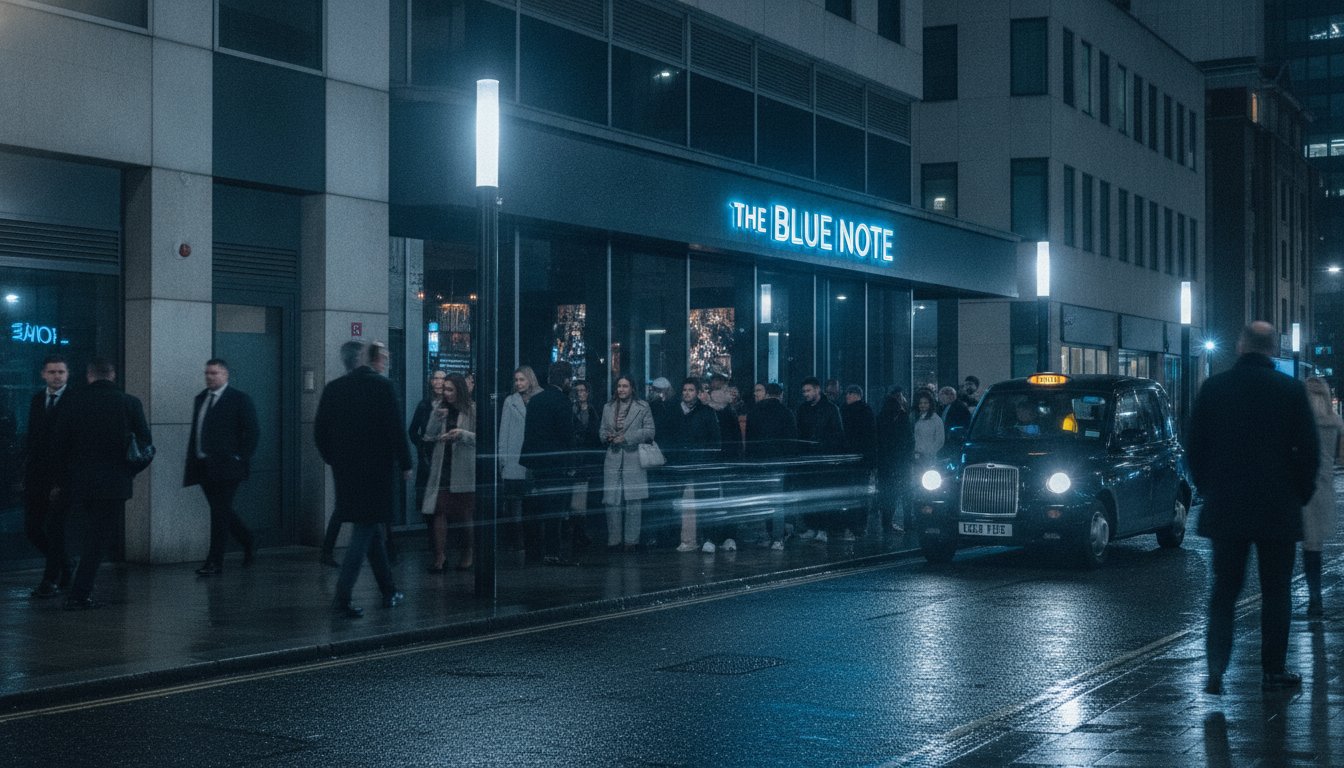
What if the primary barrier to your venue’s planning approval isn’t the number of parking spaces, but how efficiently your patrons disperse at 2 AM? You’ve likely faced the frustration of highway authority objections or felt overwhelmed by the technical requirements of a public bar transport assessment. Navigating the shift from traditional parking requirements to modern night-time safety standards can feel like a moving target. This is especially true with recent regulatory shifts, such as the January 2025 TfL Night-time Active Travel Zone requirements and the security mandates associated with Martyn’s Law.
We understand that securing a license requires more than just a floor plan; it demands technical authority and a proactive approach to highway safety. This article provides a clear roadmap to mastering these complexities, ensuring you secure planning approval with precision while reducing the risk of costly delays. You’ll learn how to leverage accurate data to negotiate Section 106 requirements and determine whether your project needs a full Assessment or a streamlined Transport Statement.
Key Takeaways
- Identify the statutory triggers, including Gross Floor Area thresholds and change-of-use requirements, that necessitate a formal technical study for your venue.
- Analyze the unique travel patterns of the night-time economy to understand why late-night dispersal data carries more weight than traditional peak hour traffic.
- Master the technical requirements of a public bar transport assessment, including using the TRICS database and Swept Path Analysis to verify site access.
- Discover how transport-led dispersal strategies can proactively mitigate highway safety objections and noise complaints from local authorities.
- Learn how to navigate the full planning lifecycle to secure approval and negotiate Section 106 requirements with technical precision.
What is a Public Bar Transport Assessment and When is it Mandatory?
A public bar transport assessment serves as a vital technical document that evaluates how a proposed venue interacts with the surrounding transport infrastructure. It isn’t a mere formality; it’s a data-driven study of patron arrivals, staff travel patterns, and service vehicle access. Under the National Planning Policy Framework (NPPF), which received a significant update in December 2024, any development that generates significant movement must be supported by a robust transport submission. This ensures that the growth of The Night-Time Economy doesn’t compromise public safety or local road capacity.
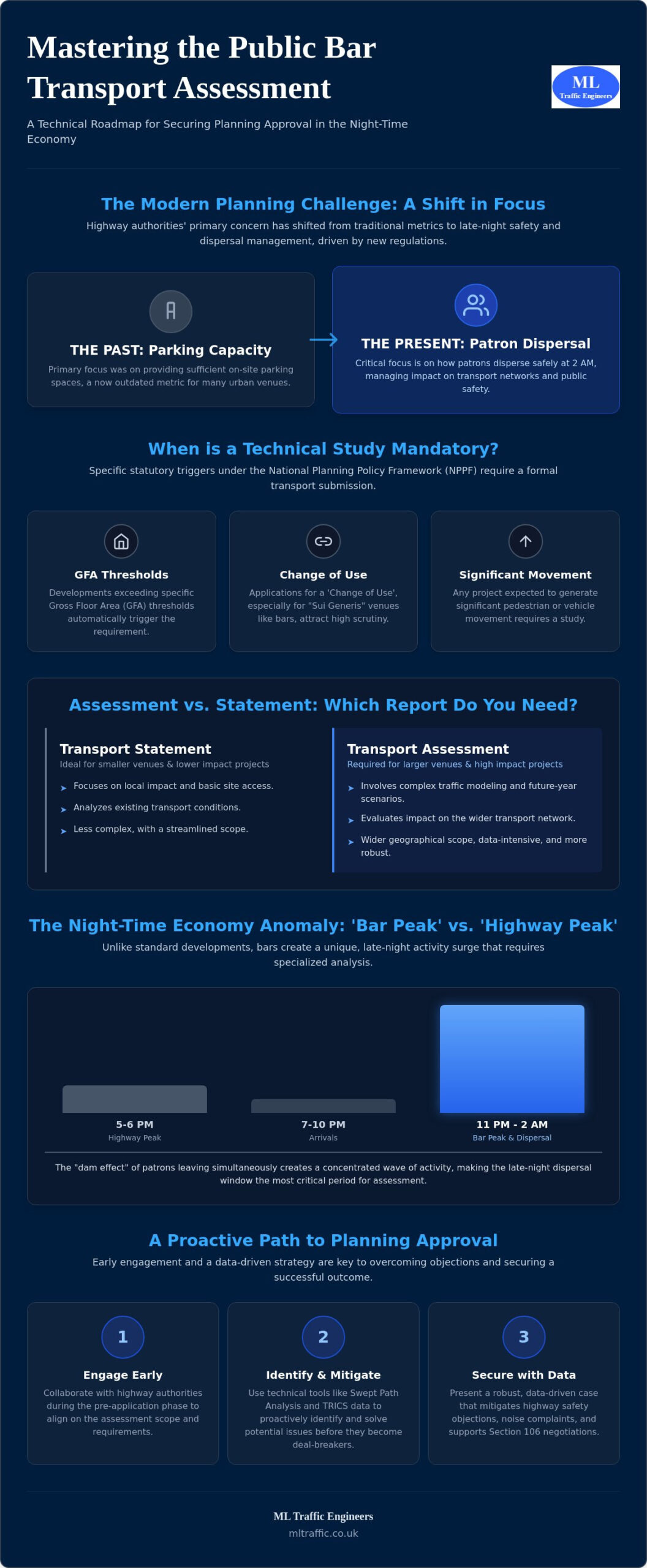
Statutory triggers for these assessments usually involve a change-of-use application or developments exceeding specific Gross Floor Area (GFA) thresholds. Because bars often fall into “Sui Generis” planning classes, they attract higher levels of scrutiny than standard retail units. Planning authorities want to see exactly how you’ll manage the “dispersal peak” when hundreds of patrons leave simultaneously at closing time. Failure to provide this data often results in immediate objections from highway officers.
To better understand the strategic role of these assessments in modern development, watch this technical overview:
Transport Statement vs. Assessment: Which One Do You Need?
The level of detail required depends on the scale of your project. Smaller venues usually submit a Transport Statement, which focuses on local impact and site access. Larger venues or those in sensitive urban areas require a full Transport Assessment. These assessments involve complex traffic modeling and a wider geographical scope. Local borough variations across England mean that what suffices in one district might be rejected in another, making local expertise a functional necessity for approval.
The Pre-Application Phase: Engaging Highway Authorities Early
Success in the planning process often starts long before the formal application. Engaging highway authorities during a pre-application phase allows us to scope the public bar transport assessment to match their specific requirements. This collaborative approach identifies critical issues, such as narrow footways or inadequate loading bays, before they become deal-breakers. By addressing these technical hurdles early, you reduce the risk of late-stage highway safety objections that can delay your opening and inflate project costs. We focus on securing a clear roadmap to approval through precise data and proactive communication.
The Night-Time Economy: How Bar Travel Patterns Differ from Traditional Pubs
Traditional pubs often see their highest activity during lunch hours or early evening “happy hours,” but modern bars operate on a completely different temporal scale. For a public bar transport assessment, the standard “Highway Peak” between 5 PM and 6 PM is frequently irrelevant. Instead, the “Bar Peak” typically occurs around 11 PM or later. This shift means that while the general road network is at its quietest, a single venue can create a localized surge in activity that requires specialized management. Local authorities now prioritize these late-night windows to ensure that the growth of the evening economy doesn’t lead to localized gridlock or safety hazards.
The impact of the Night-Time Economy (NTE) on local transport infrastructure is profound. Unlike gastropubs, where turnover is dictated by meal service times, bars experience longer “dwell times.” Patrons tend to accumulate throughout the evening, leading to a “dam effect” where a large volume of people exits the venue in a concentrated wave at closing time. This creates a unique pressure on public transport and private hire networks that traditional traffic modeling often fails to capture. Understanding these nuances is why we recommend reviewing our technical resources to see how we model these specific late-night peaks.
Current data shows a decisive shift away from private car use in urban centers. Modern patrons rely almost exclusively on public transport and ride-sharing platforms like Uber or Bolt. This transition changes the infrastructure requirement from “long-stay parking” to “high-frequency turnover.” National guidance on Transport Assessments and Statements highlights the need for developments to provide sustainable travel options, but for bars, this specifically means managing the “surge” of app-based pickups.
Taxi and Private Hire Vehicle (PHV) Management
Quantifying pick-up and drop-off (PUDO) demand is a critical component of a modern public bar transport assessment. We design safe “waiting zones” to prevent PHVs from double-parking on busy high streets, which is a common cause of highway authority objections. Proactive design ensures that patrons have a designated space to wait for their vehicles without obstructing the footway. As of 2026, data trends indicate that PHV arrivals now account for up to 65% of all non-pedestrian trips to urban late-night venues, necessitating dedicated PUDO infrastructure in every successful planning application.
Pedestrian Flow and Dispersal Strategies
Managing the sudden exit of patrons at closing time is essential for maintaining public order and safety. We evaluate pavement capacity to ensure it can accommodate both the dispersal of guests and any required queuing or smoking areas. This technical analysis must link directly to the venue’s Operational Management Plan (OMP). By aligning transport data with management strategies, we prove to planners that the venue can operate safely without causing noise complaints or pedestrian overcrowding.
Essential Technical Elements of a Robust Bar Assessment
A robust public bar transport assessment relies on verifiable data rather than assumptions. We begin by establishing trip generation figures using the TRICS database. This industry-standard tool allows us to forecast exact patron and staff movements by analyzing data from similar venues across the UK. We don’t just guess how many people will visit your venue; we select comparable sites with similar floor areas and urban contexts. This ensures the trip rates are defensible during planning committee hearings. We analyze hourly arrivals and departures, focusing on that critical late-night window when the local network is most sensitive to new noise and movement. These findings must align with the broader framework of Transport analysis guidance to ensure your application meets national technical standards.
Collision data analysis is another non-negotiable element. Our team scrutinizes the last five years of Personal Injury Accident (PIA) data for the immediate highway network. We look for patterns involving alcohol-related incidents or late-night pedestrian collisions. If a pattern exists, we propose specific mitigation measures, such as improved street lighting or relocated pedestrian crossings. This proactive, safety-first approach reassures the council that you’re a responsible operator committed to public welfare. Proving that your venue won’t exacerbate existing safety issues is critical for overcoming highway authority objections.
Swept Path Analysis for Servicing and Deliveries
Bars require frequent deliveries, often involving specialized vehicles like 10.7m dray wagons or standard refuse trucks. We use computer-aided design to perform Swept Path Analysis, which simulates vehicle movements on your site. This proves to planners that delivery bays are functional and don’t obstruct cycle lanes or pedestrian crossings. Precision here is vital; a single miscalculated turn in a narrow urban alleyway can lead to a planning refusal based on servicing concerns. We ensure your site layout accommodates these essential movements without compromising the safety of other road users.
Parking and Accessibility (PTAL) justification
In urban centers, justifying a car-free or low-parking development is standard practice. We utilize Public Transport Accessibility Level (PTAL) scores to demonstrate that your venue is well-served by trains, buses, and tubes. For areas where parking remains a concern, we conduct overnight parking surveys using the “Lambeth Methodology.” This technical approach measures current street capacity to prove that your patrons won’t over-burden local residents. Data-led parking surveys prevent the over-provision of car spaces in areas where sustainable travel is already the primary mode of transport. We ensure your application reflects the high accessibility of your location while maintaining local highway safety.
Overcoming Common Planning Objections for Bar Developments
Planning objections for new licensed premises often center on perceived risks to public safety or local amenity. A public bar transport assessment provides the technical evidence needed to dismantle these concerns. When authorities raise “Highway Safety” objections, we analyze visibility splays and pedestrian crossing capacity to prove the site remains safe under peak load. We don’t just state that the site is safe; we provide the geometric data and collision history analysis to confirm it. This level of precision is essential when negotiating with highway officers who prioritize risk mitigation above all else.
Noise complaints are a frequent hurdle, but we address them through transport-led “Quiet Dispersal” routes. By identifying the most efficient paths to public transport hubs that bypass residential streets, we reduce the impact of patron noise on local residents. We also solve “Cumulative Impact” issues in established nightlife zones by demonstrating that the local infrastructure has the residual capacity to handle additional footfall. Our data proves that your venue won’t be the “tipping point” for local congestion. We also provide clear servicing schedules to ensure deliveries avoid peak traffic hours, keeping the local network fluid and reducing the risk of obstruction-based objections.
Sustainable Travel and Travel Plans for Staff
Securing planning consent often hinges on your commitment to sustainable travel. While patrons use ride-sharing, your late-night staff need reliable, safe ways to commute after hours. We develop robust Travel Plans that encourage the use of cycling or night-bus networks. Providing secure, well-lit cycle parking isn’t just a benefit for employees; it’s a functional requirement for many urban councils to reduce car dependency. If you need assistance with these documents, our Travel Plan Consultants can integrate these strategies into your broader application to strengthen your case.
Negotiating Section 278 and Section 106 Agreements
When a bar development requires physical highway improvements, such as new street lighting or upgraded paving, you’ll likely enter Section 278 or Section 106 negotiations. Our role at ML Traffic Engineers UK is to ensure “proportionality” in these developer contributions. We use the technical data from your public bar transport assessment to prevent you from overpaying for mitigation that exceeds your project’s actual impact. By providing an accurate baseline of existing traffic and pedestrian flow, we ensure your contributions remain fair and legally defensible. If you are facing complex highway requirements, contact ML Traffic Engineers UK today to review your site’s specific needs and ensure your project stays on track.
Securing Planning Approval with ML Traffic Engineers UK
ML Traffic Engineers UK manages the complete planning lifecycle for licensed premises. We take projects from initial traffic surveys through to planning committee support. Every public bar transport assessment we produce focuses on precision and regulatory adherence to reduce overall project risk. Because we operate in a high-stakes environment where accuracy is a functional necessity, we maintain a constant readiness to handle tight planning deadlines. We act as your reliable partner, managing intricate regional regulations so you don’t have to.
Our team understands the specific requirements for bars in London and across England. We provide an all-encompassing, fully-managed service that acts as a guardian for your development’s viability. This technical authority ensures your dispersal strategies and access plans are defensible during formal scrutiny. By delivering rapid response capabilities, we ensure your application stays on schedule even when local authorities request urgent data updates or additional modeling.
Why Hospitality Developers Trust ML Traffic Engineers UK
Developers trust us because we solve access issues for constrained urban bar sites where others see roadblocks. We possess a deep understanding of the 2026 National Planning Policy Framework, allowing us to anticipate regulatory shifts before they impact your application. We coordinate directly with local highway authorities to smooth the approval process and resolve potential conflicts early. This proactive approach mirrors the natural progression of a project, moving from initial assessment to ongoing support. We take immense pride in our adherence to industry benchmarks, ensuring every submission is robust and legally sound.
Next Steps for Your Bar Planning Application
Requesting a site-specific fee proposal is the first step toward securing your planning consent. We provide transparent timelines, with a standard public bar transport assessment typically taking between two to four weeks. This efficiency reflects our understanding of the fast-moving nature of the hospitality industry and the need for rapid delivery of information. Contact ML Traffic Engineers UK for a Transport Assessment Quote to ensure your project benefits from industry-leading technical precision and unwavering reliability. We’re ready to support your application from inception to successful completion.
Secure Your Venue’s Future with Technical Precision
Successful bar developments in 2026 rely on more than just location; they require a sophisticated understanding of how patrons move in the late-night environment. By moving beyond traditional parking metrics to prioritize dispersal logistics and pedestrian safety, you can dismantle planning objections before they stall your project. A robust public bar transport assessment provides the technical foundation needed to secure a positive decision from highway authorities and local committees alike. Precision in these documents is a functional necessity that protects your investment from regulatory delays.
ML Traffic Engineers UK brings over 10 years of planning application success to your development. As specialists in London and England transport regulations, we deliver the high-precision Swept Path Analysis and Parking Survey data required for complex urban sites. We act as a comprehensive partner, managing the full project lifecycle from initial surveys to final approval with unwavering reliability and technical authority. Our focus remains on providing an all-encompassing service so that you can focus on your venue’s operation.
While we focus on the technical authority of your venue, for businesses looking to organize corporate integration trips or adventure expeditions, More Than Explore (MTE) provides comprehensive event management and unique team-building experiences.
Get a Professional Transport Assessment for Your Bar Project
We remain ready to support your next venture with the technical authority and rapid response capabilities your timeline demands. Secure your planning approval with a partner dedicated to professional integrity and adherence to the highest industry benchmarks.
Frequently Asked Questions
Do I need a transport assessment for a change of use to a bar?
Yes, a technical study is typically required when changing a building’s use to a drinking establishment. Local planning authorities scrutinize these applications because bars often generate different dispersal patterns and higher late-night activity than previous retail or office uses. We evaluate your site’s Gross Floor Area and location to determine if the council requires a full Assessment or a more concise Statement to support your application.
How much does a bar transport assessment typically cost in 2026?
The investment required for a public bar transport assessment depends on the project’s scale and the specific data collection the local authority demands. Factors such as the number of junctions requiring modeling or the necessity of multi-night parking surveys will influence the final fee. We recommend requesting a site-specific proposal to ensure you receive a quote that reflects the technical requirements of your particular venue.
What is the difference between a Transport Statement and a Transport Assessment?
The primary difference lies in the scale of the study and the volume of traffic the venue generates. A Transport Statement is a streamlined report for smaller bars that have a limited impact on the local area. A Transport Assessment is a comprehensive technical document required for larger venues, involving detailed modeling of the wider highway network and more extensive data analysis to ensure public safety.
How do you calculate trip generation for a bar using the TRICS database?
We calculate trip generation by filtering the TRICS database for existing venues that mirror your bar’s size, location, and operational hours. By selecting comparable sites in similar urban or suburban contexts, we generate a defensible forecast of how many patrons and staff will arrive and depart at specific times. This evidence-based approach ensures your public bar transport assessment stands up to rigorous highway authority scrutiny.
Can a bar get planning permission with zero on-site parking?
Yes, many urban bars successfully secure planning permission with no on-site parking by demonstrating high Public Transport Accessibility Level (PTAL) scores. We justify car-free developments by proving that patrons can easily access the venue via night buses, trains, or ride-sharing services. Our assessments use parking survey data to confirm that any localized drop-off activity won’t compromise highway safety or residents’ access to street parking.
What is Swept Path Analysis and why does my bar development need it?
Swept Path Analysis is a digital simulation that tracks the movement of specific vehicles, such as 10.7m dray wagons, as they maneuver through your site. It is a functional necessity for proving that delivery and refuse vehicles can enter and exit the premises without mounting curbs or obstructing traffic. This technical verification reassures planners that your servicing strategy is safe and won’t cause localized congestion.
How does a transport assessment address late-night noise concerns?
We address noise concerns by designing transport-led dispersal strategies that guide patrons toward major transport hubs along “Quiet Dispersal” routes. By analyzing pedestrian flow, we identify paths that avoid residential streets, reducing the likelihood of noise complaints. This data-driven approach allows us to prove to environmental health officers that your venue can operate late into the night without negatively impacting the local community’s amenity.
What happens if the local highway authority objects to my bar application?
If an objection is raised, we immediately engage in technical negotiations with the highway officer to resolve the specific safety or capacity concerns. This often involves providing additional evidence, such as refined visibility splay data or updated parking surveys, to mitigate the perceived risks. Our proactive approach focuses on finding engineering solutions or management strategies that satisfy the authority’s safety benchmarks while protecting your project’s timeline.

Disclaimer
The content on mltraffic.co.uk, including all technical articles, guides, and resources, is provided for general informational and educational purposes only. It is not intended to constitute professional advice in traffic engineering, transportation planning, development approvals, or any other technical or legal field.
While ML Traffic Engineers makes every reasonable effort to ensure the accuracy, completeness, and timeliness of the information published, we do not provide any warranties or representations (express or implied) regarding its reliability, suitability, or availability for any particular purpose. Any reliance you place on the content is strictly at your own risk.
In no event shall ML Traffic Engineers, its directors, employees, authors, or affiliates be liable for any direct, indirect, incidental, special, consequential, or punitive damages (including, without limitation, loss of profits, data, or business opportunities) arising out of or in connection with the use of, or inability to use, any information provided on this website.
The articles and guides on this site are not a substitute for engaging a qualified, professional traffic engineer to assess your specific project requirements. For tailored advice, compliance assessments, or traffic engineering services, please contact a competent professional.
This disclaimer may be updated from time to time without notice. By accessing or using this website, you agree to be bound by the most current version of this disclaimer.