Did you know that 42% of minor development applications in London face immediate delays at the validation stage because of insufficient highway data? For a residential developer, these technical hurdles represent more than just paperwork. They are often the primary cause of stalled timelines and unexpected costs from off-site highway works. Securing a robust transport assessment for residential development is no longer just a box-ticking exercise. It’s a critical strategic tool used to preempt council objections through data-driven precision.
We understand that the confusion between Transport Statements and full Assessments, combined with the 2026 shift toward a vision-led planning approach, creates significant regulatory pressure. This guide provides the technical clarity you need to master these requirements and secure planning approval with confidence. You’ll learn how to navigate the latest NPPF revisions, manage 100% EV charging mandates, and ensure your highway mitigation remains cost-effective. We’ll examine the specific evidence required to satisfy local authorities and keep your project moving from inception to completion.
Key Takeaways
- Utilize TRICS data and Swept Path Analysis to provide technical proof that your site can safely accommodate emergency and refuse vehicle movements.
- Distinguish between a Transport Statement and a full Assessment to ensure your submission is proportionate to your project’s scale and avoids unnecessary modelling costs.
- Align your site design with Active Travel England standards and Vision Zero principles to satisfy the 2026 shift toward sustainable transport infrastructure.
- Secure a robust transport assessment for residential development to act as a strategic negotiation tool that preempts highway objections and reduces project risk.
- Engage with expert Travel Plan Consultants early to implement effective car-reduction strategies that strengthen the sustainability profile of your planning application.
What is a Transport Assessment for Residential Development?
A transport assessment for residential development is a comprehensive technical document required by planning authorities to evaluate the impact of new housing on the existing highway network. It serves as a piece of the wider transportation planning process, acting as the bridge between your architectural vision and the functional reality of local infrastructure. Unlike a generic traffic report, this document uses empirical data to forecast how future residents will move. It ensures that the local area can absorb additional demand without compromising public safety or network efficiency.
The legal foundation for these reports rests on the National Planning Policy Framework (NPPF). As of the Summer 2026 revisions, the framework has shifted from a “predict and provide” model to a “vision-led” approach. This change requires developers to define desired place-making outcomes first, rather than simply reacting to traffic forecasts. Residential projects face unique scrutiny compared to industrial or commercial sites. While a warehouse focuses on heavy goods vehicle timing, a housing development must account for complex multi-modal patterns. This includes school run peaks, grocery deliveries, and pedestrian safety for vulnerable road users.
The Local Highway Authority (LHA) acts as the primary guardian of these standards. They review your submission to ensure that your project doesn’t just “fit” the road but actively contributes to its long-term viability. Their feedback can make or break an application, which is why precision in your initial data is a functional necessity for securing planning permission.
The Threshold: When do you need a full Assessment?
Differentiating between a small-scale site and a major development is the first step in your planning strategy. In many regions, including most London boroughs, schemes under 50 units usually require a Transport Statement. This is a lighter, more concise report focused on immediate site access. However, once a project exceeds 80 dwellings, a full Assessment becomes mandatory. Local authority variations exist, so checking the specific Local Validation List for your borough is essential to avoid immediate validation delays at the start of the project lifecycle.
Core Objectives of a Successful Assessment
A successful assessment must prove three specific points to the LHA. First, it must demonstrate safe and suitable access for all users, including those with mobility impairments. Second, it must show that any “residual cumulative impact” on the road network isn’t severe. Finally, it must promote sustainable travel. By integrating a robust Travel Plan, you can reduce car dependency and satisfy the strict 2026 environmental benchmarks that councils now prioritize.
The Technical Engine: Data and Analysis Requirements
A transport assessment for residential development relies on a technical engine of precise, empirical data. Without accurate modeling, even the most sustainable architectural designs can fail at the planning stage. We prioritize high-resolution data to ensure your project meets both local highway authority standards and international sustainability goals for reduced carbon impact. Precision here isn’t just about compliance. It’s about protecting your project from the 42% of applications that face immediate delays due to insufficient highway evidence.
Technical reporting must go beyond surface-level observations. It requires a rigorous combination of trip generation modeling, vehicle movement simulations, and real-world surveys. This data counters outdated council records and provides a factual basis for your development’s impact. Our team provides the technical analysis required to satisfy these rigorous council standards.
TRICS Trip Generation for Residential Sites
We use the 2026 TRICS database to predict how many vehicle and pedestrian trips your site will generate. Selecting comparable sites is the most critical part of this process. A site in a high-density urban area with a PTAL score of 5 behaves differently than a rural development. We analyze peak hour data for both morning and evening commutes to ensure the network can handle the highest levels of demand. This multi-modal approach accounts for the 80% sustainable trip target set by the London Plan, shifting the focus from cars to active travel.
Swept Path Analysis (SPA) and Site Layout
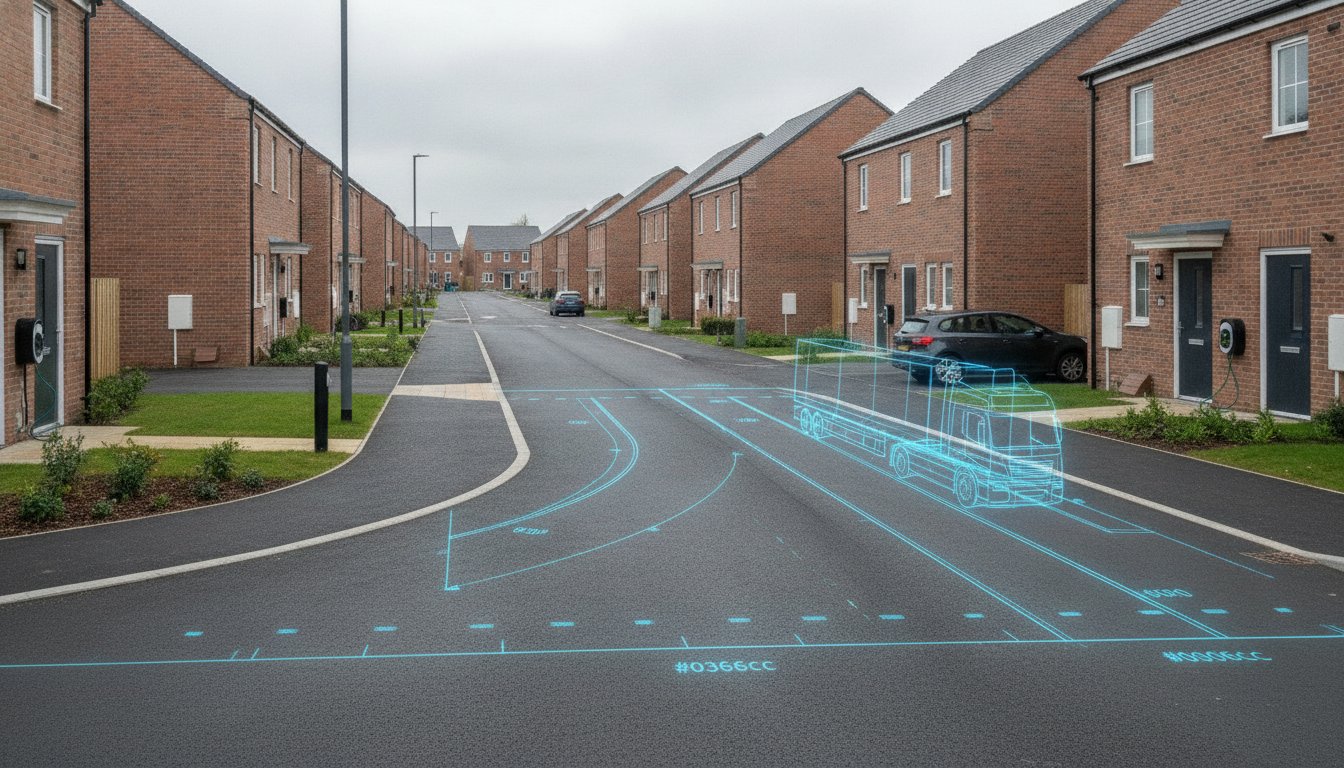
Ensuring that fire tenders and refuse trucks can navigate your estate is a non-negotiable safety requirement. We utilize Swept Path Analysis to simulate these movements during the early design stages. This prevents costly redesigns after you’ve already committed to a layout. With light van movements increasing by 30% in urban centers, your site must accommodate frequent delivery vehicles without blocking emergency access routes. Integrating SPA into your car park design ensures every turn and junction is functionally safe and compliant with Building Regulations Part S.
Parking surveys provide the final layer of technical defense. As of 2026, 100% of new residential parking spaces must include EV charging infrastructure. We conduct parking stress surveys to justify “low-car” or car-free developments in high-accessibility areas. This data-led approach proves to local authorities that your parking provision is sufficient, sustainable, and safe.
Transport Statement vs. Assessment: Which One Do You Need?
Choosing the wrong technical document is a primary cause of planning delays and unnecessary expenditure. A transport assessment for residential development is required when a project’s impact is significant, while a Transport Statement suffices for smaller schemes with lower traffic implications. The UK government guidance on Transport Assessments emphasizes that these documents must be proportionate to the scale of the development. However, the line between the two isn’t always determined by unit count alone. It’s often defined by the existing capacity of the local highway network.
Under-reporting is a major risk that leads to immediate friction with local authorities. If you submit a Statement for a site that the council deems “sensitive,” they will likely reject the application or demand a full upgrade mid-process. Approximately 15% of London applications face deferral due to insufficient transport evidence. This results in wasted technical fees and months of project stagnation. Budgeting for the correct level of consultancy from the start is more cost-effective than attempting to “downgrade” a report that requires more technical weight to pass the validation stage.
Key Differences in Scope and Detail
A full Assessment requires detailed junction capacity modelling using specialized software like Junctions 9 or 10. This analysis tests how specific junctions perform under peak pressure and predicts the cumulative impact of your development alongside other local projects. Statements rarely require this level of complex simulation. Both documents now require a high depth of sustainable transport analysis to meet 2026 standards, focusing on pedestrian and cycle connectivity. For a detailed breakdown of costs and requirements for smaller sites, see our Developer’s Buying Guide for Transport Statements.
Decision Factors for Developers
Site location and surrounding infrastructure often dictate the report type more than unit numbers alone. A 40-unit scheme in a rural area might trigger a full transport assessment for residential development if the local road network is already at capacity or has a poor safety record. Identifying “sensitive” highway areas is a functional necessity. These include sites near schools, hospitals, or within Air Quality Management Areas (AQMAs) where any increase in traffic is heavily scrutinized. We always recommend securing pre-application advice from the Local Highway Authority (LHA). This “scoping” exercise confirms the exact level of detail and the specific junctions that need testing before you commit to technical work.
Navigating Local Authority Requirements in 2026
Securing planning permission in 2026 requires more than just technical data. It requires a deep understanding of the policy shift toward Vision Zero and Active Travel England standards. Local authorities now prioritize the safety of vulnerable road users and the quality of the pedestrian environment over vehicle throughput. Your transport assessment for residential development must reflect these priorities to avoid immediate pushback. We take an active approach to these regulations, ensuring your project meets the latest legislative benchmarks from the first day. This includes aligning with the “Healthy Streets” approach and the goal of eliminating all transport-related deaths by 2041.
Specific regions present unique challenges. For example, Transport Planning in London involves mandatory oversight from TfL for any site within 100 metres of a red route. These applications often trigger Section 106 financial contributions for public transport improvements or Section 278 agreements for physical highway modifications. Navigating these negotiations requires a reliable partner who understands regional variations so you don’t have to. We manage the full project lifecycle, from initial scoping to the final highway works agreement, ensuring you remain compliant with the London Plan’s strict parking mandates.
The 5-Step Roadmap to Approval
We follow a logical, sequential flow to ensure your application remains on track. This systematic approach reduces logistical pressure and minimizes the risk of technical objections during the validation stage.
- Step 1: Scoping. We agree on the assessment’s scope with the Local Highway Authority early. This prevents redundant work and ensures we test the correct junctions.
- Step 2: Data Collection. Our teams conduct parking and traffic surveys to build a factual evidence base that counters outdated council records.
- Step 3: Technical Modelling. We perform impact analysis to predict future network performance and justify your site’s access strategy.
- Step 4: Mitigation Strategy. We develop robust Travel Plans and highway works to offset any identified impacts and promote sustainable travel.
- Step 5: Negotiation. We manage post-submission queries from planning officers to keep your timeline moving and reach a successful decision.
Common Objections and How to Preempt Them
Council objections often focus on three areas: parking provision, pedestrian safety, and local congestion. If a council objects to a “car-free” design, we use parking stress surveys to justify the provision level based on the site’s PTAL score. When pedestrian links are deemed inadequate, we propose sustainable infrastructure improvements as part of the mitigation strategy. For congestion concerns, we use precise junction modelling to prove that the residual cumulative impact is not severe. This data-led precision is your best defense against planning delays.
Don’t let regulatory hurdles stall your project. Contact our technical team today to secure a compliant transport assessment for residential development.
Why Expert Consultancy is Vital for Residential Success
A transport assessment for residential development represents more than a data set; it’s a strategic negotiation document. Professional Travel Plan Consultants provide the necessary foresight to reduce car dependency and meet the high sustainability expectations of 2026 planning committees. This expertise ensures your scheme remains functional while satisfying the strict legislative benchmarks that define modern housing projects. Technical precision is a functional necessity in this high-stakes environment, where even minor data gaps can lead to costly delays.
ML Traffic Engineers UK acts as a dependable partner throughout the full project lifecycle. Since our inception in 2014, we’ve focused on delivering technical authority with a client-focused approach. We understand the logistical and regulatory pressures that developers face during the planning phase. Our team manages every technical detail from initial site scoping to post-submission negotiations. This comprehensive support ensures your project adheres to industry benchmarks without unnecessary delays. By identifying potential highway objections before they reach the council, we protect your investment and reduce project risk.
Beyond the Report: Strategic Planning Support
Expert consultants provide a reassuring voice in high-stakes environments. We represent developers in technical meetings with highway officers to defend the data and the proposed access strategy. We utilize a technical lexicon rooted in regulatory compliance to communicate effectively with planning authorities. This ensures that technical arguments for specific junction designs are framed in a way that planning officers can readily accept. We also advise on site layout early in the process to maximize developable area while ensuring every road and junction meets safety standards. This proactive involvement prevents the technical bottlenecks that often stall residential applications during the consultation period.
Efficiency and Reliability
The fast-moving nature of the infrastructure sector requires a partner with constant accessibility. ML Traffic Engineers UK maintains a sense of readiness and urgency to ensure your project stays on schedule. Our deep understanding of regional regulations across England and London allows us to provide a fully-managed service that addresses intricate local requirements. We take pride in our adherence to standards and our role as professional guardians of public safety. This rhythmic efficiency suggests a brand that values your time and understands the unpredictable nature of planning timelines.
Contact ML Traffic Engineers UK for a tailored Transport Assessment quote to secure your project’s success with a robust transport assessment for residential development.
Secure Your Planning Approval with Technical Precision
The 2026 planning landscape demands a transition from traditional traffic forecasting to a vision-led, outcome-focused methodology. By prioritizing sustainable movement and high-resolution data, you address the core concerns of the Local Highway Authority before they result in application deferrals. A robust transport assessment for residential development is no longer just a technical requirement; it’s your strongest asset in negotiating complex planning conditions and minimizing off-site highway costs. This strategic approach ensures your site remains both compliant with the latest NPPF revisions and commercially viable.
Since 2014, ML Traffic Engineers UK has provided the specialized technical authority needed to navigate these high-stakes regulatory environments. Our all-encompassing service manages the full project lifecycle, offering expertise in TRICS modeling and Swept Path Analysis from initial scoping through to final approval. We understand the urgency of housing delivery and maintain a constant readiness to prevent technical bottlenecks in your timeline. Get a Professional Transport Assessment for Your Residential Project and partner with an expert team dedicated to precision, safety, and your project’s success. We look forward to securing the planning results your development deserves.
Frequently Asked Questions
Do I need a Transport Assessment for a small residential conversion?
Most small conversions involving fewer than 50 units only require a Transport Statement rather than a full Assessment. However, if your project is located in a sensitive area or has complex access issues, the council may request a more detailed report. You should always consult the local authority’s validation list to confirm the specific requirements for your site location.
How long does it take to complete a Transport Assessment for a housing development?
A standard assessment typically takes between three to six weeks to complete. This timeframe includes essential site observations, data collection from the TRICS database, and technical modeling of local junctions. More complex projects that require extensive negotiation with highway officers or Transport for London (TfL) may take longer to reach the final submission stage.
What is the difference between a Transport Assessment and a Travel Plan?
A Transport Assessment evaluates the physical impact of a development on the highway network, while a Travel Plan is a strategic document designed to manage and reduce that impact. The Assessment focuses on infrastructure capacity and safety. In contrast, the Travel Plan promotes sustainable travel habits, such as cycling and public transport use, among future residents.
Can a Transport Assessment help reduce my Section 106 contributions?
A robust transport assessment for residential development can justify lower financial contributions by providing empirical proof that the project’s impact is less severe than predicted. Accurate modeling can demonstrate that your on-site mitigations are sufficient to handle the new demand. This technical evidence often prevents developers from being overcharged for unnecessary off-site highway works.
What happens if the local council objects to my Transport Assessment?
We immediately engage in technical negotiations with highway officers to address their specific concerns. This process often involves providing additional data or refining the proposed mitigation strategy to satisfy safety standards. Our team defends the precision of the original report while finding a functional solution that allows the project to move forward toward approval.
Is Swept Path Analysis always required for residential planning?
Most residential applications require Swept Path Analysis to prove that fire tenders and refuse trucks can safely navigate the proposed site layout. Councils prioritize emergency access and service vehicle movements as non-negotiable safety benchmarks. Providing this visual evidence early in the design stage prevents costly layout revisions and ensures your application meets mandatory Building Regulations.
How much does a Transport Assessment cost for a UK residential project?
The cost of an assessment depends on the scale of the development and the complexity of the required junction modeling. Factors such as the number of sites to be surveyed and the specific requirements of the local highway authority will influence the total fee. Developers should seek a tailored quote that reflects the unique technical demands of their specific residential scheme.
What is TRICS data and why is it used in residential planning?
TRICS is the industry-standard database used to predict trip generation for new developments by analyzing surveys from comparable existing sites. It provides the factual foundation needed to forecast vehicle and pedestrian movements accurately. Using the latest TRICS data is essential for producing a compliant transport assessment for residential development that stands up to council scrutiny.

Disclaimer
The content on mltraffic.co.uk, including all technical articles, guides, and resources, is provided for general informational and educational purposes only. It is not intended to constitute professional advice in traffic engineering, transportation planning, development approvals, or any other technical or legal field.
While ML Traffic Engineers makes every reasonable effort to ensure the accuracy, completeness, and timeliness of the information published, we do not provide any warranties or representations (express or implied) regarding its reliability, suitability, or availability for any particular purpose. Any reliance you place on the content is strictly at your own risk.
In no event shall ML Traffic Engineers, its directors, employees, authors, or affiliates be liable for any direct, indirect, incidental, special, consequential, or punitive damages (including, without limitation, loss of profits, data, or business opportunities) arising out of or in connection with the use of, or inability to use, any information provided on this website.
The articles and guides on this site are not a substitute for engaging a qualified, professional traffic engineer to assess your specific project requirements. For tailored advice, compliance assessments, or traffic engineering services, please contact a competent professional.
This disclaimer may be updated from time to time without notice. By accessing or using this website, you agree to be bound by the most current version of this disclaimer.