Author: adminmltuk

  • Traffic Engineer In Bradford: Expert Transport Assessments For Planning Success In 2026

    Traffic Engineer In Bradford: Expert Transport Assessments For Planning Success In 2026

    Planning applications in Bradford rarely succeed on architecture alone. But strong the design, the question that keeps coming back from highways officers, planners and committee members is simple: what will this scheme do to the road network, parking demand, servicing movements and safety conditions around the site?

    That is where a traffic engineer in Bradford becomes central to the process rather than an afterthought. We’re not just talking about producing a report to tick a box. A well-scoped transport assessment or transport statement can identify problems early, shape the layout, justify trip assumptions, respond to local policy and, crucially, reduce the risk of avoidable highways objections.

    In Bradford, that matters. The district includes dense urban corridors, suburban residential areas, town centres, school-fronted routes, constrained access points and locations already under pressure at peak times. Add local parking standards, active travel expectations and the need to align with national guidance, and transport input quickly becomes one of the most practical parts of a planning submission.

    In this guide, we explain what a Bradford traffic engineer typically does, when transport evidence is needed, how Bradford’s planning context affects reporting requirements, and what to look for when appointing a consultant. For architects, planners, developers, surveyors, legal teams and local authorities, the aim is straightforward: better evidence, fewer surprises, and a stronger route to planning success.

    Key Takeaways

    • A traffic engineer in Bradford plays a vital role in assessing and managing a development’s impact on local roads, parking, servicing, and safety, ensuring compliance with both local and national planning policies.
    • Early involvement of a traffic engineer helps refine site layouts, balance parking provision, and identify necessary mitigations, reducing the risk of costly highways objections and delays in planning approvals.
    • Transport assessments or statements are essential depending on project scale and local sensitivity; many mid-sized and change-of-use developments in Bradford require detailed transport evidence due to complex local conditions.
    • Bradford’s planning context demands transport reports tailored to specific site conditions such as congested corridors, proximity to schools, or town centres, rather than generic assessments.
    • A comprehensive traffic engineering review covers trip generation, junction capacity, parking strategies, access design, and road safety, integrating diverse factors to present robust and clear evidence for planning authorities.
    • Choosing a local, experienced traffic engineer who combines technical expertise with strong communication skills improves the likelihood of smooth planning processes and successful development outcomes in Bradford.

    Why A Traffic Engineer Matters For Development Projects In Bradford

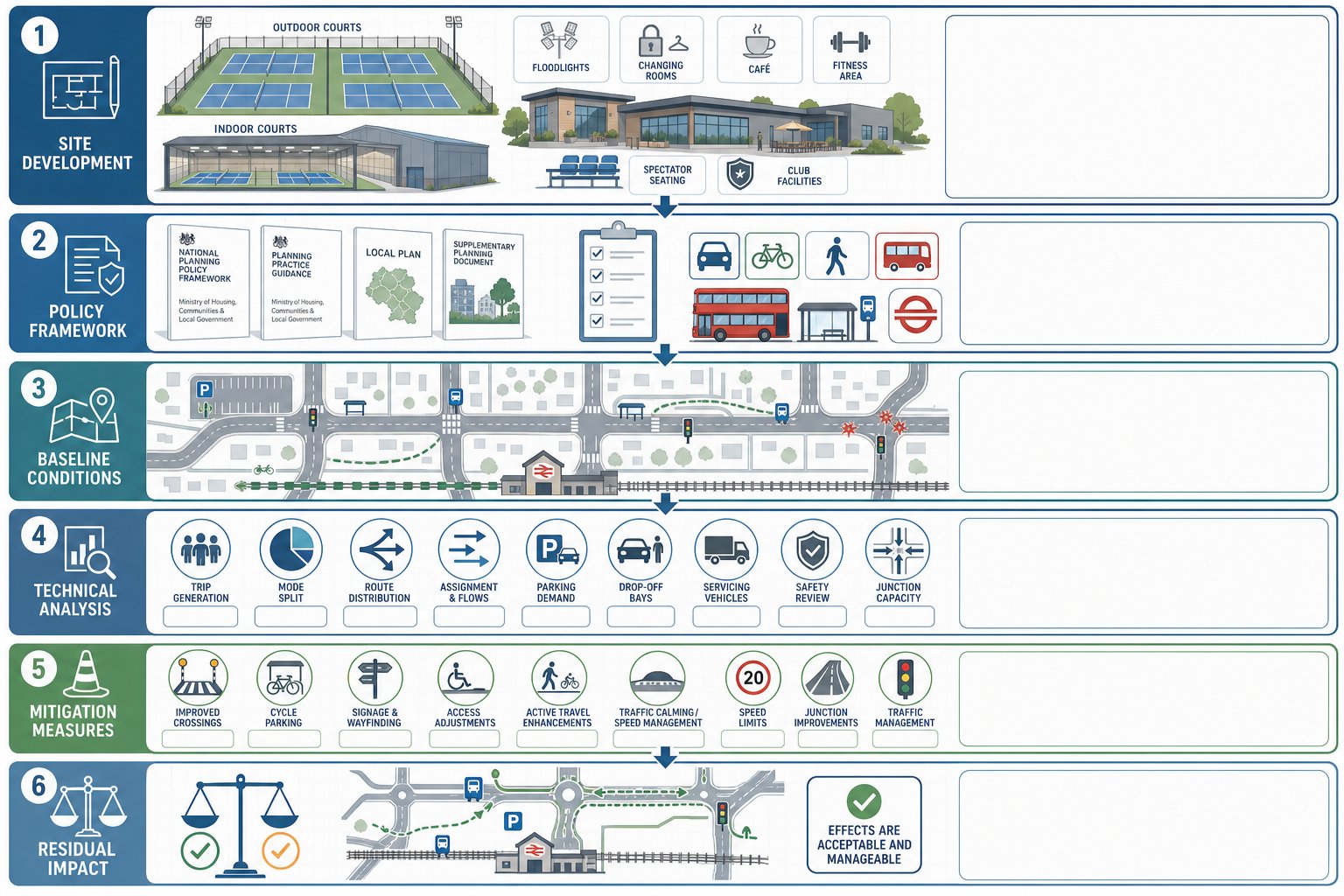
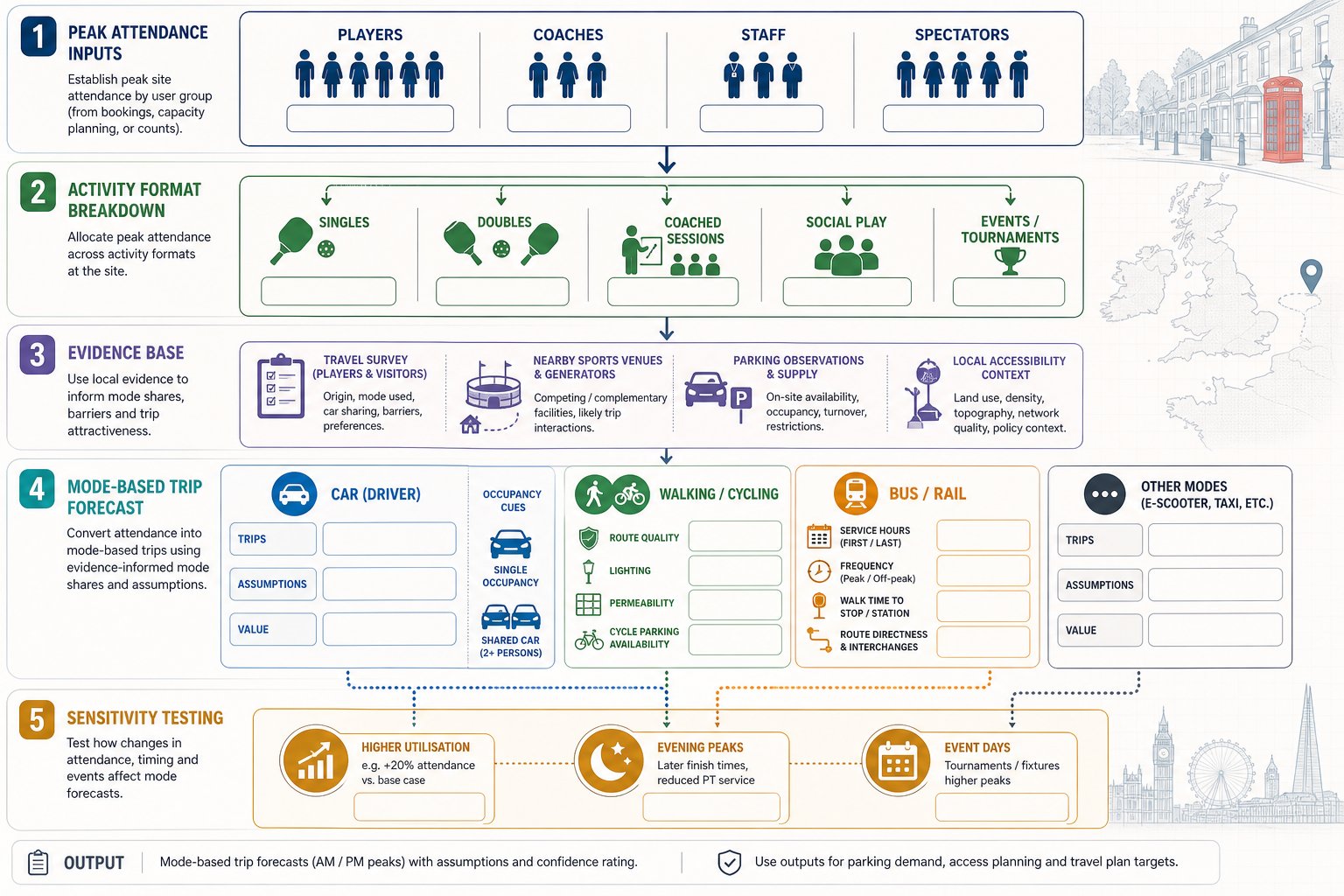
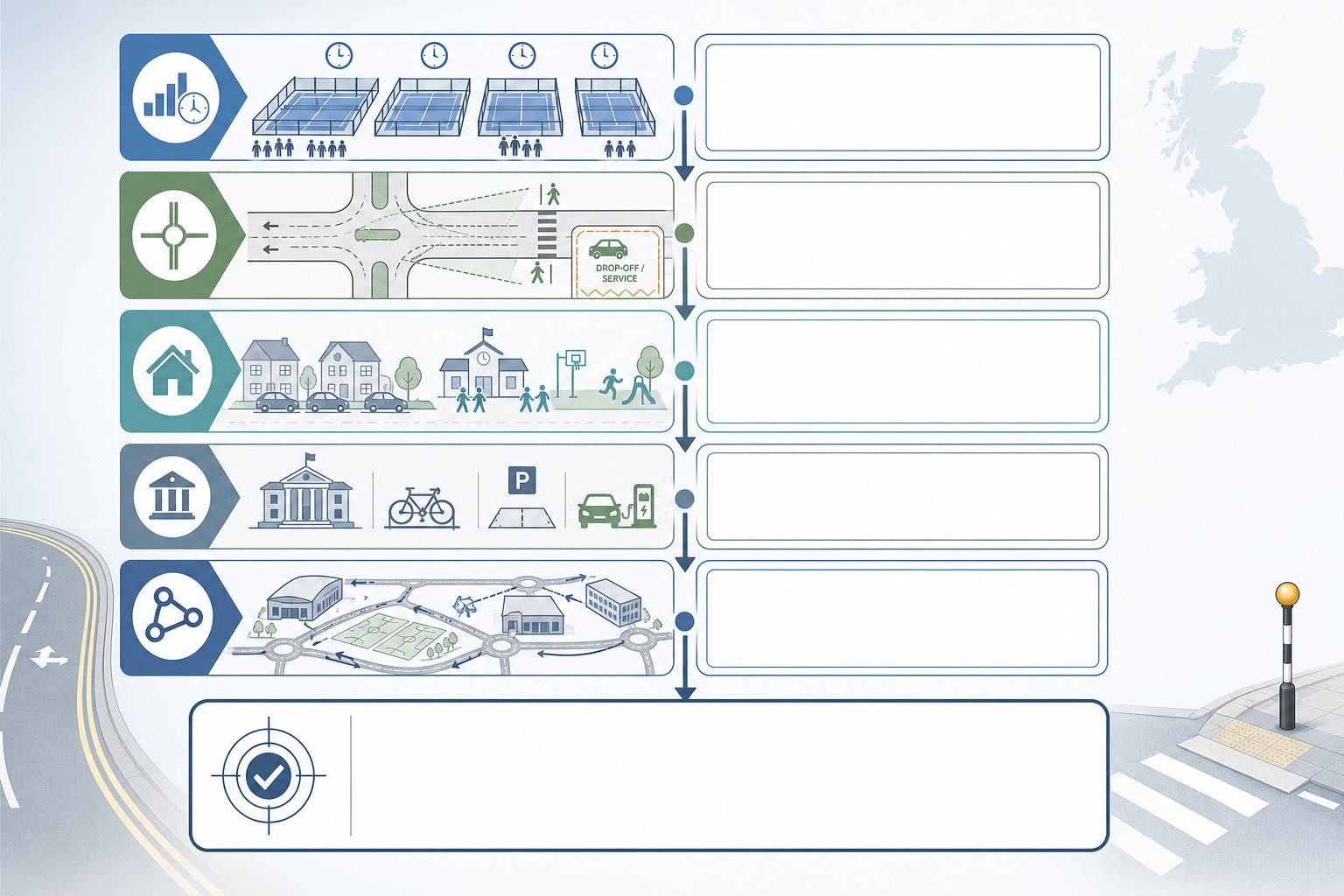
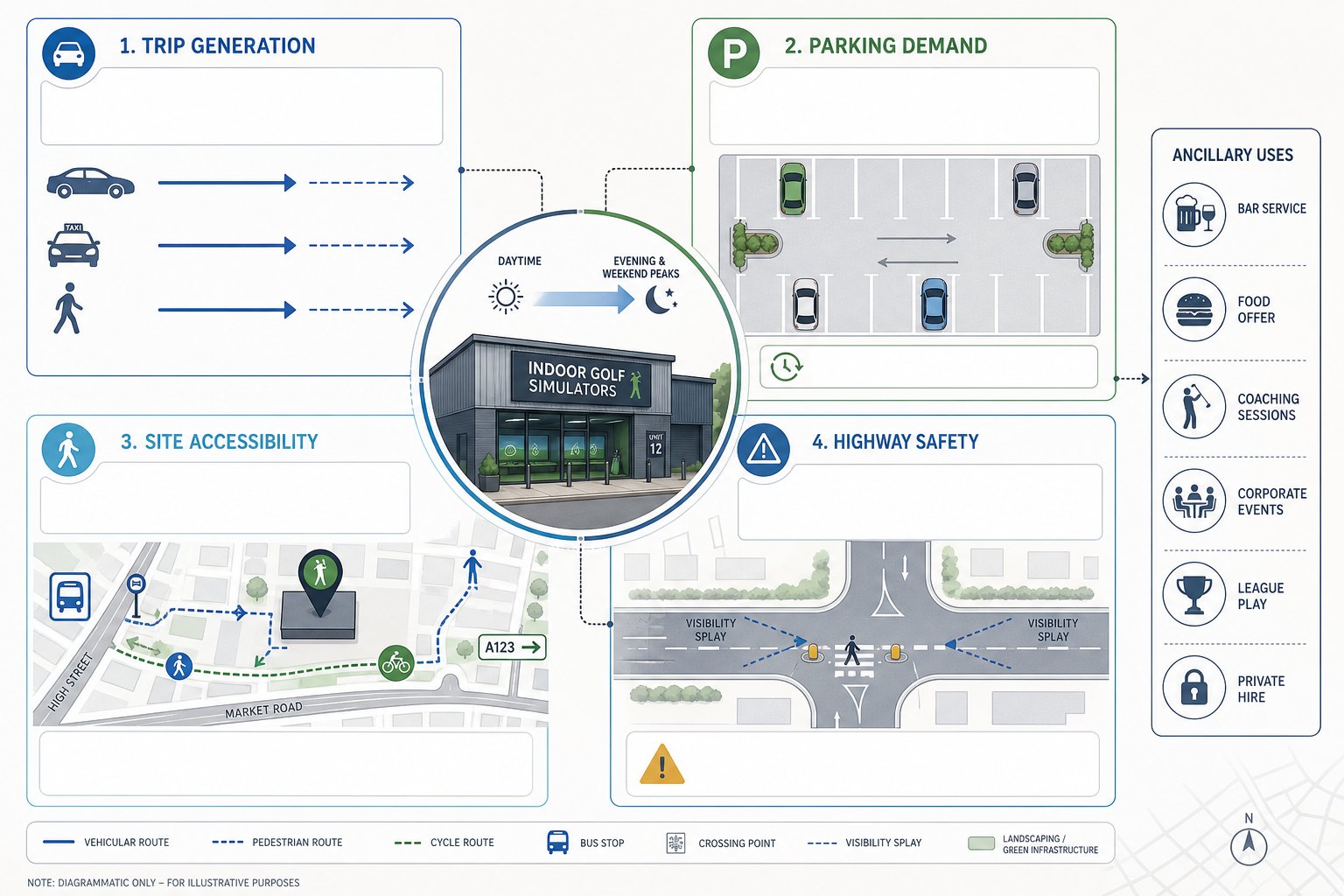
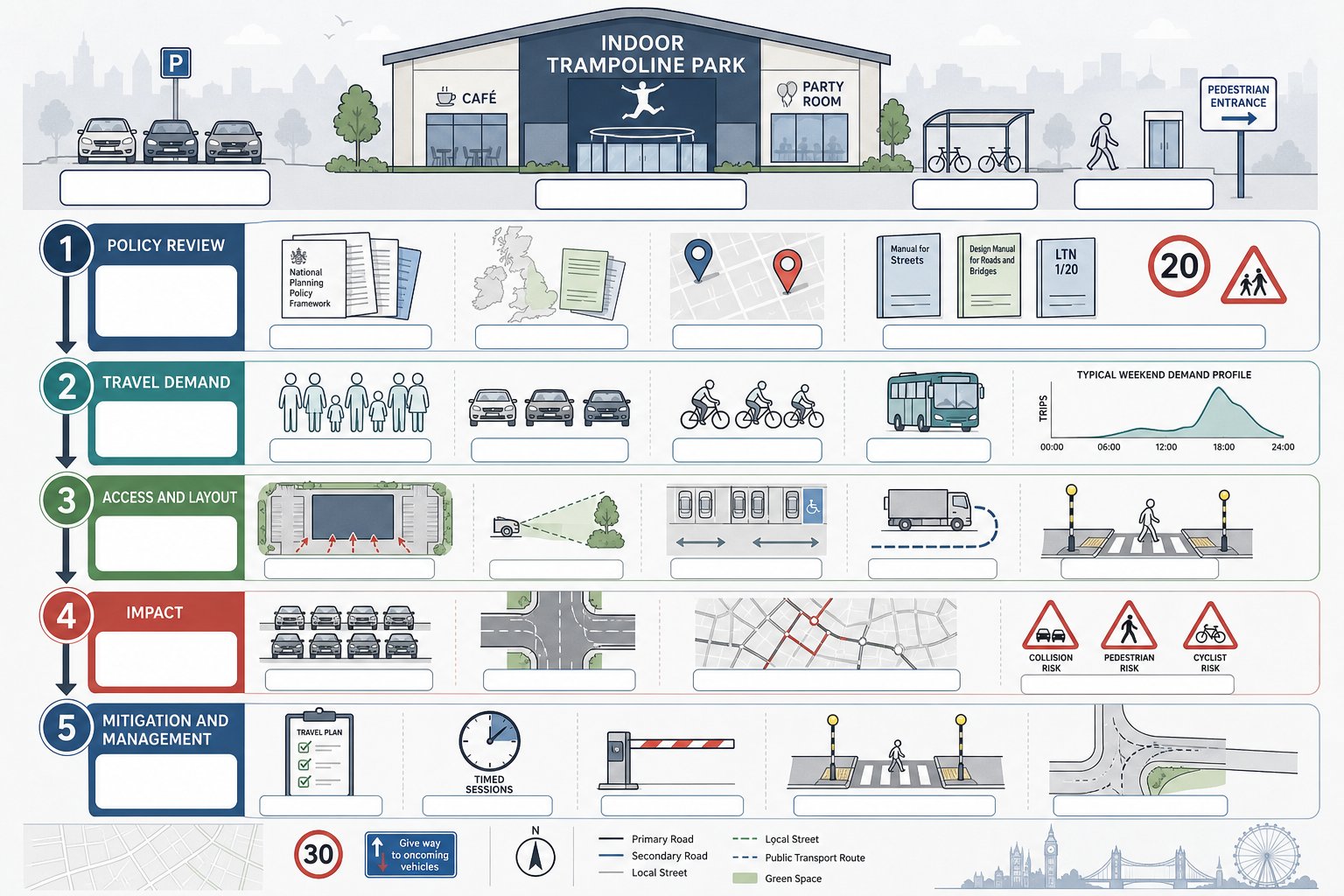
    Infographic showing how traffic engineering supports smoother planning decisions for Bradford developments.

    A traffic engineer in Bradford helps translate a development concept into something the planning system can test properly. That sounds obvious, but in practice it’s often the difference between a scheme that moves smoothly through consultation and one that stalls because highways concerns were left too late.

    At planning stage, Bradford Council and its highways officers will want to know whether a proposal can operate safely and efficiently. They will look at vehicle trips, turning movements, visibility, parking, servicing, pedestrian access, cycle provision and the likely effect on nearby junctions. If those issues are not addressed with evidence, assumptions tend to be challenged. And once concerns become formal objections, resolving them usually costs more time and more money.

    The value of early input is that transport advice can shape the scheme before the application is fixed. Access geometry can be refined. Parking can be rebalanced. Refuse tracking can be tested. Mitigation can be identified before an officer asks for it. In many cases, we find that transport work is most useful when it influences the site layout, not just when it documents it.

    That is especially true for projects sitting on constrained plots, corridors with congestion at peak hours, or sites near schools, local centres and signalised junctions. A good engineer doesn’t simply report impacts: we help anticipate them and show how they can be managed in a policy-compliant way.

    For teams comparing wider advisory support, Traffic Engineering Consultants: often become involved not only in assessment, but in strategy, negotiation and evidence-led mitigation. In a similar planning context across West Yorkshire, a Traffic Engineer In Leeds: role follows the same principle: establish impact clearly, align with local policy, and remove uncertainty before determination.

    How Bradford’s Planning Context Shapes Transport Requirements

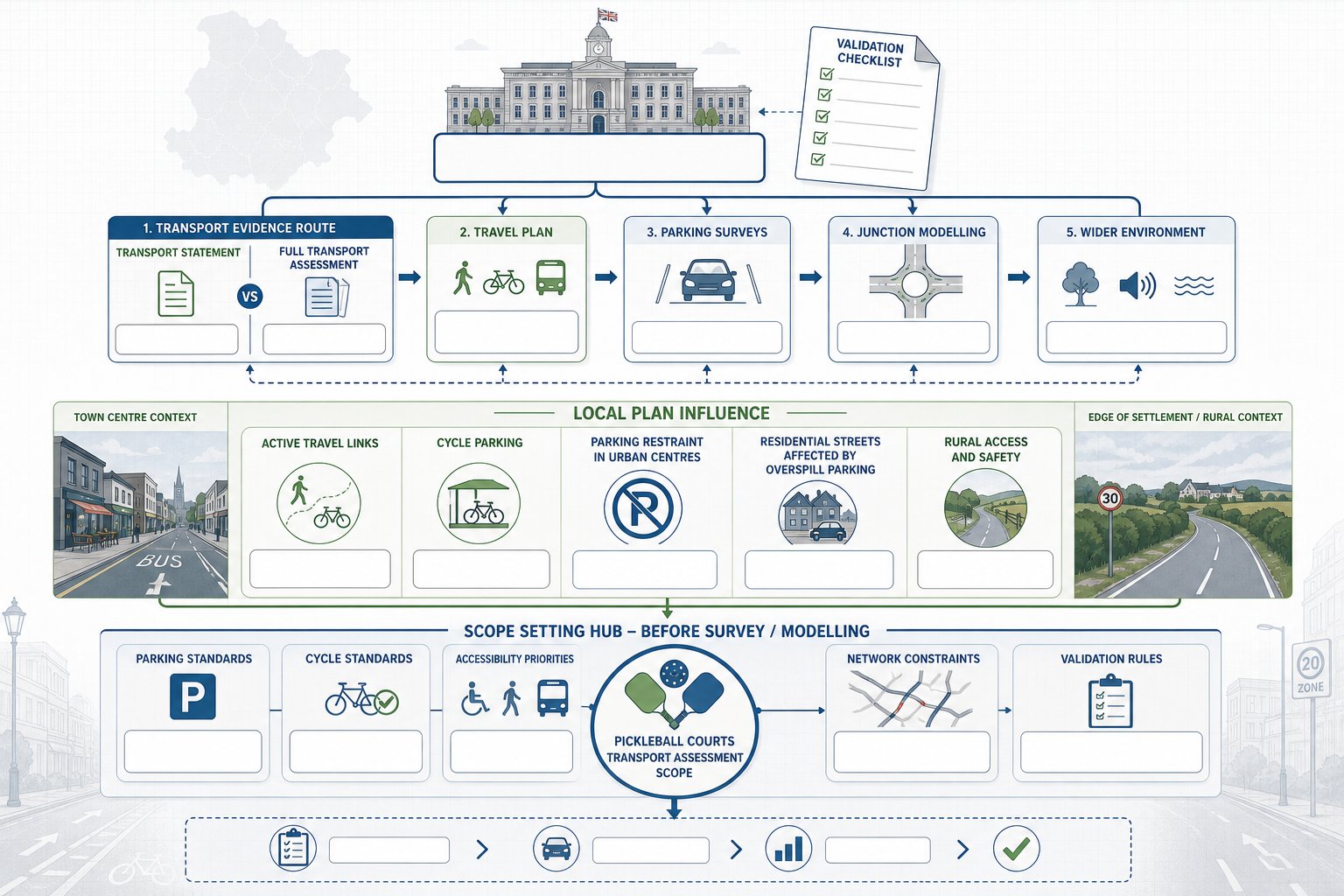
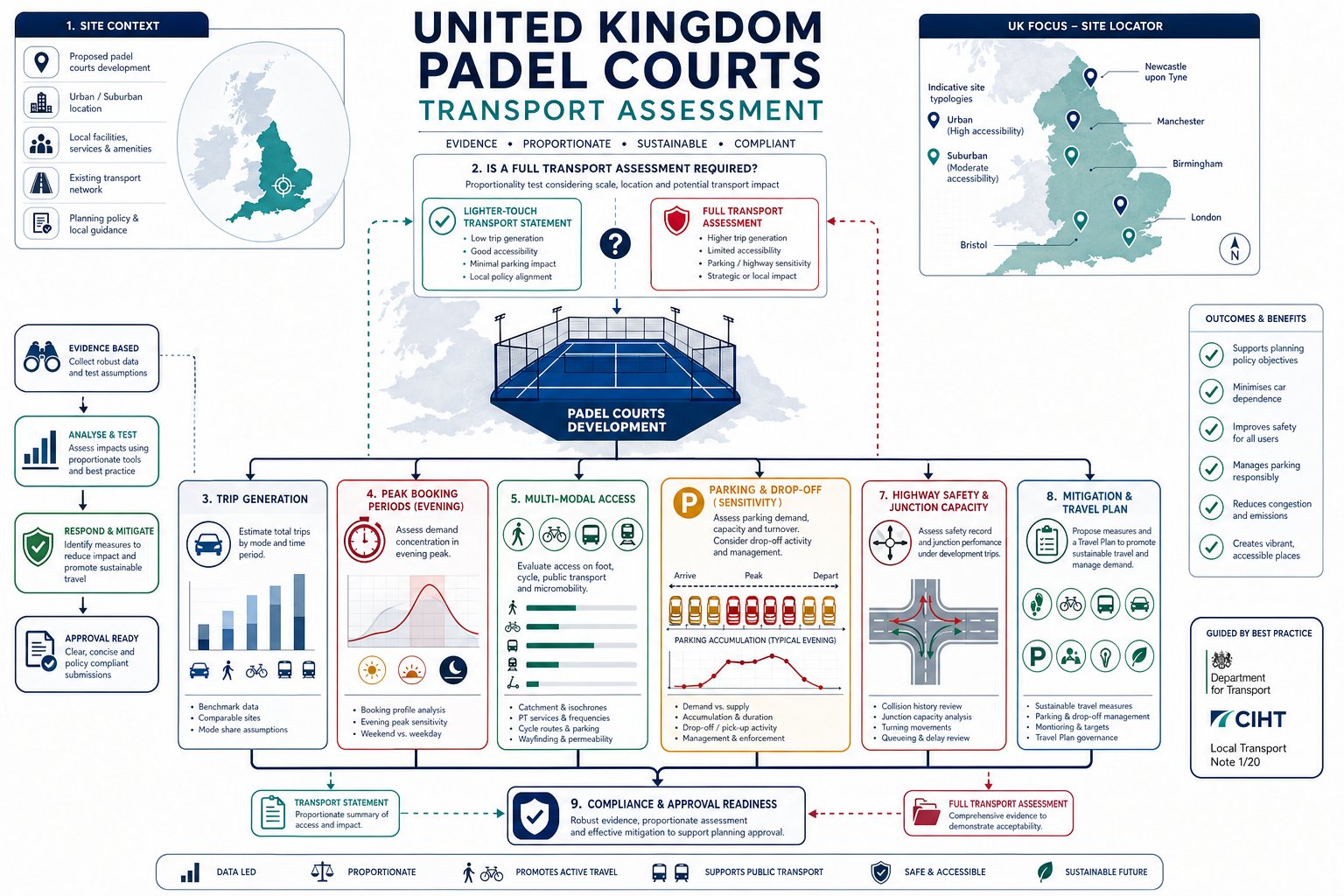
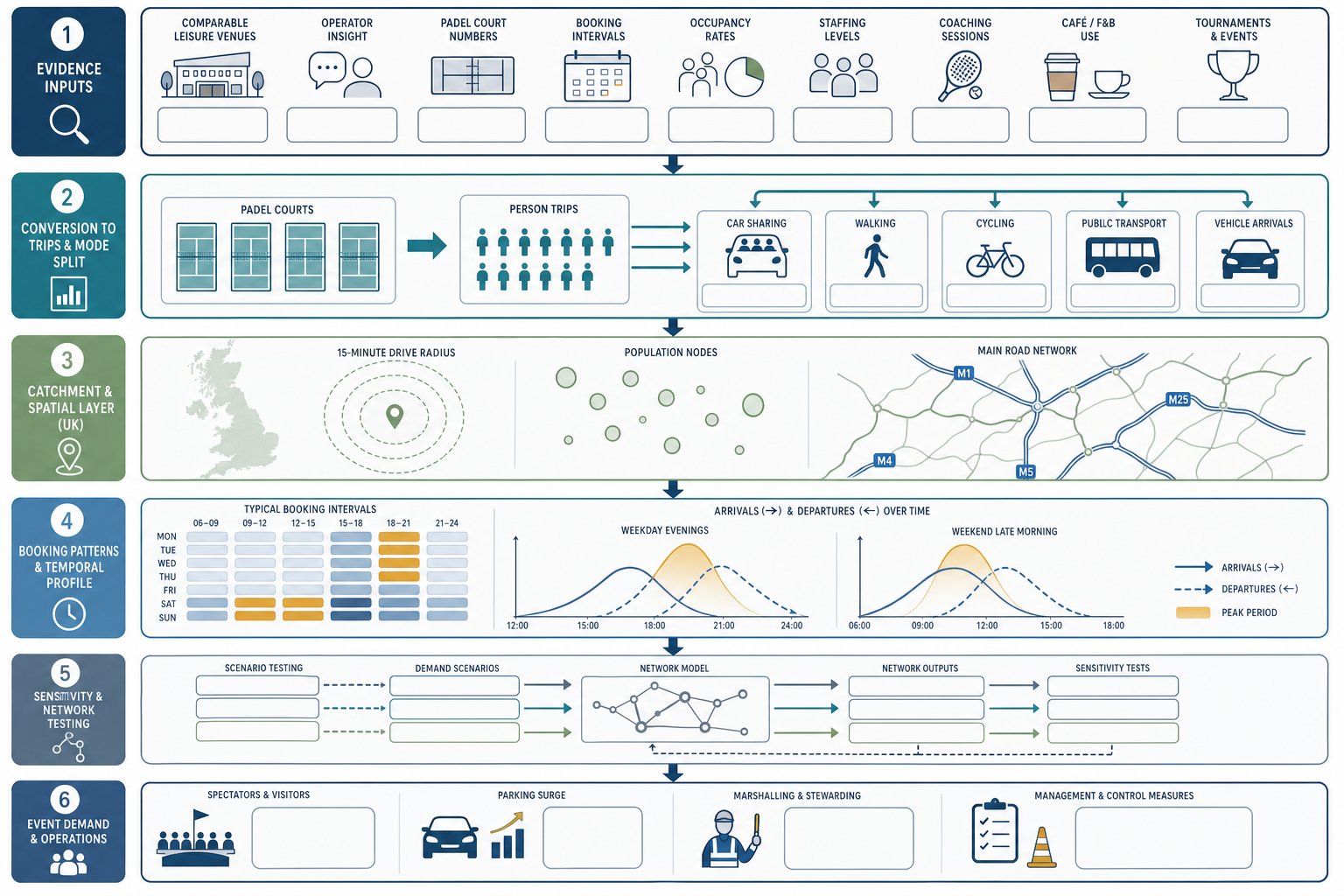
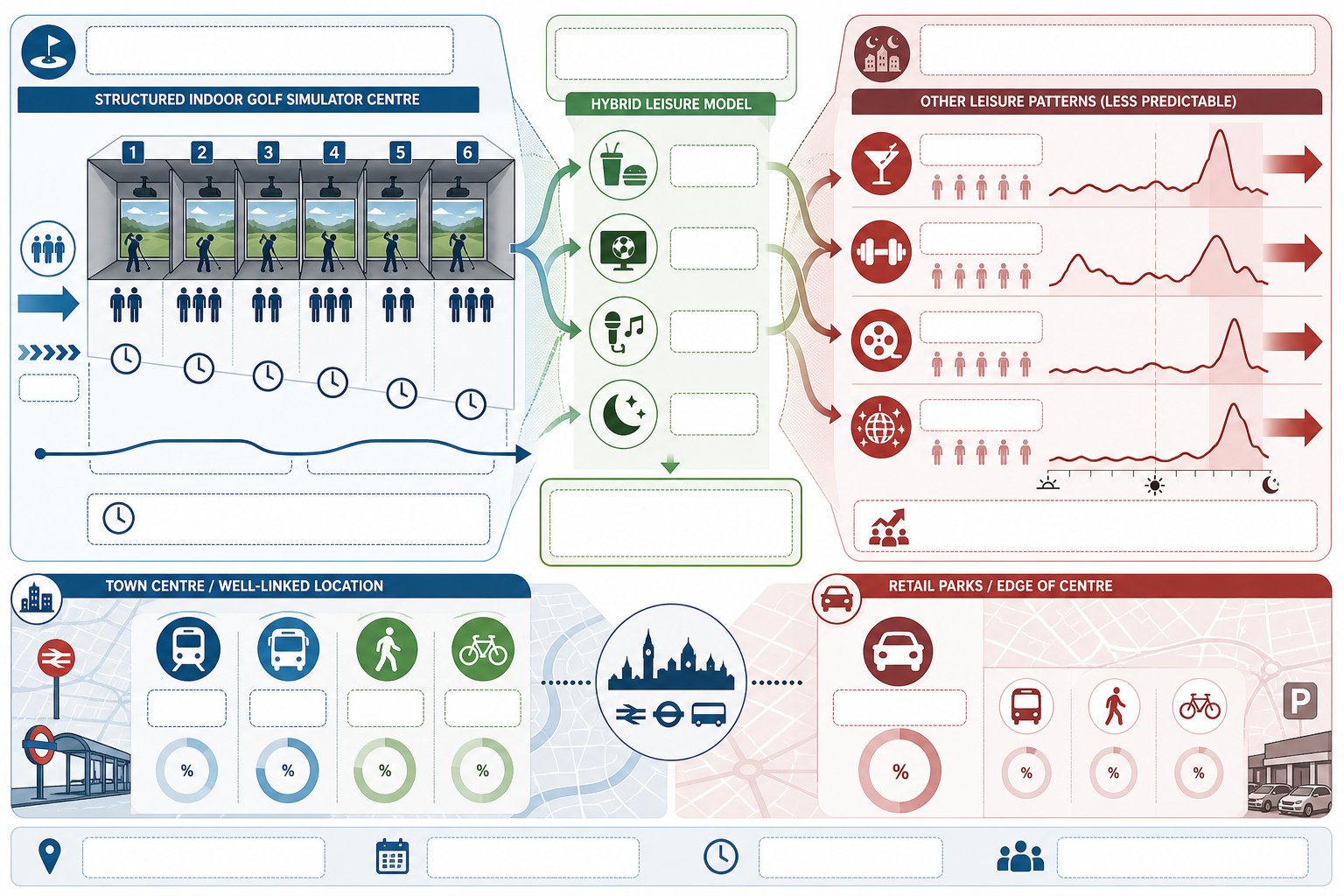
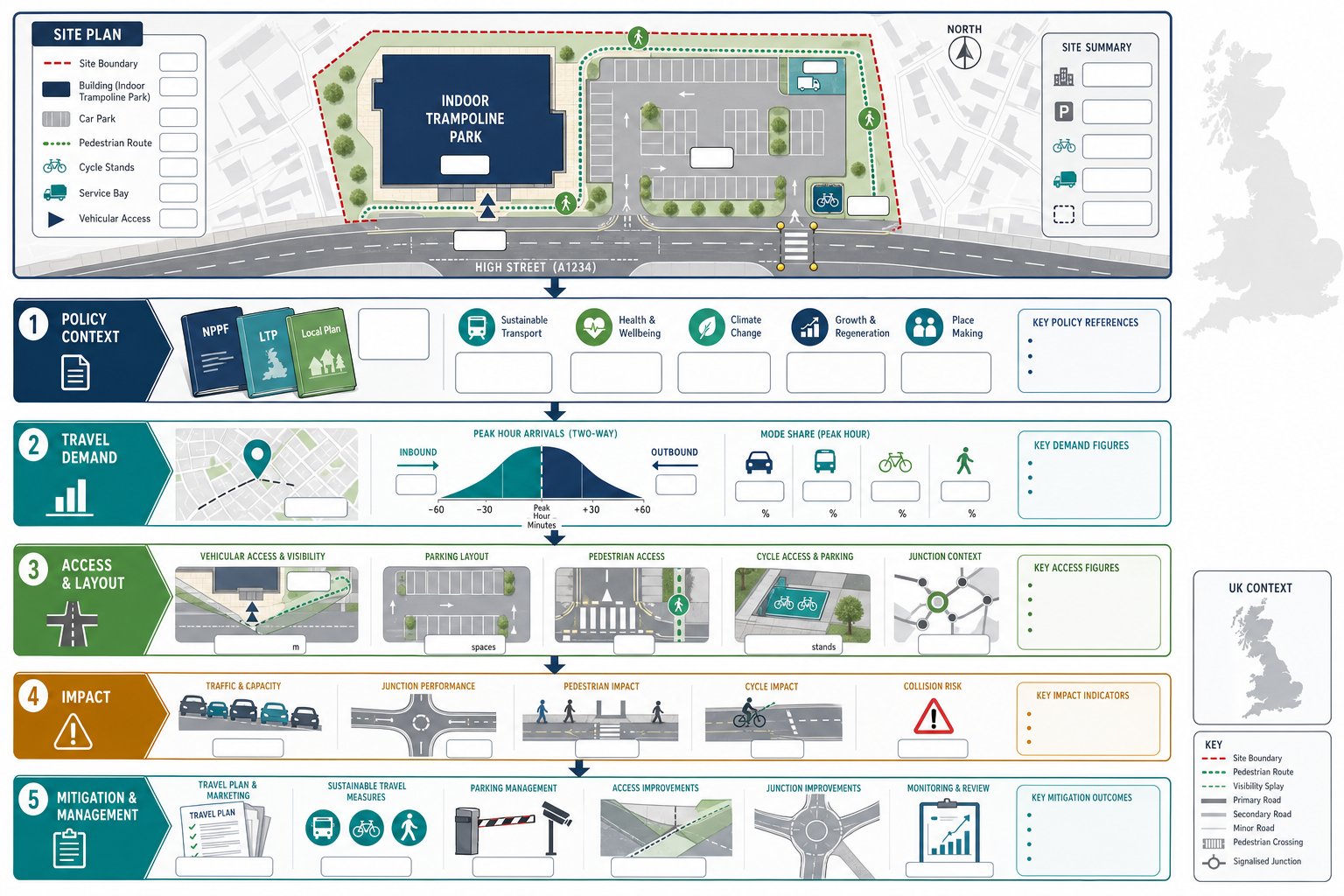
    Infographic showing how Bradford planning policy shapes transport assessment requirements.

    Bradford’s transport requirements are shaped by both local and wider policy layers. At the local level, Bradford Metropolitan District Council acts as planning and highway authority, so proposals need to respond to its development plan policies, parking expectations, access standards and place-specific concerns. At the wider level, schemes also sit within West Yorkshire transport priorities around bus reliability, active travel, connectivity and safer movement.

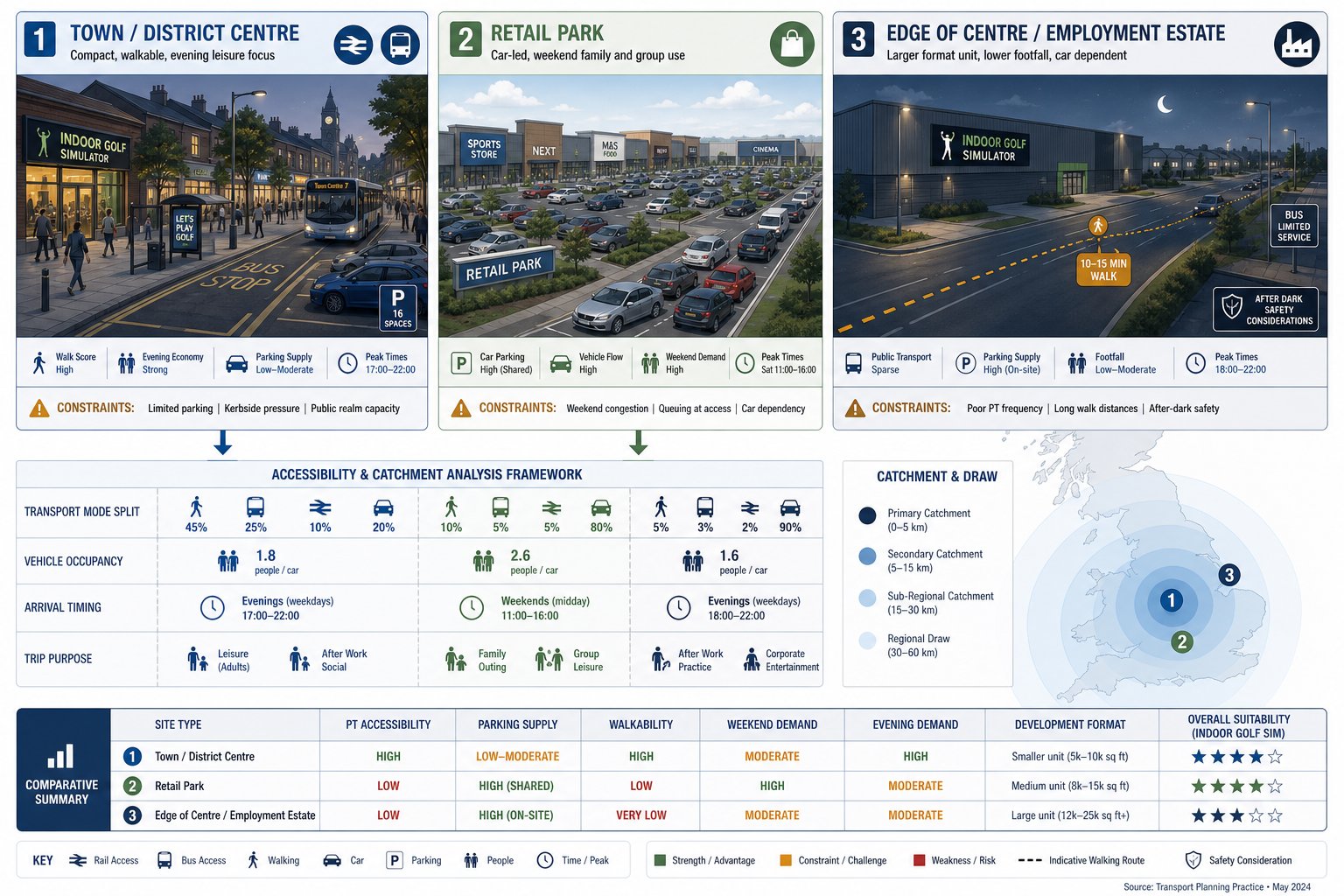
    That means a traffic report for Bradford cannot be entirely generic. A technically correct transport statement still falls short if it does not speak to the local context. For example, a site near a district centre may need more emphasis on walking catchments, bus accessibility and realistic car parking demand. A school expansion may require a sharper focus on drop-off behaviour, crossing points and peak-time safety. An employment scheme near a strategic route may need more detailed junction modelling and servicing analysis.

    National guidance still matters, of course. The National Planning Policy Framework supports development that offers safe and suitable access for all users, and it expects significant impacts on the transport network to be addressed. But local interpretation is where many applications succeed or struggle. Bradford officers will typically want evidence proportionate to the development, but proportionate does not mean superficial.

    This is why scoping is so important. We usually advise agreeing the scope of assessment early, particularly where there is any uncertainty over thresholds, study area, collision data, or modelling requirements. Work grounded in Highway And Traffic Engineering principles tends to land better when it clearly reflects local roads, local movement patterns and the practical realities of Bradford streets rather than abstract textbook assumptions.

    When A Transport Assessment Or Transport Statement Is Needed

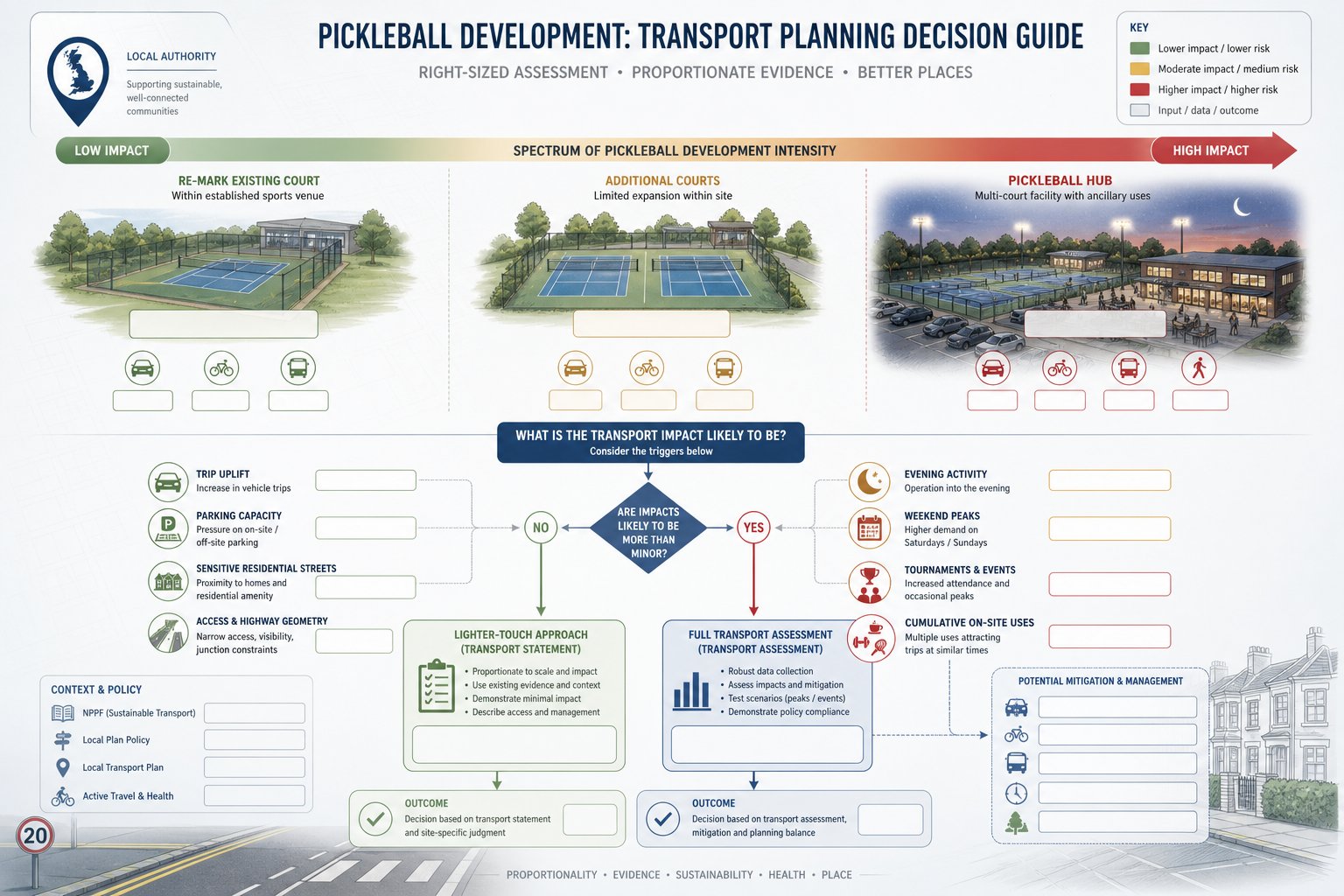
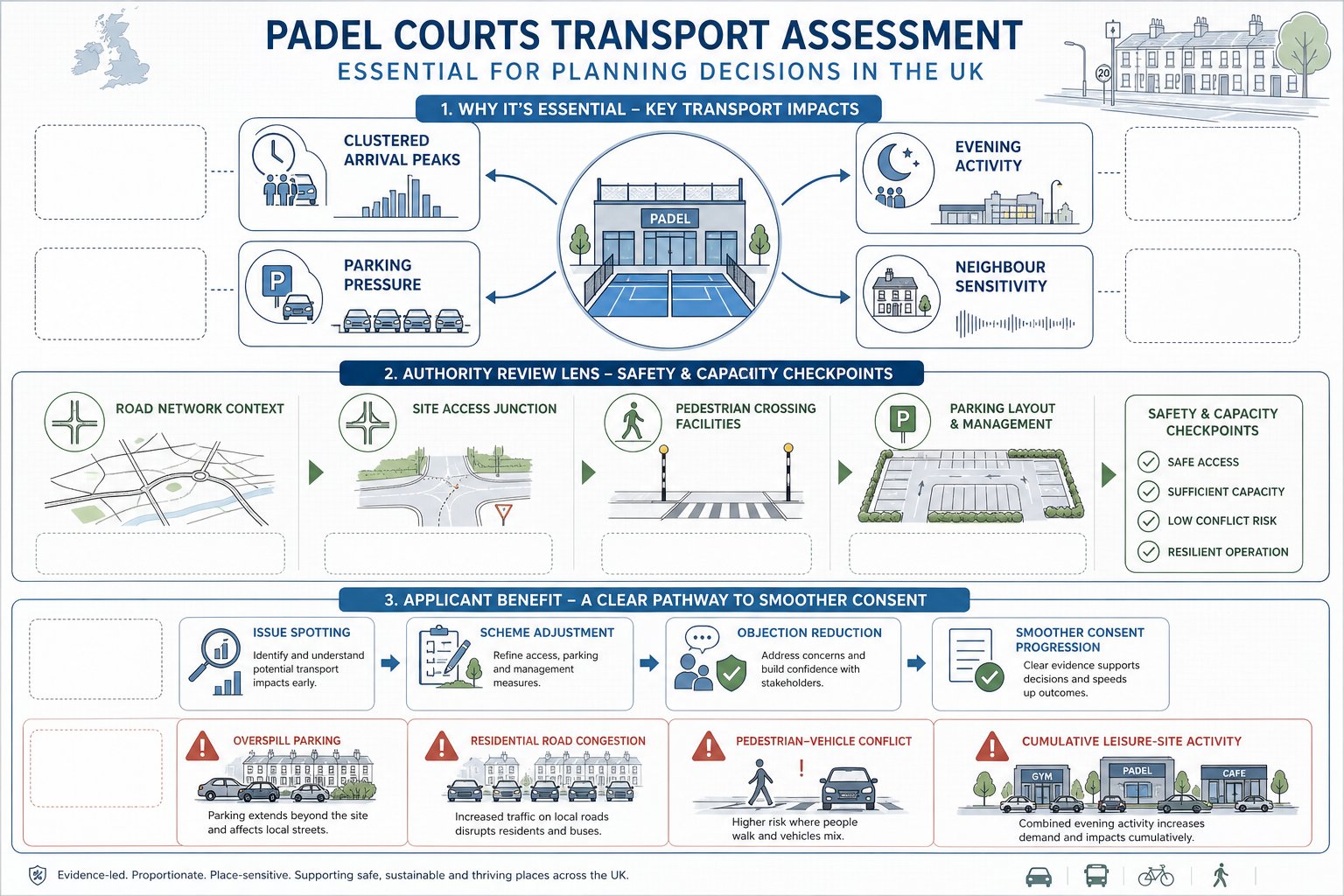
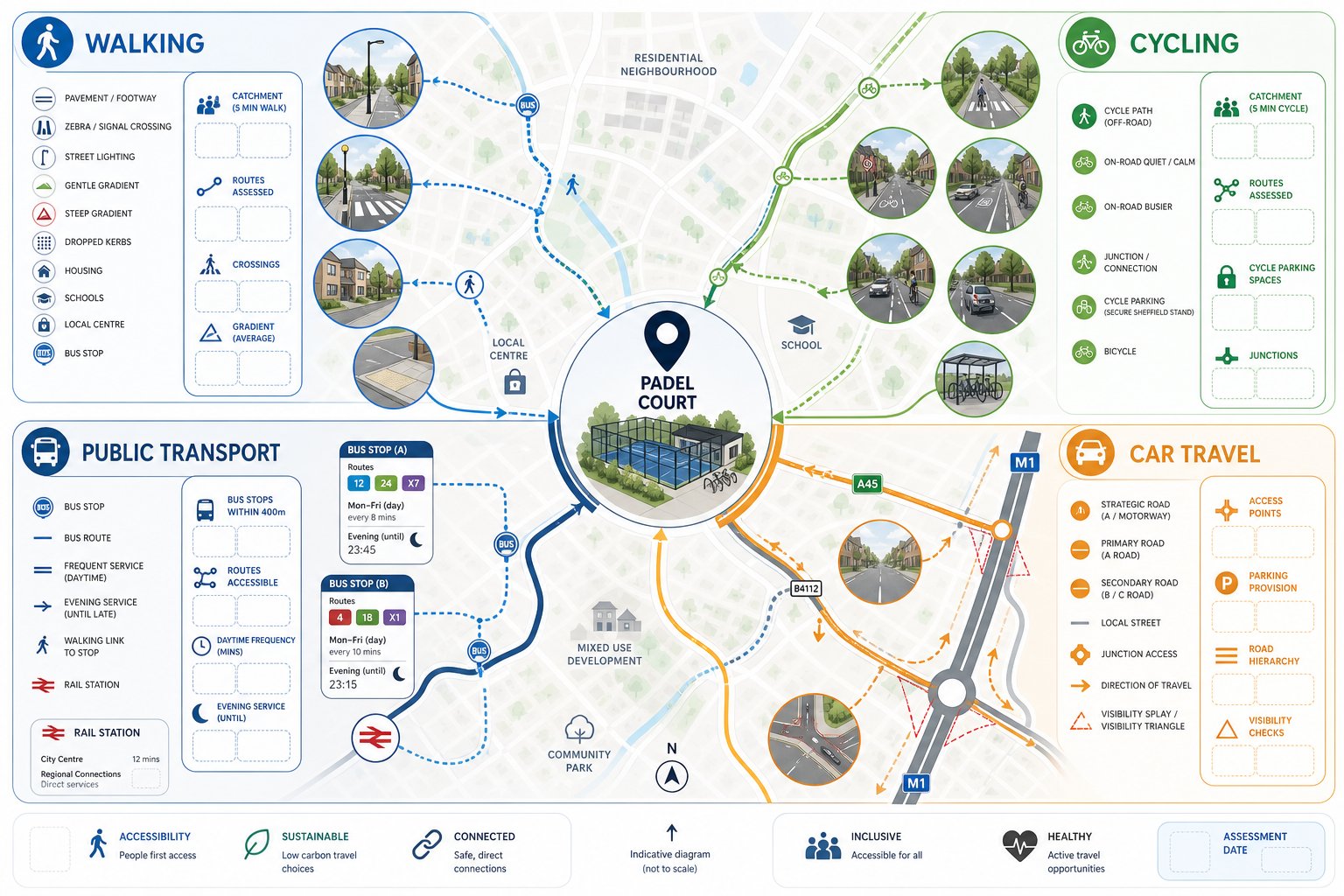
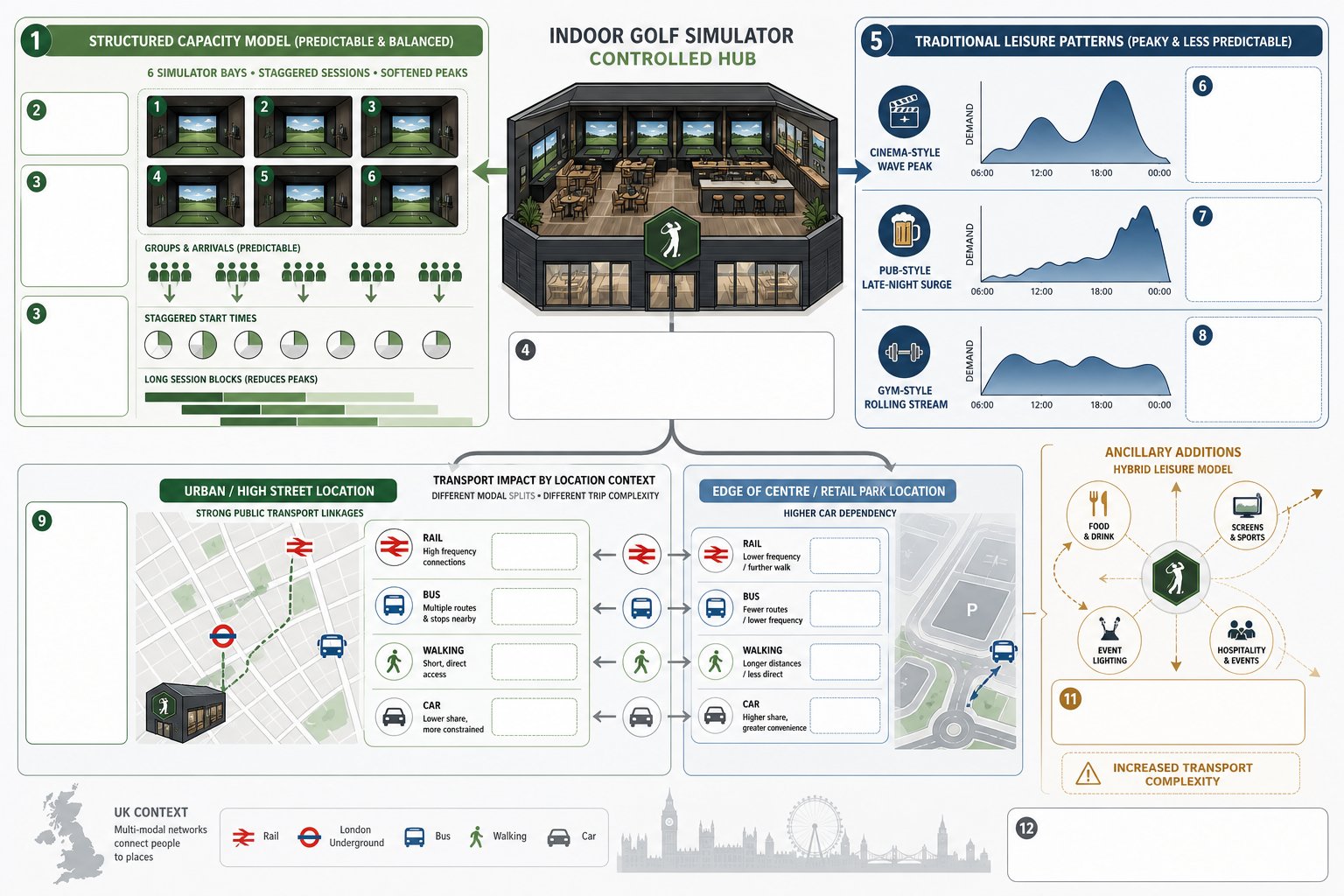
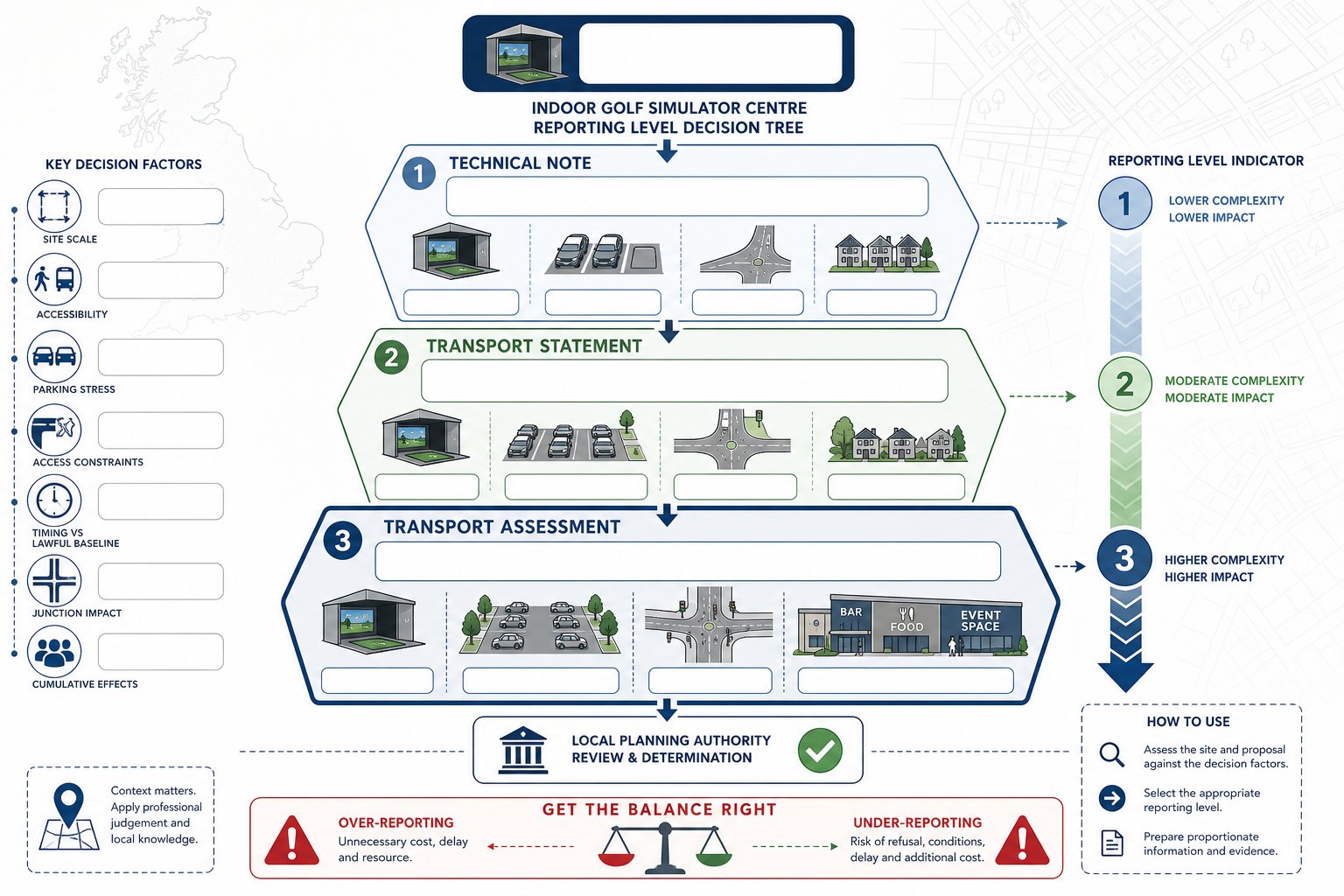
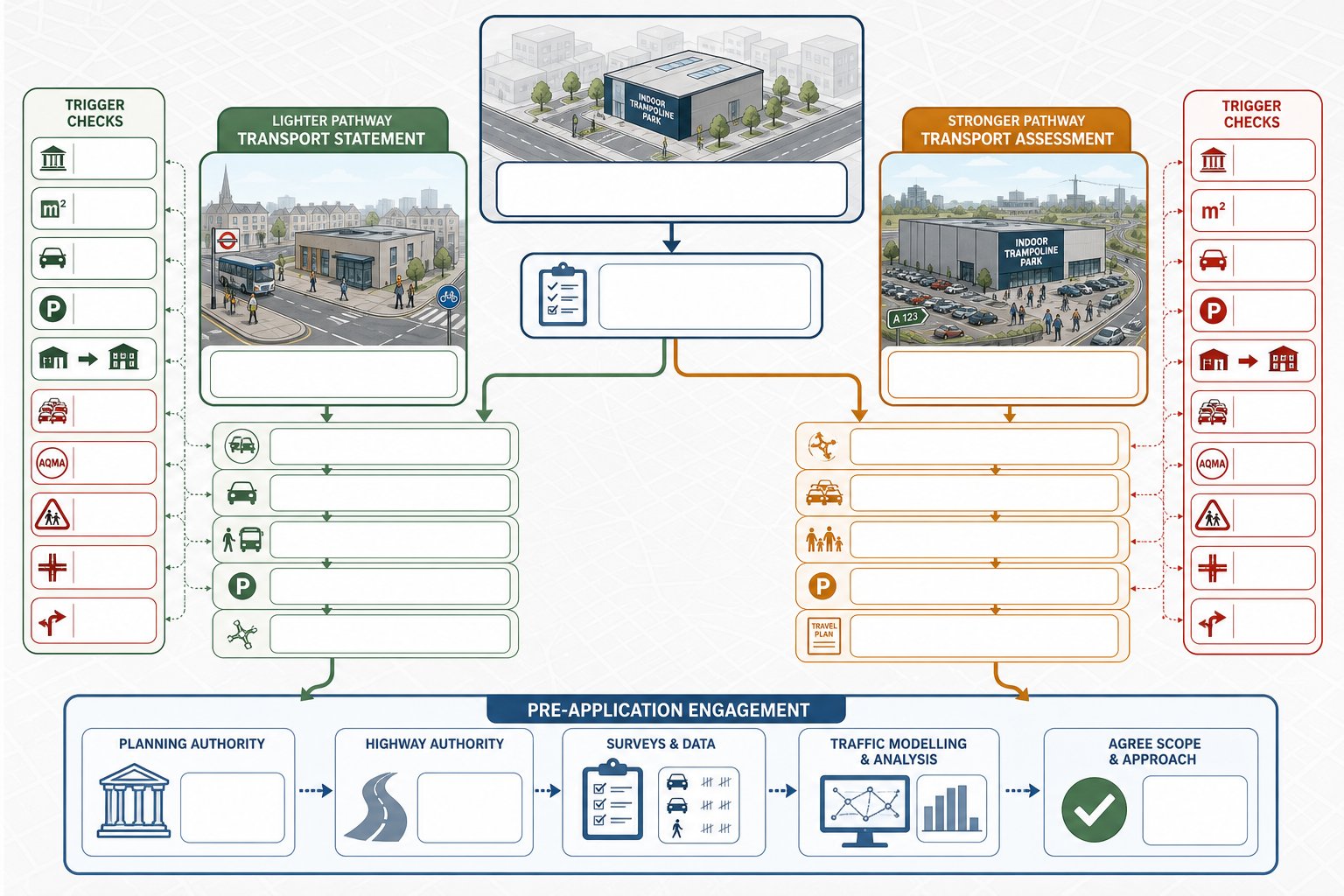
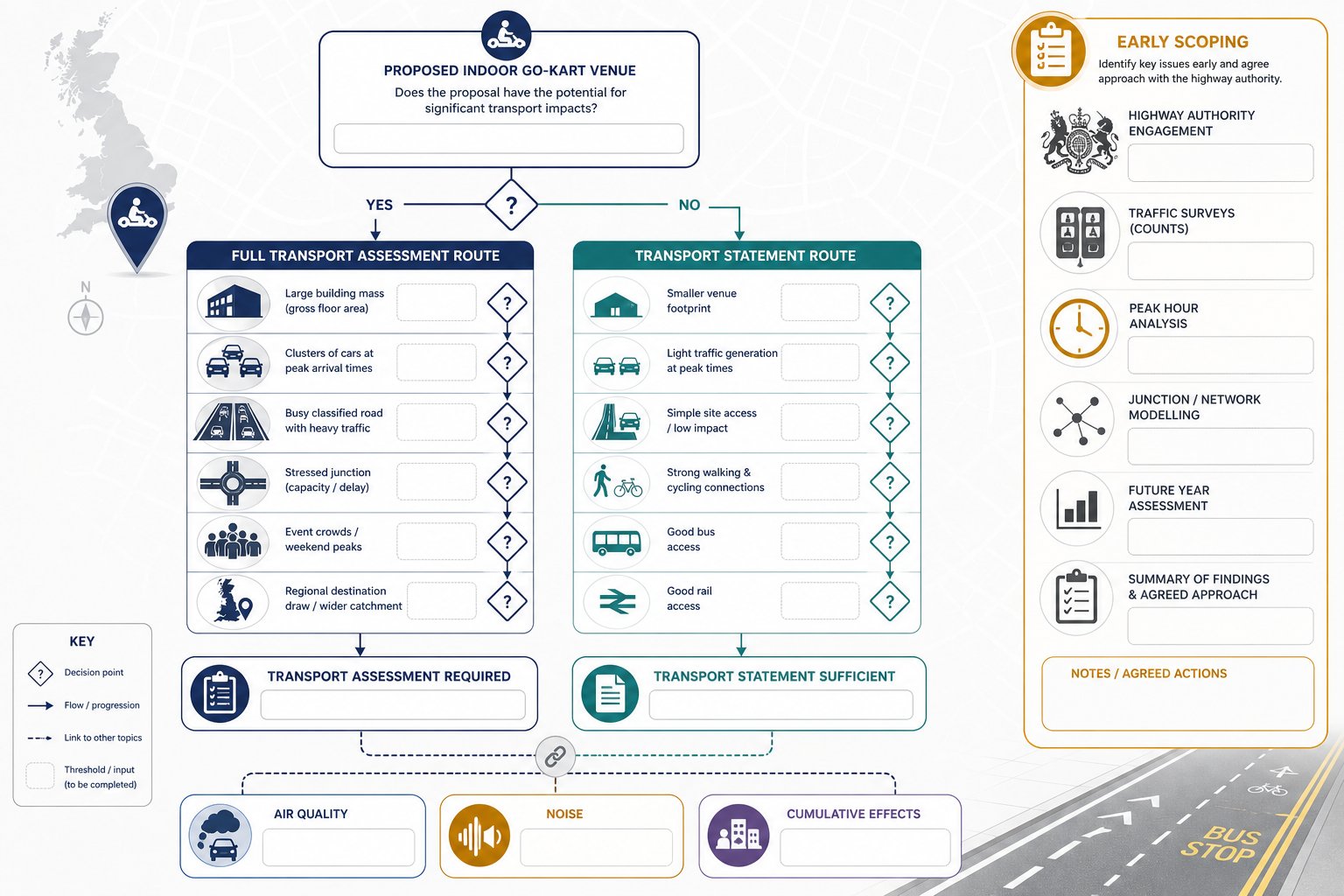
    decision infographic showing when transport studies are needed for Bradford developments

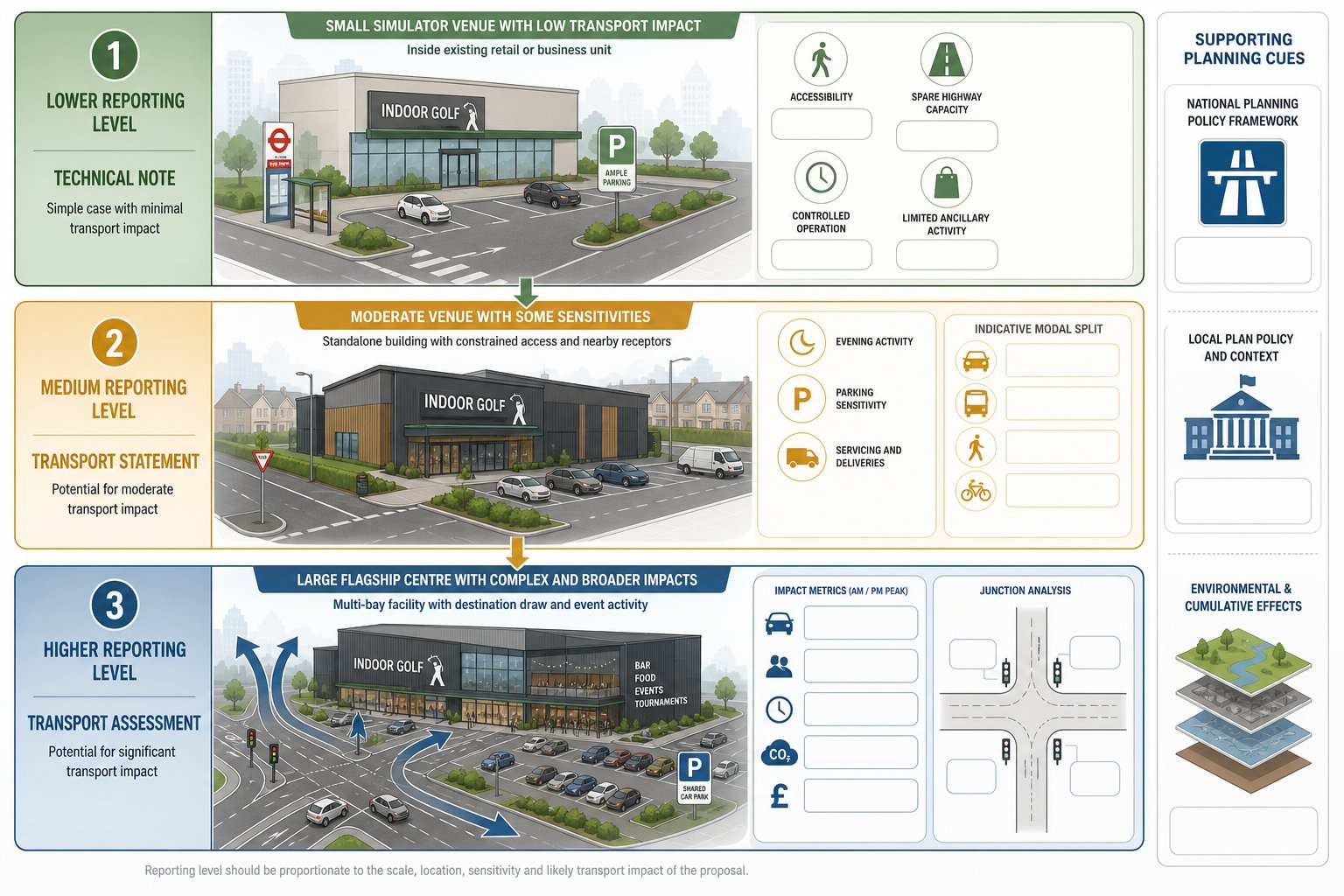
    Not every planning application in Bradford needs a full Transport Assessment (TA), but many need more than a brief note saying the impact will be low. The usual question is proportionality: how much transport evidence is needed for the likely scale and intensity of the proposal?

    Broadly, a Transport Assessment is used for larger or more traffic-intensive development. That can include substantial housing sites, retail proposals, employment uses, roadside food and beverage schemes, mixed-use developments and other applications where trip generation could materially affect the surrounding network. A Transport Statement is generally used for smaller proposals where impacts are more limited but still need structured evidence.
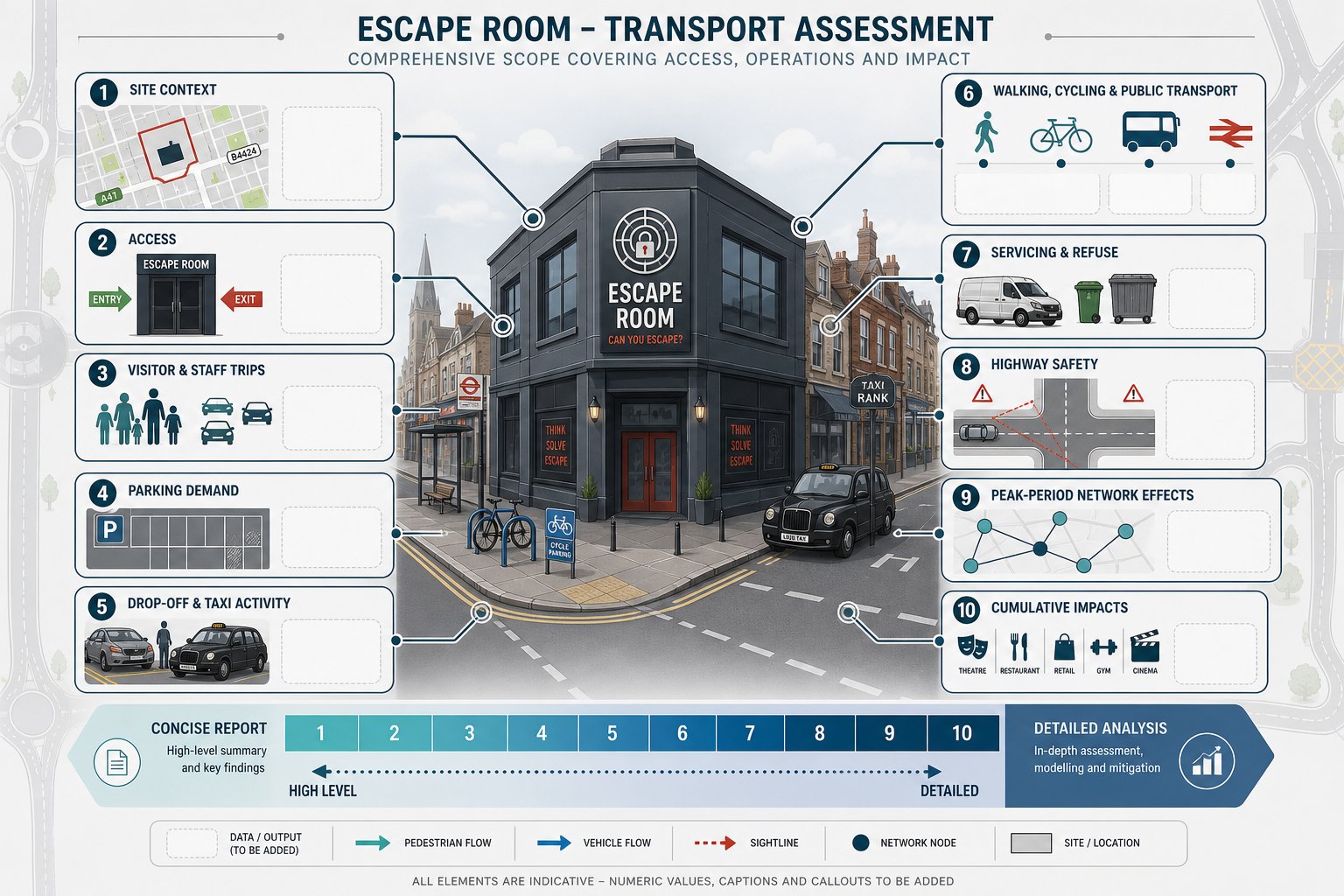
    The line between the two is not always fixed by a single universal threshold. In reality, Bradford’s highways officers may consider land use, local sensitivity, road conditions, nearby junction stress, site constraints and whether the proposal involves vulnerable users. A small scheme on a difficult site can generate more scrutiny than a larger one in a less constrained location.

    Pre-application discussion is often the sensible route. If the scope is agreed early, the planning team can avoid overproducing analysis in one area while missing something more important elsewhere. And where the application also needs a Travel Plan, access review or parking strategy, it is better to establish that upfront rather than retrofit it after consultation.

    For broader context, Traffic Engineering and Transportation work often overlaps with land use planning much earlier than many project teams expect. That early coordination usually saves time later.

    Typical Triggers For Planning Applications

    Typical triggers include high trip-generating uses such as supermarkets, drive-thrus, roadside retail, trade counters and leisure formats with sharp peak-hour demand. Housing schemes can also trigger a TA or TS, particularly once they move beyond a modest scale or are located on roads with existing congestion, parking stress or limited pedestrian infrastructure.

    Another common trigger is a constrained access arrangement. If visibility is tight, gradients are awkward, turning space is limited or servicing needs to be carefully managed, transport input is usually expected even where traffic generation itself is not exceptional. Similarly, a site with known collision history or one located close to schools, healthcare facilities or care uses will often attract a more detailed highways review.

    Change-of-use applications are regularly underestimated. A building may already be in use, but if the proposed use materially changes trip patterns, peak timing, servicing demand or parking accumulation, the authority may still require transport evidence. We often see this with former office, industrial or community premises proposed for retail, education, food-led or health-related uses.

    And then there’s local context: if neighbours already raise concerns about rat-running, school gate parking or blocked accesses, Bradford officers are unlikely to accept a light-touch submission without supporting analysis. In that sense, transport reporting is not just about size. It’s about risk, sensitivity and whether the development changes how the site interacts with the highway network.
    What A Bradford Traffic Engineer Will Usually Assess

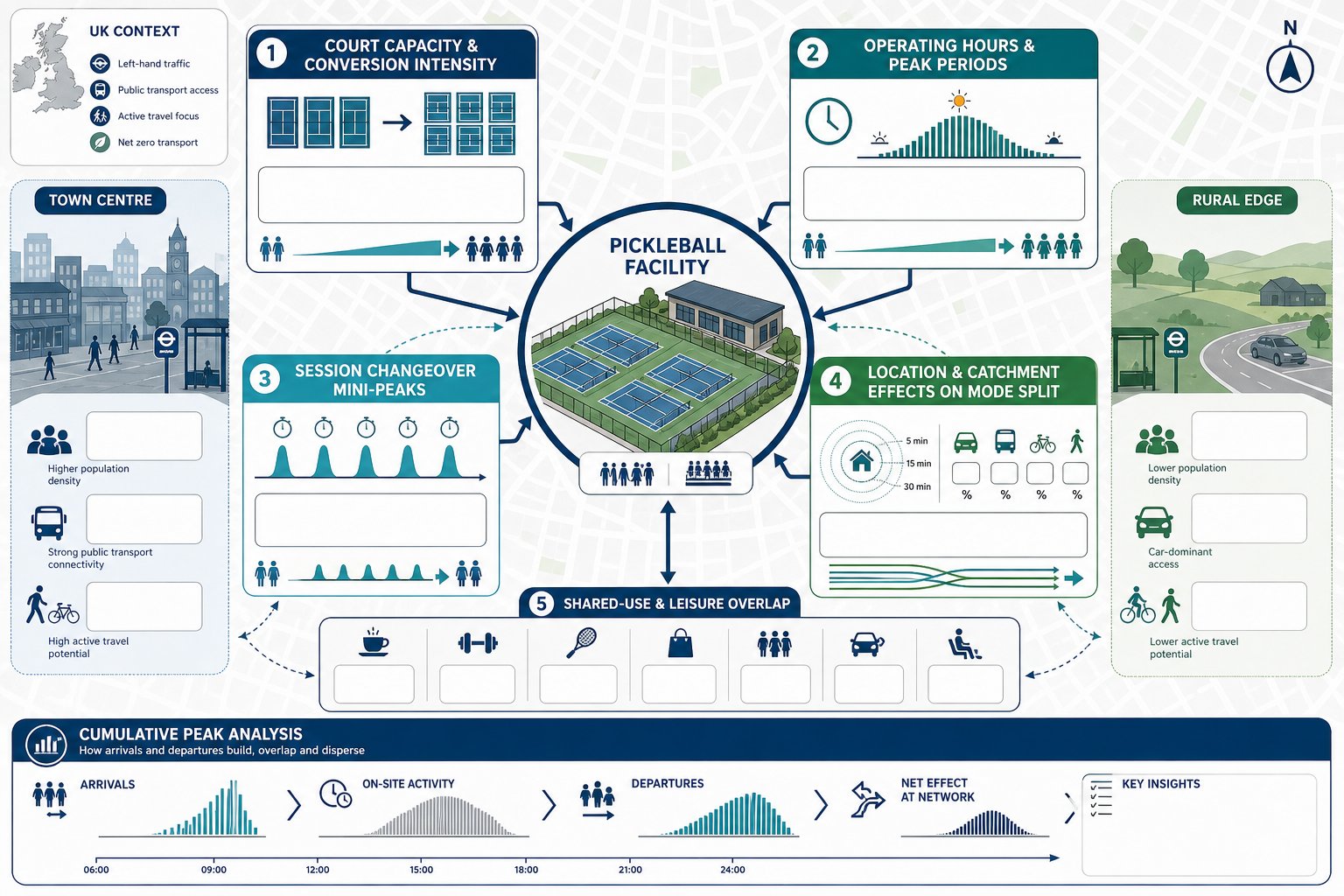
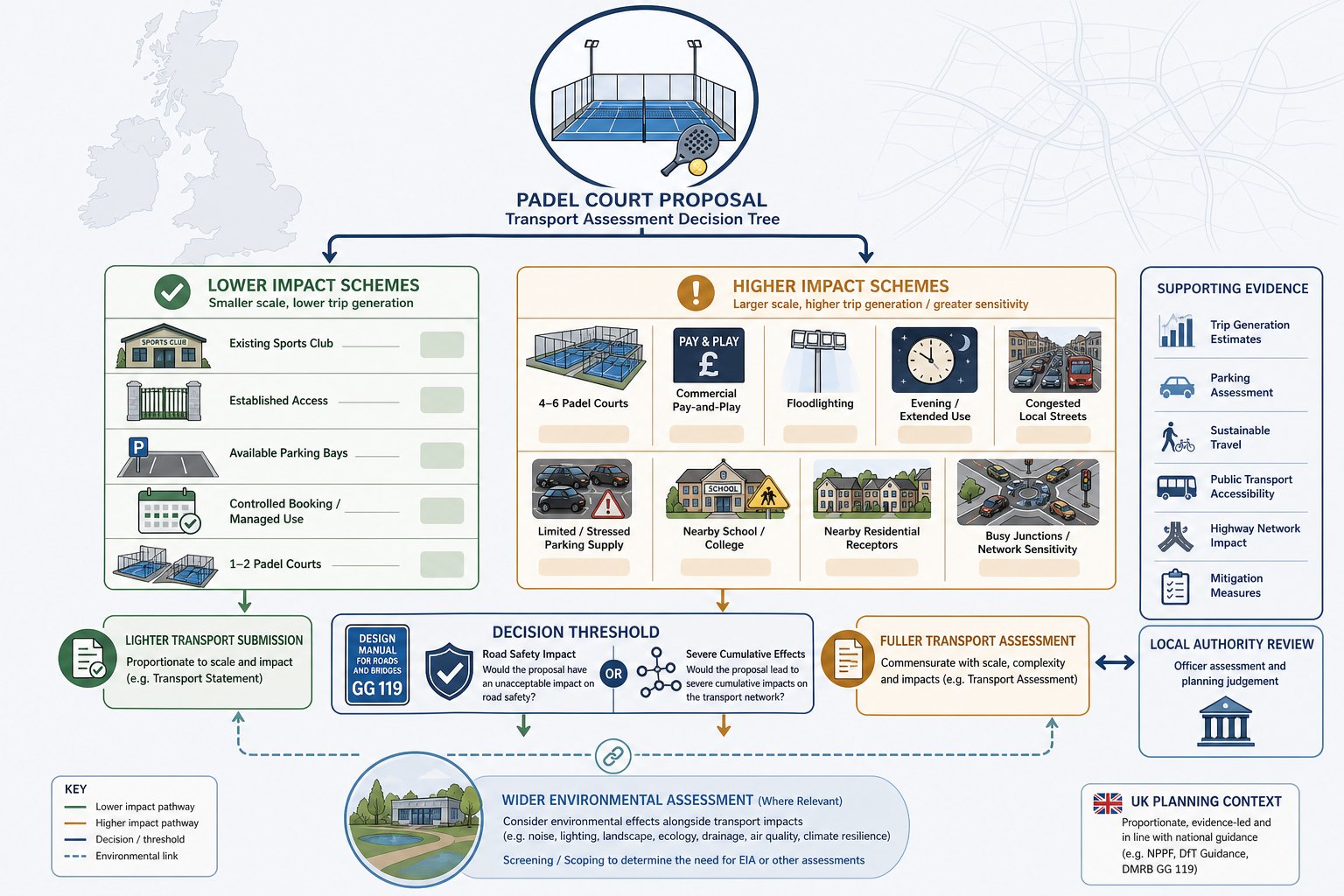
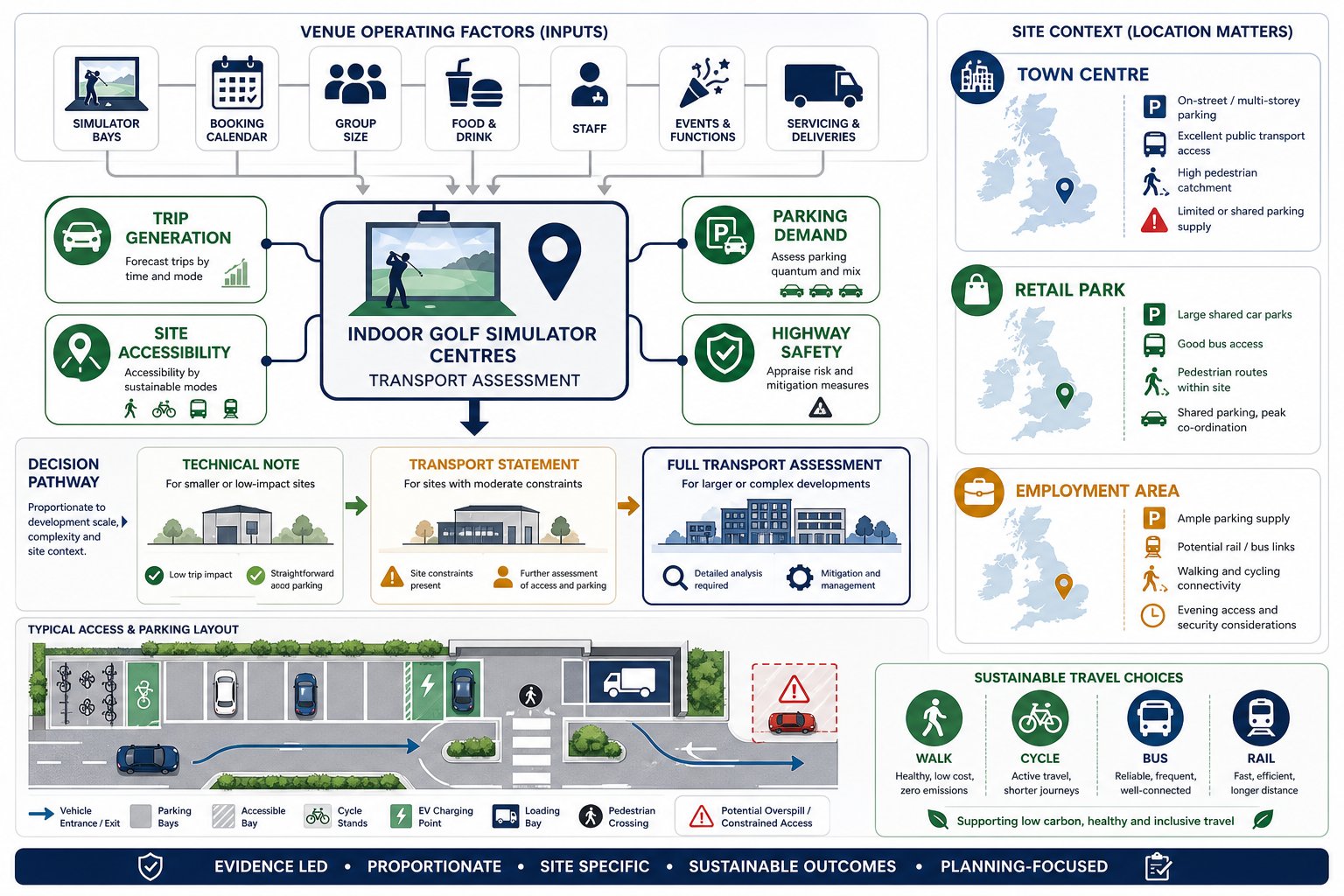
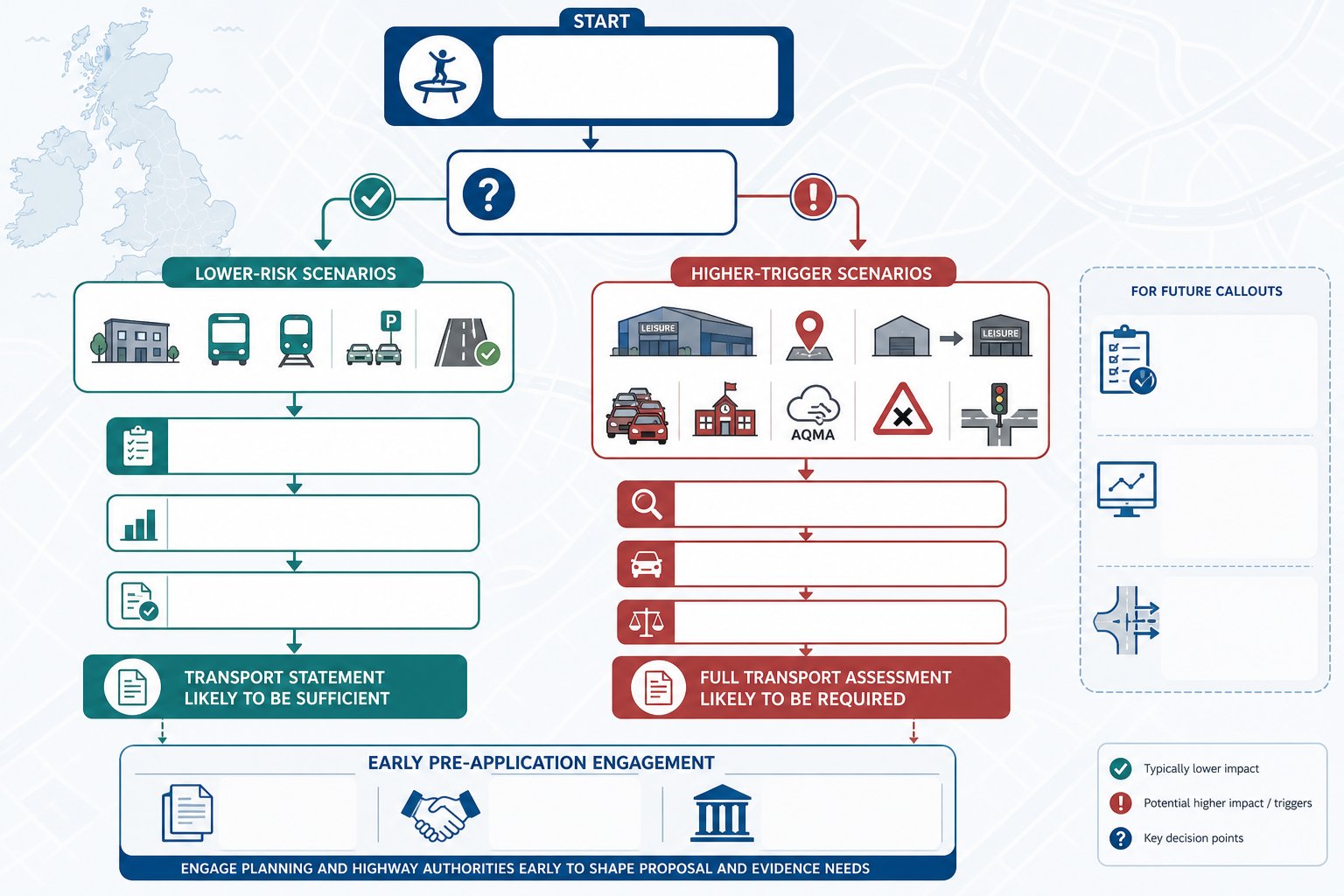
    Infographic of key traffic engineering checks for a Bradford development site.

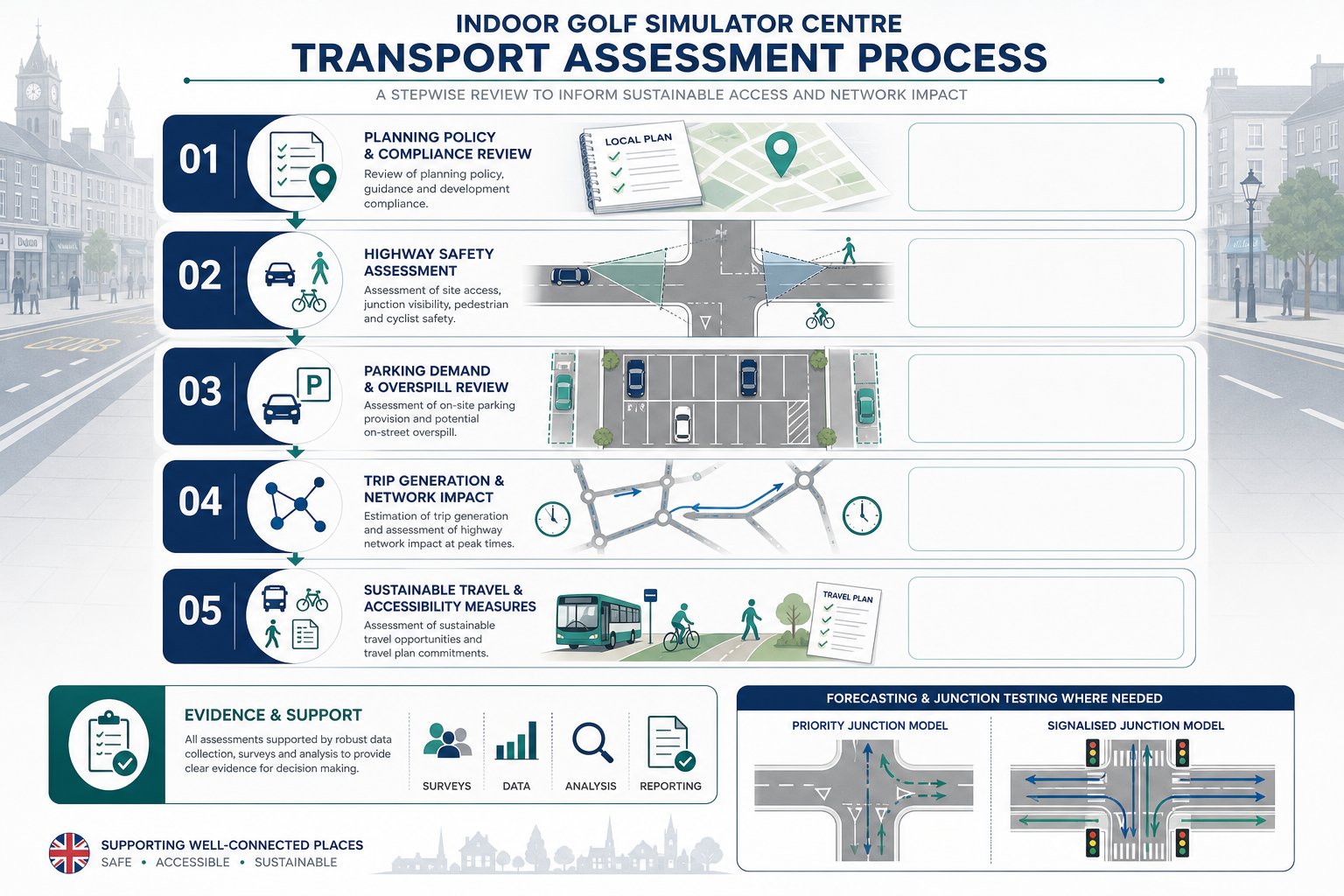
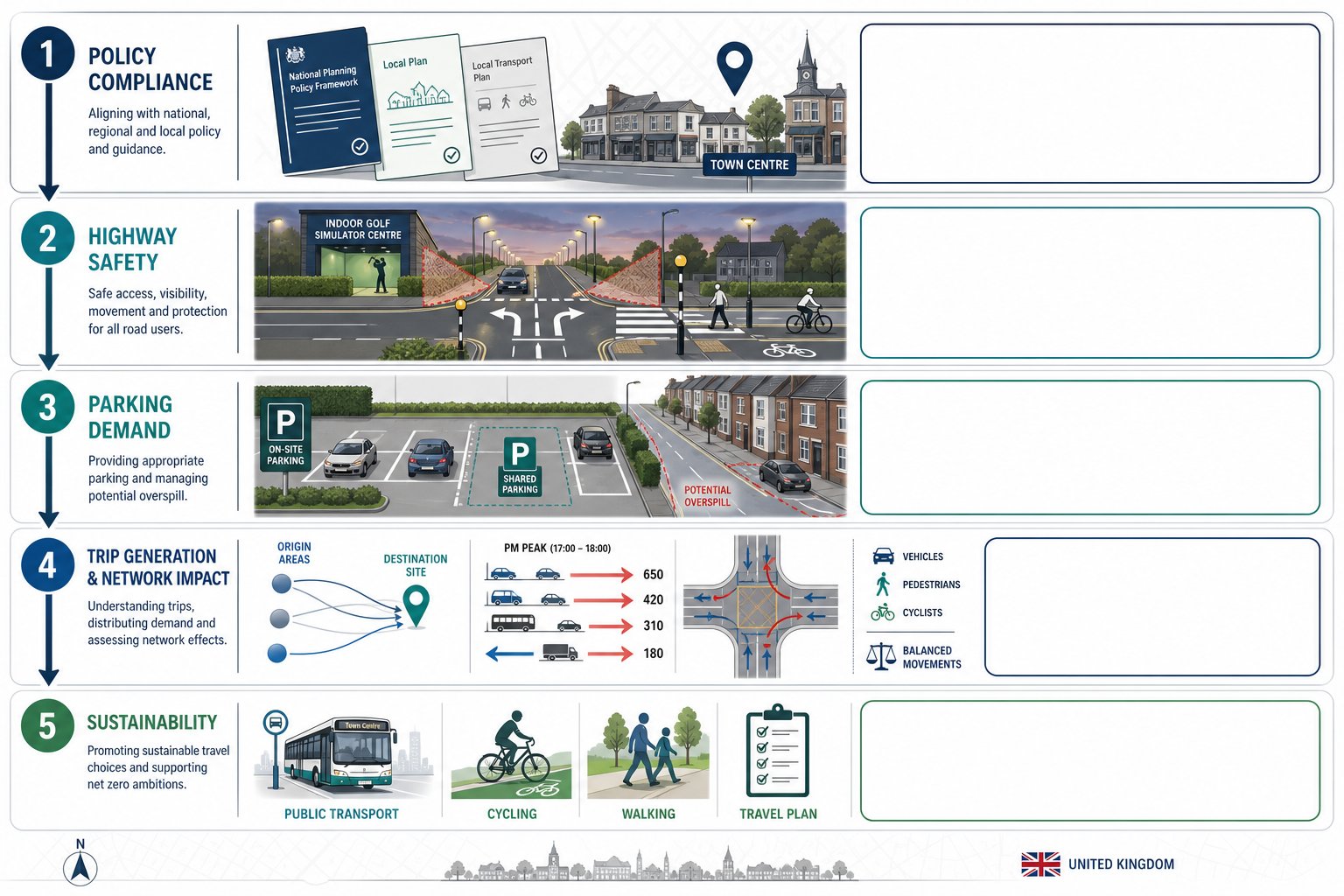
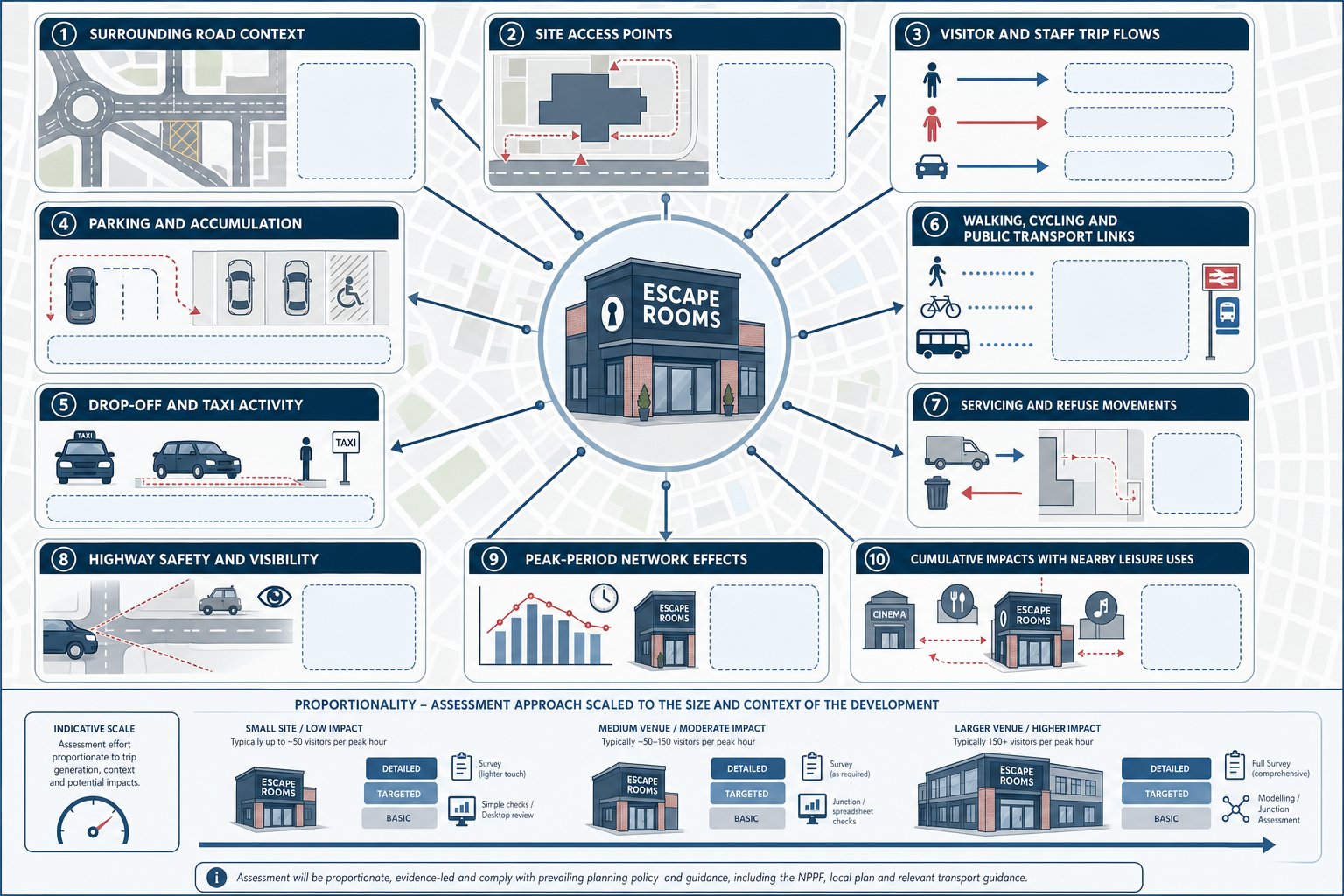
    A Bradford traffic engineer will usually assess the proposal from several angles at once: how many trips it creates, where those trips are likely to go, whether nearby junctions can cope, whether vehicles can get in and out safely, whether parking and servicing are realistic, and whether the proposal supports sustainable travel.

    That mix is important because planning decisions are rarely made on one metric alone. A junction might technically operate within capacity, but if servicing blocks manoeuvring space or pedestrian access is poor, highways concerns can remain. Equally, a site may have acceptable access visibility, but if parking is underprovided or badly arranged, displacement onto surrounding roads may become the real issue.

    The right assessment is hence integrated rather than siloed. We usually combine observed local conditions, policy review, trip forecasting, swept path testing, road safety evidence and design checks into one narrative that answers the authority’s likely questions before they are formally asked. On stronger submissions, the technical work also helps the rest of the consultant team. Architects refine layout. Planners sharpen policy justification. Lawyers and land teams understand where obligations or off-site works may arise.

    A lot of that comes down to clarity. Officers do not need pages of unnecessary theory: they need robust evidence tied to the actual Bradford site.

    Trip Generation, Junction Capacity, And Highway Impact

    Trip generation normally starts with establishing an evidence base for likely arrivals and departures by time period and mode. In UK practice, this often means using TRICS or comparable data sources, then sense-checking the findings against local context, existing travel patterns and the proposed development mix. That “sense-checking” matters more than many people think. A suburban infill housing site in Bradford should not be treated as if it behaves like a city-centre apartment block in another region.

    Once trip rates are established, we look at distribution and assignment: where vehicles are likely to route on the surrounding network. The assessment area then follows from that. Key junctions are tested using tools such as PICADY, ARCADY, LINSIG or, for more complex cases, microsimulation platforms including VISSIM. The purpose is straightforward: estimate queues, delays, reserve capacity and whether the development creates a material adverse effect.
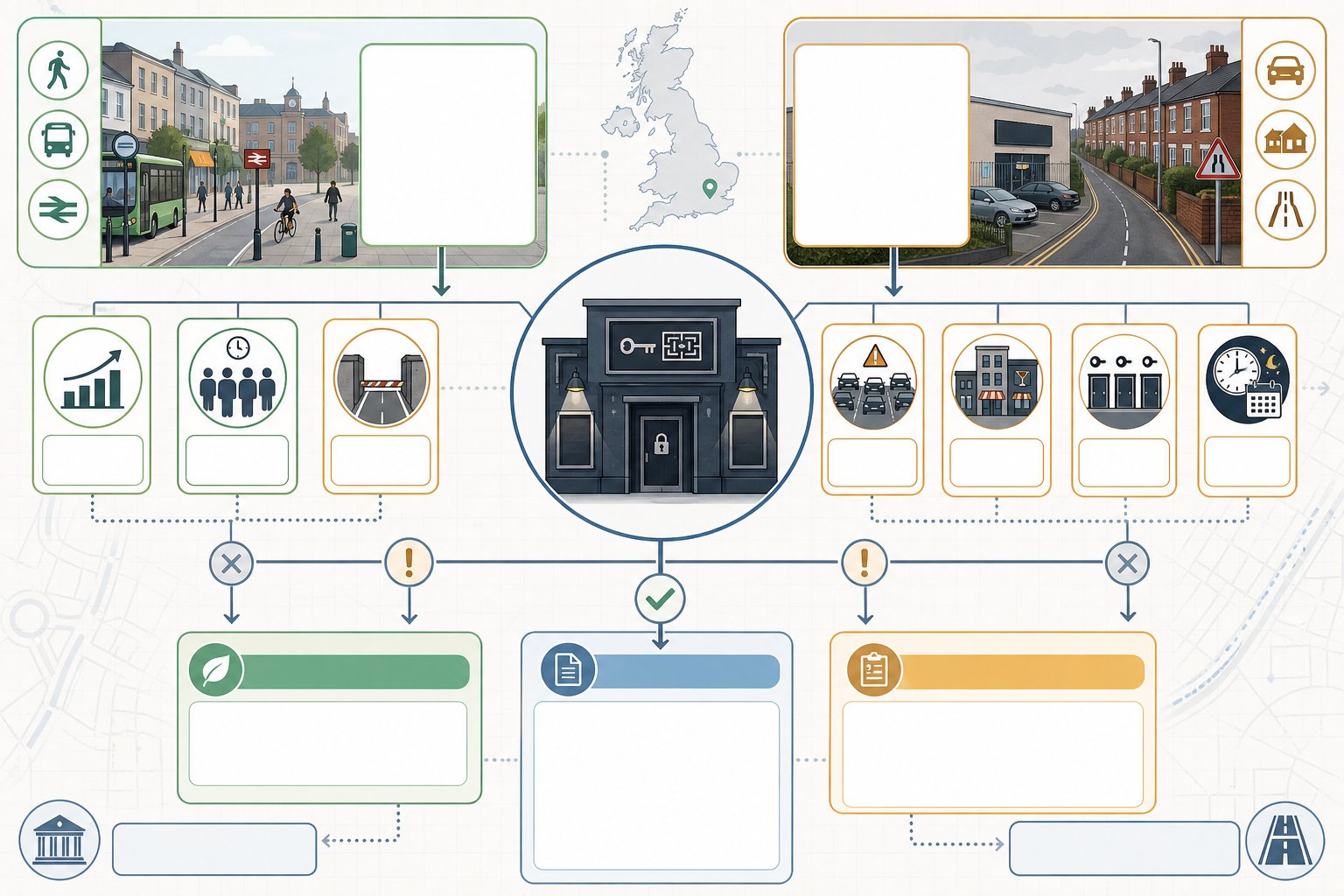
    But numbers alone are not enough. The authority will also want to know whether any impact can be mitigated. Sometimes the answer is a ghost island right-turn lane, signal adjustment, improved lane discipline or a revised access arrangement. Sometimes it is operational rather than geometric, such as delivery timing or Travel Plan measures. On employment and retail projects, Commercial Traffic Engineering analysis often becomes central because peak trading patterns and servicing demand can affect junction performance in ways headline daily trip totals do not capture.

    Parking, Servicing, Access, And Road Safety Considerations

    Parking is where many seemingly straightforward applications become difficult. Bradford officers will usually expect parking provision to reflect local standards, operational need and the site’s accessibility by walking, cycling and public transport. Underproviding spaces without a credible justification can push overspill onto nearby streets. Overproviding them can undermine layout quality and sustainable travel arguments. The answer is rarely “as many spaces as we can fit.”

    That is why a proper parking strategy traffic review is useful. We assess car parking, disabled bays, cycle parking, electric vehicle provision, loading areas, tracking for refuse and service vehicles, and whether the arrangement actually works day to day rather than merely fitting on a drawing.

    Access design is equally critical. Visibility splays, carriageway width, radii, gradients, pedestrian crossing desire lines and internal turning all need to be checked against current standards and site conditions. A weak point here can unravel an otherwise acceptable proposal, which is why access design highway principles should be addressed early in concept design.

    Road safety review brings another layer. We consider personal injury collision records, speed environment, likely conflict points, vulnerable road users and whether mitigation such as lining changes, crossing upgrades, traffic calming or visibility improvements may be required. In Bradford, especially around schools, local centres and busy distributor routes, these details often carry real weight in the planning balance.

    Common Project Types That Need Traffic Engineering Input

    Infographic of Bradford development types needing traffic engineering input.

    Traffic engineering input is needed across a wider range of planning applications than many clients first assume. Yes, large strategic developments obviously require it. But plenty of smaller or mid-sized schemes in Bradford also need transport evidence because their local impact is concentrated, sensitive or operationally awkward.

    The common thread is not simply scale. It is whether the proposed development changes how people, vehicles and service activity interact with the local highway network. If the answer is yes, a traffic engineer usually has a role to play.
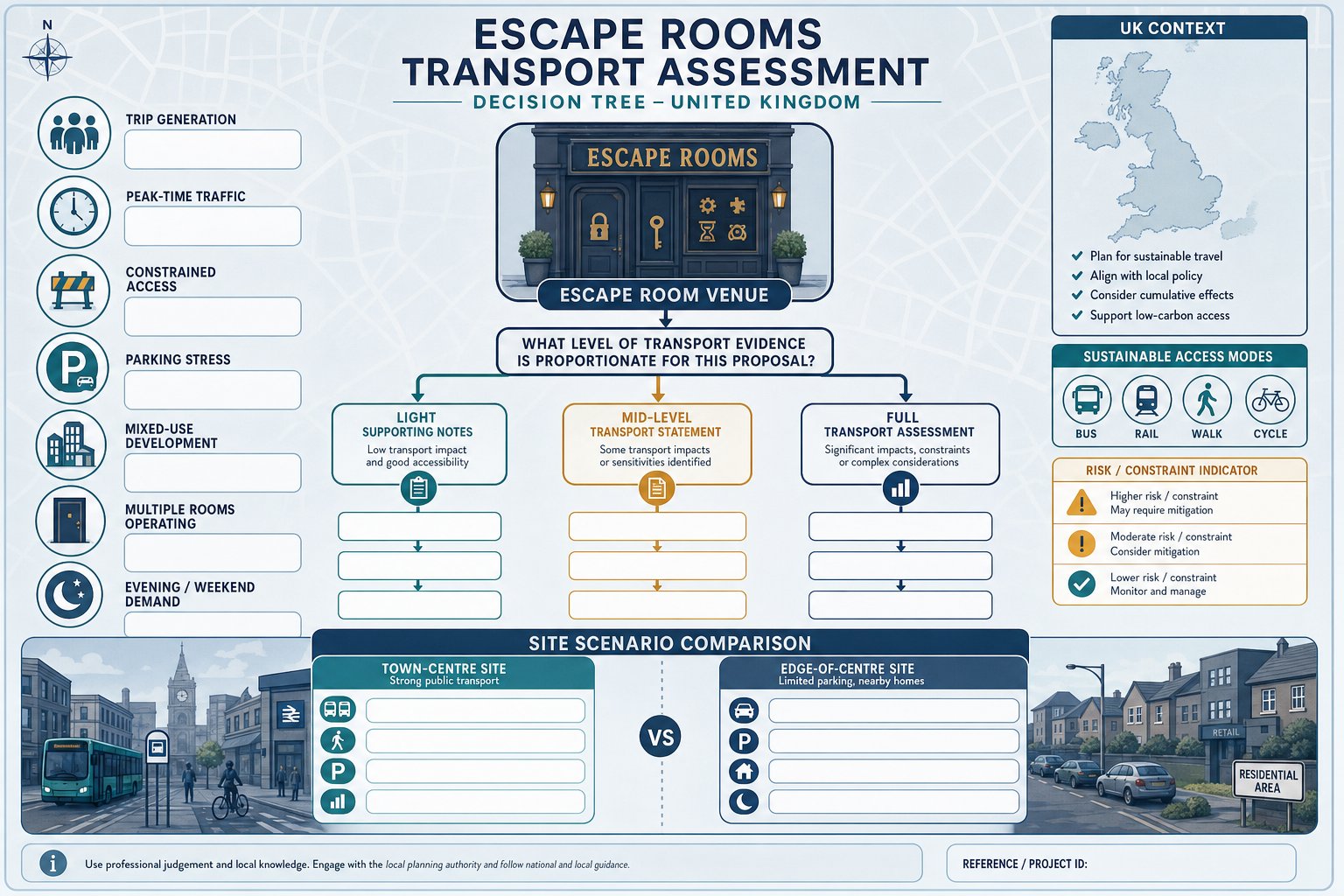
    Residential, Mixed-Use, And Commercial Developments

    Residential schemes are one of the most frequent triggers. Medium-sized housing developments, apartment proposals, extra care schemes and mixed-tenure layouts all raise questions around trip rates, parking demand, estate road design, refuse tracking and access visibility. On edge-of-settlement or suburban sites, the local road network may already be under pressure at school and commuter peaks, so junction testing becomes important quickly.

    Mixed-use development adds another level of complexity because different land uses peak at different times. A scheme combining residential, commercial floorspace and local retail may benefit from internal trip capture, but it can also create overlapping parking and servicing demand. Those interactions need to be explained properly, not assumed away.

    Commercial proposals in Bradford often draw detailed scrutiny where they sit on strategic corridors, near junctions with limited reserve capacity, or in areas where delivery traffic and customer turnover are both high. Business parks, industrial units, trade counters, logistics premises and roadside retail formats each behave differently. Good reporting reflects that. More general Traffic Engineering: Your Complete understanding is useful here, but project-specific evidence is what carries weight in a live planning application.

    Schools, Healthcare Sites, And Change-Of-Use Applications

    Schools and healthcare sites can be among the most sensitive applications from a highways perspective, even where total daily trip numbers are not huge. The issue is concentration. School arrivals and departures compress demand into short windows, often on streets already affected by informal parking, turning movements, crossing activity and neighbour concerns. A school expansion may hence need more detailed analysis than a larger residential proposal elsewhere.

    Healthcare uses bring their own issues: patient arrivals, staff shift changes, ambulance or service access, blue badge provision, pharmacy collection patterns and a need for clear wayfinding on site. GP surgeries, clinics and health centres frequently generate parking stress if layouts are not carefully matched to operational reality.

    Change-of-use applications are another category where transport input is often underestimated. A lawful existing use does not automatically mean a proposed new use is neutral from a traffic perspective. A former office converted to a nursery, clinic, food outlet or place of assembly may alter peak periods, dwell times, servicing frequency and parking behaviour substantially. We often advise treating these schemes cautiously, especially where the surrounding streets are already sensitive to congestion or informal parking. In practice, one of the quickest ways to attract avoidable objections is to assume that because a building already exists, transport evidence will not matter.

    The Process Of Preparing A Transport Report For Bradford

    The process normally starts with scoping. Before counts are commissioned or modelling assumptions are fixed, we establish what Bradford Council is likely to require: the likely form of report, the study area, relevant junctions, parking issues, sustainable travel expectations and whether a Travel Plan or road safety review should sit alongside the main submission. Getting this right early avoids the classic planning problem of producing too much of the wrong evidence.

    Next comes data collection. Depending on the project, that may include classified turning counts, queue length observations, speed surveys, collision records, site visits, parking beat surveys, servicing observations and a review of walking, cycling and bus accessibility. The point is to understand how the network actually works, not how we assume it works from mapping alone.

    We then assess trip generation, trip distribution and network assignment, followed by any required junction modelling. If access arrangements are being created or altered, geometry and swept path analysis are tested in parallel. Parking layouts, cycle provision, loading areas and internal circulation are checked against local guidance and operational practicality. This stage often involves back-and-forth with the design team, because the strongest applications come from transport and layout being developed together rather than in separate silos.

    Where issues are identified, mitigation is considered. That might include revised access design, localised highway improvements, Travel Plan measures, operational controls, parking refinement or pedestrian upgrades. We then bring the work together into a concise Transport Assessment or Transport Statement that addresses likely officer questions directly. At firms with long-standing local authority experience, including teams with more than three decades in the field, the real value is often speed plus precision: reports that are proportionate, locally aware and prepared in a way that supports decision-making rather than burying it under unnecessary technical padding.

    Choosing The Right Traffic Engineer For Your Application

    Choosing the right consultant is not just about who can produce a report fastest, though turnaround matters. It is about who understands how Bradford applications are actually reviewed and what level of evidence is likely to resolve concerns before they escalate.

    We would start with local and regional experience. A consultant who regularly works in Bradford and West Yorkshire is more likely to understand local parking expectations, common officer concerns, strategic movement priorities and the sort of mitigation that is realistic to secure. That local grounding often shows up in subtle ways: better scoping, more credible assumptions, and reports that answer practical planning questions rather than relying on generic boilerplate.

    Technical capability matters too. The right traffic engineer should be comfortable with TA and TS preparation, junction modelling, access review, swept path analysis, road safety assessment and Travel Plan work. But software knowledge alone is not enough. What clients usually need is judgement: when to keep the analysis proportionate, when to push for more evidence, and how to explain conclusions clearly enough that planners, architects, lawyers and committee members can all follow them.
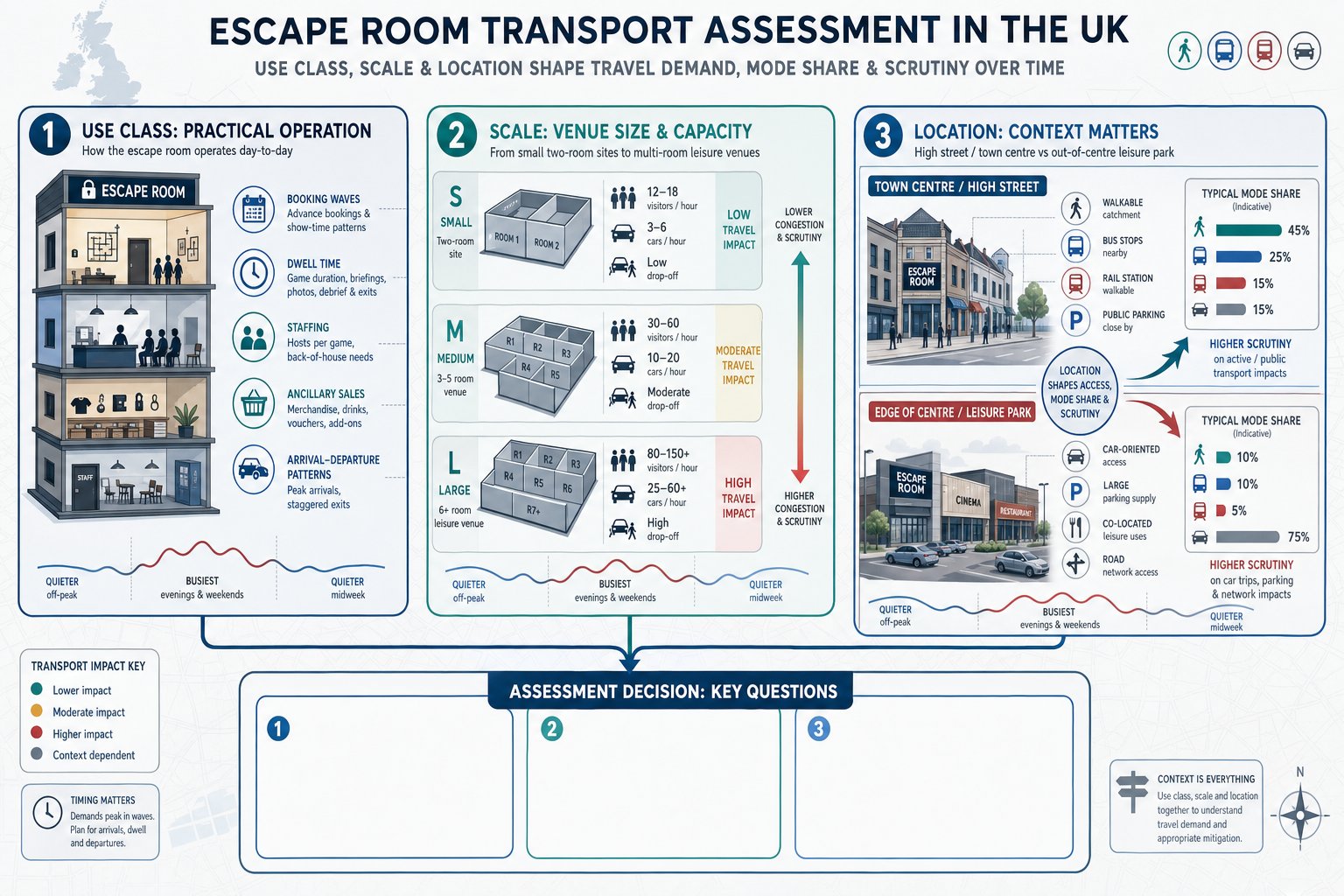
    Communication is often the differentiator. A strong consultant can talk to highways officers, challenge unreasonable requests when justified, refine mitigation without becoming adversarial and, if necessary, support appeals or committee presentation with evidence that stands up.

    In our experience, the best appointment is usually the team that combines technical depth with concise reporting and planning awareness. That is especially valuable when programmes are tight and transport work needs to slot neatly into a wider application strategy rather than becoming a project in its own right.

    Conclusion

    In Bradford, transport evidence is rarely a side issue. It sits close to the heart of whether a development is judged safe, practical and policy-compliant. A capable traffic engineer in Bradford helps answer the questions that planning officers, highways teams and local stakeholders are most likely to raise: how the site will be accessed, what traffic it will generate, whether nearby junctions can cope, and what mitigation is needed if they cannot.

    For architects, planners, developers, surveyors and legal teams, the practical lesson is simple. Bring transport input in early, scope it properly, and use it to shape the scheme rather than defend it after the fact. That approach usually leads to clearer submissions, fewer late changes and a better chance of planning success.

    In 2026, with policy expectations, active travel priorities and scrutiny of highway impact continuing to sharpen, early and locally informed transport advice is not optional on many Bradford schemes. It is one of the most reliable ways to turn a promising proposal into a deliverable one.

    Frequently Asked Questions About Traffic Engineering in Bradford

    What role does a traffic engineer play in Bradford planning applications?

    A traffic engineer in Bradford assesses development impacts on the local road network, including trip generation, parking, servicing, and safety, ensuring proposals comply with Bradford Council’s transport policies to improve their chances of planning approval.

    When is a Transport Assessment or Transport Statement required in Bradford?

    Larger or more traffic-intensive developments, such as substantial housing or retail sites, generally require a Transport Assessment, while smaller proposals with limited impact need a Transport Statement. Scoping with Bradford Council helps determine the appropriate level of assessment.

    How do Bradford’s local policies influence transport requirements for developments?

    Bradford Metropolitan District Council’s Local Plan sets standards for parking, road safety, and sustainable travel modes. Developments must also align with West Yorkshire transport priorities like bus reliability and active travel, requiring tailored transport evidence reflecting local conditions.

    What typical issues does a Bradford traffic engineer assess for development projects?

    They evaluate trip generation and distribution, junction capacity and delays, parking and servicing layouts, access geometry, road safety records, and sustainable transport provisions to produce integrated, site-specific transport reports addressing Bradford’s planning requirements.

    Why should developers appoint a local traffic engineer early in the planning process?

    Early involvement allows transport input to shape site layout and access, identify mitigation measures, and ensure evidence aligns with local policies, reducing risk of highways objections and costly delays, improving the likelihood of smooth planning approval.

    What types of developments commonly need traffic engineering input in Bradford?

    Medium to large housing developments, mixed-use schemes, commercial projects near busy corridors, schools, healthcare sites, and change-of-use applications often require traffic engineering to address local highway impacts and comply with planning guidelines.

  • Traffic Engineer In Huddersfield: Planning-Focused Transport Advice For Faster, Stronger Applications In 2026

    Traffic Engineer In Huddersfield: Planning-Focused Transport Advice For Faster, Stronger Applications In 2026

    Planning applications rarely fail because of one dramatic flaw. More often, they slow down on the details: an access that feels under-tested, parking that doesn’t quite add up, servicing that looks awkward on paper, or transport evidence that arrives too late to reassure officers and consultees. In Huddersfield, where development proposals can sit within sensitive urban streets, suburban networks, village edges, or employment locations with specific highway constraints, those details matter.

    That’s where a Traffic Engineer in Huddersfield becomes central to the planning process. We’re not just producing technical documents for the sake of it. We’re helping architects, planners, surveyors, developers, and legal teams show that a scheme works in transport terms before objections harden and review cycles multiply. Good traffic engineering gives decision-makers confidence: the site can be accessed safely, vehicle movements are understood, parking and servicing are workable, and sustainable travel has been considered properly.

    At ML Traffic, we focus on concise, accurate reporting shaped around planning realities, not generic templates. With more than 30 years of experience, we understand that the strongest submissions usually come from getting the transport strategy right early. In the sections below, we explain what a traffic engineer does in Huddersfield planning projects, when transport input is needed, what reports may be required, and how to choose support that helps move an application forward rather than hold it back.

    Key Takeaways

    • A Traffic Engineer in Huddersfield plays a crucial role by ensuring development proposals are transport-ready, addressing access, parking, safety, and sustainable travel early in the planning process.
    • Transport input is essential for many developments that alter traffic flows, parking, servicing, or road safety, with particular scrutiny on larger schemes and those in sensitive locations.
    • Transport reports such as Transport Assessments, Statements, and Travel Plans must be proportionate, targeted, and locally relevant to satisfy Huddersfield’s planning and highway authorities.
    • Key traffic engineering considerations include trip generation, access design, parking adequacy, servicing logistics, highway safety, and practical sustainable travel measures.
    • Early and clear communication with local planners and highway officers helps avoid delays by addressing potential objections and aligning submissions with Huddersfield’s specific policies and expectations.
    • Choosing the right traffic engineer involves prioritising planning focus, proportional advice, clear communication, local authority insight, and reliability to support smooth application progression.

    What A Traffic Engineer Does In Huddersfield Planning Projects

    Traffic engineer reviewing planning and highway layout documents in a modern office.
    Traffic engineer reviewing development access plans in a modern office.

    A traffic engineer’s role in a planning-led project is broader than many clients expect. Yes, we assess vehicle movements and highway impacts, but we also help shape the planning narrative around access, safety, parking, servicing, and sustainable travel. That means looking at how a proposal will actually function once built, not just whether a report can be submitted.

    In practical terms, we review site access arrangements, likely trip generation, junction performance where relevant, visibility, internal layout, refuse and delivery movements, parking strategy, and links to walking, cycling, and public transport. We translate those findings into planning-ready evidence that officers and highway authorities can work with.

    That planning interface matters. A technically correct report can still be unhelpful if it doesn’t answer the questions a local authority is likely to ask. Strong transport advice is targeted, proportionate, and clear. It identifies risk early, recommends mitigation where needed, and avoids unnecessary analysis where a lighter approach will do.

    For many schemes, our job starts before an application is assembled. We often support teams in the same way wider Highway And Traffic Engineering advisers do: by clarifying what evidence is likely to be expected and what design changes could save time later. In Huddersfield, that can be the difference between a smooth validation process and a long exchange of avoidable technical queries.

    When A Development In Huddersfield Needs Transport Input

    Traffic engineer reviewing development transport plans in a modern Huddersfield office.
    Traffic engineer reviewing development access and traffic plans in Huddersfield office.

    Not every application needs a full transport package. But many more schemes need transport input than people first assume. If a development changes traffic flows, introduces a new access, affects parking demand, alters servicing patterns, or raises road safety questions, transport input is usually sensible and often necessary.

    The obvious triggers are larger developments: housing sites, commercial floorspace, industrial uses, schools, care facilities, roadside schemes, or mixed-use proposals. But smaller applications can also need review where the site is constrained, the surrounding highway network is sensitive, or there is a history of local concern about traffic, overspill parking, or junction safety.

    In Huddersfield, context is everything. A modest proposal on a quiet, low-speed road may need only a concise statement. A similar-sized scheme on a busier route, near a school, on a bend, or with limited frontage may attract much closer scrutiny. Change-of-use applications can be particularly underestimated because trip rates, delivery activity, and parking demand can shift significantly even if the building footprint does not.

    We usually advise clients to bring in transport support early where access design is still flexible. That early-stage input often prevents expensive redesign. It also aligns well with broader Traffic Engineering Consultants: planning support, where the goal is not just to respond to objections but to reduce the chance of them appearing in the first place.

    Transport Assessments, Statements, And Travel Plans Explained

    Traffic engineer reviewing transport planning documents in a modern UK office.
    Traffic engineer reviewing transport reports in a modern UK office.

    These three documents are related, but they do different jobs.

    A Transport Assessment is the most detailed of the three. It is usually prepared for larger schemes or proposals with potentially material transport effects. It examines existing conditions, forecasts likely trips, considers distribution and assignment, reviews impact on the local network, and may assess junction capacity, accident records, accessibility, servicing, and mitigation. The point is to show, with evidence, whether the development would create a severe impact or whether issues can be managed acceptably.

    A Transport Statement is lighter-touch. It is commonly used for smaller developments where the transport implications are more limited but still need to be explained. A good statement is not a cut-down assessment in disguise: it is a proportionate document that addresses the actual planning questions raised by the site.

    A Travel Plan focuses on behaviour rather than pure highway capacity. It sets out measures to encourage sustainable travel, such as walking links, cycle parking, public transport information, shower facilities, car sharing, or monitoring arrangements. Councils often expect these for offices, schools, larger residential schemes, and employment uses.

    The best report type depends on thresholds, local expectations, and the specifics of the proposal. In our work, proportionate reporting is key. The same principle sits behind Traffic Engineering and Transportation: technical evidence should answer the real planning issue, not overwhelm it with unnecessary pages.

    How Local Highway And Planning Requirements Shape Transport Reports

    Traffic engineer reviewing local transport plans in a modern Huddersfield office.
    Traffic engineer reviewing local transport plans in a modern UK office.

    Transport reports are never written in a vacuum. In Huddersfield, as elsewhere, they need to reflect both national planning principles and local authority expectations. That means understanding what planners and highway officers will focus on, how they interpret policy, and what level of evidence they are likely to require.

    At a local level, reports are shaped by questions such as:

    • Is the access safe and suitable for the intended use?
    • Are visibility splays achievable and maintainable?
    • Is parking sufficient without over-provision?
    • Can deliveries, refuse vehicles, and service traffic manoeuvre safely?
    • Does the proposal support sustainable travel in a credible way?
    • Would the development create unacceptable pressure on nearby streets or junctions?

    The answer is not always more data. Often it is better judgement. A local highway authority usually wants a report that is specific, proportionate, and directly tied to the site. Generic commentary can be worse than saying less.

    That’s why local planning awareness matters so much. We look at the development type, surrounding road hierarchy, land use context, likely officer concerns, and the practical standards likely to apply. Work in Huddersfield may share themes with nearby urban centres, but each authority area and site setting has its own emphasis. Even when comparing experience from a Traffic Engineer In Leeds: instruction, the detail still has to be recalibrated for local policy, geometry, and planning risk.

    Common Development Types That Require Traffic Engineering Support

    Traffic engineer reviewing residential and commercial site transport plans in office.
    Traffic engineer reviewing residential and commercial site transport plans in office.

    Some development categories routinely need transport input because the planning questions are predictable: how people arrive, where they park, how vehicles turn, and whether the local network can accommodate the change. Two broad groups come up again and again.

    Residential Schemes

    Residential developments often look straightforward until the detail is tested. Parking pressure, access width, emergency and refuse tracking, visibility at the site entrance, and pedestrian links all matter. On larger housing sites, trip generation and junction effects may also need to be assessed, particularly in peak periods.

    In Huddersfield, residential schemes can vary from infill plots on existing streets to edge-of-settlement sites and apartment-led town locations. Each has a different transport profile. A small apartment scheme may generate modest traffic but raise sharp parking concerns. A suburban housing site may have adequate parking but require more robust evidence on access design, walking links, and network impact.

    We also regularly advise on whether a residential proposal needs a transport statement, a fuller assessment, a travel plan, or simply focused access and parking input. Early clarity here avoids over-scoping.

    Commercial, Industrial, And Mixed-Use Sites

    Commercial and employment proposals often need more detailed operational review. Staff travel patterns, customer traffic, HGV movements, delivery times, yard circulation, servicing bays, and conflict between pedestrians and larger vehicles can all become central planning issues.

    Industrial sites, in particular, may generate fewer peak-hour commuter trips than people expect but more servicing demand than early layouts allow for. Mixed-use developments add another layer because uses can interact in useful ways, or compete for the same parking and access space.

    This is where comparative experience helps. Lessons from work by a Traffic Engineer In Manchester: on tighter urban sites or by a Traffic Engineer In Birmingham: on larger multi-user schemes can be useful, but the report still needs to fit the local Huddersfield planning context.

    Key Traffic And Transport Issues Reviewed At The Planning Stage

    Most planning-stage transport reviews circle around a core set of issues. The exact list changes from site to site, but the same themes appear repeatedly.

    Trip generation is usually first. How many vehicle movements is the development likely to create, and at what times? That can influence whether a simple qualitative review is enough or whether detailed analysis is needed.

    Access suitability comes next. Is the proposed entrance fit for the expected use, vehicle types, and traffic levels? Can vehicles enter and leave safely? Does the design create conflict with pedestrians or parked cars?

    Parking and manoeuvring are another common focus. Under-provision can displace vehicles onto nearby roads: poor layout can create awkward reversing or blocked service areas. Over-provision can also be questioned if it undermines sustainable transport objectives or wastes land.

    Servicing matters more than many teams expect. A development may work well for private cars but fail once refuse collection, deliveries, or maintenance vehicles are considered.

    Highway safety is central throughout. Existing collision patterns, site lines, speed environment, and likely user behaviour all feed into the judgment.

    Finally, sustainable travel is no longer a side note. Officers often want clear evidence that walking, cycling, and public transport opportunities have been thought through in practical terms, not simply listed. Good Traffic Engineering: Your practice means dealing with all of these issues in a balanced way, without overcomplicating the submission.

    Access Design, Visibility, And Highway Safety Considerations

    If one topic consistently shapes planning outcomes, it is access. A site can have strong design credentials and a viable use, but if the highway access is poorly configured or weakly evidenced, the application can quickly stall.

    Access review normally considers geometry, width, gradient, relationship to nearby junctions, pedestrian crossing points, boundary treatment, and whether different users can move safely through the same space. For some sites, the issue is simple priority access design. For others, it is whether the access can accommodate service vehicles without over-running footways or causing conflict on the carriageway.

    Visibility is equally important. We assess whether drivers can see and be seen within a distance appropriate to the road environment. That means understanding speed, frontage conditions, vegetation, walls, parked cars, and future maintenance responsibilities. Visibility splays that work only in ideal conditions rarely reassure a highway authority.

    Highway safety is broader than splays alone. We also review recorded collision patterns where relevant, likely turning movements, vulnerable road users, and whether the proposal could intensify existing risk. Sometimes the answer is design change. Sometimes it is operational control. Sometimes it is demonstrating that the site already functions safely and the uplift is limited.

    In short, a transport report should not treat access as a drawing note. It is usually one of the first things decision-makers test, because it goes directly to whether development can happen safely in real life.

    Parking, Servicing, And Sustainable Travel Strategy

    Parking is one of the most scrutinised planning issues because everyone has an opinion on it, and local residents often express those views forcefully. But good parking analysis is not guesswork. It should reflect land use, likely demand, location, local standards, availability of alternatives, and the practical usability of the spaces shown.
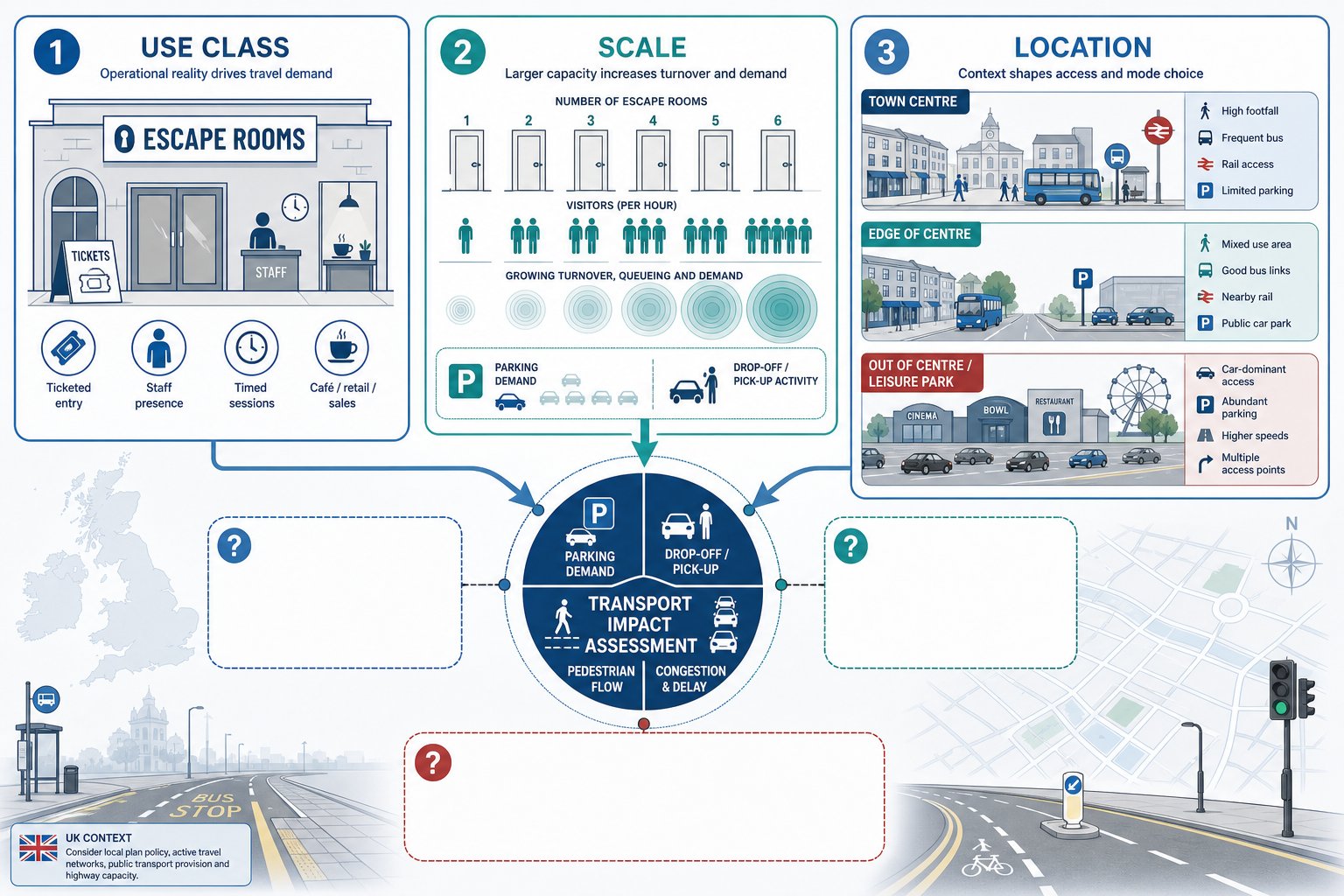
    For residential schemes, the debate often centres on overspill parking, visitor provision, cycle storage, and whether spaces are realistically usable. For commercial and mixed-use sites, staff parking, customer turnover, disabled bays, EV provision, and shared parking arrangements may all be relevant.

    Servicing is just as important, though it gets less public attention. Refuse collection, parcel deliveries, HGV access, loading activity, and turning provision need to work without creating regular conflict or unsafe reversing onto the highway. On constrained sites, servicing can become the make-or-break issue.

    Then there is sustainable travel strategy. A convincing planning submission should explain how the site supports walking, cycling, and public transport in practical terms: footway links, cycle parking quality, bus stop proximity, travel information, and measures that fit the development type. This is especially important where car parking is restrained or the authority places strong weight on modal shift.

    The strongest strategy balances realism with policy. We’re not trying to pretend every user will arrive by bike. We’re showing that the development has been planned sensibly, with genuine travel choices built into the scheme.

    The Typical Process From Initial Review To Planning Submission

    Most transport instructions follow a recognisable sequence, though the depth varies with the scheme.

    First, we carry out an initial review. That usually includes site location, proposed use, access points, surrounding highway conditions, likely planning triggers, and whether any immediate transport risks stand out. This early stage is often where the biggest time savings happen, because design changes are still relatively easy.

    Second comes data gathering and appraisal. Depending on the project, that may involve site visits, traffic counts, collision data, parking review, swept path testing, accessibility mapping, or policy review. Not every scheme needs all of this: proportionality matters.

    Third, we move into assessment and strategy. We consider likely transport effects, whether mitigation is needed, and what type of reporting is appropriate. Sometimes that means a short technical note. Sometimes it means a full assessment package with plans and supporting appendices.

    Fourth, we prepare the planning submission material itself. This is where technical findings need to be translated into a document that reads clearly and anticipates consultee concerns.

    Finally, there is often post-submission support: responding to comments, clarifying assumptions, or refining details through condition discharge. That workflow is common across many regions, whether the instruction resembles a Traffic Engineer In London: city-centre commission or a more suburban Yorkshire site. The sequence stays similar: the local detail changes.

    Choosing The Right Traffic Engineer In Huddersfield

    Choosing a traffic engineer is not only about credentials. It is about fit: planning awareness, local sensitivity, responsiveness, and the ability to produce documents that are technically sound and commercially useful.

    We’d suggest looking for five things.

    First, planning focus. Some engineers are excellent modellers but less comfortable with the practical realities of planning submissions. You want advice that helps the application move forward, not just technically accurate text.

    Second, proportional judgment. Over-reporting can waste time and money: under-reporting can expose the scheme to objection. A good consultant knows the difference.

    Third, communication. Architects, planners, solicitors, and developers need clear answers quickly. Dense technical jargon rarely helps a project team make decisions.

    Fourth, local authority awareness. That doesn’t mean claiming to know every officer personally. It means understanding how highway and planning concerns are typically framed, and preparing reports accordingly.

    Fifth, reliability under programme pressure. Deadlines matter. Delays in transport input often hold up the wider submission pack.

    At ML Traffic, our approach is built around concise, accurate reporting, shaped to local thresholds and planning context, with more than 30 years of experience behind it. For clients comparing broader regional support, our work as a Traffic Engineer In different cities reflects the same principle: practical transport advice should reduce friction, not add to it.

    Conclusion

    A well-prepared planning application does more than describe a development. It proves the scheme can function safely and credibly within its transport setting. That is exactly where a Traffic Engineer in Huddersfield adds value.

    From early access reviews and parking strategy through to transport statements, assessments, travel plans, and responses to consultee comments, good transport input helps remove uncertainty from the process. It gives planners and highway officers something they can rely on, and it gives design teams a clearer basis for decision-making.

    In our experience, the strongest outcomes usually come when transport advice is brought in early, kept proportionate, and aligned with the realities of local planning. Done properly, it doesn’t just support an application on paper. It helps the scheme stand up to scrutiny and move forward with fewer surprises.

    Frequently Asked Questions about Traffic Engineers in Huddersfield

    What is the role of a traffic engineer in Huddersfield planning projects?

    A traffic engineer in Huddersfield assesses vehicle movements, access design, parking, servicing, and sustainable travel to ensure developments function safely and efficiently within the local transport network, providing accurate planning-ready evidence.

    When does a development in Huddersfield require transport input from a traffic engineer?

    Transport input is typically needed when a development affects traffic flows, access points, parking demand, servicing patterns, or road safety, especially for larger or sensitive sites, to meet local planning and highway requirements.

    What are the differences between a transport assessment, transport statement, and travel plan in Huddersfield?

    A transport assessment is detailed for larger schemes, analysing impacts on traffic and the network. A transport statement is a lighter report for smaller developments. A travel plan promotes sustainable travel options like walking and cycling to reduce vehicle trips.
    How do local planning and highway requirements in Huddersfield shape transport reports?

    Reports must address access safety, visibility splays, parking sufficiency, servicing logistics, highway safety, and support for sustainable travel, tailored to local policies and officer expectations to avoid generic or unnecessary analysis.

    What common development types in Huddersfield require traffic engineering support?

    Residential schemes, commercial, industrial, and mixed-use developments often need traffic engineering due to concerns like parking pressure, access safety, service vehicle manoeuvring, and trip generation assessments.

    How can I choose the right traffic engineer in Huddersfield for my planning project?

    Select a traffic engineer with local planning experience, clear communication skills, an understanding of highway authority concerns, proportional reporting, and a track record of delivering timely and relevant transport advice that facilitates smoother approvals.

  • Traffic Engineer In Bolton: Planning-Led Transport Support For Faster, Stronger Applications In 2026

    Traffic Engineer In Bolton: Planning-Led Transport Support For Faster, Stronger Applications In 2026

    Planning applications in Bolton rarely fail on ambition alone. More often, they run into trouble because the transport case is thin, late, or too generic for the site and policy context. A housing scheme with an awkward access. A retail proposal near a stressed junction. A commercial site where servicing, parking and peak-hour traffic haven’t been tested properly. That is where a traffic engineer in Bolton becomes central to the application, not peripheral to it.

    We approach transport evidence as part of the planning strategy from day one. For architects, planners, surveyors, lawyers, developers and public-sector teams, the question usually isn’t whether transport matters: it’s how much evidence is proportionate, what Bolton Council is likely to expect, and how to avoid the kind of late redesign that burns time and budget.

    In practice, robust transport support means more than producing a report with the right title. It means understanding local junction pressure, parking standards, sustainable travel expectations, access geometry, servicing demands and, where relevant, interactions with the wider strategic road network. It also means presenting evidence in a way decision-makers can actually use.
    Below, we break down what a traffic engineer in Bolton typically does for planning applications, when a Transport Assessment or Statement may be needed, what reports usually support schemes, and how early technical input can materially improve the prospects of consent in 2026.

    Key Takeaways

    • A traffic engineer in Bolton plays a critical role in crafting transport evidence that aligns with local policy and site-specific conditions to support planning applications effectively.
    • Early engagement with a traffic engineer helps identify and resolve access, parking, and network impact issues before designs are finalised, saving time and costs during planning.
    • Bolton-specific transport assessments focus on real network conditions, including junction pressures, parking standards, and sustainable travel, ensuring submissions address local concerns.
    • Not all developments require a full Transport Assessment; selecting the appropriate level of reporting—Transport Statement, Travel Plan, or technical notes—avoids over- or under-reporting.
    • Robust transport evidence in Bolton integrates with overall planning strategies and clearly demonstrates safety, accessibility, and manageable traffic impacts to decision-makers.
    • Providing clear project details early aids traffic engineers in delivering proportionate, targeted transport reports that reduce planning risks and facilitate smoother approvals.

    What A Traffic Engineer In Bolton Does For Planning Applications

    Traffic engineer reviewing planning and transport plans in a modern office.

    A traffic engineer in Bolton helps turn a proposal into a planning-ready transport case. That starts with reviewing the development itself: the proposed use, scale, access points, parking numbers, cycle provision, servicing arrangements and likely trip impacts. We then test whether those elements are likely to satisfy both national guidance and local planning expectations.

    For most schemes, the real work sits at the intersection of design and evidence. A site access may look acceptable on a drawing, but once visibility splays, speed environment, refuse tracking or peak-hour turning movements are assessed, weaknesses can appear quickly. Our role is to identify those issues early enough to fix them.

    We also advise on the right level of reporting. Some sites need a full Transport Assessment with junction modelling and mitigation. Others need a lighter-touch Transport Statement, a Travel Plan or a focused technical note on a single matter such as parking accumulation or access visibility. That proportionality matters. Over-reporting can waste money: under-reporting can trigger avoidable objections.

    In many cases, we also liaise with highways officers and the wider consultant team to close out points before determination. That is often the difference between a transport submission that merely exists and one that actively supports permission. Our wider experience as Traffic Engineering Consultants: helps clients understand where specialist input is likely to carry most weight.

    Why Bolton Transport Evidence Needs A Local Planning Focus

    Traffic engineer reviewing Bolton transport plans in a modern office.

    Transport reports are strongest when they are local, not templated. Bolton has its own planning pressures, movement patterns and decision-making context, so evidence that could pass in one authority may feel incomplete here. The issue is not simply whether a report cites the National Planning Policy Framework: it is whether the transport case responds to Bolton-specific concerns on highway safety, capacity, parking and sustainable travel.

    That local focus usually means grounding the assessment in real network conditions. Junctions that are stable on paper can operate very differently near school peaks, retail peaks or football/event movements. Nearby committed developments may change baseline assumptions. Historic collision patterns, town-centre priorities, bus accessibility and walkability all influence how a proposal is judged.

    Parking is another frequent example. A numerical standard is only the start. In practice, officers often want confidence that overspill won’t migrate onto neighbouring streets, that cycle parking is usable rather than decorative, and that servicing can happen without disrupting movement or safety.

    We also find that local framing improves communication with decision-makers. Instead of abstract transport language, the report can speak directly to Bolton conditions and planning concerns. For teams operating across multiple cities, that local calibration is the same reason clients often compare approaches used by a Traffic Engineer In Manchester: or other nearby authorities, because thresholds may rhyme, but they don’t match exactly.

    When A Development In Bolton May Need A Transport Assessment Or Statement

    Traffic engineer reviewing Bolton development traffic plans and junction data.

    Not every planning application in Bolton requires a full transport submission, but many need more than a standard planning statement paragraph. The trigger is usually whether the proposal is likely to create material transport effects, raise access or safety concerns, or sit in a location where the surrounding network is already sensitive.

    As a rule of thumb, a Transport Assessment is more likely where peak-hour trip generation is substantial, where the development connects to a key route or constrained junction, or where the use is known to create concentrated arrival and departure patterns. A Transport Statement is often suitable for smaller schemes with more limited impact, provided access, parking and sustainable travel issues can still be addressed credibly.

    In Bolton, applications often move into formal transport-report territory when they affect A-roads, town-centre movement corridors, school-related traffic patterns or locations with known congestion and collision history. If there is any prospect of impact on the Strategic Road Network, National Highways may also need to be considered.

    The decision should not be left to guesswork. Early scoping allows the team to decide whether a TA, TS, Travel Plan or technical note is proportionate, and whether surveys or modelling will be needed. On multi-authority portfolios, this mirrors the judgement calls made by a Traffic Engineer In Birmingham: or other city-based transport specialist, but always with Bolton’s own planning context in mind.

    Common Development Types That Often Require Traffic Input

    Certain land uses attract transport scrutiny more often than others because their traffic profile is either intensive, peaky or operationally awkward. Large residential schemes fall into that category, especially where a new priority junction, ghost island right-turn lane or internal road hierarchy is proposed. Apartment schemes can also need transport evidence where parking ratios are tight or town-centre servicing needs to be justified.

    Retail developments are regularly tested closely, particularly supermarkets, retail parks and drive-thru formats. Those uses can generate short-stay turnover, weekend peaks and queueing pressure that is very different from a standard office or industrial scheme. Employment parks, warehouses and logistics uses also tend to need detailed review because HGV routing, yard circulation and shift-change effects matter as much as pure trip totals.

    Education, leisure and event-related proposals can be even more sensitive. Schools, colleges, sports facilities and stadium-linked uses often create compressed demand at specific times, which means local junction performance and active travel planning become central issues rather than appendices.

    Key Traffic Engineering Reports Used To Support Bolton Schemes

    Traffic engineer reviewing transport planning reports in a modern Bolton office.

    Different schemes need different transport documents, and the choice should reflect risk, scale and likely scrutiny. In Bolton, the most common reporting suite includes Transport Assessments, Transport Statements, Travel Plans and targeted technical notes. Sometimes that package is supported by junction modelling, swept path analysis, parking surveys or access drawings.

    The key is not to produce paperwork for its own sake. Each report should answer a planning question clearly: is the access safe, is the traffic impact acceptable, can people arrive by realistic non-car modes, and are any mitigation measures necessary? Where the answer is yes, the report needs to show why in a methodical, evidence-led way.

    A good transport submission also works as part of the wider planning narrative. It should align with the Design and Access Statement, drainage strategy, layout drawings and operational assumptions. If one document says delivery vehicles are occasional and another shows frequent articulated movements, credibility disappears fast.

    That coordination is one reason concise, planning-led reporting matters. Our approach is built around producing evidence that is technically sound but also readable by officers, consultees and appeal inspectors. Broader Highway And Traffic input can be useful where transport issues overlap with access design, highway works or implementation strategy.

    Transport Assessment And Transport Statement

    A Transport Assessment is the fuller, more analytical document. It usually sets out baseline conditions, policy context, site accessibility, trip generation, trip distribution, assignment, committed development review, junction impact testing and mitigation if required. Where the application is substantial or potentially contentious, this is typically the core transport document.

    A Transport Statement is lighter and more proportionate. It still needs to be robust, but it generally focuses on demonstrating that the proposal’s effects are limited and manageable. For smaller developments, that may be enough to satisfy the authority, especially where no major junction intervention is proposed.

    The difference is not just length. It is depth of analysis. A TA might include multiple junction models and sensitivity tests: a TS may rely more on reasoned appraisal, survey evidence and a straightforward explanation of why severe impact is not expected.

    Travel Plans, Technical Notes, And Junction Capacity Reviews

    Travel Plans are often underestimated. A good one is not a box-ticking exercise: it shows how the development will support realistic mode choice through measures, targets, management arrangements and monitoring. For residential schemes, that may involve welcome packs, cycle storage and public transport information. For employment uses, it can extend to coordinator roles, car-share initiatives and shower/changing provision.

    Technical notes are useful where the issue is narrow but important. They can address visibility splays, parking demand, servicing, swept path movements, local collision records or responses to officer comments without reopening the whole assessment.

    Junction capacity reviews bring numerical confidence where concern centres on queues, delay or reserve capacity. Depending on the junction form, this may involve PICADY, ARCADY, LINSIG or more detailed modelling. The point is not software for software’s sake: it is demonstrating whether a proposal performs acceptably on the network and, if not, what mitigation is reasonable.

    How A Traffic Engineer Assesses Access, Safety, And Network Impact

    Traffic engineer assessing road access and safety near a UK junction.

    The assessment process usually starts on the ground. We visit the site, review how people actually move around it, and check whether the drawing assumptions reflect reality. That means looking at approach speeds, visibility, footway continuity, crossing opportunities, nearby junction behaviour, on-street parking, bus stops and informal desire lines. Desktop analysis alone misses too much.

    Access assessment then tests whether vehicles can enter and leave safely, whether servicing works without conflict, and whether internal circulation is practical. For many schemes, swept path analysis is essential because refuse vehicles, fire appliances or articulated deliveries can expose geometry issues early. If the access arrangement sits in a faster-speed environment, visibility checks against Manual for Streets or DMRB principles become especially important.

    Network impact is typically assessed through trip generation and assignment. TRICS remains the standard source for many land uses, but it still requires judgement: selecting suitable sites, understanding local comparability and avoiding lazy assumptions. Once trips are estimated, they are distributed across the likely routeing pattern and tested at relevant junctions.

    Safety is not just a collision-data appendix. We consider whether the proposal changes conflict points, increases turning pressure, affects vulnerable users or creates awkward manoeuvres. Where highway works are proposed, Road Safety Audit coordination may be needed. Similar methodology is used across cities, whether by a Traffic Engineer In Leeds: or elsewhere, but the practical judgement always depends on the local street context.

    Bolton Planning Considerations That Can Influence Transport Requirements

    Transport requirements in Bolton are shaped by more than trip numbers. Local planning policy, site location and delivery mechanism can all change the level of evidence expected. A town-centre development with strong walk and bus links may justify a different parking approach from an edge-of-settlement site where car dependency is harder to avoid. That sounds obvious, but it is exactly where weak applications can drift into generic language.

    Parking standards remain a live issue, especially where schemes propose reduced provision, shared parking or non-standard operational arrangements. Cycle parking, EV charging and accessibility for disabled users can also influence layout decisions and officer responses. If these matters are not integrated early, the transport report ends up defending a design it did not help shape.

    Air quality, regeneration priorities and highway mitigation can also affect requirements. In some cases, a proposal may need off-site works secured through Section 278, financial contributions through Section 106, or targeted upgrades such as lining, signing, crossing improvements or access control measures. Where the scheme sits near a constrained corridor, the authority may expect a clearer explanation of cumulative effects and sustainable travel mitigation.

    Bolton’s context also rewards practical realism. Officers generally want to know not just whether a scheme works mathematically, but whether it will function on an ordinary Tuesday morning. That planning-led mindset is common in other urban authorities too, including work typically handled by a Traffic Engineer In Liverpool:, but local evidence remains decisive.

    The Value Of Early Traffic Advice For Architects, Developers, And Consultants

    Early traffic advice saves more than time: it protects design intent. Once a masterplan, red line boundary or access strategy has hardened, transport problems become expensive. We often find that a one-hour early review can prevent weeks of redesign later, especially on constrained urban sites where access geometry, parking efficiency and pedestrian movement all compete for the same space.

    For architects, the value is usually layout confidence. We can sense-check whether the proposed access point is likely to work, whether servicing can be accommodated, whether parking numbers are realistic and whether a Travel Plan-led approach could support a leaner site arrangement. For planners and lawyers, early advice reduces risk by clarifying what level of evidence will probably be needed and where objections are most likely to arise.

    Developers benefit because programme certainty improves. If surveys, modelling or junction design work will be required, it is better to know before the submission date is fixed. That allows the team to sequence information properly rather than scrambling for technical evidence after validation or, worse, after an objection.

    This is particularly helpful on mixed-use and phased schemes, where transport assumptions need to align with delivery stages. Comparable benefits are often seen on projects led by a Traffic Engineer In London: or other major-city consultant teams, but in Bolton the same principle holds: earlier transport thinking generally means fewer surprises.

    What Information To Prepare Before Instructing A Traffic Engineer

    A traffic engineer can start quickly when the core project information is clear. The essentials are usually the site boundary, the proposed use, scale and access concept. That means plans showing the red line boundary, existing highway connections, any known level changes, nearby constraints and the draft layout if one exists.

    We also need a solid description of the development quantum: unit numbers, gross floor area, use classes, servicing assumptions, parking provision and, if relevant, phasing. Even at early stage, approximate figures help us advise on likely scope. A scheme described simply as “commercial” or “residential-led” is too vague to price or scope properly.

    Pre-application feedback is particularly useful. If Bolton Council has already commented on access, parking, sustainable travel or junction impacts, that steers the assessment straight away. Nearby consented schemes, known local objections, land ownership constraints and any operational peculiarities should also be shared early. The more transparent the starting brief, the fewer surprises later.

    Programme matters too. We always want to know the target submission date, whether surveys are season-sensitive, and whether other design packages depend on transport input. In practice, the best briefs are short but specific: a drawing pack, a land-use schedule, existing context, and a realistic deadline. That is usually enough to define whether the job needs a TA, TS, Travel Plan or focused note.

    How The Traffic Engineering Process Typically Works From Enquiry To Submission

    Most transport commissions follow a fairly consistent sequence, even though the detail varies by scheme. We begin with an initial review of the proposal, site context and likely planning risk. At that stage, we advise on the probable scope: whether the project needs a Transport Assessment or Statement, whether surveys are likely, and whether access design or modelling will be central.

    The next step is usually methodology agreement, formally or informally, with the local highway authority. That can save a lot of friction later. If everyone understands which junctions will be assessed, what survey periods are relevant and what development assumptions are being tested, the reporting process becomes far more efficient.

    Data collection follows. Depending on the site, this may include traffic counts, queue surveys, speed surveys, parking beat surveys, collision analysis and accessibility review. We then test access design, servicing, parking and internal layout, before moving into trip generation, distribution and junction assessment.

    If impacts arise, mitigation is developed and tested. That may involve geometric improvements, local highway works, operational changes or sustainable travel measures. Where required, Road Safety Audit input is coordinated. The reporting stage then pulls everything together into a clear planning document, supported by drawings and appendices.

    Finally, post-submission support matters more than many teams expect. Highways officers may ask for clarifications, updated plans or a short rebuttal note. On more complex or contentious schemes, that continuing role can be as valuable as the original report. A similar end-to-end process underpins work in other locations, including a Traffic Engineer In Bristol:, but the best outcomes always come from tailoring the scope to the local authority and the actual development risk.

    Conclusion

    A strong planning application in Bolton needs more than a transport document attached at the end. It needs a transport case that fits the site, the scale of development, the local network and the authority’s likely concerns. That is the real value a traffic engineer brings: not just calculations, but judgement.

    When the scope is proportionate, the evidence is local, and access and network issues are addressed early, applications tend to move more cleanly through the system. Risks are easier to identify, layouts are more efficient, and highways objections are less likely to derail programme or cost.

    For architects, planners, developers, legal teams and councils alike, the message is straightforward. Bring transport advice in early, define the right level of assessment, and make sure the submission speaks to Bolton rather than to planning in the abstract. In 2026, that planning-led approach is still one of the simplest ways to build faster, stronger applications.

    Frequently Asked Questions About Traffic Engineering in Bolton

    What role does a traffic engineer in Bolton play in planning applications?

    A traffic engineer in Bolton reviews proposed developments for access, parking, servicing, and trip impacts against national and local standards. They prepare key documents such as Transport Assessments and liaise with Bolton Council to address transport objections, ensuring the application meets local transport policy requirements.

    When is a Transport Assessment or Transport Statement required in Bolton?

    Developments typically require a Transport Assessment when trip generation is substantial, access involves sensitive junctions or A-roads, or uses generate concentrated traffic. Smaller schemes with limited impact often need a lighter Transport Statement, provided access and parking are credibly addressed.

    Why is local planning focus crucial for transport evidence in Bolton?

    Bolton’s unique highway safety concerns, traffic patterns, and planning policies mean transport evidence must reflect local junction pressures, accident clusters, and town-centre priorities. Generic reports may miss these factors, affecting the likelihood of planning approval.

    What types of developments commonly require traffic engineering input in Bolton?

    Large residential estates, retail parks, supermarkets, drive-thru restaurants, employment parks, warehouses, and schools or leisure venues often need detailed transport assessments due to their traffic intensity, access complexity, or peak demand patterns.

    How early should developers seek traffic engineering advice in Bolton?

    Early traffic advice is valuable to optimise site layouts, access, and parking before masterplans are fixed. This reduces late-stage redesigns, aligns transport assessments with planning submissions, and lowers the risk of objections or delays.

    How does a traffic engineer in Bolton assess access safety and network impact?

    They conduct site visits, speed and visibility surveys using Manual for Streets and DMRB guidance, analyse trip generation from TRICS data, and model junction capacity. Safety audits and coordination ensure that access and network effects comply with local and national standards.

  • Traffic Engineer In Hereford: Planning-Focused Transport Advice For Faster, Stronger Applications In 2026

    Traffic Engineer In Hereford: Planning-Focused Transport Advice For Faster, Stronger Applications In 2026

    Getting a scheme through planning in Hereford is rarely just about land use, layout, or design quality. Transport can become the point where an otherwise sensible project starts to wobble. A site may look straightforward on paper, yet questions around access, visibility, parking, congestion, junction pressure, or sustainable travel can quickly decide whether an application moves forward smoothly or attracts costly delay.

    That is exactly where a traffic engineer in Hereford adds value. We help translate a development proposal into clear, evidence-based transport advice that planners, highway officers, consultants, and project teams can work with. In a city shaped by historic streets, constrained routes, river crossings, and peak-time pressure on key corridors, generic reporting is rarely enough. What tends to work is advice grounded in local highway realities, proportionate survey evidence, and reports that answer the authority’s concerns before they harden into objections.

    For architects, planners, surveyors, lawyers, developers, and councils, the objective is not to produce transport paperwork for its own sake. It is to support a better planning outcome. In practice, that means understanding when a Transport Assessment is needed, when a shorter Transport Statement may be appropriate, how Herefordshire Council is likely to review the evidence, and what technical work can make an application more robust from the outset.

    Key Takeaways

    • A traffic engineer in Hereford is crucial for delivering transport advice tailored to the city’s unique historic streets, constrained routes, and peak congestion challenges.
    • Early involvement of a Hereford traffic engineer improves planning outcomes by ensuring safe access, realistic parking, and sustainable travel measures are integrated from the concept stage.
    • Choosing between a Transport Assessment or Transport Statement in Hereford depends on development scale, site context, and local sensitivities rather than size alone.
    • Robust traffic surveys and local data are essential in Hereford to provide credible baseline evidence reflecting actual network operations for planning submissions.
    • Common transport issues in Hereford include junction capacity, safe access, and active travel connectivity, all requiring practical solutions grounded in local conditions.
    • Selecting a traffic engineering consultant with Hereford-specific experience and the ability to tailor reports ensures proportionate, credible advice that meets local authority expectations.

    Why A Traffic Engineer Matters For Development Projects In Hereford {#p-DTGmG5l0X1378yTbDYF}

    Hereford’s network is not especially forgiving. A relatively modest amount of extra vehicle movement can have a visible effect where routes funnel toward constrained junctions, river crossings, school traffic hotspots, or older streets with limited width and frontage activity. That matters because planning transport work is not judged in the abstract: it is judged against the actual roads, actual queues, and actual safety conditions around a site.

    A traffic engineer helps establish whether the development impact is likely to be acceptable and, just as importantly, what can be done if it is not. We assess likely trip generation, distribution, and assignment, review the surrounding network, consider active travel opportunities, and test whether access arrangements are safe and suitable for all users. Where required, we also coordinate with wider project teams so the transport strategy matches the architectural and planning narrative rather than sitting awkwardly beside it.

    This early coordination is often the difference between a clean submission and a reactive one. A scheme that has transport input at concept stage usually has better parking logic, more realistic servicing, and fewer late redesigns. That is true in Hereford and elsewhere: the same planning-led approach is reflected in work such as Traffic Engineering Consultants: broader development support and in city-specific advice like Traffic Engineer In Birmingham: where local highway context also drives report strategy.

    There is another practical point. Highway officers and planning case officers tend to respond better to concise, proportionate, technically sound evidence than to bloated reports that avoid the real issue. Our role is to identify what matters, test it properly, and present it clearly.

    When A Transport Assessment Or Transport Statement Is Typically Needed {#2Su661HvcmqhefqKZ2SMw}

    The choice between a Transport Assessment and a Transport Statement usually comes down to scale, trip intensity, and local sensitivity. A Transport Assessment is generally expected for larger schemes or proposals likely to create material transport effects. A Transport Statement is more commonly used for smaller developments where transport issues still need to be addressed, but the likely impacts are more limited.

    In Hereford, that distinction is not just about unit numbers or floor area. Context matters. A modest proposal on a constrained rural road, near a busy school route, or close to a stressed junction may need more evidence than a similar-sized scheme in a less sensitive location. National policy and Department for Transport guidance set the framework, but local authority expectations and site conditions decide how far the analysis needs to go.

    A sensible first step is screening the proposal against likely trip generation, site access conditions, parking demands, sustainable travel opportunities, and the existing operation of nearby junctions. If trunk roads or the strategic road network could be affected, National Highways may also need to be considered. That early judgement prevents under-scoping, which can trigger objections, and over-scoping, which wastes time and budget.

    We usually advise clients to think less in terms of “What is the minimum report we can submit?” and more in terms of “What level of evidence will make this application feel credible?” That tends to be the better commercial decision.

    How Hereford Planning Context And Local Highway Constraints Shape Transport Advice

    Transport advice in Hereford has to respond to a particular local pattern: historic fabric, limited crossing points, rural approaches, and peak-time congestion that can spread quickly through linked junctions. On paper, a site may appear close to facilities and within a developed area. In practice, the quality of footways, crossing points, visibility, road width, bus connectivity, or queue interaction can change the planning picture.

    That means our work is rarely limited to forecasting vehicle trips. We also look closely at whether people can realistically walk to local services, whether cycle connections are practical rather than theoretical, whether servicing can occur without conflict, and whether refuse vehicles or emergency vehicles can enter, turn, and leave safely. Parking standards and layout efficiency matter too, especially on compact sites where over-optimistic design can create operational problems that planning officers immediately spot.

    Local nuance is important. A market-town or cathedral-city setting often demands a finer-grained approach than a purely suburban expansion area. In that respect, Hereford has more in common with places requiring tailored local judgement than with one-size-fits-all transport reporting. You can see the same principle in Highway And Traffic Engineering project support and in regional examples like Traffic Engineer In Bristol: where constraints on the surrounding network shape both scope and mitigation.

    For that reason, strong Hereford transport advice usually starts with the place, not the template.

    Common Development Types That Require Traffic Engineering Input

    Many projects need transport input earlier than expected. Not because they are unusually large, but because access, parking, servicing, or local traffic effects become planning issues very quickly.

    Residential Schemes

    Residential development is the most common example. We are often asked to support anything from a small infill proposal to a substantial edge-of-settlement scheme. The questions sound familiar, but the answers are site-specific: Is the access safe? Are visibility splays achievable? Will parking work in day-to-day use rather than just on a drawing? Are nearby junctions already under pressure at school and commuter peaks? Can pedestrians reach shops, schools, and bus stops without awkward or unsafe movement?

    Trip generation is central, but it is not the whole story. Residential schemes also need realistic assumptions on car ownership, visitor parking, refuse collection, emergency access, and internal turning. On constrained sites, a design that technically fits can still perform badly once bins, delivery vans, or parked vehicles are introduced into real life.

    Larger housing proposals may need junction capacity testing, Travel Plan measures, and a clearer narrative around sustainable travel. Smaller schemes often benefit from a concise but focused appraisal that deals directly with access and operational concerns before they become reasons for refusal.

    Commercial, Employment, And Mixed-Use Projects

    Commercial and mixed-use proposals usually bring a broader set of transport questions. A warehouse, trade counter, office, roadside use, foodstore, or town-centre redevelopment can generate very different traffic profiles depending on opening hours, servicing arrangements, staffing levels, customer turnover, and HGV activity.

    For these schemes, we look closely at peak patterns, delivery activity, loading space, staff and visitor parking, and whether the surrounding highway can cope with both regular traffic and servicing demands. Mixed-use sites can be especially sensitive because they combine competing movements: residents want quiet and safe circulation, while commercial occupiers need practical access and loading.

    Hereford sites of this type often raise questions about routing, local amenity, junction pressure, and whether walking, cycling, and bus access are genuinely attractive. Comparative experience helps here: methods used for Traffic Engineer In Leeds: more complex urban applications and Traffic Engineer In Liverpool: employment-led schemes can be adapted, but always to Hereford’s local conditions rather than copied across.

    What A Traffic Engineer In Hereford Can Prepare For A Planning Application

    The transport package for a planning application should be proportionate, technically sound, and aligned with the planning strategy. That might be a short note for a straightforward proposal, or a wider evidence set for a more sensitive site.

    Transport Assessments, Transport Statements, And Travel Plans

    Transport Assessments and Transport Statements are the core planning documents. They explain existing conditions, forecast likely trip generation, set out how traffic will distribute on the network, and assess whether nearby junctions or routes are likely to be materially affected. Where necessary, they include capacity analysis, sustainable travel measures, and mitigation.

    Travel Plans often sit alongside these reports. A good Travel Plan is not decorative. It shows that the development has considered how residents, staff, or visitors can travel by modes other than the private car, and it can help make a proposal more acceptable where network sensitivity is a concern. In Hereford, that may include walking links to nearby facilities, cycle parking quality, bus accessibility, welcome packs, monitoring, or on-site measures that make low-car travel more realistic.

    The best reporting is concise and specific. We focus on what the authority needs to know, rather than burying the important point under fifty pages of general policy text.

    Access Appraisals, Visibility Reviews, And Swept Path Analysis

    A planning application often succeeds or fails on practical highway detail. Access appraisals test whether the proposed junction or access point is suitable in principle. Visibility reviews consider whether drivers, cyclists, and pedestrians can see and be seen in line with relevant standards and the speed environment. Swept path analysis demonstrates whether the vehicles that must use the site, from refuse trucks to fire appliances and delivery vehicles, can manoeuvre safely.

    These tasks matter because they expose design risks early. A beautiful layout can unravel if a refuse vehicle overruns a footway, if an HGV cannot enter without crossing the centreline, or if boundary treatment blocks required visibility. Identifying those issues before submission is far cheaper than redesigning under planning pressure.

    On some projects, temporary construction access or traffic management also needs to be considered, especially where road space is limited or neighbouring uses are sensitive. Comparable work across Traffic Engineer In London: dense urban sites and Traffic Engineer In Manchester: constrained access schemes shows how much value there is in resolving movement details early.

    How Traffic Surveys And Local Data Support A Robust Submission {#XSivR2CpKRWCzwpw4HnfL}

    Good transport reporting stands on evidence. Without reliable baseline data, even a well-written report can feel speculative. That is why traffic surveys matter so much in Hereford. They show how the network is actually operating, not how we assume it might be operating.

    Depending on the site, we may use classified turning counts, automatic traffic counts, speed surveys, queue observations, parking beat surveys, or pedestrian and cycle counts. Collision data is also important, particularly where access safety, visibility, or vulnerable road user movement is likely to be scrutinised. The purpose is simple: to establish a credible baseline and test future conditions against it.

    Survey timing needs judgement. School-term conditions, seasonal variation, local events, roadworks, and temporary diversions can all distort results. A robust submission does not just collect data: it explains why the dataset is representative. That sounds obvious, but it is often where weaker applications fall down.

    We also use local data to keep modelling proportionate. Not every scheme needs complex software modelling. Sometimes a focused review of observed queues, turning movements, and likely trip impact is enough. Sometimes it is not. The key is matching the method to the planning question, then explaining the answer in a way officers can trust.

    Key Transport Issues That Often Affect Hereford Sites

    Certain transport issues come up repeatedly in Hereford, and most of them are linked to the city’s constrained movement network and the mix of urban and rural site contexts.

    Junction capacity is one of the most common. Even relatively modest trip increases can attract concern if they feed into already stressed intersections at commuter or school peaks. Queuing interaction between nearby junctions can also be more important than a simple standalone capacity review suggests.

    Safe access is another recurring issue, especially on rural edges, narrow frontages, or roads with limited forward visibility. A proposal may have enough land for an access in plan form but still struggle once speed environment, verge conditions, drainage features, or boundary constraints are examined properly.

    Walking and cycling connectivity often deserves more attention than applicants expect. Planning officers increasingly want to know whether a route is convenient and attractive, not merely technically possible. A site that is “close” to facilities as the crow flies may still have weak active-travel links on the ground.

    Parking and servicing also matter. Under-provision can create overspill and neighbour objection: over-provision can undermine sustainability arguments and waste site area. Refuse collection, delivery activity, and turning space are especially important on compact or mixed-use sites. In short, the transport issues that affect Hereford schemes are practical, visible, and hard to argue away if they are not addressed properly.

    Choosing The Right Traffic Engineering Support For Your Project

    The right consultant is not simply the one who can produce a report fastest. Speed matters, of course, but planning success usually depends on whether the advice is locally aware, proportionate, and strategically useful. In Hereford, that means understanding Herefordshire Council expectations, recognising when a site is likely to trigger detailed scrutiny, and shaping the transport scope around the real planning risks.

    We would suggest looking for three things. First, experience with development impact work, access reviews, parking and circulation design, and planning-focused report writing. Second, the ability to tailor outputs to the project rather than recycling a generic template. Third, enough practical judgment to say when a short, well-aimed statement will do and when a fuller technical package is needed.

    That is where our approach at ML Traffic tends to help. With more than 30 years of experience, we focus on concise, accurate transport engineering reports produced quickly and aligned to local authority thresholds and planning context. For clients, that usually means fewer surprises, clearer advice, and documents that are easier for the wider consultant team to use.

    The strongest support also extends beyond the initial submission. If queries come back from planning or highway officers, or if an appeal requires technical input, continuity matters. A consultant who understands both the site and the reasoning behind the original advice is far more useful than a low-cost report provider who disappears once the PDF has been issued.

    Conclusion

    For most development projects in Hereford, transport is not a box-ticking exercise. It is a planning issue that can strengthen an application or quietly derail it. Engaging a traffic engineer early gives the project team a clearer view of what evidence is needed, how the local network is likely to be viewed by the authority, and what design changes may improve the scheme before positions harden.

    Whether the project needs a Transport Statement, a full Transport Assessment, a Travel Plan, access checks, swept path analysis, or targeted survey work, the aim is the same: technically sound advice that is proportionate, credible, and useful. In a constrained context like Hereford, that kind of planning-focused input often makes the difference between a submission that merely exists and one that is genuinely ready for scrutiny.

    Why A Traffic Engineer Matters For Development Projects In Hereford

    Traffic engineer reviewing Hereford development plans with a project team.

    Hereford’s network is not especially forgiving. A relatively modest amount of extra vehicle movement can have a visible effect where routes funnel toward constrained junctions, river crossings, school traffic hotspots, or older streets with limited width and frontage activity. That matters because planning transport work is not judged in the abstract: it is judged against the actual roads, actual queues, and actual safety conditions around a site.

    A traffic engineer helps establish whether the development impact is likely to be acceptable and, just as importantly, what can be done if it is not. We assess likely trip generation, distribution, and assignment, review the surrounding network, consider active travel opportunities, and test whether access arrangements are safe and suitable for all users. Where required, we also coordinate with wider project teams so the transport strategy matches the architectural and planning narrative rather than sitting awkwardly beside it.

    This early coordination is often the difference between a clean submission and a reactive one. A scheme that has transport input at concept stage usually has better parking logic, more realistic servicing, and fewer late redesigns. That is true in Hereford and elsewhere: the same planning-led approach is reflected in work such as Traffic Engineering Consultants: broader development support and in city-specific advice like Traffic Engineer In Birmingham: where local highway context also drives report strategy.

    There is another practical point. Highway officers and planning case officers tend to respond better to concise, proportionate, technically sound evidence than to bloated reports that avoid the real issue. Our role is to identify what matters, test it properly, and present it clearly.

    When A Transport Assessment Or Transport Statement Is Typically Needed

    Traffic engineer reviewing transport planning data in a modern Hereford office.

    The choice between a Transport Assessment and a Transport Statement usually comes down to scale, trip intensity, and local sensitivity. A Transport Assessment is generally expected for larger schemes or proposals likely to create material transport effects. A Transport Statement is more commonly used for smaller developments where transport issues still need to be addressed, but the likely impacts are more limited.

    In Hereford, that distinction is not just about unit numbers or floor area. Context matters. A modest proposal on a constrained rural road, near a busy school route, or close to a stressed junction may need more evidence than a similar-sized scheme in a less sensitive location. National policy and Department for Transport guidance set the framework, but local authority expectations and site conditions decide how far the analysis needs to go.

    A sensible first step is screening the proposal against likely trip generation, site access conditions, parking demands, sustainable travel opportunities, and the existing operation of nearby junctions. If trunk roads or the strategic road network could be affected, National Highways may also need to be considered. That early judgement prevents under-scoping, which can trigger objections, and over-scoping, which wastes time and budget.

    We usually advise clients to think less in terms of “What is the minimum report we can submit?” and more in terms of “What level of evidence will make this application feel credible?” That tends to be the better commercial decision.

    How Hereford Planning Context And Local Highway Constraints Shape Transport Advice

    Traffic engineer reviewing road constraints in a historic Hereford street.

    Transport advice in Hereford has to respond to a particular local pattern: historic fabric, limited crossing points, rural approaches, and peak-time congestion that can spread quickly through linked junctions. On paper, a site may appear close to facilities and within a developed area. In practice, the quality of footways, crossing points, visibility, road width, bus connectivity, or queue interaction can change the planning picture.

    That means our work is rarely limited to forecasting vehicle trips. We also look closely at whether people can realistically walk to local services, whether cycle connections are practical rather than theoretical, whether servicing can occur without conflict, and whether refuse vehicles or emergency vehicles can enter, turn, and leave safely. Parking standards and layout efficiency matter too, especially on compact sites where over-optimistic design can create operational problems that planning officers immediately spot.

    Local nuance is important. A market-town or cathedral-city setting often demands a finer-grained approach than a purely suburban expansion area. In that respect, Hereford has more in common with places requiring tailored local judgement than with one-size-fits-all transport reporting. You can see the same principle in Highway And Traffic Engineering project support and in regional examples like Traffic Engineer In Bristol: where constraints on the surrounding network shape both scope and mitigation.

    For that reason, strong Hereford transport advice usually starts with the place, not the template.

    Common Development Types That Require Traffic Engineering Input

    Traffic engineer reviewing housing and commercial site plans in a modern office.

    Many projects need transport input earlier than expected. Not because they are unusually large, but because access, parking, servicing, or local traffic effects become planning issues very quickly.

    Residential Schemes

    Residential development is the most common example. We are often asked to support anything from a small infill proposal to a substantial edge-of-settlement scheme. The questions sound familiar, but the answers are site-specific: Is the access safe? Are visibility splays achievable? Will parking work in day-to-day use rather than just on a drawing? Are nearby junctions already under pressure at school and commuter peaks? Can pedestrians reach shops, schools, and bus stops without awkward or unsafe movement?

    Trip generation is central, but it is not the whole story. Residential schemes also need realistic assumptions on car ownership, visitor parking, refuse collection, emergency access, and internal turning. On constrained sites, a design that technically fits can still perform badly once bins, delivery vans, or parked vehicles are introduced into real life.

    Larger housing proposals may need junction capacity testing, Travel Plan measures, and a clearer narrative around sustainable travel. Smaller schemes often benefit from a concise but focused appraisal that deals directly with access and operational concerns before they become reasons for refusal.

    Commercial, Employment, And Mixed-Use Projects

    Commercial and mixed-use proposals usually bring a broader set of transport questions. A warehouse, trade counter, office, roadside use, foodstore, or town-centre redevelopment can generate very different traffic profiles depending on opening hours, servicing arrangements, staffing levels, customer turnover, and HGV activity.

    For these schemes, we look closely at peak patterns, delivery activity, loading space, staff and visitor parking, and whether the surrounding highway can cope with both regular traffic and servicing demands. Mixed-use sites can be especially sensitive because they combine competing movements: residents want quiet and safe circulation, while commercial occupiers need practical access and loading.

    Hereford sites of this type often raise questions about routing, local amenity, junction pressure, and whether walking, cycling, and bus access are genuinely attractive. Comparative experience helps here: methods used for Traffic Engineer In Leeds: more complex urban applications and Traffic Engineer In Liverpool: employment-led schemes can be adapted, but always to Hereford’s local conditions rather than copied across.

    What A Traffic Engineer In Hereford Can Prepare For A Planning Application

    Traffic engineer reviewing planning transport drawings in a modern UK office.

    The transport package for a planning application should be proportionate, technically sound, and aligned with the planning strategy. That might be a short note for a straightforward proposal, or a wider evidence set for a more sensitive site.

    Transport Assessments, Transport Statements, And Travel Plans

    Transport Assessments and Transport Statements are the core planning documents. They explain existing conditions, forecast likely trip generation, set out how traffic will distribute on the network, and assess whether nearby junctions or routes are likely to be materially affected. Where necessary, they include capacity analysis, sustainable travel measures, and mitigation.

    Travel Plans often sit alongside these reports. A good Travel Plan is not decorative. It shows that the development has considered how residents, staff, or visitors can travel by modes other than the private car, and it can help make a proposal more acceptable where network sensitivity is a concern. In Hereford, that may include walking links to nearby facilities, cycle parking quality, bus accessibility, welcome packs, monitoring, or on-site measures that make low-car travel more realistic.

    The best reporting is concise and specific. We focus on what the authority needs to know, rather than burying the important point under fifty pages of general policy text.

    Access Appraisals, Visibility Reviews, And Swept Path Analysis

    A planning application often succeeds or fails on practical highway detail. Access appraisals test whether the proposed junction or access point is suitable in principle. Visibility reviews consider whether drivers, cyclists, and pedestrians can see and be seen in line with relevant standards and the speed environment. Swept path analysis demonstrates whether the vehicles that must use the site, from refuse trucks to fire appliances and delivery vehicles, can manoeuvre safely.

    These tasks matter because they expose design risks early. A beautiful layout can unravel if a refuse vehicle overruns a footway, if an HGV cannot enter without crossing the centreline, or if boundary treatment blocks required visibility. Identifying those issues before submission is far cheaper than redesigning under planning pressure.

    On some projects, temporary construction access or traffic management also needs to be considered, especially where road space is limited or neighbouring uses are sensitive. Comparable work across Traffic Engineer In London: dense urban sites and Traffic Engineer In Manchester: constrained access schemes shows how much value there is in resolving movement details early.

    How Traffic Surveys And Local Data Support A Robust Submission

    Good transport reporting stands on evidence. Without reliable baseline data, even a well-written report can feel speculative. That is why traffic surveys matter so much in Hereford. They show how the network is actually operating, not how we assume it might be operating.

    Depending on the site, we may use classified turning counts, automatic traffic counts, speed surveys, queue observations, parking beat surveys, or pedestrian and cycle counts. Collision data is also important, particularly where access safety, visibility, or vulnerable road user movement is likely to be scrutinised. The purpose is simple: to establish a credible baseline and test future conditions against it.

    Survey timing needs judgement. School-term conditions, seasonal variation, local events, roadworks, and temporary diversions can all distort results. A robust submission does not just collect data: it explains why the dataset is representative. That sounds obvious, but it is often where weaker applications fall down.

    We also use local data to keep modelling proportionate. Not every scheme needs complex software modelling. Sometimes a focused review of observed queues, turning movements, and likely trip impact is enough. Sometimes it is not. The key is matching the method to the planning question, then explaining the answer in a way officers can trust.

    Key Transport Issues That Often Affect Hereford Sites

    Certain transport issues come up repeatedly in Hereford, and most of them are linked to the city’s constrained movement network and the mix of urban and rural site contexts.

    Junction capacity is one of the most common. Even relatively modest trip increases can attract concern if they feed into already stressed intersections at commuter or school peaks. Queuing interaction between nearby junctions can also be more important than a simple standalone capacity review suggests.

    Safe access is another recurring issue, especially on rural edges, narrow frontages, or roads with limited forward visibility. A proposal may have enough land for an access in plan form but still struggle once speed environment, verge conditions, drainage features, or boundary constraints are examined properly.

    Walking and cycling connectivity often deserves more attention than applicants expect. Planning officers increasingly want to know whether a route is convenient and attractive, not merely technically possible. A site that is “close” to facilities as the crow flies may still have weak active-travel links on the ground.

    Parking and servicing also matter. Under-provision can create overspill and neighbour objection: over-provision can undermine sustainability arguments and waste site area. Refuse collection, delivery activity, and turning space are especially important on compact or mixed-use sites. In short, the transport issues that affect Hereford schemes are practical, visible, and hard to argue away if they are not addressed properly.

    Choosing The Right Traffic Engineering Support For Your Project

    The right consultant is not simply the one who can produce a report fastest. Speed matters, of course, but planning success usually depends on whether the advice is locally aware, proportionate, and strategically useful. In Hereford, that means understanding Herefordshire Council expectations, recognising when a site is likely to trigger detailed scrutiny, and shaping the transport scope around the real planning risks.

    We would suggest looking for three things. First, experience with development impact work, access reviews, parking and circulation design, and planning-focused report writing. Second, the ability to tailor outputs to the project rather than recycling a generic template. Third, enough practical judgment to say when a short, well-aimed statement will do and when a fuller technical package is needed.

    That is where our approach at ML Traffic tends to help. With more than 30 years of experience, we focus on concise, accurate transport engineering reports produced quickly and aligned to local authority thresholds and planning context. For clients, that usually means fewer surprises, clearer advice, and documents that are easier for the wider consultant team to use.

    The strongest support also extends beyond the initial submission. If queries come back from planning or highway officers, or if an appeal requires technical input, continuity matters. A consultant who understands both the site and the reasoning behind the original advice is far more useful than a low-cost report provider who disappears once the PDF has been issued.

    Conclusion

    For most development projects in Hereford, transport is not a box-ticking exercise. It is a planning issue that can strengthen an application or quietly derail it. Engaging a traffic engineer early gives the project team a clearer view of what evidence is needed, how the local network is likely to be viewed by the authority, and what design changes may improve the scheme before positions harden.

    Whether the project needs a Transport Statement, a full Transport Assessment, a Travel Plan, access checks, swept path analysis, or targeted survey work, the aim is the same: technically sound advice that is proportionate, credible, and useful. In a constrained context like Hereford, that kind of planning-focused input often makes the difference between a submission that merely exists and one that is genuinely ready for scrutiny.

    Frequently Asked Questions About Traffic Engineering in Hereford

    Why is a traffic engineer important for development projects in Hereford?

    A traffic engineer in Hereford assesses how a development impacts the local, constrained highway network, including historic streets and busy junctions, providing evidence and mitigation strategies that ensure proposals are acceptable to Herefordshire Council and National Highways when trunk roads are involved.

    When is a Transport Assessment or Transport Statement required in Hereford?

    Transport Assessments are usually needed for larger developments or those causing significant traffic effects, while Transport Statements suit smaller schemes. The local context, such as proximity to busy roads or sensitive junctions, influences the need and scope of these reports, following national guidance and council expectations.

    What types of development commonly require traffic engineering input in Hereford?

    Residential projects, from small infill to major housing estates, and commercial or mixed-use developments involving offices, retail, or warehousing often require traffic engineering support. This includes assessing access safety, parking, servicing, trip generation, and the impact on local junctions and transport modes.

    How do Hereford’s local highway constraints affect transport advice for planning applications?

    Due to limited river crossings, historic road layouts, and congestion at peak times, transport advice must consider actual road conditions, pedestrian and cycle accessibility, parking efficiency, and safety, tailoring reports to local nuances rather than using generic templates to meet Herefordshire Council’s specific concerns.

    What transport documents and analyses can a traffic engineer in Hereford prepare for a planning application?

    They can prepare Transport Assessments, Transport Statements, and Travel Plans detailing trip generation and mitigation, as well as access appraisals, visibility reviews, swept path analyses for vehicle manoeuvrability, and temporary traffic management plans, providing technically sound evidence aligned with planning policy.

    How do traffic surveys support robust planning submissions in Hereford?

    Traffic surveys such as classified turning counts, speed measurements, queue observations, and collision data establish accurate baseline conditions. These data inform credible modelling and demonstrate how the local road network operates, ensuring planning submissions are evidence-based and trusted by highway authorities.

  • Traffic Engineer In Portsmouth: Planning Reports, Local Insight, And Faster Project Approval In 2026

    Traffic Engineer In Portsmouth: Planning Reports, Local Insight, And Faster Project Approval In 2026

    Portsmouth is not an easy place to win planning consent on transport matters. It is a compact island city with a tightly constrained road network, heavy peak-time pressure, sensitive residential streets, strong expectations around walking, cycling and public transport, and a planning context where parking, servicing and air quality can quickly become deciding issues. That means transport evidence cannot be treated as a late-stage add-on.

    For architects, planners, developers, surveyors and legal teams, the value of a traffic engineer in Portsmouth is simple: we help turn a proposal into something the planning authority can properly assess and, more importantly, something that stands up to scrutiny. That may involve a Transport Assessment, a Transport Statement, a Travel Plan, access design advice, junction analysis, parking review, servicing checks, or negotiation with highways officers before an application is lodged.

    In practice, faster approvals usually come from earlier transport input rather than thicker reports. If the access works, the surveys are current, the trip rates are realistic and the scheme responds to Portsmouth City Council’s policy position, the application is already in a far stronger place. In the sections below, we explain what a traffic engineer does, when formal transport documents are needed, what makes Portsmouth different, and how to choose the right consultant for a smoother planning process in 2026.

    Key Takeaways

    • A traffic engineer in Portsmouth plays a crucial role in ensuring transport proposals are technically sound, policy-compliant, and feasible within the city’s constrained network.
    • Early involvement of a traffic engineer improves chances of planning approval by addressing access, parking, servicing, and sustainable travel concerns before submission.
    • Transport Assessments, Statements, or Travel Plans are required based on development scale, land use, and local sensitivity, with proportional evidence tailored to Portsmouth’s specific context.
    • Portsmouth’s unique issues like congestion, parking pressure, air quality, and impact on bus and cycle routes demand transport reports grounded in local observation and policy alignment.
    • Collaborating with a traffic engineer helps architects, planners, and developers reduce risk, avoid redesign, and speed up the planning process through clear, concise, and credible transport evidence.
    • Selecting a traffic engineer familiar with Portsmouth’s policies and urban constraints ensures relevant, accessible communication and timely delivery for smoother project progression.

    What A Traffic Engineer In Portsmouth Does For Planning Applications

    Flowchart of traffic engineering tasks for a Portsmouth planning application.

    A traffic engineer in Portsmouth provides the technical transport case behind a planning application. At the most basic level, we assess whether a development can be accessed safely and whether the local network can reasonably accommodate the movement it creates. But the role is broader than that.

    We prepare Transport Assessments, Transport Statements and Travel Plans, review site access arrangements, advise on visibility splays, parking levels, swept paths, delivery strategy and internal circulation, and check whether a proposal aligns with local and national policy. For many schemes, we also review collision history, sustainable travel opportunities and the effect on nearby junctions, bus operations or cycle routes.

    In a city like Portsmouth, this work often starts well before submission. Early feasibility advice can save months. A modest layout change, fewer parking spaces in the wrong place, or an access point too close to a junction can create avoidable objections later. That is why many teams bring in Traffic Engineering Consultants: What at concept stage rather than after drawings are fixed.

    We also liaise with Portsmouth City Council planning and highway officers and, where trunk road implications arise, other stakeholders. Good transport advice is not only about calculations. It is about framing evidence clearly, anticipating queries, and presenting a scheme as safe, workable and policy-compliant from the outset.

    When A Transport Assessment, Transport Statement, Or Travel Plan Is Needed

    Decision tree showing when TA, TS, or Travel Plan is needed in Portsmouth.

    Whether a scheme needs a Transport Assessment (TA), a Transport Statement (TS), or a Travel Plan depends on three things: scale, land use, and location sensitivity. There is no single shortcut threshold that applies to every site in exactly the same way. National policy sets the broad framework, but local validation requirements and site-specific circumstances matter a great deal.

    A smaller development with limited traffic impact may only need a TS. That document is usually shorter and more proportionate, but it still needs to address access, parking, servicing and the likely transport effects of the proposal. Larger, more intensive or more sensitive schemes generally require a full TA, especially where junction capacity, cumulative impact, road safety, or mode share are likely to be scrutinised in detail.

    A Travel Plan is often required where a development is expected to generate regular staff, visitor, pupil, patient or resident movement that could be influenced by sustainable travel measures. In Portsmouth, where mode shift is a live policy issue, Travel Plans can carry real weight.

    The key is proportionality. A good report should be neither thin nor bloated. Teams often benefit from early Highway And Traffic input to agree what level of evidence is sensible before surveys are commissioned.

    And one practical point: if the site sits in a constrained urban area, near schools, busy corridors or controlled parking zones, the transport requirement often rises faster than the unit count alone might suggest.

    How Portsmouth Planning Context Shapes Transport Requirements

    Infographic of Portsmouth transport planning issues affecting development and site access.

    Portsmouth’s planning context is unusually transport-sensitive. The city’s island geography limits route choice, many streets operate under historic constraints, and development often takes place close to existing homes, schools, local centres and bus corridors. That means even relatively modest schemes can trigger detailed questions about parking stress, servicing practicality, highway safety or sustainable travel expectations.

    Portsmouth City Council typically looks closely at whether development supports walking, cycling and public transport rather than defaulting to private car use. National planning policy points in the same direction, but local context makes the issue sharper here. A proposal that might appear straightforward on paper can become contentious if it adds turning pressure at a fragile junction, removes kerbside function, or relies on optimistic assumptions about parking displacement.

    This is why transport advice in Portsmouth cannot be copied from a generic template. The best work combines policy review with grounded site observation. That includes the local road hierarchy, nearby crossings, cycle provision, bus stop quality, loading patterns and resident parking behaviour. In practice, the discipline overlaps strongly with Traffic Engineering and because planning success depends on how real people move around the site and its surroundings, not just on model outputs.

    Key Local Issues That Can Affect A Development Proposal

    Several Portsmouth-specific issues tend to influence transport requirements:

    • Congestion and junction sensitivity. Small network changes can have outsized effects where links are already close to capacity.
    • On-street parking pressure. Residential streets may already experience overspill, especially near centres, stations, schools or seafront areas.
    • Air quality concerns. AQMAs and wider emissions considerations can shape both planning strategy and mitigation.
    • Bus, cycle and walking impacts. If access design disrupts a bus route, weakens cycle continuity or creates pedestrian conflict, objections become more likely.
    • Servicing constraints. Tight urban plots often make refuse collection, delivery turning and emergency access harder than expected.

    Those factors do not automatically stop development. But they do mean the transport case needs to be specific, evidence-led and locally credible.

    Typical Projects That Need Traffic Engineering Input In Portsmouth

    Infographic of Portsmouth development types and traffic engineering issues for planning projects.

    Not every planning application needs a substantial transport submission, but many more schemes benefit from traffic engineering input than applicants first assume. In Portsmouth, that is largely because compact urban conditions create transport pinch points quickly. A project can be small in floor area and still raise difficult questions about access, parking or servicing.

    We regularly see traffic engineering needs across residential intensification, mixed-use regeneration, commercial redevelopment, education and healthcare sites, leisure uses, and changes of use that alter trip timing or operational patterns. The earlier those issues are tested, the more options the design team has.

    Traffic engineering is also valuable where a site appears straightforward but sits in a politically or technically sensitive location. Near schools, shopping streets, bus routes or existing parking stress, the planning authority will often expect a firmer evidence base. For business-led schemes, Commercial Traffic Engineering advice can help align operations, servicing and customer access with planning expectations before submission.

    Residential, Mixed-Use, Commercial, And Change-Of-Use Schemes

    For residential projects, common issues include parking demand, cycle storage, refuse access, drop-off behaviour, visibility and whether local junctions can absorb new trips. Even a modest block of flats can draw scrutiny if it displaces parking into controlled or congested streets.

    For mixed-use schemes, the challenge is often interaction: servicing, resident amenity, pedestrian movement and varying peak demands across uses.

    For commercial sites, delivery patterns, staff travel, customer turnover and loading arrangements are often central.

    For change-of-use applications, transport impact can shift significantly without major physical works. Office to HMO, retail to takeaway, or industrial to trade counter proposals can all create different trip rates, parking demand or road safety concerns. That is exactly where a proportionate but well-targeted transport statement can make the difference.

    What Is Included In A Traffic Engineering Report

    Infographic showing the main parts of a traffic engineering report in Portsmouth.

    A strong traffic engineering report does two things at once: it explains the proposal in a way planning officers can follow, and it provides enough technical evidence to withstand challenge from highway consultees. The exact content varies by scheme, but most reports combine policy review, site appraisal, survey evidence, trip analysis, operational assessment and design commentary.

    Typically, we begin with the site and proposal, then set out the relevant national and local planning and transport policy context. After that come the existing conditions: access arrangement, nearby highway network, sustainable travel opportunities, collision record where relevant, and baseline traffic or parking conditions. The report then moves into the impact of the development and any mitigation or Travel Plan measures needed.

    In practice, clarity matters almost as much as technical accuracy. A report can contain the right numbers and still cause delay if the logic is hard to follow or the drawings do not tie back to the narrative. Some planning teams find it helpful to align the transport chapter with wider Traffic Engineering: Your principles so the evidence supports the full planning story rather than sitting beside it awkwardly.

    Survey Data, Trip Generation, Junction Review, Parking, And Servicing

    The technical core often includes:

    • Survey data such as classified traffic counts, turning counts, queue observations, speed surveys, parking beat surveys and site visits at relevant times.
    • Trip generation using TRICS or comparable evidence, with assumptions that suit the actual Portsmouth context rather than a generic suburban comparison.
    • Trip distribution and assignment showing where vehicles, cycles and pedestrians are likely to travel.
    • Junction review or modelling using tools such as PICADY, ARCADY, LINSIG or more detailed software where warranted.
    • Parking strategy, including disabled bays, EV provision, cycle parking and management arrangements. A well-judged parking strategy traffic response is often central in Portsmouth.
    • Servicing and swept path assessment for refuse vehicles, deliveries and emergency access.
    • Road safety commentary including visibility, conflict points and, where appropriate, collision analysis.

    Done properly, the report shows not only what the impacts are, but why the authority can be satisfied they are acceptable.

    How A Traffic Engineer Supports Architects, Planners, And Developers

    The best traffic input is collaborative, not reactive. We do not simply appear at the end to write a report around a finished design. We help shape the scheme so the transport case is easier to justify in the first place.

    For architects, that often means advising on access geometry, bin collection strategy, turning space, cycle parking placement, basement ramps, visibility, and whether the layout creates avoidable conflict between pedestrians, servicing and private vehicles. For planners and planning consultants, we provide the technical evidence that supports the planning statement, responds to validation requirements and deals with likely objections before they land. For developers, our role is partly strategic: reducing risk, avoiding redesign, and helping maintain programme certainty.

    This support usually starts with site appraisal and concept testing. It may continue through pre-app discussions, design team workshops, formal submission, responses to consultee comments, and discharge of conditions. On more contentious schemes, it can extend to committee support or appeal evidence.

    Access design is a recurring pressure point in Portsmouth, especially on constrained plots. Getting that right early, with support informed by access design highway, often saves painful redesign later.

    For firms working across several cities, local interpretation matters too. A strategy that suits another authority may not transfer neatly. That is one reason scheme teams comparing regions often notice differences between a Traffic Engineer In another city and one working routinely with Portsmouth’s urban constraints and policy emphasis.

    Common Reasons Transport Reports Are Delayed Or Challenged

    Most transport objections are not caused by the mere existence of development traffic. They arise because the evidence is incomplete, inconsistent, out of date or insufficiently tuned to local policy. That is frustrating, because many delays are avoidable.

    A common issue is weak survey evidence. Post-pandemic travel patterns, school-related peaks, hybrid working and local parking controls have made baseline conditions more nuanced. If counts were taken at the wrong time, on an unrepresentative day, or too long before submission, the authority may question the results.

    Another frequent problem is poor alignment between documents. If the architect’s drawings, Design and Access Statement, Delivery and Servicing detail, and transport report describe different parking numbers, vehicle routes or use classes, confidence drops immediately.

    We also see schemes challenged because of optimistic assumptions. Understated trip rates, unsupported claims about walking uptake, or casual statements that overspill parking will be “managed” rarely survive scrutiny in Portsmouth.

    Then there is policy mismatch. Ignoring local parking standards, air quality concerns, cycle requirements or the practical needs of bus operation can make an otherwise competent report look generic.

    Finally, a lack of early engagement often hurts. A brief pre-application conversation can identify whether the authority is likely to expect a TS or TA, additional parking data, a Framework Travel Plan, or access revisions. Without that, teams sometimes submit too little, then spend weeks answering questions that could have been anticipated.

    How To Choose The Right Traffic Engineer In Portsmouth

    Choosing the right consultant is not just about finding someone who can produce a report. It is about finding a team that understands how Portsmouth schemes are reviewed, what local officers are likely to focus on, and how to give the wider design team clear, practical advice under time pressure.

    First, look for relevant local experience. That does not simply mean having worked in Hampshire once or twice. It means familiarity with constrained urban sites, parking-sensitive neighbourhoods, mixed-mode corridors and the way local policy expectations translate into technical requirements.

    Second, check for technical range. A good consultant should be comfortable with TRICS analysis, junction modelling, parking studies, access review, swept path assessment, Travel Plans and concise planning-facing writing. Software matters, yes, but judgement matters more. Plenty of weak reports are produced with excellent software.

    Third, assess communication quality. Can the engineer explain risks clearly to architects and clients? Can they write in a way officers will actually read without digging for the point? Fast approval often depends on concise reporting and timely responses rather than sheer volume.

    Fourth, ask about programme and responsiveness. In live planning work, speed is not a luxury. It affects validation, committee dates, land deals and contractor sequencing.

    For many teams, the strongest option is a consultant able to combine early concept input, local policy awareness and efficient report delivery. That is the value proposition firms such as ML Traffic focus on: concise, accurate transport evidence shaped by long experience and tailored to authority expectations rather than padded with unnecessary text.

    Conclusion

    In Portsmouth, transport is rarely a box-ticking exercise. The city’s constrained network, parking pressure, air quality concerns and strong sustainable travel agenda mean planning applications need transport evidence that is proportionate, local and technically credible.

    A capable traffic engineer helps the whole team make better decisions earlier: choosing the right level of reporting, stress-testing access and layout, using robust survey evidence, and addressing the issues Portsmouth City Council is most likely to examine. That reduces planning risk, cuts avoidable delay and improves the chances of a cleaner path to approval.

    For architects, developers, planners and legal teams, the practical takeaway is straightforward. Bring transport advice in early, keep the evidence consistent across all submission documents, and use a consultant who understands Portsmouth rather than relying on a generic template. In a city like this, local insight is not a nice extra. It is often what makes a scheme feel deliverable.

    Frequently Asked Questions About Traffic Engineering in Portsmouth

    What role does a traffic engineer in Portsmouth play in planning applications?

    A traffic engineer in Portsmouth provides essential transport assessments, access design advice, and traffic impact analysis to ensure planning applications comply with local policies and road safety requirements, improving chances of approval on the city’s constrained road network.

    When is a Transport Assessment or Transport Statement required for Portsmouth developments?

    The need for a Transport Assessment or Statement depends on the scale, land use, and location sensitivity of the development, with larger or more traffic-sensitive schemes generally requiring a full Transport Assessment and smaller schemes a Transport Statement.

    How does Portsmouth’s unique planning context affect transport requirements?

    Portsmouth’s dense island geography and policy focus on sustainable travel mean developments must carefully address parking restraint, air quality, and impacts on bus and cycle routes, making transport evidence more detailed and locally tailored than generic reports.

    What key local issues should traffic engineering reports address in Portsmouth?

    Reports should cover congestion and junction capacity, on-street parking pressure, air quality management, impacts on bus and cycle routes, and servicing constraints to meet Portsmouth City Council’s scrutiny and ensure safe, compliant developments.

    How can a traffic engineer support architects, planners, and developers early in a project?

    Early involvement of a traffic engineer helps optimise site access, parking layouts, servicing strategies, and policy compliance, reducing redesign risks and ensuring transport evidence aligns smoothly with planning submissions for faster approvals.

    What are common reasons why transport reports might be delayed or challenged in Portsmouth?

    Delays often stem from outdated or insufficient survey data, ignoring local policies like parking standards or AQMA rules, underestimating trip generation, inconsistent information across documents, or lack of early engagement with Portsmouth highways officers.

  • Traffic Engineer in Bournesmouth: 2026 Guide to Planning Support, Local Insight, and Faster Transport Reports

    Traffic Engineer in Bournesmouth: 2026 Guide to Planning Support, Local Insight, and Faster Transport Reports

    Traffic Engineer In Bournemouth: Planning Support, Local Insight, And Faster Transport Reports In 2026

    Planning applications rarely fail because the architecture is weak on paper. More often, they stall because the transport case is thin, late, or not properly aligned with local expectations. In Bournemouth, that matters more than many teams first assume. A site can look straightforward until access geometry, parking stress, seasonal traffic, refuse tracking, or sustainable travel objections start to unravel the programme.

    That is where a traffic engineer in Bournemouth becomes valuable. We prepare the transport evidence that helps architects, planners, developers, surveyors, lawyers, and local authorities move from a concept drawing to a defensible planning submission. That can mean a concise Transport Statement for a modest infill scheme, a detailed Transport Assessment for a major mixed-use proposal, or a Travel Plan that responds to policy and planning conditions.

    The key is not simply producing a report. It is producing the right report, at the right depth, with assumptions that Bournemouth, Christchurch and Poole Council is likely to recognise as reasonable, policy-compliant, and technically robust. In practice, that means understanding local road constraints, parking standards, active travel expectations, and when a scheme needs formal junction modelling rather than broad narrative.

    In this guide, we set out what a traffic engineer does, when particular transport documents are needed, how impact is assessed, and what commonly causes delay. If you are assembling a planning team in 2026, getting transport advice in early usually saves far more time than it costs.

    Key Takeaways

    • Engaging a traffic engineer in Bournemouth early in the planning process ensures transport reports align with local policies and reduce application delays.
    • Transport evidence must be tailored to Bournemouth’s unique conditions, including local road constraints, parking standards, and seasonal traffic variations.
    • Choosing between a Transport Assessment, Statement, or Travel Plan depends on the scale and impact of the development, with professional guidance critical to avoid under- or over-scoping.
    • Accurate trip generation, junction capacity analysis, and access design contribute to meeting Bournemouth’s safety and sustainable travel standards.
    • Collaboration among architects, planners, developers, and traffic engineers enhances proposal viability by addressing key transport and servicing considerations from concept to submission.
    • A clear, evidence-backed transport report that addresses local concerns and policies is essential for a smoother planning determination in Bournemouth.

    What A Traffic Engineer In Bournemouth Does For Planning Applications

    Traffic engineer reviewing Bournemouth site plans and transport planning documents.

    For planning work, our role is broader than many clients expect. We do not only forecast vehicle trips. We review how a proposal sits within the surrounding highway network, how people are likely to arrive by different modes, whether the access is safe, and whether the development can be served, parked, and operated without creating unacceptable effects.

    At the start of an instruction, we usually test five things. First, the planning context: local plan policies, parking standards, active travel expectations, and any site-specific history. Second, the physical context: junction form, visibility, footway continuity, crossing opportunities, bus access, and servicing constraints. Third, the scale of likely impact: whether the scheme points toward a Transport Statement, full Transport Assessment, or a lighter technical note. Fourth, data needs: surveys, collision records, speed data, parking beat surveys, or junction counts. Fifth, mitigation: what can realistically be adjusted in the layout before positions harden.

    That early stage is where experience pays off. A capable team will often refine a red-line boundary, access location, parking arrangement, or swept-path layout before an objection is drafted. Our approach follows the same practical principles described in broader work on Traffic Engineering Consultants: What and reflects the wider discipline set out in Traffic Engineering: Your Complete.

    In Bournemouth specifically, a traffic engineer also translates local authority expectations into a submission strategy. That includes deciding what must be evidenced in detail and what can properly be addressed proportionately.

    When You Need A Transport Assessment, Transport Statement, Or Travel Plan

    Traffic engineer reviewing transport planning reports in a modern UK office.

    Not every development needs the same level of transport evidence. One of the most common reasons applications slow down is that the wrong document is submitted at the outset.

    A Transport Assessment is usually needed where a scheme could create material transport effects. That often includes larger residential developments, food retail, employment uses, schools, care schemes, or mixed-use proposals that intensify movements at already sensitive locations. A TA goes beyond a description of the site. It normally includes baseline conditions, trip generation, trip distribution, assignment, capacity testing where justified, servicing review, parking analysis, accessibility, and mitigation.

    A Transport Statement is a more proportionate document for smaller or less impactful proposals. It still needs to be evidence-led, but it is generally shorter and less model-heavy. For example, a modest redevelopment with acceptable access, limited additional trips, and no obvious network stress may be well suited to a TS.

    A Travel Plan is different again. It is about behaviour and mode choice rather than pure impact. Schools, workplaces, larger residential developments, and some town-centre schemes may need one either at application stage or by condition. That document sets out targets, measures, monitoring, and management arrangements to encourage walking, cycling, public transport use, car sharing, or reduced single-occupancy car trips.

    In practice, we advise clients to scope the document against thresholds, local sensitivity, and likely consultation issues rather than unit numbers alone. That is especially important on commercial sites, where operational patterns can matter more than gross floorspace, a theme also explored in Commercial Traffic Engineering In.

    How Bournemouth Planning And Highway Requirements Shape Transport Evidence

    Traffic engineer reviewing Bournemouth transport planning evidence in a modern office.

    In Bournemouth, transport evidence is shaped by both national guidance and the local planning and highway context. BCP Council will typically want to understand not only whether a development adds traffic, but whether it does so in a way that is safe, policy-compliant, and compatible with local sustainable travel aims.

    That affects scope from day one. Parking provision must reflect local standards rather than generic assumptions. Access arrangements need to respond to street type, frontage activity, nearby junctions, pedestrian movement, and the character of the area. The evidence base may also need to engage with cycling connectivity, bus accessibility, and town-centre walkability, especially where reduced parking is proposed.

    Local requirements can also influence methodology. For one site, a simple peak-hour trip review may be enough. For another, the authority may expect capacity modelling, queue review, collision analysis, a Stage 1 Road Safety Audit, or clearer demonstration of why particular trip rates are robust. If a scheme sits near sensitive residential streets, schools, seafront routes, or constrained corridors, the threshold for technical scrutiny often rises.

    This is why transport reporting cannot be copied from one authority to another. The framing used for a Bournemouth application may differ significantly from approaches that work elsewhere, even though the underlying discipline is similar to work we deliver for teams reading Traffic Engineering and Transportation or location-specific pieces such as Traffic Engineer In Bristol:.

    The Difference Between A Transport Assessment And A Transport Statement

    The distinction matters because under-scoping can trigger delay, while over-scoping can waste time and budget.

    A Transport Assessment is the fuller technical document. It usually covers development details, policy review, baseline transport conditions, multi-modal accessibility, trip generation, distribution and assignment, operational impact, parking, servicing, mitigation, and often junction modelling using software such as ARCADY, PICADY, LINSIG, SIDRA, or in some cases microsimulation. It is the right tool when decision-makers need to understand whether a development has a significant effect and how that effect can be managed.

    A Transport Statement is shorter and more proportionate. It still examines baseline conditions and proposed access, and it still justifies trip forecasts, but the impact review is higher level. A TS is often suitable where the proposal is smaller, the road network context is less constrained, and there is no credible basis to expect severe transport consequences.

    The practical question is not which title sounds easier. It is which level of evidence will withstand scrutiny once planning, highway, and third-party comments arrive.

    How A Traffic Engineer Assesses Trip Generation, Distribution, And Impact

    Traffic engineer reviewing traffic data and junction impacts in a modern office.

    Trip generation is where transport evidence becomes quantitative. We estimate how many person trips and vehicle trips a development is likely to create, when those trips occur, and how they compare with the site’s existing or lawful use.

    That work usually starts with an agreed development schedule and a clear definition of peak periods. We then draw on recognised databases and comparative survey evidence, adjusting for local context rather than applying raw rates blindly. In some cases, existing use credit is highly material. A site moving from one active commercial use to another may generate less net impact than headline floorspace suggests.

    Distribution and assignment come next. We consider where trips are likely to come from and go to using census journey patterns, local network logic, observed turning movements, catchment characteristics, and route choice. For mixed-use development, internal trip capture may also be relevant. For town-centre sites, non-car mode share needs proper attention: assuming every trip arrives by private car is both unrealistic and poor planning evidence.

    Impact is then tested proportionately. Sometimes that means a straightforward comparison of forecast flows against baseline conditions. Sometimes it means formal modelling of nearby junctions in the relevant peak hours, sensitivity tests, or queue review. We are looking for a grounded answer to two questions: does the development create a material operational issue, and if so, what mitigation is sensible?

    The best transport work is rarely about generating the most spreadsheets. It is about using the right level of analysis to answer the planning question clearly, defensibly, and without leaving obvious gaps.

    Junction Capacity, Access Design, And Highway Safety Considerations

    Traffic engineer reviewing junction access and road safety plans in a modern office.

    For many schemes, the decision turns on access and safety rather than headline trip totals. A development can generate a modest number of trips and still face objection if vehicles cannot enter and leave safely, if visibility is poor, or if the nearest junction is already performing badly.

    Junction capacity work examines whether additional traffic is likely to create unacceptable queues, delay, or reserve capacity problems. The modelling tool depends on the junction form: priority junctions often use PICADY, roundabouts ARCADY, signals LINSIG, and more complex scenarios may need SIDRA or microsimulation. But software is only part of the story. Inputs, survey quality, growth assumptions, and network logic matter just as much.

    Access design is more physical. We review width, radii, gradient, forward visibility, pedestrian crossing points, cycle interaction, and how the proposed entrance sits relative to bends, parking, trees, or neighbouring accesses. Manual for Streets principles often come into play, especially on urban streets where balancing vehicle movement with placemaking and pedestrian safety is essential.

    Collision history can also shape the response. If there is a pattern of turning, shunt, or pedestrian incidents nearby, the authority may expect a stronger case that the proposal does not worsen an existing issue. In some cases, a Road Safety Audit is prudent even before it is formally requested.

    And this is where early layout testing helps. Small geometric changes made at concept stage often avoid much larger redesigns later, particularly on tight urban plots or sites with ambitious density targets.

    Parking, Servicing, Refuse Collection, And Delivery Movements

    Parking and servicing are easy to underestimate because they feel operational rather than strategic. In planning terms, they are often central.

    Parking provision in Bournemouth must be justified against local standards, site accessibility, use class, and development type. Too little parking can prompt concerns about overspill onto surrounding streets. Too much can conflict with design quality, viability, and sustainable travel objectives. The right answer is rarely a simple maximum or minimum figure: it depends on context, nearby controls, likely car ownership, visitor demand, and the practical layout of the site.

    Servicing can be even more decisive. We assess what vehicles need to access the site, how often, and whether they can manoeuvre safely. That usually includes delivery vans, rigid lorries where relevant, emergency access, and refuse vehicles. Swept-path analysis is often required to prove that vehicles can enter, turn, load, and leave in forward gear where necessary.

    Refuse strategy is a common pressure point on constrained sites. If bins have to be dragged excessive distances, if collection vehicles would need to reverse unsafely, or if collection blocks the highway, planning officers and highways colleagues will notice.

    For commercial and mixed-use development, loading bay placement, timing restrictions, and management plans may all become part of the package. The same themes recur across urban authorities, whether teams are comparing Bournemouth issues with Traffic Engineer In London: or the logistical patterns discussed in Traffic Engineer In Leeds:.

    A transport submission that ignores servicing details is often incomplete, even if the trip generation work is otherwise sound.

    Sustainable Travel, Accessibility, And Active Travel Expectations

    Transport evidence in 2026 is not just about cars. BCP, like most authorities, expects planning submissions to show how a site supports walking, cycling, public transport use, and realistic travel choice.

    That means we assess more than distance to the nearest bus stop. We look at route quality, crossing facilities, footway continuity, gradients, lighting, wayfinding, cycle links, secure cycle parking, and whether key day-to-day destinations are genuinely accessible without driving. A site may be geographically close to services but still perform poorly if the pedestrian route is indirect or unpleasant.

    For some developments, active travel measures are straightforward: cycle parking, welcome packs, travel information, shower facilities, or public transport contribution. For others, more structured mitigation is needed, such as a Travel Plan coordinator, monitoring framework, car club provision, or targeted incentives for residents or staff.

    What matters is credibility. Decision-makers are increasingly sceptical of generic claims that a scheme is “sustainable” without evidence. If reduced parking is proposed, the active travel narrative has to be convincing. If a site is edge-of-centre or on a constrained corridor, the submission should show exactly how non-car trips can work in practice.

    Well-prepared accessibility work often does more than satisfy policy wording. It can strengthen the overall planning balance by demonstrating that the proposal supports healthier, lower-impact travel patterns rather than simply accommodating vehicle demand.

    Key Local Factors In Bournemouth That Can Affect A Transport Report

    Bournemouth has transport characteristics that can materially affect how a report should be prepared. Treating it like a generic South Coast location is a mistake.

    The first factor is the network itself. Some corridors are constrained, heavily trafficked, or sensitive to relatively small changes in peak-hour flow. That can make junction performance and routing assumptions more important than on a site served by a robust strategic road. The second is seasonality. Tourism, seafront activity, event traffic, and school holiday patterns can distort what “typical” conditions really mean, so survey timing and interpretation need care.

    The third factor is urban character. Bournemouth includes residential streets where parking stress, rat-running concerns, and pedestrian amenity can quickly become planning issues even when absolute trip numbers are not dramatic. The fourth is air quality and wider environmental sensitivity. On some corridors, an authority may expect a clearer explanation of how the proposal avoids worsening existing pressure.

    Topography and connectivity also matter. A theoretical cycle catchment on a flat map can look very different on the ground. Bus accessibility may be strong in one part of the town and much weaker in another. And town-centre, suburban, and edge locations each demand different assumptions about mode share.

    These local variables are exactly why experience in multiple authorities helps: it sharpens judgement about what is site-specific, what is policy-led, and what evidence must be tailored rather than recycled.

    Working With Architects, Planners, Developers, And Local Councils

    The strongest planning outcomes usually come from collaboration, not from transport advice being bolted on at the end. We work best when we are part of the design conversation early, alongside architects, planning consultants, developers, surveyors, and legal teams.

    At concept stage, transport input can shape access position, internal circulation, parking ratio, cycle storage, service yard layout, and even unit mix. That is often where the biggest value sits. If the first fixed layout leaves no room for refuse turning or compliant visibility splays, the reporting task becomes defensive rather than strategic.

    Pre-application engagement can also be useful, especially for larger, contentious, or unusual sites. A short, focused note to BCP highways or planning officers can help establish whether the authority is likely to expect a TA, what junctions should be assessed, whether survey updates are needed, and how sustainable travel should be addressed. It does not remove all risk, but it often narrows the scope for avoidable disagreement.

    Coordination across disciplines matters too. Drainage features can affect visibility. Landscaping can affect sightlines. Servicing arrangements can affect acoustic design. Legal rights of access can alter the transport strategy entirely. Good project teams spot those overlaps early.

    Our experience across different local authority contexts, including work analogous to Traffic Engineer In Manchester: and other planning-led commissions, helps us keep transport advice practical rather than siloed.

    Common Reasons Transport Submissions Are Delayed Or Challenged

    Most challenged submissions are not rejected because transport engineering is inherently contentious. They are challenged because something basic was missed.

    A frequent issue is poor scoping. If the authority expected a Transport Assessment and receives a thin Statement, objections are predictable. The reverse problem also happens: an overly elaborate report that still fails to answer the actual local concern. Another common issue is weak data. Out-of-date traffic counts, incomplete speed surveys, missing parking observations, or unsupported trip rates can undermine confidence very quickly.

    Assumptions are another pressure point. If mode share, trip distribution, or servicing demand appears optimistic without evidence, consultees will test it hard. Local standards are often mishandled too, especially on parking and cycle provision. We also regularly see schemes where walking, cycling, and public transport are dealt with in a token paragraph rather than a meaningful accessibility review.

    Timing causes delays as well. Transport work instructed after the layout is effectively final tends to expose problems that are expensive to solve. Tight programmes can then force rushed surveys or reactive redesign.

    Perhaps the biggest issue, though, is lack of narrative. A report can contain all the right tables and still fail if it does not explain why the development is acceptable in planning terms. Decision-makers need analysis, but they also need a coherent professional judgement that connects the numbers to the site and policy context.

    What To Prepare Before Instructing A Traffic Engineer

    A good instruction starts with good information. The more clearly the project team defines the site and proposal, the faster we can advise on scope, risks, likely surveys, and reporting programme.

    At minimum, we usually need:

    • a red-line site plan
    • a draft layout or access sketch
    • proposed use classes and development schedule
    • unit numbers, GIA, or floorspace as relevant
    • details of existing or lawful use
    • any planning history or appeal material
    • pre-application advice, if already obtained
    • target submission date and decision pressures
    • known site constraints, including rights of way, land ownership, level changes, trees, or frontage restrictions

    If available, it also helps to have early architectural drawings, swept-path aspirations, parking assumptions, and any viability pressures that may affect layout options. For phased schemes, we need clarity on what is sought now and what is reserved.

    We then advise on the likely level of reporting, surveys, modelling, and whether pre-app dialogue is sensible. At ML Traffic, that front-end clarity is one reason clients come to us for concise, accurate reports on demanding programmes. It lets us match the evidence to the scheme rather than produce generic transport paperwork.

    Put simply, the better the instruction, the fewer surprises later. And in planning, fewer surprises usually means faster progress.

    Conclusion

    Transport evidence can make or break a planning application long before committee. In Bournemouth, where local highway conditions, parking expectations, seasonal demand, and sustainable travel policy all influence the outcome, a generic report is rarely enough.

    Using a specialist traffic engineer in Bournemouth early helps reduce that risk. We can identify whether a scheme needs a Transport Assessment, Transport Statement, Travel Plan, junction modelling, servicing review, or simply a better layout before the application is submitted. More importantly, we can align the technical case with what BCP and wider planning policy are likely to expect.

    For architects, planners, developers, surveyors, lawyers, and councils, the practical goal is simple: proportionate, robust transport evidence that answers the real questions first time. That is usually the quickest route to a stronger application and a smoother determination process.

    Frequently Asked Questions about Traffic Engineers in Bournemouth

    What services does a traffic engineer in Bournemouth provide for planning applications?

    A traffic engineer in Bournemouth reviews site access, assesses local highway conditions, and prepares essential transport evidence like Transport Assessments, Transport Statements, and Travel Plans to ensure planning applications meet Bournemouth, Christchurch and Poole Council requirements and national guidance.

    When is a Transport Assessment required instead of a Transport Statement in Bournemouth?

    A Transport Assessment is needed for larger or more impactful developments that may significantly affect local traffic, such as major residential or retail projects. Smaller schemes with limited transport impact usually require a more concise Transport Statement suitable for less complex proposals.

    How does Bournemouth’s local planning policy affect transport evidence?

    Bournemouth’s local planning policies influence parking standards, sustainable travel expectations, and road safety requirements. Transport evidence must address local issues like junction capacity, access design, and promote active travel to align with the Bournemouth, Christchurch & Poole Council’s objectives for safe and sustainable developments.

    What factors can delay or challenge transport submissions in Bournemouth?

    Common causes of delays include submitting the wrong transport document, inadequate local data, unsupported assumptions on trip generation or mode share, neglecting walking and cycling considerations, and late transport advice after layouts are fixed, leading to costly redesigns or objections by the council.

    How can early involvement of a traffic engineer benefit a Bournemouth planning application?

    Engaging a traffic engineer early helps shape site layouts, access points, and parking arrangements to comply with local standards, reducing risk of refusals or delays. Early input supports effective pre-application discussions with BCP Highways, aligning transport evidence with policy and making applications stronger and smoother to determine.

    What should developers prepare before instructing a traffic engineer in Bournemouth?

    Developers should provide a red-line site plan, draft layouts, proposed use classes, unit counts or floorspace, existing use details, any planning history, known site constraints, and target submission dates. This information enables accurate scoping of Transport Assessments or Statements tailored to Bournemouth’s local requirements.

  • Traffic Engineer In Exeter: Planning-Led Transport Support For Faster, Stronger Applications In 2026

    Traffic Engineer In Exeter: Planning-Led Transport Support For Faster, Stronger Applications In 2026

    A planning application can look solid on paper and still come unstuck on transport. In Exeter, that happens more often than many project teams expect. A site may be well located, the land use may be broadly acceptable, and the design may be commercially workable, yet questions about access, congestion, parking, servicing, cycle provision, or cumulative impact can quickly turn into delays, redesign, or outright objection.

    That is exactly where a traffic engineer in Exeter adds value. We help translate transport risk into something manageable: proportionate evidence, clear technical reasoning, and designs that stand up to scrutiny from Devon County Council highways, Exeter City Council, and the wider planning team. Done early, that input can save weeks of back-and-forth. Done late, it often becomes a rescue job.

    Exeter is not a place where generic transport reporting tends to perform well. The city has constrained corridors, school-run peaks, sensitive junctions, active travel expectations, and increasing pressure for sustainable development outcomes. So applicants need more than a standard template. They need transport advice that fits local policy, local thresholds, and local officer expectations.

    In this guide, we set out what we actually do, when transport reports are needed, which issues come up most often in Exeter, and how a well-judged strategy helps architects, planners, developers, lawyers, and councils move schemes forward with more confidence.

    Key Takeaways

    • A traffic engineer in Exeter provides tailored transport evidence that aligns with local policies to prevent planning delays and objections.
    • Early involvement of a traffic engineer can identify and mitigate transport risks, saving time and costs in the planning process.
    • Exeter’s unique transport challenges require transport strategies that support sustainable travel, including pedestrian, cycle, and public transport accessibility.
    • Transport Assessments, Statements, and technical notes must be proportionate and chosen carefully to match the scale and sensitivity of the development.
    • Successful planning applications depend on collaborative work between traffic engineers, planners, architects, and developers, focusing on clear, localised, and concise transport reporting.
    • Selecting a traffic engineer familiar with Exeter’s local authority standards and planning expectations reduces refusal risk and supports smoother project delivery.

    What A Traffic Engineer In Exeter Does For Planning Applications

    Traffic engineer reviewing planning and transport documents in a modern Exeter office.

    A traffic engineer in Exeter provides the technical transport evidence that allows a planning application to address highway safety, accessibility, and network impact in a way decision-makers can rely on. In practice, that usually starts with a review of the site, the proposed use, and the likely concerns the highway authority will raise.

    We then scope and prepare the right level of reporting. That may be a full Transport Assessment for a larger or more sensitive scheme, a proportionate Transport Statement for a smaller proposal, or a focused technical note responding to one specific issue. The job is not just writing reports: it is deciding what level of evidence is necessary and defensible.

    From there, the work often includes trip generation analysis, junction capacity reviews, access design, visibility checks, parking and cycle provision review, servicing arrangements, and road safety input. On schemes with tight urban layouts, we may also advise on refuse tracking, emergency access, delivery vehicle movements, and whether the geometry actually works in the real world rather than only on a layout plan.

    Just as importantly, we help frame the transport case in planning terms. That means aligning evidence with national policy, local standards, and likely consultee concerns. For many clients, the value lies in combining the wider role of Traffic Engineering Consultants: What with site-specific Exeter knowledge. The result should be a submission that feels coherent, proportionate, and difficult to dismiss on transport grounds.

    Why Exeter Developments Need A Local Transport Strategy

    Traffic engineer reviewing Exeter transport strategy with maps and development plans.

    Exeter rewards local understanding. On the face of it, that sounds obvious, but it matters more here than in many places because the city’s transport picture is shaped by a mix of historic streets, strategic road interfaces, growing development pressure, university-related movement, school peaks, and stronger expectations around walking, cycling, and public transport.

    A local transport strategy is what turns those moving parts into a planning position. Without one, even a technically competent application can feel generic. And generic submissions tend to invite questions. Why is parking pitched at that level? How will residents reach key destinations without over-reliance on the car? Does the access interact with a bus route? Will school-time congestion make the situation materially worse? Those are local questions, not just transport textbook questions.

    In Exeter, air quality, corridor capacity, and mode shift are recurring themes. That means applicants often need to show not simply that a scheme can be accessed, but that it supports sustainable travel in a credible way. The strategy may include pedestrian links, cycle parking, travel plan measures, public transport accessibility, junction mitigation, or operational changes to reduce conflict.

    We find that local strategy is often the difference between a report that states numbers and one that actually solves planning problems. Teams working across multiple regions often benefit from comparing local practice with places such as Traffic Engineer In Bristol: or Traffic Engineer In London:, but Exeter still needs its own response. One size really does not fit all.

    Exeter Planning And Highway Context: What Applicants Need To Consider

    Traffic engineer reviewing Exeter development plans in a modern office.

    Applicants in Exeter need to think about transport in three layers at once: national policy, local highway standards, and site-specific operational reality.

    At national level, the key test is familiar but still frequently misunderstood. Decision-makers look closely at whether the residual cumulative impacts of development would be severe, whether safe and suitable access can be achieved, and whether opportunities to promote sustainable transport have been properly taken. That framework sits within the National Planning Policy Framework and is central to how objections are framed.

    At local level, Devon County Council’s highway requirements matter a great deal. Visibility splays, access spacing, junction form, parking provision, cycle facilities, tracking, and servicing all need to align with adopted guidance and what officers will reasonably accept. A drawing that is technically possible but awkward to use on a daily basis tends to attract challenge.

    Then there is the policy layer. Exeter schemes may need to address low-car or car-lite expectations, town centre accessibility, public transport connectivity, and the quality of pedestrian and cycle links. On some sites, the issue is less about raw traffic generation and more about whether the development supports the pattern of movement local policy is trying to encourage.

    This is why early review matters. We often identify transport risks before a design is fixed, which gives the wider consultant team room to adapt. The same planning-led discipline seen in Traffic Engineer In Leeds: work applies here, but Exeter’s highway and sustainability context needs to be read on its own terms.

    Common Development Types That Require Transport Input

    Traffic engineer reviewing development transport plans in a modern Exeter office.

    Not every scheme needs a lengthy transport document, but many development types in Exeter do require some level of traffic engineering input. The trigger may be scale, sensitivity, constrained access, or simply the likelihood of a highways objection.

    Residential Schemes

    Residential projects are a common example. Small infill plots can look straightforward until access visibility, bin collection, turning, or parking stress becomes an issue. Edge-of-settlement allocations bring a different set of questions: trip distribution, junction capacity, pedestrian connectivity, bus access, and cumulative effects with nearby growth. Purpose-built student accommodation and HMOs can also attract detailed scrutiny because travel patterns, servicing, pick-up and drop-off activity, and cycle demand differ from standard suburban housing assumptions.

    For residential work, we usually test whether the proposed access works safely, whether internal layouts are practical, and whether the parking and cycle strategy will stand up in both policy and operational terms. That balance is crucial in Exeter, where over-provision can conflict with sustainable travel objectives, but under-provision can create overspill and neighbour concern.

    Commercial, Education, And Mixed-Use Projects

    Commercial and institutional schemes tend to raise more varied transport issues. Retail and leisure uses may create pronounced peak demand and servicing activity. Employment parks can generate directional peaks that affect specific junctions. Schools and education facilities are especially sensitive because even modest developments can have sharp arrival and departure surges. Health uses bring their own complexity, with staff, visitor, ambulance, and servicing movements all overlapping.

    Mixed-use schemes often need the most careful handling because the internal logic of the site matters as much as the external impact. Access strategy, shared servicing, pedestrian priority, cycle routes, and phased delivery all need to work together. On these projects, principles discussed in Commercial Traffic Engineering In are highly relevant, especially where planning teams need one coordinated transport narrative rather than several disconnected notes.

    Transport Assessments, Statements, And Technical Notes Explained

    Traffic engineer reviewing transport assessment documents in a modern Exeter office.

    These documents are often mentioned together, but they are not interchangeable.

    A Transport Assessment (TA) is the fuller form of analysis. It is usually prepared for larger schemes, schemes in sensitive locations, or proposals where there is a realistic prospect of significant transport effects. A TA typically covers existing conditions, policy context, multi-modal accessibility, trip generation, trip distribution, junction impact, road safety considerations, parking and servicing, active travel opportunities, and any mitigation required. If a proposal is likely to prompt serious highways questions, a TA is often the right vehicle for answering them properly.

    A Transport Statement (TS) is shorter and more proportionate. It is generally suited to smaller developments where the transport issues are more limited, but not absent. A TS still needs to be evidence-based. It is not a lightweight version prepared by guesswork: it should show why the scheme is acceptable without unnecessary modelling or extended appendices.

    A technical note is narrower again. We often prepare one where the authority has raised a focused question: perhaps access width, accident data, trip rates, parking accumulation, or a specific junction concern. In those cases, a concise response can be more effective than reopening an entire report.

    The real skill lies in choosing the right format at the start. Too little evidence can weaken the application. Too much can waste time, fees, and officer attention. Our approach is to keep reporting concise but robust, much like the planning support principles we apply across locations from Exeter to Traffic Engineer In Manchester:.

    When A Travel Plan, Visibility Review, Or Swept Path Assessment Is Needed

    Some supporting documents are not automatic, but when they are needed, they are very hard to substitute after the event.

    A Travel Plan is usually required where a development will generate a meaningful number of regular trips and there is genuine scope to influence how those trips are made. Schools, larger residential schemes, employment sites, and some mixed-use developments are typical examples. A good Travel Plan is not fluff. It should set out realistic measures, responsibilities, targets, monitoring, and review mechanisms. If it reads like a generic appendix copied from another job, officers notice.

    A visibility review becomes necessary where the proposed access is constrained, where recorded or observed vehicle speeds matter, or where the relationship between the site entrance and the public highway is not straightforward. This can be the issue that decides whether a scheme is workable at all, particularly on roads with narrow frontage, bends, parking activity, or higher approach speeds.

    A swept path assessment is needed where larger vehicles must enter, turn, load, or exit in limited space. Refuse vehicles, fire appliances, articulated deliveries, and service vans all come up regularly. Tight urban sites in Exeter often look efficient on plan and then fail when actual vehicle movement is tested.

    These pieces of work are often modest in scale but significant in outcome. A well-timed drawing or review can remove an objection before it forms. We see similar patterns in other urban authorities, including Traffic Engineer In Birmingham:, but Exeter’s constrained layouts make early checking especially worthwhile.

    Key Traffic And Transport Issues Often Raised In Exeter

    Most Exeter transport objections are not mysterious. They tend to cluster around a fairly consistent group of issues.

    First, junction and corridor congestion. Peak-hour stress on key routes can sharpen scrutiny even where a site does not generate huge numbers of trips. The question is often whether development traffic arrives at the wrong place at the wrong time, particularly where cumulative growth is already a concern.

    Second, pedestrian and cycle connectivity. Authorities increasingly look beyond the red line. Is there a usable walking route to local services? Are cycle links direct and safe enough to be genuinely attractive? Is crossing provision realistic for children, older people, or less confident users? A site can be close to facilities as the crow flies and still perform poorly in practical accessibility terms.

    Third, parking pressure and overspill. This is a recurring issue in denser parts of Exeter and around areas with existing permit controls, school activity, or student demand. Parking strategy needs to be justified carefully, particularly where the development leans on sustainable location arguments.

    Fourth, access interaction with main roads and bus routes. New or intensified accesses on A and B roads, or along corridors with regular bus movements, often draw detailed comment on safety, delay, and manoeuvrability.

    And finally, school-time peaks. Even developments that look harmless in daily average terms can become controversial if they overlap with the school run. That is why timing, local observation, and practical judgement matter as much as spreadsheet output.

    How A Traffic Engineer Supports Architects, Planners, And Developers

    Good transport input is most useful when it is not sitting in a silo.

    For architects, we help shape layouts before problems become expensive. Access width, corner radii, tracking, parking arrangement, cycle storage, refuse collection, and pedestrian priority all affect the quality of the scheme. Often a small change to building position or internal circulation solves a transport problem without compromising the design intent.

    For planners and town planning teams, our role is partly technical and partly strategic. We align evidence with policy, support planning statements, advise on likely consultee positions, and help decide whether an issue needs redesign, further justification, or a proportionate rebuttal. That can be the difference between a submission that feels coordinated and one that reads like separate consultants talking past each other.

    For developers, we focus on delivery risk. What is likely to be queried? What mitigation is genuinely needed? What can wait until condition stage, and what must be resolved now? Those distinctions matter because transport scope affects programme, design freeze, and cost.

    Lawyers and land teams also benefit from early input where option agreements, due diligence, or reserved matters strategy depend on highway assumptions. If an access cannot be made compliant, the commercial implications are obvious.

    At ML Traffic, that collaborative approach is central to how we work: concise reporting, quick turnaround, and advice tailored to local thresholds rather than generic templates. It is the same mindset we apply whether a team is considering Exeter or comparing experience with Traffic Engineer In Liverpool:.

    The Process From Initial Review To Planning Submission

    Most successful transport work follows a fairly disciplined sequence, even if the timescales are tight.

    First comes initial review and data gathering. We look at the site, the proposed quantum and use, nearby constraints, policy position, access options, and whether existing drawings are likely to work. Depending on the scheme, that may include site visits, desktop review, collision data, traffic counts, parking observations, or baseline accessibility analysis.

    Second is scoping. This stage is often underestimated. Agreeing the likely assessment scope with the local planning authority or highway authority can prevent a lot of wasted effort. It helps determine whether the project needs a TA, TS, Travel Plan, junction modelling, swept path testing, or more focused technical evidence.

    Third comes detailed assessment and design development. This is where the real technical work happens: trip analysis, network review, access design, visibility, servicing, sustainable travel measures, and mitigation thinking. Importantly, it should happen alongside the evolving site layout, not after it.

    Fourth is reporting and submission. We prepare the necessary documents in a way that is concise, clear, and aligned with the planning narrative. A report should answer the authority’s likely questions before they are asked.

    Finally, there is post-submission support. Highway comments often lead to clarification requests, refinements, or negotiation over conditions. Staying engaged matters. A planning application is rarely won by the first PDF alone: it is won by how effectively the team responds when scrutiny arrives.

    Choosing The Right Traffic Engineer In Exeter

    Not all transport consultants are equally suited to planning work in Exeter. Technical competence is essential, of course, but on its own it is not enough. The right consultant also needs judgement: what to escalate, what to scope out, and how to present evidence in a way officers can engage with quickly.

    We would usually suggest looking at five things.

    First, local authority familiarity. Has the consultant worked on schemes involving Devon County Council standards and Exeter planning expectations? Local knowledge does not replace analysis, but it does improve relevance.

    Second, range of capability. Many projects need more than one document. Transport Assessments, Statements, Travel Plans, swept path work, parking review, access design, and technical notes often overlap. It helps if one team can handle the full package.

    Third, clarity of reporting. Dense reports packed with boilerplate rarely persuade anyone. Planning teams need concise, accurate documents that answer the right questions.

    Fourth, responsiveness. Development programmes move quickly. A transport consultant who cannot turn comments, redesigns, or addendum notes around promptly can become a critical-path problem.

    Fifth, ability to negotiate. The best outcomes often come from sensible discussion with officers, not from taking entrenched positions too early.

    In short, choose a traffic engineer in Exeter who understands both highways detail and planning strategy. That combination is what tends to reduce refusal risk, avoid unnecessary redesign, and keep applications moving.

    Conclusion

    In Exeter, transport is rarely a box-ticking exercise. It is often one of the issues that determines whether a scheme feels deliverable, sustainable, and policy-compliant. That is why early, locally informed advice matters.

    A well-chosen traffic engineer helps applicants do more than produce a report. We help define the right scope, test whether access and layout truly work, address Devon County Council expectations, and build a transport case that supports the wider planning argument. For architects, planners, lawyers, surveyors, developers, and public sector teams alike, that means fewer surprises and a better chance of securing consent without avoidable delay.

    Used properly, transport input is not a hurdle. It is a tool for getting stronger applications over the line, faster, with more confidence, and with fewer expensive corrections late in the process.

    Frequently Asked Questions about Traffic Engineering in Exeter

    What role does a traffic engineer in Exeter play in planning applications?

    A traffic engineer in Exeter prepares proportionate transport evidence such as Transport Assessments and Statements to ensure planning applications comply with Devon County Council’s highway standards, address safety and accessibility, and satisfy national and local policy requirements.

    Why is a local transport strategy essential for developments in Exeter?

    Exeter’s constrained corridors, air quality concerns, and emphasis on sustainable travel mean developments must align with local transport strategies that focus on walking, cycling, public transport, and managing congestion to meet planning approval criteria.

    Which types of developments in Exeter typically require transport engineering input?

    Residential infill sites, student accommodation, commercial, education, mixed-use schemes, and larger developments often need detailed transport input due to issues like access design, parking, servicing, and cumulative traffic impacts.

    How do Transport Assessments differ from Transport Statements in Exeter planning?

    Transport Assessments provide comprehensive multi-modal analysis for larger or sensitive developments, while Transport Statements offer proportionate evidence for smaller projects, ensuring all transport impacts are suitably addressed for local planning requirements.

    When is a Travel Plan necessary for Exeter developments?

    A Travel Plan is required when developments have significant trip generation, such as schools, sizable residential or employment sites, and outlines realistic measures to promote sustainable travel and reduce traffic impact over time.

    What makes choosing the right traffic engineer in Exeter crucial?

    Selecting a traffic engineer familiar with Exeter and Devon County Council standards, who can provide clear, concise reports and negotiate with local officers, reduces refusal risk and helps secure timely planning consent with appropriate mitigation.

  • Traffic Engineer In Plymouth: Transport Planning Support For Smoother Planning Approvals In 2026

    Traffic Engineer In Plymouth: Transport Planning Support For Smoother Planning Approvals In 2026

    Planning applications rarely fail on ambition alone. More often, they stall because transport questions turn up late, the evidence is too thin, or the local highway authority simply isn’t convinced the scheme will work on the ground. In Plymouth, that matters more than many teams expect. The city has a complex road network, busy corridors feeding the A38, sensitive residential streets, and a planning policy backdrop that places real weight on safe access, sustainable travel, parking, and network impact.

    That’s where a Traffic Engineer in Plymouth becomes central to the planning process rather than an afterthought. We work with architects, planners, developers, surveyors and legal teams to test whether a scheme is likely to create transport concerns, define the right scope of assessment, and produce reports that stand up to scrutiny. Sometimes that means a concise Transport Statement. Sometimes it means a full Transport Assessment, Travel Plan, junction modelling package, access review, or swept path work.

    The practical goal is simple: reduce uncertainty and help a planning submission move forward with fewer avoidable objections. In 2026, with local validation expectations, policy compliance, and evidence quality under even sharper focus, transport input needs to be proportionate, technically sound, and aligned with Plymouth City Council’s requirements from the outset. The sections below explain what that looks like in practice, when reports are usually required, and how to choose support that genuinely improves the odds of a smoother planning decision.

    Key Takeaways

    • A Traffic Engineer in Plymouth plays a crucial role early in the planning process to address transport concerns and align schemes with local policies for safe access and sustainable travel.
    • Transport Assessments or Statements are required based on site-specific transport impacts, not just development size, focusing on trip generation, junction capacity and sustainable travel arrangements.
    • Tailoring transport reports to Plymouth’s local planning context and highway requirements ensures compliance and reduces objections during the planning approval process.
    • Common developments needing traffic engineering input include residential schemes, commercial, community and mixed-use projects, where access, parking, servicing and trip profiles vary significantly.
    • Proactive engagement, proportionate transport evidence, credible sustainable travel measures, and clear presentation help avoid delays and further information requests.
    • Choosing the right traffic engineer involves local expertise, relevant experience, professional credentials, and ongoing availability for pre-application to post-submission support.

    What A Traffic Engineer In Plymouth Does For Planning Applications

    Traffic engineer planning application process infographic for a Plymouth development site.

    A traffic engineer’s role is broader than many project teams first assume. We’re not just producing a report to satisfy a validation checklist. We’re usually helping shape the scheme itself so that access, parking, servicing, circulation, and sustainable travel all make sense before the application lands on a case officer’s desk.

    In Plymouth, that starts with reviewing the proposal against the local planning context, including the Plymouth and South West Devon Joint Local Plan, relevant supplementary guidance, parking expectations, and national documents such as Manual for Streets and the Department for Transport’s transport assessment guidance. We look at the red-line boundary, surrounding road hierarchy, nearby junctions, walking and cycling links, bus accessibility, recorded safety issues, and whether the site sits close to a constrained corridor or strategic route.

    From there, we advise on what level of transport evidence is proportionate. For some schemes, a short note can answer the key questions. For others, a full package is needed, covering trip generation, traffic distribution, junction capacity, visibility, swept paths, and mitigation. That early judgement matters because over-scoping wastes time and money, while under-scoping almost always leads to objections or requests for further information.

    We also work closely with the rest of the design team. Access widths may affect landscape plans. Vehicle tracking can alter a building line. Parking layout can influence drainage and bin collection strategy. This coordination is a big reason experienced Traffic Engineering Consultants: What tend to add value well before submission, not just at the reporting stage.

    When A Transport Assessment Or Transport Statement Is Needed In Plymouth

    Decision infographic showing when developments in Plymouth need transport planning reports.

    The short answer is this: a Transport Assessment or Transport Statement is needed when the development is likely to create transport effects that the planning authority cannot reasonably ignore. The harder part is deciding where that threshold sits for a particular site.

    National guidance still points teams toward assessing proposals that may generate significant transport impacts. In practice, larger residential, retail, employment, education, healthcare, and leisure schemes are the obvious candidates. But in Plymouth, smaller schemes can also trigger transport work where the location is sensitive. A modest development beside a heavily trafficked junction, near a school, on a constrained urban street, or with poor visibility may still need formal evidence.

    A Transport Statement is generally suitable where impacts are expected to be limited and the task is mainly to describe existing conditions, estimate likely trips, and show that access, parking, and sustainable travel arrangements are acceptable. A Transport Assessment is more detailed. It usually covers baseline conditions, future year forecasts, committed development, trip generation and distribution, junction modelling, mitigation, and a clearer explanation of residual impacts.

    The right answer often emerges through scoping. We prefer to review likely trip rates, surrounding constraints, and consultee sensitivities before deciding what to submit. That avoids the common mistake of treating every site the same. Comparable planning contexts in cities discussed by Traffic Engineer In Bristol: and Traffic Engineer In Birmingham: show the same pattern: thresholds matter, but site-specific judgment matters more.

    How Local Planning And Highway Requirements Shape Transport Reports

    Infographic showing how Plymouth transport reports follow local planning and highway rules.

    A good transport report for Plymouth is never just a generic national template with local place names dropped in. It has to respond to the actual policy and highway context that decision-makers are working within.

    At local level, that means understanding how sustainable transport, accessibility, parking provision, highway safety, and design quality are addressed within the development plan and validation requirements. Plymouth City Council will want confidence that a scheme is not simply workable for cars, but appropriately connected for walking, cycling, buses, and inclusive access. If the proposal sits near the strategic highway network, National Highways may also have a role, particularly where cumulative effects on the A38 corridor are a concern.

    That policy context shapes report structure. For example, if a scheme relies on reduced parking, the transport case needs to explain why the location can support that approach and what travel plan measures will make it credible. If an access is technically achievable but awkward for pedestrians, the design may need refining before submission. If servicing vehicles can enter but not turn, a swept path assessment becomes essential rather than optional.

    We also pay close attention to the Local Validation List and any pre-application advice. Those two items often tell you exactly what the authority will expect, yet they’re surprisingly easy to underuse. Work prepared with the same practical discipline used by Highway And Traffic specialists tends to perform better because it is built around the authority’s real concerns, not just textbook compliance.

    Common Development Types That Need Traffic Engineering Input

    Infographic of development types in Plymouth needing traffic engineering review.

    Not every proposal needs a lengthy transport package, but a wide range of developments in Plymouth benefit from traffic engineering input far earlier than teams often expect. The common thread is simple: if a scheme changes how people, goods, refuse vehicles, emergency services, or delivery traffic move to and around a site, transport questions will surface.

    The degree of input depends on scale, use, and context. A small urban infill site can be transport-sensitive because of tight geometry or parking pressure. A much larger greenfield edge-of-settlement scheme may have room for access design but still require robust junction testing and travel planning. And some uses, such as drive-thrus or schools, can create sharp peaks that need careful assessment even where daily traffic totals don’t look dramatic on paper.

    That is why we usually advise clients not to think in terms of “big scheme equals report, small scheme equals no issue”. The more accurate question is whether the development introduces material planning and highway risks that need evidence, drawings, or mitigation.

    Residential Schemes

    Residential development is one of the most frequent triggers for transport support in Plymouth. This covers everything from single plots with awkward access arrangements to estate extensions and major housing allocations.

    For smaller residential schemes, the issues are often deceptively practical: can vehicles enter and leave in a safe manner, is visibility acceptable, where do refuse vehicles stop or turn, will parking overspill affect neighbours, and is there a reasonable walking route to local services? On compact sites, a quick access review or swept path check can avoid a costly redesign later.

    For larger housing developments, the emphasis shifts. We’re usually looking at trip generation, peak-hour impact on nearby junctions, pedestrian and cycle connectivity, bus accessibility, internal street hierarchy, emergency access, and whether phased mitigation is required. Travel Plans also become more meaningful on these schemes, especially where active travel infrastructure or bus service enhancements form part of the planning balance.

    Plymouth’s topography and street patterns can complicate residential design more than a plan drawing first suggests. Steep gradients, constrained frontages, and established parking stress all matter. Similar urban pressures appear in places covered by Traffic Engineer In London: where location-specific judgement is often just as important as raw trip numbers.

    Commercial, Mixed-Use, And Community Developments

    Commercial and community schemes tend to require a broader transport lens because they involve more varied trip profiles, servicing demands, and operating patterns. Retail units, foodstores, drive-thrus, offices, industrial premises, schools, health facilities, leisure uses, care homes, and mixed-use town centre projects all raise different questions.

    A drive-thru may hinge on queueing and internal stacking. An industrial scheme may stand or fall on HGV access, turning, and interaction with nearby junctions. A school can generate acute arrival and departure peaks, safety concerns outside the gate, and strong pressure for active travel planning. Community uses often need careful thought about drop-off, accessibility for disabled users, and compatibility with neighbouring streets.

    Mixed-use sites are especially interesting because the answer is rarely found in a single spreadsheet. We need to understand whether uses share trips internally, whether parking can be managed across the day, how servicing avoids conflict, and whether the transport narrative is coherent enough for planning officers, councillors, and local residents to follow. That combination of technical evidence and plain-English explanation is often what turns a dense report into a useful planning document.

    Core Traffic Engineering Services For Plymouth Projects

    Infographic of traffic engineering services for planning projects in Plymouth.

    Most Plymouth planning schemes don’t need every transport service available, but they do need the right combination delivered at the right time. The best outcomes usually come from proportionate scope, clear assumptions, and enough technical depth to answer the authority’s likely questions before they are formally asked.

    Our work typically starts with identifying what evidence is essential for validation and determination, then supporting the design team so that transport inputs feed into the wider planning case. That can mean anything from a concise statement for a small redevelopment site to a package of surveys, modelling, access design advice, and follow-up responses after submission.

    Transport Assessments, Transport Statements, And Travel Plans

    These are the backbone documents for many planning applications. A Transport Statement is often the right fit where a proposal has limited impact but still needs a reasoned explanation of access, parking, servicing, and likely trip generation. A Transport Assessment goes further, providing a detailed appraisal of baseline conditions, development trips, assignment, future year scenarios, cumulative impacts, mitigation, and residual effects.

    Travel Plans sit alongside that technical evidence. Done well, they’re not generic promises about encouraging cycling. They set realistic targets, identify measures, define monitoring, and explain how the development will support more sustainable travel choices. In Plymouth, that often means paying attention to walking routes, gradients, cycle parking quality, bus availability, and the practical travel behaviour of future users.

    Underpinning these reports are survey data and forecasting tools. We may use TRICS for trip generation, junction counts for calibration, parking surveys where stress is a concern, and multi-modal accessibility reviews where car restraint or reduced parking provision needs support. The same planning-led mindset discussed in Traffic Engineer In Leeds: is relevant here too: the report has to help win consent, not just exist.

    Junction Capacity Analysis, Access Design, And Swept Path Assessments

    When a development may affect operation on the surrounding highway network, junction modelling becomes central. Depending on the site, that could involve priority junction analysis, roundabout modelling, or signal assessment using established tools such as PICADY, ARCADY, or LINSIG. The objective is not merely to produce numbers: it is to understand whether queues, delays, and reserve capacity remain acceptable with development traffic in place, and whether mitigation is needed.

    Access design is equally important. We review visibility splays, bellmouth geometry, gradients, pedestrian crossing points, internal circulation, and compatibility with Manual for Streets or other relevant standards. A technically poor access can undermine an otherwise strong planning case.

    Swept path assessments are the detail that many teams leave too late. Yet refuse vehicles, fire appliances, delivery vans, and larger service vehicles all need to move safely without unrealistic manoeuvres. A tracking exercise can expose problems with bin collection, servicing courts, or basement ramps long before they become planning objections.

    On more complex developments, these services also overlap with parking strategy, EV charging provision, cycle parking quality, and construction traffic planning. In other words, transport evidence is rarely a single standalone task: it’s a linked package that supports safe, workable development.

    The Process From Initial Enquiry To Planning Submission

    A well-run transport workstream usually follows a clear sequence, and when that sequence is skipped, projects tend to feel the consequences later.

    First comes the initial enquiry. At this stage, we review the red-line boundary, site location, development quantum and mix, any concept drawings, and any pre-application feedback already received. That early review lets us identify obvious transport risks, likely report requirements, and whether traffic, speed, parking, or junction surveys are needed. It also allows us to provide a sensible fee and programme rather than guessing.

    Next is scoping and data collection. We prefer to agree the assessment scope with the relevant highway authority wherever possible. That can cover study area junctions, survey days, assessment years, committed development, and whether a TS or TA is expected. Good scoping is one of the easiest ways to avoid later dispute.

    Then comes design support. We work with architects and planners on access location, internal layout, parking strategy, servicing, active travel links, and any initial mitigation options. This is often the point where swept paths or capacity tests change the design for the better.

    After that, we move into assessment and reporting: baseline review, trip generation, assignment, impact testing, mitigation, and drafting. Once the team has reviewed the documents, we finalise them for submission and remain involved post-submission to answer consultee comments. That ongoing role matters. Teams dealing with schemes in cities such as Traffic Engineer In Manchester: run into the same reality: determination often depends as much on how comments are handled as on the first draft report.

    What Helps Avoid Delays, Objections, And Requests For Further Information

    Most planning delays linked to transport are avoidable. Not all, of course. Some sites are genuinely constrained and some highway concerns are entirely justified. But a surprising number of objections stem from timing, scope, presentation, or coordination failures rather than from the development principle itself.

    The first safeguard is early engagement. If highway officers are likely to care about a specific junction, school gate issue, parking stress problem, or strategic route effect, it is better to know that before surveys are commissioned and models are built. Pre-application discussions can save weeks.

    The second is proportionate but robust evidence. Up-to-date traffic counts, speed data, parking stress surveys, and accurate drawings make a huge difference. Old counts, unsuitable neutral months, or diagrams that don’t match the architect’s plans are classic triggers for further information requests.

    Third, sustainable travel measures need to be credible. It’s not enough to state that residents can walk or cycle if the route is indirect, steep, poorly lit, or disconnected. The report should explain what infrastructure exists, what improvements are proposed, and how a Travel Plan will support realistic behaviour change.

    Clarity also matters more than many technical teams admit. Officers, committee members, and objectors need to understand the story. A concise summary, well-annotated figures, and straightforward explanation of effects and mitigation can prevent misunderstanding from turning into objection. Finally, transport advice should align with drainage, urban design, ecology, and noise work. A great access proposal that clashes with tree protection or visibility requirements is not a great proposal at all.

    Choosing The Right Traffic Engineer For A Plymouth Development

    Choosing the right consultant is partly about technical competence and partly about judgment. You need both.

    At a minimum, the team should understand Plymouth’s planning and highway environment, the expectations of Plymouth City Council, and where National Highways may become relevant because of A38 interactions. That local awareness affects scoping, assumptions, design advice, and how reports are framed. Generic transport writing rarely performs as well as work grounded in the realities of the local network and authority concerns.

    Track record matters too. We’d always recommend looking for experience on comparable schemes by scale and type, not just a long project list. A consultant who regularly supports residential infill may not be the best fit for a logistics or school project, and vice versa.

    Professional credentials are another obvious checkpoint: Chartered status, relevant institution membership such as MICE or MCIHT, appropriate professional indemnity cover, and competence with recognised modelling and design tools. But softer skills matter just as much. Can the engineer explain technical issues clearly to planners, lawyers, ward members, and residents? Can they hold their line when assumptions need defending, while still being pragmatic enough to refine a scheme when evidence points that way?

    We’d also look at availability. Planning applications move quickly, and transport questions rarely arrive once. A consultant who can support pre-app, submission, consultee responses, committee preparation, and appeal if necessary is often worth more than one who simply issues a report and disappears. That’s the difference between document production and real planning support.

    Conclusion

    For many Plymouth developments, transport is the part of the planning case that quietly decides whether the whole submission feels credible. A safe access, realistic parking strategy, sound junction evidence, and a convincing approach to sustainable travel can turn a scheme from questionable to well-founded. The reverse is true as well: weak or late transport input can create avoidable friction even where the wider proposal is strong.

    That is why a Traffic Engineer in Plymouth should be brought in early, scoped properly, and integrated with the design team rather than treated as a final reporting exercise. In 2026, smoother approvals are far more likely when transport evidence is local, proportionate, technically robust, and clearly explained. For architects, planners, developers, lawyers, and councils alike, the goal is not simply to satisfy a requirement. It is to demonstrate, with confidence, that the development will work in the real world as well as it does on the drawing board.

    Frequently Asked Questions About Traffic Engineering in Plymouth

    What role does a traffic engineer play in Plymouth planning applications?

    A traffic engineer in Plymouth assesses how developments impact local roads, junctions, parking, safety, and sustainable travel. They prepare Transport Assessments, Transport Statements, and Travel Plans aligned with Plymouth City Council policies to ensure schemes work in practice and meet local planning requirements.

    When is a Transport Assessment or Transport Statement required in Plymouth?

    Transport evidence like a Transport Assessment is needed for developments with significant transport impacts, such as large housing or commercial projects. Smaller but sensitive sites, for example near busy junctions or schools, may require a Transport Statement to address local concerns effectively.

    How do local Plymouth policies affect transport reports?

    Transport reports must comply with Plymouth City Council’s planning policies on sustainable transport, parking, and road safety. They also follow the Local Validation List and design standards like Manual for Streets, ensuring evidence meets local authority expectations and reflects the city’s transport context.

    What types of developments typically need traffic engineering input in Plymouth?

    Traffic engineering support is critical for residential schemes ranging from infill plots to major housing sites, as well as commercial, mixed-use, and community developments like schools, retail parks, offices, and care homes, because these affect access, parking, safety, and transport networks.

    How can early engagement with a traffic engineer help avoid planning delays in Plymouth?

    Early involvement allows scope agreement with Plymouth highway officers, timely data collection, and integration of transport design with planning. This reduces risks of objections and requests for further information, streamlining approval by ensuring transport evidence is proportionate, robust, and locally relevant.

    What should I look for when choosing a traffic engineer for a Plymouth development?

    Select a consultant with local Plymouth experience, a strong track record on similar schemes, professional qualifications (Chartered status, MICE/MCIHT), proficiency in modelling tools, clear communication skills, and capacity to support pre-application to post-submission stages for smooth planning navigation.

  • Traffic Engineer In Basingstoke: Planning Reports, Local Highways Insight And Faster Approvals In 2026

    Traffic Engineer In Basingstoke: Planning Reports, Local Highways Insight And Faster Approvals In 2026

    Getting a planning application over the line in Basingstoke often comes down to a deceptively simple question: can the site be accessed safely, and can the surrounding network cope? For architects, planners, surveyors, developers and local authorities, that question rarely has a one-line answer. It usually needs measured evidence, policy awareness, and someone who understands how Hampshire highways officers are likely to read the detail.

    That is where a traffic engineer in Basingstoke becomes valuable. We’re not just talking about trip rates and visibility splays on a drawing. In practice, traffic engineering sits right in the middle of planning strategy, access design, local policy compliance and technical negotiation. A well-scoped report can remove uncertainty early, while a weak one can trigger avoidable objections, redesign work and delay.

    In Basingstoke and Deane, the local context matters. The relationship between development sites and the M3, A339, A33, A30, key roundabouts, bus links, rail access and established residential streets can change the right transport response quite dramatically. Some schemes need a full Transport Assessment, some only a concise Transport Statement, and others are best served by a targeted technical note that answers one highway point properly rather than ten points poorly.

    In this guide, we set out what a traffic engineer does, when different transport reports are needed, the checks that matter most, and how to choose the right support for faster, stronger planning submissions in 2026.

    Key Takeaways

    • A traffic engineer in Basingstoke plays a critical role in ensuring safe access and managing transport impact, tailoring advice to local Hampshire highways policies and conditions.
    • Selecting the appropriate transport report—Transport Assessment, Transport Statement, or Technical Note—is vital to provide proportional, effective evidence and avoid delays.
    • Traffic engineering in Basingstoke shapes site layout, access design, parking, and transport mitigation, reducing planning risks and addressing local objections early.
    • Developments of all sizes and types, from residential and mixed-use to commercial and care facilities, require transport input that reflects actual usage and local context.
    • Core technical checks such as access design, visibility splays, junction capacity, and vehicle manoeuvrability are essential to defend planning applications successfully.
    • Choosing a traffic engineer with local experience and the ability to scale services ensures clear communication, tailored advice, and smoother planning approvals in Basingstoke.

    What A Traffic Engineer Does In Basingstoke Planning Projects

    Infographic of traffic engineering steps for Basingstoke planning projects.

    A traffic engineer in Basingstoke provides the technical bridge between a development concept and a planning submission that can stand up to scrutiny. At the early stage, we typically review the proposed access, internal layout, parking, servicing, pedestrian routes and likely traffic effects on nearby roads and junctions. That sounds straightforward, but it rarely is. A site that looks workable on a sketch plan can quickly become problematic once gradients, refuse movements, visibility or right-turn demand are tested properly.

    In practical terms, our role includes assessing whether the site can achieve safe and suitable access in line with the National Planning Policy Framework, and whether the residual cumulative transport impact would be severe. We also consider whether mitigation is needed, whether through layout changes, off-site highway works, travel planning measures or refined servicing arrangements.

    For planning teams, the real value is often in risk reduction. We help identify likely highway objections before the application is submitted, not after. That might mean adjusting an access point away from a bend, checking whether parking provision aligns with local expectations, or demonstrating that a nearby priority junction still operates within capacity.

    This work often overlaps with wider traffic engineering consultants support, especially where planning strategy and technical evidence need to move together. And because local interpretation matters, a traffic engineer who understands Hampshire County Council and Basingstoke and Deane Borough Council can usually frame the evidence far more effectively than a generic report writer.

    When A Transport Assessment, Statement Or Technical Note Is Needed

    Decision tree showing when TA, TS, or technical note is needed.

    Not every development in Basingstoke needs the same level of transport evidence. The right report depends on the likely scale of impact, the sensitivity of the local network, and what Hampshire County Council is likely to expect at pre-application or application stage.

    A Transport Assessment (TA) is normally required for larger or more complex schemes where the transport effects are material and need detailed analysis. That often includes major residential development, strategic mixed-use sites, or proposals that may affect busy junctions, schools, town centre routes or the strategic road network. A TA will usually cover existing conditions, trip generation, trip distribution, junction capacity, sustainable travel opportunities and any proposed mitigation.

    A Transport Statement (TS) is more proportionate for medium-scale development where impacts are real but relatively contained. It still needs to be robust, but it tends to be shorter and more focused than a full TA.

    A Technical Note is often the right tool for smaller schemes or discrete issues. If the only live concern is parking stress, access visibility, or a response to a consultee comment, a concise note can be far more effective than an oversized report.

    The key point is proportionality. We generally advise agreeing scope early, because the wrong reporting level wastes time either way: too little evidence invites objection: too much can delay submission for no planning benefit. This is a recurring theme across wider highway and traffic planning support, and it matters just as much in Basingstoke as it does on more complex urban schemes.

    How Traffic Engineering Supports Planning Applications In Basingstoke And Deane

    traffic engineering planning application process for roads, access, and mitigation in Basingstoke

    Good traffic engineering does more than produce a report to sit in the application bundle. It helps shape the planning case itself. In Basingstoke and Deane, highway matters often influence site layout, density, servicing arrangements, active travel connections, and even whether a proposal is considered deliverable in the first place.

    At application stage, our role is to provide evidence that the development can achieve safe access and acceptable operation on the surrounding network. That means grounding design choices in measured geometry, survey data and recognised modelling methods rather than broad assumptions. If objections arise, the technical work also gives the team something solid to respond with.

    This is especially important where comments from the local highway authority focus on cumulative impact, parking pressure, school-run conflict, pedestrian safety or the operation of nearby roundabouts. A clear technical response can narrow the debate quickly. Without one, relatively minor issues can become a holding objection for weeks.

    Traffic engineering also supports negotiation around planning conditions and legal agreements. Where off-site works are needed under Section 278, or transport measures need securing through Section 106, we can help define what is proportionate and technically justified. Travel Plans also sit within this space, giving councils confidence that the development is not relying solely on private car use.

    For multidisciplinary teams, this means transport input is most useful when it starts early and stays involved. The best outcomes usually come when access design, planning strategy and transport evidence are developed together rather than in isolation.

    Typical Development Types That Need Traffic Engineering Input

    Infographic showing development types in Basingstoke needing traffic engineering input.

    Traffic engineering input is relevant across a much wider spread of schemes than many applicants first assume. In Basingstoke, the requirement is not limited to major allocations or large commercial parks. Smaller sites can also trigger transport concerns where access is constrained, surrounding streets are sensitive, or local highway comments are likely.

    The common thread is simple: if a proposal changes how people, vehicles, deliveries or service movements interact with the highway network, there is usually a transport question to answer. Sometimes that question is strategic, such as cumulative traffic growth. Sometimes it is very local, such as whether a refuse vehicle can enter and leave in forward gear.

    The right level of input varies with the use class, scale and context. Residential-led development often focuses on trip generation, parking, sustainable travel and safe access. Employment schemes may bring more emphasis on HGV routing, staff travel and servicing. Education and care uses can create highly concentrated peak activity, which means even modest floor areas can need careful assessment.

    That is why we rarely treat traffic engineering as a box-ticking exercise. Different land uses create different patterns of demand, and the report needs to reflect that reality if it is going to be persuasive.

    Residential Schemes And Mixed-Use Sites

    Residential schemes are among the most common developments requiring a traffic engineer in Basingstoke, from small infill plots to strategic urban extensions. Even where the number of homes is modest, access width, visibility, turning, parking layout and effects on nearby priority junctions can all become planning issues.

    Mixed-use sites add another layer. Residential, retail, workspace and community uses can have very different peak periods and internal movement patterns. That can be a benefit if trips are genuinely linked and spread across the day, but councils will usually expect that claim to be evidenced rather than assumed. We hence test whether the mix changes trip generation, parking demand and servicing needs in a meaningful way.

    On larger sites, phasing also matters. An access arrangement that works for the first parcel may not be the final solution for the full allocation, so the transport strategy has to be coherent from the outset. This is where experience from comparable work, including projects shaped by a Traffic Engineer In London: planning context or other high-pressure authorities, can be surprisingly useful: the principles of phasing, evidence and mitigation travel well, even when local standards differ.

    In Basingstoke specifically, residential and mixed-use proposals also need to show realistic links to bus routes, schools, local centres and active travel corridors. If those connections are weak, the application needs to explain how dependency on the car has been addressed as far as reasonably possible.

    Commercial, Education And Care Developments

    Commercial development can produce very different traffic effects depending on whether the use is office, industrial, warehousing, retail or leisure. A light industrial scheme may have limited employee parking demand but more regular van activity. A retail proposal might produce short-stay turnover, weekend pressure and sensitivity around nearby roundabouts. Warehousing introduces servicing, articulated vehicle manoeuvring and routeing considerations that often dominate the technical case.

    Education uses are another category where transport evidence needs care. Schools, nurseries and colleges can generate intense but short-lived peaks, often interacting with existing congestion and on-street parking stress. The issue is not just total trips: it is timing, parent behaviour, crossing demand and road safety around the gate line. Those details matter to both councils and local residents.

    Care developments, including care homes, extra-care and medical facilities, may appear low impact at first glance, yet operational patterns can still raise questions around staff shifts, visitor peaks, ambulance access, servicing and accessible parking. Here, a proportionate technical note is sometimes enough, but only if it addresses the real operational profile clearly.

    Across all these sectors, transport evidence works best when it reflects the actual use rather than relying on generic templates. We have seen many schemes move faster once the traffic report begins speaking the same language as the proposed operation.

    Key Local Considerations For Highway And Transport Reports In Basingstoke

    Basingstoke has a transport context of its own, and good reporting needs to respond to it directly. Hampshire County Council, as local highway authority, will usually expect proposals to align with its standards on visibility, parking, cycle parking, servicing and manoeuvring. Basingstoke and Deane Borough Council policy also shapes how transport issues are viewed, particularly where accessibility, place-making and sustainable travel are concerned.

    Location is a major factor. Sites with direct or indirect influence on the M3, A339, A33 or A30 often require more careful consideration of distribution and junction impact than sites serving quieter local roads. Equally, some town-centre or edge-of-centre schemes are judged as much on sustainable accessibility as on pure vehicle capacity, especially where bus services and rail access via Basingstoke station are strong.

    Local character matters too. Established residential streets can be sensitive to turning movements, school-run parking and informal pedestrian activity. Industrial areas may be more tolerant of HGV movement but stricter on operational access design. A report that ignores these nuances tends to look generic, and generic reports do not persuade officers for long.

    That is one reason we favour locally grounded advice rather than a one-size-fits-all template. The same disciplined approach used by a Traffic Engineer In Birmingham: planning team or a Traffic Engineer In Leeds: assignment still needs to be adapted to Hampshire policy, thresholds and decision-making culture if it is going to work in Basingstoke.

    Access Design, Visibility And Junction Capacity: The Core Technical Checks

    Most transport reports stand or fall on a small number of technical checks. In Basingstoke, the core ones are usually access design, visibility, junction capacity and vehicle manoeuvrability. If any of those are weak, the wider planning argument becomes much harder to defend.

    Access design starts with the basics: can vehicles enter and leave safely, can pedestrians move clearly around the frontage, are gradients acceptable, and does the geometry suit the expected vehicle types? Those questions apply whether the proposal is a single commercial access or a new residential street.

    Visibility is often the first point raised by highway officers. Splays need to reflect speed environment, local standards and site constraints. Overly optimistic assumptions here are a classic cause of delay.

    Junction capacity analysis then looks at whether nearby priority junctions, roundabouts or signalised nodes can absorb forecast development traffic. Depending on the junction type, tools such as PICADY, ARCADY or SIDRA may be used. The modelling itself matters, but so do the inputs: survey quality, growth assumptions, committed development and realistic distribution all need to be right.

    Finally, swept path analysis checks whether refuse vehicles, fire appliances and delivery vehicles can manoeuvre without conflict. For some schemes, especially tight urban or backland sites, this becomes the critical issue.

    When needed, broader insight from a Traffic Engineer In Manchester: style evidence base or Traffic Engineer In Bristol: level threshold review can help benchmark assumptions, but the final judgement still has to be tailored to Basingstoke’s local highway context.

    Scope Of Services A Traffic Engineer May Provide

    The scope of services a traffic engineer may provide can be broader than many project teams expect. It often starts with feasibility, but it does not end there. In many planning projects, we move from initial access review through to application support, responses to objections, condition discharge and detailed highway design input.

    At feasibility stage, we may review site constraints, likely trip impact, access options and whether a Transport Statement or Assessment is likely to be needed. During pre-application work, we can help frame discussions with Hampshire County Council so the eventual evidence base is proportionate and defensible.

    As the design develops, the service scope may include parking and servicing strategy, cycle provision, electric vehicle considerations, refuse tracking, visibility checks, junction modelling and Travel Plans. Construction traffic is another common issue. On constrained sites, a Construction Traffic Management Plan can become essential to reassure the authority that temporary effects are manageable.

    Where schemes require off-site mitigation, a traffic engineer may also support the concept design of Section 278 works, traffic regulation changes or pedestrian crossing improvements. The best value usually comes when those strands are joined up, because transport reporting, design and negotiation influence one another throughout the planning process.

    Transport Statements, Assessments And Travel Plans

    Transport Statements, Transport Assessments and Travel Plans are the documents most planning teams will recognise first, but they are only useful when they are tightly matched to the scheme.

    A good TS or TA should explain the existing transport context, estimate likely trip generation using sensible evidence, set out assignment assumptions, assess impacts and identify mitigation where needed. The difference is usually depth rather than principle. Statements are more concise: Assessments go further into modelling, scenario testing and strategic impact.

    Travel Plans support that evidence by showing how a development will encourage lower-car modes in a realistic way. In Basingstoke, that may include improved pedestrian links, cycle parking, wayfinding to nearby services, public transport information, welcome packs, car club measures or monitoring commitments. Empty promises are easy to spot, so the measures need to suit the location and user group.

    For us, the strongest reports are the ones planners can actually use in conversation with officers. They are not bloated, and they do not bury key conclusions under pages of standard text. They explain the issue, the method and the outcome clearly enough that a reviewer can follow the logic without feeling they are being pushed toward it.

    Junction Modelling, Swept Path Analysis And Access Appraisals

    These are often the specialist tasks that make or break an application once the broad transport strategy is agreed.

    Junction modelling tests whether development traffic can be accommodated at nearby nodes with acceptable delay and queueing. In Basingstoke, this is especially relevant where sites connect to busy roundabouts, main distributor roads or corridors influenced by the strategic network. The output needs interpretation, not just numbers. A model can technically pass but still raise operational concerns if queues block other movements or interact badly with pedestrian activity.

    Swept path analysis is equally important for servicing and emergency access. If a refuse vehicle cannot turn properly, or a delivery vehicle over-runs footways, the issue is obvious on plan and hard to argue away. We hence use tracking early, not as a last-minute patch.

    Access appraisals bring these checks together by testing whether a proposed access works in geometric, operational and safety terms. That may involve visibility, radii, gradients, frontage constraints and relationship to nearby junctions or crossings. For constrained plots, small adjustments can make a big difference.

    In our experience, the strongest planning submissions are rarely the ones with the most modelling. They are the ones where the technical work answers the real highway questions before the authority has to ask them.

    How To Choose The Right Traffic Engineer In Basingstoke

    Choosing the right traffic engineer in Basingstoke is partly about qualifications and partly about judgement. Technical competence is essential, of course, but planning support also requires proportionality, local awareness and the ability to communicate clearly with design teams and highway officers.

    We would start with relevant UK experience. Look for a consultant with a track record in transport planning and traffic engineering, ideally backed by professional engagement with bodies such as CIHT, TPS or ICE. Then test local fit. Have they worked in Hampshire or with similar authorities? Do they understand how local thresholds, parking expectations and access standards are typically interpreted?

    Range of service matters too. A consultant may be perfectly capable of producing a brief technical note but not set up for junction modelling, swept path analysis or Travel Plans. If your project could evolve, it is safer to appoint a team that can scale with it.

    It is also worth asking how they approach scope. Good consultants do not automatically push every project toward a full TA. They explain what is likely to be required, what can be scoped out, and where early risk sits. That practical approach is central to how we work at ML Traffic, where concise reporting and local-authority-aware advice often help clients move more quickly without cutting corners.

    Finally, ask to see examples of similar schemes. Not glossy marketing slides, actual evidence of clear thinking, proportionate reporting and planning-aware technical support.

    Conclusion

    In Basingstoke and Deane, transport evidence can either smooth the path to approval or become the reason a scheme stalls. The difference is usually not volume of paperwork. It is whether the right issues were identified early, tested properly and explained in a way that fits local policy and highway expectations.

    A capable traffic engineer in Basingstoke helps with exactly that: shaping access, checking visibility and capacity, selecting the right level of reporting, and supporting planning teams through comments, conditions and negotiation. For residential, mixed-use, commercial, education or care development, early input usually saves far more time than it costs.

    In 2026, with authorities continuing to expect proportionate but robust transport evidence, the strongest applications will be the ones built on clear technical judgement rather than generic templates. If the goal is faster decisions and fewer avoidable highway objections, traffic engineering needs to be part of the conversation from the start.

    FAQs About Traffic Engineers in Basingstoke

    What role does a traffic engineer play in planning applications in Basingstoke?

    A traffic engineer in Basingstoke reviews site access, parking, servicing, and traffic impacts to ensure safe access and compliance with local policies, helping to reduce risks and address potential highway objections early in the planning process.

    When is a Transport Assessment required for developments in Basingstoke?

    A Transport Assessment is typically needed for larger or more complex schemes, such as major residential or mixed-use developments, where detailed junction modelling and mitigation are essential to assess transport effects comprehensively.

    How does a traffic engineer ensure a development’s access meets Hampshire County Council standards?

    They assess access design, visibility splays, junction capacity, and vehicle manoeuvrability against Hampshire County Council requirements, using detailed surveys and modelling to confirm safe, suitable access for all users and vehicle types.

    What types of developments commonly require traffic engineering input in Basingstoke?

    Traffic engineering is needed for residential, mixed-use, commercial, education, and care developments, particularly when changes affect vehicle movements, parking, servicing, or pedestrian safety on nearby roads.

    How can a travel plan support sustainable transport in Basingstoke developments?

    Travel Plans encourage low-car travel by improving pedestrian and cycle links, providing public transport information, supporting car clubs, and offering monitoring, thereby aligning with local sustainable travel policies.

    What should I consider when choosing a traffic engineer in Basingstoke?

    Choose one with relevant UK experience and local knowledge of Hampshire policies, capable of providing a full range of services including assessments, modelling, and design, and with proven success negotiating with local authorities.

  • Traffic Engineer In Guildford: Expert Transport Planning Support For Faster, Stronger Applications In 2026

    Traffic Engineer In Guildford: Expert Transport Planning Support For Faster, Stronger Applications In 2026

    Guildford planning work rarely succeeds on design merit alone. But good the architecture, the transport case still has to stand up to scrutiny: access, junction impact, parking pressure, servicing, pedestrian safety, cycle movement, and whether the local highway network can realistically absorb change. That is where a traffic engineer in Guildford becomes central to the planning process.

    We work with architects, planners, developers, solicitors, surveyors, and design teams who need transport evidence that is clear, proportionate, and aligned with how planning decisions are actually made. In practice, that often means translating a promising scheme into something a case officer, highway authority, committee member, or appeal inspector can test with confidence.

    Guildford has its own pressures. Historic streets, constrained junctions, school-run peaks, commuter movement, town-centre activity, and varied village contexts across the wider borough all shape what is likely to be acceptable. A generic report drafted without local awareness can miss the point entirely.

    In this guide, we explain what a traffic engineer in Guildford does, which projects typically need input, how transport assessments and travel plans fit into the planning process, and what to look for when appointing support. The aim is simple: help you build a stronger application, reduce avoidable objections, and move faster with evidence that answers the questions decision-makers are actually asking.

    Key Takeaways

    • A Traffic Engineer in Guildford plays a crucial role in supporting planning applications by providing transport evidence tailored to local conditions and decision-maker expectations.
    • Transport assessments, statements, and travel plans each serve distinct purposes and must be correctly matched to the site’s scale, land use, and local authority thresholds to ensure effective planning support.
    • Local knowledge is essential in Guildford due to unique constraints like historic streets, narrow junctions, and varying local traffic patterns that influence the acceptability of developments.
    • Early collaboration between traffic engineers, architects, planners, and councils leads to better design choices, fewer objections, and faster planning approvals.
    • A well-prepared traffic engineering report focuses on practical issues such as access design, junction capacity, parking management, and highway safety to strengthen planning applications and appeals.
    • When choosing a Traffic Engineer in Guildford, prioritise those with planning-led experience, local understanding, clear communication skills, and a collaborative approach to effectively navigate the borough’s specific challenges.

    What A Traffic Engineer In Guildford Does For Planning And Development

    Traffic engineer reviewing development transport plans in a modern UK office.
    Traffic engineer reviewing development plans and road analysis in a modern office.

    A traffic engineer in Guildford supports planning and development by assessing how a proposal will function in transport terms before problems become planning objections. That sounds straightforward. It rarely is.

    Our role usually starts with understanding the site, proposed land use, likely trip generation, surrounding highway conditions, and the planning strategy. From there, we assess whether the development can be accessed safely, whether nearby junctions can accommodate additional traffic, whether parking and servicing arrangements work, and whether mitigation is needed.

    That can involve traffic counts, junction reviews, swept path analysis, visibility checks, accident data review, baseline parking surveys, and transport policy appraisal. We also prepare the documents that planning teams rely on, including transport statements, transport assessments, travel plans, technical notes, and responses to highways queries. Broader Highway And Traffic Engineering support often sits alongside this work when a scheme needs both planning evidence and practical design input.

    Just as important, we help teams decide what level of reporting is actually proportionate. Not every site needs a large modelling exercise. Not every application can get by with a few paragraphs on access either. Good advice means identifying the right technical scope early, then producing evidence that is robust enough for the decision in front of it.

    That combination of analysis, judgement, and planning awareness is what turns transport work from a box-ticking exercise into something genuinely useful.

    Why Guildford Requires A Local Transport And Highways Perspective

    Traffic engineer reviewing Guildford transport plans in a modern office.
    Traffic engineer reviewing local transport data in a Guildford street context.

    Guildford is not a place where standardised transport commentary goes very far. Local context matters because the acceptability of development often turns on conditions that only become obvious once you understand the network around the site.

    The borough combines busy strategic movement with highly local constraints: narrow frontages, town-centre pedestrian activity, station-related demand, school traffic, village lanes, conservation sensitivities, and junctions that may operate adequately on paper but feel fragile in reality. A proposal near one corridor may be judged very differently from an apparently similar proposal elsewhere because local traffic patterns, parking stress, and walkability are different.

    There is also the practical side of dealing with authority expectations. Thresholds, survey scope, mitigation preferences, and report presentation all benefit from local familiarity. We find that teams save time when transport evidence is framed in a way that reflects how officers and highway reviewers in the area are likely to interrogate it.

    That does not mean transport planning becomes subjective. It means local evidence is interpreted through local conditions. A capable Traffic Engineer in Guildford knows that the same technical guidance can lead to different planning outcomes depending on access geometry, nearby receptors, peak periods, and cumulative development pressure.

    And that local perspective often makes the difference between a report that merely exists and one that actually resolves concerns.

    Common Projects That Need Traffic Engineering Input

    Traffic engineer reviewing UK development traffic plans in a modern office.
    Traffic engineer reviewing residential and commercial development transport plans in a modern office.

    Not every scheme needs the same level of transport input, but a surprisingly wide range of projects benefit from it. The common thread is simple: if a development changes how people, vehicles, or service activity interact with the highway, transport evidence usually helps.

    Residential Developments

    Residential schemes often trigger questions that seem modest at first and become critical later. How many trips will the development generate? Is the access wide enough and visible enough? Will refuse vehicles turn safely? Is parking likely to overspill onto surrounding streets? Will the internal layout work for emergency access, deliveries, and daily manoeuvring?

    Even relatively small housing proposals can face resistance where local roads are narrow, on-street parking is heavy, or visibility is constrained. For larger schemes, the scope expands into junction capacity, pedestrian links, cycle provision, travel planning, and the cumulative impact of nearby development allocations.

    Residential work also tends to be politically sensitive. Neighbours understand peak-time congestion on their street far better than abstract planning policy, so evidence needs to be both technical and readable. That is why structured Traffic Engineering: Your Complete input can be so valuable at concept stage, before an application is locked into a weak layout.

    Commercial, Education, And Mixed-Use Schemes

    Commercial, education, and mixed-use proposals usually create more complex movement patterns. Staff arrival peaks, customer turnover, delivery activity, school drop-off, shared access points, and multiple user groups all have to be understood together.

    A warehouse, nursery, roadside unit, town-centre commercial scheme, or mixed-use redevelopment may each require different evidence, but the pressure points are familiar: servicing strategy, peak-hour impact, pedestrian conflict, cycle movement, taxi activity, and whether the site can operate efficiently without creating highway safety issues.

    For business and institutional schemes, timing matters. A school can be acceptable in daily traffic terms and still fail on drop-off management. A commercial site can have modest trip generation and still struggle because one rigid vehicle cannot turn without overrunning. Work in Commercial Traffic Engineering tends to focus on these operational realities, not just headline numbers.

    That practical detail is often what gives planning officers confidence that a scheme will function once occupied, not just once approved.

    Transport Assessments, Statements, And Travel Plans Explained

    Traffic engineer reviewing transport planning reports in a modern office.
    Traffic engineer comparing transport reports in a modern UK office.

    These documents are often mentioned together, but they serve different purposes.

    A Transport Statement is typically used for developments with limited transport impact. It summarises existing conditions, anticipated trip generation, access arrangements, parking, sustainable travel opportunities, and any modest mitigation required. Its job is to show that the proposal is acceptable without unnecessary technical weight.

    A Transport Assessment goes further. It provides a fuller evidence base on existing travel conditions, development demand, network impact, junction performance, mode share, policy context, accessibility, and mitigation. Where a proposal could materially affect the surrounding network, this is usually the core planning document.

    A Travel Plan focuses on behaviour and mode choice. It sets out measures to encourage walking, cycling, public transport, car sharing, and other sustainable options, often supported by targets, monitoring, and management arrangements.

    The mistake we see most often is treating these as interchangeable templates. They are not. The right document depends on local thresholds, scale, land use, and sensitivity of the site. A well-judged scope can avoid both under-reporting and overcomplication.

    In practical terms, we align the reporting package with the application strategy. If access is straightforward but local concern is parking stress, the evidence needs to deal with parking properly. If the issue is cumulative junction pressure, analysis has to focus there. That broader role is similar to what many Traffic Engineering Consultants: What provide across planning-led schemes: the right report, at the right depth, for the right decision.

    Junction Capacity, Access Design, And Highway Safety Considerations

    Traffic engineer reviewing junction and access safety plans in Guildford.
    Traffic engineer reviewing junction access and highway safety plans in Guildford.

    This is where a lot of planning applications either become persuasive or start to wobble.

    Junction capacity asks whether surrounding junctions can continue to operate acceptably with development traffic added. Depending on the site, that may involve priority junction review, signal junction modelling, roundabout assessment, or queue and delay analysis. The point is not to prove there will never be congestion. It is to show whether the impact is severe, manageable, or capable of mitigation in policy terms.

    Access design focuses on how vehicles, cyclists, and pedestrians enter and leave the site. Width, radii, gradients, visibility splays, gate positions, crossing points, and internal geometry all matter. One awkward access can undermine an otherwise sensible scheme. Detailed access design highway work is often where transport engineering and site design need to speak to each other properly.

    Highway safety pulls the wider picture together. We review collision records, likely conflict points, pedestrian desire lines, cycle interaction, and operational features such as school peaks or delivery overlap. Safety concerns are rarely solved by assertion: they need evidence and, where required, design change.

    Guildford schemes frequently sit in constrained settings, so the answer is not always a large intervention. Sometimes a revised access position, clearer pedestrian priority, or a better-served loading arrangement is enough. Sometimes it is not. The value lies in knowing the difference early, before a weak point hardens into a reason for refusal.

    Parking, Servicing, And Vehicle Tracking Requirements

    Parking can look like a numbers exercise. In planning terms, it is usually much more than that.

    Local authorities want to know whether the quantity and layout of parking are suitable for the use proposed, whether disabled and cycle parking are properly integrated, and whether overspill is likely to harm neighbouring streets. In Guildford, that can be especially sensitive around stations, schools, local centres, and established residential roads where kerb space is already doing too much work.

    Servicing is equally important. A site may technically have enough parking and still fail because delivery vehicles cannot enter, unload, turn, and exit safely. Bin collection, supermarket deliveries, school catering vehicles, and occasional larger service movements all need thought at design stage rather than after submission.

    That is where vehicle tracking comes in. Swept path analysis demonstrates whether the relevant design vehicles can manoeuvre through accesses, around corners, into loading areas, and back out without conflict. It is not glamorous, but it is often decisive.

    We also advise on management where geometry alone does not solve the issue: timed deliveries, booking systems, marshal arrangements, or revised servicing points. Comparable urban work by a Traffic Engineer In one authority area may look similar on paper, yet local parking stress and servicing patterns can change the planning balance significantly.

    Well-presented parking and servicing evidence reassures reviewers that the site will work on an ordinary Tuesday, not just in an idealised drawing.

    How Traffic Evidence Supports Planning Applications And Appeals

    Good transport evidence does two jobs at once. First, it identifies likely impacts in a form that planners and highway officers can test. Second, it gives the wider consultant team a framework for refining the scheme before concerns become entrenched.

    For planning applications, that may mean demonstrating that trip generation is proportionate, local junctions remain within acceptable limits, access is safe, parking is workable, and sustainable transport measures are credible. It can also mean narrowing the debate. Instead of a generalised objection about traffic, the discussion becomes a specific conversation about peak-hour movements, servicing frequency, visibility, or mitigation.

    At appeal stage, robust evidence becomes even more valuable. Inspectors are rarely persuaded by broad claims from either side. They respond to structured analysis, transparent assumptions, and a clear explanation of why impacts are or are not material. When transport work has been prepared carefully from the outset, the appeal case is usually stronger because the technical foundation already exists.

    We also find that concise reporting matters. Decision-makers do not need fifty pages of throat-clearing. They need evidence they can follow. That is one reason our approach aligns with the wider ethos behind ML Traffic: concise, accurate reporting tailored to authority thresholds and planning context. Similar lessons can be seen in work by a Traffic Engineer In Bristol: local teams that succeed tend to frame technical issues in a way planning officers can use, not just engineers can admire.

    Working With Local Councils, Design Teams, And Planning Consultants

    Transport engineering is collaborative by nature. The best outcomes usually come from early coordination rather than late-stage technical patching.

    With local councils and highway authorities, the aim is clarity. We need to understand likely concerns, thresholds for assessment, relevant local standards, and whether a proposal may need changes before determination. Pre-application dialogue can be especially useful on sensitive or larger sites, though it only works well when the transport input is focused and realistic.

    With architects and design teams, our role is often to pressure-test layouts before they solidify. Can the access be shifted a few metres? Does the internal aisle width work? Is the pedestrian route legible? Will a tracking issue undermine the frontage strategy? Small design changes early can prevent major planning problems later.

    Planning consultants rely on transport advice to integrate policy, evidence, and strategy. Lawyers may need technical support where obligations, conditions, or appeal matters turn on transport effects. Surveyors and developers often need quick answers on risk before land positions are finalised.

    That joined-up approach is common across regional planning work, whether the discussion is with a Traffic Engineer In Manchester: scheme team on city-centre servicing or a Surrey project dealing with suburban access constraints. The principle is the same: transport evidence should inform decisions, not arrive too late to influence them.

    When teams collaborate early, applications are typically stronger, faster, and less exposed to avoidable highways objection.

    What To Look For When Choosing A Traffic Engineer In Guildford

    Not all transport support is equal, and appointment decisions have a direct effect on programme risk.

    First, look for planning-led experience. A consultant may be technically competent but still struggle to produce reports that answer planning questions in a proportionate way. You want someone who understands the difference between engineering detail and decision-useful evidence.

    Second, test local awareness. That does not just mean knowing where Guildford is on a map. It means understanding how constrained streets, local parking conditions, school movements, commuter demand, and borough-level expectations shape assessment and mitigation.

    Third, ask about report quality and turnaround. Clear technical writing matters. So does speed, provided it does not come at the expense of accuracy. For many projects, the real value lies in getting reliable advice early enough to influence layout, red-line strategy, and planning narrative.

    Fourth, look for collaborative working style. Transport engineers need to coordinate with architects, planning consultants, highways officers, and sometimes legal teams. If they cannot explain a junction result without disappearing into jargon, problems tend to multiply.

    Finally, ask for relevant examples: residential access, mixed-use servicing, parking stress analysis, travel plans, or appeal support. Broader benchmarking from a Traffic Engineer In planning context can help, but what really matters is whether the consultant can apply sound judgement to your specific site.

    In short, choose someone who is technically solid, locally aware, commercially responsive, and able to make the planning case clearer rather than heavier.

    Conclusion

    A strong planning application needs more than a compliant drawing set. It needs transport evidence that reflects how the site will actually operate and how local decision-makers will assess that operation. That is the real value a traffic engineer in Guildford brings.

    When the work is done well, it reduces uncertainty early. Access issues are identified before layouts are fixed. Junction and parking concerns are tested before objections harden. Reports are scoped proportionately, written clearly, and aligned with the planning route the wider team is trying to follow.

    For architects, planners, developers, councils, and legal teams, the goal is not paperwork for its own sake. It is a faster, stronger application with fewer avoidable transport risks. In Guildford, where local conditions and highway sensitivities matter, informed transport planning is rarely optional. It is often one of the reasons a scheme progresses at all.

    Frequently Asked Questions About Traffic Engineering in Guildford

    What role does a traffic engineer in Guildford play in the planning process?

    A traffic engineer in Guildford assesses transport impacts of proposed developments, including access, junction capacity, parking, and safety, to provide clear, proportionate evidence supporting planning applications that local authorities can confidently evaluate.

    Why is local knowledge essential for traffic engineering in Guildford?

    Guildford’s unique conditions—historic streets, narrow junctions, school traffic peaks, and varied local contexts—mean transport assessments must consider local road pressures and authority expectations to produce relevant, effective planning evidence.

    What types of developments typically require input from a traffic engineer in Guildford?

    Projects like residential developments, commercial, education, and mixed-use schemes often need traffic engineering support to address issues such as trip generation, access design, parking management, servicing arrangements, and pedestrian and cycle safety.

    How do transport assessments, statements, and travel plans differ in planning applications?

    Transport Statements address limited impacts with concise summaries; Transport Assessments provide detailed analysis for significant impacts including junction performance; Travel Plans focus on encouraging sustainable travel behaviours with targets and monitoring.

    What should I look for when choosing a traffic engineer in Guildford?

    Seek a planning-led expert with local Guildford experience who produces clear, timely reports, understands local highway standards, collaborates well with planning teams, and has proven expertise in residential and commercial transport assessments.

    How does vehicle tracking and swept path analysis influence development design in Guildford?

    Vehicle tracking ensures service and delivery vehicles can safely manoeuvre on-site, preventing operational issues. It informs access and servicing layout design, helping avoid planning objections related to safety and functionality.