Author: adminmltuk

  • Traffic Engineer In Luton: Planning Reports, Local Insights, And Faster Project Approvals In 2026

    Traffic Engineer In Luton: Planning Reports, Local Insights, And Faster Project Approvals In 2026

    Planning in Luton rarely fails because of one dramatic issue. More often, schemes slow down because transport questions were left too late, scoped too lightly, or answered in a way that doesn’t quite line up with local expectations. A junction that looks acceptable on a drawing can unravel under peak-hour testing. A modest access can become contentious if visibility, servicing or parking standards are missed. And on sites influenced by the M1, airport-related movement, school traffic or town-centre constraints, small errors can have outsized consequences.

    That’s where a traffic engineer in Luton becomes central to the project team. We help turn transport risk into a clear, evidence-based strategy that supports planning rather than holding it back. For architects, planners, surveyors, developers, solicitors and councils, that usually means one thing: getting the right report, with the right scope, backed by data and local policy awareness.

    In this guide, we explain what a traffic engineer in Luton actually does, which types of development most often need transport input, how Transport Assessments differ from Transport Statements and Travel Plans, and why Luton Council and National Highways requirements can shape the whole submission. We’ll also cover the practical issues that most often affect outcomes in 2026: access design, parking, servicing, walking and cycling links, and the avoidable mistakes that lead to delays or objections.

    Key Takeaways

    • A traffic engineer in Luton transforms transport risks into clear, evidence-based strategies that support planning applications effectively.
    • Early involvement of a traffic engineer can prevent costly redesigns by addressing access constraints, parking standards, and local highway expectations from the start.
    • Transport Assessments, Transport Statements, and Travel Plans serve distinct roles, with the choice depending on the development’s scale and impact on local transport.
    • Local planning policies and Luton Council Highways’ requirements heavily influence transport reports, making scoping discussions crucial to align assessments with expectations.
    • Key factors affecting planning in Luton include access design, safety, parking, servicing, and sustainable travel options like walking, cycling, and public transport.
    • Selecting a traffic engineer with local experience, technical competence, clear reporting skills, and responsiveness ensures smoother planning approvals and fewer objections.

    What A Traffic Engineer In Luton Does For Planning Applications

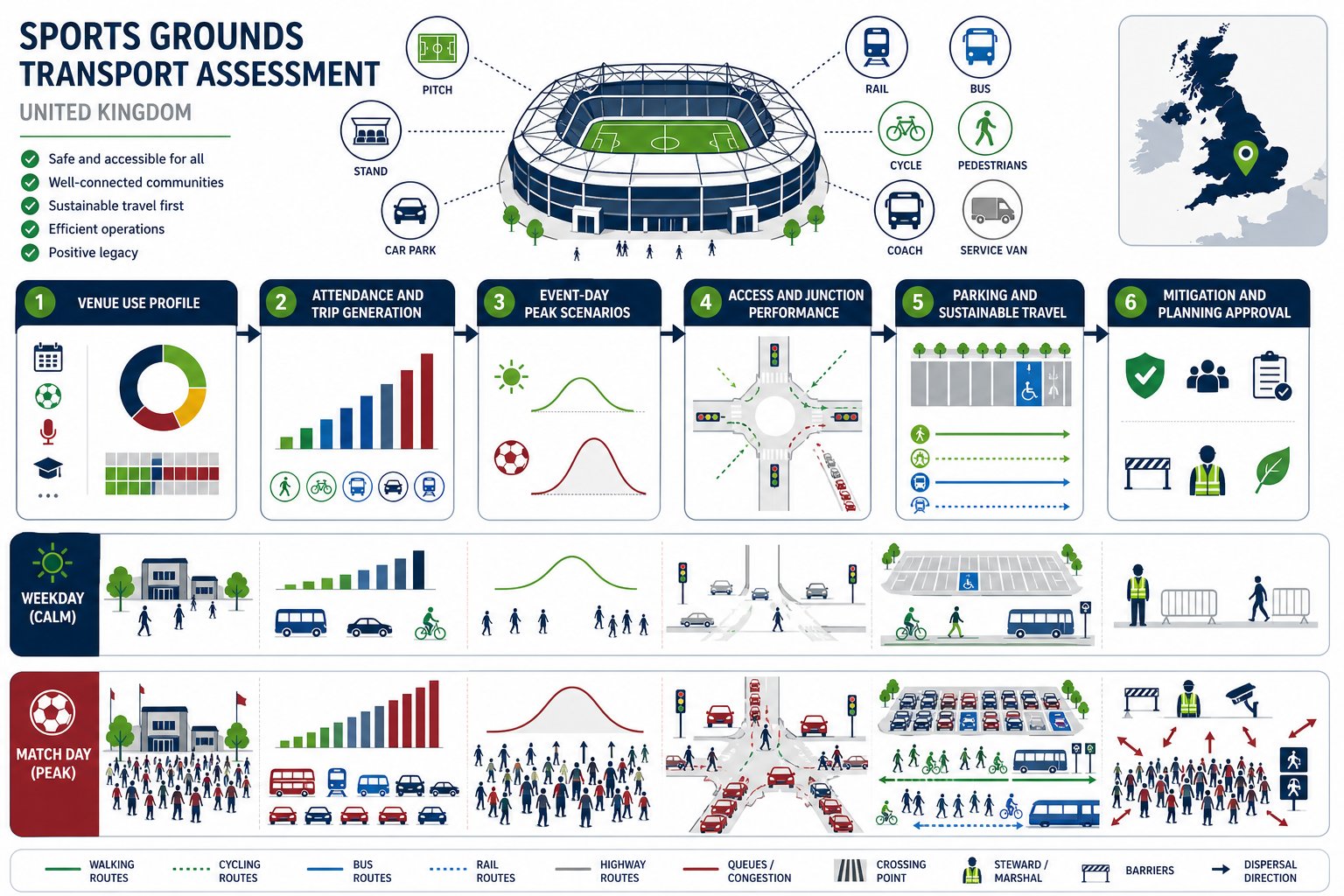
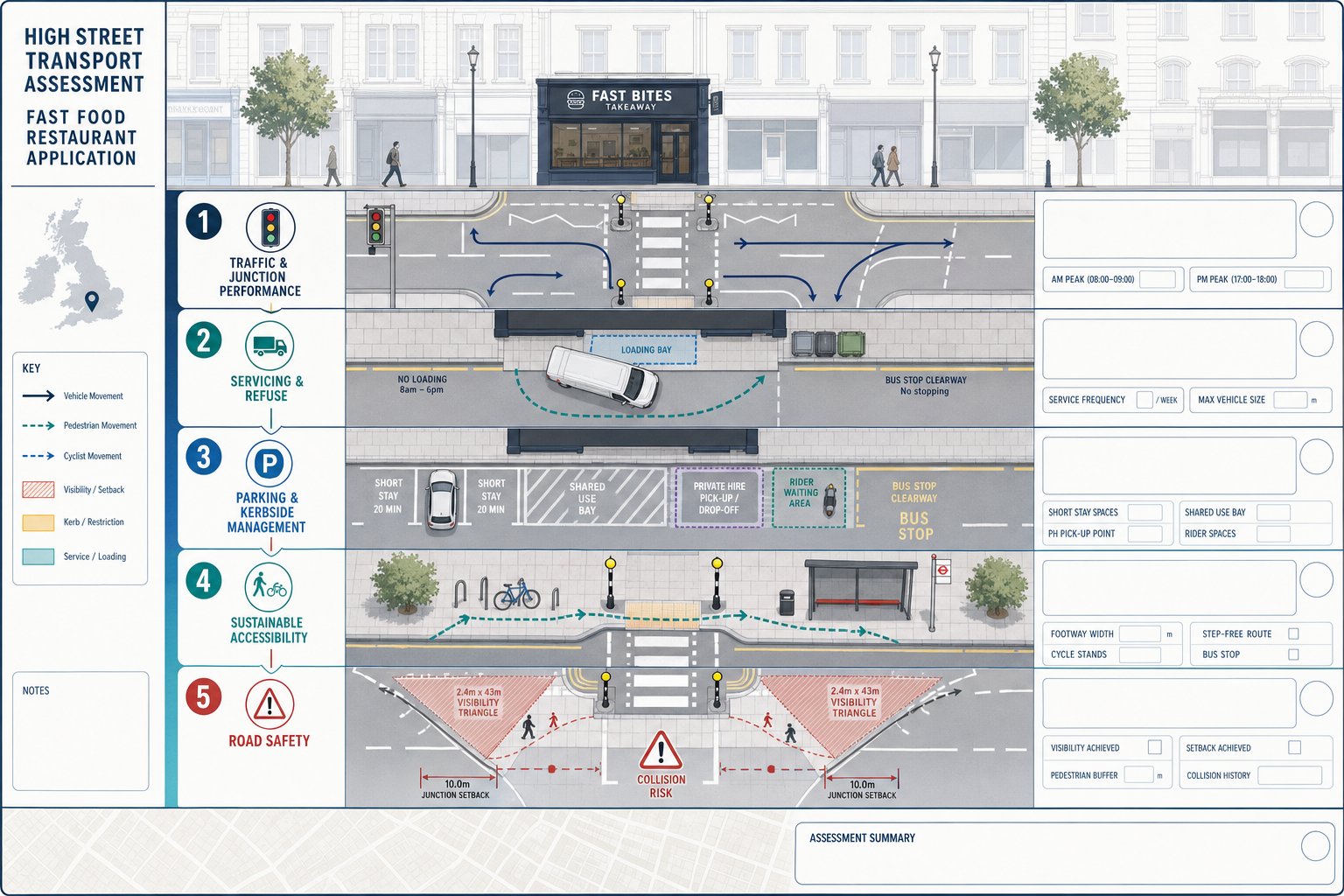
    Traffic engineering planning application process for a development site in Luton.
    infographic of traffic engineer steps for a Luton planning application

    A traffic engineer in Luton supports planning applications by translating a development proposal into measurable transport effects, then showing how those effects can be managed acceptably. In practice, that means much more than “doing a report”. We review the site, surrounding highway network, local policy position, likely trip generation, parking demand, access strategy and the way people are expected to travel to and from the scheme.

    For smaller applications, the work may be proportionate and concise. For larger or more sensitive proposals, it can involve junction modelling, queue analysis, accident review, swept-path testing, walking and cycling audits, and a carefully structured mitigation package. The key is not volume. It’s relevance. Planning officers and highway consultees want clear evidence that the proposal has been assessed properly and that the conclusions are defensible.

    We also help teams understand when transport input needs to start. Too often, layout, unit mix or servicing assumptions are fixed before anyone has tested whether the site can actually operate safely. Early advice from Traffic Engineering Consultants: can prevent redesign later, especially where access constraints or local parking standards are tight.

    At its best, transport input helps the rest of the consultant team move faster. It gives planners a stronger policy case, architects clearer design parameters, and applicants a better chance of avoiding late-stage objections from Luton Council Highways or National Highways.

    Projects In Luton That Commonly Need Transport Input

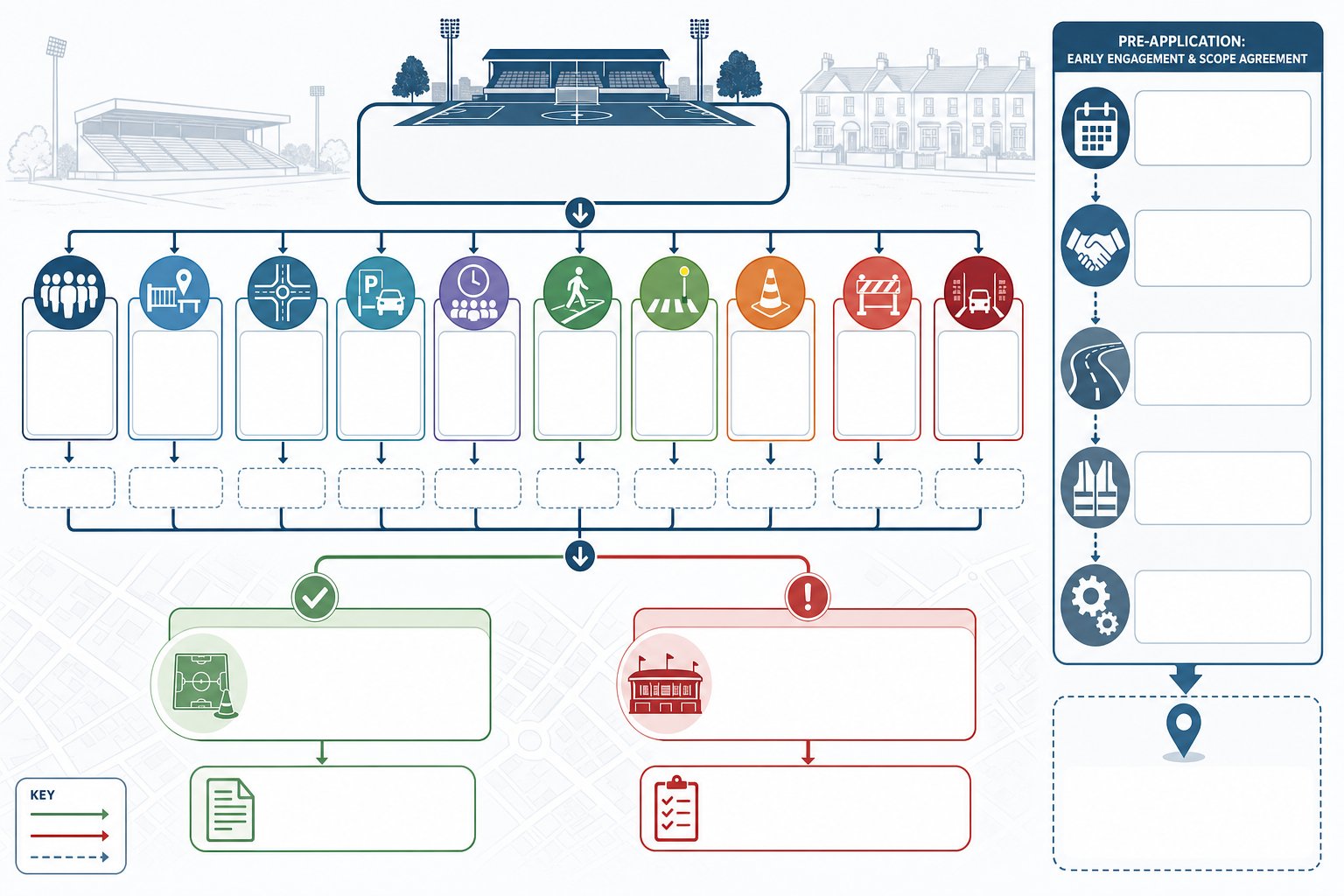
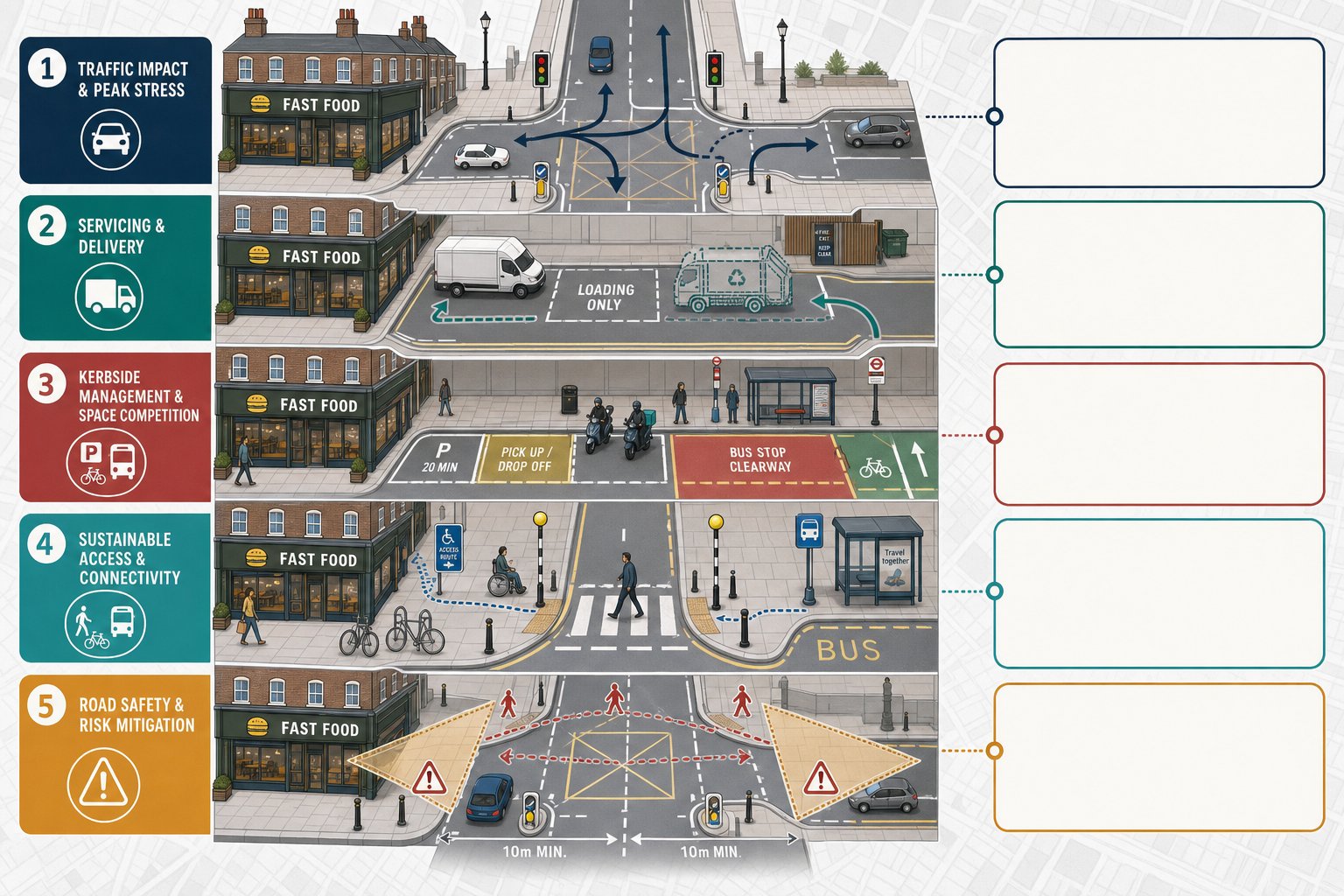
    Infographic of Luton developments needing transport engineering review and traffic impact analysis.
    Infographic showing Luton project types that need transport planning input.

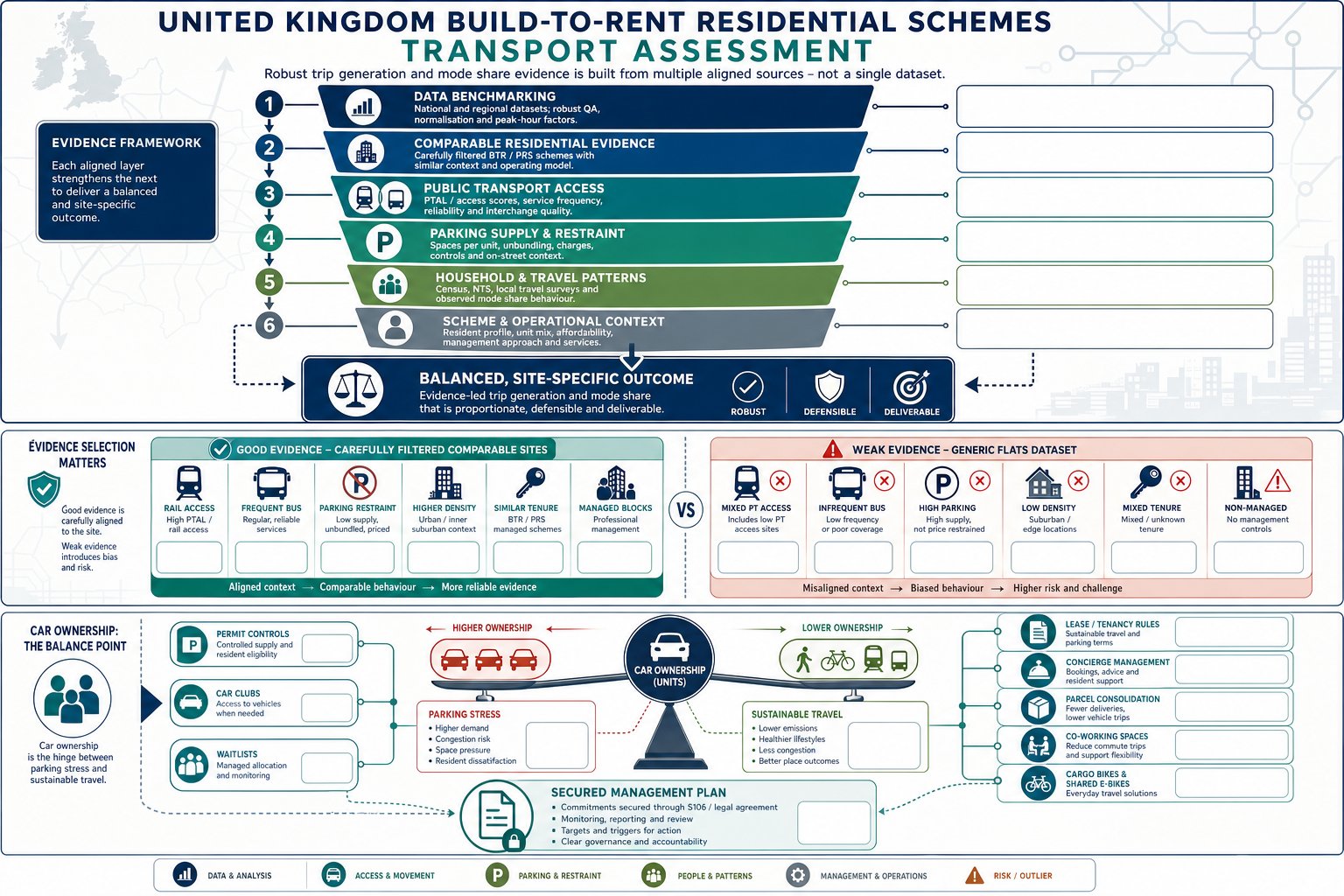
    Luton has a development pattern that makes transport evidence especially important. Residential schemes are a major part of the workload, ranging from small infill sites and flat conversions to larger estates and mixed-use urban regeneration. Even when trip rates are modest, local concerns around parking stress, access width, refuse collection, school traffic and pedestrian safety can push transport matters high up the agenda.

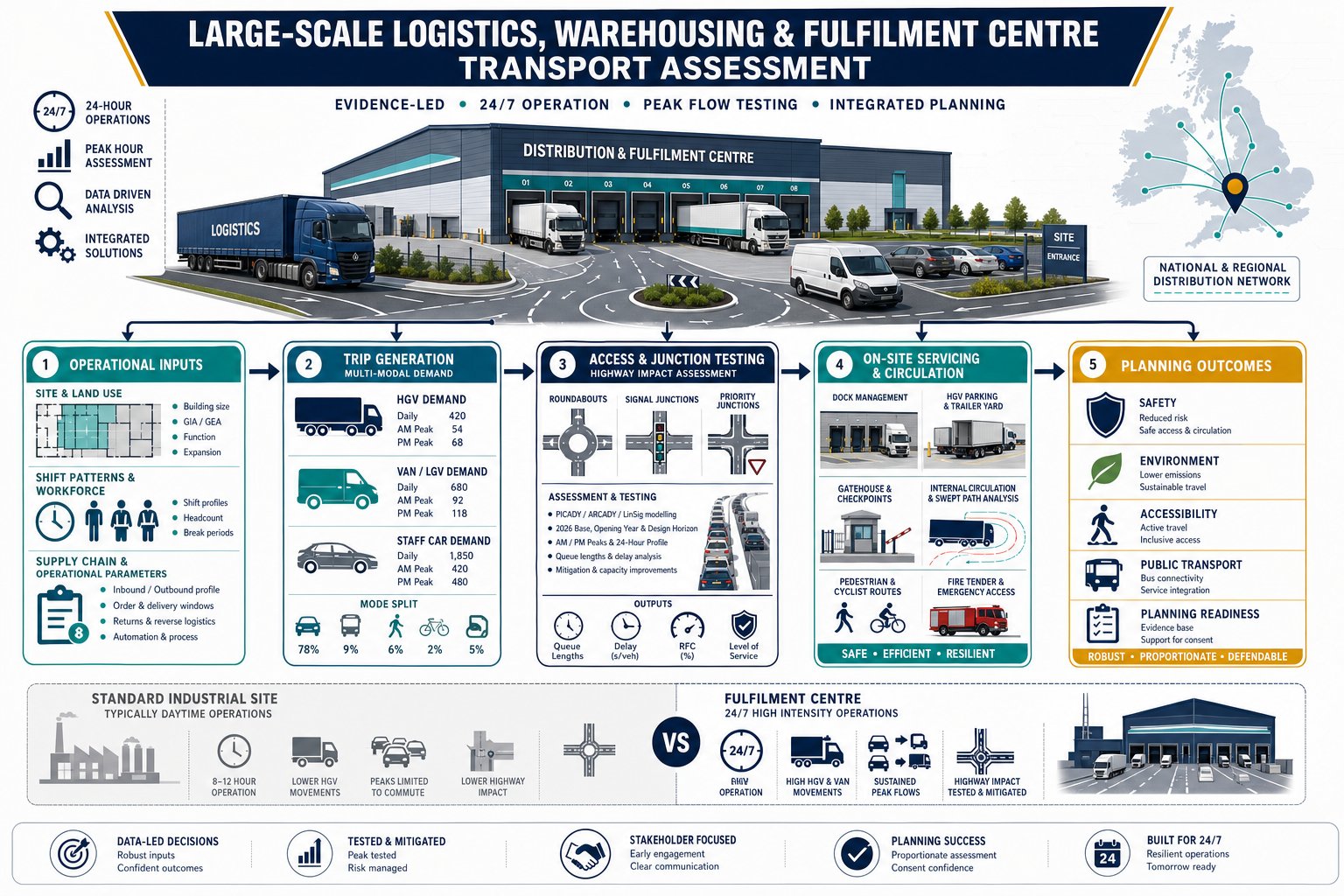
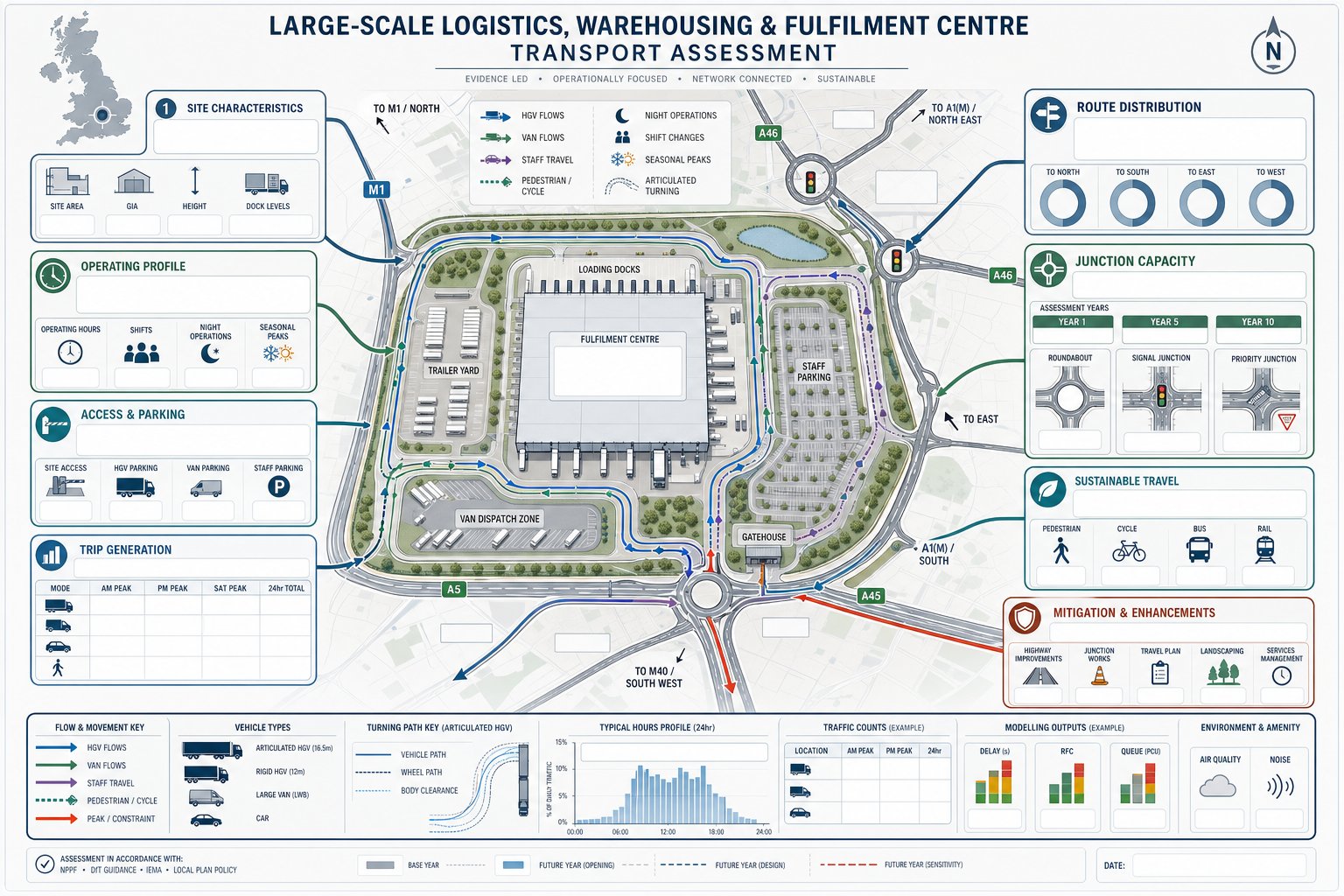
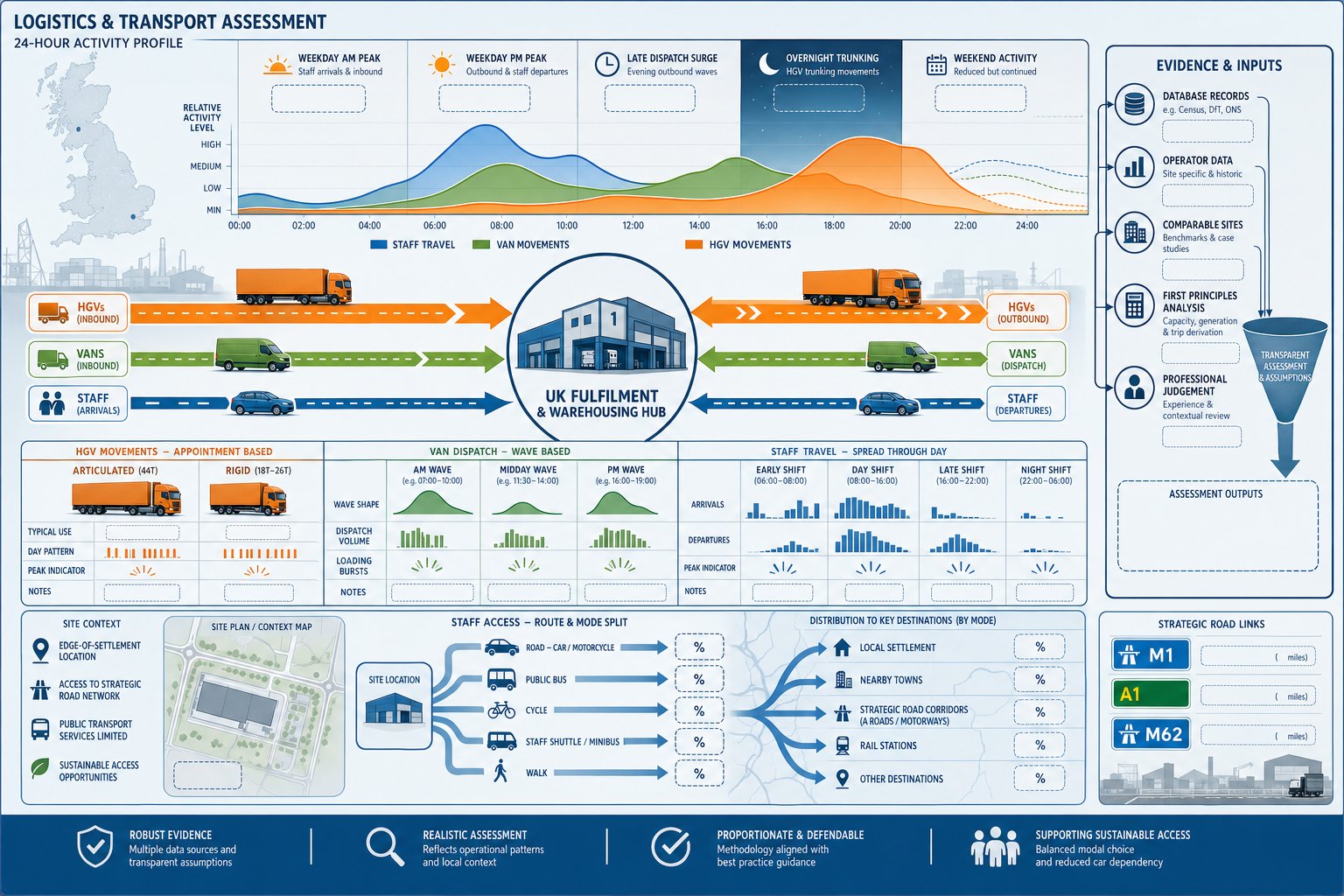
    Commercial development is another common trigger. Employment sites, warehousing, trade counters and roadside uses near the M1 corridor, Junctions 10 and 11, or key distributor roads often need robust analysis because HGV movements, shift patterns and servicing can materially affect the surrounding network. Retail and drive-thru proposals also attract scrutiny, particularly where short-stay turnover, queueing and proximity to signalised junctions are involved. On these schemes, principles from Commercial Traffic Engineering become highly relevant.

    Schools, healthcare facilities and town-centre mixed-use schemes regularly require transport input too. These uses can generate peaky travel patterns, vulnerable road user interactions and delivery constraints that simple headline trip numbers don’t capture.

    In Luton specifically, sites influenced by airport activity, strategic roads, bus corridors or dense residential streets often need a more careful transport narrative than applicants first expect. The threshold for concern is not just scheme size. It’s context, sensitivity and whether the local highway authority can see that the proposal has been thought through properly.

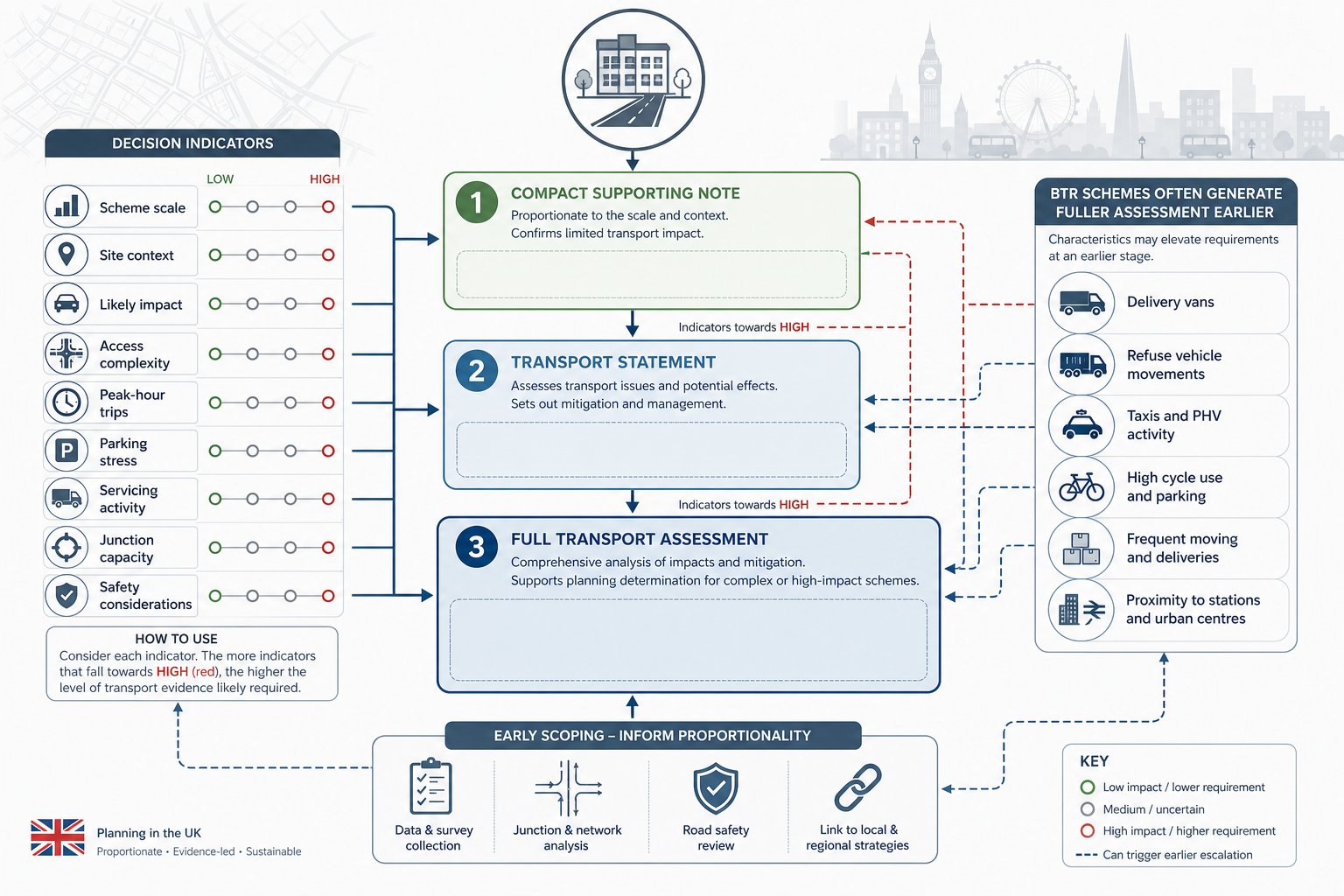
    Transport Assessment Vs Transport Statement Vs Travel Plan

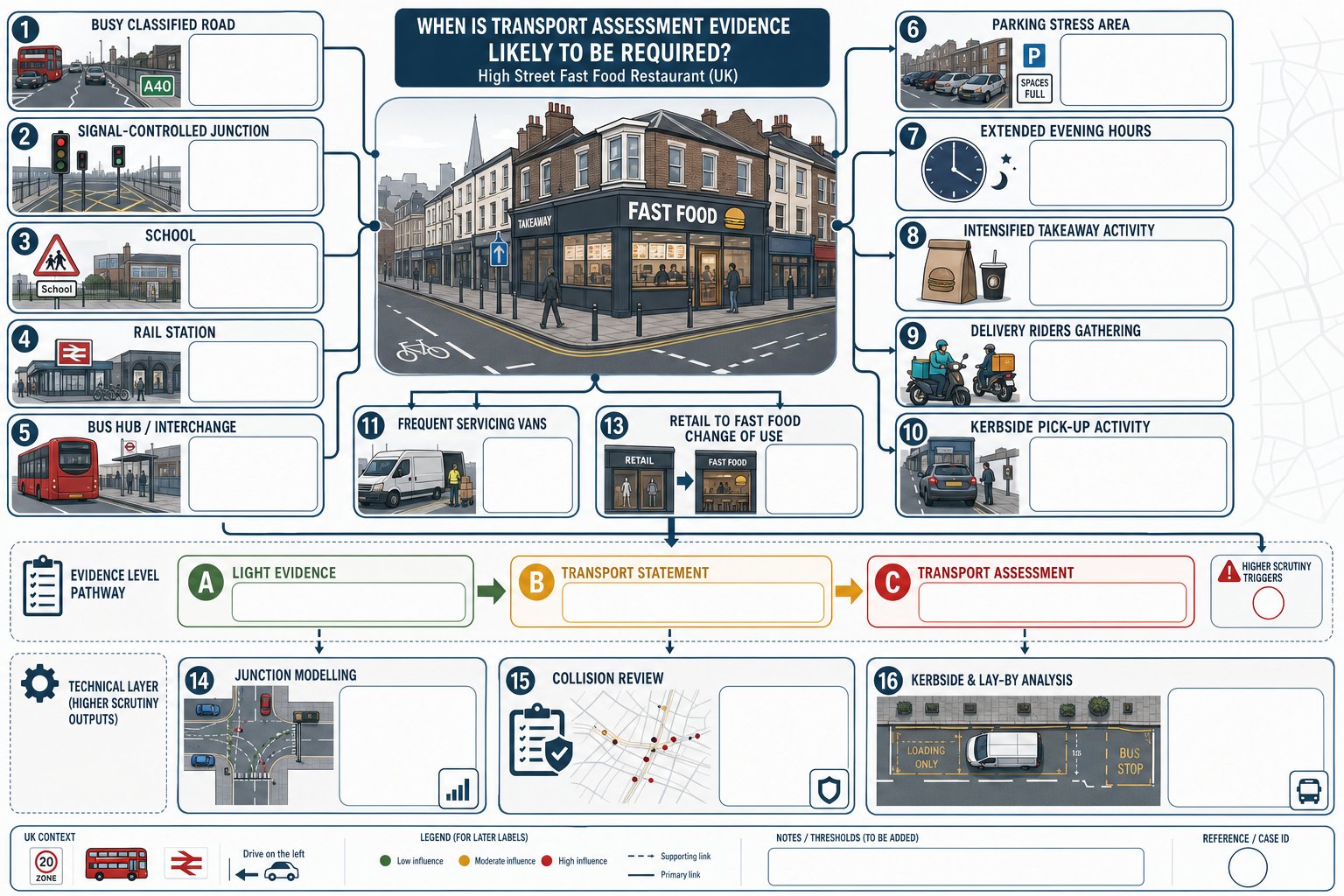
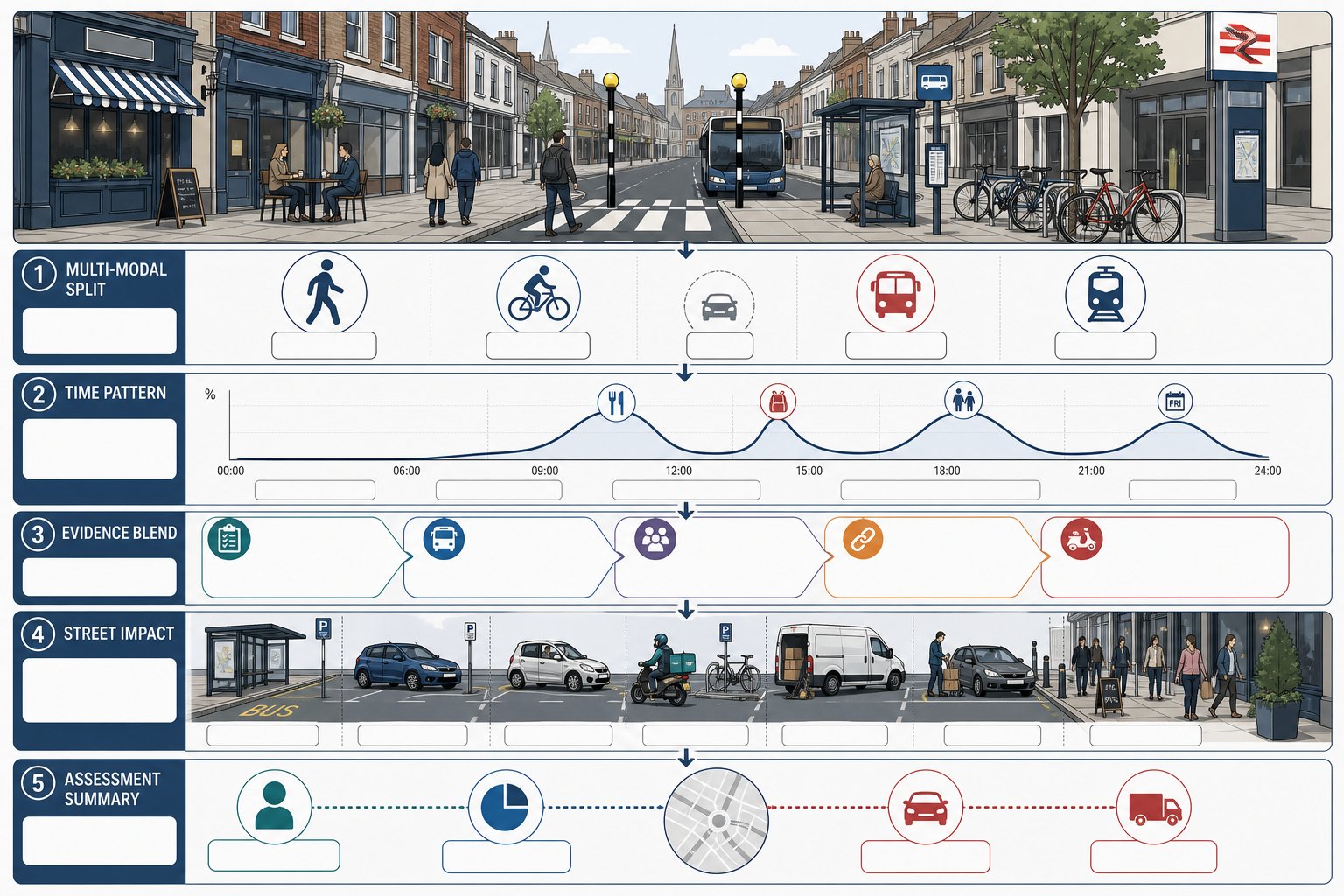
    comparison infographic of Transport Assessment, Transport Statement, and Travel Plan options.
    Comparison infographic of Transport Assessment, Transport Statement and Travel Plan.

    These three documents are often mentioned together, but they do different jobs.

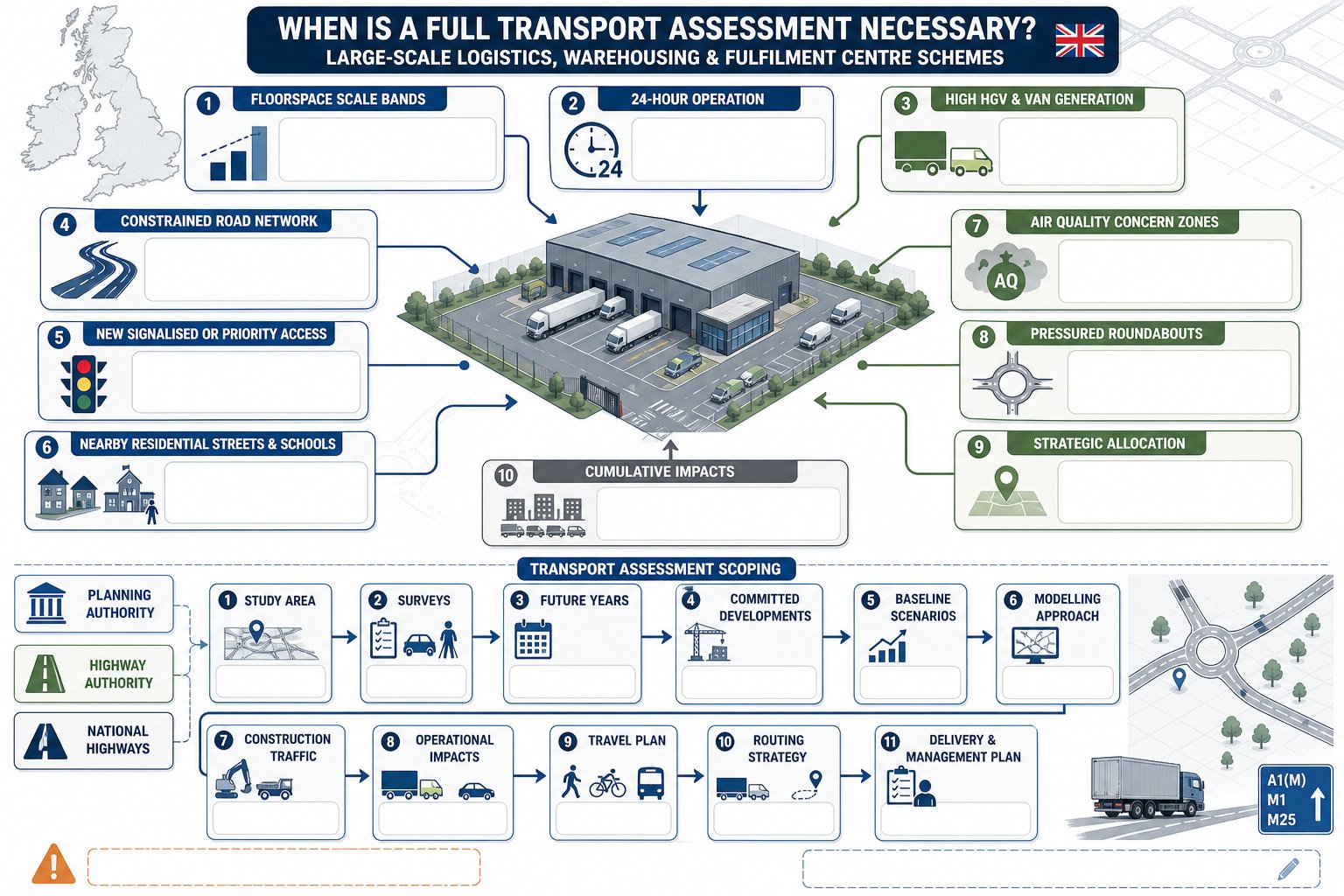
    A Transport Assessment (TA) is the more detailed option. It is generally used where a development is likely to have a material transport impact or where the site context is sensitive enough to justify fuller analysis. A TA may include multi-modal trip generation, distribution and assignment, committed development review, junction modelling, road safety commentary, parking analysis and mitigation proposals. It is the document most likely to be scrutinised line by line by highway consultees.

    A Transport Statement (TS) is lighter and more proportionate. It is usually suitable for smaller schemes where impacts are limited and can be explained without extensive modelling. That does not mean it can be vague. A good TS still needs sound survey evidence, policy alignment and a reasoned conclusion.

    A Travel Plan is different again. It focuses on behaviour, not just capacity. It sets out measures, targets and monitoring to encourage walking, cycling, public transport, car sharing and lower car dependency. For many developments, especially employment, education and larger residential schemes, it forms an important part of the planning package.

    The challenge is choosing the right tool for the application. We often advise teams using a framework similar to Traffic Engineering and Transportation: start with scale, then test sensitivity, then align scope with the authority’s expectations. Getting that judgment right early can save weeks.

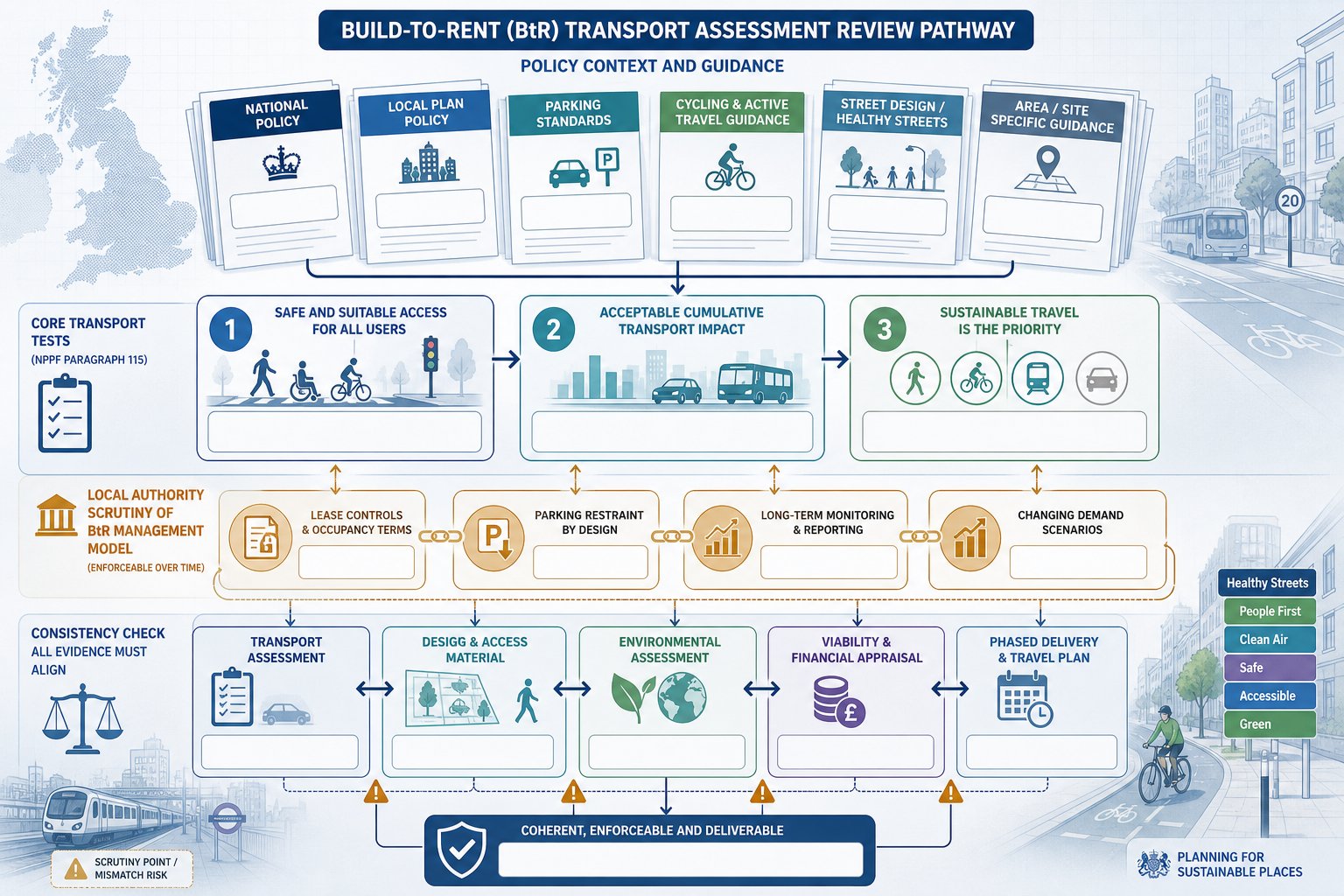
    How Local Planning And Highway Requirements Shape Transport Reports In Luton

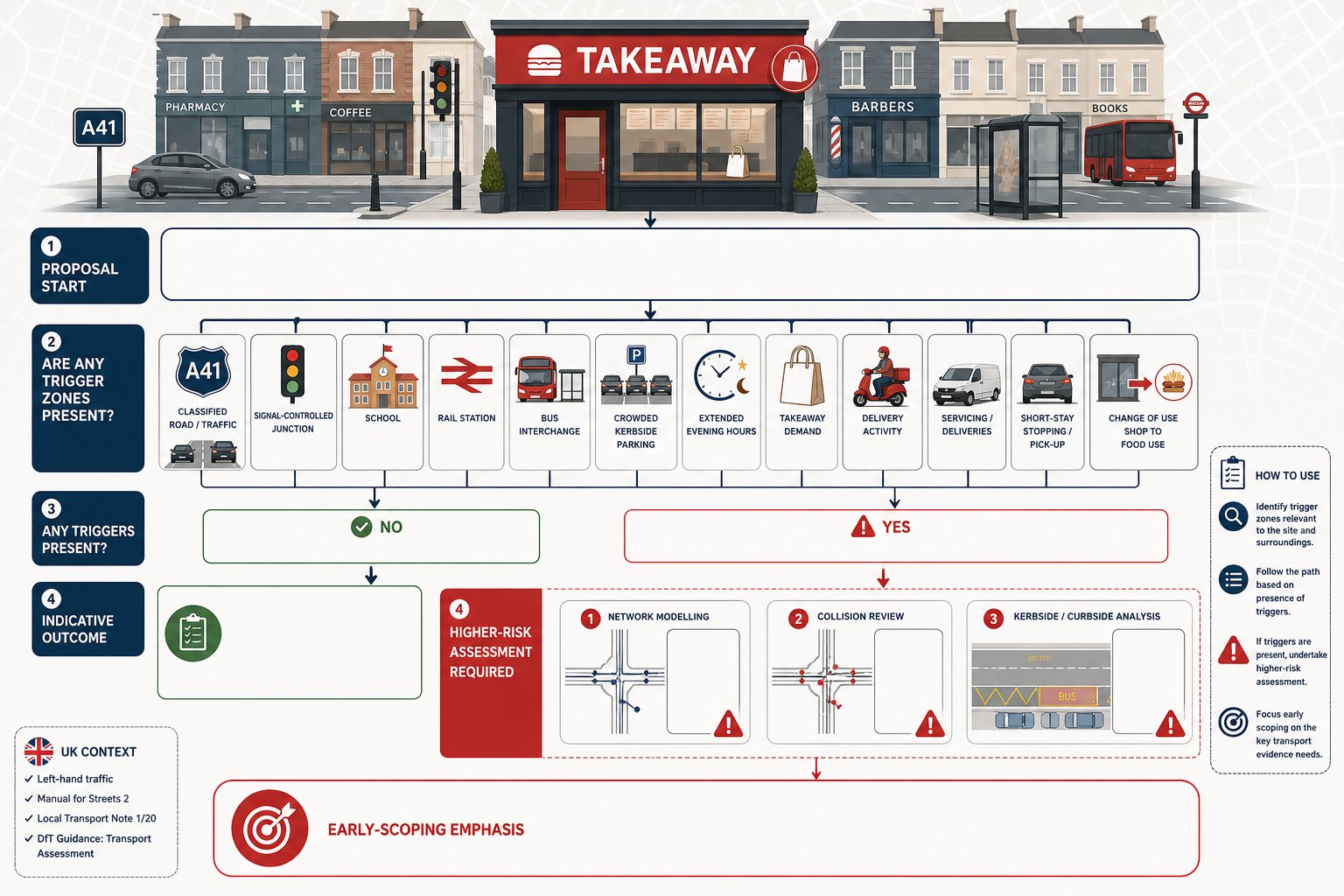
    Infographic of Luton transport report inputs, local constraints, and planning process.
    Infographic showing how local planning and highways shape transport reports in Luton.

    Transport reports in Luton aren’t written in a vacuum. They need to fit the local planning framework, the practical expectations of Luton Council Highways, and, on some schemes, the strategic concerns of National Highways. National guidance matters, of course: the National Planning Policy Framework, Manual for Streets, relevant DfT advice, parking and design guidance, and accepted trip-rate sources such as TRICS or other recognised evidence bases all feed into the work. But local interpretation is what often decides whether a report lands well.

    That means understanding Luton’s Local Plan policies, parking standards, sustainable transport objectives and the characteristics of the surrounding network. Authorities will usually want the scope to reflect the site’s actual constraints: nearby schools, bus stop placement, established on-street parking pressure, existing collision history, rat-running patterns, or strategic road interfaces.

    Scoping discussions are especially valuable here. Agreeing survey dates, assessment years, committed development assumptions, modelling scenarios and report format before drafting reduces the chance of later challenge. This is where broad experience in Highway And Traffic Engineering helps, because the issue is rarely just calculation. It’s judgment.

    In our experience, the strongest transport reports for Luton combine technical rigour with local realism. They don’t overstate benefits, and they don’t duck awkward constraints. They show that the applicant understands how the site functions today and how the proposal will sit within that network tomorrow.

    Key Traffic And Access Issues That Affect Development Sites

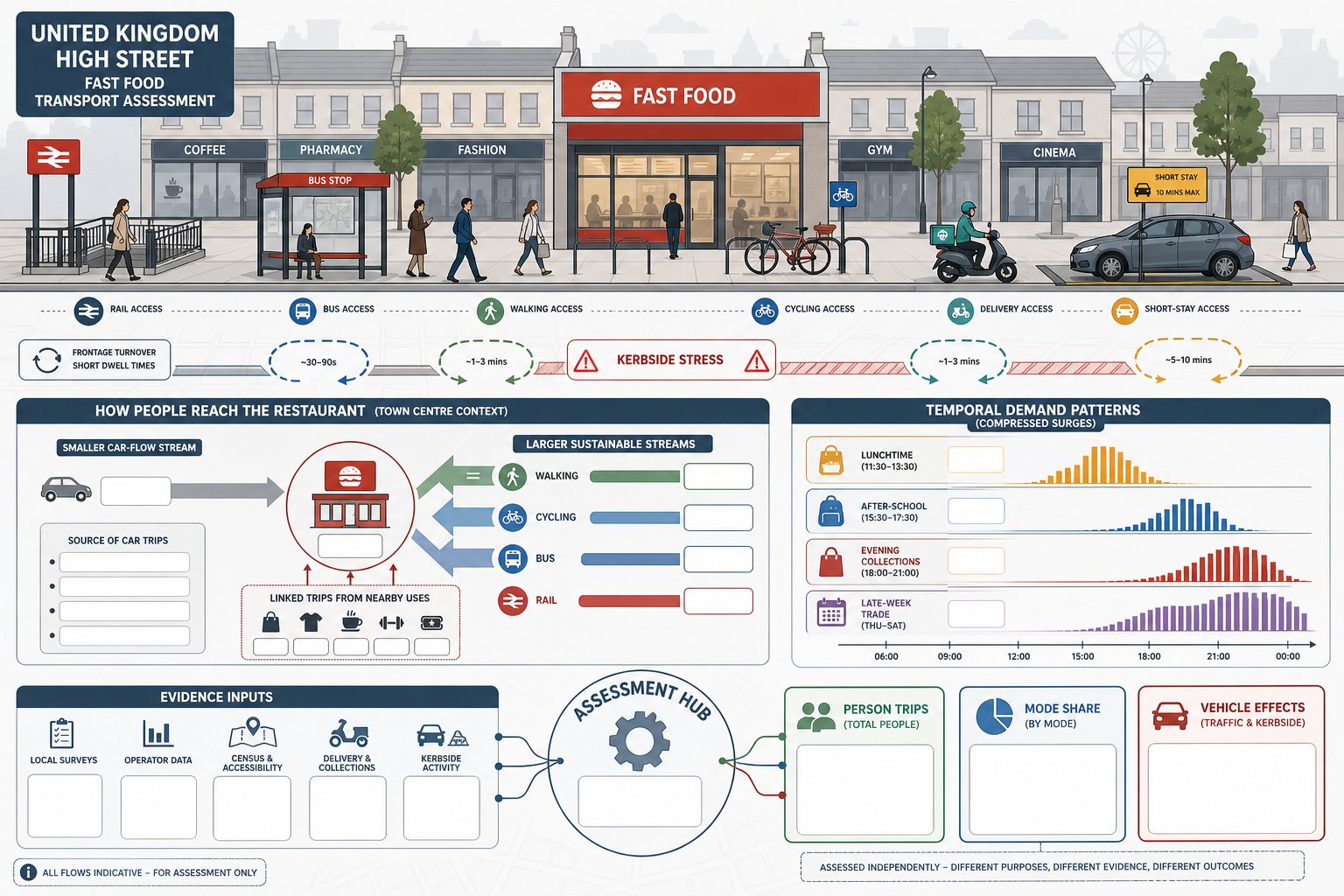
    Infographic of key traffic and access issues around a Luton development site.
    Infographic of development site traffic, access, parking, and pedestrian issues in Luton.

    Some transport issues appear again and again in Luton planning work. Junction capacity is one of them, particularly where a site loads traffic onto already stressed corridors or where a “small” increase still affects a constrained arm at peak times. But capacity is only part of the picture. Safety, access quality, operational practicality and neighbourhood effects can be just as influential.

    For example, a site may generate relatively few trips yet still attract concern because vehicles must turn across traffic near a crossing point, because deliveries would block internal circulation, or because displaced parking could intensify pressure on nearby residential streets. Likewise, a proposal close to the strategic road network may need to prove not only that its access works locally, but that cumulative effects at a wider level remain acceptable.

    We also see recurring concerns around bus route interference, school pick-up conflict, pedestrian severance and informal rat-running. These aren’t always easy to capture in a single spreadsheet or model output. They require a practical reading of how people actually move through a place.

    Good transport input hence looks at the whole chain: how vehicles enter, turn, park, service and leave: how pedestrians and cyclists cross desire lines: and whether the layout works in the messy, real-world conditions that officers and neighbours will notice immediately.

    Access Design, Visibility, And Highway Safety Considerations

    Access design is often where planning transport work becomes tangible. But persuasive a trip forecast may be, a scheme can still stall if the proposed access is awkward, substandard or unsafe. In Luton, this frequently means close attention to visibility splays, carriageway width, radii, gradients, forward visibility, pedestrian crossing points and the relationship between the access and surrounding kerbside activity.

    The applicable standard depends on context. Some sites are best assessed with Manual for Streets principles: others, particularly those touching faster roads or more strategic conditions, need a more conservative approach informed by DMRB or authority-specific expectations. The important point is that the chosen standard has to be justified and applied consistently.

    Highway safety review should also go beyond geometry. We need to understand whether an access sits near a bus stop, a school entrance, a bend, a loading bay or habitual on-street parking. Those details can materially change how safe an arrangement is in practice.

    On many projects, early coordination between transport and design teams avoids expensive revision. Broader principles from Traffic Engineering: Your are useful here, but every Luton site still needs its own evidence-led response. A neat plan is not enough if drivers, cyclists or pedestrians won’t interact with it predictably on the ground.

    Parking, Servicing, And Vehicle Tracking Requirements

    Parking and servicing are where otherwise viable schemes often become vulnerable. Luton Council will typically expect proposals to align with local parking standards or, where a departure is proposed, explain clearly why that variation is justified. For residential schemes, that can involve unit mix, visitor provision, disabled bays, electric vehicle charging and cycle storage. For commercial uses, turnover, staff travel patterns, delivery frequency and operational dwell times become critical.

    Servicing is just as important. If refuse vehicles, delivery vans or emergency vehicles cannot enter and leave safely, the report will be challenged quickly. This is why swept-path analysis matters. Vehicle tracking demonstrates whether the site layout works for the design vehicles it claims to accommodate, including turning, reversing, overrun and conflict points.

    We also look carefully at the real operational question: will servicing happen as designed, or will drivers default to kerbside stopping because the service yard is too tight, inconvenient or poorly sequenced? That gap between drawing-board logic and on-site behaviour is where objections often emerge.

    Clear transport reporting helps bridge that gap. When layout, parking supply and servicing strategy are tested together rather than in isolation, the planning case becomes much more robust and much easier for officers to support.

    Sustainable Travel, Walking, Cycling, And Public Transport Expectations

    By 2026, it is no longer enough for a planning submission to show that cars can get in and out. Luton schemes are increasingly expected to demonstrate credible sustainable travel choices as part of the development strategy. That means safe walking routes, direct pedestrian links, secure and convenient cycle parking, and realistic access to bus or rail services where those options exist.

    This is not just policy theatre. Sustainable access can directly affect trip generation assumptions, parking demand, Travel Plan commitments and the authority’s overall view of whether a site is in an appropriate location for the proposed use. If a development relies heavily on car travel in a place where walking, cycling or public transport should be viable, that tension usually needs to be addressed head on.

    A strong package may include footway improvements, crossing upgrades, better cycle access, contributions to bus stop infrastructure, wayfinding, welcome packs, car club measures or phased Travel Plan targets. The level of intervention depends on scale and context.

    For project teams working across regions, comparisons with places such as Traffic Engineer In London: can be instructive, but Luton’s own network and policy context still set the benchmark. The most persuasive submissions show that sustainable travel has been designed in from the outset, not bolted on at the end as a token paragraph.

    The Typical Process From Site Review To Planning Submission

    A well-run transport input process usually follows a clear sequence, even though the details vary by project.

    First comes the initial brief: what is proposed, what drawings exist, what planning route is intended, and where the likely transport pressure points are. Then we review policy, planning history, site constraints and the surrounding highway context. That early stage often reveals whether the scheme is likely to need a TS, a TA, a Travel Plan, access drawings, swept paths, junction modelling or some combination of these.

    Next comes scoping with the relevant authority or authorities. In Luton, this is often one of the most valuable steps, because it can settle questions on survey coverage, peak periods, assessment years, baseline conditions and whether National Highways needs to be engaged.

    After that, surveys and data collection are carried out, followed by trip forecasting, capacity testing, design review and iterative coordination with the wider consultant team. Draft reporting is then prepared, checked and refined before submission. If comments come back from the local highway authority, a good transport consultant responds with evidence rather than defensiveness.

    That workflow sounds straightforward, but timing matters. Late instruction, incomplete drawings or unagreed assumptions can quickly compress the programme and reduce the quality of the submission.

    What Information A Traffic Engineer Needs At The Start

    The quality of the final report is heavily influenced by the quality of the information we receive at the beginning. At a minimum, we normally need the red-line boundary, a clear description of the proposed development, existing and proposed site layout drawings, access arrangements, parking numbers, cycle provision, servicing strategy and any known phasing.

    We also need to understand the planning history. Previous refusals, appeal decisions, pre-application advice, old highway comments or legacy access concerns can all shape the right approach. If there are known constraints around easements, land control, visibility ownership or nearby highway works, those should be flagged early rather than surfaced later.

    For larger or phased schemes, detail on build-out assumptions, staff numbers, opening hours, delivery patterns and anticipated mode split can materially affect the analysis. The same applies to adjacent developments that may already be committed.

    This is where experienced teams often benefit from the discipline used by Traffic Engineer In Liverpool: and similar project-led approaches elsewhere: define the practical questions first, then gather the data that genuinely answers them. Better inputs lead to clearer scoping, fewer revisions and reports that stand up more confidently under scrutiny.

    Common Reasons Transport Reports Are Delayed Or Challenged

    Most delayed transport submissions don’t fail because the maths is impossible. They fail because the basics weren’t handled cleanly.

    A common issue is out-of-date or incomplete traffic survey data. If surveys were collected in unusual conditions, outside agreed periods, or without enough coverage of nearby junctions and pedestrian routes, the authority may simply not accept the baseline. Another regular problem is skipping formal scoping. When applicants assume what Luton Council Highways will want, rather than agreeing it, they risk producing a report that answers the wrong questions.

    We also see schemes challenged for weak junction modelling, unrealistic trip assumptions, omission of committed developments, or failure to test peak periods that actually matter locally. Parking is another frequent source of difficulty. A development might look compliant at headline level yet still face objections if disabled provision, cycle parking, EV charging, visitor demand or servicing overlap have not been resolved properly.

    And then there’s presentation. Even technically sound analysis can lose credibility if the report is inconsistent, poorly explained or missing audit trails. Teams that work with the discipline associated with Traffic Engineer In Manchester: style reporting tend to avoid that trap: clear assumptions, transparent appendices, and conclusions that genuinely follow from the evidence.

    Choosing The Right Traffic Engineer In Luton For Your Project Team

    Not every consultant offering transport reports is equally well suited to a Luton planning application. The right choice is usually a team that combines technical competence with local awareness and commercial realism. In plain terms, they should know what a report needs to say, what evidence needs to sit behind it, and how Luton and nearby authorities are likely to interrogate it.

    We’d suggest looking for four things.

    First, relevant planning-facing experience. Pure highway design knowledge is useful, but planning support requires proportionate judgment, policy literacy and the ability to write clearly for officers, not just engineers.

    Second, practical command of the tools. Junction modelling, trip forecasting, swept-path analysis, CAD-based access review and parking assessment should all be within reach where the project demands them.

    Third, a track record of producing concise, audit-ready reports. Long reports do not automatically perform better. Decision-makers value clarity.

    Fourth, responsiveness. Development programmes move quickly, and transport advice is most valuable when it informs the scheme early rather than reacting after the layout is fixed.

    For many clients, that is why specialist teams with a focused Traffic Engineer in Luton perspective are easier to work with than generalists. The best consultant doesn’t just identify risks. They help the wider team solve them in time to keep the application moving.

    Conclusion

    For planning applications in Luton, transport input is rarely a box-ticking exercise. It affects layout, access, parking, servicing, sustainability credentials and, eventually, whether an authority feels comfortable granting permission. The schemes that move most smoothly are usually the ones where transport issues are identified early, scoped properly with the relevant highway bodies, and addressed in a way that reflects both local policy and real on-street conditions.

    A capable traffic engineer in Luton helps turn that into a practical strategy. We test assumptions, identify risks before they harden into objections, and produce reports that are proportionate, technically sound and easier for decision-makers to trust. For architects, planners, developers, surveyors and councils alike, that early clarity can make the difference between a submission that drifts and one that progresses with confidence in 2026.

    Frequently Asked Questions about Traffic Engineering in Luton

    What role does a traffic engineer in Luton play in planning applications?

    A traffic engineer in Luton assesses the transport impact of a development, forecasting trip generation, parking demand, and junction capacity. They prepare Transport Assessments, Statements, and Travel Plans to ensure schemes comply with Luton Council and National Highways requirements, supporting smoother planning approvals.

    How do Transport Assessments differ from Transport Statements and Travel Plans in Luton?

    Transport Assessments (TAs) are detailed reports for developments with significant transport impact, including modelling and safety reviews. Transport Statements (TSs) are lighter, proportionate documents for smaller schemes. Travel Plans focus on behavioural strategies to promote sustainable travel and reduce car use.

    Which types of development in Luton typically require transport engineering input?

    Residential projects, especially larger estates or infill schemes, retail and drive-thru outlets near M1 junctions, employment and warehousing sites, schools, healthcare facilities, and town-centre mixed-use developments usually need transport assessments due to their impact on local traffic, parking, and safety.

    Why is early engagement with a traffic engineer recommended for Luton developments?

    Early involvement helps identify transport risks and constraints before finalising layout or servicing plans, preventing costly redesigns. It ensures alignment with Luton Council Highways on scope, survey needs, and access design, which improves the chances of timely planning approval and reduces objections.

    What are common transport-related issues that can delay or challenge planning approval in Luton?

    Delays often arise from outdated or insufficient traffic survey data, lack of scoping with highway authorities, inadequate junction modelling, not accounting for committed developments, and failure to meet local parking or visibility standards. Poorly explained or inconsistent reports also risk rejection.

    How do sustainable travel considerations affect transport reports in Luton?

    Schemes must demonstrate provision for walking, cycling, and public transport access, with secure cycle parking and links to bus or rail. Travel Plans outlining targets to reduce car dependency are essential, aligning with Luton’s Local Transport Plan and influencing parking demand and trip forecasts.

  • Traffic Engineer In Newcastle: Planning Reports, Local Insight, And Faster Approvals In 2026

    Traffic Engineer In Newcastle: Planning Reports, Local Insight, And Faster Approvals In 2026

    A planning application can look straightforward on paper and still stall the moment highways become an issue. That’s especially true in Newcastle, where steep streets, constrained city-centre corridors, Controlled Parking Zones, busy bus movements and event traffic can turn a simple access question into a long planning exchange.

    That’s where a Traffic Engineer in Newcastle earns their keep. We’re not just producing a report to tick a validation box. We’re helping project teams show, with evidence, that a scheme can operate safely, fit local policy, and support sustainable movement choices without creating avoidable objections from highways officers or consultees.

    For architects, planners, surveyors, solicitors, developers and local authorities, the value is usually the same: less guesswork, clearer advice early on, and a better chance of getting to determination without rounds of preventable revisions. In practice, that means understanding Newcastle City Council requirements, knowing when a Transport Statement is enough and when a fuller Transport Assessment is needed, and shaping mitigation so it is realistic rather than theoretical.

    In this guide, we explain what a traffic engineer does for planning applications in Newcastle, when transport input becomes necessary, which documents matter most, and how local conditions influence what gets accepted. We’ll also cover how we work with the wider consultant team and what to look for when appointing the right specialist.

    Key Takeaways

    • A Traffic Engineer in Newcastle provides crucial, evidence-based transport input to ensure planning applications meet local policy and operate safely within the city’s unique conditions.
    • Early engagement with a traffic engineer helps identify potential issues with site access, parking, and servicing, reducing costly revisions during the planning process.
    • Not all schemes require the same level of transport assessment; proportionality is key, with options ranging from concise Transport Statements to comprehensive Transport Assessments.
    • Local factors such as Newcastle’s steep topography, Controlled Parking Zones, and event-related traffic must be considered to produce credible and acceptable transport reports.
    • Effective collaboration between traffic engineers, architects, planners, lawyers, and developers leads to more efficient planning outcomes and clearer, realistic proposals.
    • Choosing a traffic engineer with local knowledge, technical competence, and negotiation skills is vital to navigate Newcastle City Council requirements and streamline application approval.

    What A Traffic Engineer In Newcastle Does For Planning Applications

    Infographic of a traffic engineer assessing site access, safety and planning evidence.

    A Traffic Engineer in Newcastle provides the technical evidence that helps a planning proposal stand up to scrutiny. At its simplest, that means reviewing how people, vehicles, cycles and service movements will reach and use a site. But in planning terms, the job is broader than many expect.

    We assess likely trip generation, parking demand, servicing patterns, site access, road safety considerations and the potential effect on nearby junctions and streets. We then compare that evidence against national policy such as the National Planning Policy Framework, guidance such as Manual for Streets, and local expectations set by Newcastle City Council. The aim is to show that the development is safe, efficient and sustainable for all users, not only drivers.

    Good transport input also starts early. If access geometry is weak, if visibility is constrained, or if a layout creates awkward refuse tracking, those issues are usually cheaper to solve before the design is fixed. That is why transport advice often sits alongside architectural and planning strategy from the outset.

    For multi-site operators and project teams working beyond the North East, the same planning logic appears in other cities too, although thresholds and local emphasis differ. That wider context is reflected in work such as Traffic Engineering Consultants: and regional planning support like Traffic Engineer In Leeds:.

    In short, our role is part analyst, part designer, part negotiator. The report matters, yes, but so does the judgement behind it.

    When You Need Transport Input For A Newcastle Development

    Infographic showing when Newcastle developments need traffic engineering input.

    Transport input is usually needed when a scheme changes how a site connects to the highway network or increases movement in a way the local authority will want tested. Sometimes that trigger is obvious: a new residential development, a foodstore, a student scheme or an employment site. Sometimes it is less dramatic, such as a change of use that intensifies deliveries, raises parking stress, or introduces a new access point onto the public highway.

    In Newcastle, we would normally advise early transport review where a development involves:

    • a new or altered vehicular access
    • increased traffic generation or servicing demand
    • material parking pressure
    • a site in a constrained urban location
    • policy-sensitive uses where mode share and sustainable travel need careful justification
    • junctions already known to experience peak-period pressure

    The key point is proportionality. Not every scheme needs a lengthy Transport Assessment. Some only require a concise Transport Statement supported by sensible drawings and baseline evidence. Others need junction modelling, travel planning and negotiation with multiple parties, including National Highways where the strategic network could be affected.

    That judgement call is where experience counts. Early scoping can prevent both under-reporting and over-reporting, two very different problems, but both expensive in their own way.

    Common Project Types That Require Traffic Engineering Support

    The most frequent project types include residential schemes, PBSA, retail and leisure uses, schools, healthcare, industrial and logistics premises, and mixed-use urban redevelopment. Newcastle also sees plenty of city-centre conversion projects where transport is shaped less by raw trip numbers and more by servicing, car parking restraint, cycle provision and walkability.

    We’re often asked to support sites where the planning issue is not whether development can happen, but how it should function. A student accommodation scheme might need robust evidence on car ownership assumptions and servicing. A trade counter may hinge on swept path analysis and peak delivery patterns. A suburban housing site may stand or fall on access visibility, internal tracking and whether nearby junctions can accommodate additional demand.

    Comparable issues arise in other city regions: work delivered by Highway And Traffic Engineering teams or in places such as Traffic Engineer In Manchester: follows a similar principle: identify the real transport risk early, then assess it at the right level.

    How Newcastle Planning And Highway Requirements Shape Transport Reports

    Infographic showing Newcastle transport report factors like parking, access, cycling, and junctions.

    Transport reports are never written in a vacuum. In Newcastle, the content and depth of a report are shaped by local plan policy, parking expectations, site context and the concerns highways officers are likely to focus on.

    That means a Newcastle report should do more than recite national guidance. It needs to respond to local corridor pressures, public transport accessibility, the city’s cycling network, pedestrian connections, and any site-specific constraints such as nearby schools, loading activity or Controlled Parking Zones. Air quality and sustainable travel objectives can also influence what is expected, particularly on central or highly accessible sites where reduced car dependence is part of the planning argument.

    Parking is a good example. The issue is rarely just whether spaces meet a numeric standard. Officers may also want to understand overspill risk, disabled provision, servicing compatibility, cycle parking quality, and how the proposal aligns with the location’s accessibility profile. Likewise, access design is not only about drawing a bellmouth: it is about whether the arrangement feels safe and intuitive in real conditions.

    We also tailor scope to likely consultation dynamics. If a site is close to a sensitive junction or major route, capacity testing may be unavoidable. If the proposal relies on sustainable travel credentials, the evidence around walking, cycling and public transport needs to be robust rather than optimistic.

    That locally tuned approach is central to our work at ML Traffic, and it is the same principle behind regional planning support such as Traffic Engineer In Liverpool: and Traffic Engineer In Birmingham:: national standards matter, but local interpretation is what often decides the outcome.

    Key Documents Prepared By A Traffic Engineer

    Infographic of traffic engineering reports, transport planning, and access analysis in Newcastle.

    The documents we prepare depend on the scale of development, the site constraints and the likely planning questions. Some schemes need one concise report. Others need a coordinated pack of technical documents supporting access, parking, servicing, sustainable travel and delivery management.

    Common outputs include:

    • Transport Assessments
    • Transport Statements
    • Travel Plans
    • Construction Traffic Management Plans
    • Parking and Servicing Strategies
    • access appraisals and preliminary highway design input
    • swept path analysis plans
    • road safety audit support and responses

    The trick is not producing more paperwork than a project needs. A short, well-targeted submission often performs better than a bulky document that avoids the actual issue. Local authorities generally respond best when reports are proportionate, evidence-led and clear about mitigation.

    Transport Assessments, Transport Statements, And Travel Plans

    A Transport Assessment is the fuller, data-rich option used for larger or more sensitive proposals. It typically examines baseline network conditions, trip generation, trip distribution, modal split, traffic impact, parking, servicing and, where necessary, junction capacity. It is designed to answer the question: what effect will this development have, and is that effect acceptable?

    A Transport Statement is usually used for smaller schemes where impacts are expected to be limited. It is still evidence-based, but more concise and proportionate. A good TS doesn’t feel thin: it simply focuses on the issues that genuinely matter.

    A Travel Plan sits slightly differently. Its purpose is to encourage sustainable travel through practical measures and targets, public transport information, cycle facilities, appointment of a coordinator, welcome packs, car-club promotion, monitoring arrangements and so on. For many urban Newcastle sites, the Travel Plan is where the sustainable movement story becomes tangible.

    Junction Reviews, Access Appraisals, And Swept Path Analysis

    Junction reviews test whether nearby nodes can accommodate development traffic safely and efficiently. Depending on the case, that may involve observed operations, queue review, modelling software such as Junctions or LinSig, and sensitivity testing. The point is not to produce dramatic diagrams: it is to understand whether the network can absorb change and, if not, what mitigation would be proportionate.

    Access appraisals look at the direct interface between site and street. We review geometry, visibility, pedestrian crossing points, gradients, proximity to junctions, and the practical operation of entry and exit movements. Many planning delays start here because an access was assumed to work before it was properly tested.

    Swept path analysis then shows whether vehicles can manoeuvre safely within the site and at its access. Cars matter, but so do refuse vehicles, fire appliances, delivery vans and larger HGVs where relevant. Tracking often reveals layout conflicts that are easy to miss on an architectural plan, bin stores clipped by turning movements, awkward reversing, or service yards that technically fit but don’t really function. Fixing those issues before submission saves time, and usually a few headaches too.

    The Traffic Engineering Process From First Enquiry To Submission

    Five-stage traffic engineering process infographic for planning support in Newcastle.

    A well-run process makes planning smoother because it reduces late surprises. Our approach usually follows five broad stages.

    First comes scoping. We review the proposal, site access, likely policy triggers and whether engagement with Newcastle City Council, or in some cases National Highways, would be helpful before the application is submitted. This stage sets the assessment level and identifies the decisions that could affect layout, quantum or programme.

    Second is data collection. That may include traffic counts, junction observations, parking surveys, speed surveys, site visits, collision review and public transport accessibility checks. The objective is to replace assumptions with a defendable baseline.

    Third is analysis and design iteration. We test trip generation, parking demand, servicing and network effects, then work with the design team to refine layouts, access points, internal circulation and mitigation. This is often the most valuable stage because technical review can improve the scheme itself, not just the report.

    Fourth is report writing and submission support. We prepare the TA, TS, Travel Plan or other documents in a format suited to the application strategy.

    Fifth is post-submission support. Highways comments rarely arrive as a neat yes or no. They usually involve clarification, additional evidence, drawing amendments or condition wording. Staying involved during that period is often what gets the scheme over the line.

    For teams operating across multiple authorities, the broad process is familiar even where local detail changes, which is why approaches used in Traffic Engineer In London: or Traffic Engineer In Bristol: still translate well, provided the local policy and highway context are properly understood.

    Local Factors That Influence Traffic Assessments In Newcastle

    Newcastle is not a generic road network, and transport reports that treat it as one tend to feel flimsy. Local geography and movement patterns matter.

    Topography is one of the most obvious influences. Steep gradients affect walking catchments, cycle attractiveness, visibility considerations and, occasionally, servicing practicality. River crossings and bridge approaches create pinch points that can shape route choice well beyond the immediate site area. Then there are the radial routes into and around the city centre, where congestion, bus activity and signal coordination can turn a small increase in traffic into a more complex discussion about peak-hour operation.

    Parking controls are another recurring factor. Controlled Parking Zones can support lower car parking provision on well-located sites, but only if the wider parking strategy is credible. If overspill risk is brushed aside, objections come quickly.

    And Newcastle has event dynamics that aren’t trivial. St James’ Park, major venues and city-centre activity can alter traffic conditions, kerbside pressure and pedestrian flows in ways that matter for access and servicing. That does not mean every scheme needs event-day modelling, but it does mean local awareness is essential.

    Public transport accessibility across Tyne and Wear also shapes mode share assumptions. Metro connectivity, bus corridors, walking links and cycle infrastructure can strongly support a sustainable case, but only where those links are realistic, direct and attractive in practice. That “in practice” bit matters more than people think.

    Working With Architects, Planners, Lawyers, And Developers

    Traffic engineering works best when it is integrated, not bolted on late. Most planning schemes move faster when the transport engineer is in the room early with the architect, planner and client team, because transport issues often affect layout, viability and legal strategy all at once.

    With architects, we usually focus on site access, internal circulation, parking layout, servicing, tracking and the relationship between movement and placemaking. A neat-looking drawing is not necessarily an operable one. Minor changes to a corner radius, ramp alignment or bin collection point can remove a whole chain of technical objections.

    With planning consultants, the emphasis is policy alignment and application strategy. We help decide whether the transport case should lead with accessibility, capacity, highway safety, reduced parking demand, or a mitigation package. That alignment matters because a strong TA can still underperform if it does not support the wider planning narrative.

    With lawyers, transport input often feeds into Section 106 and Section 278 discussions, condition wording, access rights and appeal evidence. The legal drafting needs technical precision: vague commitments tend to create trouble later.

    With developers and land teams, the conversation is usually about risk, cost and programme. We help identify what is genuinely needed, what can be phased, and what design or mitigation options are likely to be accepted. It is rarely glamorous work, but it saves money, time and awkward meetings, which is close enough.

    How To Choose The Right Traffic Engineer For A Newcastle Project

    Not all transport consultants are equally suited to a Newcastle planning application. Technical competence is the baseline, but local judgement is what usually separates a useful appointment from a merely adequate one.

    Start with local experience. Has the consultant worked on Newcastle or wider North East schemes with similar characteristics? Do they understand how the authority tends to approach access, parking, sustainability and mitigation? That familiarity can sharpen scoping and improve the tone of technical dialogue from day one.

    Then look at technical range. A good consultant should be comfortable with TRICS, Junctions, LinSig, AutoTrack and the broader toolkit needed for transport planning and highway design support. But software alone proves very little. The real question is whether they know when each tool is necessary, and when it isn’t.

    Ask about negotiation and planning support. Can they deal directly with highways officers, respond efficiently to consultee comments, and defend evidence if an application becomes contentious or goes to appeal? Plenty of reports are competent on paper. Fewer are written by people who can carry the argument through.

    Finally, consider clarity and speed. In our experience, teams value concise advice, realistic programmes and reports that answer questions plainly. That’s especially important for architects, surveyors and lawyers who need something they can actually use in decision-making, not a 70-page exercise in throat-clearing.

    A strong Traffic Engineer in Newcastle should make the project clearer, not more complicated.

    Conclusion

    For planning applications in 2026, transport input is no longer a late-stage technical add-on. In Newcastle, it is often a core part of how a scheme is designed, justified and negotiated.

    The right traffic engineer helps you identify risk early, choose the correct level of assessment, respond to local policy and highway expectations, and present evidence in a form the authority can work with. That might mean a concise Transport Statement for a modest change of use, or a fuller package covering access, junction capacity, parking, servicing and sustainable travel measures for a larger development.

    Either way, the goal is the same: a proposal that is credible, proportionate and easier to approve.

    When project teams want transport advice that is concise, accurate and grounded in local planning reality, early involvement usually pays for itself. And in a city as varied and constrained as Newcastle, that early clarity can make all the difference between a smooth application and a slow one.

    Frequently Asked Questions About Traffic Engineers in Newcastle

    What role does a traffic engineer play in Newcastle planning applications?

    A traffic engineer in Newcastle assesses trip generation, parking demand, site access, and road safety to ensure developments meet national policies and Newcastle City Council standards, supporting schemes that are safe, efficient, and sustainable for all users.

    When is transport input required for a development project in Newcastle?

    Transport input is needed when there is new or altered vehicular access, increased traffic or servicing demands, notable parking pressure, or use changes affecting sustainable travel modes, especially for residential, retail, or employment developments.

    What are the key transport documents prepared by a traffic engineer in Newcastle?

    Traffic engineers commonly prepare Transport Assessments (TAs) for large schemes, Transport Statements (TSs) for smaller projects, Travel Plans to promote sustainable travel, along with parking and servicing strategies, access appraisals, and swept path analyses.

    How do local Newcastle conditions influence traffic engineering reports?

    Newcastle’s steep topography, Controlled Parking Zones, event traffic, and public transport network shape traffic assessments, requiring analyses to address congestion, parking overspill, sustainable travel, and site-specific constraints for realistic mitigation.

    How do traffic engineers collaborate with planning teams on Newcastle projects?

    Traffic engineers work early with architects, planners, lawyers, and developers to optimise site layouts, align transport strategies with planning policies, assist legal drafting for access and conditions, and manage project risk, cost, and programme efficiently.

    What should you consider when choosing a traffic engineer for a Newcastle development?

    Select a traffic engineer with proven Newcastle or North East experience, technical skills in industry tools, negotiation ability with local authorities, and a reputation for clear, concise advice to facilitate timely and credible planning approvals.

  • Traffic Engineer In Durham: Planning-Focused Transport Advice For Developments In 2026

    Traffic Engineer In Durham: Planning-Focused Transport Advice For Developments In 2026

    A planning application can look perfectly sound on paper and still stall the moment highway questions land on the case officer’s desk. Access width, visibility, turning, parking stress, trip generation, junction impact, these details often decide whether a scheme moves forward smoothly or gets dragged into revisions, objections, and delay.

    That is where a Traffic Engineer in Durham becomes essential. In practice, our role is not simply to “do a report”. We assess whether a development is safe, workable, and defensible from a transport perspective, then turn that analysis into planning evidence that local authorities, design teams, and applicants can rely on. For architects, planners, lawyers, surveyors, developers, and councils, that evidence can be the difference between a straightforward validation process and months of avoidable back-and-forth.

    In Durham, transport planning sits at the intersection of national guidance, local policy, and very site-specific highway constraints. A village infill scheme, a roadside commercial unit, and an education expansion might all need different levels of technical assessment, even when the planning issues appear similar at first glance.

    Below, we set out what a traffic engineer does in Durham planning projects, when a Transport Assessment or Transport Statement is typically required, which reports matter most, and why early technical advice usually saves both time and money later in the planning process.

    Key Takeaways

    • A Traffic Engineer in Durham evaluates whether a development proposal will function safely and efficiently within the local transport network, addressing site-specific access, visibility, and traffic concerns.
    • Early involvement of a traffic engineer during the concept stage helps shape compliant access, parking, and movement strategies, reducing planning delays and objections.
    • Transport Assessments or Transport Statements are essential reports that vary in detail depending on the scale and impact of the development, with local planning authorities determining submission requirements based on site context.
    • Tailored transport evidence reflecting Durham’s unique policy and highway constraints is crucial; generic reports often fail to satisfy planning officers and highway reviewers.
    • Common developments like residential, commercial, and education projects regularly require detailed traffic engineering input to address local access, trip generation, and highway safety issues.
    • Choosing a traffic engineer with local planning knowledge, relevant report experience, and ability to deliver accurate, timely advice can significantly streamline the planning process in Durham.

    What A Traffic Engineer Does In Durham Planning Projects

    Traffic engineer reviewing a Durham planning site from access analysis to submission readiness.

    A traffic engineer supporting a Durham planning application looks at one core question: will the proposal function safely and acceptably on the local transport network? That sounds simple. It rarely is.

    We typically review the proposed access strategy, junction arrangement, internal layout, parking provision, servicing, pedestrian links, cycle connections, and likely vehicle movements. We also test whether a site can accommodate the vehicles it needs to serve. On some projects, the key issue is visibility at an access. On others, it is peak-hour traffic at a nearby junction, refuse vehicle tracking, delivery conflict, or overspill parking on surrounding streets.

    Data is a big part of the job. We analyse traffic counts, collision records where relevant, speed environment, local trip patterns, and site context. That evidence is then translated into planning-ready conclusions. If a scheme needs changes, we identify them early, before a weak layout becomes expensive to fix.

    In our experience, Durham projects benefit from transport input at concept stage rather than after the design is fixed. The earlier the technical review happens, the easier it is to shape access, parking, frontage design, and movement strategy into something planning officers and highway reviewers can support. Broader Traffic Engineering: Your Complete principles apply everywhere, but local interpretation always matters.

    That is why planning teams often bring us in not just to write a report, but to pressure-test whether the proposal is genuinely ready to submit.

    When A Transport Assessment Or Transport Statement Is Needed

    Decision infographic comparing Transport Statement and Transport Assessment in Durham planning.

    A Transport Assessment or Transport Statement is usually needed when a development could materially affect traffic conditions, accessibility, or highway safety, or when the local planning authority wants formal evidence before determining the application.

    The distinction is generally one of scale and complexity. A Transport Statement is the lighter-touch document, used for proposals with more limited transport implications. It still needs to be robust. We would normally set out the site context, existing access conditions, sustainable travel opportunities, expected trip generation, parking and servicing arrangements, and whether the proposal is likely to create any significant highway concerns.

    A Transport Assessment is more detailed and is typically required for larger or more sensitive schemes. That can involve a fuller appraisal of junction performance, traffic distribution, committed development, multimodal accessibility, mitigation, and cumulative impact. If the proposal may influence a constrained junction, alter travel patterns materially, or raise substantial local concern, a full assessment is often the prudent route.

    There is no universal threshold that works neatly for every site. Durham planning officers and highway consultees will consider scale, use class, local road conditions, and context. A modest proposal in a constrained location can trigger more scrutiny than a larger one in a resilient setting.

    For teams comparing local approaches elsewhere, our pieces on Traffic Engineer In Leeds: and Traffic Engineer In Birmingham: show how thresholds and expectations can shift between authorities. In Durham, the best approach is usually to agree scope early and avoid under-submitting evidence.

    How Durham Planning Policy And Local Highway Requirements Affect Development

    Infographic showing Durham development sites assessed against local highway planning requirements.

    In Durham, transport evidence is not prepared in a vacuum. Planning outcomes are shaped by local policy expectations, highway design standards, site-specific constraints, and the judgement of officers reviewing whether a proposal is safe and suitable.

    At a practical level, most applications need to demonstrate safe access, acceptable visibility, workable servicing, suitable parking, and an overall layout that supports efficient movement. Depending on the location, there may also be stronger emphasis on walking routes, public transport availability, or how the scheme minimises unnecessary vehicle impact. Rural edge sites, infill plots on narrower streets, and developments fronting busier classified roads all tend to attract different questions.

    This is why generic reporting often falls flat. A report that simply repeats national policy language without addressing the actual geometry, traffic conditions, and likely local concerns does not help a planning officer much. We need to show how the development responds to Durham’s highway context, not just that it has been described in technical terms.

    Highway officers may request evidence on vehicle tracking, access gradients, parking accumulation, junction operation, or visibility splays before they are comfortable supporting a scheme. In some cases, a proposal is broadly acceptable but requires redesign. In others, the planning risk sits less in trip generation and more in a poor access arrangement.

    That local tailoring is one reason clients often use specialist Traffic Engineering Consultants: rather than relying on standard templates. Good transport planning in Durham means understanding both the policy framework and how reviewers are likely to interrogate the details.

    Common Development Types That Need Traffic Engineering Input

    Infographic of Durham development types needing traffic engineering input.

    Not every planning application needs the same level of transport evidence, but some development categories appear again and again because they routinely raise access, movement, and highway capacity questions.

    Residential Schemes

    Residential development is one of the most common triggers for traffic engineering input in Durham. Even relatively modest housing schemes can raise issues around site access, turning provision, parking pressure, refuse collection, emergency access, and the effect of additional traffic on nearby junctions.

    For larger residential proposals, we usually assess forecast trip generation, route distribution, internal road hierarchy, pedestrian permeability, and links to schools, shops, and public transport. For smaller schemes, the focus may be sharper: can vehicles enter and leave safely, can service vehicles turn within the site, and is parking realistically aligned with likely demand rather than simply policy minimums?

    Village and suburban edge locations often need especially careful judgement. A scheme may look low-impact numerically but still generate concern if it feeds onto a narrow road, sits near a bend, or depends on weak walking infrastructure. In those cases, the report needs to do more than count trips, it needs to explain operational reality.

    Commercial, Mixed-Use, And Education Sites

    Commercial and mixed-use schemes usually involve more varied trip patterns than housing. Staff arrivals, customer traffic, deliveries, servicing windows, and shared parking demand can all overlap in messy ways. Education projects add another layer again: concentrated peaks, parent drop-off behaviour, coach movements, and safeguarding pedestrian routes.

    These schemes often require us to test not just total traffic, but how the site works hour by hour. Can delivery vehicles manoeuvre without conflict? Is the access suitable for expected vehicle types? Will peak arrivals stack back onto the highway? Are there enough sustainable travel options to support the planning case?

    Education and mixed-use proposals also attract scrutiny because local concern tends to be high. Residents may accept the principle of development but object strongly on congestion or safety grounds. Technical evidence has to be clear, realistic, and easy for non-specialists to follow.

    That pattern is not unique to County Durham. Similar planning issues arise in dense urban contexts covered in our article on Traffic Engineer In London: and in regional city projects like Traffic Engineer In Liverpool:. The difference in Durham is often the mix of urban, suburban, and rural edge conditions within the same authority area.

    Key Traffic Engineering Reports For Planning Applications

    Infographic showing key traffic engineering reports for Durham planning applications.

    The right report depends on the scale of development, the sensitivity of the location, and the issues most likely to influence determination. But in Durham planning work, a fairly consistent group of documents comes up again and again.

    Transport Assessments, Transport Statements, And Travel Plans

    These are the core planning reports for most development proposals with transport implications.

    A Transport Statement is typically prepared where the transport case can be made through concise but structured evidence. It covers site context, accessibility, trip generation, parking, servicing, and any likely effect on the surrounding network. It is shorter than a full assessment, but it still needs to be technically credible and tailored to the scheme.

    A Transport Assessment goes further. We would usually include baseline traffic conditions, development trips, distribution and assignment, junction analysis where required, access review, sustainable travel considerations, and mitigation proposals. The aim is not to overwhelm the reader with spreadsheets. It is to demonstrate, with evidence, that the development can operate acceptably.

    A Travel Plan is often used alongside these documents, especially for developments where travel behaviour management matters. It sets out practical measures to encourage walking, cycling, public transport use, car sharing, or staggered travel demand. A decent Travel Plan is specific, monitored, and proportionate, not a generic appendix dusted off from another scheme.

    Swept Path Analysis, Access Appraisals, And Visibility Reviews

    Some planning decisions turn less on traffic volume and more on whether the physical layout works. That is where these technical documents become vital.

    Swept path analysis tests whether vehicles such as refuse wagons, delivery lorries, coaches, or emergency vehicles can manoeuvre safely within the site and at the access. If a layout only works in theory but requires vehicles to overrun kerbs, reverse excessively, or block circulation, it will attract scrutiny quickly.

    Access appraisals look at the suitability of the proposed access in context. Width, geometry, proximity to junctions, gradient, interaction with pedestrians, and general road environment all matter. A narrow access onto a busy route raises a different set of questions from a broad access on a lightly trafficked frontage.

    Visibility reviews test whether drivers can see and be seen appropriately, based on the site conditions and road characteristics. They sound basic, but they are often decisive.

    For developers working across multiple authorities, examples from Traffic Engineer In Bristol: and Traffic Engineer In Manchester: show the same principle: the strongest planning submission is the one that matches the report type to the real risk on the site.

    The Traffic Engineering Process From Site Review To Planning Submission

    A good traffic engineering process is methodical, but it should not feel slow or overcomplicated. For most Durham projects, we move through a clear sequence designed to identify issues early and present evidence cleanly.

    First comes the site review. We examine the location, surrounding roads, existing access conditions, nearby junctions, frontage characteristics, walking and cycling links, public transport availability, and any obvious physical constraints. This stage often reveals the real planning risks faster than the drawings do.

    Next is data collection and analysis. Depending on the scheme, that may include traffic counts, speed data, parking surveys, collision review, or site observations during peak periods. The point is to build a factual baseline. Assumptions without evidence are exactly what objectors and consultees tend to pull apart.

    We then move into technical testing. That might involve trip generation, distribution, junction modelling, swept path analysis, visibility measurement, parking review, or access design commentary. If the initial concept does not work, this is the moment to refine it, not after submission.

    Finally, we prepare the planning report package. The report needs to be accurate, proportionate, and readable by both technical and non-technical audiences. That balance matters more than people think. A case officer needs clear conclusions: a highway engineer needs sound methodology: a committee member may only read the summary.

    At ML Traffic, our focus is concise, accurate reporting delivered quickly, shaped by over 30 years of experience and the practical realities of local planning timescales.

    Why Early Traffic Advice Can Reduce Planning Delays And Objections

    Early traffic advice is one of the cheapest forms of planning risk management available. That is not a flashy claim: it is just how these projects tend to unfold.

    When transport input comes in late, the report often ends up defending a fixed layout with obvious weaknesses. Maybe the access is too close to a junction. Maybe a refuse vehicle cannot turn. Maybe parking is technically compliant but clearly inadequate in real use. At that stage, the team is not solving problems efficiently, it is trying to explain them away, which rarely works for long.

    By contrast, early review lets us identify what is likely to trigger concern before drawings are finalised. We can test whether visibility is achievable, whether the internal layout can accommodate service vehicles, whether a junction review is likely to be requested, and whether a full Transport Assessment may be wiser than a lighter statement. Small design changes made early usually cost little. The same changes made after objection can be painful.

    It also helps with stakeholder management. Highway officers are more receptive when an application arrives with transport issues already addressed rather than only acknowledged. Neighbour objections are harder to avoid entirely, but they are easier to answer when the evidence is clear and specific.

    Put bluntly: the planning process is slow enough already. Early traffic advice removes avoidable friction.

    Choosing A Traffic Engineer In Durham For Accurate, Timely Reporting

    Choosing the right traffic engineer is not just about technical competence. It is about whether the consultant understands planning risk, communicates clearly, and can deliver robust evidence within the programme pressures that real projects face.

    We would look for three things first.

    Local planning awareness. A consultant does not need to have worked on every street in Durham, but they do need to understand how local highway expectations shape report scope, access design, and mitigation strategy.

    Relevant report experience. Planning submissions often need more than a standard Transport Statement. A strong consultant should be comfortable with Transport Assessments, Travel Plans, swept path work, access appraisals, visibility reviews, and the judgement required to know which tools are actually necessary.

    Speed without sloppiness. Delays in transport reporting can hold up the wider application. But fast is only useful if the work is accurate. A report that comes back quickly and then attracts avoidable technical challenge has not saved any time at all.

    We also think responsiveness matters more than many teams admit. Architects and planners need clear answers while layouts are still evolving. Lawyers need evidence that stands up. Developers need to know whether a site is likely to be deliverable before sunk costs mount.

    That is why our approach is built around concise, planning-focused advice rather than over-engineered reporting. In Durham, accuracy and timing are not competing priorities. They have to arrive together.

    Conclusion

    For most schemes, the value of a Traffic Engineer in Durham is straightforward: we help show that a development is safe, accessible, and realistic from a highway and transport perspective. That means more than producing a document for validation. It means understanding what the site is likely to be asked to prove, testing the proposal honestly, and presenting evidence that planning officers and highway reviewers can rely on.

    Whether the project involves housing, a commercial site, a school expansion, or a mixed-use scheme, the transport case needs to be proportionate, locally aware, and technically sound. And in 2026, with planning scrutiny still tight and programme certainty still precious, early transport input remains one of the smartest ways to reduce delay.

    If the transport issues are identified early, the application usually stands on firmer ground. If they are ignored until the end, they have a habit of becoming the reason everything slows down.

    Frequently Asked Questions about Traffic Engineers in Durham

    What does a traffic engineer in Durham do for planning projects?

    A traffic engineer in Durham assesses whether a development is safe and suitable for the local transport network by reviewing site access, junctions, parking, servicing, pedestrian and cycle safety. They analyse traffic data and provide technical reports to support planning applications.

    When is a Transport Assessment or Transport Statement required in Durham?

    A Transport Assessment or Transport Statement is needed when a development could significantly impact traffic, accessibility, or highway safety. The choice depends on the scale and complexity of the project, with larger schemes usually requiring a full Transport Assessment.

    How do local Durham planning policies affect traffic engineering requirements?

    Durham planning policies require developments to demonstrate safe access, visibility, appropriate parking, and efficient movement tailored to local highway standards. Reports must reflect site-specific constraints and local context, not just national policy, to satisfy planning authorities and highway officers.

    What types of developments commonly need traffic engineering input in Durham?

    Residential schemes, commercial, mixed-use, and education developments frequently require traffic engineering due to their potential impact on access, parking, and highway safety. Issues like vehicle manoeuvrability, peak-time traffic, and pedestrian safety are often assessed.

    Why is early traffic engineering advice beneficial in Durham planning applications?

    Obtaining early traffic advice helps identify potential access or capacity issues before submission, reducing costly redesign and delaying objections. Early input allows smoother approval by addressing concerns proactively and providing clear evidence to planning officers.

    How should I choose a traffic engineer in Durham for my development project?

    Choose a traffic engineer in Durham who understands local planning risks, produces timely and accurate reports, has experience with relevant reports like Transport Assessments and swept path analysis, and communicates clearly with planners, architects, and developers throughout the project.

  • Traffic Engineer In Milton Keynes: Planning Support, Transport Assessments, And Local Highways Insight In 2026

    Traffic Engineer In Milton Keynes: Planning Support, Transport Assessments, And Local Highways Insight In 2026

    Milton Keynes is not a place where transport can be treated as an afterthought. Its grid-road network, roundabout-led movement pattern, strategic development pressures, and strong emphasis on accessibility mean planning proposals are often examined closely through a highways and transport lens. For architects, planners, developers, surveyors, lawyers, and local authorities, that usually raises one practical question early on: do we need a traffic engineer, and if so, what exactly will they do?

    A Traffic Engineer in Milton Keynes does far more than count vehicles or comment on parking numbers. We assess how a proposal interacts with the surrounding network, whether access arrangements are workable, how people will arrive by different modes, and what evidence is likely to satisfy planning and highway officers. In many cases, the quality of that transport evidence can shape the speed, confidence, and outcome of a planning application.

    In this text, we set out what that role looks like in practice in 2026, when transport input is commonly needed, which reports are usually required, and the local factors that matter most in Milton Keynes. We also explain how we support planning teams from early feasibility through to decision, and what information helps us give clear advice quickly. For project teams working to programme, budget, and committee pressure, getting the transport piece right early tends to save time later.

    Key Takeaways

    • A Traffic Engineer in Milton Keynes is essential for assessing transport impacts, ensuring proposals align with the city’s unique grid-road network and movement patterns.
    • Early involvement of a traffic engineer in planning applications streamlines processes by addressing access, parking, and junction safety before designs are finalised.
    • Transport evidence must be proportionate, locally aware, and clearly presented to satisfy planning officers and support confident decision-making.
    • Transport reports like Transport Assessments, Statements, and Travel Plans are tailored to development scale and should reflect Milton Keynes’ specific highway structure and sustainable travel routes.
    • Parking, servicing, and sustainable travel must be integrated thoughtfully to prevent operational conflicts and promote practical non-car travel.
    • Choosing a traffic engineer with local experience and understanding of Milton Keynes’ planning context is crucial for producing relevant, defensible transport advice that aids planning approval.

    What A Traffic Engineer Does In Milton Keynes

    Traffic engineer reviewing a Milton Keynes road and junction site plan.

    A traffic engineer in Milton Keynes provides technical evidence and practical design input so a development can be properly assessed against planning and highway requirements. In simple terms, we help answer the questions decision-makers usually ask: will the proposal create material traffic effects, can vehicles enter and leave safely, will nearby junctions cope, is parking adequate, and does the scheme support walking, cycling, public transport, and servicing in a sensible way?

    That can involve traffic surveys, trip generation forecasts, junction capacity modelling, swept path analysis, access reviews, road safety input, and the preparation of transport reports to support an application. Depending on the site, we may also advise on visibility splays, internal layout, servicing strategy, active travel links, or mitigation measures to reduce impact.

    In Milton Keynes, this role often carries extra weight because movement patterns are shaped by a distinctive local highway structure. Grid roads, large roundabouts, distributor routes, and separated pedestrian and cycle infrastructure mean transport analysis needs to reflect how trips actually move through the area, not just what a standard template might suggest.

    Our role is also interpretive. We do not simply produce data: we explain it in a form planning officers, highway officers, committees, consultants, and clients can use. Good transport advice is technically sound, but it also needs to be proportionate, locally aware, and clear enough to support decisions with confidence. That is where experienced traffic engineering consultants add real value.

    When You May Need A Traffic Engineer For A Planning Application

    Traffic engineer reviewing a site plan with roads, parking, and access layout.

    You may need a traffic engineer whenever a proposal has the potential to alter traffic flows, site access, parking demand, servicing patterns, or road safety conditions. That does not only apply to major development. Smaller schemes can also trigger transport concerns if they sit on constrained plots, connect to busy corridors, intensify commercial use, or generate awkward servicing activity.

    We are often brought in at pre-application stage, when a team wants to understand likely transport risk before layouts are fixed. That is usually the most efficient point to involve us, because access geometry, parking arrangement, turning space, and movement strategy can still be adjusted without expensive redesign. But we are also regularly instructed after a planning authority asks for additional transport evidence, or when an objection from the local highway authority needs a structured response.

    As a rule, the more a scheme changes how people and vehicles move to, from, and around a site, the more likely transport input becomes necessary. Milton Keynes planning applications can be particularly sensitive where a proposal affects a grid-road junction, introduces new access onto a strategic route, increases peak-hour trips, or relies on parking assumptions that are not well evidenced.

    Common Project Types That Require Transport Input

    Typical examples include residential development, commercial and industrial schemes, roadside and drive-through uses, schools, care uses, mixed-use regeneration, and changes of use that intensify occupation or deliveries. We also support highway works, junction alterations, active travel schemes, parking reviews, and developments needing detailed servicing analysis.

    For developers and planning teams working on employment or mixed-use proposals, issues such as HGV routing, shift patterns, and peak spreading can be just as important as raw trip numbers. That is one reason commercial traffic engineering often needs tailored evidence rather than a generic report.

    Milton Keynes Planning And Highway Context

    Traffic engineer reviewing Milton Keynes road layout and roundabout access plan.

    Milton Keynes has a planning and highway context that is unusually transport-aware. The city’s structure was designed around movement efficiency, with a recognisable grid-road system, frequent roundabouts, strategic corridors, and a long-established approach to separating certain travel modes. That creates opportunities for development, but it also means transport impacts can be highly visible when a proposal disrupts established patterns.

    From a planning perspective, proposals are commonly examined for their effect on junction performance, access safety, network resilience, parking pressure, and sustainable travel integration. A site may appear straightforward on paper, yet become more sensitive once local movement conditions are understood. For instance, a new access near a busy roundabout, or a redevelopment that alters turning patterns onto a fast-moving distributor route, can raise issues well beyond the site boundary.

    This is why local context matters so much. In Milton Keynes, officers and highway reviewers are often focused on how development interacts with the wider network rather than just the frontage. Peak-hour operation, route choice, conflict with cycle and pedestrian movements, and consistency with broader movement objectives all come into play.

    We hence approach schemes with both national guidance and local realism in mind. Principles from Manual for Streets, DMRB, TSRGD, and current planning practice are essential, but they need to be applied to Milton Keynes conditions rather than copied in abstract. That blend of policy understanding and practical transport judgement is central to effective highway and traffic engineering support.

    Typical Transport Reports Prepared For Development Proposals

    Traffic engineer reviewing transport plans, junctions, and access for a development proposal.

    The right report depends on the nature, scale, and likely transport effects of the proposal. Not every site needs a full Transport Assessment, and not every small application can rely on a short note. The key is proportionality. A well-scoped report should address the real issues without overstating or understating them.

    We typically prepare Transport Assessments, Transport Statements, Travel Plans, traffic impact notes, access appraisals, junction capacity assessments, delivery and servicing reviews, parking studies, and technical responses to planning or highway queries. The report suite is often shaped by pre-application dialogue, local validation expectations, and the transport characteristics of the development itself.

    In practice, the best reports do three things. First, they describe the existing conditions accurately. Second, they estimate the transport effects of the proposal using appropriate evidence and assumptions. Third, they explain whether mitigation is required and, if so, what form that should take. When those elements are weak, applications can stall.

    For teams trying to coordinate transport input with architecture, planning, drainage, and noise work, clarity matters. We often align our reporting with wider planning strategy so that access, layout, trip assumptions, and sustainability measures reinforce the planning narrative rather than sit awkwardly beside it.

    Transport Assessments, Transport Statements, And Travel Plans

    A Transport Assessment is usually the most detailed form of transport submission. It is commonly used where a development could create material transport effects and where decision-makers need structured evidence on trip generation, distribution, junction impacts, access design, parking, servicing, and mitigation. It may include survey analysis, capacity modelling, accident review, sustainable travel review, and detailed commentary on policy compliance.

    A Transport Statement is lighter-touch. It is more suitable where impacts are expected to be limited, but where some transport evidence is still necessary to show that access, parking, and movement effects have been considered properly. It can be highly effective for smaller or less intensive schemes when scoped sensibly.

    A Travel Plan sits alongside these documents and sets out how sustainable travel will be encouraged. That may include walking and cycling measures, public transport information, incentives, facilities, monitoring, or management actions. In Milton Keynes, where active travel connections can be a meaningful part of the movement picture, Travel Plans should be practical rather than tokenistic.

    Junction Capacity, Trip Generation, And Access Appraisals

    Trip generation work estimates how many vehicle and person trips a development is likely to produce. That usually involves informed use of survey databases, local comparisons, consented benchmarks, and professional judgement. The point is not to produce the biggest spreadsheet: it is to produce a defensible forecast.

    Junction capacity assessments then test whether surrounding junctions can accommodate those trips, often during weekday peak periods. Depending on the local layout, this may involve roundabout modelling, priority junction analysis, signal assessment, or sensitivity testing. In Milton Keynes, roundabout interaction and corridor operation are frequently important.

    Access appraisals consider whether a site can be entered, exited, and serviced safely and efficiently. That includes geometry, visibility, vehicle tracking, pedestrian and cycle interaction, and the relationship between site access and the surrounding highway environment. Strong analysis here often prevents later objections. Broader traffic engineering and transportation input can be especially useful when access strategy and planning strategy need to develop together.

    How Traffic Engineers Support Planning Applications From Start To Decision

    Traffic engineer reviewing site plans and reports for a planning application.

    The most effective transport support usually starts before an application is submitted. Early in the process, we review the site, likely access options, land use mix, potential trip impacts, and the probable level of reporting needed. That helps project teams understand transport risk before they have invested too heavily in a layout that may be hard to defend.

    At feasibility stage, we often identify whether a proposal is likely to need a Transport Statement, a full Transport Assessment, a Travel Plan, junction modelling, swept path analysis, or a targeted note on parking and servicing. We can also help shape red-line boundaries, internal circulation, access positioning, and mitigation concepts while those decisions are still flexible.

    As the planning application develops, we prepare the required reports, coordinate with architects and planners, and make sure the technical narrative is consistent across the wider submission. That includes aligning floor areas, uses, access drawings, parking numbers, and operational assumptions. A surprising number of transport objections begin with simple inconsistencies between submitted documents.

    After submission, our role often becomes just as important. We respond to highway authority comments, clarify methodology, update drawings, test alternatives, and negotiate proportionate mitigation where needed. Sometimes that means addressing a specific capacity concern. Other times it means reframing a point that has been misunderstood.

    In our experience, planning support is not just about producing a report once. It is about staying engaged until determination, so the transport case remains clear, credible, and responsive. That practical, iterative approach is at the heart of Traffic Engineering: Your Complete Guide style advice, especially on live planning schemes.

    Key Local Considerations For Sites In Milton Keynes

    Several local factors regularly influence how we assess development sites in Milton Keynes. The first is the relationship to grid-road corridors and their junctions. Even when a site itself is modest, a nearby roundabout or strategic connection can become the focus of highway review if additional peak trips are expected.

    The second is network character. Roads in Milton Keynes can operate very differently from tighter historic town centres. Speeds, route choice, lane discipline, and roundabout spacing all affect how access should be designed and how impacts should be tested. A layout that might work in another authority area may not be persuasive here without adaptation.

    Third, pedestrian and cycle movement deserves proper attention. Milton Keynes has a long-established network of off-road and semi-segregated routes in many locations, and proposals should connect sensibly into that system. Sustainable travel arguments are strongest when they reflect real local routes rather than generic statements about mode shift.

    Parking and servicing also need to be considered in the context of land use, local expectations, and likely operational patterns. Overspill concerns, delivery conflict, and turning space can become practical planning issues quickly if they are left unresolved.

    And finally, highway safety remains central. Existing collision patterns, visibility, crossing demand, and access conflict points should be reviewed carefully. We often find that local success depends less on producing more paperwork and more on addressing the handful of site-specific movement issues that genuinely matter.

    Parking, Servicing, And Sustainable Travel Considerations

    Parking, servicing, and sustainable travel are often treated as separate topics, but in planning terms they are tightly connected. A scheme with adequate parking on paper can still perform badly if delivery vehicles block manoeuvring space, if disabled bays are poorly placed, or if cycle storage is technically provided but practically unusable.

    We hence look at these elements as part of one operational picture. Parking provision should reflect the use, likely demand profile, local accessibility, and risk of overspill. Too little parking can displace problems onto surrounding streets or neighbouring land. Too much can undermine placemaking and weaken the sustainability case. The answer is rarely just “more”.

    Servicing needs the same realism. Refuse collection, courier activity, staff deliveries, and larger vehicle movements should all be understood early. Swept path analysis is often essential, particularly where constrained plots, shared yards, or mixed residential-commercial environments are involved.

    Sustainable travel measures work best when they are tailored. In Milton Keynes, that may mean convenient walking routes, direct cycle links, secure cycle parking, public transport information, staff travel measures, or small design changes that make non-car travel feel obvious rather than aspirational. A credible Travel Plan supports this, but the site design itself has to do some of the work.

    Comparable urban lessons can be seen in areas such as Traffic Engineer In London: and Traffic Engineer In Manchester:, though Milton Keynes still needs its own locally grounded judgement.

    How To Choose The Right Traffic Engineer In Milton Keynes

    Choosing the right consultant is partly about technical competence and partly about planning judgement. You need someone who can produce robust transport evidence, but also someone who understands how that evidence will be read by planning officers, highway officers, committee members, and, in some cases, appeal inspectors.

    We would suggest looking for four things. First, relevant UK experience in development planning, not just pure highway design. Second, familiarity with the standards and guidance that commonly shape advice, including DMRB, Manual for Streets, TSRGD, junction modelling tools, and road safety principles. Third, a clear understanding of how local authority review processes work in practice. And fourth, the ability to write concise, defensible reports rather than generic templates.

    Speed matters too. Planning programmes move quickly, and transport advice often has to align with design revisions, planning deadlines, and comments from multiple consultants. A good engineer should be responsive without becoming careless.

    For many clients, local awareness is especially valuable. Someone who understands how Milton Keynes sites are likely to be viewed in relation to grid roads, roundabouts, sustainable movement links, and strategic growth pressures will usually add more value than a consultant applying a one-size-fits-all method.

    That is one reason firms with long experience and a focused planning approach, including teams such as those at ML Traffic, are often asked to support applications where concise evidence and authority-aware reporting are critical.

    What Information To Prepare Before Seeking Transport Advice

    Good transport advice starts with good input information. We can often give an early steer from limited material, but the clearer the starting brief, the faster and more reliable the advice will be.

    At minimum, it helps to provide the site location, an address or plan, the red-line boundary, the proposed land use, estimated floor area or unit numbers, access ideas, likely parking provision, and any known servicing needs. If the scheme has evolved already, earlier layouts or pre-application comments can also be useful because they reveal what has been considered before.

    We also recommend sharing any transport-related constraints you already know about: nearby junction concerns, visibility limitations, local parking sensitivities, existing traffic surveys, collision history, or planning officer comments. Even partial information can help us scope the work properly and avoid unnecessary reporting.

    Where available, supporting documents such as topographical surveys, tracking plans, existing planning permissions, design and access material, and draft site layouts make a real difference. They help us spot whether the likely issue is traffic impact, access, servicing, parking, sustainable travel, or a combination of several.

    For multi-site developers and planning teams, examples from other authorities can help frame expectations too, including work on Traffic Engineer In Bristol: or comparable regional schemes. But for Milton Keynes, the strongest starting point is still a clear brief, accurate plans, and honest assumptions about how the site will operate.

    Conclusion

    A well-chosen Traffic Engineer in Milton Keynes can make a substantial difference to the quality and resilience of a planning application. In a city where road hierarchy, roundabout performance, access design, parking, servicing, and sustainable movement all attract close attention, transport evidence needs to be both technically credible and locally informed.

    The most successful schemes are usually the ones that address transport early, not after objections arrive. That means understanding whether the development needs a Transport Statement or Assessment, testing access and junction implications properly, and presenting clear, proportionate evidence that speaks to the realities of Milton Keynes.

    For architects, planners, surveyors, developers, legal teams, and public sector clients, the aim is not to produce paperwork for its own sake. It is to reduce uncertainty, support decision-making, and give a project the best chance of moving through planning with fewer surprises. Done well, transport input becomes a practical planning tool, not a late-stage obstacle.

    Frequently Asked Questions About Traffic Engineers in Milton Keynes

    What does a traffic engineer in Milton Keynes do?

    A traffic engineer in Milton Keynes assesses how developments affect traffic flow, access, parking, and road safety. They prepare transport reports, conduct junction modelling, and advise on walking, cycling, and public transport to support planning applications effectively.

    When is it necessary to hire a traffic engineer for a planning application in Milton Keynes?

    You typically need a traffic engineer whenever a proposed development may impact traffic movements, site access, parking demand or servicing. Early consultation helps address risks and avoids costly redesigns or objections during the planning process.

    What types of projects commonly require transport input from a traffic engineer in Milton Keynes?

    Projects such as residential developments, commercial sites, schools, mixed-use regeneration, highway improvements, and active travel schemes often require traffic engineering input to ensure safe and efficient transport arrangements.

    How do traffic engineers support planning applications from start to decision in Milton Keynes?

    Traffic engineers provide early feasibility advice, prepare technical evidence like Transport Assessments or Statements, respond to authority comments, and refine transport designs to align with planning and highway requirements until the application is determined.

    What are the key local factors a traffic engineer must consider in Milton Keynes?

    They must consider the grid-road network and roundabouts, local traffic and pedestrian/cycle movement patterns, parking and servicing needs, and highway safety conditions to produce transport evidence tailored to the unique Milton Keynes context.

    How can I choose the right traffic engineer for my Milton Keynes development project?

    Select a consultant with relevant UK transport planning experience, knowledge of local standards like DMRB and TSRGD, understanding of Milton Keynes highway conditions, and the ability to produce clear, concise, and locally aware transport reports.

  • Traffic Engineer In Birmingham: Expert Support For Planning Applications In 2026

    Traffic Engineer In Birmingham: Expert Support For Planning Applications In 2026

    Planning applications in Birmingham rarely fail on architecture alone. More often, pressure builds around access, parking, servicing, highway safety, or a junction that already feels close to breaking point at school-run time. That’s where a traffic engineer in Birmingham becomes central to the process.

    We work with architects, planners, developers, lawyers and project teams who need transport evidence that is practical, proportionate and credible. In a city like Birmingham, dense, fast-changing, and layered with local policy, bus priority, active travel infrastructure and strategic routes, transport input isn’t a box-ticking exercise. It can shape whether a scheme is validated smoothly, queried repeatedly, conditioned heavily, or supported.

    A strong transport submission does two things at once. It satisfies the local authority’s technical expectations, and it helps the wider design team make better decisions before plans harden. Access geometry, parking ratios, swept paths, trip rates, servicing strategy, junction performance, sustainable travel measures, these are often the details that decide whether a proposal feels workable in the real world.

    In this guide, we explain what a traffic engineer in Birmingham actually does, when Transport Assessments and Transport Statements are needed, how impacts are tested, and why early advice can save months rather than days. For Birmingham planning applications in 2026, that early clarity is often the difference between momentum and delay.

    Key Takeaways

    • A traffic engineer in Birmingham plays a crucial role in planning by assessing site access, parking, servicing, and highway safety to ensure proposals are workable and compliant with local policies.
    • Early transport input is essential in Birmingham to address design constraints, allowing for better planning decisions and avoiding costly revisions or planning delays.
    • Transport Assessments or Statements must be proportionate to the development’s scale and local context, considering Birmingham’s complex traffic environment and policy layers.
    • Effective transport reports in Birmingham encompass more than traffic counts, including sustainable travel strategies, servicing plans, and construction logistics to meet local authority expectations.
    • Choosing a traffic engineer with local Birmingham experience and sector-specific knowledge improves communication, relevancy, and planning success.
    • Integrating transport advice early enhances project momentum, reduces objections, and aligns schemes with Birmingham City Council’s validation requirements and strategic objectives.

    What A Traffic Engineer In Birmingham Does For Planning And Development

    Traffic engineer reviewing development transport plans in a modern Birmingham office.

    A traffic engineer in Birmingham supports development proposals by testing how a site will function on the ground and how it will interact with the surrounding network. That sounds simple. In practice, it spans access design, vehicle tracking, parking layout, trip generation, junction assessment, sustainable travel strategy, and discussions with the local highway authority.

    For planning purposes, we typically start by asking a few blunt questions: Can vehicles get in and out safely? Will the site operate without conflict between cars, vans, refuse vehicles and pedestrians? Is parking realistic for the proposed use? And will the surrounding roads absorb the additional movement without creating severe impacts?

    Those questions feed into formal reports and drawings. Depending on the scheme, that may mean a Transport Statement, a full Transport Assessment, a Travel Plan, a Delivery and Servicing Plan, or a targeted technical note responding to officer comments. On some projects, highway works are also needed, new bellmouth access, visibility improvements, junction alterations or internal layout changes. That is where transport planning and detailed design start to overlap, often alongside highway design consultants.

    In Birmingham, the role also involves coordination. We may liaise with Birmingham City Council highways, public transport stakeholders, and, where trunk roads are affected, National Highways. Good transport advice isn’t just technical: it’s strategic. It helps the planning team present a scheme that works on paper and on the street.

    Why Birmingham Developments Often Need Transport Input Early

    Traffic engineer reviewing Birmingham development plans with a project team.

    Birmingham schemes benefit from transport input early because transport constraints tend to be design constraints. If a site has awkward frontage, restricted visibility, nearby signals, bus lanes, cycle routes, loading pressure or controlled parking, those issues can’t be tidied up gracefully at the end.

    We regularly find that pre-application transport review changes the shape of a scheme in useful ways. A residential layout may need bin collection reworked. A city-centre scheme may need less emphasis on private parking and more on cycle storage, servicing windows and walking links. A commercial site may need a different access point entirely. These are not minor edits once an architect has fixed the massing and the planning statement is drafted.

    Birmingham City Council generally expects highway and transport matters to be addressed as far as possible before submission, particularly on more sensitive or larger sites. Early scoping can establish whether surveys are required, what peak periods matter, which junctions need testing and whether the authority is likely to expect a TA rather than a lighter TS. Our experience mirrors the wider principles set out by Traffic Engineering Consultants: What: the earlier transport evidence starts, the more options a project team keeps.

    And that flexibility matters. It is much cheaper to redraw a plan in week three than to defend an avoidable transport objection three months after submission.

    Local Planning And Highway Context In Birmingham

    Traffic engineer reviewing Birmingham transport plans in a modern professional setting.

    Birmingham has a planning and highway context that demands a local, not generic, approach. The city combines dense urban corridors, suburban neighbourhoods, major regeneration areas, strategic freight routes, clean air policy pressures, bus priority measures and an increasing emphasis on active travel. A site that looks straightforward on a red-line plan can sit in a surprisingly sensitive transport position.

    Policy sits across several layers. At the national level, the National Planning Policy Framework and Planning Practice Guidance shape what counts as acceptable transport evidence and whether impacts would be severe. Locally, Birmingham Development Plan policies, transport strategy documents and highway design expectations influence the detail. West Midlands policy priorities, especially around mode shift, connectivity and public realm, also affect how schemes are judged.

    That means we do more than count vehicle trips. We examine how a proposal sits within its street context: parking controls, public transport accessibility, pedestrian routes, cycle facilities, servicing restrictions, nearby schools, collision history and peak-period congestion. A good Birmingham Transport Consultant: Planning-Led approach reflects those local realities rather than relying on national assumptions alone.

    For applicants, the key point is this: Birmingham is not a place where a templated report travels well from one authority to another. Local knowledge usually shows up in the quality of the analysis, and planning officers notice it.

    Birmingham City Council Requirements And Validation Expectations

    Birmingham City Council’s local validation expectations are a practical checkpoint, not an afterthought. If the right transport information is missing, applications can be delayed, queried or invalidated while further material is requested.

    The exact requirement depends on the development type, scale and location, but BCC commonly expects proportionate transport evidence where a proposal could materially affect traffic, access, parking, servicing or sustainable travel patterns. That may include a Transport Assessment, a Transport Statement, a Travel Plan, access drawings, parking layouts, swept path analysis and visibility information. In more constrained cases, officers may also expect clarification on refuse collection, delivery activity or construction routing.

    Thresholds are informed by national guidance, but local circumstances can push requirements higher. A moderate-sized scheme near a congested junction or on a corridor with active travel priorities may attract more scrutiny than a larger scheme in a less sensitive location. This is why we advise teams to confirm likely scope early and document assumptions clearly.

    Concise evidence helps. Officers are rarely impressed by bulk for its own sake: they want a report that addresses the real issues directly. That is one reason many teams value Traffic Engineer In Birmingham support grounded in local validation practice.

    When A Transport Assessment Or Transport Statement Is Needed

    Traffic engineer reviewing transport assessment plans in a modern Birmingham office.

    The decision between a Transport Assessment (TA) and a Transport Statement (TS) is mainly about scale, intensity and sensitivity. A TA is normally required for schemes that are likely to generate notable trip demand or affect multiple points on the network, larger residential development, supermarkets, schools, employment sites, mixed-use regeneration and other high-footfall uses. A TS is usually the proportionate route for smaller proposals where impacts are more limited but still need to be evidenced properly.

    But size alone does not decide it. In Birmingham, location can tip the balance. A development below typical national thresholds may still need a TA if it sits near an already stressed junction, on a strategic corridor, close to a school, or in a city-centre environment with complex servicing and sustainable transport issues. Conversely, some straightforward schemes can be addressed through a well-scoped TS with targeted analysis.

    We usually make the judgement by looking at land use, expected trip generation, local highway sensitivity, collision history, access complexity and whether mitigation may be required. If several of those factors are live, a TA is often the safer choice.

    The important thing is proportionality. Over-scoping can waste time and money: under-scoping can create planning delay when the authority asks for more evidence later. A sound early review, often supported by broader Highway And Traffic planning advice, helps get that balance right from the outset.

    How Trip Generation, Junction Capacity And Traffic Impact Are Assessed

    Traffic engineer analyzing Birmingham junction and trip generation data in a modern office.

    Transport impact assessment is evidence-led, but not mechanical. We start with trip generation: how many vehicle, pedestrian, cycle and sometimes public transport trips a development is likely to create in relevant peak periods. That usually draws on TRICS data, local survey evidence, census or travel behaviour information, and professional judgement about the site’s actual context.

    Those trips are then distributed and assigned across the network. In plain English, we work out where vehicles are likely to come from and go to, and which junctions will feel the effect. For Birmingham projects, that often means selecting junctions close to the site plus any known pressure points flagged by local knowledge or pre-application discussion.

    Capacity testing follows. Priority junctions may be modelled in PICADY, roundabouts in ARCADY, and signalised layouts in LINSIG or similar software. We compare baseline conditions with future-year scenarios, then add development traffic to identify changes in queueing, delay and reserve capacity. The numbers matter, but they are not the whole story.

    We also review road safety, servicing interactions, visibility, internal circulation and impacts on vulnerable users. A scheme that barely changes junction capacity could still raise concerns if pedestrian desire lines are poor or HGV manoeuvres conflict with cyclists. That wider perspective is central to Traffic Engineering and Transportation work. Good reporting explains not only what the models say, but what those results mean in the street environment people actually use.

    Key Transport Reports Commonly Required For Birmingham Schemes

    Different schemes call for different reports, and Birmingham planning applications often need a package rather than a single document. The right combination depends on use class, scale, site constraints, policy context and how much transport risk sits within the proposal.

    Most commonly, we prepare Transport Assessments, Transport Statements, Travel Plans and technical notes. On operationally complex sites, Delivery and Servicing Plans matter just as much. And where the build phase could affect neighbours or key corridors, a Construction Logistics Plan or Construction Traffic Management Plan can become central to officer comfort.

    The practical point is that each report answers a different planning question. A TA or TS explains the likely traffic and transport effects. A Travel Plan shows how sustainable travel will be encouraged. A servicing document proves that the day-to-day operation is realistic. Construction logistics address the temporary, but often politically sensitive, impacts during the works.

    That layered approach is especially useful in Birmingham because many sites are constrained in more than one way. A city-centre development may not generate severe traffic impact, for example, but still need careful servicing strategy, cyclist protection, pedestrian management and construction routing. Broader thinking around Commercial Traffic Engineering is often what turns a merely compliant submission into a persuasive one.

    Transport Assessments, Transport Statements And Technical Notes

    A Transport Assessment is the most comprehensive of the core transport reports. It typically includes site context, policy review, baseline conditions, sustainable transport audit, trip generation, distribution, junction modelling, parking analysis, road safety review and mitigation proposals. For larger schemes, it may cover multiple future years and several tested scenarios.

    A Transport Statement is a lighter-touch document, but it still needs discipline. A good TS does not simply say impacts are limited: it demonstrates that with proportionate evidence. That might include trip estimates, parking review, access appraisal, local highway observations and a short commentary on sustainable travel opportunities.

    Technical notes sit somewhere else entirely. They are targeted responses used to deal with a specific issue: revised trip rates, updated surveys, a single junction reassessment, tracking for refuse vehicles, or clarification following authority comments. In practice, these notes can be hugely valuable because they allow the team to answer one question precisely rather than reopening an entire report.

    For many applicants, concise technical work is as important as the main submission. It is one reason Traffic Engineering: Your Complete guidance remains useful across both strategic and detailed planning stages.

    Travel Plans, Delivery And Servicing, And Construction Logistics

    Travel Plans are often misunderstood as generic policy paperwork. In reality, a good Travel Plan is a behavioural strategy tied to the site. It sets out measures to encourage walking, cycling, public transport and car sharing, usually with targets, monitoring arrangements and management responsibility. In Birmingham, where mode shift is a live policy issue, that can carry real weight.

    Delivery and Servicing Plans focus on daily operation. They show how vans, HGVs, refuse vehicles and occasional servicing activity will enter, manoeuvre, load, unload and leave without causing unreasonable disruption or safety problems. This is especially important for mixed-use, retail, hospitality, student and city-centre schemes where kerbside pressure is intense.

    Construction Logistics Plans or CTMPs deal with the temporary but very visible impact of the build process. They can cover haul routes, vehicle timing, contractor parking, wheel washing, banksman procedures, temporary traffic control and communication with neighbours. A well-prepared plan reassures officers that the site can be built without chaos, which, frankly, is often half the battle.

    Typical Projects That Benefit From A Traffic Engineer In Birmingham

    Almost any development with transport implications can benefit from traffic engineering input, but some project types consistently need it more than others.

    Residential schemes are the obvious example. That includes small infill sites, apartment blocks, build-to-rent projects, extra care, student accommodation and larger suburban allocations. The transport questions vary, parking demand, access width, emergency tracking, servicing, school-run interaction, walking links, but they arise on nearly every residential submission.

    Mixed-use and city-centre projects also benefit strongly. Here, the challenge is often less about raw traffic growth and more about tight frontage conditions, servicing windows, taxi activity, cycle parking, public realm conflicts and integration with nearby bus and rail services. Hotels, offices and PBSA schemes can all be sensitive in this way.

    Retail parks, supermarkets, drive-thrus and leisure uses usually generate sharper peak impacts and often need more detailed operational review. Schools, colleges, healthcare facilities and event-related uses can be even trickier because arrival patterns are concentrated and public concern is often high.

    In short, if a proposal changes movement patterns, kerbside activity or demand on nearby junctions, transport input helps. The exact work may differ, but the principle stays the same: a traffic engineer in Birmingham gives the design team evidence before assumptions harden into planning risk.

    How Early Traffic Engineering Input Helps Avoid Planning Delays

    Planning delays often begin long before an application is submitted. They start when transport issues are assumed away, parked for later, or addressed with evidence that is too generic for the site. By the time comments come back from the authority, the design team is then forced into reactive work, new surveys, revised tracking, extra modelling, amended parking or a late servicing strategy.

    Early input reduces that risk in several ways. First, it identifies show-stoppers before the project team is overcommitted. If visibility is poor, a right-turn movement is unsafe, or refuse collection cannot be achieved properly, it is better to know when the scheme is still flexible. Second, it helps agree the likely scope of work with the authority, including which junctions require modelling and whether a TS is enough or a TA will be expected.

    Third, it improves the planning narrative. When parking levels, active travel measures, servicing arrangements and access design are evidenced from the start, objections tend to be narrower and easier to resolve. We have seen modest up-front transport advice save months of redesign and consultant churn later.

    That is especially true on Birmingham sites close to strategic roads, heavily trafficked corridors or constrained urban streets. In those situations, early Traffic Engineer in Birmingham input is not really a luxury. It is project protection.

    Choosing The Right Traffic Engineer For A Birmingham Planning Application

    Choosing the right consultant is partly about technical skill and partly about fit. Plenty of engineers can produce a transport report. Fewer can produce one that is proportionate, locally aware, clearly argued and genuinely helpful to the wider planning team.

    We would look for five things. First, direct Birmingham and West Midlands experience. Local authority preferences, common pain points and recurring network issues matter more than many clients expect. Second, relevant sector experience: a consultant who understands residential infill may not automatically be the best fit for a supermarket, school or city-centre mixed-use scheme.

    Third, capability across the whole process. That includes surveys, trip-rate analysis, modelling, access review, swept paths, technical responses and, where needed, detailed highway design coordination. Fourth, communication. Planning programmes rarely survive consultants who write dense reports, disappear during determination, or cannot explain their own conclusions in meetings.

    And fifth, judgement. The best advice is not always the longest report or the most defensive modelling package. Often it is the consultant who knows which issues matter, which can be scoped out, and how to give officers confidence without inflating the process.

    For clients seeking concise reporting and local threshold awareness, that is the difference between documentation and support. With more than 30 years of experience behind our approach, we see the role as helping projects move, not just adding another PDF to the application set.

    Conclusion

    In Birmingham, transport is rarely a side issue in planning. It influences validation, design development, officer confidence and, eventually, whether a scheme feels deliverable in its real street context.

    Using an experienced traffic engineer in Birmingham early in the process helps align proposals with local and national policy, identify risks before they become expensive, and provide evidence that is proportionate to the site and use. That may involve a full Transport Assessment, a concise Transport Statement, a servicing strategy, a Travel Plan, or simply the right technical note at the right moment.

    What matters is timing and local judgement. When transport input is brought in early, design teams usually gain clearer options, fewer surprises and a stronger planning case. In a city as complex and fast-moving as Birmingham, that practical advantage still counts for a lot in 2026.

    Frequently Asked Questions about Traffic Engineering in Birmingham

    What does a traffic engineer in Birmingham do for planning applications?

    A traffic engineer in Birmingham assesses how a development will function safely on local roads, including access, parking, servicing, and junctions. They prepare transport reports and liaise with Birmingham City Council and National Highways to ensure compliance and practical design solutions.

    When is a Transport Assessment or Transport Statement required in Birmingham?

    Larger developments or those affecting busy junctions typically need a Transport Assessment, while smaller schemes may only require a Transport Statement. The decision depends on the scale, trip generation, and network sensitivity, with Birmingham’s local policies influencing thresholds beyond national guidance.

    How early should transport input be sought for Birmingham developments?

    Transport advice should be obtained early at the pre-application stage to identify access or highway constraints, agree survey and modelling scope with authorities, and avoid costly redesign or planning delays later in the process.

    What local planning policies affect traffic engineering in Birmingham?

    Traffic engineering must consider the Birmingham Development Plan, Local Transport Plan, West Midlands transport priorities, and the National Planning Policy Framework. These policies emphasise active travel, bus priority, and mitigating severe traffic impacts.

    How are traffic impacts like trip generation and junction capacity assessed?

    Trip generation is estimated using local data and TRICS surveys, then assigned across the network. Junction capacity is tested with modelling software like PICADY and LINSIG, factoring in queues, delays, and safety impacts to recommend mitigation where needed.

    What project types most benefit from a traffic engineer’s involvement in Birmingham?

    Residential developments, city-centre mixed-use projects, retail parks, schools, healthcare, and leisure facilities all require transport input to address parking, access, servicing, and local highway impacts effectively.

  • Traffic Engineer In Coventry: Planning, Transport Assessments, And Local Insight For 2026 Projects

    Traffic Engineer In Coventry: Planning, Transport Assessments, And Local Insight For 2026 Projects

    Coventry schemes rarely succeed on planning merit alone. If access is awkward, junctions are already under pressure, parking is poorly justified, or sustainable travel has been treated as an afterthought, even a promising proposal can slow down fast. That is why a Traffic Engineer in Coventry often becomes central to the planning process far earlier than many teams expect.

    For architects, planners, developers, surveyors and legal teams, transport work is not just a technical appendix. It shapes site capacity, informs design, affects viability, and can influence whether highway officers support, question, or resist an application. In a city with strategic corridors such as the A444, A45 and the ring road, plus busy local centres, bus routes and constrained urban streets, local context matters.

    We approach transport advice as part of the wider planning strategy, not a box-ticking exercise. That means understanding Coventry City Council expectations, applying national policy proportionately, and producing reports that are concise, defensible and useful in practice. Whether the issue is a full Transport Assessment, a proportionate Transport Statement, swept path checks, parking evidence or technical responses to consultation comments, the quality of the transport case can make a measurable difference.

    This guide explains what a traffic engineer does, when formal reporting is needed, how Coventry’s local context shapes advice, and what to look for when appointing support for 2026 projects.

    Key Takeaways

    • A Traffic Engineer in Coventry plays a crucial role early in the planning process to address local transport challenges and improve application success.
    • Transport Assessments or Statements are required based on the development’s size, location, and impact on Coventry’s congested road network.
    • Effective transport advice must align with Coventry’s local policies, urban context, and sustainable travel goals to shape practical, proportionate planning submissions.
    • Key concerns include site access, junction capacity, parking strategy, sustainable travel options, and servicing arrangements, all of which impact planning decisions.
    • Choosing a Traffic Engineer with local authority experience, broad technical skills, clear communication, and reliable delivery is essential for navigating Coventry’s planning requirements.
    • Early traffic engineering involvement helps identify risks, optimise designs, and ensure transport evidence supports planning permission without unnecessary delays.

    What A Traffic Engineer In Coventry Does For Planning And Development

    Traffic engineer reviewing development plans with a professional team in a modern office.

    A traffic engineer involved in Coventry planning work does much more than count vehicles or produce a standard report. Our role usually begins with one simple question: will transport be a planning risk on this site, and if so, how do we manage it early?

    That can mean reviewing a prospective development site before land is acquired, testing whether an access arrangement is realistic, or identifying whether local junction pressure is likely to trigger a more detailed assessment. On some schemes, the key issue is network impact. On others, it is servicing, refuse collection, parking layout, pedestrian safety, or whether the proposal aligns with sustainable transport policy.

    For housing, employment, retail and mixed-use projects, we assess likely trip generation, where those trips will travel, and how they interact with nearby roads and junctions. We also advise on site access geometry, visibility, internal circulation and loading arrangements so designs work not only on paper but in day-to-day operation.

    In practical terms, that often means coordinating with planning consultants, architects and highway designers from the outset. A well-scoped transport strategy can avoid redesign later. It also helps ensure the submitted documents are proportionate. For broader context on the profession, our overview of Traffic Engineering Consultants: explains how transport input fits into planning success across different authorities.

    In Coventry especially, the strongest transport advice is local, policy-aware and commercially realistic.

    When A Transport Assessment Or Transport Statement Is Needed In Coventry

    Traffic engineer reviewing Coventry transport planning documents in a modern office.

    The short answer is: when a development is likely to create a level of transport impact that the local planning authority and highway officers need evidenced properly.

    A Transport Assessment is typically required for larger or more traffic-intensive proposals where the impact may be material. Think major residential schemes, substantial commercial floorspace, roadside development, education uses, logistics activity or mixed-use proposals with notable peak-hour movement. A Transport Statement is generally used for smaller developments where effects are more limited, but still need to be demonstrated clearly.

    There is no sensible one-size-fits-all threshold. Coventry City Council will consider scale, land use, local sensitivity, access conditions and cumulative impact. A modest scheme in a constrained location near a busy corridor may need more analysis than a larger scheme in a highly accessible area with spare network capacity.

    That is why pre-application scoping matters. We normally agree the scope of work with officers early where possible: study area, survey requirements, assessment years, junctions to model, and whether a Travel Plan should accompany the application. National guidance under the NPPF sets the broad framework, but local judgement drives the detail.

    This proportional approach is similar to what we see in other authorities, whether on a Traffic Engineer In Birmingham: commission or work for dense urban applications in other city settings. The point is not to overproduce paperwork: it is to give officers the evidence they actually need to reach a decision.

    How Local Planning And Highway Context Shapes Transport Advice In Coventry

    Traffic engineer reviewing Coventry transport plans in a modern office.

    Transport advice in Coventry has to reflect both policy and place. That sounds obvious, but it is where many weak reports fall down.

    At policy level, we consider national planning guidance alongside the Coventry Local Plan, local parking expectations, sustainable travel objectives, air quality concerns and relevant highway design standards used across Coventry and the wider West Midlands context. Those documents influence what is likely to be acceptable on parking levels, accessibility claims, mitigation design and the weight given to non-car travel options.

    At place level, Coventry has a transport network with very different operating conditions from one area to another. Sites affected by the ring road function differently from suburban plots near local centres. The A45 and A444 corridors can create strategic sensitivity, while some urban sites face tighter geometric constraints, active frontage issues, bus stop interactions or limited servicing space.

    That local reading changes the advice. A scheme with strong walking and bus accessibility may justify a different parking approach than an edge location with weaker mode choice. A junction that appears acceptable from a desktop plan may be problematic once queueing, lane discipline or nearby signals are understood properly.

    Our work is strongest when transport planning is integrated with planning strategy, not bolted on at the end. That is also why clients often compare local authority expectations across cities: work on a Traffic Engineer In Bristol: project, for example, may share core methodology, but Coventry’s highway context will still shape the final judgement.

    Key Factors That Influence Traffic Impact In Coventry Developments

    Traffic engineer reviewing Coventry development traffic and transport planning models.

    Not every Coventry development creates the same kind of traffic issue. In practice, several overlapping factors determine whether a proposal is likely to be straightforward or contentious.

    First is the nature of the use itself. Residential, student, industrial, roadside retail, healthcare and mixed-use schemes all generate movement differently, and not just in volume. Timing matters. A development that produces sharp peak-hour demand near already stressed junctions may be more problematic than one with higher daily traffic spread across the day.

    Second is location. Accessibility by foot, cycle and bus can materially influence trip patterns, parking demand and the strength of a Travel Plan. Sites close to local services and public transport usually perform better in planning terms than isolated layouts dependent on private car use.

    Third is the baseline network. Existing congestion, collision history, school-related peaks, on-street parking pressure and nearby committed development all affect the transport case. Officers will reasonably ask not only what your site does in isolation, but what it adds to an already changing network.

    Fourth is design quality. Poor servicing arrangements, weak visibility, awkward turning movements or undercooked parking strategy can create objections even where traffic generation itself is manageable.

    These issues are not unique to Coventry: they are common themes across urban authorities and are often explored through Highway And Traffic planning work. The difference is always in the local detail.

    Trip Generation, Distribution, And Junction Capacity Modelling

    Trip generation usually begins with comparable-site evidence, often using TRICS-type methodology, then refined to reflect local circumstances. We look at development type, scale, likely mode share and whether standard rates need adjustment for urban context, mixed uses or sustainability credentials.

    Distribution and assignment come next: where do trips come from, where do they go, and how should they be loaded onto the network? Census travel-to-work data, local routing logic, committed development evidence and observed traffic conditions all help build a defensible picture.

    Then there is capacity testing. Depending on the site, we may use priority junction assessment, signal modelling, corridor analysis or more detailed tools such as SYNCHRO, HCM-based methods or microsimulation. The goal is not to create a dramatic model for its own sake. It is to answer a planning question clearly: does the development cause a severe effect, and if there is pressure, what mitigation is reasonable?

    In Coventry, modelling also has to account for local junction interactions, bus movement, signal coordination and the very practical reality that a technically compliant output still needs to make sense to officers and stakeholders.

    Sustainable Travel, Parking, And Servicing Considerations

    Sustainable travel is now central, not decorative. A convincing Coventry application needs to show how people can realistically walk, cycle and use public transport, not merely that a bus stop exists somewhere on a plan.

    We assess footway continuity, crossing opportunities, cycle route connections, journey times to key destinations and the quality of access to nearby services. Where appropriate, we support measures such as improved crossings, cycle parking, wayfinding, public transport information and Travel Plan commitments.

    Parking is equally sensitive. Under-provision can trigger overspill concerns: over-provision can undermine sustainability arguments and waste land. We hence test parking against local expectations, accessibility, likely user profile, disabled provision, visitor demand, EV charging and operational needs.

    Servicing often becomes the issue that catches teams late. Retail units, apartment refuse collection, care uses and urban infill schemes all need workable delivery and waste strategies. Swept path analysis helps demonstrate that vehicles can enter, turn, load and leave safely without relying on optimistic manoeuvres.

    And frankly, if servicing looks awkward to a case officer, it usually looks awkward to everyone else too.

    Common Reports Prepared By A Traffic Engineer For Coventry Applications

    Traffic engineer in Coventry reviewing transport planning reports in a modern office.

    The documents needed for a Coventry application depend on scale, complexity and the planning risks on the site. But most projects fall into a fairly familiar family of reports.

    Some require a full Transport Assessment with surveys, trip generation, distribution, modelling and mitigation proposals. Others need a Transport Statement focused on access, parking, sustainable travel and a proportionate review of local effects. Many applications also benefit from a Travel Plan, especially where mode shift will form part of the planning case.

    Beyond those core reports, we often prepare technical notes to answer consultation comments, short evidence pieces to justify design amendments, and vehicle tracking material to demonstrate operational practicality. In appeal scenarios, or where objections become technical, more formal highway evidence may also be needed.

    The best reporting is concise, not thin. Officers do not need 150 pages of recycled theory: they need a document that addresses the real transport questions. That principle applies in Coventry just as much as on a Traffic Engineer In Manchester: instruction or for major-city regeneration work elsewhere.

    Transport Assessments, Transport Statements, And Travel Plans

    A Transport Assessment is the fuller document. It usually sets out the site context, planning background, accessibility review, survey data, trip generation, trip distribution, capacity testing, accident review, parking and servicing assessment, and any proposed mitigation. It is suited to schemes where transport effects may be significant enough to influence determination materially.

    A Transport Statement is shorter and more proportionate. It still needs to be robust, but it is generally used where impacts are lower and extensive modelling may not be justified. For many small-to-medium urban developments, a well-argued TS is the right answer.

    A Travel Plan complements either document where encouraging sustainable travel is important. This can include welcome packs, cycle provision, public transport information, monitoring commitments, car club measures, management arrangements and targets for reducing single-occupancy car use.

    The distinction matters because over-scoping can waste time and fees, while under-scoping can lead to objections and delay.

    Technical Notes, Swept Path Analysis, And Highway Evidence

    Technical notes are often the unsung workhorses of planning transport support. When a consultee raises a specific concern about parking stress, visibility, delivery turning, or revised unit mix, a focused note can deal with the issue faster than reopening an entire report.

    Swept path analysis is equally important on constrained Coventry sites. Using vehicle tracking software, we test whether refuse vehicles, fire appliances, delivery vans and larger service vehicles can manoeuvre safely. This is particularly valuable for tight urban plots, student accommodation, town centre servicing yards and mixed-use schemes with limited frontage.

    Highway evidence tends to come into play where decisions are challenged, conditions are disputed, or a planning appeal requires a more formal expert position. In those cases, clarity is everything. Technical confidence helps, but so does writing evidence that non-engineers can actually follow.

    That blend of engineering and planning communication is a hallmark of strong Traffic Engineer In London: work as well as Coventry-facing applications.

    How Traffic Engineers Support Planning Applications From Early Feasibility To Decision

    The biggest value we add often comes before an application is submitted.

    At feasibility stage, we review access options, likely reporting requirements, junction sensitivity, parking implications and whether the proposal has any obvious transport red flags. That early view can shape land bids, layout options and the wider planning strategy. It can also save clients from pushing a concept that looks efficient on an architectural drawing but is weak once vehicles, pedestrians and servicing are tested.

    During pre-application work, we help define scope with highway officers and planning teams. Agreeing the right survey periods, study area and assessment methodology early reduces argument later. It also gives the wider consultant team more certainty on programme.

    At submission stage, we prepare the relevant reports and drawings, coordinating closely with architects, planning consultants and drainage or civil teams where needed. If officers request clarification, we respond through technical notes, revised drawings or additional evidence. If mitigation is needed, we help refine what is proportionate and deliverable, whether through planning conditions, Section 106 obligations or Section 278 works.

    And when a scheme becomes contentious, continuity matters. The same transport team that shaped feasibility should ideally support the negotiations, because they understand not just the numbers, but the commercial and planning logic behind them.

    That end-to-end involvement is one reason experienced clients often compare local approaches across cities, from Coventry to a Traffic Engineer In Leeds: instruction with similar planning pressure points.

    Common Challenges On Coventry Sites And How They Are Addressed

    Coventry sites can be deceptively difficult. A plot may look straightforward until the transport detail is unpacked.

    One common challenge is the constrained urban site, especially near the ring road or within established built-up areas. Access widths, turning space, visibility and servicing can all become tight. Here, we often look at refined access geometry, delivery management, one-way circulation or carefully justified servicing arrangements supported by swept path testing.

    Another issue is junction stress on nearby corridors. Existing queues, signal staging and interaction between closely spaced junctions can mean even modest additional trips attract scrutiny. In those cases, robust baseline evidence and proportionate modelling are essential. Sometimes the answer is physical mitigation: sometimes it is a clearer explanation of why the impact is not severe in policy terms.

    Parking pressure is also a recurring concern, particularly where surrounding streets are already busy. We address this through parking accumulation analysis, accessibility review, user-profile evidence and realistic management measures rather than vague claims that residents will simply not drive.

    Air quality and sustainable travel frequently sit behind officer concerns too. Stronger pedestrian links, cycle facilities, EV provision and meaningful Travel Plan measures can materially improve the planning position.

    Most importantly, challenges are easier to solve when identified early. By the time a refusal reason is drafted, options usually narrow quite quickly.

    How To Choose The Right Traffic Engineer In Coventry

    If you are appointing a traffic engineer in Coventry, technical competence is only the starting point. Plenty of consultants can produce a report. Fewer can produce one that is proportionate, locally aware, easy for officers to navigate, and strategically useful to the wider project team.

    We would look for five things.

    First, local authority experience. Familiarity with Coventry City Council processes, officer expectations and common transport concerns helps enormously. It means the advice is grounded in how decisions are actually made, not just in generic national guidance.

    Second, breadth of capability. The right consultant should be able to handle Transport Assessments, Transport Statements, Travel Plans, parking reviews, access design input, swept path analysis, and where necessary junction modelling or appeal evidence.

    Third, communication. Transport work often sits between planning, design and legal issues. Reports need to be concise, structured and defensible. Meetings with officers require diplomacy as much as technical skill.

    Fourth, software and methodology. Recognised modelling tools matter, but so does knowing when not to overcomplicate the task.

    Fifth, reliability. Fast turnaround is useful only if the output is accurate. For clients comparing options, examples from a Traffic Engineer In Liverpool: or Coventry commission can reveal whether a consultant writes with genuine planning clarity.

    In short: choose a team that understands roads, planning and people.

    Conclusion

    A strong planning submission in Coventry usually needs more than a standard transport chapter. It needs evidence that the development has been tested properly against local network conditions, policy expectations and day-to-day operational reality.

    That is where a Traffic Engineer in Coventry can make a meaningful difference. From early feasibility and pre-application strategy to Transport Assessments, Travel Plans, servicing checks and responses to highway comments, the right advice helps teams reduce risk and keep schemes moving.

    For architects, planners, developers, surveyors and legal teams, the practical question is not simply whether transport work is required. It is whether the work is proportionate, credible and aligned with how Coventry decisions are actually made in 2026.

    When that happens, transport evidence stops being a hurdle and becomes part of the route to permission.

    Frequently Asked Questions about Traffic Engineers in Coventry

    What role does a traffic engineer play in Coventry planning applications?

    A traffic engineer in Coventry assesses transport impacts, designs site access and junction layouts, and advises on mitigation measures such as sustainable travel and parking. Their input shapes planning strategy to align with local policies and ensures developments operate safely and efficiently on the local road network.

    When is a Transport Assessment or Transport Statement required in Coventry?

    Transport Assessments are needed for larger, traffic-intensive developments, while Transport Statements suit smaller schemes with limited impact. Coventry City Council determines the scope based on site size, location, and traffic sensitivity, coordinated through pre-application discussions to avoid unnecessary work.

    How does Coventry’s local context influence traffic engineering advice?

    Coventry’s transport advice considers local road network constraints, strategic corridors like the A45 and ring road, parking standards, sustainable travel policies, and air quality concerns. This ensures site access, parking, and mitigation proposals are realistic and meet both national guidance and Coventry City Council expectations.

    What sustainable travel considerations do traffic engineers in Coventry incorporate?

    Traffic engineers assess walking and cycling connectivity, public transport accessibility, and design of safe crossings. They promote Travel Plans, cycle parking, EV charging provision, and measures that support reducing private car use, reflecting Coventry’s commitment to sustainable transport within planning applications.

    How do traffic engineers support planning applications from start to finish in Coventry?

    They provide early feasibility reviews of access and transport risks, scope assessment requirements with local officers, prepare Transport Assessments or Statements, develop Travel Plans, respond to consultation comments, and negotiate necessary highway mitigation. Continuous involvement ensures alignment with planning decisions and efficient application progression.

    What should I look for when choosing a traffic engineer in Coventry?

    Select a traffic engineer with proven Coventry City Council experience, broad expertise in assessments, strong communication and concise reporting skills, familiarity with recognised modelling software like SYNCHRO, and relevant professional qualifications. Such a consultant ensures locally aware, strategic, and dependable transport advice.

  • Traffic Engineer In London: Planning Reports, Assessments, And Advice For Smoother Approvals In 2026

    Traffic Engineer In London: Planning Reports, Assessments, And Advice For Smoother Approvals In 2026

    London planning is rarely held up by architecture alone. More often, the friction appears where a scheme meets the street: vehicle access, servicing, parking pressure, bus operations, cycle safety, or a borough officer’s perfectly fair question about whether the junction can actually cope. That’s where a traffic engineer in London becomes central to the planning team, not an afterthought.

    We work with architects, planners, developers, surveyors, lawyers and councils to turn transport risk into structured planning evidence. In practice, that means assessing how a proposal will function on the highway network, how people will reach it, how deliveries will be handled, and whether the development aligns with London’s policy push toward public transport, walking, cycling and Vision Zero.

    In 2026, the standard is higher than simply proving “no severe impact”. Boroughs and TfL increasingly expect robust survey work, policy-led reasoning, realistic mitigation and clear reporting that fits the local context. A weak transport submission can slow validation, trigger rounds of objections, or force redesign when the project can least afford it.

    This guide explains what a traffic engineer in London actually does for planning applications, when input is needed, what reports are typically required, and why some submissions sail through while others stall. If your project sits on a constrained urban site, and in London, most do, the details matter more than ever.

    Key Takeaways

    • A traffic engineer in London plays a vital role in planning applications by transforming transport risks into structured, policy-aligned evidence that supports smooth project approvals.
    • Successful transport reports must go beyond vehicle counts to address London’s local policies on public transport, active travel, parking, servicing, and Vision Zero road safety principles.
    • Early involvement of a traffic engineer is crucial in London developments, especially for sites with constrained access or near busy transport networks, to avoid delays and costly redesigns.
    • Comprehensive transport assessments in London typically include trip generation, junction impact analysis, servicing strategies, and tailored mitigation measures that reflect the borough’s specific concerns.
    • Robust baseline data, including traffic counts, parking surveys, and active travel audits, must be recent and relevant to the local conditions to withstand borough scrutiny and support sound recommendations.
    • Selecting a traffic engineer with London-specific experience and strong communication skills ensures planning submissions are credible, context-sensitive, and address local authority expectations effectively.

    What A Traffic Engineer In London Does For Planning Applications

    Infographic of a London traffic engineer guiding planning application transport assessments.

    A traffic engineer in London supports the planning process by translating transport risk into evidence that local authorities can assess. At the start of a project, we review the site, proposed land use, access points, surrounding highway conditions and likely planning triggers. That early review often saves weeks later, because transport issues have a habit of surfacing after layouts feel fixed.

    For smaller schemes, we may prepare a concise statement demonstrating that impacts are limited and manageable. For more complex developments, we produce a full assessment covering trip generation, mode share, junction performance, servicing, parking, active travel and mitigation. We also review tracking, refuse collection strategy, delivery arrangements, visibility, swept paths and access geometry.

    Just as important, we liaise with borough highways officers and, where relevant, Transport for London. London’s planning environment is collaborative but exacting. Officers want evidence, not optimism. That means our role is partly technical and partly strategic: understanding what level of assessment is proportionate, what policy concerns are likely to arise, and how to answer them before they become objections.

    For many teams, that wider advisory role is as valuable as the report itself. Good Traffic Engineering Consultants: What help shape site design, not just comment on it. And where a client needs concise, authority-aware reporting, a specialist Traffic Engineer in London can make the planning path noticeably smoother.

    How London Planning Policy And Local Authority Requirements Shape Transport Reports

    London transport report infographic showing policy layers, borough rules, and mobility priorities.
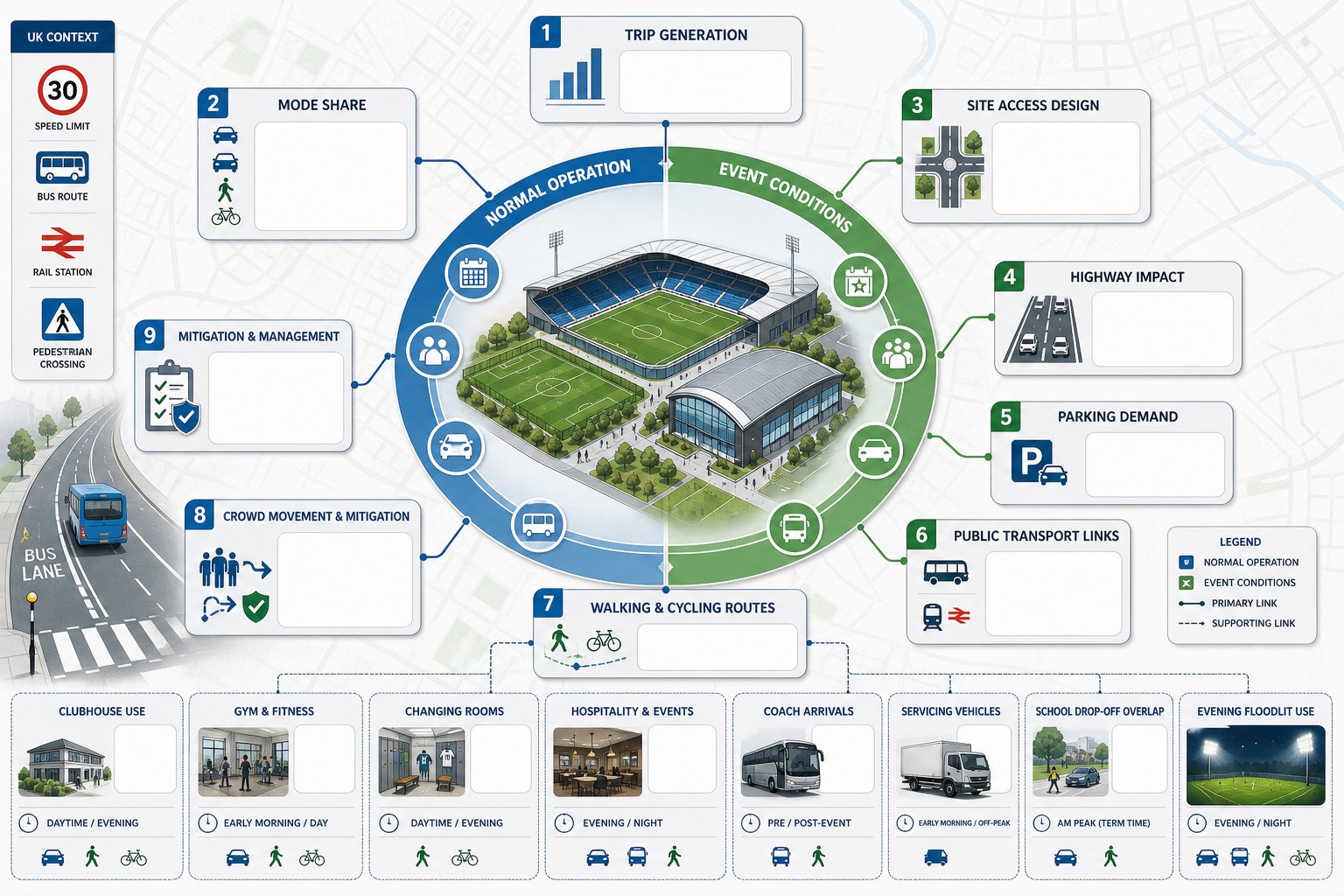
    Transport reports in London are policy documents as much as technical ones. We do not simply count vehicles and attach a few drawings. We have to show how a scheme aligns with the London Plan, the relevant borough Local Plan, any transport supplementary planning guidance, and technical standards such as Manual for Streets, DMRB where applicable, and the Traffic Signs Regulations.

    That policy framework changes the emphasis of reporting. In many towns, the main question is highway capacity. In London, capacity still matters, but so do mode shift, accessibility, public transport integration, cycle parking, walkability, servicing restraint and road danger reduction. Boroughs often expect clear evidence that car use has been minimised where feasible and that the development supports a car-free or car-lite approach if the location justifies it.

    TfL adds another layer for sites on or near the Transport for London Road Network, major bus corridors or sensitive junctions. A report may need to address bus stop accessibility, pedestrian demand, freight management, signal impacts or network resilience beyond the immediate frontage.

    This is why local experience matters. A technically correct report can still struggle if it misses the policy mood of the borough. Practical London Development Transport advice should connect transport evidence to planning policy in plain terms. The strongest submissions also reflect broader Traffic Engineering and Transportation principles: accessibility, safety, proportionality and a realistic understanding of how London streets actually operate.

    When A Development In London Needs Traffic Engineering Input

    Infographic showing when London developments need traffic engineering input.

    Some projects obviously need traffic engineering input. Others only seem simple until the access, servicing or parking questions arrive. In London, we’d usually advise early transport input for any major residential, office, retail, leisure, logistics, education or mixed-use scheme. But smaller developments can need it too, particularly where the site sits on a constrained street or relies on awkward servicing.

    Typical triggers include a new or altered vehicular access, basement parking, blue badge parking pressure, on-street loading, refuse collection from the carriageway, or any change likely to affect a nearby junction. Sites close to schools, stations, town centres, cycle corridors or bus-heavy routes often attract closer scrutiny because the street is already doing a lot of work.

    Location matters hugely. If a site is near the TfL Road Network, a signalised junction, a busy high street, or a one-way system with limited kerb space, even modest development can require robust evidence. We also see transport input requested where councils are concerned about road safety history, pedestrian crowding, or conflict between deliveries and active travel.

    The practical rule is simple: if movement to and from the site could become a planning issue, bring in a transport specialist before the design is locked. That is particularly true in commercial schemes, where Commercial Traffic Engineering decisions can affect viability. For schemes facing likely network scrutiny, a focused traffic impact assessment is often the difference between a manageable planning discussion and a late-stage problem.

    Transport Statements, Transport Assessments, And Travel Plans Explained

    Three-part infographic showing Transport Statement, Assessment, and Travel Plan in London.

    These three documents are often mentioned together, but they do different jobs.

    A Transport Statement is usually used for smaller developments where transport effects are expected to be limited. It describes existing conditions, accessibility, likely travel demand, access and servicing arrangements, and explains why the impacts are acceptable. Think of it as proportionate planning evidence rather than a deep modelling exercise.

    A Transport Assessment goes further. It is typically required for larger or more sensitive schemes and provides a detailed review of person trips and vehicle trips, mode split, trip generation, distribution, assignment, junction performance, parking demand, servicing, road safety and mitigation. This is where junction modelling, queue analysis and more extensive survey data often appear.

    A Travel Plan is not a technical appendix for the shelf. It is a management strategy designed to reduce private car reliance and encourage sustainable travel through measures such as cycle parking, showers, car club membership, public transport information, delivery management, welcome packs, targets and monitoring.

    In London, councils frequently look at these documents as a package. A technically competent assessment can still feel weak if the Travel Plan is generic, or if the statement glosses over servicing tension on a narrow street. The best reports are concise where they can be and detailed where they must be. That broader discipline sits at the heart of Highway And Traffic Engineering: matching evidence to risk, and not pretending a short report can answer a long list of transport concerns.

    How A Traffic Engineer Assesses Trip Generation, Distribution, And Junction Impact

    London traffic engineering process showing trip, distribution, junction, and site checks.

    This is the part many planning teams hear about first, but it only works when the basics are sound. We begin by estimating how many trips the proposed development is likely to generate by mode and by time period. That usually involves TRICS or comparable data sources, adjusted for London context, public transport accessibility, land use, scale and local travel behaviour.

    Then we look at where those trips are likely to come from and go to. Distribution is never a guess dressed up as a diagram. We use census patterns, local network logic, station catchments, observed turning movements, committed developments and accessibility data to assign trips in a way that reflects real movement patterns.

    Only then do we test junction impact. Depending on the junction type, that may involve software such as ARCADY for roundabouts, PICADY for priority junctions, LINSIG or LinSig-style signal modelling for controlled junctions, or other accepted tools such as SYNCHRO. But modelling is only as credible as the assumptions behind it. Overstate pass-by trips, understate delivery activity, or choose the wrong baseline year, and the numbers become fragile very quickly.

    We also sense-check the outputs. If a model says everything is fine but site observations show chronic blocking back, something is wrong. Sound Traffic Engineering: Your Complete approach means combining software, observed conditions and planning judgement. Borough officers usually spot formulaic modelling: they respond far better to analysis that feels grounded in the street network they know.

    Key Surveys And Data Used To Support Planning Submissions

    Good transport evidence starts with good baseline data. In London, that usually means more than one survey type because a site rarely has only one transport question. We may need to understand traffic volumes, turning movements, queues, pedestrian flows, cycle movements, parking occupancy, servicing behaviour, bus availability, collision history and the walk quality between the site and nearby stations or bus stops.

    The right survey package depends on the proposal. A small infill residential scheme may only need focused counts, parking surveys and access review. A larger mixed-use development may need multi-day counts, junction turning surveys, queue observations, servicing assessments, active travel audits and public transport accessibility commentary.

    Timing matters as much as the survey itself. Data should be recent, representative and collected at periods relevant to the land use. School peak conditions, weekend retail peaks, event impacts and seasonal distortion can all change the picture.

    Traffic Counts, Turning Counts, And Queue Surveys

    Traffic counts establish existing flow levels on surrounding roads, often as 24-hour automatic counts over several days. Turning counts record how vehicles move through specific junctions during peak periods. Queue surveys help us understand not just volume, but operational stress: how far traffic stacks back, whether it blocks side roads, and where delay becomes problematic.

    Those surveys are often the backbone of any assessment or modelling exercise. If the count locations are poorly chosen, or if peak periods miss the true network pressure, the rest of the report may be challenged.

    Parking, Servicing, And Active Travel Site Reviews

    Parking surveys test how much kerbside or off-street capacity really exists, rather than how much appears available at a quick glance. In dense London streets, that distinction matters. We also assess servicing by reviewing delivery patterns, loading restrictions, vehicle sizes and whether manoeuvres can occur safely without unreasonable conflict.

    Active travel reviews examine footway widths, crossing points, dropped kerbs, lighting, cycle access, secure cycle parking and the realism of walking and cycling routes. In 2026, boroughs increasingly expect these elements to be treated as core evidence, not a short afterthought tucked behind vehicle analysis.

    Access, Servicing, And Delivery Strategy In Constrained London Streets

    London sites often fail or succeed on servicing detail. A scheme can look entirely sensible on the plans, then unravel because a delivery van has nowhere lawful to stop, a refuse vehicle cannot manoeuvre without reversing onto the highway, or loading activity would conflict with a cycle lane at precisely the wrong hour.

    That is why we treat access and servicing strategy as a design exercise, not a compliance note. We look at street width, one-way operation, bus movements, parking controls, loading windows, neighbouring frontages, swept path requirements and whether on-site turning is realistic. Sometimes the answer is a redesigned access. Sometimes it is timed deliveries, smaller vehicles, consolidation, a booking system, or keeping certain servicing activity off peak.

    On constrained sites, being “technically possible” is not enough. Borough officers want arrangements that are workable in normal conditions, not only when the street is unusually empty. We hence test how servicing will happen day to day, who will manage it, and whether the operation depends on unrealistic driver behaviour.

    This is where practical experience counts. Developers often benefit from Traffic Engineer in London input before layouts are finalised, because access geometry and servicing strategy can influence bin stores, cores, basement ramps and frontage design. For broader project coordination, Traffic Engineer In work is most effective when transport, architecture and operations are considered together rather than in sequence.

    Road Safety, Visibility, And Highway Design Considerations

    Road safety is no longer a box to tick in London planning. It sits at the centre of transport review, especially under Vision Zero principles. We assess whether a proposal creates or worsens conflict between drivers, pedestrians and cyclists, whether visibility at access points is appropriate, and whether highway design supports lower-risk movement for all users.

    That includes checking visibility splays, access width, radii, footway continuity, crossing desire lines, cycle interactions, gradients, tracking and the relationship between site access and nearby junctions or bus stops. A visibility standard lifted from a rural road context rarely tells the whole story on an urban London street: we need design judgement as well as standards.

    Collision analysis also matters. If the surrounding network has a recent pattern of pedestrian injury, turning collisions or side-swipe incidents involving cyclists, a borough may expect more than a simple assurance that the proposal is acceptable. It may require physical mitigation, operational changes or a stronger rationale for the chosen layout.

    Good highway design balances safety with place. It should allow access without inviting excessive speed, support walking and cycling without creating ambiguity, and fit the local street character. Done well, this strengthens planning credibility because officers can see the scheme has been designed with actual street users in mind, not just with vehicles in mind.

    Common Reasons Transport Reports Are Challenged By Boroughs

    Most challenged transport reports are not rejected because they are wildly incompetent. They struggle because something important feels thin, outdated or too convenient.

    A common issue is underestimated trip generation. If a borough believes the land use, occupancy profile or delivery demand has been softened to keep impacts low, confidence drops quickly. The same goes for parking assumptions that ignore real local stress or overstate the effect of nearby public transport.

    Outdated survey data is another recurring problem. London streets change fast: road space reallocation, new cycle lanes, bus priority, nearby development and kerbside policy can all alter conditions. Data that looked acceptable 18 months ago may no longer reflect reality.

    Reports are also challenged when they treat walking, cycling and buses lightly while focusing heavily on vehicles. In London, that balance matters. Boroughs expect assessments to address sustainable travel seriously, especially where policy pushes car-free or low-car development.

    Then there is mitigation. Vague promises of management plans “if required” rarely satisfy officers. They want specific, deliverable measures with clear responsibility and, where relevant, monitoring.

    In our experience, the best defence against challenge is proportionate honesty. If there is a constraint, acknowledge it and show how it will be managed. That is the difference between a report that feels written to persuade and one written to inform planning judgement.

    How To Choose The Right Traffic Engineer In London For Your Project

    The right consultant is not simply the one who can produce a report fastest, although speed matters. You need someone who understands London borough expectations, TfL interfaces, urban servicing problems and the difference between theoretical compliance and a submission that will actually stand up under review.

    Start with relevant experience. Has the consultant worked on similar sites, similar land uses and similar borough contexts? A town centre retrofit in Camden or Southwark presents different transport issues from an edge-of-borough logistics site or a suburban infill scheme.

    Then look at technical range. A strong traffic engineer should be comfortable with Transport Statements, Transport Assessments, Travel Plans, junction modelling, access design, servicing strategy, parking analysis and road safety considerations. Professional credentials such as MICE, MCIHT or MILT are useful indicators, but practical planning judgment matters just as much.

    Communication is often the deciding factor. Can they explain risk clearly to architects and lawyers? Can they negotiate sensibly with officers? Can they defend assumptions without sounding defensive? Those skills save time.

    We’d also suggest reviewing whether the consultant tailors work to thresholds and local authority expectations rather than applying the same template everywhere. That is one reason many teams value Highway And Traffic specialists with borough-specific experience. For clients needing concise and fast-moving planning support, Traffic Engineer in London expertise is most useful when it combines technical precision with genuinely practical advice.

    Conclusion

    A competent traffic engineer in London does far more than calculate vehicle trips. The real job is to show, with evidence, that a development can function safely, sustainably and credibly within one of the most demanding planning environments in the country.

    That means understanding borough policy, TfL expectations, constrained streets, realistic servicing, active travel, road safety and the everyday behaviour of the network around the site. It also means knowing when a short statement is enough and when a detailed assessment, modelling package or travel plan is unavoidable.

    For architects, planners, developers and councils, the value is straightforward: fewer surprises, stronger planning submissions and a better chance of addressing transport concerns before they harden into objections. In London, smoother approvals rarely happen by accident. They are usually built on early input, robust data and transport advice that is both technically sound and locally aware.

    Frequently Asked Questions about Traffic Engineers in London

    What role does a traffic engineer in London play in planning applications?

    A traffic engineer in London assesses how developments affect highway access, parking, servicing and safety. They prepare transport reports and liaise with borough officers and TfL to provide evidence supporting planning applications.

    When is traffic engineering input necessary for a London development project?

    Traffic engineering input is typically needed for major residential, office, retail or mixed-use schemes, especially where there is new vehicular access, significant parking, or sites near TfL roads or busy junctions.

    What documents do traffic engineers prepare for London planning submissions?

    They prepare Transport Statements for smaller schemes, detailed Transport Assessments for larger projects analysing trip impacts and junctions, and Travel Plans promoting sustainable travel with targets and monitoring.

    How do London planning policies influence traffic engineering reports?

    Reports must align with the London Plan and borough policies promoting public transport use, walking, cycling, and Vision Zero road safety, beyond just highway capacity, to encourage car-free or car-lite developments.

    What surveys and data support a transport report in London?

    Key data include traffic flow counts, turning movements, queue surveys, parking occupancy, pedestrian and cycle flows, public transport accessibility, and collision history to provide robust baseline evidence.

    How do traffic engineers assess trip generation and junction impacts for developments?

    They estimate trips using TRICS data adjusted for local context, distribute trips based on census and network data, then model junction performance with software like ARCADY or LINSIG, validating results against real observations.

  • Traffic Engineer In Liverpool: Planning Support, Transport Reports, And Local Insight For 2026 Projects

    Traffic Engineer In Liverpool: Planning Support, Transport Reports, And Local Insight For 2026 Projects

    Liverpool schemes rarely fail on ambition. They usually get stuck on detail: an access point that looked fine at concept stage, parking that no longer aligns with policy, or a junction impact that wasn’t tested early enough. That’s where a traffic engineer in Liverpool becomes central rather than optional.

    For architects, planners, surveyors, developers and legal teams, transport work is often the thread that ties planning strategy to something authorities can actually approve. We’re not just talking about traffic counts and diagrams. We’re talking about evidence that a site can function, that it connects properly to walking, cycling, bus and rail networks, and that the surrounding highway network won’t be pushed beyond what Liverpool’s planning and highway officers will accept.

    In a city with busy radial routes, constrained urban streets, major event traffic, port-related freight movements and intense regeneration pressure, generic transport advice doesn’t go very far. Local knowledge matters. Timing matters too. Bring in the right technical input early and a scheme can be shaped around realistic access, servicing and movement assumptions. Leave it late, and even a strong proposal can end up reacting to objections instead of leading the case.

    In this guide, we’ll break down what a traffic engineer in Liverpool actually does, which reports are commonly needed, when to appoint one, and what local authorities are usually looking for in 2026 planning submissions.

    Key Takeaways

    • A traffic engineer in Liverpool is essential for aligning development proposals with local transport policies and practical network realities to secure planning consent.
    • Early involvement of a traffic engineer helps shape realistic access, parking, servicing, and movement strategies, reducing costly redesigns and delays.
    • Transport reports such as Transport Assessments, Statements, Travel Plans, and junction reviews must reflect Liverpool’s unique urban environment and local travel patterns to be persuasive.
    • Liverpool’s planning authorities prioritise detailed local context, including active travel links, freight routes, event traffic, and road safety, in evaluating transport evidence.
    • Choosing a traffic engineer with proven local experience, technical depth, clear communication, and responsiveness significantly improves planning outcomes.
    • Effective traffic engineering in Liverpool transforms transport challenges into planning strengths, speeding up approvals and reducing objection risks.

    What A Traffic Engineer In Liverpool Does For Planning And Development

    Infographic showing how a traffic engineer guides Liverpool development planning.
    Traffic engineer reviewing development transport plans in a modern Liverpool office.

    A traffic engineer in Liverpool provides the transport evidence that helps development move from concept to consent. In practical terms, that means assessing existing conditions, forecasting likely movement patterns, testing network effects, and recommending changes that make a proposal both policy-compliant and operationally workable.

    At site level, we typically review access geometry, visibility, internal circulation, parking provision, turning for service vehicles, and how pedestrians and cyclists move through and around the development. For larger schemes, we may also carry out junction capacity assessments, queue analysis or microsimulation to understand whether surrounding roads can absorb forecast demand.

    Just as important is interpretation. Data alone doesn’t persuade an authority. It has to be explained in the context of local thresholds, planning policy, and the actual character of the network. A city-centre apartment scheme near strong public transport links is assessed differently from an edge-of-city logistics site or a suburban school expansion.

    We also help shape mitigation. That might include altered site access, revised parking ratios, delivery controls, pedestrian crossing improvements, cycle provision, or travel planning measures. The point isn’t simply to “do a report”. It’s to reduce risk and produce a scheme that stands up technically.

    For clients comparing broader advisory support, pages on Traffic Engineering Consultants: and Highway And Traffic Engineering give a useful wider picture of how transport input fits into planning strategy.

    Why Liverpool Projects Need Location-Specific Transport Input

    Liverpool transport planning infographic showing local routes, constraints, and development impacts.
    Traffic engineer assessing Liverpool street conditions and transport planning factors.

    Liverpool is not a place where off-the-shelf transport advice works especially well. The city has dense central areas, older streets with limited width, sensitive residential corridors, strategic freight connections, heavy bus movement, rail interchanges, and recurring event pressure linked to football and city-centre activity. Those factors change how transport impacts are judged.

    Liverpool City Council and the Liverpool City Region Combined Authority also expect local context to be understood, not glossed over. A report that relies heavily on generic assumptions but barely addresses nearby bus services, active travel links, school traffic, stadium effects, dock-related HGV routes or townscape constraints is likely to invite questions.

    This is where local experience makes a noticeable difference. We can identify early whether on-street parking stress will become a planning issue, whether a proposed servicing arrangement conflicts with surrounding activity, or whether a junction that appears acceptable in desktop terms is already sensitive at peak times. Those are the sorts of details that often decide whether a consultee response is supportive, neutral or resistant.

    Location-specific input also improves design efficiency. If the site layout responds to actual street conditions from the start, the planning team avoids expensive late redesign. That matters even more on tighter programmes, where transport revisions can delay validation or trigger fresh rounds of consultation.

    A more general overview of this planning-led approach is reflected in Traffic Engineering and modern development advice, but Liverpool projects usually need a sharper local lens.

    Key Planning And Transport Reports Often Required In Liverpool

    Liverpool planning reports infographic showing transport statements, assessments, travel plans and junction reviews.
    Traffic engineer reviewing Liverpool planning and transport reports in a modern office.

    The documents required depend on the scale, use and likely impact of the proposal, but several report types come up repeatedly in Liverpool planning work. Authorities typically want enough evidence to understand trip generation, access safety, junction performance, parking demand, servicing practicality and the scheme’s relationship with sustainable transport.

    For smaller developments, a concise statement may be enough. For larger or more sensitive proposals, a fuller evidence base is normally expected. In either case, the report has to be proportionate but robust. Too little detail and the application can be challenged. Too much irrelevant material and the key points get buried.

    Liverpool submissions commonly involve transport assessments, transport statements, travel plans, technical notes and targeted junction reviews. Depending on the site, there may also be supporting drawings, swept path analysis, collision reviews, construction traffic material and responses to consultation comments.

    Good report preparation is partly technical and partly strategic. We don’t just ask what can be written: we ask what the authority is likely to test. If a proposal sits near a constrained junction, schools, heavy pedestrian movement or sensitive residential parking conditions, those issues need clear treatment up front rather than defensive follow-up later.

    Transport Assessments And Transport Statements

    Transport Assessments and Transport Statements sit at the core of many planning submissions. Broadly, a Transport Statement is used for smaller proposals with lower expected impact, while a Transport Assessment is more detailed and suited to schemes where network effects, access complexity or policy sensitivity are greater.

    Both are usually prepared with reference to Department for Transport guidance, the National Planning Policy Framework and local validation expectations. They often include baseline site context, sustainable transport review, traffic surveys, TRICS-based trip generation, trip distribution, junction impact analysis, access appraisal, parking and servicing assessment, and road safety commentary.

    In Liverpool, the difference between an acceptable report and a persuasive one often comes down to local realism. Trip assumptions should reflect the city’s actual mode choice opportunities. Parking justification should be tied to site location and use type. Collision data should be interpreted rather than dumped into an appendix and forgotten.
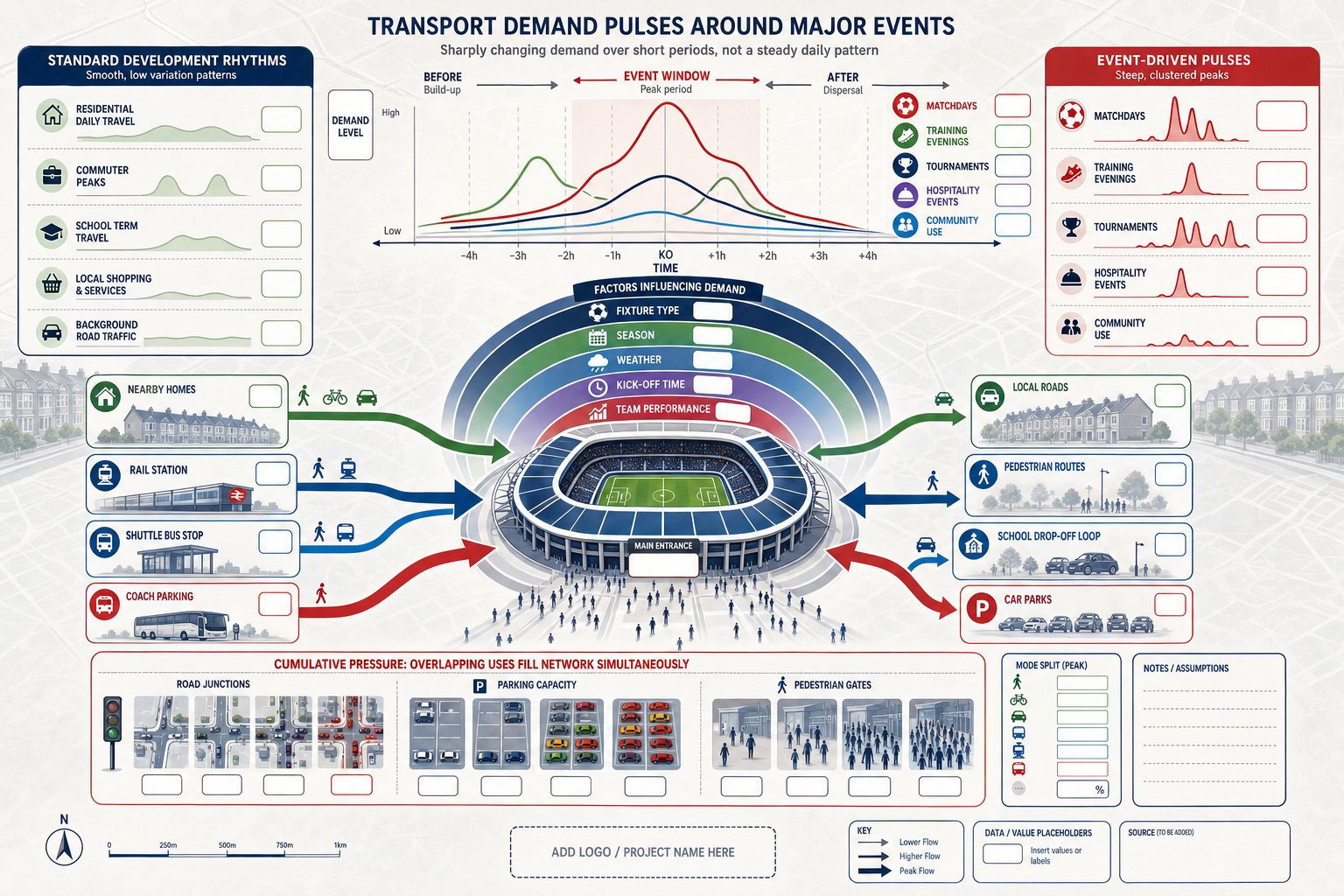
    Where a full strategic picture helps, Traffic Engineering: Your shows how these studies support safer, better-argued planning decisions.

    Travel Plans, Technical Notes, And Junction Reviews

    Travel Plans are frequently required either as part of the application package or by condition. A useful Travel Plan isn’t vague encouragement to “use sustainable transport”. It sets measures, targets, responsibilities, monitoring arrangements and realistic interventions such as cycle parking, travel information, car club membership, bus incentives, staff travel management or school drop-off controls.

    Technical notes are another common requirement, especially once comments come back from highways officers or National Highways. These concise documents can address revised modelling, tracking details, visibility splays, parking clarification, servicing amendments or policy interpretation. A good technical note is brief, focused and hard to misread.

    Junction reviews come into play where a development could alter operation or safety on nearby roads. That might involve priority junctions, signalised junctions, roundabouts or internal site access points. The assessment may lead to recommendations such as lane reallocation, signal timing changes, pedestrian crossing facilities, lining adjustments or access redesign.

    For commercial and employment-led sites, issues around servicing, peak overlap and operational resilience are especially important, which is why Commercial Traffic Engineering has become a bigger planning topic in 2026.

    When To Appoint A Traffic Engineer During A Project

    Timeline showing why appointing a traffic engineer early in a project matters.
    Traffic engineer advising a project team early in a Liverpool planning meeting.

    The best time to appoint a traffic engineer is usually before the scheme starts feeling fixed. In other words: early. Pre-application stage is ideal because access, parking, servicing, tracking, and junction assumptions can still be shaped without ripping up the design team’s work.

    That early input often prevents predictable problems. We can flag whether the proposed access point is likely to be resisted, whether vehicle tracking will drive layout changes, whether cycle parking is underprovided, or whether a Transport Assessment threshold is likely to be triggered. That’s much cheaper to resolve before submission drawings are locked.

    At minimum, a traffic engineer should be involved before the planning application is finalised wherever Liverpool’s validation expectations indicate a TA, TS, Travel Plan or supporting highways note may be needed. Waiting until an authority asks for more information can create delays, re-consultation and credibility problems.

    There are also later-stage appointments that still add value. We’re often brought in when objections emerge, when legal teams need technical evidence for appeal, or when a redesign creates new transport implications. But those are usually reactive positions.

    The practical rule is simple: if movement, access, parking, servicing or network effect could influence planning outcome, bring transport input in early enough to steer the proposal rather than merely defend it.

    How Traffic Engineering Supports Planning Applications And Appeals

    Traffic engineering process for planning applications and appeals in Liverpool.
    Traffic engineer presenting planning transport evidence in a modern Liverpool office.

    Planning applications succeed more easily when transport evidence is clear, proportionate and aligned with policy. That’s the real role of traffic engineering in the process. We help translate a development proposal into transport terms the authority can test, understand and, ideally, accept.

    For applications, that means preparing reports and drawings that explain baseline conditions, likely trip effects, sustainable travel opportunities, access arrangements, parking rationale, servicing proposals and any mitigation needed. It also means responding quickly and precisely when comments come back. Many applications are not refused because of one fatal issue: they stall because concerns aren’t answered well enough.

    Traffic engineering also matters in negotiation. Meetings with highways officers, combined authority representatives or design teams are often where technical issues are narrowed. If the evidence is weak, those meetings drift. If the evidence is sound, they become problem-solving sessions.

    Appeals raise the stakes. At that point, transport work may need to withstand formal scrutiny by inspectors, legal representatives and expert witnesses. We may prepare rebuttal notes, statement of common ground input, proofs of evidence or hearing material. In those cases, concise reasoning matters as much as technical accuracy.

    For teams working across more than one city, comparing local approaches can be useful. The contrast with Traffic Engineer In Manchester: or Traffic Engineer In Leeds: shows how regional context can shift report emphasis, even when the core methodology is similar.

    Common Development Types That Need Traffic Engineering Input

    Not every site needs the same depth of transport work, but certain development types regularly trigger detailed review because they affect movement patterns, parking demand, servicing or road safety in obvious ways. In Liverpool, that list spans everything from city-centre residential towers to education sites and port-linked industrial uses.

    Residential, Mixed-Use, And Commercial Schemes

    Residential development is one of the most common areas for traffic engineering input, but the issues vary sharply by location. Edge-of-city housing may raise questions about junction capacity, school-run overlap and car dependency. City-centre apartments often turn instead on parking restraint, servicing strategy, active travel links and realistic mode share assumptions. Purpose-built student accommodation adds another layer, with term-time peaks, drop-off activity and low-car but high-delivery movement.

    Mixed-use schemes are more complex because different uses peak at different times. A development combining residential, retail, workspace and leisure may produce a balanced profile overall, yet still create local pinch points if servicing and public realm planning are weak.

    Commercial proposals need particular care around servicing, parking turnover, pedestrian desire lines and customer access. Retail and leisure uses can produce compressed peaks and high weekend activity. Office-led schemes may depend heavily on public transport accessibility and travel planning credibility. Regeneration projects often involve all of this at once.

    Schools, Healthcare, Industrial, And Logistics Sites

    Schools and higher education sites are transport-sensitive almost by definition. Drop-off and pick-up activity, bus movement, walking routes, road safety and neighbour impact all come under scrutiny. Even modest expansions can generate strong local concern if traffic management is not thought through properly.

    Healthcare sites bring another pattern. Clinics, hospitals, care homes and extra-care accommodation may involve staff shifts, ambulance access, visitor parking, servicing and accessibility for people with reduced mobility. These schemes need practical movement planning, not just policy citations.

    Industrial and logistics developments can be especially demanding in Liverpool because HGV routing, port-related movements, last-mile delivery patterns and strategic road network effects may all be relevant. Vehicle tracking, yard operation, gatehouse arrangements, shift changes and driver welfare facilities can all influence whether the transport case feels credible.

    Across these use classes, the core value of a traffic engineer in Liverpool is the same: proving that the development can function safely and sensibly in its real-world setting.

    What Liverpool Planning Teams And Highway Authorities Typically Review

    Liverpool planning and highways officers usually focus on a practical set of questions. Can vehicles enter and leave safely? Will the surrounding network continue to operate acceptably? Does the parking and servicing arrangement make sense? Are pedestrians, cyclists and public transport users properly considered? And does the evidence stack up?

    Access design is often the starting point. Authorities will review geometry, visibility, relationship to nearby junctions, footway crossings, adoptability issues and whether larger vehicles can manoeuvre without conflict. Internal layout matters too, particularly where refuse, emergency or delivery vehicles need reliable access.

    Junction operation is another frequent focus. If a site adds material traffic to a constrained location, the authority will want to know how queues, delays and network interaction have been assessed. It isn’t only about model outputs: officers will usually consider whether the assumptions behind those outputs are believable.

    Parking and servicing are closely scrutinised in Liverpool because many sites sit within constrained urban environments. Numbers alone are rarely enough. Layout, accessibility, cycle provision, disabled spaces, loading strategy and conflict with surrounding kerbside activity all matter.

    Road safety is never an afterthought. Collision history, pedestrian crossing conditions, school route sensitivity and HGV impacts can all shape the response. Construction traffic is also increasingly reviewed, especially on tighter urban sites where routing, timing and site management can affect both safety and local amenity.

    And, more than some applicants expect, sustainable transport integration carries real weight. Good walking links, bus accessibility, rail proximity and cycle facilities are part of the planning case, not decorative extras.

    How To Choose The Right Traffic Engineer In Liverpool

    Choosing the right consultant is not just about finding someone who can produce a report. Most competent engineers can do that. The better question is whether they can produce the right report, at the right stage, in a way that helps the wider planning strategy.

    First, look for proven local experience. Liverpool has its own transport character, policy emphasis and review culture. A consultant who understands local authority thresholds, the shape of common highways concerns and the reality of the city’s network will usually spot issues faster and frame responses better.

    Second, test technical depth. Depending on the scheme, you may need trip generation analysis, junction modelling, swept path work, Travel Plans, collision analysis, appeal evidence or quick-turnaround technical notes. Ask about recent comparable projects, not just general capability.

    Third, assess communication. Reports should be clear enough for planners and committee members, not written only for modellers. We’d always favour concise argument over bulky paperwork. That matters even more when lawyers, architects and project managers need transport advice translated into decisions.

    Finally, consider responsiveness. Planning programmes move quickly, and transport work often sits on the critical path. At ML Traffic, our approach is built around concise, accurate reporting and more than 30 years of experience, tailored to local authority expectations. That’s the difference between a document that merely exists and one that actively helps secure consent.

    A current Traffic Engineer in Liverpool resource can help benchmark what local, planning-led support should look like in practice.

    Conclusion

    For 2026 development work, a traffic engineer in Liverpool is rarely just a box-ticking appointment. The role is central to de-risking planning, shaping access and movement strategy early, and giving councils and highway officers the evidence they need to support a proposal with confidence.

    The strongest schemes usually have one thing in common: transport issues were identified before they became objections. That means local analysis, proportionate reporting, realistic mitigation and clear communication with planning and highways stakeholders.

    Whether the project is residential, commercial, educational, healthcare-led or logistics-based, the transport case needs to reflect Liverpool as it actually operates, not as a generic template assumes it does. Get that right, and planning discussions tend to become more focused, more constructive and, frankly, faster. Get it wrong, and transport can become the reason an otherwise sound scheme starts slipping.

    Frequently Asked Questions About Traffic Engineers in Liverpool

    What role does a traffic engineer in Liverpool play in planning and development?

    A traffic engineer in Liverpool analyses transport conditions, designs site access and parking, assesses junction impacts using modelling, and advises on mitigation measures to ensure developments comply with local policies and function safely within the transport network.

    Why is local knowledge important for traffic engineering projects in Liverpool?

    Liverpool’s unique transport context—including narrow streets, event traffic, bus and freight routes—requires traffic engineers to provide location-specific advice that meets Liverpool City Council standards and addresses local constraints for effective planning support.

    When should a developer appoint a traffic engineer during a project in Liverpool?

    Ideally, a traffic engineer should be engaged at the pre-application stage to influence design decisions on access, parking, and servicing early, avoiding costly revisions and ensuring planning submissions meet Liverpool’s validation requirements for transport evidence.

    What types of transport reports are typically needed in Liverpool planning applications?

    Common reports include Transport Assessments for larger developments, Transport Statements for smaller proposals, Travel Plans with sustainability measures, and technical notes or junction reviews responding to highway authority concerns, all tailored to Liverpool’s local guidance.

    How do traffic engineers contribute to planning appeals in Liverpool?

    They prepare robust, evidence-based reports and expert witness statements, engage with highway authorities, and address objections through clear, localised transport analysis to support appeals effectively within Liverpool’s planning framework.

    What factors should be considered when choosing the right traffic engineer in Liverpool?

    Select a chartered engineer with proven Liverpool experience, familiarity with local standards and modelling practices, strong communication skills, responsiveness, and a track record of helping secure planning consent through clear, concise transport evidence.

  • Traffic Engineer In Leeds: Expert Transport Support For Planning Applications In 2026

    Traffic Engineer In Leeds: Expert Transport Support For Planning Applications In 2026

    Planning applications in Leeds rarely fail on ambition alone. More often, they stall because the transport case underneath them is too thin, too late, or too generic for the site in question. A scheme may look commercially sound and architecturally polished, yet still hit resistance if access, servicing, parking, junction impact, or sustainable travel haven’t been addressed properly.

    That is where a Traffic Engineer in Leeds becomes central rather than optional. We help turn development proposals into evidence-backed planning submissions that stand up to scrutiny from highways officers, planners, consultees, and sometimes committee members as well. In practice, that means testing whether a site can operate safely, whether the surrounding network can accommodate demand, and what mitigation is needed to make a proposal acceptable.

    For architects, planning consultants, solicitors, surveyors, developers, and local authorities, the value is simple: fewer assumptions, fewer avoidable objections, and a clearer route through planning. Leeds has its own policy context, transport pressures, and expectations around active travel, public transport, and road safety. A generic national report often won’t do the job.

    In this guide, we explain what a traffic engineer does, when Transport Assessments and Travel Plans are needed, how Leeds City Council typically approaches transport evidence, and what separates a useful report from one that creates delay.

    Key Takeaways

    • A Traffic Engineer in Leeds provides essential, site-specific transport evidence that ensures planning applications meet local transport policies and avoid generic, ineffective assessments.
    • Robust transport reports must demonstrate safe access for all users, realistic traffic impacts, and deliverable mitigation aligned with Leeds City Council’s expectations and West Yorkshire’s transport strategies.
    • Early engagement with traffic engineers helps define the right scope, surveys, and assessment type (Transport Assessment, Statement, or Travel Plan), reducing delays and costly resubmissions.
    • Effective traffic engineering support includes detailed junction modelling, swept path analysis, and access reviews to solve site constraints and support sustainable travel initiatives.
    • Clear, concise, and authority-aware reporting enhances the credibility of planning submissions, facilitating smoother approvals and fewer objections from highways officers and consultees.
    • Choosing a traffic engineer experienced with Leeds’ policy context, capable of technical diversity, and responsive to evolving project needs is critical for successful planning outcomes.

    What A Traffic Engineer In Leeds Does For Planning And Development

    Infographic of traffic engineering steps for Leeds planning and development.

    A traffic engineer working on Leeds schemes provides the technical transport evidence that helps a development move from concept to consent. That sounds neat on paper. In reality, the role spans analysis, design, negotiation, and a fair bit of problem-solving.

    At the earliest stage, we review the site’s context: surrounding roads, nearby junctions, public transport availability, collision history, walking and cycling links, parking pressure, servicing constraints, and the way people already move through the area. We then test how a proposal is likely to change those conditions.

    That usually includes trip generation, traffic distribution, access design, visibility checks, junction modelling, and review of internal layout for cars, delivery vehicles, refuse collection, and emergency access. On more constrained sites, small details become decisive. A few metres of forward visibility, an awkward bin store arrangement, or a delivery vehicle over-running a footway can create a planning headache surprisingly quickly.

    We also advise on mitigation: junction amendments, lining and signing, parking management, crossing facilities, traffic regulation orders, bus stop improvements, or active travel measures. The aim is not just to identify impacts, but to show how those impacts can be reduced to an acceptable level.

    For teams comparing approaches across different authorities, broader Traffic Engineering Consultants: support often matters because thresholds, validation expectations, and officer priorities vary from city to city. In Leeds, that local calibration is especially important.

    Why Leeds Developments Need Robust Transport Evidence

    Three-part Leeds transport planning infographic showing impact, access, and mitigation.

    Leeds is a growing city, but it is also a city where transport impacts are examined closely. Development pressure, busy radial corridors, mixed urban form, and a strong policy emphasis on sustainable travel mean transport reports need to do more than tick a box.

    Robust evidence is needed for three main reasons.

    First, it must demonstrate that the development does not create an unacceptable or “severe” transport impact in planning terms. That means showing the likely traffic effects with credible survey data, realistic assumptions, and modelling that reflects local conditions rather than generic templates.

    Second, submissions need to show safe and suitable access for all users. Not just motorists. Leeds officers will typically expect proper consideration of pedestrians, cyclists, bus passengers, servicing vehicles, and emergency access. A car-dominated assessment with only a token paragraph on active travel is one of the quickest ways to invite challenge.

    Third, transport evidence often becomes the bridge between planning ambition and deliverable mitigation. If local concern exists around congestion, air quality, school travel, or collision risk, a well-structured submission can frame solutions early rather than letting objections gather momentum.

    That is why concise, authority-aware reporting tends to outperform bulky but unfocused documents. Our experience is that highways officers respond better to clear analysis, transparent assumptions, and mitigation that is actually deliverable. And when schemes have similarities with work in other major authorities, lessons from Traffic Engineer In Manchester: or comparable city-centre contexts can still be useful, provided they are adapted properly to Leeds rather than copied across.

    Local Planning And Highways Context In Leeds

    Layered infographic of Leeds transport planning factors for a development site.

    Leeds planning applications are assessed within a layered framework: national planning policy, the Leeds Local Plan, local parking and design expectations, and wider West Yorkshire transport strategies. For applicants, the practical message is straightforward: transport evidence must be locally grounded.

    Leeds is not dealing with transport in isolation. It is balancing housing delivery, regeneration, employment growth, public transport reliability, active travel, road safety, and place quality at the same time. So when highways officers review a proposal, they are rarely asking only, “Can cars get in and out?” They are also asking whether the site supports mode shift, whether servicing is workable without conflict, and whether the design fits the street environment around it.

    That local framing affects the scope of reports. Parking provision may need careful justification. Cycle parking and end-of-trip facilities can be material. Access geometry, gradients, refuse tracking, and pedestrian desire lines are often scrutinised closely. If a site sits near a constrained junction, school, or strategic corridor, the authority may also expect targeted analysis rather than broad assumptions.

    Good transport work in Leeds hence starts with the policy and network context, not just with modelling software. The numbers matter, of course. But so does understanding what officers are trying to achieve on the ground.

    Leeds City Council Expectations And West Yorkshire Considerations

    Leeds City Council typically expects transport submissions to be proportionate, technically sound, and tied to the specifics of the site. Pre-application discussion can make a big difference here, especially where thresholds are marginal or where an applicant wants to agree the extent of survey work, modelling, or Travel Plan commitments early.

    In practical terms, officers often focus on:

    • safe and suitable site access
    • adequate visibility splays
    • servicing and refuse collection arrangements
    • emergency vehicle access
    • parking and cycle provision aligned with policy
    • pedestrian and cycle connectivity
    • impacts on bus operation and wider corridor schemes
    • road safety, including potential conflict points

    West Yorkshire considerations add another layer. Development may need to respond to broader transport objectives around bus priority, active travel corridors, decarbonisation, and safer streets. That means a report should not treat the site boundary as the end of the conversation. If a proposal interacts with nearby crossings, bus stops, junction upgrades, or strategic routes, that interaction needs to be addressed.

    The same principle appears in other major urban authorities too, whether in Traffic Engineer In London: work or regional city planning. But Leeds has its own rhythm and thresholds. Knowing how local expectations translate into validation, consultation responses, and conditions is often what separates a smooth application from a drawn-out one.

    When A Transport Assessment, Transport Statement, Or Travel Plan Is Needed

    Decision infographic showing when TA, TS, or Travel Plan is needed in Leeds.

    Not every Leeds application needs a full Transport Assessment, but many schemes need more than a short transport note. The right document depends on scale, use class, expected trip generation, network sensitivity, and the issues raised at pre-app stage.

    A Transport Assessment (TA) is usually needed for larger or more traffic-intensive development, major housing, substantial employment uses, retail parks, roadside food and beverage, logistics, and mixed-use schemes with meaningful movement demand. A TA normally covers baseline conditions, traffic surveys, trip generation, distribution and assignment, junction impact, sustainable access, road safety, and mitigation.

    A Transport Statement (TS) is typically used for medium-scale or lower-impact schemes where the transport effects are material but not extensive enough to justify a full TA. It still needs evidence, but often with a narrower scope.

    A Travel Plan (TP) is commonly required for major development and sometimes for uses with concentrated staff or visitor trips. Its purpose is different. Rather than simply measuring traffic impact, it sets out how the development will encourage walking, cycling, public transport, car sharing, and monitoring over time.

    The smart move is to agree scope early with LCC Highways. That avoids the classic problem: a team prepares a TS, only to be told late in the process that a TA and Travel Plan were expected. We have seen that happen more than once, and it rarely saves time or fees in the long run.

    Where clients want a broader primer on report selection and timing, our Traffic Engineer in Leeds guidance sits alongside local scoping advice.

    Key Traffic Engineering Services For Leeds Planning Applications

    For planning applications in Leeds, traffic engineering support usually works best as a package rather than a single report dropped in at the eleventh hour. The core services typically include scoping, surveys, analysis, drawings, mitigation design, and responses to consultation comments.

    We often begin by reviewing the proposal and identifying what the authority is likely to ask for. That can include whether traffic counts are needed, which junctions should be assessed, whether a swept path is necessary, how parking should be justified, and whether a Travel Plan is likely to be conditioned.

    Beyond the headline reports, effective support often includes access strategy, servicing review, active travel review, and short technical notes responding to comments from highways officers or third parties. Those follow-up notes matter more than many teams expect. A well-aimed two-page response can sometimes remove an objection faster than a fifty-page appendix.
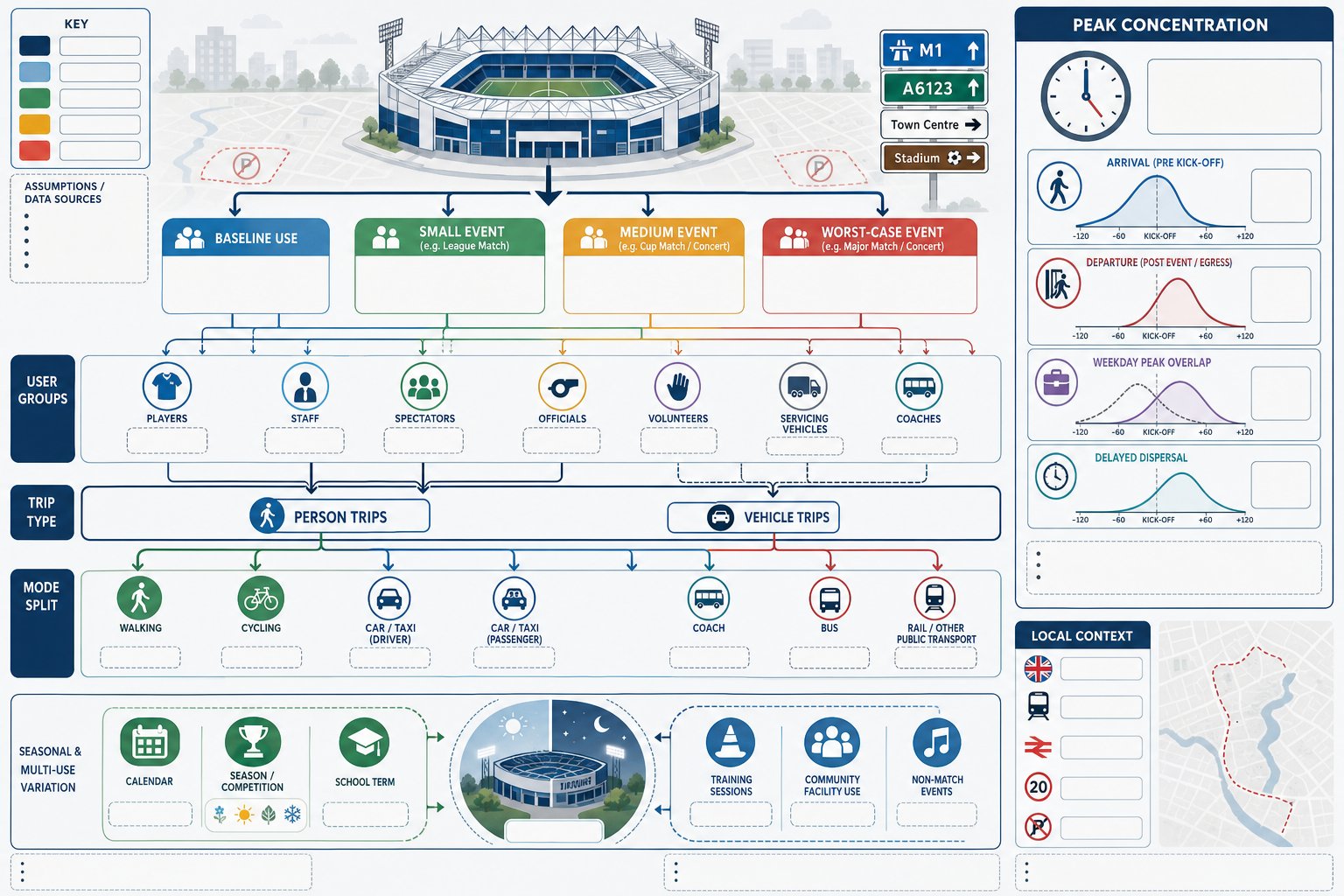
    There is also a coordination role. Traffic engineers sit between architects, planners, flood consultants, drainage designers, and highways officers. If the site layout changes, the transport evidence may need to change with it. A revised refuse route, relocated substation, or altered parking court can have knock-on effects for tracking, visibility, and capacity work.

    In other words, the service is not just about producing documents. It is about keeping the transport case coherent while the scheme evolves.

    Transport Assessments, Statements, And Technical Notes

    A strong TA or TS does more than assemble data. It explains the transport story of the site in a way that is proportionate, transparent, and defensible.

    That generally means establishing the baseline first: existing highway network conditions, sustainable travel opportunities, local collision records, parking context, and observed peak-hour operation. From there, we estimate trip generation using recognised databases and comparable sites, distribute those trips across the likely network, and test the effects at the relevant junctions.

    The report should then assess access arrangements, servicing, walking and cycling links, public transport accessibility, and road safety. If mitigation is needed, it should be described in practical terms, not buried in vague wording. Officers want to know what is proposed, whether it works, and whether it can realistically be delivered.

    Technical notes are the quieter workhorses of the process. They may respond to comments on parking, justify survey validity, update modelling after a layout change, or provide targeted evidence on a single issue. A concise note is often all that is needed to move a file forward.

    Junction Capacity Modelling, Swept Path Analysis, And Access Reviews

    Junction modelling is often where transport debates become most technical. In Leeds applications, this may involve priority junction modelling with PICADY, roundabout testing with ARCADY, or signal analysis through LINSIG, depending on the network context. The model itself is not the point: the point is whether it reflects observed conditions and answers the planning question being asked.

    If a junction is already under pressure, the authority will want confidence that the baseline is accurate and that growth assumptions are reasonable. That includes queue behaviour, lane use, signal staging, committed development, and the spread of traffic across the local network. Poorly scoped modelling can look precise while still being unconvincing.

    Swept path analysis is equally important on constrained sites. Refuse vehicles, delivery vans, articulated HGVs, and fire appliances all need to move safely without excessive overrun, awkward reversing, or conflict with pedestrians and parked cars. Tracking drawings are often decisive on apartment schemes, schools, and commercial yards.

    Access reviews bring those elements together. We check width, radii, gradients, visibility, interaction with crossings and cycle routes, and whether the layout works for real users rather than idealised ones. That is often where subtle issues show up, especially on tight urban plots.

    Common Leeds Development Types That Require Traffic Engineering Input

    In Leeds, traffic engineering input is needed across far more than just large housing sites. Many of the most contentious applications are medium-sized schemes on constrained plots where access, servicing, or local congestion create a disproportionate level of scrutiny.

    Residential development is the obvious category: housing estates, apartment blocks, student accommodation, and later living schemes. Here, the recurring issues are access safety, parking demand, refuse and emergency access, and the quality of walking and cycling links.

    Food retail, drive-thrus, and leisure uses often trigger detailed highways review because trips can be concentrated, peak periods can overlap with local congestion, and servicing can be awkward. Drive-thrus, in particular, raise questions around internal queuing, exit visibility, and interaction with adjacent highway movements.

    Employment, warehousing, and logistics schemes tend to require robust HGV access analysis, servicing design, staff travel planning, and junction testing. A site may work perfectly well for cars yet still fail under heavy vehicle tracking.

    Schools, healthcare, and mixed-use development bring a different profile. They can create highly peaked travel demand, sensitive pedestrian movements, and pressure on nearby kerbside space. In those cases, the design of drop-off arrangements and the credibility of the Travel Plan become central.

    Across these sectors, Leeds schemes often benefit from advisers who understand both local issues and transferable city experience, whether from Traffic Engineer In Birmingham: work or comparable urban authority submissions.

    How A Traffic Engineer Supports The Planning Application Process

    The best traffic engineering input starts before the planning application is submitted. By the time a project reaches validation, many of the important transport decisions should already have been made.

    At concept stage, we review site constraints and opportunities so the layout is not built around assumptions that later prove unworkable. That might mean repositioning an access, adjusting parking geometry, creating room for tracking, or strengthening pedestrian links before the design hardens.

    Next comes scope agreement. We help define with LCC Highways what level of assessment is needed, which surveys should be undertaken, which junctions should be tested, and whether a Travel Plan or off-site works package is likely. This stage sounds procedural, but it can save weeks of avoidable back-and-forth.

    We then prepare the reports and drawings needed for submission: TA, TS, Travel Plan, technical notes, access drawings, swept paths, and mitigation sketches where relevant. Once consultation responses land, the role becomes partly analytical and partly diplomatic. Highways comments need a measured reply, firm where the evidence supports it, but flexible enough to keep progress moving.

    On some schemes, that extends to negotiating Section 106 obligations or Section 278 highway works. On others, it means supporting the planning team at committee or appeal. Expert evidence carries more weight when it is consistent, concise, and clearly tied to policy and local conditions.

    That end-to-end support is often what clients actually need, more than a report in isolation.

    Common Reasons Transport Submissions Are Delayed Or Challenged

    Most transport objections are not caused by the existence of impact. They are caused by uncertainty about impact. If the authority cannot follow the logic, trust the data, or see how mitigation will work, delay tends to follow.

    One of the biggest causes is poor scoping. When an application is submitted with the wrong level of assessment, the wrong study area, or no agreed basis for modelling, comments come back asking for more work. That can reset the programme.

    Another common issue is weak or dated survey data. Leeds officers are unlikely to be persuaded by traffic counts that no longer reflect current conditions, abnormal survey periods, or unsupported assumptions about future demand. Survey timing matters, and so does explaining why the dataset is valid.

    We also see challenges where junction models do not match local expectations. If lane allocations, queue patterns, signal staging, committed development, or growth assumptions are off, confidence in the whole submission drops.

    Then there is underplaying sustainable travel and safety. A report that focuses heavily on car trips but barely addresses pedestrian routes, cycle parking, bus access, crossing demand, or collision history can look incomplete.

    Finally, Travel Plans are often too generic. Officers want realistic measures, named responsibilities, baseline data, targets, and monitoring. Boilerplate wording does not travel well.

    These problems are avoidable. Early dialogue, well-structured evidence, and concise follow-up notes usually cost less than repairing a weak submission after objections appear.

    That is true in Leeds and elsewhere: even a Birmingham Transport Consultant: approach still has to be recast to fit local policy and officer expectations.

    Choosing The Right Traffic Engineer In Leeds

    Choosing the right consultant is not just about finding someone who can produce a Transport Assessment. Plenty of firms can do that. The better question is whether they can produce the right transport evidence for your particular Leeds site, in the right format, at the right time, with the confidence to defend it.

    We would look for five things.

    First, local authority awareness. Experience with Leeds City Council, West Yorkshire policy context, and local transport sensitivities matters. A report can be technically correct and still miss what officers are most concerned about.

    Second, technical range. The consultant should be comfortable with TA/TS preparation, junction modelling, swept paths, parking review, access design, and Travel Plans. Gaps in capability can lead to fragmented advice and inconsistent submissions.

    Third, clear writing. Planning teams do not need impenetrable prose. They need concise reports that explain assumptions, findings, and mitigation plainly. That sounds obvious, but it is surprisingly rare.

    Fourth, responsiveness. Planning timetables shift. Layouts change. Consultation comments arrive late on a Friday afternoon, because of course they do. A useful traffic engineer can adjust quickly without losing the thread.

    Fifth, credibility in discussion. The ability to engage calmly with officers, planning consultants, architects, and sometimes members is part of the job.

    For clients comparing city-specific support, examples from Traffic Engineer In Liverpool: or Traffic Engineer In Bristol: can show how good transport advice adapts to place rather than relying on a single template. In Leeds, that adaptability is a genuine advantage.

    Conclusion

    A well-prepared planning application in Leeds needs transport evidence that is proportionate, policy-aware, and grounded in how the site will actually function. That is the practical value of working with an experienced Traffic Engineer in Leeds: we identify the transport risks early, shape the right scope, and provide analysis that highways officers can properly test rather than pick apart.

    For architects, planners, solicitors, developers, and public sector teams, the goal is not simply to produce another report. It is to reduce uncertainty, answer likely objections before they arise, and present mitigation that is realistic enough to be approved and delivered.

    In 2026, as Leeds continues to balance growth with safer streets, active travel, public transport, and network resilience, transport input remains one of the clearest ways to de-risk an application. Get it right early, and the whole planning process tends to move with far less friction.

    Frequently Asked Questions About Traffic Engineers in Leeds

    What role does a traffic engineer in Leeds play in planning applications?

    A traffic engineer in Leeds provides technical transport evidence for planning proposals, assessing access, parking, junction impact, and sustainable travel. They analyse site context, model traffic flow, and design mitigation to ensure safe, policy-compliant development that meets Leeds City Council requirements.

    When is a Transport Assessment or Travel Plan required for Leeds developments?

    Transport Assessments are needed for larger or traffic-intensive schemes, such as major housing and retail parks, while Transport Statements suit medium-impact projects. Travel Plans are often required for major developments to promote walking, cycling, public transport, and monitor travel behaviour, with scope agreed early with Leeds City Council.

    How do local policies in Leeds influence transport evidence submissions?

    Leeds planning decisions are guided by national policy, the Leeds Local Plan, and West Yorkshire transport strategies prioritising sustainable travel and Vision Zero road safety goals. Transport evidence must address local parking standards, safe access for all modes, and integration with active travel and bus priority corridors.

    What common issues cause delays in transport submissions for Leeds planning?

    Delays often result from inadequate scoping with Leeds Highways, outdated or unvalidated traffic data, junction models not matching officer expectations, inadequate consideration of pedestrian, cycling or bus access, and generic Travel Plans lacking realistic measures or monitoring commitments.

    How can a traffic engineer help reduce planning objections in Leeds?

    By producing clear, locally-tailored transport evidence aligned with Leeds policies, a traffic engineer helps de-risk applications. Early engagement, accurate modelling, realistic mitigation, and concise responses to consultation avoid assumptions and objections, ensuring smoother approval processes and fewer delays.

    What services do traffic engineers typically offer for Leeds planning applications?

    They provide scoping advice, conduct traffic surveys, prepare Transport Assessments, Statements, and Travel Plans, design site access and mitigation measures, undertake junction modelling and swept path analysis, and handle consultation responses. Their role includes coordinating transport evidence with evolving site design and planning teams.

  • Traffic Engineer In Sheffield: Expert Support For Planning, Transport Assessments, And Local Approval In 2026

    Traffic Engineer In Sheffield: Expert Support For Planning, Transport Assessments, And Local Approval In 2026

    Planning a scheme in Sheffield without transport input is a bit like drawing a building before checking the ground levels: you can do it, but you may end up redesigning a lot more than you expected. For architects, planners, developers and legal teams, transport issues often sit quietly in the background until they become the reason a planning application stalls.

    That matters even more in Sheffield. The city’s steep topography, constrained urban streets, strategic bus corridors, Supertram interfaces and growing emphasis on active travel all shape what is, and isn’t, likely to be accepted. A traffic engineer in Sheffield helps turn those constraints into a workable planning strategy. We assess how a development will operate, whether the access is safe, how servicing and refuse can be accommodated, and what level of transport reporting is proportionate for the proposal.

    In practice, our role is not just to “do the report”. We help clients make better decisions early, align schemes with local policy, and reduce the risk of objections from highways officers or consultees later on. Whether the project is a small infill scheme, a residential block, a logistics site or a mixed-use redevelopment, the right transport advice can be the difference between a smooth submission and a long round of revisions.

    Below, we break down what that support usually involves in Sheffield in 2026, where the common risks sit, and how to prepare a strong planning submission from the outset.

    Key Takeaways

    • A traffic engineer in Sheffield plays a crucial role in ensuring developments are safely accessible and compliant with local transport policies, reducing planning delays.
    • Early involvement of a traffic engineer helps shape access, parking, servicing, and sustainable travel strategies, aligning schemes with Sheffield’s unique topography and transport demands.
    • Transport Statements, Assessments, and Travel Plans must be proportionate to the development’s impact and address Sheffield’s specific transport context, including tram and bus corridors.
    • Swept path analysis and Construction Traffic Management Plans are vital on constrained urban sites to demonstrate safe vehicle manoeuvres and manage construction phase impacts.
    • Understanding local authority expectations, transport software tools, and a track record with similar schemes is essential when choosing a traffic engineer in Sheffield.
    • Providing comprehensive site details and known constraints upfront allows for accurate scoping, saving time and costs by focusing on relevant transport issues from the start.

    What A Traffic Engineer In Sheffield Does For Planning And Development

    Traffic engineer reviewing development and transport plans in a modern office.

    A traffic engineer in Sheffield applies transport engineering principles to one practical question: can a development be accessed, serviced and operated safely and acceptably within the local network?

    For planning purposes, that usually means we review trip generation, likely vehicle movements, walking and cycling connections, public transport accessibility, parking demand, servicing arrangements and the effect on nearby junctions. We then translate that analysis into planning-ready outputs: Transport Statements, Transport Assessments, Travel Plans, junction modelling, vehicle tracking, access drawings and technical responses to highways comments.

    On many schemes, our involvement starts before the planning pack is assembled. We advise on whether an access is likely to be acceptable, whether visibility splays are achievable, whether bin collection and fire access work, and whether the proposed parking strategy is realistic. That early technical steer often saves a surprising amount of redesign.

    We may also input into signs, lining, internal circulation, loading arrangements and mitigation measures if a proposal creates pressure on the surrounding network. For broader context on how this role fits within planning work, Traffic Engineering Consultants: often bridge the gap between site design, transport policy and highway authority expectations.

    In short, we help make transport issues legible to the planning system, and make planning proposals more legible to transport officers.

    Why Sheffield Developments Need Local Transport And Highways Input Early

    Traffic engineer reviewing a Sheffield development transport plan with a planning team.

    Early input matters in any city, but Sheffield has a habit of punishing late transport thinking.

    A scheme can look fine on a drawing set and still run into trouble once local realities are tested: a gradient too steep for comfortable pedestrian access, a servicing route that conflicts with parked vehicles on a narrow terraced street, or an access point too close to a busy bus movement or signalised junction. Add in local policy pressures around sustainable travel, air quality and public realm, and it becomes obvious why transport should be considered before the design hardens.

    We normally advise clients to bring in highways and transport input at concept or pre-app stage, not after the application has already been drafted. That allows us to shape access strategy, parking provision, cycle storage, servicing and site circulation while there is still flexibility. It also means we can judge whether a Transport Statement is enough or whether a fuller assessment is likely.

    Local familiarity helps here. Thresholds, officer expectations and network sensitivities are rarely identical from city to city. Comparing approaches across places such as Traffic Engineer In Leeds: or Traffic Engineer In Manchester: shows how strongly local authority context can shape the same type of development.

    Done early, transport advice reduces avoidable objections, cuts redesign time and gives the planning team a clearer route through to submission.

    Planning Applications That Commonly Require Traffic Engineering Support

    Traffic engineer reviewing Sheffield development plans in a modern office.

    Not every application needs a full transport package, but a lot more schemes need traffic engineering input than applicants first assume.

    The obvious examples are larger residential developments, apartment buildings, retail schemes, schools, healthcare uses, employment sites and logistics or warehousing proposals. These often create enough additional trips, servicing demand or parking pressure to justify formal assessment. But smaller projects can also trigger transport concerns if they introduce a new access, intensify an existing use, alter a car park, or sit on a constrained frontage.

    In Sheffield, we regularly see traffic engineering support needed for:

    • housing schemes on former industrial or infill sites
    • student and build-to-rent developments
    • foodstores and roadside retail
    • care homes and medical uses
    • schools and nurseries
    • industrial yards, last-mile logistics and trade counters
    • mixed-use town and city centre redevelopments
    • schemes involving access changes onto classified roads

    Materiality is the key test. A modest development can still need analysis if it affects a sensitive junction, bus corridor, tram environment or residential street with limited capacity. Equally, some applications need only proportionate evidence.

    For teams working across multiple cities, comparisons with places such as Traffic Engineer In Birmingham: can be useful, but Sheffield-specific site conditions and policy framing still need their own response. That’s why we tailor advice to the proposal rather than forcing every project into the same reporting template.

    Transport Statements, Transport Assessments, And Travel Plans Explained

    Traffic engineer reviewing transport planning documents and vehicle tracking in a modern office.

    These documents are often mentioned together, but they do different jobs.

    A Transport Statement (TS) is usually the proportionate option for smaller schemes with limited transport impact. It explains the site context, access arrangements, parking, sustainable travel opportunities and likely traffic effects in a concise way. A good TS is not just brief: it is targeted. It addresses the actual risks of the site instead of padding out pages with generic commentary.

    A Transport Assessment (TA) goes further. It is typically required where a development is likely to generate more significant trips or where the network effect is potentially material. A TA may include trip generation analysis, distribution and assignment, junction capacity testing, sustainable mode review, road safety context and mitigation proposals. If there is likely to be pressure at a nearby roundabout or signal junction, the TA is where that evidence is set out clearly.

    A Travel Plan (TP) focuses on behaviour rather than pure capacity. It sets out measures to encourage walking, cycling, public transport, car sharing and responsible travel choices, often with targets, management actions and monitoring commitments. In a city with strong policy emphasis on mode shift, this can carry real weight.

    Across England, the principles are broadly familiar, whether we are preparing work akin to Highway And Traffic Engineering support or city-specific reports. The important point is proportionality: the document should fit the development and the authority’s likely concerns.

    When A Swept Path Analysis Is Needed

    Swept path analysis is used where we need to prove that vehicles can manoeuvre safely and realistically. In planning, that commonly means refuse wagons, fire appliances, articulated vehicles, service vans or rigid HGVs.

    If a site layout only works on paper because a large vehicle clips a kerb, mounts a footway or needs impossible reversing, officers will spot it quickly. Vehicle tracking software allows us to demonstrate turn-in, turn-out, internal circulation and servicing in a way that is visual and technically defensible. It is especially useful on tight urban sites, awkward corners and shared yards.

    When A Construction Traffic Management Plan Is Required

    A Construction Traffic Management Plan, or CTMP, is usually required where the build phase itself could create a material highways or amenity impact. Think constrained city-centre plots, school-adjacent sites, roads with restricted loading opportunities, or developments needing frequent HGV deliveries.
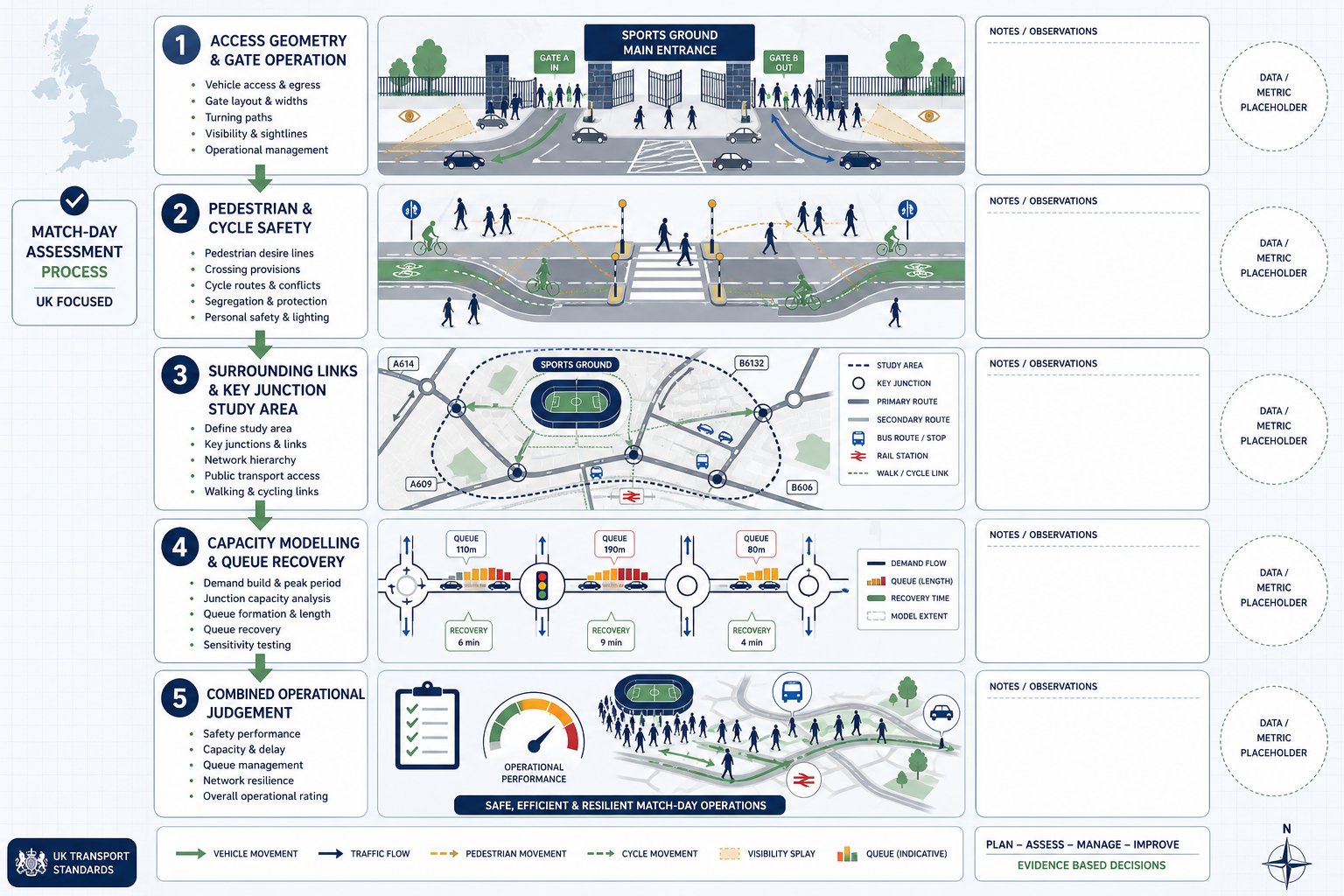
    A robust CTMP covers likely construction vehicle numbers, routing, delivery hours, wheel washing if relevant, contractor parking, temporary traffic management, pedestrian protection and communication arrangements. It can also address banksmen, on-site marshals and abnormal load procedures where needed.

    This is one of those documents that is easy to underestimate. A technically sound permanent access does not remove construction-stage risk, and officers often want comfort that neighbours, buses, cyclists and school traffic will be protected while the site is being built.

    Key Sheffield And South Yorkshire Transport Considerations For New Schemes

    Traffic engineer reviewing Sheffield transport plans with hills, tramlines, buses and cyclists.

    Sheffield has transport characteristics that are easy to list and harder to design around well.

    Topography is the first. Steep gradients affect walkability, cycle attractiveness, accessibility for some users and even servicing practicality. A route that looks short on a location plan may feel much less convenient on the ground if it climbs sharply. We hence assess connectivity in a way that reflects real user experience, not just map distance.

    Street pattern is another factor. Parts of the city rely on narrow terraced streets, constrained junctions and kerbside activity that leaves little room for error. Parking overspill, delivery stopping and refuse access can become critical issues quickly. Then there are bus corridors, Supertram interfaces and wider South Yorkshire priorities around active travel, decarbonisation and public transport reliability.

    In some locations, air quality considerations, city-centre public realm priorities or school street measures will also shape what mitigation is acceptable. A solution based purely on accommodating more car movement may not align with policy direction, even if it appears operationally convenient.

    That local policy lens is what distinguishes a generic report from one likely to carry weight. While there are lessons from schemes in Traffic Engineer In Bristol: or Traffic Engineer In London:, Sheffield submissions need to speak directly to Sheffield and South Yorkshire realities. We frame transport evidence around those realities from the start, rather than trying to retrofit them later.
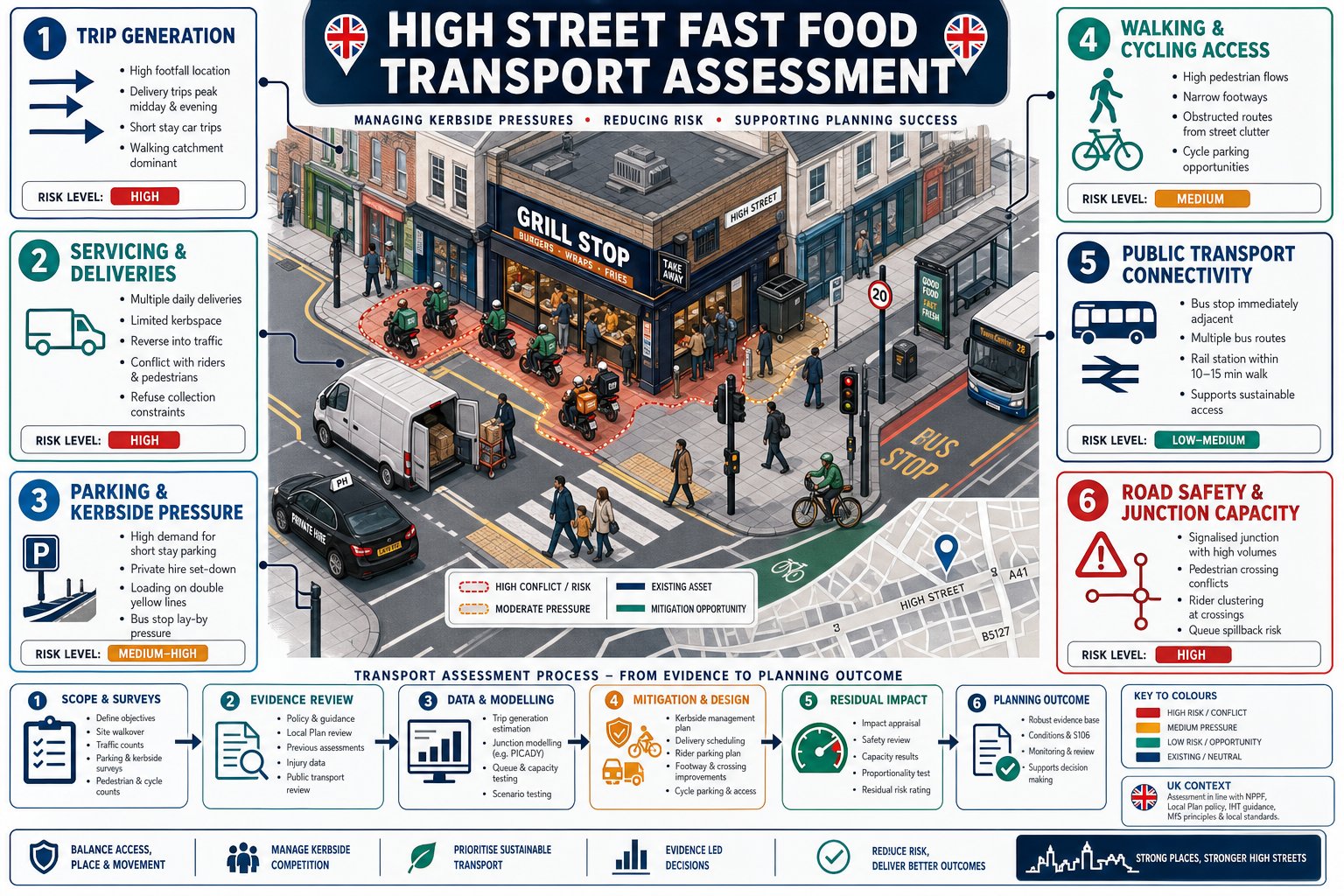
    How Traffic Surveys And Data Inform A Robust Planning Submission

    Good transport reports are built on evidence, not optimism.

    The type of data we collect depends on the site and likely issues. For some schemes, classified turning counts at nearby junctions are essential. For others, queue surveys, automatic traffic counts, speed data, parking beat surveys, pedestrian and cycle counts, or servicing observations provide the clearer picture. We may also review collision history, committed developments and publicly available transport context data.
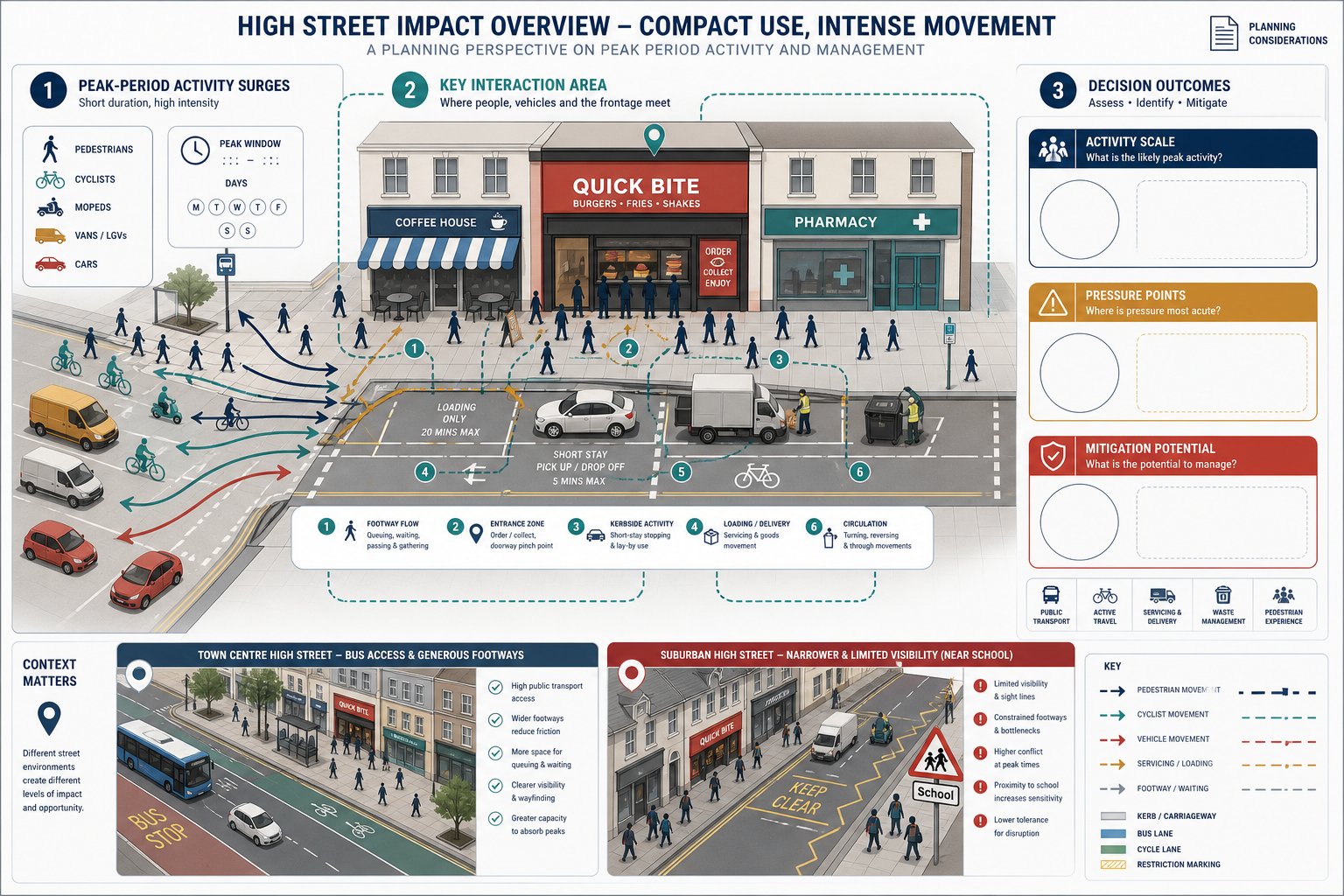
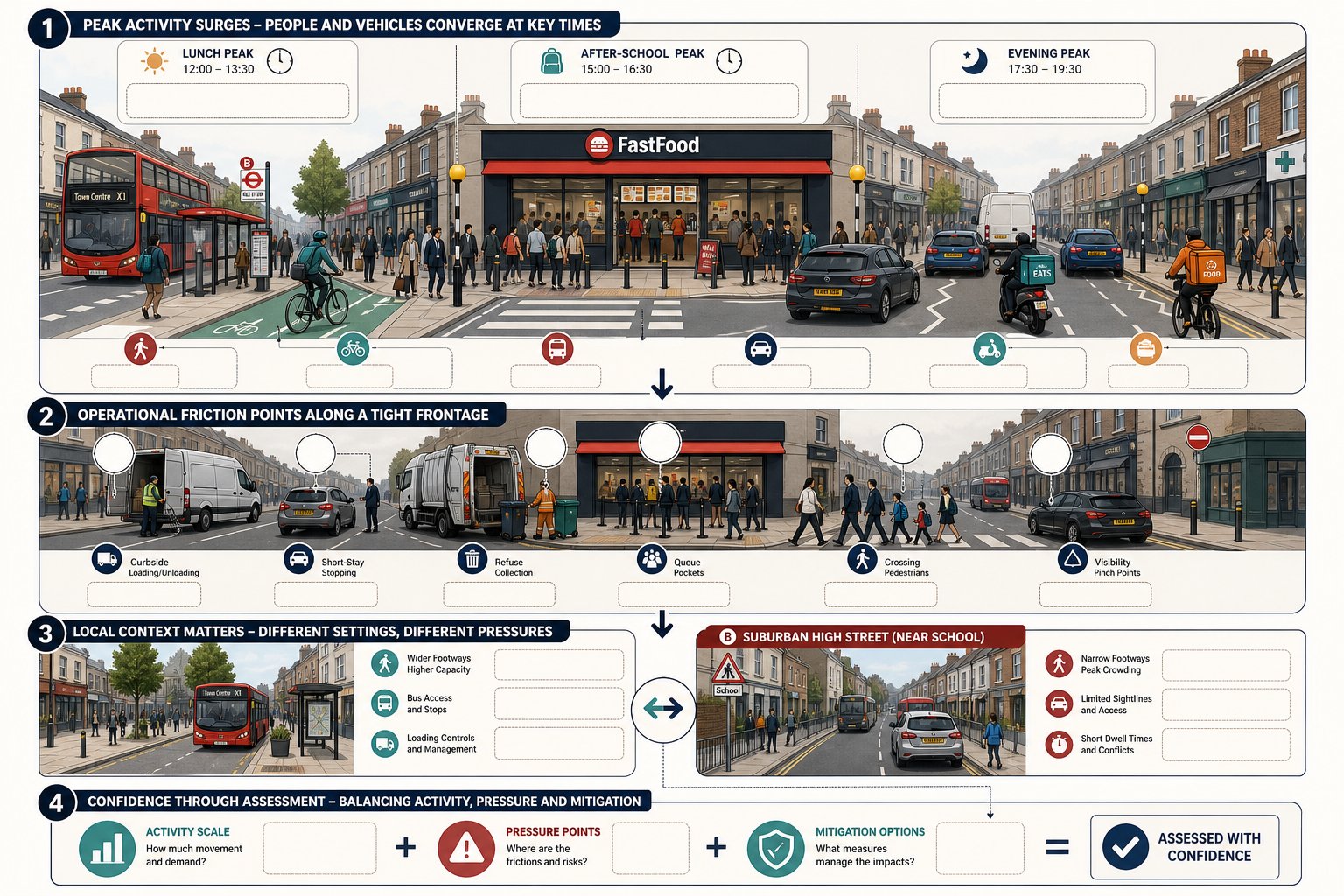
    That information feeds the technical core of the submission. Junction counts support capacity modelling. Speed data informs visibility and access review. Parking surveys test whether displaced demand is likely to be a problem. Pedestrian flows help us understand whether a crossing desire line or footway pinch point could become material.

    What matters is not just collecting data, but collecting the right data at the right time. Surveys carried out in an unrepresentative period can weaken confidence. So can counts that miss school activity, peak servicing or network disruption patterns. We usually scope surveys carefully to avoid expensive but irrelevant work.

    Done well, data helps move a discussion away from assumption. It gives planning officers and highway officers a shared factual base, which is often what unlocks progress. And when a scheme is challenged, robust evidence is far easier to defend than broad statements about likely minimal impact.

    Common Highways And Access Issues That Delay Approval

    Some planning delays are complex. Others are painfully predictable.

    One of the most common is inadequate visibility at the site access. If splays cannot be achieved because of boundary constraints, parked vehicles, street furniture or gradient, the whole access strategy may need to be revisited. Another frequent issue is poor internal layout: cars overhanging footways, refuse vehicles unable to turn, delivery bays blocking circulation, or disabled parking placed in impractical locations.

    We also see applications delayed by an over-reliance on private car trips without enough evidence on sustainable travel alternatives. In Sheffield, that can be particularly problematic where policy supports active travel and public transport use. A weak cycle strategy, poor pedestrian links or unconvincing Travel Plan can make a development feel out of step with local objectives.

    Parking and servicing are another flashpoint. Too little parking can create overspill objections: too much can raise policy questions or undermine placemaking. Servicing often causes the real headache, especially on constrained urban sites where delivery vehicles and refuse collection need space the architect would understandably rather use for something else.

    Then there is simple underestimation of sensitive network effects. A proposal may not generate huge traffic overall, but if it adds pressure to the wrong junction, near the wrong school, or along the wrong corridor, approval can slow down fast. Most of these issues are manageable, if they are identified early enough.

    Working With Architects, Planning Consultants, And Developers On A Scheme

    Transport input works best when it is collaborative rather than bolted on at the end.

    We usually work iteratively with architects, planning consultants, developers, surveyors and sometimes legal teams from the point where the site strategy is still flexible. That may involve testing alternative access points, marking up internal layouts, reviewing parking ratios, checking service yards, advising on refuse strategy and feeding transport wording into the planning statement or Design and Access Statement.

    This process is rarely linear. An architect adjusts the building line, which affects tracking. A planner flags likely policy pressure on car parking, which changes the balance of spaces and cycle provision. A land constraint shifts levels, which then affects pedestrian gradients. Transport engineering sits in the middle of those moving pieces.

    Our role is partly technical and partly interpretive. We help the wider team understand what a highways officer is likely to focus on, and we respond when comments come back. That can mean revising drawings, tightening report wording, agreeing planning conditions or preparing evidence for appeal.

    With more than 30 years of experience, the approach behind mltraffic.co.uk is built around concise, accurate reporting aligned to local authority thresholds rather than over-produced documents that bury the answer. For project teams, that usually means faster coordination, clearer actions and fewer surprises once the application is live.

    How To Choose The Right Traffic Engineer In Sheffield

    Not all transport consultants are interchangeable, and the cheapest quote is not always the most economical choice once delays are counted.

    We would look for five things.

    First, local authority understanding. A consultant should know how Sheffield and the wider South Yorkshire context influence report scope, access design and likely officer concerns.

    Second, planning fluency. Technical capability matters, but so does the ability to write clearly for planners, members, applicants and sometimes inspectors. A sound model hidden inside a muddled report is not much use.

    Third, relevant software and technical range. Depending on the scheme, that might include PICADY, ARCADY, LINSIG, CAD tools and vehicle tracking packages. Larger or more sensitive proposals may also require microsimulation or more detailed network testing.

    Fourth, track record. Ask whether the consultant regularly prepares TS, TA and TP documents for schemes similar to yours, and whether they handle negotiation after submission rather than disappearing once the invoice is paid.

    Fifth, professional standards. Membership of bodies such as CIHT or ICE, appropriate PI insurance and a disciplined QA process all matter.

    The right adviser should also be pragmatic. We have seen technically correct advice that was almost unusable in planning terms because it ignored programme, budget or design realities. Good traffic engineering solves problems in a way the wider team can actually use.

    What To Prepare Before Instructing A Transport Consultant

    A better brief produces a better report. It really is that simple.

    Before instructing a transport consultant, we recommend assembling the core information that will shape scope and programme:

    • site address and red line boundary
    • proposed use classes, unit numbers or floorspace
    • draft site layout and access drawings
    • levels information where gradients may matter
    • parking, cycle and servicing assumptions
    • proposed phasing, if relevant
    • any pre-application advice already received
    • previous planning decisions or refusal reasons
    • known local concerns, constraints or legal issues
    • any existing transport, survey or highway information

    If the development team already knows the likely flashpoints, perhaps a difficult junction, neighbour objections, rights over land, or servicing pressure, it helps to say so early. There is no prize for making the consultant guess.

    We also advise agreeing practical points upfront: whether the priority is a fast initial review, a full planning package, support for pre-app discussions, or technical backup through determination and condition discharge. That shapes the level of detail we produce from day one.

    When the starting information is clear, we can usually scope work more accurately, avoid unnecessary surveys, and focus effort where it will make the biggest difference to the planning outcome. That tends to save both time and money, which clients rarely object to.

    Conclusion

    In Sheffield, transport is rarely a side issue. It influences access, layout, policy fit, servicing, sustainability and, eventually, whether a scheme feels credible to the decision-maker. Appointing a locally aware traffic engineer in Sheffield early gives the wider team a clearer route through those issues before they harden into objections.

    We find that the strongest planning submissions are not always the biggest or most technical. They are the ones built on proportionate evidence, realistic design assumptions and a clear understanding of local transport context. If the access works, the servicing works, the sustainable travel case is credible and the report answers the authority’s real concerns, the application stands on much firmer ground.

    That is exactly where focused transport support adds value in 2026: not as paperwork for its own sake, but as a practical tool for faster, more robust local approval.

    Frequently Asked Questions about Traffic Engineers in Sheffield

    What role does a traffic engineer in Sheffield play in the planning process?

    A traffic engineer in Sheffield assesses how developments can be accessed and operated safely within the local transport network, preparing Transport Statements, Transport Assessments, and technical reports to support planning submissions aligned with South Yorkshire policies.

    Why is early transport input important for Sheffield developments?

    Early transport input helps shape access strategies, parking, and servicing before designs are fixed, reducing redesign and objection risks. Sheffield’s steep topography and local policies on sustainable travel make this early consideration critical for smooth planning approval.

    When is a swept path analysis necessary in Sheffield planning applications?

    Swept path analysis is required to prove that large vehicles like refuse wagons, fire appliances, and HGVs can manoeuvre safely within site layouts or junctions, ensuring practical vehicle access on constrained or complex urban sites in Sheffield.

    What are common traffic-related issues that can delay planning approval in Sheffield?

    Typical delays arise from inadequate visibility splays at access points, poor internal layouts preventing vehicle manoeuvres, insufficient parking or servicing space, and over-reliance on car trips without strong sustainable travel proposals, all critical in Sheffield’s local context.

    Which types of planning applications in Sheffield typically need traffic engineering support?

    Applications including residential estates, apartment blocks, schools, retail, healthcare, logistics sites, and any developments altering access or parking commonly require traffic engineering input to assess trip generation, safety, and network impact.

    How do Traffic Statements, Assessments, and Travel Plans differ for Sheffield developments?

    A Transport Statement suits smaller schemes with limited impact; a Transport Assessment covers larger developments needing detailed trip and junction analysis; a Travel Plan focuses on encouraging sustainable travel behaviour, all tailored to Sheffield’s local transport requirements.