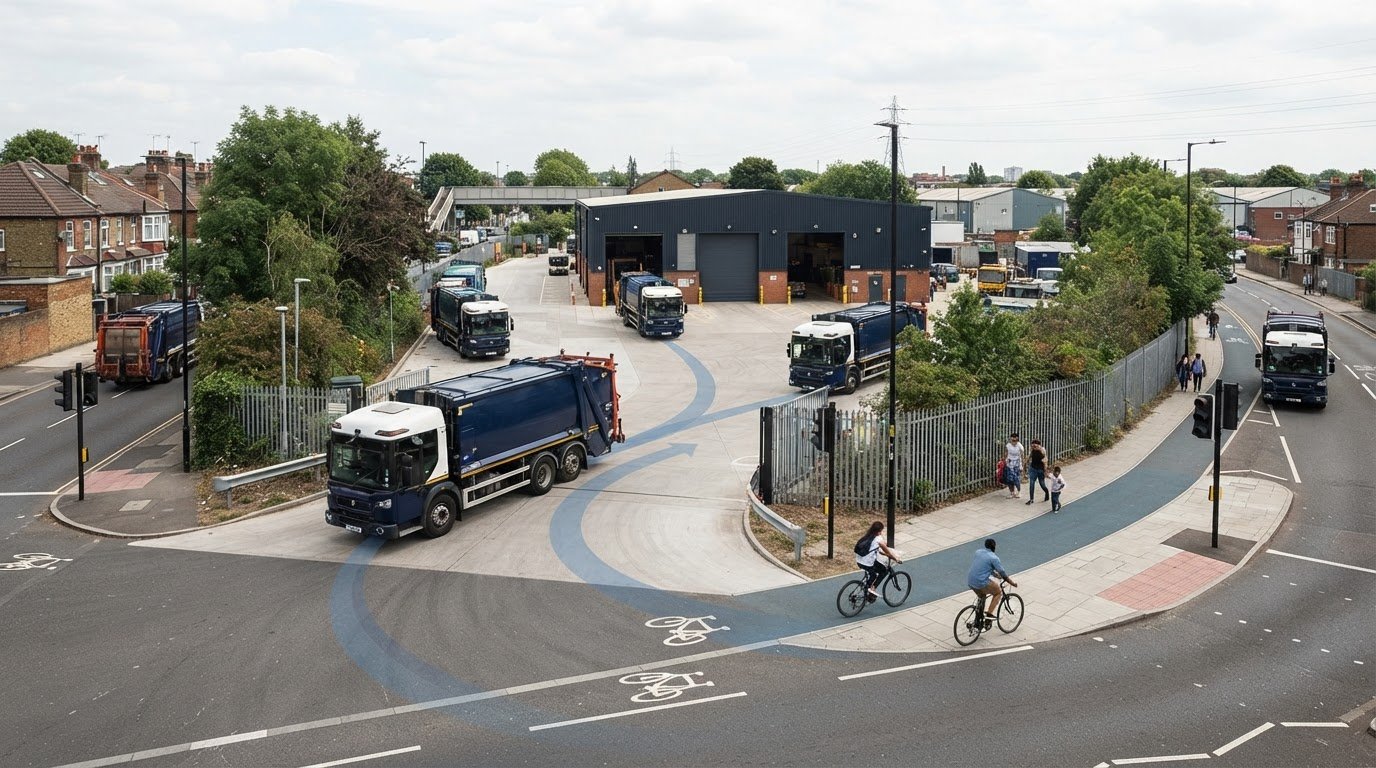
A waste facility’s transport case is only as credible as its account of the vehicles it will generate. A transport assessment for a waste management facility in Enfield should explain how operational traffic will reach the site, enter and manoeuvre, and affect nearby roads and people walking or cycling. A generic report may miss the local planning context that shapes how those effects are assessed.
It can be difficult to know what information to gather or how to describe day-to-day vehicle movements. This guide explains the transport questions a proposed Enfield waste facility may need to address, from vehicle activity and site access to local transport priorities. It also outlines how to scope a clear, site-specific planning submission in light of Enfield’s planning context and the shift towards vision-led transport planning.
You’ll find practical pointers on preparing the evidence and working with an experienced transport planning consultancy. ML Traffic Engineers UK takes a hands-on approach to planning work, with senior staff who each have over 35 years of traffic engineering experience. The aim is a focused assessment that reflects the proposal and its setting, rather than a template that leaves key questions unanswered.
Key Takeaways
- Assess the waste operation’s actual activity, access arrangements and vehicle movements, rather than relying on the site’s land-use label alone.
- A transport assessment for a waste management facility in Enfield should address site access, vehicle routing and potential effects on the surrounding network.
- Choose between a Transport Statement and a Transport Assessment based on the proposal’s scale, likely transport effects and applicable planning context.
- Build a clear assessment brief by setting out the proposal, site activity, vehicle details, access and relevant routes.
- ML Traffic Engineers UK prepares tailored Transport Assessments for planning submissions, with a hands-on approach and senior staff who each have over 35 years of traffic engineering experience.
Why an Enfield waste management facility needs a site-specific transport assessment
A Transport Assessment (TA) is technical evidence used to examine a development’s transport effects and access arrangements. For a proposed waste site, it should connect the operation as designed with the way vehicles and people will travel to and from it. A transport assessment for a waste management facility in Enfield should therefore reflect the specific proposal, not rely on a standard account of what waste facilities generally do.
The land-use label alone cannot establish the likely transport effects. The assessment needs to reflect the proposed activities, how the site will operate and how it relates to the surrounding road network. This evidence helps planning decision-makers understand the transport implications and consider them alongside other planning matters. It supports a decision, but does not guarantee planning permission or determine the outcome on its own.
What makes a waste facility’s transport profile different?
Vehicle types, operating patterns and site activity shape the questions an assessment needs to answer. A proposal might involve vehicles bringing waste, taking materials away, or both. The relevant movements and access considerations depend on the facility’s operations, so the report should not assume a standard vehicle mix, frequency or schedule.
Keep different trip sources distinct. Operational vehicle movements are not the same as journeys by staff, visitors or other users. Separating them helps explain what activity is expected, when it may occur and which parts of the transport case relate to site operations. The assessment can then focus on relevant access arrangements and effects instead of presenting a single unexplained total.
How Enfield’s planning context informs the assessment
Enfield’s planning context includes topics such as waste management, transport infrastructure, roads, walking and cycling, public transport and freight. These themes help frame the questions a proposal may need to address, but they do not automatically determine the scope or findings of every TA. Identify the current policy wording and guidance that apply to the proposal and its location.
The North London Waste Plan and Enfield’s transport and planning documents may be relevant, alongside London-wide policy. The applicable highway authority or transport bodies can also depend on the site and affected routes. Avoid treating a policy reference as a fixed conclusion. Identify the relevant documents, explain their connection to the proposal and make the transport analysis specific to the site.
Edmonton EcoPark provides local context because it demonstrates that waste infrastructure is part of Enfield’s planning environment. It is not a template for another site. Different access points, nearby routes, surrounding land uses and operating arrangements can raise different assessment questions. A credible report explains those distinctions rather than borrowing assumptions from a separate project.
For an overview of the evidence and structure involved, see this Transport Assessment guide for London planning applications. The central principle is to establish the applicable planning context, then assess the actual proposal and its transport effects.
What a transport assessment for an Enfield waste facility should examine
A Transport Assessment evaluates transport effects arising from a specific development. For a proposed waste site, its scope should connect the operation to the access arrangements, vehicle movements, routes and surrounding network that could be affected. It should explain how its conclusions follow from the proposal’s details and location, rather than rely on assumed or generic activity.
Start with the operational information available, then identify which transport questions that evidence can answer. The appropriate level of analysis depends on the scale and nature of the proposal, the site setting, relevant routes and the planning context. Enfield’s waste and transport policies provide context, but the assessment should show how relevant policy topics relate to this particular operation, not simply list them.
Vehicle movements, access and routing
Vehicle types and operating patterns help determine which movements to assess. The report should distinguish vehicles associated with the facility’s operations from other relevant trips, and use project information to describe how each group would access the site. Avoid unsupported vehicle totals, trip rates or operating hours. Where details are not settled, identify assumptions clearly so readers can understand the basis of the assessment.
Consider access alongside the routes vehicles are expected to use and the network effects that may follow. The appropriate level of route analysis depends on the proposal and its location. For example, a constrained site entrance may prompt different questions from a site with straightforward access. The assessment should show the actual circumstances rather than assume a problem or its absence.
Network users and local transport context
Assess the road network alongside people walking and cycling and public transport, where relevant to the site and likely effects. Freight is part of the picture too: describe the proposal’s vehicle movements and routing considerations without assuming a particular route or transport authority requirement. Enfield’s wider priorities and applicable waste planning context can help frame these questions. Check current policy wording before making a policy-specific claim.
The Scottish Government’s Scottish Government Transport Assessment Guidance offers a reference point for assessment principles, but it is Scottish guidance, not Enfield policy. For broader London planning context, the Transport Assessment guide for London planning applications provides related background. Neither replaces checking the current requirements relevant to the proposal and location.
A useful scope makes the evidence traceable: readers can see which project details informed the assessment, what effects were considered and why the analysis is proportionate. ML Traffic Engineers UK prepares site-specific Transport Assessments for planning submissions. Explore ML Traffic’s transport planning support for information about shaping an assessment around the proposal and its local context.
Transport Assessment or Transport Statement: choosing the right scope for Enfield
A Transport Statement (TS) is generally a concise document for explaining a proposal’s transport implications where the issues are limited. A Transport Assessment (TA) provides broader analysis when the proposal raises more extensive or interconnected transport questions. The right choice depends on the development and applicable planning context, not simply on whether the proposal involves waste.
For Enfield, consider the proposal’s actual activity, site setting, likely effects and relevant planning guidance before settling the scope. A small change to an existing operation may raise different questions from a new facility with more complex access and network effects. Neither document type should leave relevant issues unanswered.
| Consideration | Transport Statement | Transport Assessment |
|---|---|---|
| Scope | Concise account of relevant transport effects and access issues. | Broader analysis of multiple transport effects and their relationship. |
| Proposal complexity | May suit a proposal with a more limited, clearly defined transport scope. | May be appropriate where the proposal or location raises several connected questions. |
| Questions answered | What are the main transport implications, and can they be clearly explained with focused evidence? | What range of effects needs examination, and how do they interact across access and the surrounding network? |
When a concise Transport Statement may be proportionate
A TS may be suitable where the proposal’s transport effects are limited and can be addressed clearly without wider analysis. Judge suitability against the specific site, access and operational changes, along with Enfield’s current planning context. A shorter document is not a way to avoid relevant evidence. It should still explain the issues that matter and the basis for its conclusions.
For example, a contained change to an established site may call for a narrower scope than a new operation with several access or network questions. This comparison is illustrative, not a universal rule. The evidence required depends on the proposal and the planning authority’s expectations.
When a broader Transport Assessment may be appropriate
A broader TA may be warranted when operational activity, access, routing and surrounding network effects raise multiple questions that need to be examined together. The proposal’s location and current local planning context also matter. The assessment should be proportionate to those circumstances, rather than selected automatically based on the waste-related label.
Defining scope early helps align the document with the decision-makers’ transport questions. If you’re comparing document formats, ML Traffic’s Transport Statement guide for London explains the distinction in more detail. The essential test is whether the chosen document gives a clear, site-specific account of the relevant effects.
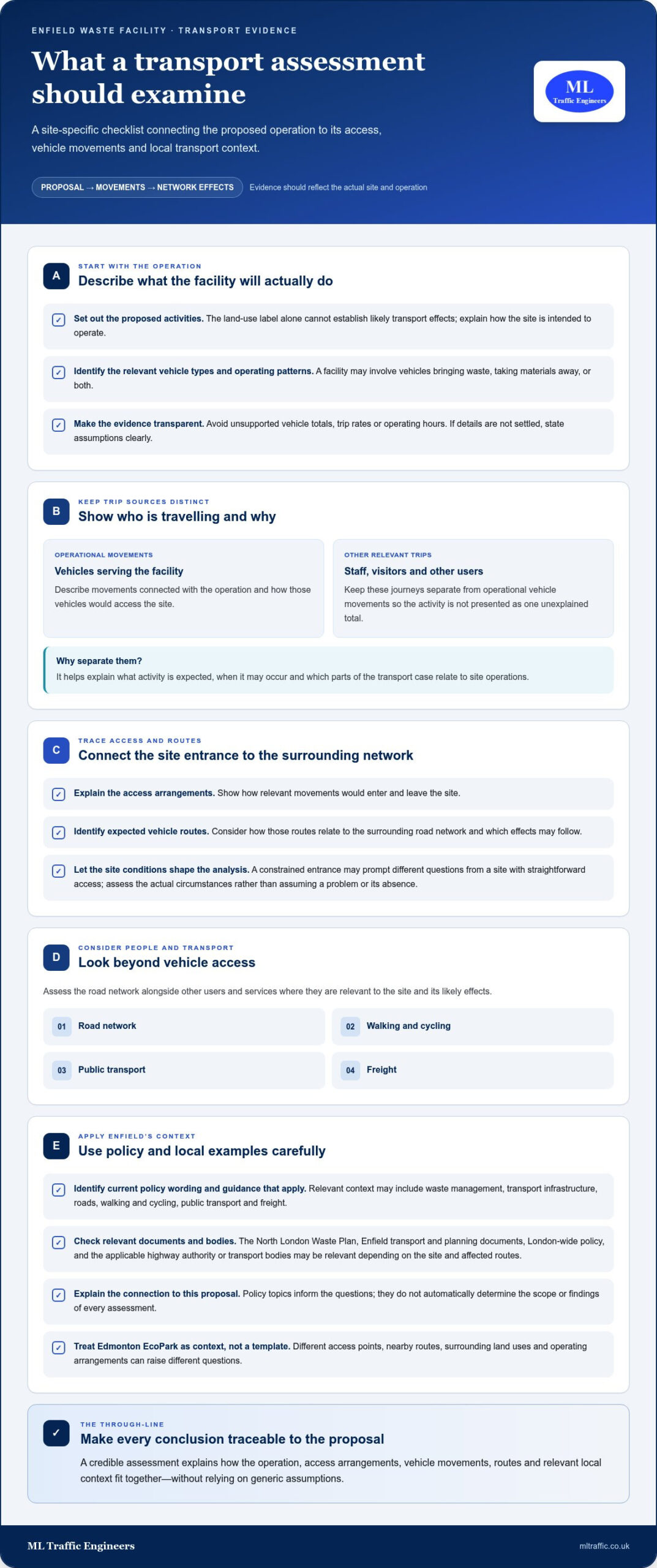
How to prepare an Enfield waste facility transport assessment brief
A clear brief gives the transport planner a reliable starting point and keeps the assessment focused on the proposal. Assemble what is known, distinguish confirmed details from assumptions and use the information to identify which transport questions need answers.
- Define the proposal. Summarise the site location, proposed use and planned activities. Explain whether the proposal is new, an extension or a change to an existing operation.
- Describe how the site will function. Set out the operational process and any known patterns of activity. Separate operational movements from staff, visitor and other relevant trips.
- Record access and vehicle information. Provide available details about site access and vehicle types. Include operating patterns or movement estimates where known, and label provisional information rather than filling gaps with standard assumptions.
- Identify relevant routes and surroundings. Show the routes considered for access and note nearby road connections or transport features that may be relevant. The scope should follow the site’s actual location, not a presumed route.
- Agree the assessment questions. Connect each potential transport effect with a question the evidence should answer, then establish a proportionate scope in the current planning context.
Information to assemble before scoping
Useful starting material may include a site plan, access layout, proposal description and available operational details. Bring together information on vehicle types, expected activity patterns, staff or visitor travel and surrounding routes. These are practical inputs, not a universal list of mandatory documents. If an item is unavailable or still being developed, say so clearly so the assessment can distinguish known facts from working assumptions.
Land use can also shape which transport considerations are relevant. ML Traffic’s project types for transport planning show how different development contexts inform transport work. For a waste proposal, describe the particular operation rather than relying on a generic category.
Turning project information into a clear assessment scope
Translate the brief into specific questions. If access is a concern, define what needs to be examined about the entrance and the vehicles using it. If routes are relevant, identify which connections and potential network effects the assessment should consider. If walking, cycling or public transport may be affected, explain why those users matter in this location.
Review current Enfield planning and transport documents when identifying relevant local policy topics. Confirm the wording and applicability rather than assuming a policy automatically determines the evidence required. The final scope should make the link between each project detail, the question it raises and the analysis proposed.
ML Traffic Engineers UK takes a hands-on approach to project-specific Transport Assessments. Discuss your Enfield transport assessment brief with ML Traffic to develop a scope grounded in the proposal and its planning context.
Commission an Enfield waste management facility Transport Assessment
ML Traffic Engineers UK prepares Transport Assessments for planning submissions, tailoring each document to the proposal and its local planning context. A transport assessment for a waste management facility in Enfield needs to reflect the site’s operational details and the transport questions raised by its location. Project-specific analysis is essential; a standard template cannot take its place.
Each senior member of the ML Traffic team has over 35 years of traffic engineering experience. The consultancy takes a hands-on approach, using available project information to develop a clear assessment scope and report. This expertise supports a well-evidenced planning submission, but no Transport Assessment can guarantee a planning decision.
What an experienced transport planning consultancy contributes
Good assessment work starts by understanding the proposal, not by assuming every development presents the same transport issues. The site layout, access, intended activity and relevant surrounding routes help shape the scope. Local authority context matters too: current planning policies and guidance can influence which questions the assessment should address and how the evidence is presented.
ML Traffic tailors assessments to local planning contexts, including differences between local authorities. This keeps technical reporting relevant to the application rather than relying on generic wording. The purpose is to explain the transport evidence clearly so decision-makers can consider it alongside the wider planning case, not to predict or promise the outcome.
To understand how this work fits with the consultancy’s wider planning support, see ML Traffic’s transport planning work. The assessment itself remains focused on the specific proposal and the issues its evidence needs to resolve.
Discuss the project and agree the next step
To begin a useful discussion, bring together a concise description of the proposed facility, its Enfield location, any available site or access plans, known operational and vehicle details, and the transport questions already identified. Distinguish confirmed project information from assumptions or details still being developed. This gives the assessment scope a clear starting point.
ML Traffic can use those details to discuss a suitable Transport Assessment approach for the planning submission. A well-defined scope relates the evidence to the project information and its planning requirements.
Share your Enfield proposal and its transport planning needs through ML Traffic’s contact route to discuss the next step with an experienced team.
Move your Enfield proposal forward with a clear next step
Use the transport assessment as a working part of the planning process. If the facility layout, access arrangements or operational details change, revisit the transport evidence so it continues to reflect the proposal being submitted. This keeps the assessment connected to the project as it develops, rather than leaving decision-makers to interpret outdated assumptions.
A transport assessment for a waste management facility in Enfield needs sound technical judgement and a clear understanding of local planning context. ML Traffic Engineers UK brings a hands-on approach, with senior staff who each have over 35 years of traffic engineering experience. The team tailors assessments to the proposal and relevant authority context while supporting the planning process without promising an approval outcome.
ML Traffic’s transport planning work covers Greater London, Manchester, Birmingham, the West Midlands, Liverpool, Surrey, East Sussex, West Sussex, Hampshire, Berkshire and Buckinghamshire. For your Enfield proposal, share the site details and transport questions you’re working through. Discuss your Enfield waste facility project with ML Traffic to take the next step towards a clear, project-specific planning submission.
Frequently Asked Questions
Does every waste management facility in Enfield need a Transport Assessment?
No. The document required depends on the proposal’s likely transport effects and the applicable planning context. A development with limited effects may be addressed through a Transport Statement, while a proposal likely to have significant effects may require a Transport Assessment. Strategic schemes referable to the Mayor of London also require a Transport Assessment. Compare current Enfield guidance and thresholds with the site and proposal rather than assuming one report type applies to every waste facility.
What transport information should I prepare for an Enfield waste facility planning application?
Prepare a clear description of the proposed operation, the site location and access, and any available layout plans. Include known vehicle types, expected operational patterns, and information about staff or visitor activity. Note which details are settled and which remain provisional. If you have traffic or parking survey results, include their context and collection basis. This helps the assessment distinguish observed conditions from forecasts and project assumptions.
How are waste facility vehicle movements considered in a Transport Assessment?
The assessment considers movements in relation to the proposed operation, including vehicle type and purpose and how vehicles would use site access and relevant routes. It should distinguish operational trips from staff, visitor or other traffic where relevant. For example, vehicles delivering waste and vehicles removing processed material may represent different activities. The analysis should explain its evidence and assumptions rather than rely on a standard movement profile for all waste sites.
Can a Transport Statement be suitable for a waste management proposal?
Yes. A Transport Statement can be appropriate if the proposal’s transport effects are limited and can be explained with concise evidence. The fact that a proposal relates to waste does not, by itself, settle the report scope. Consider the specific activity, site circumstances and applicable planning guidance. A TS still needs to address relevant transport questions; it should not be used to avoid analysis that the proposal’s effects call for.
Which Enfield planning policies are relevant to a waste facility’s transport assessment?
Potentially relevant documents include the North London Waste Plan, Enfield’s Local Plan and transport strategy, the London Plan and the Mayor’s Transport Strategy, alongside national planning policy. Which policies apply depends on the proposal and site. Check the current adopted wording and relevant guidance before citing a policy or drawing a conclusion. Establish whether the site’s location or routes engage another highway authority or transport body.
Does a Transport Assessment guarantee planning permission for a waste management facility?
No. A Transport Assessment provides evidence about transport matters for decision-makers to consider as part of the wider planning application. It can explain the proposal’s effects and the basis for the transport analysis, but it does not determine every planning issue or guarantee a favourable decision. Other planning considerations and the application as a whole remain relevant. Treat the report as a technical contribution to the submission, not a promise of consent.
When should transport assessment scope be considered during a waste facility proposal?
Consider scope early, while the proposal and access arrangements can still be refined. Early planning helps identify what information is available, which transport questions need analysis and whether the proposed report type fits the likely effects. Where appropriate, scope discussions can involve Enfield’s planning or highways teams and TfL, depending on the site and routes. Revisit the approach if the operation, layout or access changes materially before submission.

Disclaimer
The content on mltraffic.co.uk, including all technical articles, guides, and resources, is provided for general informational and educational purposes only. It is not intended to constitute professional advice in traffic engineering, transportation planning, development approvals, or any other technical or legal field.
While ML Traffic Engineers makes every reasonable effort to ensure the accuracy, completeness, and timeliness of the information published, we do not provide any warranties or representations (express or implied) regarding its reliability, suitability, or availability for any particular purpose. Any reliance you place on the content is strictly at your own risk.
In no event shall ML Traffic Engineers, its directors, employees, authors, or affiliates be liable for any direct, indirect, incidental, special, consequential, or punitive damages (including, without limitation, loss of profits, data, or business opportunities) arising out of or in connection with the use of, or inability to use, any information provided on this website.
The articles and guides on this site are not a substitute for engaging a qualified, professional traffic engineer to assess your specific project requirements. For tailored advice, compliance assessments, or traffic engineering services, please contact a competent professional.
This disclaimer may be updated from time to time without notice. By accessing or using this website, you agree to be bound by the most current version of this disclaimer.