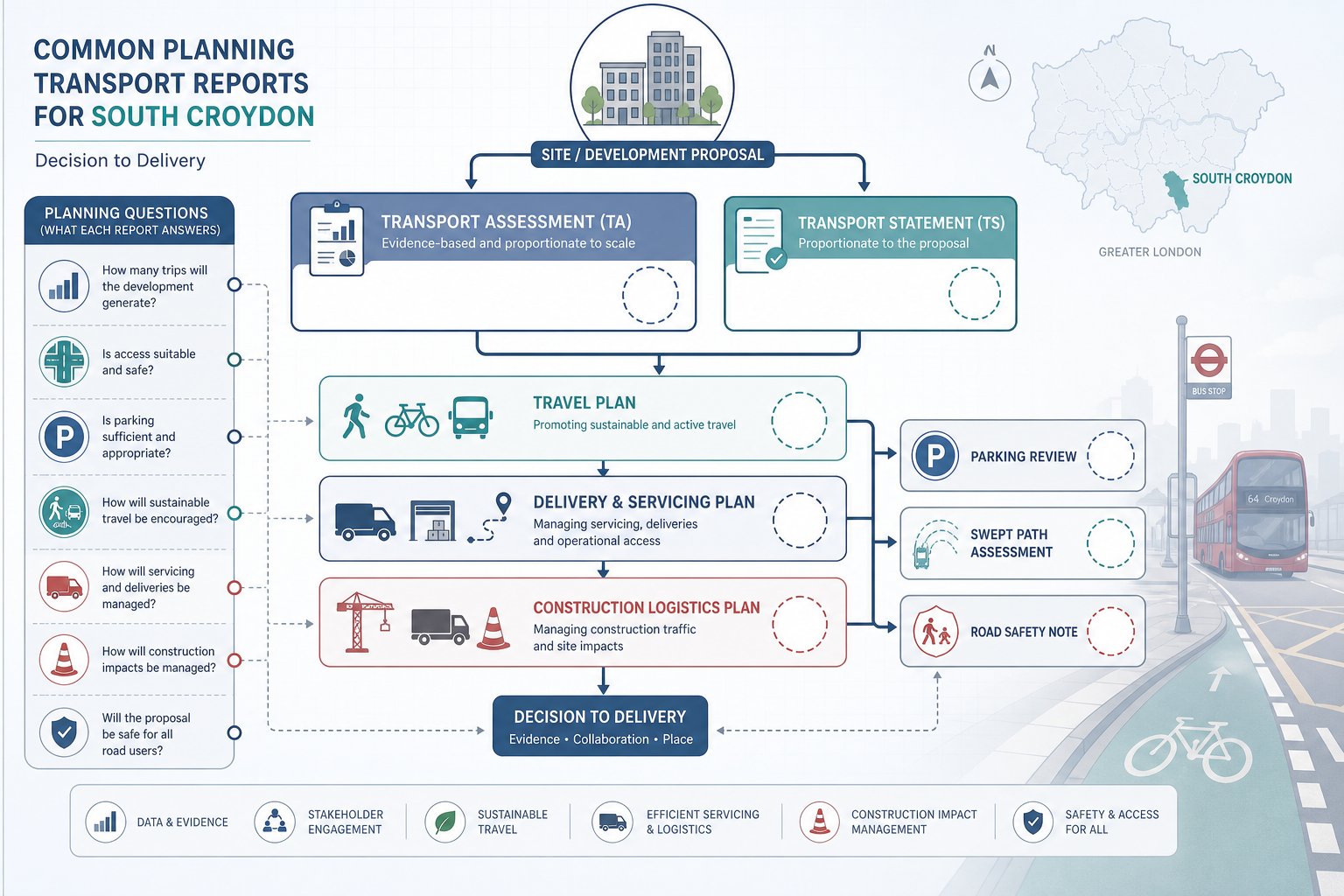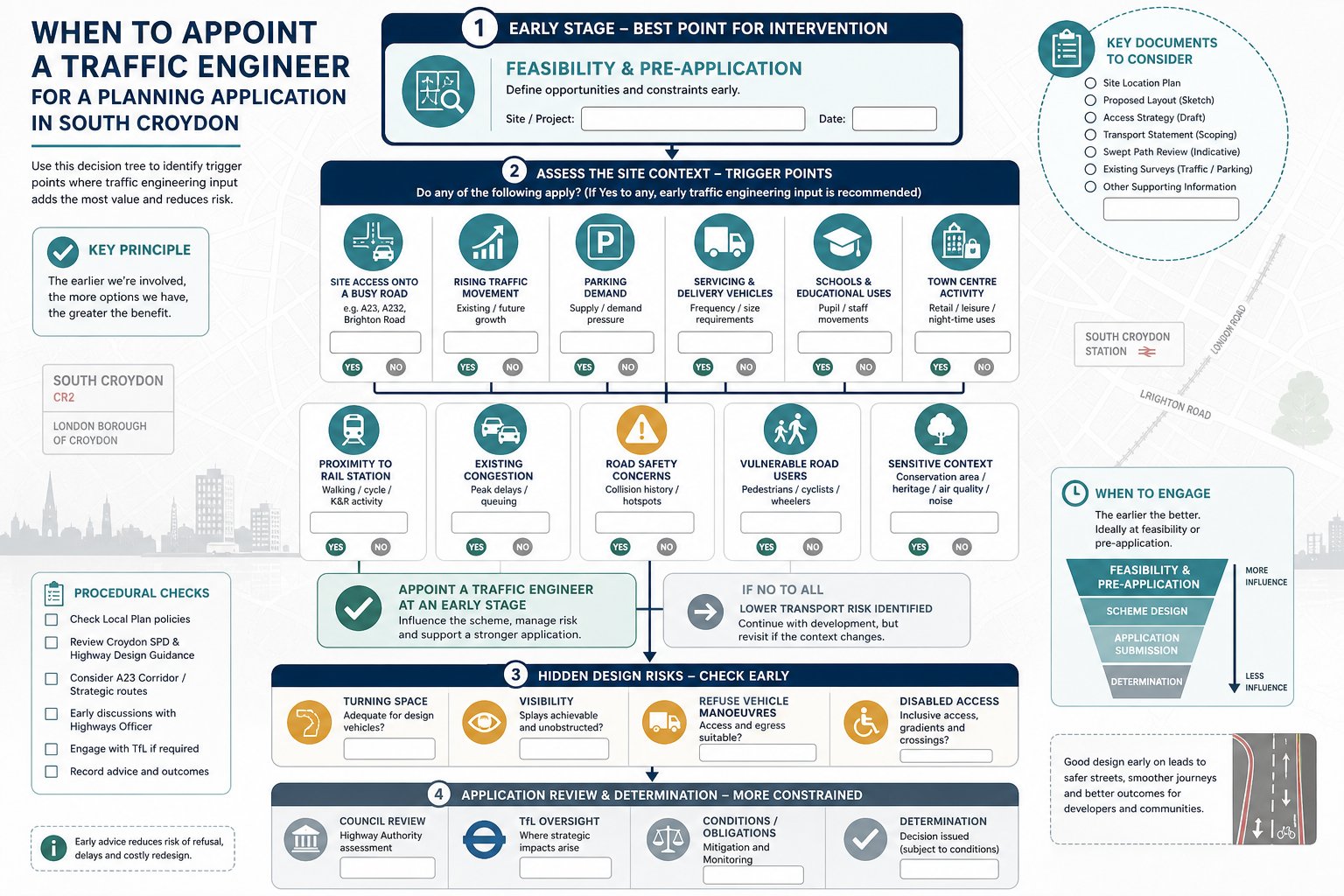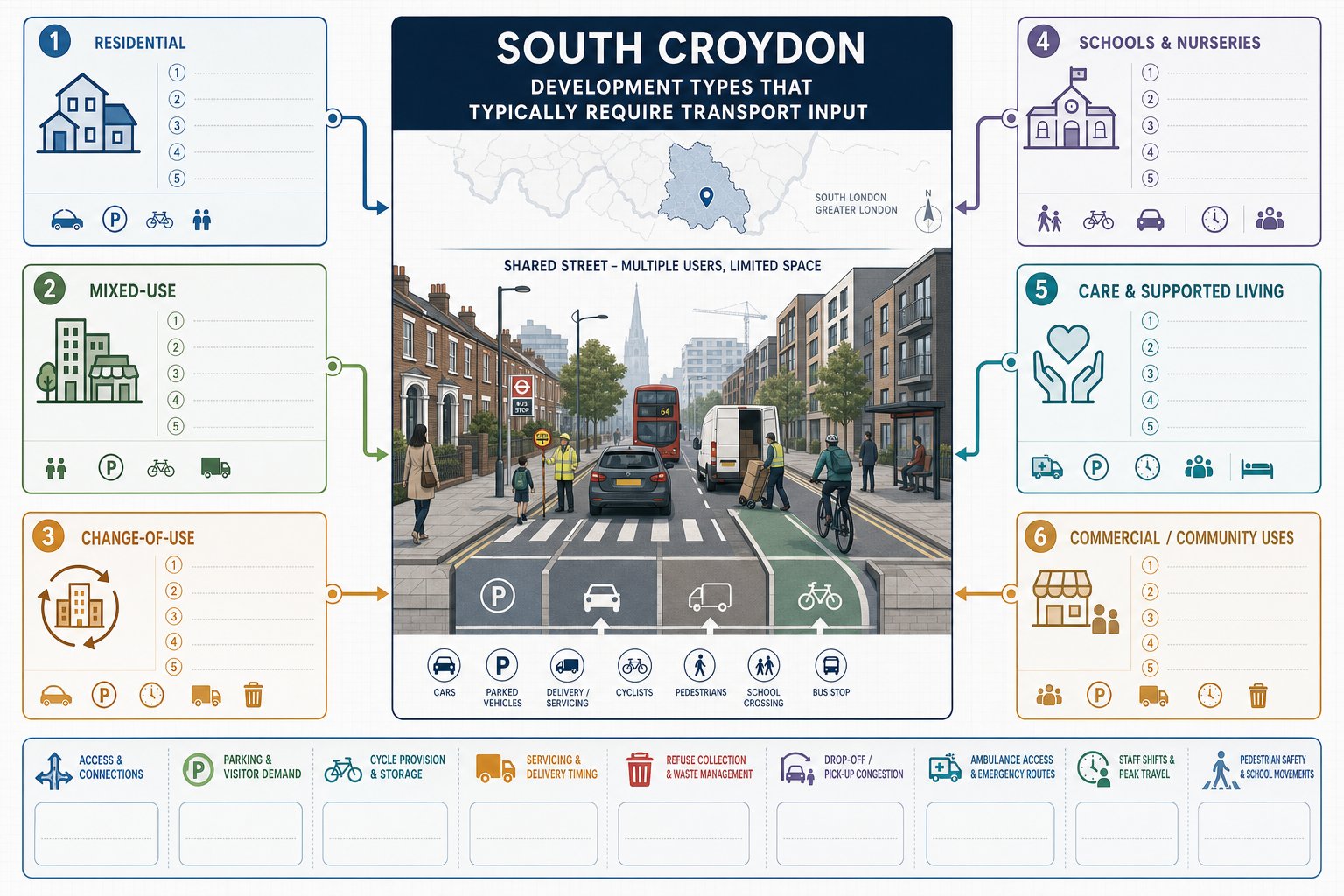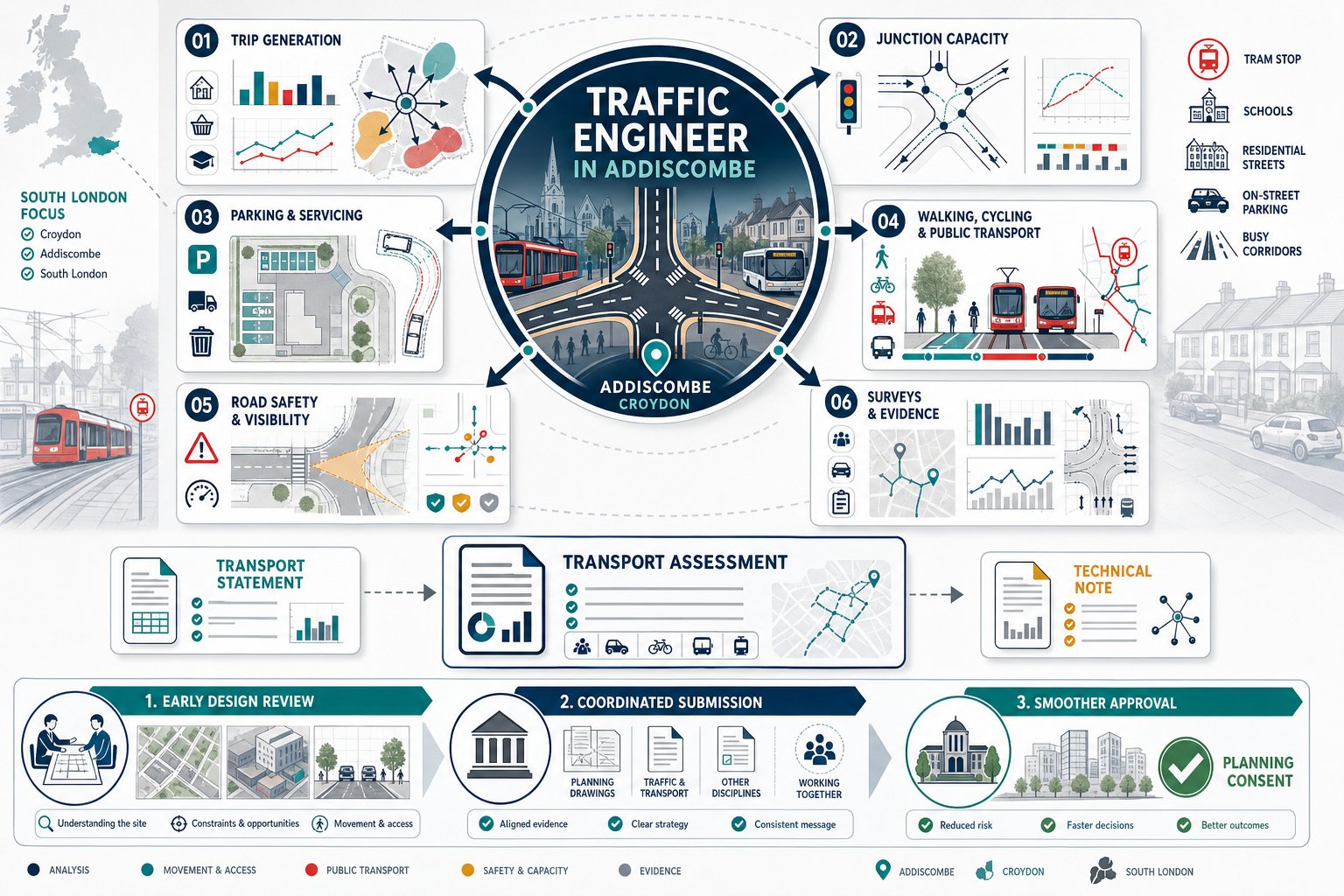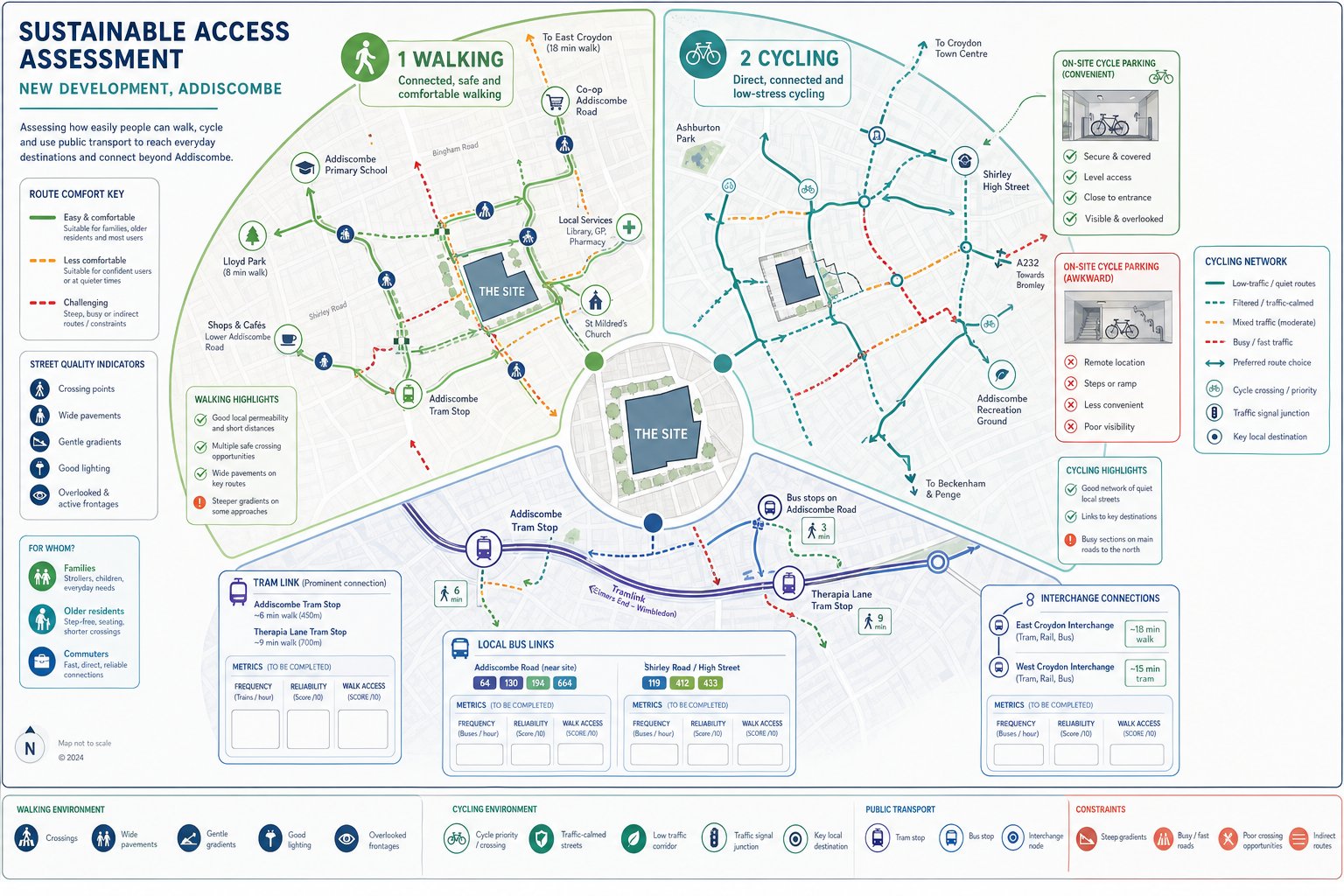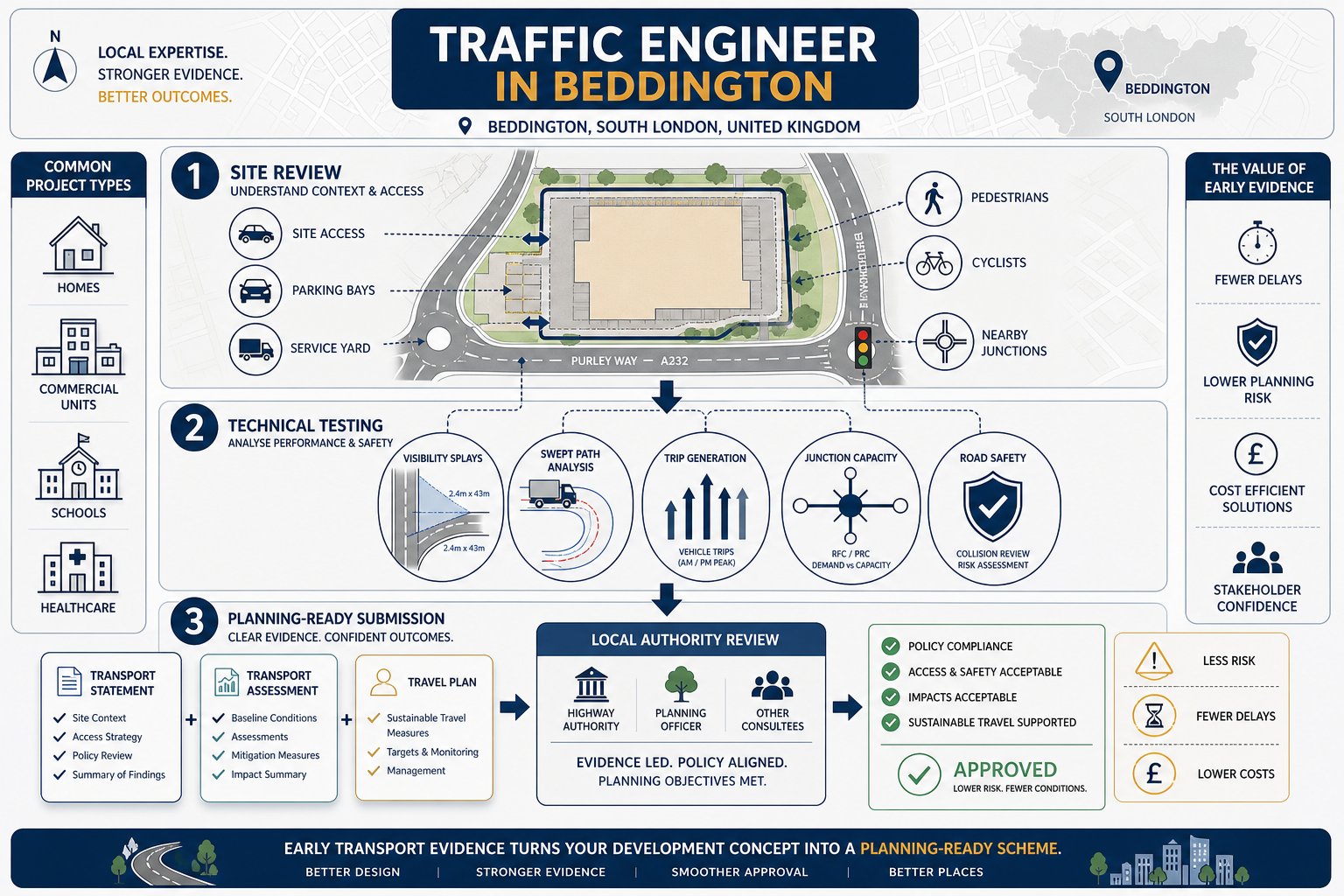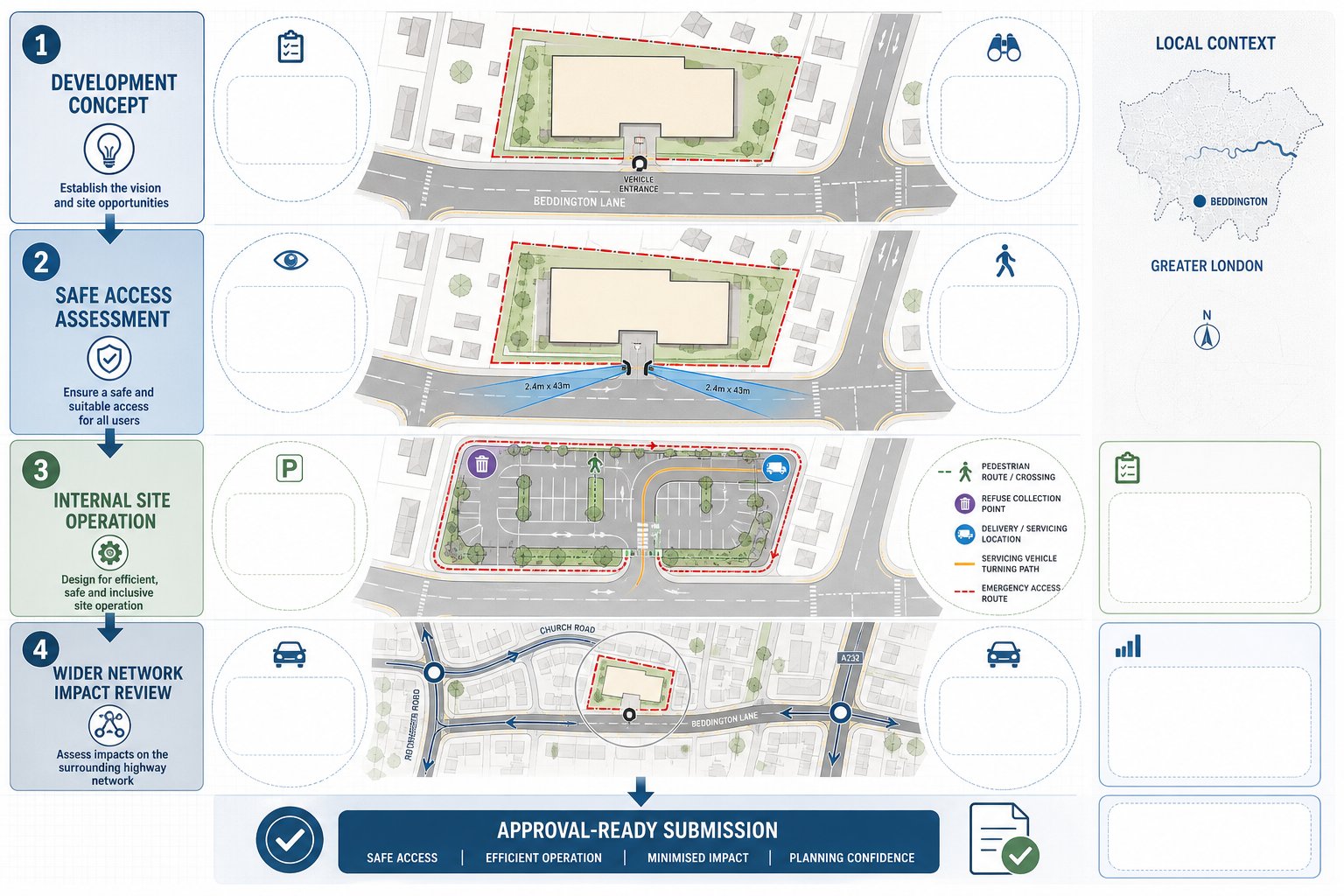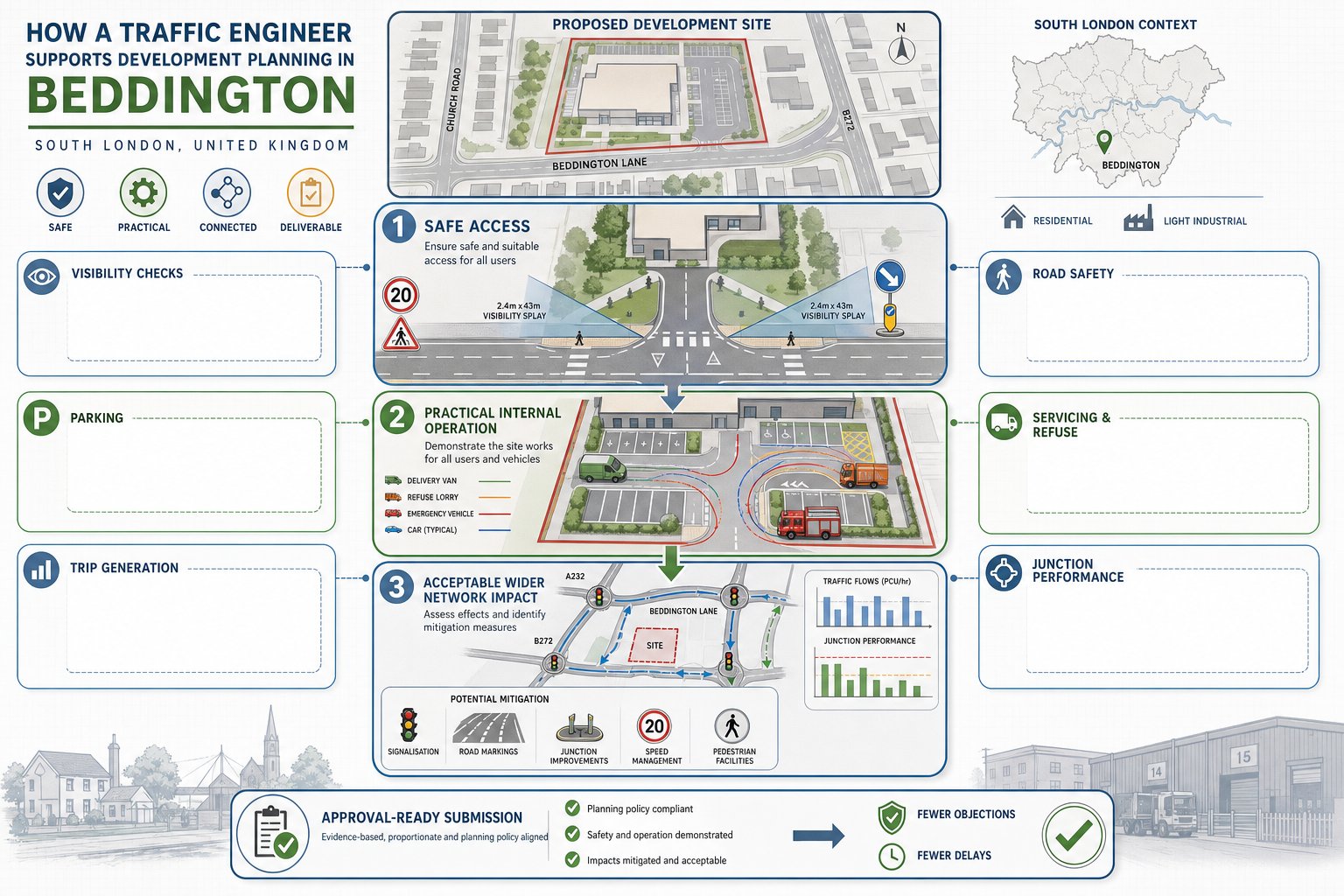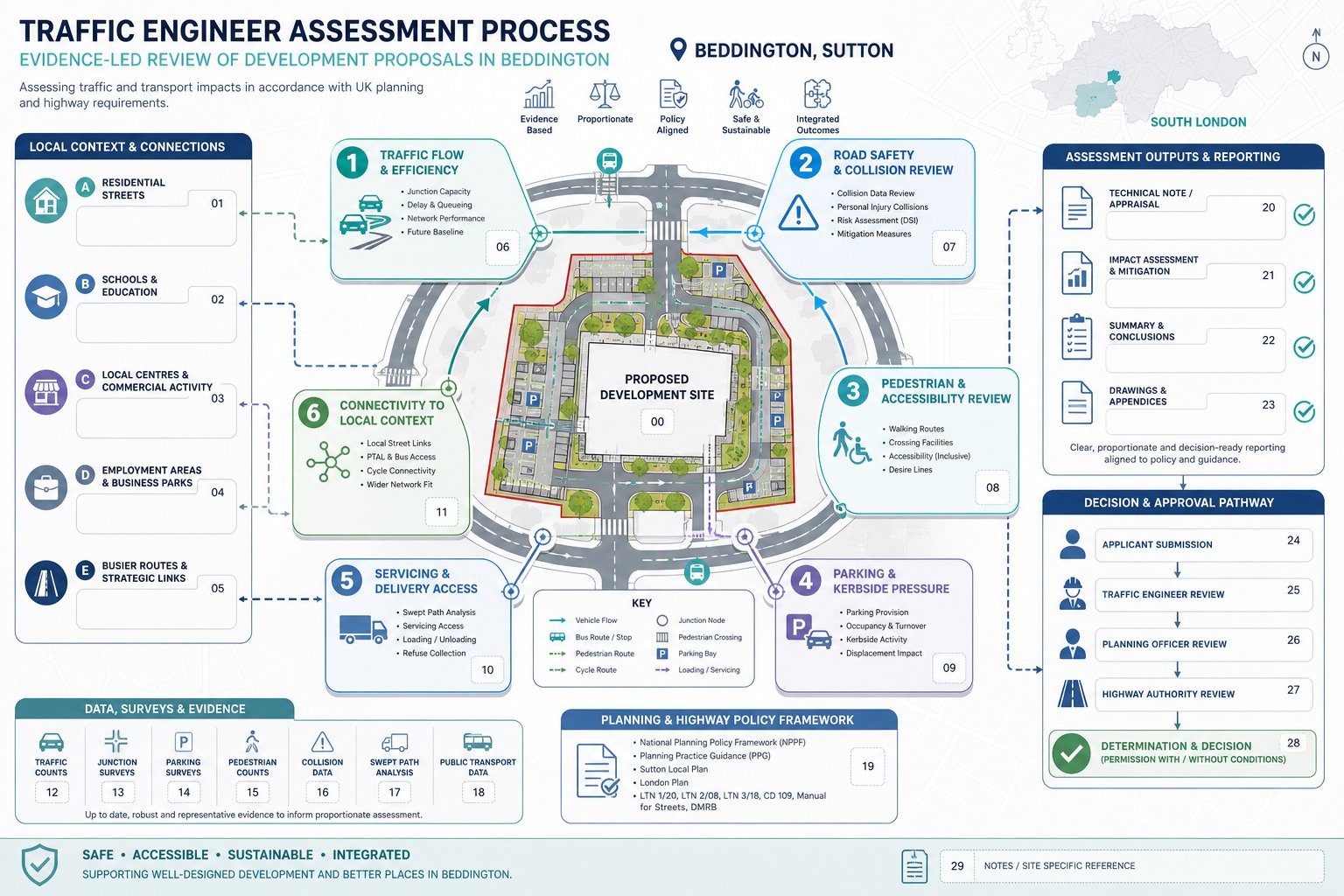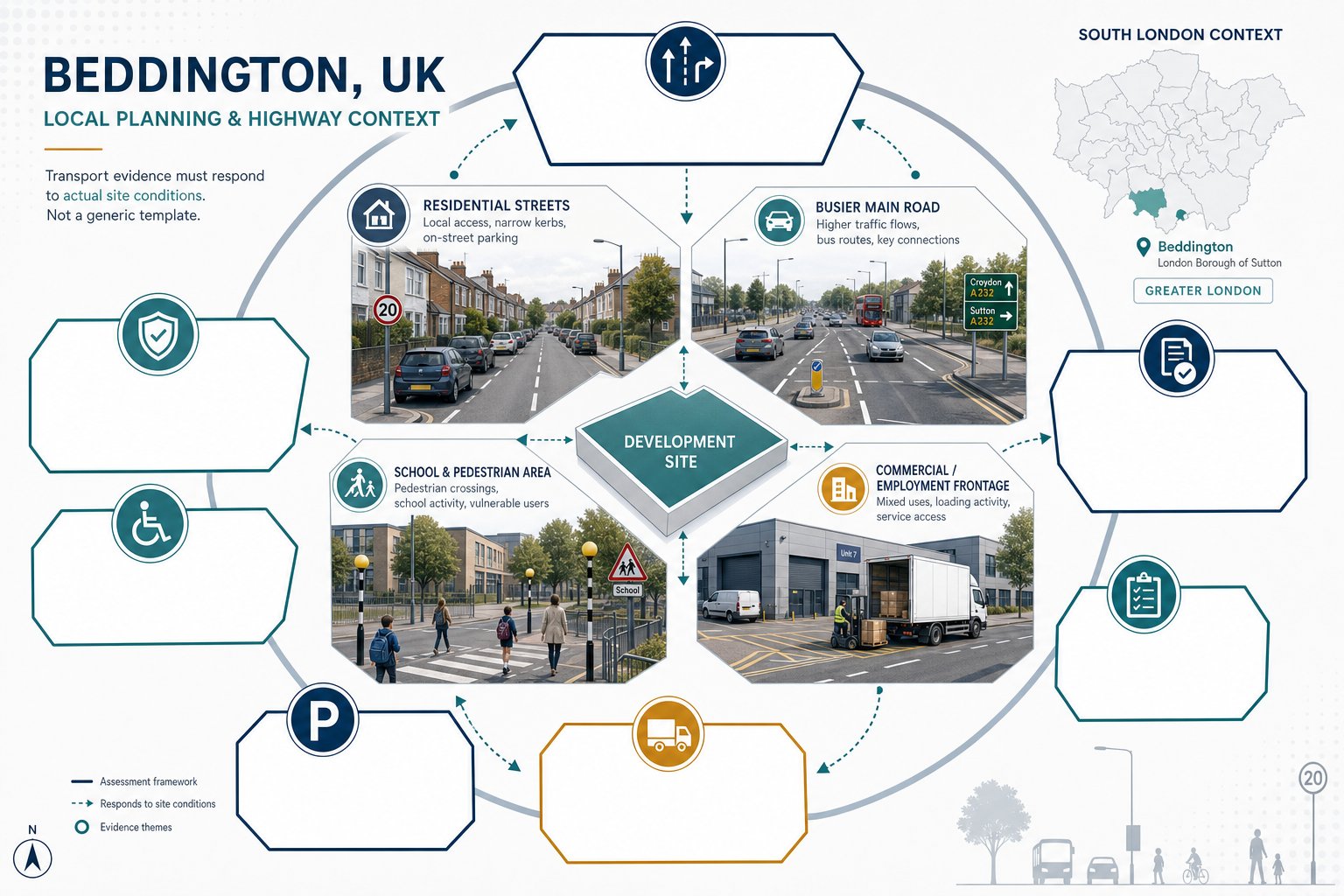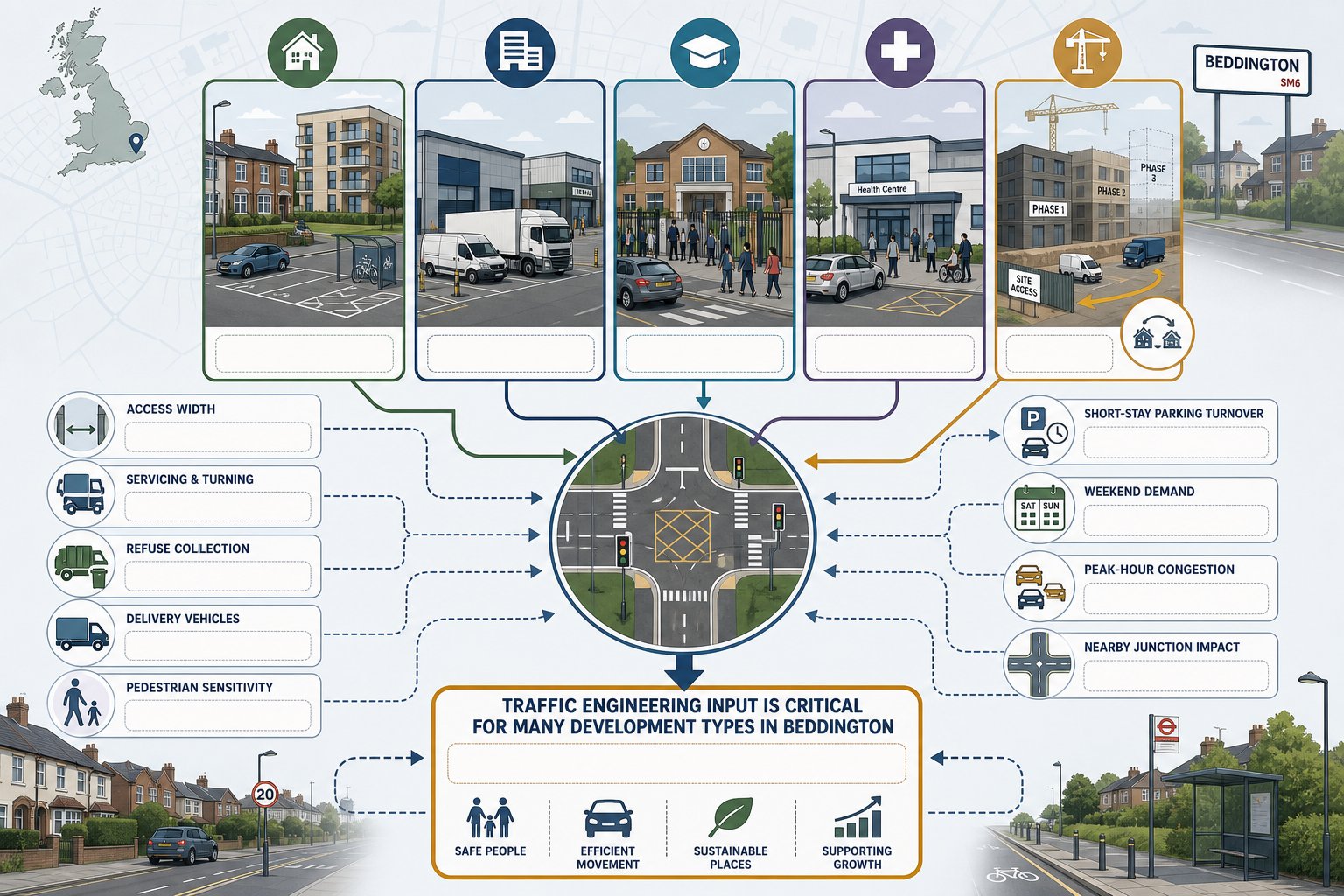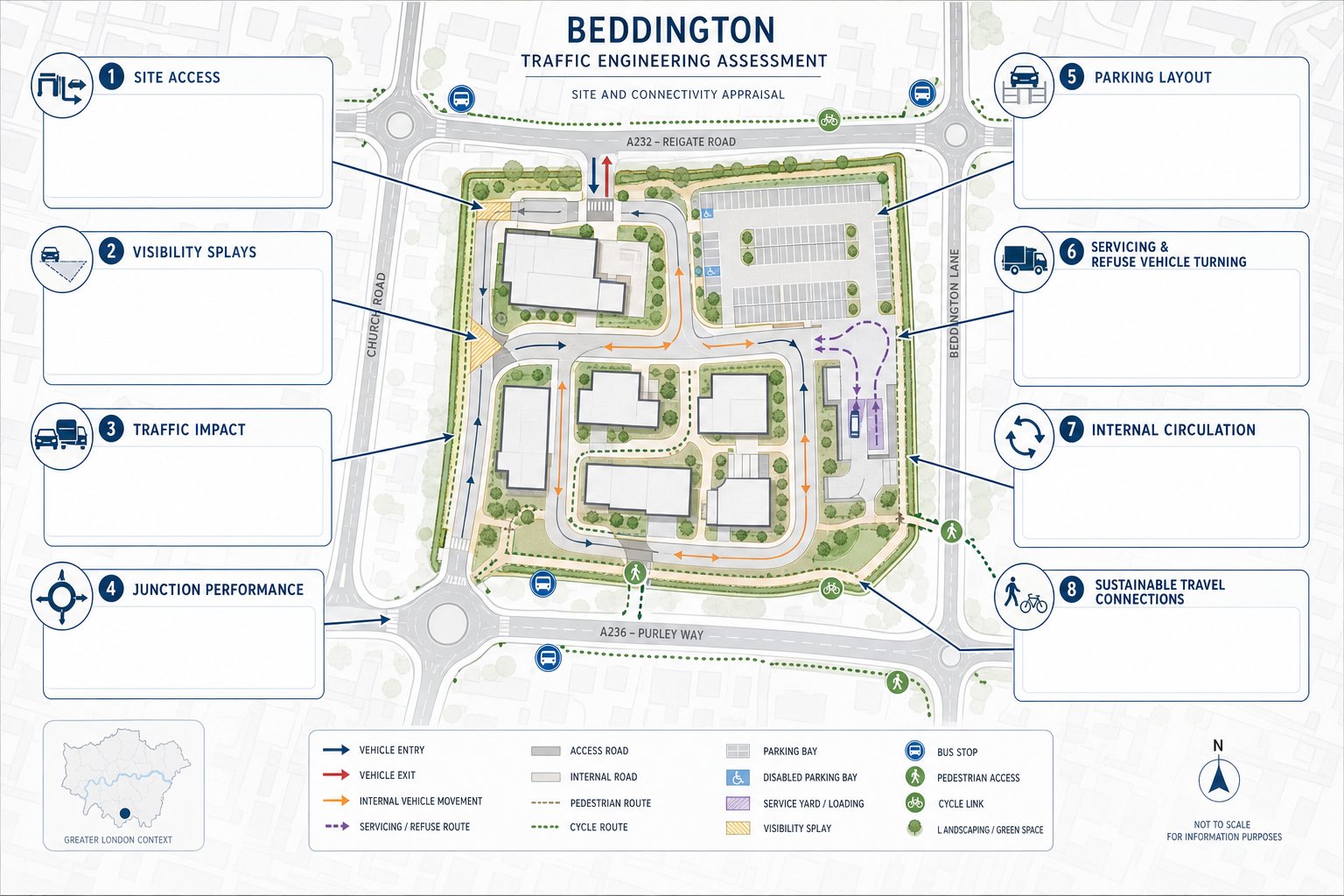
Category: High Frequency Posts

  • Highway Infrastructure Design In The UK: A Practical Guide For Planning, Compliance, And Delivery In 2026

    Highway Infrastructure Design In The UK: A Practical Guide For Planning, Compliance, And Delivery In 2026

    If a planning application lives or dies on access, movement, and network impact, then highway infrastructure design UK work is rarely a side note. It’s often the point where planning ambition meets engineering reality.

    For architects, planners, developers, solicitors, surveyors, and local authorities, that reality is getting more demanding in 2026. Highway design now has to do more than fit kerbs, radii, and visibility splays onto a drawing. It must respond to national policy, local transport strategy, climate resilience, inclusive movement, technical approval routes, and increasingly tight scrutiny from highway authorities and consultees. A scheme can look straightforward on paper, then stall because drainage was treated too late, junction capacity was under-tested, or the access strategy wasn’t aligned with the local authority’s design guide.

    In practice, good highway infrastructure design in the UK is about joining up planning, transport evidence, and detailed engineering early enough to avoid expensive redesign. That means understanding what type of scheme you’re promoting, which standards actually apply, how the authority will review it, and what drawings and assessments need to accompany the planning case.

    In this guide, we set out the core principles, approval pathways, and recurring pitfalls that shape successful project delivery across UK highway schemes, from development-led access works to wider highway improvements and adoptable estate roads.

    What Highway Infrastructure Design Covers In The UK Planning Context

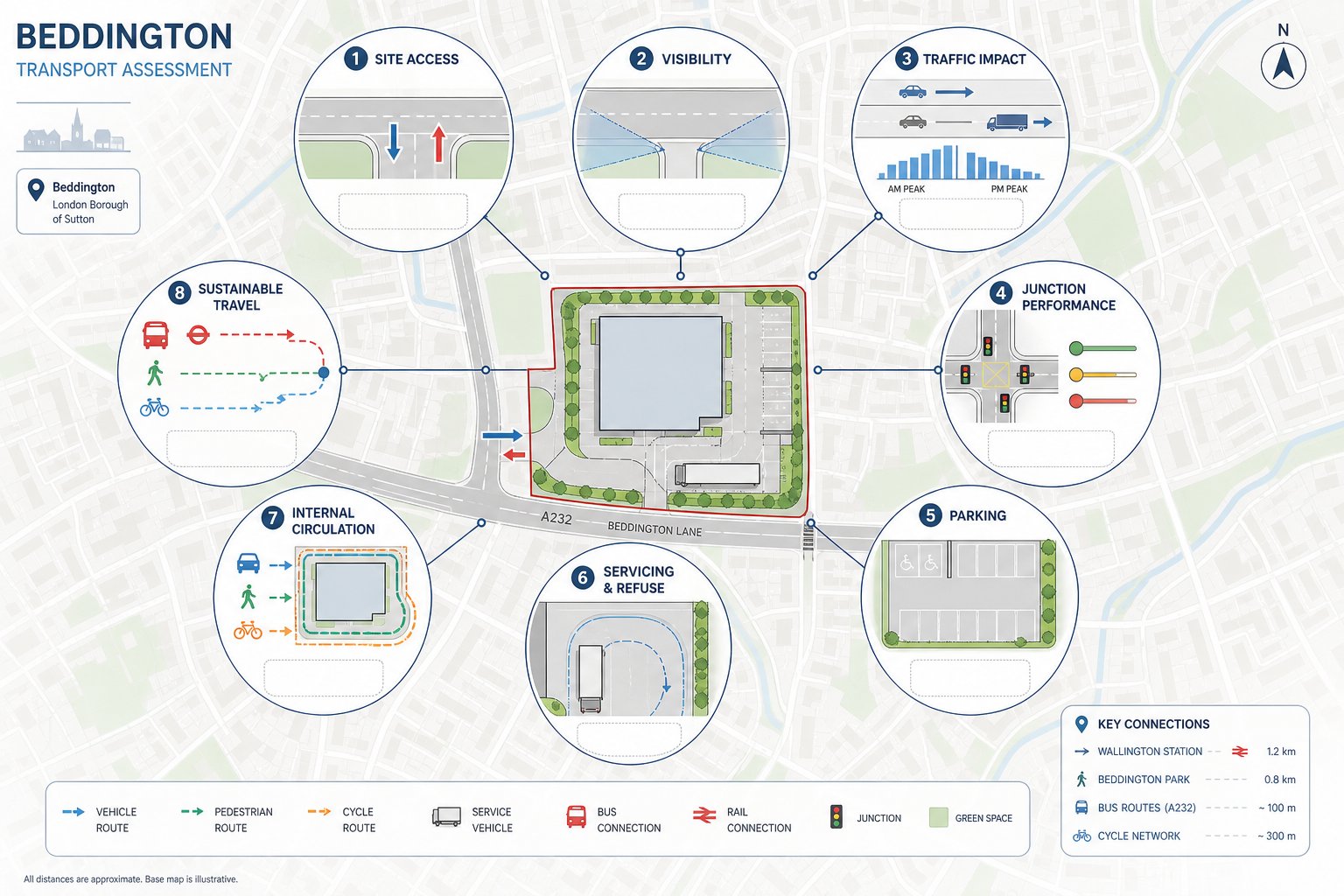
    UK highway planning infographic showing site access, transport links, and three scheme types.

    Highway infrastructure design in the UK planning system covers far more than the carriageway edge. In planning terms, it usually includes site access, junction alterations, internal road layouts, walking and cycling links, servicing strategy, car parking arrangement, refuse and emergency access, and any off-site works needed to make a development acceptable.

    For development-led projects, the design must show that the proposal can be safely reached, can operate efficiently, and won’t create severe impacts on the surrounding network. That often links directly to the policy tests behind Transport Assessments, Transport Statements, and planning conditions. For larger schemes, it also has to sit alongside environmental work, flood risk strategy, utilities planning, and sometimes Environmental Impact Assessment.

    The planning context matters because the highway solution is rarely judged in isolation. Authorities will look at whether it supports local plan objectives, sustainable transport priorities, road safety outcomes, and placemaking goals. A technically workable junction may still be challenged if it undermines walking routes, public realm quality, or bus access.

    That’s why we usually advise treating highway design as part of the planning narrative from day one, not as a late-stage engineering add-on. When the access strategy, movement hierarchy, and technical constraints are understood early, the application tends to move faster and with fewer painful revisions.

    The Main Types Of Highway Infrastructure Schemes

    In broad terms, UK schemes tend to fall into three groups.

    First, there are Strategic Road Network projects involving motorways and trunk roads, where National Highways standards, approvals, and operational concerns are central. These are typically the most procedurally demanding.

    Second, there are local highway authority schemes: junction upgrades, corridor improvements, traffic management changes, bus priority measures, and public realm interventions on county, city, or borough roads.

    Third, there are development-led schemes. These are the projects many planning teams deal with most often: new priority or signalised junctions, ghost islands, roundabout modifications, internal estate roads, adoptable streets, servicing yards, parking courts, and pedestrian/cycle links tied to housing, commercial, logistics, education, or mixed-use development.

    Some schemes, of course, blur the edges. A housing site may require both local road works and interventions affecting the Strategic Road Network. And that’s exactly where early scoping pays off.

    How Policy, Standards, And Local Authority Requirements Shape Design

    UK highway design framework showing national, technical, and local approval layers.

    Every highway design decision sits inside a policy and standards framework. The trick is knowing which documents are genuinely determinative, which are advisory, and which local requirements will shape the authority’s expectations in practice.

    At national level, relevant policy can include the National Planning Policy Framework, transport decarbonisation objectives, and, for nationally significant infrastructure, National Policy Statements and the Planning Act regime. On the technical side, National Highways’ DMRB remains the core reference point for the Strategic Road Network and often influences wider practice, even where it does not apply directly.

    But many planning disputes happen at local level. Local Plans, Local Transport Plans, area action policies, parking standards, highways supplementary planning documents, and street design guides can be just as important as national guidance. One authority may support tighter urban geometry and place-led design: another may be more conservative on visibility, tracking, or adoptable street width. Designers who ignore that local culture usually discover it during consultation, which is the expensive moment to learn it.

    For firms like ours, working across authorities means tailoring reports and drawings to local thresholds and approval habits, not just citing generic standards. That sounds obvious, but it’s often the difference between a smooth technical review and three rounds of avoidable comments.

    National Guidance, Design Codes, And Approval Routes

    The main guidance stack usually includes DMRB for trunk roads and motorway-related matters, Manual for Streets principles for lower-speed local environments where adopted or accepted, local street design manuals, and specialist guidance on active travel, drainage, and accessibility. National Highways’ design principles, including the emphasis on good design rather than purely engineered minimums, also shape expectations around context-sensitive solutions.

    Approval routes depend on scheme type. Nationally Significant Infrastructure Projects typically proceed through the Development Consent Order process under the Planning Act 2008. More routine development generally sits under the Town and Country Planning Act, often with parallel or subsequent processes under the Highways Act 1980 for off-site works, stopping up, Section 278 works, Section 38 adoption, or other agreements.

    That overlap matters. A planning permission may establish the principle of access, but detailed technical approval for construction or adoption often comes later. If the concept design has not been developed with those later stages in mind, delays are almost guaranteed.

    Key Design Principles For Safe, Efficient, And Buildable Highway Layouts

    Infographic of key principles for safe, durable UK highway layout design.

    The best highway layouts tend to look deceptively simple. Behind that simplicity is a balancing exercise between safety, capacity, usability, construction cost, maintainability, and long-term resilience.

    Safety is the baseline, but it is not the only design objective. A layout also needs to function operationally across typical and stressed conditions, accommodate the right vehicles, allow intuitive movement, and be capable of being built without heroic retaining structures or endless utility diversions. We also need to think about maintenance access, drainage performance, future resurfacing, and how the network behaves in heavy rainfall or during incidents.

    Context matters enormously. A rural access junction serving a logistics site has different priorities from an urban mixed-use street where pedestrian comfort and cycle permeability are front and centre. Good design responds to place, speed environment, land use, and likely user behaviour rather than applying geometry mechanically.

    Buildability is another area that gets underestimated. A neat preliminary drawing can unravel once levels, tie-ins, statutory undertakers’ apparatus, retaining requirements, and temporary traffic management are understood. So practical design means asking awkward questions early: can we actually construct this within the land available, maintain traffic, drain it properly, and hand it over for adoption?

    In 2026, climate resilience is no longer a nice extra either. Heat, intense rainfall, flood pathways, and maintenance burdens increasingly shape pavement choice, drainage strategy, and materials specification. In short, good highway infrastructure design UK work is not just compliant. It is workable, durable, and proportionate.

    Junction Design, Access Strategy, And Network Capacity Considerations

    infographic showing UK junction design, access options, and traffic capacity analysis.

    Junction design is usually where transport planning evidence and engineering detail meet most visibly. The chosen form of access has to be safe, legible, policy-compliant, and capable of handling expected traffic without creating unacceptable queues or blocking effects.

    That starts with the access strategy itself. Should the development connect via a simple priority junction, a compact roundabout, signals, or multiple access points separating cars, service vehicles, and active travel users? The answer depends on traffic generation, road hierarchy, frontage constraints, speed environment, nearby junction spacing, right-turn demand, pedestrian flows, and the authority’s appetite for intervention.

    Once a junction form is identified, capacity and operational testing usually follow. That may involve priority junction assessment, roundabout modelling, signal modelling, network simulation, queue analysis, and sensitivity testing for future year scenarios. The purpose is not just to prove theoretical capacity. It is to show that the proposed arrangement protects network performance and does not introduce knock-on problems nearby.

    There is also a design judgement element that software alone cannot resolve. A model may say a layout operates within capacity, but if turning paths are awkward, pedestrian crossings feel hostile, or deliveries block the only lane, the real-world result can still be poor.

    And then there is access hierarchy within the site. Internal roads, servicing loops, parking areas, and emergency access need to reinforce efficient circulation rather than create conflict. A successful access strategy feels obvious to users. When drivers hesitate, overshoot, reverse awkwardly, or compete for space with pedestrians, the layout is usually telling us something.

    Walking, Cycling, Public Transport, And Inclusive Movement Requirements

    Infographic of inclusive UK street design prioritising walking, cycling, buses and accessibility.

    Highway design for planning applications is no longer judged mainly on car movement, if it ever really should have been. Authorities increasingly expect schemes to prioritise sustainable and inclusive movement from the outset.

    That means safe, direct, and attractive walking routes: coherent cycle access: suitable crossing facilities: connections to existing rights of way or local desire lines: and, where relevant, infrastructure that supports bus penetration, bus stop upgrades, or priority measures. For many authorities, these are not bolt-ons to help a planning statement read better. They are core tests of whether the development is genuinely accessible.

    Inclusive design broadens the conversation further. Kerb details, gradient, crossfall, tactile provision, dropped crossings, refuge width, waiting areas, and route continuity all affect whether older people, disabled users, parents with pushchairs, and less confident cyclists can use the scheme comfortably. A route that technically exists but feels awkward, indirect, or unsafe is unlikely to achieve its purpose.

    The key is movement hierarchy. We need to ask who the street is for first, and only then decide how geometry, frontage, planting, parking, and crossing points support that hierarchy. In lower-speed development settings, that often means a place-led street design rather than a highway-first layout.

    From a planning perspective, these choices also support Travel Plans and mode share assumptions. If a development claims sustainable trip patterns but provides poor walking and cycling links, decision-makers will notice the mismatch rather quickly.

    Drainage, Utilities, Levels, And Other Technical Constraints

    Some of the biggest design delays come from issues that are barely visible on early concept drawings. Drainage, utilities, levels, and ground conditions have a habit of doing that.

    Highway drainage must deal with runoff safely and within the receiving system’s limits. Increasingly, schemes are expected to integrate sustainable drainage principles, attenuation, treatment stages, exceedance routes, and climate allowances rather than simply pipe water away. The highway layout affects all of that: kerb lines, gradients, low points, crossing locations, and available verge space all influence whether the drainage solution is realistic.

    Utilities are another classic constraint. Existing apparatus can dictate carriageway width, restrict tree planting, complicate drainage runs, or make a seemingly modest widening prohibitively expensive. Early statutory undertaker searches and coordination are worth their weight in gold.

    Levels and earthworks matter just as much. Tying a site access into an existing road, achieving workable gradients, avoiding excessive retaining walls, and coordinating finished floor levels with drainage and visibility can become a complex three-dimensional exercise. On sloping or constrained sites, this often drives the design more than plan geometry does.

    Then there are structures, geotechnical considerations, pavement design, and construction phasing. Each can affect cost, programme, and adoptability. The lesson is simple: technical constraints should inform concept design, not arrive later as reasons why the concept no longer works.

    Road Safety, Visibility, Speed Environment, And Audit Requirements

    Road safety is threaded through every stage of highway design, but it becomes especially visible in discussions around access geometry, visibility, crossing provision, speed environment, and Road Safety Audit.

    Visibility splays remain a recurring source of planning negotiation. The correct approach depends on road type, actual vehicle speeds, alignment, vertical profile, and the standard or guidance being applied. Designers need to be realistic about achievable visibility within land control and honest about whether mitigation is needed, whether through speed management, vegetation control, relocation of access, or a different junction form.

    Speed environment is broader than posted speed limit. We need to consider what speeds drivers are likely to travel at, how the road reads visually, and whether the proposed layout encourages behaviour consistent with the intended function. A 30 mph sign does not automatically create a 30 mph environment. Geometry, frontage activity, crossing frequency, and carriageway character all play a part.

    Formal Road Safety Audits are generally undertaken at key stages and should be treated as a valuable challenge process, not an irritating box-tick. A good audit can spot conflict points, non-motorised user issues, maintenance hazards, or driver expectancy problems before they become built-in defects.

    That said, an audit is not a substitute for sound design judgement. If a layout is fundamentally strained, the audit will not rescue it. Better to resolve safety issues at concept stage than to defend them later under pressure from consultees, members, or, worse, after opening.

    How Highway Infrastructure Design Supports Planning Applications

    In planning terms, highway design is evidence. It demonstrates that the development can be accessed safely, integrated with the surrounding network, and mitigated where necessary. Without credible design work, transport statements tend to read as aspiration rather than proof.

    A robust design package helps planning officers and highway consultees answer practical questions quickly. Where is the access? Can refuse vehicles turn? Are visibility splays available within control? Will the junction accommodate forecast demand? How do pedestrians reach nearby services? Can off-site works be delivered within highway land or third-party land constraints? Is there a workable route to adoption?

    This is where coordinated reporting matters. Plans, swept path drawings, preliminary engineering layouts, and transport evidence should tell the same story. If the highway drawing shows one thing and the Transport Assessment assumes another, confidence in the whole application drops.

    For many schemes, concise and authority-specific technical submissions are more persuasive than bloated generic reports. That is very much the approach we value at ML Traffic: clear transport engineering reports, prepared quickly, but shaped around the local authority’s thresholds, policy context, and review habits. Speed helps, of course. Accuracy and relevance help more.

    Transport Assessments, Travel Plans, And Supporting Technical Evidence

    Depending on scale and impact, the supporting package may include a Transport Assessment, Transport Statement, Framework or Full Travel Plan, junction capacity modelling, swept path analysis, speed surveys, collision review, access drawings, parking plans, delivery and servicing analysis, and construction traffic material.

    Each piece should support a clear planning argument. The Transport Assessment explains baseline conditions, trip generation, distribution, assignment, impact, and mitigation. Travel Plans set out how sustainable travel will be encouraged and monitored. Design drawings show the physical solution is deliverable. Technical appendices give consultees confidence that assumptions have been tested rather than guessed.

    The strongest submissions are proportionate. A small infill scheme does not need a strategic modelling epic. But a major allocation site cannot rely on a simplistic access sketch and broad promises. Matching evidence to impact is part of good planning strategy.

    From Concept To Delivery: Design Stages, Approvals, And Adoption

    Highway schemes usually move through concept, preliminary, and detailed design before construction, but the important point is not the labels. It is the increasing level of commitment and scrutiny at each stage.

    Concept design tests feasibility: access options, land take, constraints, broad geometry, movement hierarchy, and planning fit. Preliminary design develops that into something capable of supporting planning, cost estimation, and consultation. Detailed design resolves construction information, specification, drainage details, pavement build-up, signs and lines, utilities interface, and technical approval requirements.

    Approvals may run in parallel or sequence. Planning permission may establish the principle of development and associated access works. Separate agreements or approvals may then be needed for work in existing highway, new adoptable roads, structures, drainage outfalls, traffic regulation orders, or works affecting the Strategic Road Network.

    Adoption is another area where early decisions matter. If roads are intended for adoption under Section 38, the authority’s specification, geometry standards, drainage expectations, lighting requirements, and commuted sums approach can shape the layout from the start. Retrofitting adoptability later is usually awkward and expensive.

    Construction and handover complete the picture. Temporary traffic management, phasing, quality control, as-built information, and maintenance responsibilities all need planning well before boots hit site. The schemes that deliver most smoothly are usually the ones where planning, engineering, and legal processes were aligned early rather than managed in silos.

    Common Design Challenges And How To Avoid Delays

    Most highway design delays are predictable. They tend to arise not from obscure technical surprises, but from ordinary issues left too late.

    One common problem is late engagement with the highway authority or National Highways. Designers make reasonable assumptions, progress the scheme, and then discover a local policy nuance, modelling requirement, or adoption expectation that changes everything. Early dialogue is almost always cheaper than redesign.

    Another is weak baseline data. Out-of-date traffic surveys, poor speed data, limited collision review, or sketchy topographical information can undermine otherwise competent design work. If the starting point is wrong, every later conclusion becomes harder to defend.

    Coordination failures are just as damaging. Highway geometry may look fine until flood risk consultants, landscape architects, utilities teams, and masterplanners reveal conflicting assumptions. We have seen accesses shifted by retaining needs, cycle routes squeezed by service corridors, and drainage features land exactly where visibility needs to be kept clear. None of that is unusual. It just needs integrating early.

    A final challenge is narrative. Even a technically sound scheme can stall if the application does not explain why the chosen design is appropriate, proportionate, and policy-led. Decision-makers need a coherent story, not just separate drawings and calculations.

    The practical fix is straightforward: engage early, survey properly, test options honestly, coordinate disciplines, and produce evidence that fits the authority reviewing it. Do that, and highway infrastructure design UK work becomes far more predictable.

    Highway design is rarely the easiest part of a planning application, but it is often one of the most influential. Done well, it reduces objection risk, supports a stronger planning case, and creates infrastructure that can actually be delivered, adopted, and used safely. In 2026, that means designing with policy, people, and technical reality in view at the same time.

    For architects, planners, developers, and councils, the winning approach is practical rather than flashy: establish the right standards early, understand local authority expectations, coordinate drainage and utility constraints before layouts harden, and make sure transport evidence and engineering drawings say the same thing.

    That’s the real value of good highway infrastructure design in the UK. It turns an access idea into a consentable, buildable, defensible scheme, and saves a lot of pain along the way.

    Frequently Asked Questions on Highway Infrastructure Design in the UK

    What does highway infrastructure design include in the UK planning system?

    In the UK, highway infrastructure design covers site access, junction alterations, internal road layouts, walking and cycling links, servicing strategies, car parking arrangements, refuse and emergency access, plus any off-site works needed to support a development’s safe and efficient operation within planning policies.

    How do national and local policies influence highway infrastructure design in the UK?

    Design must comply with national frameworks like the National Planning Policy Framework and standards such as National Highways’ DMRB, while also aligning with local plans, transport strategies, street design guides, and parking standards, which shape authority expectations and practical approvals.

    What are the main types of highway infrastructure schemes in the UK?

    UK schemes typically include Strategic Road Network projects involving motorways and trunk roads, local highway authority schemes like junction upgrades and bus priority, and development-led schemes such as housing estate roads, priority junctions, and pedestrian/cycle links associated with new developments.

    Why is early coordination between planning, transport evidence, and highway engineering important?

    Early integration avoids costly redesign by ensuring that access strategies and technical constraints are aligned with local authority requirements and design guides, leading to smoother planning approval and construction phases with fewer revisions or objections.

    How are walking, cycling, and inclusive movement addressed in UK highway design?

    Highway design prioritises safe, direct, and attractive pedestrian and cycle routes, accessible crossings, and bus infrastructure, ensuring inclusive access for disabled users, older people, and families, in line with sustainable transport policies and travel plan commitments.

    What common challenges cause delays in highway infrastructure design projects and how can they be avoided?

    Delays often stem from late engagement with authorities, insufficient baseline data, poor coordination of utilities and drainage, and unclear design rationale. Early stakeholder communication, thorough surveys, integrated multidisciplinary design, and clear, proportionate reporting help prevent these issues.

  • Masterplan Transport Inputs: A Practical Guide To Smarter Planning And Stronger Applications In 2026

    Masterplan Transport Inputs: A Practical Guide To Smarter Planning And Stronger Applications In 2026

    A masterplan can look convincing on paper and still unravel the moment transport is tested properly. We’ve seen it happen: a promising site advances through visioning, land budgets and sketch layouts, only for access constraints, junction pressure, bus routing or parking conflicts to force expensive redesign later. That is exactly why masterplan transport inputs matter.

    In practical terms, masterplan transport inputs are the early transport evidence, assumptions and design parameters that shape a scheme before detailed layouts are locked in. They help us decide not only how people will move, but what can realistically be built, where it should sit, how dense it can be, when infrastructure is needed, and whether a planning application is likely to hold up under scrutiny.

    For architects, planners, developers, surveyors, lawyers, builders and local authorities, the value is straightforward: better early inputs usually mean fewer surprises later. They support more credible land use plans, stronger design decisions, clearer conversations with highway authorities, and more robust planning submissions.

    In 2026, that early-stage work matters even more. Policy pressure around sustainable transport, carbon reduction, healthy streets, accessibility and highway safety is sharper than it was a few years ago. So in this guide, we set out how we approach masterplan transport inputs in a way that is practical, policy-aware and geared towards deliverable outcomes.

    What Masterplan Transport Inputs Are And Why They Matter Early

    Infographic of early transport planning inputs shaping a UK development masterplan.

    Masterplan transport inputs are the strategic transport assumptions and evidence base used to inform a site-wide concept before the design becomes too fixed. That includes access options, likely trip demand, movement corridors, sustainable travel potential, parking principles, servicing needs, and the relationship between the site and the wider network.

    At this stage, we are not usually trying to produce final geometric design or a fully calibrated transport model. We are trying to answer more fundamental questions. Can the site support the proposed scale of development? Where should the principal access points be? What sort of street hierarchy is sensible? How much can we rely on walking, cycling and public transport? Which junctions are likely to become pressure points? And what mitigation may be needed later?

    Those early answers shape the whole masterplan. If they are weak, optimistic without evidence, or left too late, the scheme often carries hidden risk all the way into application stage. That is when teams discover that a preferred access cannot be delivered, a bus route cannot turn, parking is out of step with policy, or a key junction needs upgrades the scheme has not budgeted for.

    That is why early alignment between land use planning and transport planning matters. A robust transport assessment for developments rarely starts at the application boundary line: it starts when the masterplan is still flexible enough to improve.

    How Transport Inputs Shape Land Use, Density And Site Layout

    Infographic showing transport links shaping density, land use, and site layout.

    Transport is not a technical appendix to be bolted on after the “real” planning work is done. It is one of the forces that determines the land use pattern itself.

    Street hierarchy, access points and public transport corridors influence block structure, frontage conditions, plot depth and parcel efficiency. Put simply, where movement goes, development tends to organise around it. A site with strong public transport frontage and direct active travel links may support higher density homes, smaller parking ratios, or a mixed-use centre in a location that encourages footfall. A site with a constrained single access and poor non-car connectivity may need a different density profile altogether.

    We also use transport inputs to understand desire lines. Where are people likely to walk to school, a local centre, open space, healthcare, employment areas or a station? If those routes are indirect, severed or unpleasant, car dependency rises quickly. If they are direct and legible, the masterplan can support healthier and more sustainable travel habits from day one.

    This is especially important on larger or phased schemes, where the movement framework can either support placemaking or quietly undermine it. On more complex projects, a mixed use masterplan approach helps coordinate access, land use intensity and parking strategy rather than treating them as separate design problems.

    Good transport inputs do not reduce design ambition. Usually, they make it more credible.

    Key Planning And Policy Drivers That Influence Transport Strategy

    Infographic of UK planning and policy factors shaping transport masterplan decisions.

    By 2026, transport strategy is shaped as much by policy as by engineering. National planning policy across England continues to push developments towards sustainable travel patterns, safe and suitable access, and location-efficient growth. But the real detail often sits at local level.

    Local Plans, transport strategies, parking standards, area action plans, town centre frameworks and active travel policies all influence what is likely to be acceptable. Some authorities set explicit mode share targets. Others place heavy emphasis on reducing private car reliance, protecting bus corridors, or improving cycling connectivity. In urban authorities, parking restraint may be a central issue. In more rural authorities, the focus may be on safe access, realistic mitigation and avoiding isolated car-led layouts.

    Then there are wider duties and objectives: net zero, air quality management, road safety, equalities, inclusive design and public health. These are no longer side considerations. They often affect officer recommendations and committee discussions directly. A scheme that appears to increase car dependency without a convincing justification can face resistance even if its junction modelling is technically acceptable.

    That is why we try to ground transport strategy in policy from the start, not retrofit policy wording later. An Access Strategy Transport approach tied to the Local Plan and local highway expectations usually produces stronger design choices and cleaner planning narratives. And where carbon reduction is a live issue, Net Zero Transport Planning principles can materially influence mode share assumptions, parking levels and infrastructure triggers.

    Core Baseline Information Needed Before Design Work Progresses

    Infographic of transport baseline inputs for a UK masterplan site.

    Before a masterplan starts hardening into preferred options, we need a baseline that is broad enough to reveal constraints and specific enough to guide decisions. Too many projects jump from site red line to concept layout without this step, and that is usually where avoidable risk begins.

    At minimum, we need to understand the highway network, key junction performance, collision history, public transport availability, walking and cycling links, parking controls, committed development, and any planned infrastructure schemes that could affect demand or capacity. We also need to know how the authority is likely to scope the transport evidence later.

    This is not just data gathering for its own sake. Baseline work tells us what kind of development pattern is realistic. It also shows where we can unlock opportunities. A nearby bus corridor, a new walking link, or a planned junction upgrade can change the picture significantly.

    For developers and planning teams working to tight programmes, this is where experienced Transport Planning Consultants: often add value quickly: turning a mass of local transport context into a usable set of design parameters, risks and next steps.

    Site Context, Access Constraints And Surrounding Network Conditions

    The first layer is the site’s position within the wider transport network. Is it fronting a strategic road, a local distributor, or a constrained village street? Are there weight limits, height restrictions, bridge constraints, rail crossings, flood zones, air quality issues or ecological designations affecting access choices? Is the surrounding street pattern porous or highly limited?

    These factors matter early because they can eliminate options. A beautifully drawn boulevard is not much use if the external connection cannot physically or safely support it. The same goes for assumptions about construction access, bus penetration or servicing routes.

    We also review nearby junctions and corridors that are likely to carry site traffic. Even at masterplan stage, it is usually possible to identify likely stress points. If a roundabout already struggles in the AM peak, or if a signal junction has limited reserve capacity, that needs to inform layout, land use intensity and phasing assumptions.

    And there is a practical point here: authorities tend to respond better when the team acknowledges obvious surrounding constraints early rather than pretending they do not exist.

    Existing Travel Demand, Local Facilities And Sustainable Travel Opportunities

    The second layer is how people already travel in and around the area, and what destinations are realistically available without a car. Census data, local surveys, mobile data where appropriate, school travel patterns, bus service frequency, rail access and known peak periods all help build a picture.

    We then map nearby facilities: schools, food stores, health services, employment clusters, parks, community uses and town centres. This reveals two things. First, which external trips might realistically be made on foot, by cycle or by public transport. Second, which missing facilities could sensibly be brought into the site to reduce off-site travel demand.

    This is where transport planning becomes genuinely strategic. If a masterplan places a local centre or primary school in the wrong location, people may drive short distances they could have walked. If it sits on the natural desire line, mode share can shift more credibly.

    For larger schemes, that analysis often overlaps with Private Sector Transport Planning decisions about viability, phasing and infrastructure timing.

    Trip Generation, Distribution And Assignment At Masterplan Stage

    Infographic of masterplan trip generation, scenario testing, and network impact assessment.

    Trip generation at masterplan stage is necessarily high level, but it still needs discipline. We usually begin with land use assumptions, density ranges and likely development quantum, then test a sensible range of trip rates rather than a single optimistic point estimate.

    The key is not just how many trips the site may produce, but under what travel behaviour assumptions. A scheme next to frequent bus services, local jobs and schools should not be assessed in exactly the same way as an edge-of-settlement site with limited alternatives to the car. Scenario testing is essential: policy-compliant mode share, more car-dependent outcomes, and sometimes an enhanced sustainable travel case if infrastructure is delivered.

    Distribution and assignment then show where those trips are likely to go and which parts of the network carry them. At this stage, we are trying to flag likely issues, not claim false precision. If the broad pattern suggests pressure on one arm of a junction or on a corridor with existing congestion, that informs design choices and infrastructure planning straight away.

    A good masterplan-stage exercise also distinguishes between total trips and critical trips. Not every movement affects planning risk equally. Often, a small number of peak-hour turning movements at a sensitive junction drive the need for mitigation far more than the total daily traffic figure.

    Designing Movement Networks For All Modes Across The Site

    A strong site-wide movement network does two jobs at once: it enables efficient access, and it creates a place people can actually live, work and move around comfortably. The best masterplans do not separate those aims.

    We normally start with a clear hierarchy of primary streets, secondary streets and more local routes, each with an intended place and movement function. That sounds obvious, but many weak layouts are really just undifferentiated road patterns trying to solve every problem at once. The result is often poor legibility, indirect walking routes, awkward service access and vehicle speeds that feel too high for the setting.

    At masterplan stage, we want the structure to be permeable for people but controlled enough for vehicles. That means direct walking and cycling links, logical street connections, public transport routes that can operate sensibly, and vehicle access points that do not dominate the whole plan. It also means designing with future details in mind: refuse vehicles, emergency access, parking courts, frontage quality, crossing points and likely tracking needs.

    Where schemes involve multiple stakeholders or public scrutiny, early public consultation transport can be useful. It often exposes desire lines, school-run pressures and local rat-running concerns that desktop work alone may miss.

    Walking, Cycling And Public Transport Integration

    Walking, cycling and public transport integration should be embedded in the plan structure, not added as green lines on a later diagram. Routes need to be direct, safe, attractive and connected to actual destinations people care about.

    That means looking beyond the site boundary. Can residents walk to existing centres without negotiating hostile junctions? Does the cycle network connect to schools and employment, or stop abruptly at the edge of the site? Are bus stops placed within realistic walking catchments, with routes that operators can serve efficiently? On larger sites, is there land safeguarded for bus priority or future transit if growth justifies it?

    The quality of these decisions has a direct effect on mode share credibility. Authorities are understandably sceptical of low-car strategies where the active travel offer is indirect or tokenistic. But when routes are legible, overlooked, and aligned with desire lines, sustainable travel assumptions are far easier to defend.

    Vehicle Access, Servicing, Emergency Access And Parking Strategy

    Vehicle movement still matters, of course. But sustainable the ambition, a masterplan has to work for general access, deliveries, refuse, maintenance and blue-light response.

    Early questions include how many vehicular access points are needed, whether they should be all-movements or limited-turn, how emergency access resilience is provided, and whether service routes conflict with schools, squares or primary pedestrian streets. For employment or mixed-use sites, servicing can drive a surprising amount of geometry and land take.

    Parking strategy is another area where early clarity pays off. The issue is not only quantum, but location, type, management and how parking supports the overall movement strategy. Too much parking can undermine mode share and urban design. Too little, or badly arranged parking, can trigger operational problems and objection. Good strategy is policy-led, market-aware and explicit about how visitor, accessible, cycle, residential and servicing needs are handled.

    On schemes moving towards application, that logic should align with the wider masterplan transport inputs evidence base so the parking narrative is not detached from the rest of the transport case.

    Testing Development Scenarios, Phasing And Junction Impacts

    One of the most useful things we can do at masterplan stage is test alternative futures before anyone becomes too attached to a single one. Different land use mixes, density assumptions, access arrangements and mode shares can produce very different impacts on the network.

    Scenario testing helps us answer practical questions. If residential density increases near a transport corridor, does that strengthen sustainable travel outcomes or overload a key junction? If a local centre is brought forward in phase one, can it internalise more trips early? If a secondary access is delayed, what does that do to resilience and emergency planning? These are not academic exercises. They affect viability, infrastructure timing and the credibility of the planning strategy.

    Phasing is particularly important on larger sites. A layout may work perfectly at completion and still struggle badly in its early phases if bus penetration, pedestrian links or junction improvements arrive too late. We hence look for trigger points: what infrastructure is needed by occupation thresholds, what can be reserved for later, and what must be secured from the outset.

    This is also where transparent assumptions matter. Highway authorities are far more likely to engage constructively when they can see how the scenarios were built, what is fixed, what is flexible, and where sensitivity testing has been applied. Overconfident black-box forecasts rarely help.

    Common Risks That Delay Planning Applications And How To Avoid Them

    Most transport-related planning delays are not caused by obscure technical issues. They usually come from a handful of predictable mistakes.

    The first is underestimating demand. Teams sometimes lean too heavily on idealised mode share assumptions without demonstrating how the site layout, local context and transport interventions will support them. That tends to unravel when junction testing or officer review begins.

    The second is policy misalignment. Excessive parking, weak walking and cycling provision, inaccessible bus stop locations, or layouts that prioritise vehicle flow over place can all trigger redesign. Even if those issues are fixable, they absorb time and weaken confidence in the scheme.

    The third is late engagement. If the local highway authority, public transport operators, landowners with access interests, or internal planning officers are only brought in once the preferred layout is effectively fixed, objections harden quickly. In our experience, many of the best outcomes come from early, concise technical dialogue rather than long defensive exchanges later.

    The fourth is treating transport as a standalone report rather than a thread running through the masterplan. Access, density, parking, viability, phasing and public realm all interact.

    The way to avoid these risks is fairly simple, though not always easy: establish a robust baseline early, be realistic about uncertainty, test scenarios openly, align with policy, and keep the transport strategy integrated with design decisions. With a team used to preparing concise planning-ready evidence quickly, those steps are much easier to manage under real project timelines.

    Conclusion

    Masterplan transport inputs are not paperwork to justify a finished idea. They are part of how the right idea is formed in the first place.

    When we get them right early, they shape land use more intelligently, reduce redesign, support better engagement with authorities, and produce planning applications that are simply stronger. They help us understand what a site can carry, where movement should sit, which infrastructure matters most, and how policy expectations can be met without wishful thinking.

    For architects, planners, developers and councils alike, the practical lesson is clear: transport should be in the room while the masterplan is still flexible. That is when evidence is most useful and when risk is cheapest to remove.

    In 2026, with tighter scrutiny on sustainability, safety, accessibility and deliverability, that early discipline is not optional. It is often the difference between a scheme that keeps momentum and one that spends months undoing avoidable decisions.

    Frequently Asked Questions about Masterplan Transport Inputs

    What are masterplan transport inputs and why are they important early in the planning process?

    Masterplan transport inputs are the early transport evidence, assumptions, and design parameters that shape a site-wide masterplan before detailed layouts are finalised. They are crucial early on because they reduce risks, avoid costly redesign, and support robust, policy-aligned planning applications.

    How do transport inputs influence land use and site density in masterplanning?

    Transport inputs shape street hierarchy, access points, and public transport corridors, which affect block structure and plot efficiency. They help position local centres or schools along active travel routes, encouraging sustainable travel and enabling higher density development where appropriate.

    Which core baseline information is needed before progressing with masterplan transport design?

    A robust baseline includes the existing highway network, junction performance, safety history, public transport availability, walking and cycling links, committed developments, and planned infrastructure. This ensures realistic and deliverable design options that align with local policies.

    How can transport inputs support achieving sustainability and policy goals in 2026 developments?

    Embedding transport strategy early aligns with national and local policies on sustainable travel, carbon reduction, and accessibility. Integrating walking, cycling, public transport routes, and parking strategies supports mode share targets and strengthens planning outcomes under stricter policy scrutiny.

    What role does scenario testing play in masterplan transport inputs?

    Scenario testing evaluates different land use mixes, densities, and travel behaviour assumptions to identify network pressures and infrastructure needs early. This informed approach helps phase development realistically and prevents costly delays due to underestimated demand or policy misalignment.

    How should vehicle access and parking strategy be considered within masterplan transport inputs?

    Vehicle access points, servicing routes, emergency access, and parking location and quantity must align with overall movement strategy and policy. Well-planned parking supports sustainable travel goals without compromising operational needs or urban design quality.

  • Expert Witness Planning Inquiries In The UK: When You Need One And How To Prepare In 2026

    Expert Witness Planning Inquiries In The UK: When You Need One And How To Prepare In 2026

    A planning inquiry can turn on one stubborn technical point. Not the glossy visuals, not the broad planning narrative, but the detail: whether a junction really works at peak hour, whether parking stress has been properly measured, whether the evidence is balanced enough for an Inspector to rely on it.

    That’s where expert witness planning inquiries UK work becomes so important. In the UK appeals system, expert witnesses don’t simply back up a client’s position. Their job is to assist the Inspector with independent, professional opinion on matters that are genuinely technical or disputed. If the case involves transport, highways, heritage, noise, air quality, flood risk or another specialist issue, the quality of that evidence can shape the outcome.

    For architects, planners, lawyers, surveyors, developers, local authorities and project teams, the practical challenge is knowing when expert evidence is needed and how to prepare it properly. Done well, it narrows the issues, strengthens credibility and helps the inquiry focus on what really matters. Done badly, it can unravel under cross-examination.

    In this guide, we explain how planning inquiries fit into the wider UK appeals process, what an expert witness actually does, what documents need to be assembled, and how transport and highways evidence is prepared and tested. We also look at the common mistakes that weaken cases and how to choose the right expert first time.

    What An Expert Witness Does In A Planning Inquiry

    Expert witness presenting evidence at a UK planning inquiry hearing.

    An expert witness in a planning inquiry gives independent opinion evidence within a defined professional discipline. That could be planning, transport, drainage, heritage, landscape, ecology, noise or another specialist field. The crucial point is that the witness is not there merely to argue for the appellant or the council. We should think of the role as assisting the Inspector to understand technical matters that are outside ordinary factual evidence.

    In practice, that usually means the expert will:

    • explain the methodology behind reports and assessments
    • justify assumptions, data sources and modelling choices
    • identify where impacts are likely to arise, and how severe they may be
    • assess mitigation and whether it is realistic, deliverable and policy-compliant
    • help narrow areas of disagreement through a Statement of Common Ground

    At inquiry, the expert’s written proof of evidence is often taken as read, so their oral role becomes one of clarification and testing. Can they explain a junction model without jargon? Can they fairly acknowledge limitations in survey data? Can they distinguish between a likely effect and a speculative one?

    That mix of technical authority and independence is what gives expert evidence its value. The strongest witnesses are not the loudest. They are the ones whose reasoning stays measured, transparent and defensible from first report to final questions from the Inspector.

    How Planning Inquiries Fit Within The UK Appeals Process

    Expert witness giving evidence at a UK planning inquiry hearing.

    Planning inquiries are one of the procedures used by the Planning Inspectorate to determine appeals in England, with parallel arrangements in the devolved nations under their own systems. They sit alongside written representations and hearings, but are generally reserved for the more complex, technical or controversial cases.

    Most often, we see inquiries in section 78 appeals following refusal of planning permission or non-determination. They also arise in called-in applications and, in related forms, within plan-making and examination processes where specialist evidence is heavily contested.

    Why an inquiry rather than a hearing? Usually because the case needs formal testing of evidence. If there are substantial disputes on transport impact, heritage harm, viability, environmental effects or policy interpretation, the inquiry format allows witnesses to be cross-examined under a more structured process.

    A typical route looks like this:

    1. planning application is refused, conditioned, or not determined
    2. an appeal is lodged
    3. the Inspectorate selects the procedure
    4. case management directions and timetables are issued
    5. Statements of Common Ground and proofs are exchanged
    6. the inquiry sits, evidence is heard, and a decision follows

    So, in expert witness planning inquiries UK practice, the inquiry is not the whole appeals system. It is the point in that system where complex evidence is examined in depth, often with real scrutiny and very little room for vague assertions.

    When Expert Evidence Is Needed In Planning Cases

    Planning lawyer and transport expert reviewing evidence for a UK planning inquiry.

    Not every planning appeal needs an expert witness. Some disputes are narrow enough to be dealt with through written submissions or planning judgment alone. But expert evidence becomes important when a case turns on technical matters that are either disputed, complex, or likely to carry significant weight in the decision.

    Common triggers include:

    • transport and highway impacts
    • flood risk and drainage performance
    • air quality or noise effects
    • ecology and biodiversity issues
    • heritage significance and setting
    • landscape and visual effects
    • viability or deliverability questions

    We usually advise bringing in expert support early where the refusal reasons point to measurable impact. For example, if a council says a scheme would create unacceptable highway danger or severe traffic effects, that is not something to leave to broad planning rhetoric. It needs disciplined technical evidence.

    The same is true where the other side already has specialist consultants. If one party submits detailed modelling and the other responds with general disagreement, the imbalance shows.

    There is also a strategic point here. Early expert input can improve the appeal before the inquiry even starts. It may sharpen mitigation proposals, support a Statement of Common Ground, or expose weak assumptions in the opposing case. Sometimes the expert’s most useful contribution happens before anyone enters the inquiry room.

    And yes, that applies especially in transport-led appeals, where small technical points can suddenly become the whole case.

    Transport And Highways Evidence In Planning Inquiries

    Transport expert reviewing UK planning inquiry traffic evidence and road analysis.

    Transport and highways evidence is one of the most common and most heavily scrutinised forms of planning inquiry evidence. That’s because traffic impact is rarely abstract. It tends to involve numbers, modelling, observed conditions, design standards and policy tests that can be examined line by line.

    A transport expert witness may be asked to address whether a development creates a severe residual cumulative impact under national policy, whether access is safe and suitable, whether parking provision is adequate, or whether sustainable travel options are realistic in that location.

    Typical work includes reviewing traffic surveys, trip generation, distribution and assignment, junction capacity modelling, swept-path analysis, personal injury collision data, parking accumulation, accessibility audits and mitigation packages. On some schemes, the transport case is mainly about one priority junction. On others, it extends to wider network resilience, public transport links and Travel Plan effectiveness.

    For project teams, this is where specialist support matters. Firms such as ML Traffic work in this space by preparing concise transport engineering reports aligned to local authority thresholds and planning contexts, which can make a real difference when an inquiry timetable is tight.

    The key is not producing the thickest appendix bundle. It is producing evidence that is methodologically sound, transparent and easy for the Inspector to follow.

    Who Can Act As An Expert Witness And What Independence Means

    Independent expert witness presenting planning evidence in a UK inquiry setting.

    An expert witness must be suitably qualified by knowledge, experience and professional standing in the subject they are addressing. There is no single licence called “expert witness”, but in planning inquiries we would normally expect relevant degrees, substantial practice experience, and membership of appropriate professional bodies such as CIHT, CILT, RTPI or equivalent institutions depending on discipline.

    But qualifications alone are not enough. Independence is the real dividing line.

    An expert witness owes their primary duty to the Inspector, not to the party paying their fee. That duty requires objective, impartial opinion within the witness’s actual area of expertise. If the evidence starts to read like advocacy dressed up as technical analysis, credibility drops quickly.

    In practical terms, independence means:

    • acknowledging both strengths and weaknesses in the case
    • staying within one’s discipline
    • avoiding selective use of data
    • making clear where judgment is involved
    • changing position if new evidence genuinely justifies it

    This can feel uncomfortable for clients who want certainty. But honest evidence is almost always stronger than over-claimed evidence. An Inspector is more likely to trust a witness who concedes a limited point than one who appears determined to defend every last corner of the case.

    That’s why the best expert witness planning inquiries UK work is balanced. Firm, yes. Helpful to the client, ideally. But always rooted in professional independence.

    Key Documents And Evidence Needed Before The Inquiry

    Preparation for a planning inquiry is document-heavy, and for good reason. Expert opinion only carries weight if it is anchored to the right material and presented in an orderly way. Before the inquiry opens, the team should have a clear document structure covering both the appeal case and the technical evidence behind it.

    Core documents usually include:

    • the planning application and submitted drawings
    • the local planning authority’s officer report and decision notice
    • relevant development plan policies
    • national policy and guidance relied on by either side
    • appeal statement and statement of case
    • technical reports and appendices
    • Statements of Common Ground
    • proofs of evidence and summaries
    • agreed plans, photos and, where relevant, modelling outputs

    For transport cases, the evidential base may also include traffic counts, TRICS analysis, junction models, collision records, accessibility mapping, tracking drawings, parking surveys, Travel Plans and correspondence on mitigation.

    One common weakness is leaving technical documents in a half-finished state until too late. If survey notes are unclear, model files are incomplete, or appendices do not match the proof, those gaps become painfully visible under scrutiny.

    We usually recommend building the inquiry bundle backwards from the likely disputed issues. What exactly will the Inspector need to understand and test that issue? If the answer is obvious from the document set, preparation is on the right track.

    How Proofs Of Evidence, Statements, And Rebuttals Are Prepared

    A proof of evidence is the expert witness’s formal written evidence for the inquiry. It is not just a recycled technical report. It should set out qualifications, instructions, the scope of evidence, the relevant facts and policy context, the professional methodology used, the witness’s opinion, and the conclusions reached. A summary is normally provided as well.

    A statement is broader and may be used by planning witnesses or main parties to set out overall case themes, background and planning balance. Depending on the appeal, some evidence is better suited to a statement than a technical proof.

    A rebuttal proof or rebuttal note is narrower. It responds to specific points raised in another party’s evidence after the main proofs have been exchanged. It should not become a second chance to rewrite the whole case.

    Good preparation usually follows a sensible sequence:

    1. define the issues precisely
    2. review the agreed and disputed facts
    3. test the evidence base for gaps
    4. draft the proof in clear, numbered sections
    5. strip out advocacy and repetition
    6. prepare a concise summary for the inquiry
    7. draft rebuttal only where it adds real value

    This is where experienced experts earn their keep. Strong proofs read clearly, cite the right documents, and lead the reader through the analysis without fuss. They feel calm on the page. Which is helpful, because the cross-examination may be less calm.

    What To Expect At The Inquiry Hearing

    For many clients, the inquiry itself feels formal at first, and it is. But the structure is usually more predictable than people expect. Once the timetable is set, the hearing tends to follow a disciplined sequence.

    Typically, the inquiry will involve:

    • appearances and preliminary matters
    • opening submissions by the main parties
    • discussion of agreed documents and Statements of Common Ground
    • witness evidence, often taken as read from proofs
    • cross-examination by the opposing side
    • questions from the Inspector
    • any re-examination on limited points
    • closing submissions
    • a site visit, either accompanied or unaccompanied

    Expert witnesses normally give evidence on oath or affirmation. Their proof stands as their written evidence, so oral evidence often begins with confirmation of that proof and any necessary updates. The real focus then becomes questioning.

    The atmosphere varies. Some inquiries are relatively measured and technical. Others become quite forensic, especially where refusal reasons are narrow and the case hinges on one disputed effect.

    From a practical perspective, we prepare clients for two things. First, the inquiry is not a meeting: it is a formal decision-making process. Second, clarity matters more than theatrics. Inspectors are usually less impressed by flourish than by disciplined answers tied back to evidence, policy and professional judgment.

    That sounds obvious, but in the room, under pressure, people do forget.

    Cross-Examination And How Expert Witnesses Are Tested

    Cross-examination is where expert evidence is pressure-tested. Counsel or the opposing advocate will usually probe the foundations of the witness’s opinion rather than merely disagreeing with the conclusion. The aim is to expose weak assumptions, inconsistent reasoning, overlooked evidence or positions that drift beyond the witness’s true expertise.

    In planning inquiry terms, experts are often tested on:

    • the reliability of the underlying data
    • whether the survey period was representative
    • assumptions used in forecasting or modelling
    • consistency with policy wording and guidance
    • whether mitigation is secured and deliverable
    • treatment of worst-case scenarios
    • differences between professional judgment and hard evidence

    For transport witnesses, this can become very granular. One unanswered question about queue inputs, growth rates or committed development can consume far more time than anyone expected.

    The best approach is straightforward: answer the question asked, stay within expertise, and concede what should be conceded. Trying to win every point is usually counterproductive. A witness who openly accepts a limited weakness often appears more reliable overall.

    Preparation helps, of course. We would usually expect a witness to know the key documents cold, understand every material assumption in their own evidence, and have thought through the obvious lines of attack. Not scripted answers, that can sound brittle, but confident command of the case.

    Cross-examination is not about sounding perfect. It is about remaining credible under strain.

    Mistakes That Can Weaken Expert Planning Evidence

    Weak expert evidence rarely fails because of one dramatic error. More often, it is eroded by a series of avoidable problems that make the witness appear partial, unclear or insufficiently prepared.

    The most common mistakes include:

    • acting as an advocate instead of an independent expert
    • ignoring inconvenient data or acknowledged harm
    • straying beyond the witness’s discipline
    • relying on unexplained assumptions
    • producing long, unfocused proofs with little analytical structure
    • failing to engage meaningfully in Statements of Common Ground
    • turning up without command of appendices, models or source data

    Another recurring problem is overconfidence in technical material that has not been checked recently. We have seen cases where a model run, collision plan or parking survey looked sound when first prepared but was later challenged on a basic point because no one revisited it in the lead-up to inquiry.

    There is also the presentation issue. Even strong analysis can be weakened if the proof is hard to navigate, inconsistent with other documents, or cluttered with unnecessary jargon. Inspectors do not award marks for sounding complicated.

    A good internal question is this: if the opposing side put this paragraph on a screen and attacked it line by line, would it still hold up? If the answer is “probably, but…”, it needs more work.

    That bit of discomfort before the inquiry is useful. Better then than under oath.

    How To Choose The Right Expert For A Planning Inquiry

    Choosing the right expert is partly about qualifications, but not only that. The real test is fit: fit for the issue, fit for the procedure, and fit for the pressure of inquiry work.

    Start with discipline. If the key issue is highway safety, junction capacity, parking stress or accessibility, you need a transport and highways specialist with relevant inquiry experience. If the dispute is heritage, ecology or landscape-led, appoint accordingly. Sounds basic, yet mismatched appointments still happen.

    Then look at four practical factors:

    • case experience: have they worked on similar appeal types and scales of development?
    • technical credibility: are they respected in their field, with appropriate memberships and track record?
    • written clarity: can they produce concise, persuasive proofs rather than dense technical sprawl?
    • oral performance: can they explain complex points calmly under cross-examination?

    For transport matters, local planning context also matters more than many assume. Experts who understand authority thresholds, common refusal themes and how transport evidence is interpreted in practice often add value quickly. That is one reason specialist consultancies such as ML Traffic can be useful where concise, planning-focused transport evidence is needed fast.

    Before appointment, we’d usually ask for examples of similar work, likely availability around the inquiry timetable, and a frank view on the strengths and weaknesses of the case. If the expert only tells you what you want to hear, that’s a warning sign, not reassurance.

    Conclusion

    Planning inquiries reward evidence that is clear, disciplined and genuinely independent. Whether the disputed issue is transport impact, highway safety, heritage, noise or another technical matter, an expert witness is there to assist the Inspector with professional opinion, not to provide polished advocacy in a different outfit.

    For teams dealing with expert witness planning inquiries UK issues, the practical lesson is simple: prepare early, define the real points in dispute, assemble the right documents, and choose experts who can write well and withstand scrutiny. In transport-led appeals especially, the difference between a persuasive case and a fragile one often lies in the detail of surveys, assumptions, modelling and mitigation.

    If we get those fundamentals right, the inquiry becomes far less mysterious. It is still demanding, of course. But it becomes a structured forum in which robust evidence can do the job it is supposed to do: help the decision-maker reach a sound planning judgment.

    Frequently Asked Questions about Expert Witness Planning Inquiries in the UK

    What role does an expert witness play in UK planning inquiries?

    An expert witness provides independent, technical opinion within their professional field to assist the Inspector in understanding disputed or complex matters, such as transport or heritage. They explain methodologies, justify assumptions, and help narrow issues without advocating for any party.

    When is expert witness evidence typically required in UK planning appeals?

    Expert evidence is needed when disputes involve technical or complex impacts like transport, flood risk, air quality, or heritage. It is common in section 78 appeals following planning refusals, called-in applications, or when substantial technical disagreements exist.

    How is transport and highways evidence presented in planning inquiries?

    Transport experts provide evidence on traffic generation, junction capacity, safety, parking, and sustainable travel. Their proofs include traffic surveys, modelling, collision records, and mitigation proposals, focusing on clear, methodologically sound reports that meet local planning authority thresholds.

    What qualifications and standards ensure an expert witness’s independence in planning inquiries?

    Expert witnesses must have relevant qualifications, professional memberships (e.g., CIHT, RTPI), and substantial experience. Their primary duty is to the Inspector, requiring objective, impartial opinions within their expertise, acknowledging limitations and avoiding advocacy or selective data use.

    What can I expect during the inquiry hearing involving expert witnesses?

    The inquiry follows a structured timetable with opening submissions, evidence read from proofs, questioning by opposing counsel and the Inspector, cross-examination to test assumptions and methodology, re-examination on limited points, closing submissions, and often a site visit.

    How should I select the right expert witness for a planning inquiry?

    Choose an expert matching the technical discipline involved with proven inquiry experience, recognised professional standing, and strong written and oral communication skills. Familiarity with local planning context and ability to withstand cross-examination are essential for effective evidence.

  • Travel Plans For Developments: A Practical Guide To Planning Approval And Sustainable Access In 2026

    Travel Plans For Developments: A Practical Guide To Planning Approval And Sustainable Access In 2026

    A weak Travel Plan can turn an otherwise well-designed scheme into a slow, expensive planning headache. A strong one does the opposite: it shows that a development can work in the real world, not just on a red line boundary plan. For architects, planners, developers, lawyers and local authorities, that matters more than ever in 2026, when planning scrutiny around accessibility, climate impact and highway pressure is only getting tighter.

    In practice, travel plans for developments sit at the point where planning policy, transport evidence and day-to-day occupation all meet. They are not just paperwork added at the end of an application. They are the operational strategy for how people will actually reach a site, how reliance on private cars can be reduced, and how sustainable travel choices can be made realistic rather than aspirational.

    We see this first-hand across residential, commercial, education and mixed-use schemes. The difference between a generic, copy-and-paste document and a site-specific, policy-aware Travel Plan is usually obvious to a case officer within minutes. And that difference can affect validation, negotiation, conditions and, eventually, whether a proposal feels deliverable.

    This guide explains what a Travel Plan is, when it is needed, how it differs from a Transport Assessment or Transport Statement, what an effective plan includes, and where applications most often go wrong.

    What A Travel Plan Is And Why It Matters For New Developments

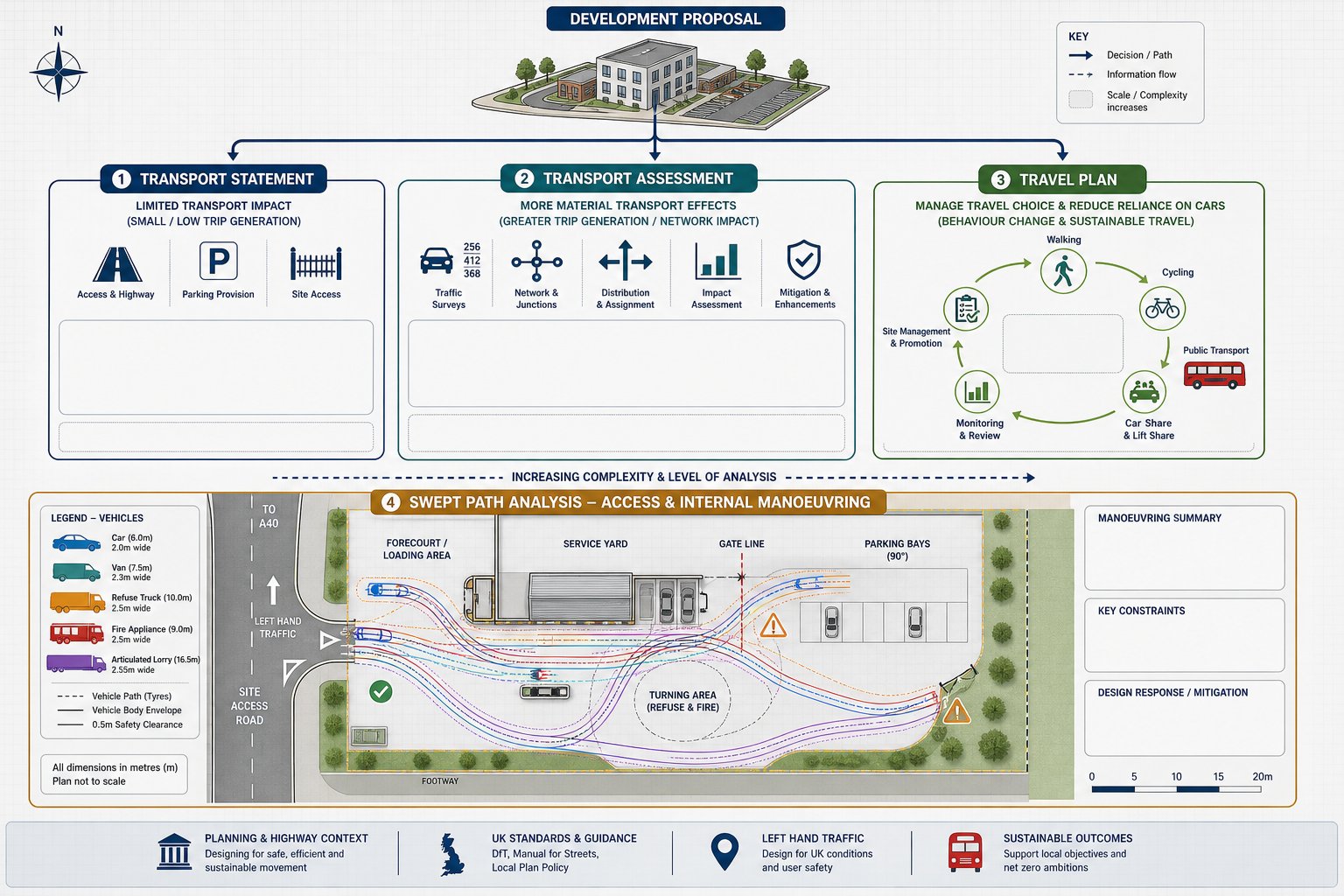
    Infographic showing how a travel plan guides sustainable access for UK developments.

    A Travel Plan is a long-term, site-specific strategy designed to manage travel demand and influence how people access a development over time. Its purpose is straightforward: reduce unnecessary car dependence, support walking, cycling, public transport and shared travel, and make sure the transport effects of a scheme are actively managed after permission is granted.

    That last point is important. A Travel Plan is not just descriptive: it is meant to do something. It sets objectives, identifies practical measures, assigns responsibility, and creates a framework for monitoring whether the development is actually performing as intended.

    For planning teams, the value is twofold. First, it helps demonstrate compliance with national and local policy that increasingly prioritises sustainable and active travel. Second, it gives local authorities confidence that the applicant has thought beyond vehicle access drawings and trip generation tables. A site may be technically accessible, but if occupiers are still likely to default to single-occupancy car trips, the planning risk remains.

    In that sense, Travel Plans are often the behavioural counterpart to technical transport evidence. They bridge policy ambition and lived reality. On more complex schemes, they also sit alongside wider transport work such as a transport assessment for planning applications, helping turn identified issues into an ongoing management response.

    Done properly, they support lower-carbon development, better site operation and more defensible planning submissions.

    When A Travel Plan Is Required For A Planning Application

    UK infographic showing when a development travel plan is required.

    A Travel Plan is usually required when a proposal is likely to generate significant movement or where the site raises particular transport sensitivity, even if the scheme is not enormous in floor area or unit count. In the UK planning context, that commonly includes larger housing developments, offices, retail, schools, universities, healthcare facilities, business parks and mixed-use schemes.

    There is no single national threshold that applies uniformly everywhere. Local planning authorities set their own validation requirements and development thresholds, often through local guidance, supplementary planning documents or county-wide transport notes. That means a Travel Plan requirement can vary not only by land use and scale, but also by site location, public transport accessibility, existing congestion, road safety issues and air quality concerns.

    In practical terms, applicants should not leave this question until submission week. We usually advise confirming likely requirements at pre-application stage, especially where a full Travel Plan, an outline framework Travel Plan or a lighter-touch Travel Plan Statement may be acceptable. Early transport input often saves time later, particularly when coordinated with wider Private Sector Transport Planning for the scheme.

    Most authorities expect the Travel Plan to be submitted with the planning application, then secured by condition, planning obligation or both. On phased developments, a framework version may be approved first, followed by more detailed travel planning before occupation.

    The main point is simple: if a development will materially affect travel patterns, the authority will usually want a credible strategy for managing that impact over several years, not just at opening day.

    How Travel Plans Differ From Transport Assessments And Transport Statements

    Comparison infographic of transport assessments and travel plans for UK developments.

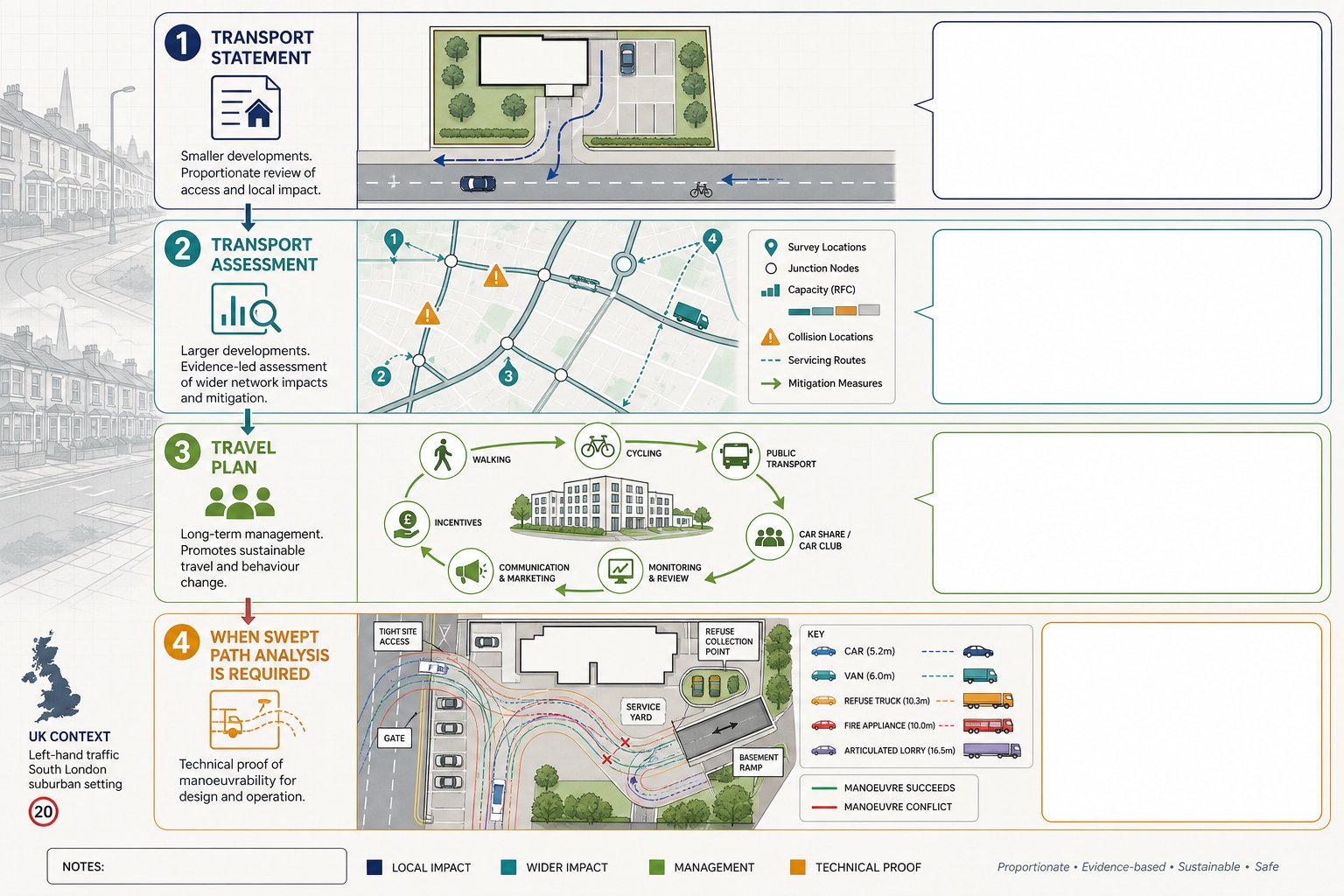
    This distinction causes more confusion than it should. A Transport Assessment or Transport Statement evaluates the likely transport effects of a proposal. A Travel Plan sets out how those effects will be managed and how sustainable travel behaviour will be encouraged once the development is built and occupied.

    So, the assessment asks: what trips will the scheme generate, on which modes, on which routes, and with what impact? The Travel Plan asks: what are we going to do about that in practice?

    A full Transport Assessment is generally used for larger or more complex proposals where detailed forecasting, junction analysis, accessibility review and mitigation testing are needed. A Transport Statement is typically proportionate to smaller schemes with lower impacts. Either can inform a Travel Plan. The Travel Plan then takes the evidence base and translates it into measures, targets, responsibilities, budgets and review mechanisms.

    For example, if the transport evidence shows good bus accessibility but weak cycling uptake, the Travel Plan might include secure cycle storage, shower provision, travel information packs, personalised journey advice and monitored mode-share targets. If parking demand risks undermining sustainable objectives, parking management becomes part of the strategy too, often aligning with a wider Parking Strategy For a site.

    In short: the TA or TS is the evidence document: the Travel Plan is the management document. One explains likely impacts. The other commits the developer or occupier to a route for reducing them over time.

    Core Elements Of An Effective Travel Plan

    infographic showing the key parts of an effective travel plan for developments

    A good Travel Plan is specific, proportionate and usable. It should reflect the actual development, the actual place and the actual people likely to use it. Generic wording is the quickest way to weaken credibility.

    Most effective plans share the same backbone: policy context, baseline conditions, clear objectives, a realistic package of measures, defined targets, named responsibilities, funding assumptions and a monitoring framework. But the quality lies in the detail. A suburban logistics-adjacent employment site will not need the same strategy as an infill town-centre residential scheme next to a rail station.

    Authorities will also want to understand who owns delivery. Is there a Travel Plan Coordinator? When are surveys undertaken? What happens if targets are missed? How are residents, staff, pupils or visitors informed? If those questions are left hanging, the document can look more aspirational than operational.

    At our end of the sector, we find the strongest plans are built from evidence up rather than policy down. They respond to the transport realities of the site and then tie those realities back to planning policy, rather than starting with a list of fashionable measures and hoping they fit.

    The three components below tend to decide whether a Travel Plan feels robust or routine.

    Baseline Travel Conditions And Site Accessibility

    infographic of a development site’s transport access and baseline travel conditions.

    Baseline work is where the Travel Plan either earns trust or loses it. Before proposing measures, we need to understand existing and likely travel conditions in a way that is site-specific and defensible.

    That usually means reviewing local highway context, walking and cycling links, bus and rail availability, service frequency, journey times, pedestrian crossing opportunities, parking controls, road safety issues and barriers to sustainable access. On occupied or comparable sites, surveys can help establish current mode share. For many developments, TRICS data and comparable site evidence are used to benchmark trip rates and likely travel patterns.

    Accessibility analysis should be practical, not just cartographic. A bus stop within 400 metres may look good on a plan, but if the route is poorly lit, indirect or severed by a difficult crossing, its real value is lower. The same applies to cycle routes that technically exist but feel unsafe at peak periods.

    Baseline evidence also needs to align with the broader technical transport case. If trip generation, access strategy and junction effects are being considered separately, the narrative should still be coherent. That is one reason developers often coordinate Travel Plans with wider Property Development Transport input, so the sustainable access story and the impact story do not drift apart.

    Without a solid baseline, every later target and measure becomes harder to justify.

    Measures To Encourage Sustainable Travel Choices

    Measures should match the users of the site and the barriers identified in the baseline. That sounds obvious, but it is where many plans become vague. Effective measures are usually a mix of physical infrastructure, information, incentives and management controls.

    For walking and cycling, common interventions include direct and legible pedestrian routes, secure and conveniently located cycle parking, showers and lockers for staff, improved crossings, signage and links into existing active travel networks. For public transport, measures may include upgraded stops, real-time information, journey planning packs, ticket discounts or travel vouchers during the first occupation phase.

    Car-related measures matter too, especially when the aim is not to ban car use but to manage it sensibly. Reduced parking restraint without a workable alternative can backfire: equally, generous unregulated parking can undo the entire plan. Car-share spaces, car club provision, EV charging, priority bays for pooled trips and permit management can all play a role.

    Behaviour-change measures are often undervalued. A clear site welcome pack, personalised travel planning, school travel initiatives, staff induction messaging and periodic promotional campaigns can shift habits, particularly in the first year of occupation. Where development impacts are more acute, these measures may complement findings from a traffic impact assessment, ensuring mitigation is both physical and behavioural.

    The key is integration. Measures work best as a package, not as isolated bullet points.

    Targets, Monitoring And Review Mechanisms

    Targets turn a Travel Plan from a statement of intent into a management tool. Without them, there is no meaningful way to judge whether the strategy is succeeding.

    Targets should be quantified, time-bound and proportionate to the scheme. They might relate to reductions in single-occupancy car commuting, increases in cycling mode share, uptake of public transport, or limits on total vehicular trip growth. On some developments, interim targets over one, three and five years are more realistic than a single long-range headline figure.

    Monitoring then provides the evidence. Depending on the site, this may involve annual or biennial resident, staff or pupil travel surveys, parking beat surveys, cycle parking occupancy checks, visitor questionnaires or reviews of public transport ticket use. Reporting arrangements should be clearly stated, including when reports go to the local authority and who signs them off.

    Review mechanisms are just as important. If targets are not being met, what happens next? A strong plan includes trigger points, corrective actions and a budget route for additional measures. Otherwise, monitoring becomes a box-ticking exercise with no consequence.

    This is where governance matters. Named responsibility, realistic funding and authority engagement make a difference. In many cases, input from Transport Planning Consultants: What applicants need can help ensure the plan is enforceable, proportionate and credible rather than merely well-worded.

    Types Of Development That Commonly Need Travel Plans

    Not every planning application needs a full Travel Plan, but some categories of development attract them regularly because of the scale, intensity or pattern of trips involved. In broad terms, the more a scheme changes travel demand, the more likely it is that a Travel Plan will be expected.

    Local authority thresholds vary, yet the same recurring development types appear across county guidance and validation lists. Residential expansion can alter peak movements and school-run patterns. Employment sites can generate concentrated commuter trips. Retail and leisure proposals often create weekend and evening peaks, with higher visitor variability. Public sector uses may involve a mix of staff, visitors, service vehicles and vulnerable users.

    The right response is not always the same document. Some authorities will accept a framework or interim plan at outline stage: others will expect a fully formed Travel Plan with clear monitoring obligations from the outset. The form may differ, but the principle does not: where sustainable access needs active management, the authority will usually want that strategy on paper.

    Below are the development types most commonly associated with Travel Plan requirements and the particular issues they tend to raise.

    Residential, Mixed-Use And Commercial Schemes

    Residential developments often need Travel Plans because they create long-term travel behaviour, not just construction traffic. Once patterns of school escorting, station access, food shopping and commuting settle in, they are hard to change. That is why authorities frequently want early occupation measures such as resident travel packs, cycle storage, pedestrian links, car club information and public transport incentives.

    Mixed-use schemes add another layer. They may combine homes, retail, workspace and leisure in ways that can reduce external trips if planned well, or intensify local pressure if planned badly. The Travel Plan hence needs to address multiple user groups and different peaks across the day.

    Commercial schemes, especially offices, industrial estates and business parks, often hinge on staff travel management. Shift patterns, parking supply, bus accessibility and active travel infrastructure all affect whether sustainable mode share targets are credible. Retail-led schemes can be trickier because visitor trips are less controllable than employee trips, so emphasis often falls on accessibility, signage, parking management and public transport integration.

    In these sectors, the strongest submissions are usually the ones that align the Travel Plan with the access strategy, servicing assumptions and wider site operations from the start rather than treating it as the last transport appendix added before submission.

    Schools, Healthcare, Leisure And Public Sector Sites

    Schools are among the clearest examples of where a Travel Plan is not optional in any practical sense, even when local guidance leaves room for interpretation. Arrival and departure peaks are intense, parking stress is immediate, and road safety concerns around the school gate can dominate local objections. Effective school Travel Plans usually combine pupil and staff surveys, walking initiatives, cycle training, drop-off management and close monitoring after opening or expansion.

    Healthcare sites have a different complexity. Hospitals, clinics and care settings operate across staggered shifts, emergency access constraints and a broad range of user needs, including patients with limited mobility. A workable Travel Plan must acknowledge those realities while still identifying where staff travel, visitor information and public transport access can be improved.

    Leisure venues and public buildings also generate scrutiny because trip patterns can be concentrated, seasonal or event-driven. Stadium-adjacent sites, civic buildings, libraries, colleges and council offices often require plans that manage both regular and occasional demand.

    For public sector clients in particular, the Travel Plan can become part planning document, part operational policy. That makes clarity on ownership, monitoring and communication especially important, because implementation usually spans several internal teams rather than a single occupier.

    How Local Authorities Assess Travel Plans

    Local authorities do not assess Travel Plans in isolation. They read them against planning policy, local transport objectives, site constraints, consultation responses and the accompanying transport evidence. A polished document will not carry much weight if the baseline is thin, the measures are generic or the targets bear little relation to the site.

    In most cases, officers and highway advisors look first at policy fit. Does the plan support the National Planning Policy Framework and local plan objectives around sustainable transport, accessibility and healthy place-making? They then move to evidence: is the accessibility review sound, are assumptions transparent, and does the proposed strategy reflect the actual context of the development?

    After that comes realism. Targets need to be ambitious enough to matter but not so optimistic that they look fictional. Measures need to be funded, deliverable and timed sensibly. Governance also matters more than many applicants expect. Authorities will want to know who is responsible for implementation, how long monitoring lasts, what reports are submitted, and what remedial steps can be taken if progress stalls.

    Experience counts here. Teams producing transport submissions quickly and accurately, with awareness of local thresholds and authority preferences, tend to avoid unnecessary churn. That is one reason specialist consultants with strong regional planning experience are often brought in early, especially where a Travel Plan may be secured through condition wording or legal agreement that needs to be practical post-consent.

    Common Mistakes That Delay Approval Or Weaken A Travel Plan

    The most common problem is generic drafting. If the Travel Plan could be lifted from a city-centre office scheme and pasted into an edge-of-settlement care home application, it is not ready. Local authorities notice that immediately. Site-specificity is not a nice extra: it is the point of the document.

    Weak baseline evidence is another recurring issue. Out-of-date public transport information, no meaningful walk/cycle appraisal, poor comparables, or a mismatch with the Transport Assessment can all undermine confidence. If the evidence base is shaky, the measures and targets built on top of it will be shaky too.

    Targets are often either too vague or too bold. Saying the plan will “encourage sustainable travel” is not measurable. Promising a dramatic collapse in car use on a peripheral site with limited bus frequency is not credible. Both approaches cause trouble.

    We also see plans with no clear implementation pathway: no coordinator, no budget, no survey timetable, no reporting route and no trigger for remedial action. At that stage, the Travel Plan becomes a planning ornament rather than a management strategy.

    And finally, timing. Leaving the document until the end of the application process usually produces a rushed result. A better approach is to develop it alongside the rest of the transport evidence so access, impact, mitigation and behavioural measures all speak the same language. That is where concise, authority-aware reporting can save weeks rather than days.

    Conclusion

    Travel plans for developments are no longer peripheral planning documents. In 2026, they are part of the core case for why a scheme is accessible, policy-compliant and capable of operating sustainably after occupation. For planning teams, the real task is not simply producing one, but producing one that is site-specific, evidence-led and workable over time.

    When the baseline is robust, the measures are realistic, and monitoring has teeth, a Travel Plan can strengthen negotiations and reduce post-submission friction. When it is generic or rushed, it tends to do the opposite.

    For developers, designers, consultants and councils alike, the practical lesson is simple: start early, align the Travel Plan with the wider transport strategy, and treat it as a live management tool rather than a last-minute appendix. That is usually the difference between a document that helps secure planning approval and one that merely occupies pages in the application bundle.

    Travel Plans for Developments: Frequently Asked Questions

    What is a travel plan and why is it important for new developments?

    A travel plan is a long-term, site-specific strategy designed to manage travel demand, reduce car dependency, and promote sustainable travel such as walking, cycling, and public transport. It is essential for ensuring developments operate sustainably and comply with planning policy.

    When is a travel plan required for a planning application?

    Travel plans are typically required for developments that generate significant vehicle trips, including larger housing, offices, retail, education, and healthcare projects. Requirements vary by local authority based on site location, transport impact, and sensitivity.

    How does a travel plan differ from a transport assessment or transport statement?

    A transport assessment or statement evaluates the transport impacts of a proposed development, while a travel plan outlines the management strategy and practical measures to mitigate those impacts and encourage sustainable travel behaviour over time.

    What are the core elements of an effective travel plan for developments?

    An effective travel plan includes a detailed baseline of travel conditions, clear objectives, a practical package of measures, defined targets with responsibilities, funding assumptions, and a monitoring and review framework to ensure ongoing deliverability.

    Which types of developments commonly need travel plans?

    Developments often needing travel plans include residential estates, mixed-use schemes, commercial offices, retail and leisure venues, schools, healthcare facilities, and public sector sites due to their significant and varied travel demands.

    How can developers ensure their travel plan meets local authority expectations?

    Developers should produce site-specific, evidence-based travel plans aligned with national and local policies. They must include robust baseline data, realistic targets, clear governance, sustainable measures, and a monitoring framework, often developed with specialist transport planning consultants.

  • Highway Design Consultants In Birmingham: How To Choose The Right Partner For Planning Success In 2026

    Highway Design Consultants In Birmingham: How To Choose The Right Partner For Planning Success In 2026

    A planning application can be technically strong, commercially sensible, and still get stuck on one stubborn issue: highways. That happens more often than many teams expect. A site may look straightforward on a location plan, but once vehicle tracking, visibility, parking pressure, servicing, pedestrian movement, and policy compliance enter the conversation, the margin for error shrinks fast.

    For architects, planners, developers, lawyers, surveyors, and local authorities, choosing the right highway design consultants Birmingham teams can rely on is rarely a box-ticking exercise. It affects programme, planning risk, negotiation with highway officers, and eventually whether a scheme moves forward without expensive redesign.

    In Birmingham, that challenge is sharper. The city combines dense urban streets, major strategic routes, active travel policies, public transport priorities, parking constraints, regeneration corridors, and Clean Air Zone considerations. A design that might pass in one authority area can draw detailed objections here if it misses local expectations.

    We’ve seen the difference good highway input makes: clearer access strategies, stronger technical evidence, quicker responses to consultation comments, and planning submissions that feel joined up rather than rushed. In this guide, we’ll break down what highway design consultants actually do, where Birmingham-specific knowledge matters most, what local officers usually want to see, and how to choose a consultant who can support planning success in 2026.

    What Highway Design Consultants Do And When You Need One

    Highway design consultants reviewing access plans in a modern Birmingham office.

    Highway design consultants are specialist civil and transport engineers who shape how vehicles, pedestrians, cycles, and servicing movements work in and around a development. Their role sits somewhere between design, policy compliance, and evidence-building. In practical terms, they turn a concept into something a planning officer and highway authority can assess properly.

    That usually includes access design, junction arrangements, on-site circulation, parking strategy, servicing layouts, swept path analysis, and technical drawings that demonstrate compliance with standards such as Manual for Streets, DMRB where relevant, and local design guidance. On more complex schemes, they also support negotiations around mitigation, off-site works, road safety concerns, and adoptable infrastructure.

    You typically need one when a development changes how a site connects to the public highway, creates material traffic impact, introduces delivery or refuse movements, or triggers planning requirements for a Transport Statement or Transport Assessment. Even smaller schemes can need input if the access is awkward, visibility is constrained, or parking and turning space are tight.

    For many planning teams, bringing in highway input early avoids the classic late-stage problem: a polished planning pack held up because the access can’t be justified. That’s why schemes often benefit from coordinated transport and design support from the outset, particularly where a local Traffic Engineer In Birmingham: can align reports and drawings before submission.

    Why Birmingham Projects Require A Local Highway And Planning Perspective

    Highway consultants reviewing Birmingham road and planning designs in a modern office.

    Birmingham is not a place where generic highway advice goes very far. The city’s planning context is shaped by busy radial routes, constrained urban frontage, major regeneration areas, bus priority measures, cycle infrastructure, rail interfaces, and neighbourhoods where on-street parking pressure is already sensitive. Add the Clean Air Zone and the strategic influence of the West Midlands Combined Authority and National Highways on some corridors, and local knowledge starts to matter a lot.

    A consultant with Birmingham experience understands the practical side of that landscape, not just the policy wording. They know where congestion is persistent, where junction capacity is politically sensitive, where schools and pedestrian flows create road safety concerns, and where a seemingly simple access proposal is likely to be challenged by officers.

    There’s also a softer advantage, though it’s not really soft at all: familiarity with how local highway officers review submissions. Good consultants don’t rely on relationships instead of technical quality, but they do understand what level of drawing detail, justification, and responsiveness tends to keep a project moving. That can save weeks.

    For schemes that move beyond planning into delivery, broader knowledge of highway infrastructure design also helps. Birmingham projects often need a consultant who can think past the application stage and anticipate what will actually be buildable, adoptable, and acceptable on the ground.

    Common Developments That Need Highway Design Input

    Highway consultants reviewing access design for a Birmingham development site.

    Not every site needs a full-scale design package, but a surprisingly wide range of developments need some degree of highway input to satisfy planning requirements. The common thread is simple: if a proposal changes access, movement, parking, loading, or highway safety conditions, technical design usually follows.

    Applications also become more likely to need specialist input where sites are constrained, urban, heavily trafficked, or politically visible. Birmingham has plenty of all four, so even modest schemes can benefit from an early highways review rather than a reactive one.

    Residential Schemes

    Residential development is one of the most frequent triggers for highway design work. That includes infill plots, backland developments, apartment schemes, student accommodation, estate road layouts for larger housing sites, and conversions that intensify use. The issues are familiar but rarely trivial: can vehicles enter and leave safely, is there enough visibility, can refuse vehicles manoeuvre properly, and does the parking layout work in the real world rather than just on paper?

    On larger schemes, the design scope widens to include estate roads, pedestrian links, cycle access, tracking for emergency and servicing vehicles, and sometimes traffic calming or adoption strategy. On smaller sites, the key battleground is often access geometry and whether turning can happen on site without vehicles reversing onto the highway.

    Commercial, Industrial, And Mixed-Use Sites

    Commercial and industrial sites often face even closer scrutiny because vehicle types are more varied and peak movements can be sharper. Retail parks, supermarkets, trade counters, logistics units, warehousing, employment parks, leisure uses, and city-centre mixed-use schemes all raise slightly different design questions.

    A warehouse may hinge on articulated vehicle tracking. A supermarket may depend on servicing without conflict with customer parking. A mixed-use city-centre scheme may need a very careful balance between access, servicing windows, pedestrian priority, and cycle movement. Regeneration projects can be broader still, involving phased access arrangements and off-site interventions.

    In these cases, highway design is not just a drafting exercise. It becomes part of the planning argument, showing that the development can function safely and efficiently from day one.

    Key Highway Design Services For Planning Applications

    Highway consultants reviewing access and junction plans in a modern office.

    Planning-stage highway design is really about evidence. The drawings and analysis need to prove that a site can operate safely, fit within policy, and avoid causing unacceptable effects on the surrounding network. For Birmingham projects, the most valuable consultants are usually those who can move comfortably between concept design, standards compliance, and planning negotiation.

    Access Design, Visibility Splays, And Junction Layouts

    Access design is usually the first thing officers look at because it sets the terms for everything else. Is the entry point in the right place? Can cars, vans, refuse vehicles, and emergency vehicles use it safely? Are gradients acceptable? Is there enough visibility in both directions? And does the proposed arrangement respect local character and highway constraints?

    Visibility splays sound simple, but they often become a point of challenge on urban sites with walls, parked cars, street trees, bus stops, or neighbouring frontages. A credible design has to reflect actual conditions, not idealised assumptions. Junction layouts may also need to show radii, lane positioning, pedestrian crossing considerations, and tie-ins to the existing carriageway or footway.

    These are the drawings that often make or break a submission. When prepared well, they reduce ambiguity and help support wider planning documents, including work typically coordinated by highway design consultants Birmingham teams handling officer queries under tight timescales.

    Swept Path Analysis, Parking Layouts, And Servicing Strategy

    If access gets a vehicle onto the site, swept path analysis shows whether that vehicle can actually use it. This is critical for refuse vehicles, fire appliances, delivery vans, rigid HGVs, and articulated vehicles where relevant. Councils want to see that turning is practical, not theoretical, and that manoeuvres do not create conflict with parking bays, soft landscaping, or building edges.

    Parking layouts are another common weak point. It isn’t enough to hit a numerical standard if bays are unusable, doors can’t open properly, disabled spaces are poorly positioned, or circulation aisles are too tight. Servicing strategy matters just as much. Officers will ask where loading happens, how long vehicles dwell, whether they reverse, and whether customer and service routes clash.

    Strong consultants tie all of this together. They don’t issue separate drawings that contradict one another: they produce a coherent package that explains how the site works operationally as well as geometrically.

    How Highway Design Supports Transport Statements And Transport Assessments

    Highway consultants reviewing transport plans and site access drawings in a modern office.

    Transport Statements and Transport Assessments are often discussed as report-led exercises, but they are heavily dependent on design. Without a clear highway design basis, the trip analysis and planning narrative can feel detached from the actual site layout. That’s where many submissions become vulnerable.

    Highway design feeds these reports in several ways. First, it defines the access arrangement being assessed. Second, it clarifies parking supply, servicing, internal circulation, and sustainable travel connections. Third, it shapes mitigation: if modelling identifies a problem, the solution must be physically deliverable. There’s no value in promising improvements that don’t fit the frontage or fail safety standards.

    For smaller schemes, a Transport Statement may be enough, but even then the credibility of the report depends on accurate design assumptions. For larger or more sensitive proposals, a full Transport Assessment may need junction capacity testing, road safety review, active travel measures, and phased mitigation proposals. In all cases, highway drawings should support the conclusions rather than lag behind them.

    That joined-up approach is one reason many project teams prefer consultants who can produce concise reports quickly while understanding local thresholds and planning triggers. A well-scoped package reduces the risk of submitting transport evidence that officers can’t reconcile with the site layout.

    What Local Authorities And Highway Officers Usually Expect To See

    Highway officers generally want clarity before they want complexity. If a submission makes them work to understand how access, parking, servicing, and safety fit together, objections become more likely. Birmingham and neighbouring authorities may differ in emphasis, but the basics are pretty consistent.

    At planning stage, officers usually expect site access drawings, visibility splays, a General Arrangement showing on-site roads, footways and parking, and swept path analysis for relevant vehicle types. They also expect the design to reference the right standards and explain any departures. If the proposal has transport impacts, they’ll want those impacts set out honestly, with mitigation shown clearly rather than buried in narrative.

    They may also look for road safety reasoning, pedestrian and cycle links, refuse strategy, disabled access provision, and evidence that the design can operate under day-to-day conditions. On urban sites, kerbside interaction matters more than some teams assume. Existing waiting restrictions, bus stops, crossing points, and informal parking habits can all influence officer comments.

    Another point that gets overlooked: consistency. If the layout drawing, transport report, swept paths, and planning statement describe slightly different schemes, confidence drops immediately. Strong submissions usually have one integrated technical story, often informed by wider highway infrastructure design UK: principles as well as the local authority’s own expectations.

    How To Choose Highway Design Consultants In Birmingham

    Choosing a consultant is partly about technical skill, but not only that. The right team for a Birmingham project should understand planning risk, local authority behaviour, and the commercial reality that deadlines rarely move just because consultation comments arrive late on a Friday.

    Start with relevant local experience. Have they supported schemes in Birmingham and nearby authorities? Do they understand when a project needs only a focused access package and when it needs a broader design-and-assessment strategy? Can they show examples across residential, commercial, industrial, and mixed-use sectors?

    Then look at capability breadth. Some consultants are strong at reports but weaker on detailed geometry. Others can draw well but struggle to defend schemes through planning comments. The best fit is usually a team that can handle access design, swept paths, parking, servicing, and transport evidence in one coordinated workflow.

    Responsiveness matters more than websites admit. Highway objections often turn on how quickly and clearly a consultant can answer officer questions, revise a layout, or justify a technical point without becoming defensive. We’d also look for concise communication. If a consultant can’t explain the issue plainly to an architect or solicitor, they may not be the best partner when planning gets tense.

    Finally, check whether they tailor work to local thresholds rather than overscoping by default. Efficient reporting is part of technical competence. Firms with established Birmingham planning experience, including those offering Traffic Engineer In support alongside design input, often add value because they keep the package proportionate as well as defensible.

    Common Reasons Highway Designs Are Delayed Or Challenged

    Most highway design delays are avoidable, which is the frustrating bit. The same issues come up again and again: access arrangements tested too late, visibility constrained by real-world conditions, parking squeezed in after the architecture is fixed, servicing not thought through, or transport reporting commissioned after the design assumptions have already drifted.

    One common problem is overconfidence in a marginal access. What looks acceptable on a preliminary plan can become difficult once levels, boundary features, pedestrian desire lines, and vehicle tracking are reviewed properly. Another is under-designed servicing. A scheme may technically include a loading space, but if the vehicle can’t reach it without blocking circulation or reversing awkwardly, officers will notice.

    Timing also causes trouble. If a Transport Statement or Transport Assessment arrives late, or is based on an outdated layout, the planning authority may question the whole submission. Mismatch between reports and drawings is a classic credibility killer.

    And then there’s policy alignment. Designs that ignore local parking expectations, active travel priorities, or established standards often trigger revisions that could have been avoided with early review. That’s why experienced teams tend to stress front-loaded technical checking. It is usually quicker to resolve layout issues before submission than to defend a weak design in response to objections.

    Conclusion

    Choosing highway design consultants Birmingham project teams can trust is really about reducing uncertainty. The right consultant doesn’t just draw an access and hope for the best. They help shape a scheme that works on site, aligns with planning policy, answers likely officer concerns, and supports the wider transport case from the start.

    In Birmingham, local context matters: congestion, public transport priorities, parking pressure, Clean Air Zone considerations, and officer expectations all influence how a design is received. That means technical competence on its own isn’t enough. You want a team that combines sound engineering, planning awareness, and quick, practical communication.

    For architects, planners, developers, surveyors, lawyers, and councils, the simplest test is this: can the consultant make the project easier to approve, easier to explain, and easier to deliver? If the answer is yes, you’re probably talking to the right partner for 2026.

    Frequently Asked Questions about Highway Design Consultants in Birmingham

    What do highway design consultants in Birmingham typically do?

    Highway design consultants in Birmingham specialise in planning safe and efficient access, vehicle tracking, parking, and servicing layouts. They ensure developments comply with local policies like those of Birmingham City Council and provide technical evidence for planning submissions, including access design, swept path analysis, and junction layouts.

    When is it necessary to hire highway design consultants for a development project in Birmingham?

    You need highway design consultants when a development alters site access, causes significant traffic impact, or requires planning assessments such as Transport Statements or Transport Assessments. Even small sites with constrained access or parking often need their input to satisfy Birmingham’s local highway standards.

    Why is local Birmingham expertise important for highway design consultants?

    Birmingham’s complex urban environment, Clean Air Zone, bus priority, and cycle routes require consultants to understand local traffic patterns, officer expectations, and planning policies. Local experience helps navigate congestion hotspots and ensures designs meet regional standards and can be delivered feasibly on site.

    How do highway design consultants support Transport Statements and Transport Assessments?

    They provide accurate access design, parking layouts, and servicing plans that underpin trip generation, junction capacity tests, and road safety assessments. This ensures Transport Statements and Assessments reflect realistic site operations and viable mitigation measures aligned with Birmingham’s highway requirements.

    What are common reasons for delays or challenges in highway design approvals in Birmingham?

    Delays often result from late or mismatched transport reports, insufficient visibility splays, poorly designed servicing or parking layouts, and lack of alignment with local policies. Early engagement with highway consultants can avoid these by ensuring designs are technically sound and meet Birmingham officer expectations.

    How should I choose the right highway design consultants in Birmingham?

    Select consultants with proven local experience in residential and commercial schemes, who handle both design and planning negotiation. Quick responsiveness, clear communication, and knowledgeable integration of technical drawings with transport evidence ensure smoother planning approvals in Birmingham.

  • Vision-Led Transport Planning: A Practical Guide To Smarter Development And Better Planning Outcomes In 2026

    Vision-Led Transport Planning: A Practical Guide To Smarter Development And Better Planning Outcomes In 2026

    Planning teams are under more pressure than ever to prove that development will create better places, not simply more traffic. That shift matters. Across England, transport evidence is no longer judged purely on whether a junction can squeak through peak-hour modelling. Increasingly, councils, design teams and applicants are being asked a tougher question: what kind of place are we actually trying to create, and does the transport strategy support it?

    That is where vision led transport planning comes in. Rather than starting with forecast vehicle demand and then retrofitting mitigation, we begin with the desired future for the site and its surroundings: how people should move, what access should feel like, which modes should be prioritised, and how transport can reinforce wider planning goals. Those goals usually include accessibility, sustainability, health, economic vitality and a more resilient planning case.

    For architects, planners, surveyors, developers, lawyers and local authorities, this is more than a change in terminology. It affects masterplanning, access design, transport assessments, stakeholder discussions and eventually planning outcomes. In our experience, the strongest submissions are the ones where transport thinking is embedded early and tied directly to place-making.

    In this guide, we set out what vision led transport planning means in practice, how it differs from older predict-and-provide methods, what current policy expects, and how to prepare evidence that is realistic, robust and planning-ready in 2026.

    What Vision-Led Transport Planning Means In Modern Planning Practice

    Infographic of vision-led transport planning linking place vision, design, travel, and infrastructure.

    Vision-led transport planning starts with an agreed ambition for a place and works backwards to shape movement, land use and infrastructure around that ambition. In simple terms, we do not ask, “How much car traffic might this scheme generate, and how do we accommodate it?” first. We ask, “What sort of place should this become, how should people reach it, and what transport choices do we want to enable?”

    That sounds subtle, but in planning practice it changes almost everything. It means movement is treated as part of place-making rather than a technical bolt-on. Walking routes, cycle permeability, public transport proximity, street hierarchy, parking restraint and access quality are considered at concept stage, not after the layout is largely fixed.

    It is also an iterative approach. The vision informs the design, the design affects likely travel behaviour, and that travel behaviour then influences what mitigation or supporting infrastructure is genuinely needed. So we test options, refine assumptions and align transport evidence with the wider planning story.

    This matters for schemes of all sizes. On a town centre infill site, it may mean leaning into existing accessibility and reducing car dependence. On a strategic urban extension, it may involve early bus strategy, connected walking and cycling networks, and land use patterns that shorten everyday trips. In both cases, the point is the same: transport planning should help deliver a better future place, not simply react to forecast traffic.

    Why Vision-Led Planning Matters For Developers, Councils And Design Teams

    Infographic showing how vision led transport planning benefits developers, councils and design teams.

    For developers, a vision-led approach usually creates a stronger planning narrative and reduces the risk of late-stage redesign. If movement priorities are defined early, site layout, frontage design, access points and parking strategy can evolve in a coordinated way. That is often far cheaper than discovering, after transport modelling is complete, that the scheme conflicts with local policy aspirations or design quality objectives.

    For councils, the benefit is clearer alignment between individual applications and wider objectives around decarbonisation, healthier travel, inclusive access and local economic performance. A development should not be assessed in isolation from the sort of settlement the authority is trying to create.

    For architects and wider design teams, vision led transport planning keeps technical work grounded in spatial quality. Streets are not just corridors for vehicular throughput: they are public realm, front doors, social space and routes to schools, shops and bus stops. That perspective is especially useful when coordinating with Masterplan Transport Inputs: on larger or phased sites.

    There is a practical commercial angle too. Schemes that demonstrate realistic mode share, proportionate mitigation and coherent access planning are often better placed in pre-application discussions. We see this regularly in Private Sector Transport Planning, where certainty and programme management matter almost as much as technical compliance. Better strategy early on tends to mean fewer surprises later.

    How It Differs From Traditional Predict-And-Provide Transport Planning

    Comparison of traditional and vision-led transport planning in the United Kingdom.

    Traditional predict-and-provide planning follows a familiar sequence: estimate future traffic growth, identify pressure on junctions or links, and then propose capacity increases or mitigation to absorb the demand. That approach can be useful in a narrow engineering sense, but it often locks in car dependency. It assumes traffic growth is a given and that the transport system’s role is mainly to accommodate it.

    Vision-led planning starts from a different premise. Travel demand is influenced by land use, urban form, accessibility, parking, route quality and public transport offer. In other words, movement patterns are not fixed: they are shaped by design and policy choices.

    That does not mean ignoring traffic impact. Far from it. We still assess baseline conditions, trip generation, distribution, assignment and highway performance where relevant. But we do so within a broader framework. The key question becomes whether the development supports agreed place-based outcomes and whether traffic effects are acceptable in that context.

    This is one reason a good Access Strategy Transport can be so valuable. It bridges architecture and transport evidence by setting movement principles before detailed testing. Put bluntly, predict-and-provide asks how to fit more movement into the network: vision-led planning asks how to create the right movement in the first place.

    The Policy Context Shaping Vision-Led Transport Assessments

    Infographic of UK transport policy shaping site-specific vision-led transport planning.

    Policy support for vision-led transport planning is now broad enough that many authorities expect it, even where they do not use that exact label. National planning and transport policy has, for years, moved towards sustainable transport, healthy streets, accessibility and reduced reliance on the private car. Climate commitments have only sharpened that direction.

    The practical implication is that transport evidence must do more than show a development is not catastrophic for road capacity. It should demonstrate that opportunities for walking, cycling and public transport have been identified and prioritised, that the site is connected credibly to local facilities, and that the proposal contributes to a pattern of development that is sustainable in transport terms.

    That expectation also sits alongside design policy. Good planning submissions now link movement strategy with urban design, active frontage, public realm and placemaking. Transport is not a separate discipline off to one side: it is one of the ways policy ambitions are delivered on the ground.

    For applicants, this makes early coordination essential. When our team prepares evidence quickly for live applications, local authority thresholds and local plan wording often shape both the depth of assessment and the framing of the argument. A generic transport report, dropped in late, rarely performs as well as one built around the policy and place context from the outset.

    National Policy, Local Plans And Site-Specific Expectations

    National policy sets the direction, but local plans, supplementary guidance and site allocations often determine the detail. One authority may place heavy emphasis on town centre accessibility and low parking provision. Another may focus on strategic bus delivery, school travel or cycling links to neighbouring communities. Site-specific expectations can go further still, especially on allocated land or politically sensitive schemes.

    That is why the vision should be established early and tested against local evidence. We need to understand settlement hierarchy, nearby services, existing travel patterns, planned infrastructure, collision data, parking stress, public transport frequency and the authority’s appetite for mode shift. If a site is promoted through consultation, transport vision should be part of that conversation rather than an afterthought, which is where public consultation transport can genuinely improve outcomes.

    Done well, policy alignment does not feel forced. The transport case simply reads as if it belongs to that place, under that plan, at that moment.

    Embedding Place, Accessibility And Sustainability From The Start

    Infographic showing vision-led transport planning from place design to impact testing.

    If vision-led planning is going to work, it has to shape the scheme before technical positions harden. That means transport input at concept stage, when block structure, density, land use mix, frontage arrangement and access priorities are still fluid. Once a layout has been fixed around vehicle convenience, it becomes much harder to retrofit a genuinely sustainable movement strategy.

    Embedding place from the start means asking practical questions. Can residents reach day-to-day services on foot in reasonable time? Are cycle routes direct, safe and coherent beyond the red line boundary? Is the bus stop merely nearby on a plan, or is it realistically attractive in terms of route choice, service frequency and waiting environment? Do disabled users experience the site as legible and convenient? And is parking calibrated to context rather than habit?

    Accessibility is not just a map exercise. It is behavioural. People respond to friction, comfort, safety and directness. A nominal five-minute walk that involves hostile crossings, blank edges or poor lighting is not equivalent to a five-minute walk through a connected, active street network.

    This is also where climate and public health objectives become concrete. Sustainable transport outcomes do not emerge from aspiration alone: they come from built form, street design, access strategy and everyday convenience. That is one reason Net Zero Transport Planning increasingly overlaps with mainstream planning evidence rather than sitting in a separate sustainability silo.

    Setting Clear Movement Principles Before Testing Highway Impact

    One of the biggest improvements a planning team can make is to define movement principles before diving into junction modelling. These principles might include pedestrian priority on internal streets, direct cycle access to surrounding routes, bus-compatible street geometry, parking levels linked to accessibility, or a servicing strategy that avoids undermining public realm quality.

    When those principles are explicit, later technical testing becomes more meaningful. We can assess whether the proposed design supports the intended travel behaviour and whether any highway interventions are proportionate. Without them, there is a risk that modelling drives the scheme towards the path of least resistance: wider junctions, more tarmac and layouts optimised around peak-hour car movement.

    In our experience, authorities are more receptive to transport evidence when they can see the logic chain. The place vision informs movement principles: movement principles shape design: design supports travel choices: and the assessment then tests impacts within that framework. It feels coherent because it is coherent.

    That is especially important on complex sites where masterplanning, viability and phased delivery interact. If the principles are unclear, every later decision becomes a negotiation. If they are clear, the submission has an anchor.

    The Core Stages Of A Vision-Led Transport Planning Process

    A sound vision-led process is structured, but not rigid. We usually think of it in five linked stages.

    First, define the vision. What are the development’s movement outcomes, and how do they support the wider planning objectives for the site and area?

    Second, establish the place and accessibility baseline. That includes land use context, existing travel options, network constraints, public transport quality, local facilities and likely barriers to mode shift.

    Third, shape the scheme around movement priorities. Access points, internal street design, parking, servicing, pedestrian links, cycling provision and links to nearby destinations should all reflect the agreed vision.

    Fourth, test realism. This is where trip generation, distribution, assignment, capacity checks and sustainable mode potential are assessed in a proportionate way. The purpose is not to abandon evidence, but to ensure evidence matches the scheme being promoted.

    Fifth, secure delivery and monitoring. Travel plans, infrastructure triggers, phased interventions and post-occupation review can all be important, particularly for larger or mixed-use proposals.

    The process is iterative because findings at stage four may prompt refinement at stage three. That is healthy. The strongest reports are rarely produced by a linear one-pass exercise: they come from testing, adjusting and improving.

    Site Analysis, Trip Realism And Multi-Modal Access Planning

    This is where weaker submissions often unravel. Site analysis must be honest about both strengths and constraints. If public transport is limited, we need to say so and address what can realistically be improved. If walking links are severed by major roads or poor crossings, glossy accessibility plans will not rescue the argument.

    Trip realism matters just as much. Over-optimistic mode share assumptions are easy to spot and quick to undermine. Councils and highways officers will ask whether the site design, local context and supporting measures genuinely justify the claimed reduction in car use. The answer should rest on evidence, comparables and design quality, not wishful thinking.

    Multi-modal access planning means looking beyond the site entrance bellmouth. It includes pedestrian desire lines, cycle route continuity, secure parking, bus stop quality, service frequency, school access, freight management and the relationship between internal layout and external connectivity. On complex schemes, mixed use masterplan thinking is often essential because different uses generate different trip patterns across the day.

    Good transport planning is rarely about one big intervention. More often, it is the cumulative effect of sensible design decisions that make sustainable choices easier, more obvious and more attractive.

    Designing Development That Supports Walking, Cycling And Public Transport

    A development does not support sustainable travel because a report says it does. It supports sustainable travel when the physical design makes those modes convenient and intuitive.

    For walking, that means direct routes, overlooked streets, safe crossings, minimal detours, strong links to surrounding destinations and entrances placed where people actually want to go. Internal permeability is crucial. If pedestrians are forced onto indirect or secondary routes while vehicles get the obvious line, the hierarchy is wrong.

    For cycling, we need route continuity, secure and usable parking, sensible gradients where possible, and clear connections to the wider network. Token cycle stores hidden in awkward corners are not enough. Nor are painted lines that disappear at the site boundary.

    For public transport, the design should acknowledge actual user experience. How far is the walk to the stop? Is it step-free? Is the waiting environment decent? Can buses move through or past the site efficiently? On larger developments, early engagement with operators can be the difference between a nominally serviceable site and one that genuinely functions without heavy car reliance.

    Parking and servicing matter too. Excessive parking can undermine the mode share narrative, but inadequate or poorly arranged parking can create overspill and local opposition. The answer is context-sensitive balance.

    This is often where experienced Transport Planning Consultants: add real value: translating broad sustainable transport aims into site layouts that can survive both technical scrutiny and commercial reality.

    Preparing Transport Assessments And Statements Using A Vision-Led Approach

    A vision-led Transport Assessment or Transport Statement still needs technical rigour. The difference is that the document should explain how transport supports the development concept, not just quantify residual traffic effects.

    In practice, that means the report should begin with the site’s policy and placemaking context, identify movement objectives, and explain how the scheme responds through layout, access, connectivity and mode choice. Baseline conditions, trip generation, distribution and impact testing remain important, but they should sit within that wider narrative.

    The evidence also needs to be proportionate. Not every site requires a sprawling assessment packed with model outputs that add little value. Equally, a concise statement should not duck key issues. The right level of detail depends on scale, context, sensitivity and local thresholds. That is why a tailored transport assessment for planning applications tends to perform better than an off-the-shelf template.

    A strong vision-led submission will usually include:

    • a clear statement of movement and place objectives:
    • honest accessibility analysis:
    • realistic trip generation and modal assumptions:
    • a coherent access and parking strategy:
    • proportionate highway testing where required:
    • measures that support walking, cycling and public transport: and
    • delivery mechanisms such as travel plans or trigger points.

    Most importantly, the report should read as though the transport strategy and development design were conceived together. If they appear disconnected, decision-makers notice.

    Common Risks, Objections And How To Strengthen A Planning Submission

    The most common weakness in transport submissions is internal inconsistency. A report may talk about mode shift and healthy streets, while the layout prioritises vehicle circulation and the parking provision signals business as usual. That gap is often where objections begin.

    Another frequent problem is over-reliance on traffic modelling. Modelling has its place, but it cannot compensate for a poor access strategy or an unconvincing sustainability case. If the development is fundamentally misaligned with policy aspirations for the area, extra decimal points on a junction assessment will not solve it.

    We also see issues where applicants overstate accessibility. A bus stop on a plan is not proof of meaningful public transport access. A nearby footway is not proof of a pleasant or safe walking route. Scrutiny tends to focus on lived conditions, not just measured distances.

    To strengthen a submission, we should tighten the logic from vision to design to evidence. Show how movement principles influenced the layout. Be realistic about likely travel behaviour. Address constraints openly. If off-site measures are needed, explain timing, deliverability and responsibility. And where consultation has shaped the scheme, say so clearly.

    For planning teams working to programme, speed matters, but clarity matters more. Concise, accurate reporting grounded in local authority expectations usually stands up best. A well-prepared submission does not try to hide the hard questions: it answers them before they become objections.

    Conclusion

    Vision-led transport planning is not a soft alternative to technical assessment. It is a better framework for it. By starting with the future place we want to create, we can align transport evidence with policy, design quality, sustainability goals and realistic travel behaviour from the outset.

    For developers, councils and design teams, that usually leads to stronger planning narratives, fewer late surprises and more defensible submissions. The key is simple enough: define the vision early, translate it into clear movement principles, test the scheme honestly, and make sure the design actually supports the outcomes being claimed.

    In 2026, that is increasingly what good planning looks like. Not transport planning as a narrow exercise in accommodating forecast traffic, but transport planning as part of making places that work better for people. When the evidence, design and policy story all pull in the same direction, planning outcomes tend to improve as well.

    Frequently Asked Questions about Vision-Led Transport Planning

    What is vision-led transport planning?

    Vision-led transport planning starts with a desired future place and works backwards to design movement, land use, and infrastructure that support accessibility, sustainability, and health. It prioritises walking, cycling, and public transport over simply accommodating forecast car traffic.

    How does vision-led transport planning differ from traditional predict-and-provide methods?

    Unlike predict-and-provide, which focuses on forecasting traffic growth and then adding capacity, vision-led planning establishes place-based movement principles first. It tests how transport can support desired outcomes, shaping travel behaviour rather than assuming fixed demand.

    Why is embedding place and sustainability early important in transport planning?

    Embedding place and sustainability at the concept stage ensures that walking routes, cycle access, public transport proximity, and parking strategies are integrated from the start. This approach avoids costly redesign and helps deliver genuinely sustainable movement patterns that align with local policy goals.

    What are the typical stages involved in a vision-led transport planning process?

    The core stages include defining the vision, assessing the place and accessibility baseline, shaping the scheme around movement priorities, testing realism of trip generation and mode share, and securing delivery with monitoring mechanisms to ensure ongoing alignment with planning objectives.

    How can developers and councils benefit from vision-led transport planning?

    Developers gain coordinated site layouts and stronger planning narratives that reduce redesign risks, while councils see enhanced alignment with decarbonisation, healthier travel, and economic vitality goals. This approach supports sustainable urban growth that meets local community aspirations.

    What common pitfalls should be avoided in vision-led transport submissions?

    Submissions often falter due to internal inconsistencies between stated mode shift ambitions and actual design, over-reliance on traffic modelling, and unrealistic accessibility claims. Strengthening the logic chain from vision to design and evidence, and addressing constraints openly, improves approval chances.

  • Onsite Delivery Transport Engineering For Planning Applications: A Practical Guide For Safer, Compliant Site Access In 2026

    Onsite Delivery Transport Engineering For Planning Applications: A Practical Guide For Safer, Compliant Site Access In 2026

    If a scheme looks workable on paper but a refuse wagon can’t turn, a delivery van blocks the footway, or an HGV has to reverse into live traffic, planning problems tend to arrive quickly. In our experience, that’s where onsite delivery transport engineering becomes decisive. It sits in the gap between a neat site layout and a site that can actually function safely, day after day, once occupied.

    For planning applications, this discipline is about much more than drawing an access point. We need to show how delivery, servicing and refuse vehicles will enter, manoeuvre, load, turn and leave without creating avoidable danger, delay or nuisance. That means understanding design vehicles, local highway standards, pedestrian and cycle movements, gradients, visibility, operational timings and the realities of constrained urban sites.

    For architects, planners, lawyers, surveyors, developers and councils, getting this right early usually saves time later. Weak servicing proposals can trigger objections, planning conditions, redesign or outright refusal. Strong evidence, by contrast, gives planning officers and highway authorities confidence that the development will operate safely and in line with policy.

    In this guide, we set out what onsite delivery transport engineering covers, why it matters in planning, how swept path analysis supports robust design, and what a submission should include in 2026 to stand up to scrutiny.

    What Onsite Delivery Transport Engineering Covers In A Planning Context

    Delivery lorry navigating a site entrance to a loading area.

    Onsite delivery transport engineering looks at how service, delivery and refuse vehicles interact with a development from the public highway to the final stopping point on site. In planning terms, that means we assess not only whether vehicles can physically get in and out, but whether they can do so safely, efficiently and in a way that aligns with policy.

    The scope usually includes servicing demand, likely trip generation, access design, internal circulation, loading arrangements, refuse collection, emergency access interfaces and the effect of those movements on surrounding streets. For a small residential infill scheme, that may be relatively modest. For mixed-use, industrial, logistics, retail or dense town-centre development, it can become one of the most scrutinised parts of the submission.

    We also need to deal with operational reality. A layout that works only if every driver behaves perfectly, arrives at an ideal time and uses a smaller vehicle than the operator actually needs is unlikely to survive review. Highway officers tend to look for resilience: can the site still operate when bins need collecting, a courier arrives early, or a larger rigid truck attends?

    In practice, the planning evidence often feeds into a Transport Statement or Transport Assessment, supported by swept path analysis, access drawings, servicing layouts and sometimes a Delivery and Servicing Plan. Firms such as ML Traffic focus on producing that evidence clearly and quickly, tailored to the local authority’s thresholds and expectations, which often makes the difference between a vague proposal and a credible one.

    Why Delivery Movements Matter To Planning Approval And Highway Safety

    delivery lorry entering a safe on-site loading bay in the UK

    Delivery movements matter because they create some of the most predictable, and most preventable, transport risks associated with development. A site may generate relatively few daily vehicle trips overall, yet still present a serious issue if its servicing arrangement forces awkward manoeuvres, blocks traffic lanes or places large vehicles across pedestrian desire lines.

    From a planning perspective, local authorities want confidence that routine operations won’t undermine highway safety or local amenity. Delivery vehicles stopping on-street because there is no usable loading bay can obstruct traffic, reduce visibility and create conflict with cyclists. Refuse vehicles reversing significant distances can raise obvious safety concerns. And if a development relies on vehicles waiting in the carriageway, objections from the highway authority are hardly surprising.

    There is also a practical legal and operational dimension. Poor delivery access can lead to planning conditions requiring revised details, restrictions on hours, management plans or post-consent redesign. In some cases, what was presented as a workable arrangement during application stage becomes difficult to operate in occupation, creating complaints from neighbours, occupiers and operators.

    We often find that the strongest submissions do two things well: they explain the likely servicing pattern in plain terms, and they show that the layout supports safe movements without relying on unrealistic assumptions. That combination reassures planning officers, consultees and, frankly, everyone else who has to live with the development.

    Typical Vehicle Types, Servicing Demands, And Operational Constraints

    delivery truck navigating a tight urban site access layout

    One of the quickest ways to weaken a planning submission is to choose the wrong design vehicle. Onsite delivery transport engineering depends on matching the assessment to the real servicing demand of the proposed use.

    Typical vehicles include:

    • articulated HGVs for larger commercial or logistics operations
    • rigid 10–12 metre trucks for retail, mixed-use and general servicing
    • vans and light goods vehicles for parcel and routine deliveries
    • refuse collection vehicles for residential, student, care or mixed-use schemes
    • fire appliances where emergency access geometry influences the design

    But the vehicle itself is only part of the picture. We also need to understand frequency, dwell times, timing restrictions and whether deliveries are scheduled or ad hoc. A café with daily small-van deliveries behaves very differently from a foodstore requiring regular rigid HGV servicing. A residential block may have modest formal servicing but heavy courier activity.

    Constraints then shape the engineering response. Common issues include narrow frontages, level changes, basement access ramps, archways, overhang restrictions, weight limits, shared courtyards, parking conflicts and nearby junctions. In town centres, there may also be access windows, bus lanes, pedestrianisation periods or pressure not to interrupt cycle routes.

    This is why generic layouts rarely satisfy detailed review. We need the servicing strategy to fit the site, the use class and the local street conditions. Otherwise, a drawing may look acceptable at concept stage but fail the moment the authority asks the obvious question: how will the biggest routine vehicle actually use it?

    How Swept Path Analysis Tests Real-World Delivery Access

    delivery lorry turning through a site access with tracked turning path

    Swept path analysis is the core technical tool used to test whether delivery and servicing vehicles can negotiate an access and move around a site as intended. It models the path taken by a specific vehicle, including wheel tracks, body overhang and turning behaviour, allowing us to assess whether there is enough space and clearance for safe manoeuvring.

    That sounds straightforward, but the value lies in how realistically the test is set up. We use swept path analysis to check key movements such as entering from the public highway, passing gates or pinch points, turning within courtyards, aligning with loading bays, reaching refuse collection points and exiting in forward gear. It can also reveal where a vehicle clips kerbs, overruns margins, crosses into opposing space or requires excessive shunting.

    For planning applications, the quality of the evidence matters as much as the existence of the drawing. Authorities will often question diagrams that use an unrealistically small vehicle, idealised lane positioning or unexplained assumptions about parked cars and street furniture. A robust analysis should reflect actual geometry, likely operational conditions and the critical manoeuvres, not just a single tidy movement selected to make the layout pass.

    Good swept path work often improves design before submission. It may lead to adjusted kerb radii, re-positioned gates, wider aisle widths, protected margins or revised loading arrangements. In other words, it isn’t just a box-ticking exercise. It is how we test whether the site works in the real world, not merely in concept sketches.

    Site Access Design Principles For Safe Entry, Exit, And Internal Circulation

    delivery lorry navigating a safe site entrance, service yard, and loading bay

    Sound access design usually follows a few consistent principles: keep movements simple, reduce reversing, maintain clear visibility and ensure the route works for the largest regular vehicle without making the site hostile for everyone else. In onsite delivery transport engineering, elegance matters less than reliability.

    The preferred arrangement is normally straightforward: safe, direct access from the highway: enough width and turning radius for the design vehicle: internal circulation that is legible: and forward exit wherever possible. Where one-way operation can remove conflict, it often helps. Where segregation between servicing and general parking is possible, it usually improves safety and efficiency.

    Gradients, gate positions, control equipment, bollards, column locations and landscape features all deserve attention. Small details can create big operational problems. A gate set too close to the carriageway can cause vehicles to wait in the road. A ramp that breaks too sharply may ground a refuse vehicle. A loading bay that works geometrically but sits across a main pedestrian route can generate avoidable risk.

    Planning officers and highway engineers generally respond well to layouts that are intuitive. If the movement pattern is obvious from the drawing, conflict points are minimised and the largest vehicle can circulate without awkward corrections, the proposal feels credible. If not, concerns tend to multiply quickly.

    Visibility, Turning Space, And Conflict Points

    Visibility remains fundamental. Drivers exiting a site need suitable sightlines to approaching traffic, cyclists and pedestrians, while vehicles entering need enough space to slow, turn and clear the carriageway safely. The exact standard depends on road speed, street form and local guidance, but the underlying principle is simple: users must be able to see and react in time.

    Turning space is just as important inside the site. A vehicle may technically enter but still fail operationally if it cannot align for a bay, pass parked cars or turn without repeated shunts. We hence look beyond the gate line and assess the full manoeuvre envelope.

    Conflict points deserve explicit attention. Typical examples include service vehicles crossing footways, meeting opposing traffic at narrow points, turning near cycle routes, or sharing limited space with resident parking and bin stores. These aren’t abstract planning concerns: they’re exactly where incidents and complaints happen.

    Loading Bays, Service Yards, And Refuse Collection Areas

    Loading bays should be sized for the largest expected regular vehicle, with enough room for opening doors, unloading and driver movement. Off-street provision is usually preferable because it avoids kerbside obstruction and gives operators a clear, controllable space.

    Service yards need more than nominal dimensions. They should allow turning, waiting and, where necessary, short-term standing without blocking fire routes, parking aisles or pedestrian access. Surface quality, drainage, lighting and physical protection can matter almost as much as geometry.

    Refuse collection areas are often underestimated. The collection point must be practical for waste operators, safe for manoeuvring and workable in day-to-day management terms. If the drag distance from store to vehicle is excessive, or the collection vehicle must reverse unsafely, authorities often push back. A clean drawing won’t rescue a collection arrangement that crews are unlikely to use in practice.

    Managing Deliveries On Tight, Shared, Or Constrained Sites

    Constrained sites are where onsite delivery transport engineering earns its keep. Dense urban plots, backland development, shared courtyards, narrow frontages and mixed-use schemes often cannot accommodate ideal geometry. That does not automatically mean the site is undevelopable. It does mean the strategy must combine physical design with operational management.

    Common responses include timed delivery windows, pre-booking systems, limits on vehicle size, designated marshal support, one-way internal controls and clearly defined waiting rules. On a compact residential-led scheme, for example, we may show that refuse is collected at a managed time outside peak pedestrian activity. On a commercial courtyard site, smaller vehicles may be mandated for routine servicing, with exceptional larger deliveries subject to supervision.

    Shared surfaces can work, but only if the hierarchy is clear. Drivers need to understand where to go and when to yield: pedestrians need routes that feel protected and legible. Markings, surface treatment, signage, lighting and management arrangements all help.

    The key is honesty. If a site cannot safely accommodate frequent large rigid vehicles, it is better to design around that reality than to pretend otherwise. Authorities generally appreciate a realistic, controlled servicing plan more than a nominally compliant layout that will fail in operation. And on constrained plots, a robust Delivery and Servicing Plan can be just as important as the geometry itself.

    Interaction With Pedestrians, Cyclists, And General Traffic

    Modern planning scrutiny goes well beyond whether a truck can physically turn. We also need to show how servicing movements interact with people walking, wheeling, cycling and driving around the site. This matters more in 2026 than it did a decade ago because policy, design standards and public expectations all place greater weight on vulnerable road user safety.

    Pedestrian routes should be direct, visible and, where possible, separated from service manoeuvring areas. Crossings need to sit where people actually walk, not merely where it is convenient on a drawing. Tactile paving, dropped kerbs, lighting and passive surveillance all support safer operation, especially in mixed-use or residential schemes with varied user groups.

    Cycle movement needs equally careful handling. If service vehicles cross a cycle track or busy cycle route, the design should reduce ambiguity and improve driver awareness. That might mean altered geometry, raised crossings, tighter control points, warning measures or operational restrictions at specific times. Simply allowing a large vehicle to roll across a cycle desire line and hoping users sort it out is not a defendable strategy.

    General traffic on the surrounding highway also matters. Vehicles waiting to enter a site, overrunning into opposing lanes or emerging slowly due to poor visibility can create knock-on effects beyond the red line boundary. Strong submissions recognise this and explain both the onsite movement and its interface with the wider street network.

    How Local Authority Standards And Planning Policies Influence Design

    No two authorities apply precisely the same emphasis, and that is one reason generic transport reports often struggle. Local plans, highway design guides, refuse collection standards, parking standards, fire access guidance and servicing policies all influence what will be accepted. In London and other major centres, requirements around Delivery and Servicing Plans are often more explicit and more demanding.

    National guidance sets the broad framework, but local interpretation usually determines the practical threshold for acceptability. One council may be particularly concerned about vehicles reversing onto classified roads. Another may focus on pedestrian priority in town centres, bin drag distances, cycle protection or the need to keep servicing off-street. Some highway authorities are comfortable with managed exceptions if the evidence is strong: others prefer strict geometric compliance wherever possible.

    That is why we tailor submissions to the authority, rather than dropping the same package into every planning application. The most effective approach is to understand local expectations early, test the layout against those standards and explain clearly where the design complies, where mitigation is proposed and why the overall arrangement is acceptable.

    This is also where experience counts. Teams that routinely prepare transport engineering reports for planning know that policy compliance is not just a list of references. It is a narrative: how the site functions, how risk is reduced, and how the proposal aligns with the authority’s stated transport and safety objectives.

    Common Reasons Delivery Access Arrangements Are Challenged

    Authorities usually challenge delivery access for fairly consistent reasons. The first is weak or incomplete evidence. If the swept path analysis is missing critical manoeuvres, uses the wrong vehicle or ignores realistic constraints such as on-street parking, the reviewing officer will notice.

    The second is unsafe reversing. Vehicles reversing onto or from the public highway remain a common point of objection, especially on busier roads or where pedestrians and cyclists are prominent. Even where technically possible, it is rarely seen as good practice.

    A third issue is inadequate loading provision. If there is no practical on-site bay, or the bay cannot be reached by the design vehicle, the likely result is kerbside loading. That can obstruct traffic, reduce visibility and shift the operational problem onto the public highway. Councils are understandably reluctant to accept that.

    Other recurring problems include poor visibility at access points, unresolved conflict with footways or cycle routes, excessive reliance on informal management, refusal arrangements that are not workable in practice, and obvious non-compliance with local design guidance. Sometimes the challenge is not that the layout is impossible, but that the submission has failed to explain it persuasively.

    In our experience, the strongest way to avoid challenge is to anticipate it. If a reviewer is likely to ask how the refuse vehicle turns, whether a van can wait clear of the highway, or what happens when pedestrians cross the service route, those answers should already be on the page.

    What A Robust Transport Engineering Submission Should Include

    A robust submission should give planning officers and highway consultees a clear, evidence-based explanation of how servicing will work from day one. The exact package varies by scale and use, but most successful planning applications include several core elements.

    First, the Transport Statement or Transport Assessment should quantify delivery and servicing demand in a realistic way. That means identifying likely vehicle types, frequency, peak activity periods and any operational assumptions. Vague wording such as “deliveries will be limited” rarely carries much weight unless supported by a management mechanism.

    Second, swept path drawings should cover the key vehicles and critical manoeuvres. These normally include access entry and exit, internal turning, loading bay approach, refuse routes and any constrained locations. The drawings need to be legible, scaled and tied to an accurate layout.

    Third, we would expect detailed access and circulation plans showing widths, radii, visibility, gradients where relevant, pedestrian routes, cycle interactions and loading or refuse areas. If the site is constrained, mitigation should be explicit rather than implied.

    Fourth, many schemes benefit from a Delivery and Servicing Plan, and some authorities effectively expect one. Where construction impacts are material, a Construction Logistics Plan may also be needed.

    Finally, the whole submission should tell a coherent safety story. Compliance with standards matters, but so does professional judgement. The best reports explain not just what the drawings show, but why the arrangement is safe, workable and appropriate for that specific development and location.

    Conclusion

    Good onsite delivery transport engineering is rarely about adding more paperwork. It is about proving that a development can function safely in everyday use, with real vehicles, real constraints and real people moving around it. For planning applications, that proof often shapes whether a proposal feels credible to the authority.

    When delivery access is considered early, layouts tend to be cleaner, objections fewer and conditions easier to manage. When it is left until late stage, the same issues become expensive: redesign, delay, awkward planning negotiations or post-consent operational problems.

    Our view is simple. The best servicing strategy is one that combines sound geometry, realistic operational assumptions, policy awareness and a clear safety narrative. Whether the site is straightforward or highly constrained, the goal is the same: safe entry, safe circulation, practical loading and a confident planning submission. That is exactly where well-prepared transport engineering evidence can save a scheme a great deal of time and trouble.

    Onsite Delivery Transport Engineering FAQs

    What does onsite delivery transport engineering involve in a planning context?

    Onsite delivery transport engineering assesses how service, delivery, and refuse vehicles safely access, manoeuvre within, and exit a site, covering access design, vehicle movements, loading and refuse areas, and impacts on surrounding streets to ensure policy compliance and operational safety.

    Why is delivery vehicle movement crucial for planning approval and highway safety?

    Delivery movements impact highway safety and local amenity; poor arrangements can cause traffic obstruction, unsafe reversing, and conflicts with pedestrians and cyclists, leading to planning refusal, conditions, or redesign to protect vulnerable road users and ensure smooth operations.

    How does swept path analysis support onsite delivery transport engineering?

    Swept path analysis uses software to model vehicle turning paths, overhangs, and clearances, testing real-world manoeuvres like entry, exit, and loading, verifying that design vehicles can navigate the site safely without unrealistic assumptions or conflicts.

    What are common vehicle types and site constraints considered in onsite delivery transport engineering?

    Typical design vehicles include articulated HGVs, rigid trucks (10–12m), vans, refuse vehicles, and fire appliances. Common site constraints are narrow frontages, level changes, height and weight limits, shared courtyards, parking conflicts, and local access restrictions.

    How can tight or constrained sites manage delivery and servicing safely?

    Constrained sites may use timed delivery windows, vehicle size limits, pre-booking systems, on-site marshals, one-way controls, and shared surfaces with clear hierarchies to ensure deliveries do not obstruct footways, cycle routes, or create unsafe conflicts.

    What should a robust onsite delivery transport engineering submission include for planning applications in 2026?

    A strong submission should incorporate a realistic Transport Statement or Assessment quantifying servicing demand, detailed swept path drawings for key manoeuvres, comprehensive access and circulation plans, a Delivery and Servicing Plan, and clear evidence of compliance with local and national standards and safety considerations.

  • Residential Development Transport Assessment: A Practical Guide For Planning Success In 2026

    Residential Development Transport Assessment: A Practical Guide For Planning Success In 2026

    Planning risk on a housing scheme rarely announces itself with a dramatic headline. More often, it turns up as a late highways objection, a request for fresh traffic counts, or a disagreement over whether the site should have been supported by a full assessment rather than a shorter statement. By that stage, programme time has already gone.

    That is why a residential development transport assessment matters so much. Done properly, it is not just a technical planning document. It is the evidence base that shows a proposed scheme can be safely accessed, can operate acceptably on the surrounding network, and can support walking, cycling and public transport in line with UK planning policy.

    For architects, planners, developers, solicitors, surveyors, builders and local authorities, the challenge is usually not understanding that transport matters. It is knowing what level of assessment is proportionate, what data the authority will expect, and how to avoid the predictable issues that stall decisions.

    In this guide, we set out the practical side of a residential development transport assessment in 2026: when it is required, what it should cover, how development type changes the scope, and how to build a robust submission that stands up to scrutiny. Our perspective is shaped by more than 30 years of transport planning experience and by the reality that every local authority applies policy a little differently. That local nuance, honestly, is where many applications are won or lost.

    What A Residential Development Transport Assessment Is And When It Is Required

    UK infographic showing residential transport assessment steps, thresholds, and related planning documents.

    A residential development transport assessment is a detailed appraisal of how a proposed housing scheme will affect movement to and from a site across all relevant modes. In practice, that means we assess existing highway and sustainable transport conditions, estimate the trips the development will generate, test the likely effect on junctions and links, review safety, and identify any mitigation needed to make the proposal acceptable in planning terms.

    For a planning authority, the purpose is straightforward: can the site be accessed safely, can the network accommodate the additional demand, and does the scheme support policy objectives around sustainable travel rather than simply adding car trips with no credible alternative?

    A full TA is usually required for larger residential schemes, higher-impact sites, or locations with known sensitivity such as congestion, poor road safety records, constrained access, school peak pressure, or limited active travel connections. As a rule of thumb, many authorities look more closely once proposals move beyond around 50 dwellings, though that is not a national hard line. Some sites below that figure still need a TA because the local road network is fragile or politically sensitive.

    The key point is proportionality. A well-scoped TA should be thorough, but not bloated. In our experience, one of the most useful starting points is agreeing the likely level of work early, especially where the development sits in that grey area between minor and major impact. Broader guidance on a transport assessment for developments can help frame that discussion before scope is fixed.

    How A Transport Assessment Differs From A Transport Statement And Travel Plan

    The terms are often used loosely, but they are not interchangeable.

    A Transport Assessment is the full technical document. It is evidence-heavy, quantitative, and usually includes survey data, trip-rate analysis, distribution and assignment, junction modelling where needed, road safety review, parking analysis and mitigation proposals. It is for developments where transport effects may be material.

    A Transport Statement is lighter-touch. It still needs to be competent and site-specific, but it is generally used where impacts are expected to be limited. It tends to describe conditions and likely effects with less modelling and fewer detailed forecasts.

    A Travel Plan is different again. It is not the impact assessment itself but the strategy for influencing travel behaviour once the development is occupied. That can include cycle parking, travel information packs, bus incentives, car club provision, welcome vouchers, monitoring and targets for mode share.

    The cleanest way to think about it is this: the TA or TS explains the transport impact: the Travel Plan explains how we will manage and improve travel choices over time. On some schemes, all three concepts appear together, but as separate functions.

    Typical Planning Thresholds And Why Local Authority Requirements Matter

    There is no single UK threshold that decides every case. National policy and guidance support a proportionate approach, but local planning authorities and highway authorities usually publish their own validation requirements or transport guidance notes.

    Typical triggers include dwelling numbers, peak-hour trip generation, percentage impact on nearby junctions, access onto classified roads, proximity to schools, town centres or constrained junctions, and whether the site sits near the strategic road network. A common local rule is that a TA may be required above 50 dwellings, or where development traffic could add around 5% to 10% to flows at a sensitive location. But “may” is doing a lot of work there.

    We have seen modest schemes require substantial analysis because they front onto fast roads, rely on substandard visibility, or sit in a village where a small traffic change is highly contested. Equally, larger urban infill sites in highly accessible locations can sometimes be scoped efficiently if the evidence is clear. That is why early dialogue with the authority matters more than chasing generic thresholds.

    For developers, this is one reason concise, locally tailored Property Development Transport advice can save time: the right answer depends on the site, the authority, and the actual transport questions that need proving.

    What A Residential Transport Assessment Should Cover

    infographic showing key parts of a residential transport assessment in the UK

    A strong residential TA is not a box-ticking exercise. It should tell a coherent story from site context through to impact and mitigation, using transparent evidence and recognised methods. At minimum, we would expect it to explain the development proposals, relevant planning and transport policy, the baseline conditions, the likely travel demand, and whether any changes to access, infrastructure or management are necessary.

    The best assessments also avoid a common trap: presenting technical outputs without explaining why they matter. A junction model is only useful if it is tied back to network function, user experience, safety and policy objectives. Authorities increasingly expect that broader narrative, particularly where active travel and decarbonisation are concerned.

    Site Access, Highway Conditions, And Sustainable Travel Context

    This part of the assessment establishes whether the site is fundamentally in the right place and whether people can realistically reach it safely.

    We would normally review the surrounding highway network, existing junction forms, carriageway widths, speed environment, visibility splays, footway provision, crossing opportunities, cycle links, bus stops, rail access where relevant, and any physical constraints such as walls, trees, gradients or third-party land. A site access drawing is often central here, because planning officers and highway engineers want to know quite early whether the access can work in engineering terms.

    But a modern residential development transport assessment should not stop at vehicle access. It should assess how residents will walk to local schools, shops and services, whether cycle routes are direct and legible, and whether public transport is a practical option rather than a policy aspiration. That is where a vision led transport approach can strengthen the case, especially on urban and edge-of-centre schemes where mode choice is a live issue.

    Baseline evidence may include speed surveys, traffic counts, site visits, accessibility mapping and an audit of walking and cycling routes. If this section is weak, the rest of the TA tends to wobble.

    Trip Generation, Distribution, Assignment, And Junction Impact

    This is usually the technical core of the document.

    Trip generation estimates how many vehicle, pedestrian, cycle and public transport trips the development is likely to create, often using TRICS data, census evidence, local surveys and reasoned adjustments for site context. The point is not to produce a single abstract number: it is to demonstrate a defensible forecast for relevant peak periods.

    Distribution then considers where those trips will come from and go to. Assignment loads those trips onto the surrounding network. On a smaller site, that may be done with turning proportions and professional judgement. On larger or more sensitive schemes, we may need more detailed network modelling.

    Junction impact testing compares baseline and future-year conditions, usually in scenarios such as: existing year, opening year without development, opening year with development, and future assessment year with development. Depending on the junction type, modelling might use priority, roundabout or signal software. The authority will expect agreed growth assumptions, realistic committed development allowances and clear explanation of results.

    Where the impact is notable, mitigation could involve access amendments, ghost islands, right-turn lanes, signal optimisation, localised widening, traffic management or sustainable travel measures that reduce car dependency. On some projects, the line between a TA and a wider traffic impact assessment becomes quite thin, particularly if cumulative effects are under scrutiny.

    Parking, Servicing, Road Safety, And Active Travel Considerations

    These topics can look secondary on paper. In reality, they are often what determines whether the authority is comfortable with the scheme.

    Parking needs to align with local standards, but numbers alone are not enough. We need to show the strategy is workable for residents and visitors, supports the character and density of the site, and avoids overspill risk on surrounding streets. Cycle parking, EV charging and blue badge provision now carry more weight than they did even a few years ago. For schemes where layout efficiency and compliance are tight, a well-evidenced Parking Strategy For developments can make the difference between policy conflict and a balanced planning judgment.

    Servicing also matters. Refuse collection, deliveries, and emergency access must be accommodated safely without awkward reversing movements or blocked routes.

    Road safety analysis should consider personal injury collision records, local patterns, vulnerable users, crossing demand, visibility, speed environment and any design features that increase conflict. And active travel should not be tacked on at the end. Authorities increasingly want to see direct, safe and attractive walking and cycling routes integrated into the layout and linked to off-site destinations. If the TA treats active travel as a paragraph rather than a design principle, that weakness tends to show.

    How Residential Development Type And Scale Affect The Assessment

    Infographic comparing transport assessment needs for different UK residential development types and sizes.

    Not all housing generates the same transport effects, and a credible TA has to reflect that. A suburban estate of 120 family houses, a town-centre apartment scheme, a retirement development, a student block and a car-free affordable housing proposal may all have the same dwelling count while producing very different travel patterns.

    Scale is the obvious variable. Larger schemes usually trigger broader study areas, more survey work, more future-year testing and greater attention to cumulative impact. They may also require phased assessment, framework travel planning, multiple access points or mitigation that extends beyond the site frontage.

    Type is just as important. Family housing often has sharper school-run and commuter peaks. Flatted schemes in accessible centres may show lower car ownership and a stronger case for mode shift. Older persons’ accommodation can produce lower peak-hour demand but different servicing and taxi patterns. Student housing may have lower car use but higher seasonal move-in activity and heavy walking and cycling demand.

    Density changes things too. High-density schemes can place pressure on parking, servicing and local street function even where overall trip rates are moderate. Mixed-use elements, if included, can alter internalisation assumptions and peak spreading. And if the site connects to the strategic road network or affects trunk roads, National Highways may need to be involved, which usually raises the technical bar.

    This is why template reporting rarely works well. A proportionate assessment for one residential form can be wholly inadequate for another. In more complex cases, a broader Private Sector Transport Planning strategy helps align land use, design and transport evidence before the application reaches the validation desk.

    The Step-By-Step Process From Scoping To Submission

    Step-by-step transport assessment process for a UK residential development.

    A good TA is usually the result of process discipline rather than last-minute technical heroics. The sequence matters.

    We start with pre-application review and scoping. That means understanding the proposed development, identifying likely transport issues, checking local validation requirements, and agreeing with the local planning authority or highway authority what should be assessed. Study area, survey scope, assessment years, committed development, modelling tools and whether a Travel Plan is required should be discussed as early as possible.

    Then comes data collection. Depending on the site, that may include automatic traffic counts, turning counts, queue observations, speed surveys, parking beat surveys, accessibility audits, collision records and public transport information. Timing matters: outdated counts, school holiday surveys or poor weather anomalies can undermine the submission.

    Once the data is in place, we analyse the baseline and prepare future-year forecasts. We then calculate trip generation, agree or justify trip rates, distribute trips, assign them to the network and test the effect at relevant junctions. In parallel, we review access design, active travel links, parking, servicing and safety.

    Mitigation is developed from the evidence, not reverse-engineered from a preferred design. After that, the TA and any Travel Plan are drafted, checked and ideally discussed informally with the authority before final submission.

    Where local context is especially sensitive, access to an experienced Traffic Engineer In practice can smooth the process because the technical work and authority dialogue need to stay tightly aligned from day one.

    Common Issues That Delay Planning Applications

    Infographic showing common transport issues that delay UK planning applications.

    Most transport-related delays are predictable. They happen not because the subject is unusually complex, but because key questions were left unresolved until too late.

    One recurring problem is inadequate baseline data. Counts may be out of date, undertaken in unrepresentative conditions, or too limited for the scale of the proposal. Another is disagreement over trip rates. If the applicant relies on poorly matched TRICS sites, excludes inconvenient comparables, or applies optimistic reductions without local justification, objections follow quickly.

    Scope disputes are another classic delay. Perhaps the applicant assumed a Transport Statement would be enough, while the authority expected a full TA. Or a junction left out of the original study area becomes contentious after consultation. Once those disagreements surface at application stage, programme slippage is almost guaranteed.

    Sustainable transport is also a frequent weak point. Authorities increasingly scrutinise walking and cycling routes, bus accessibility and travel plan measures. A car-led document with only token references to mode shift can feel outdated in 2026.

    Then there are technical presentation issues: unclear diagrams, unexplained assumptions, modelling that cannot be audited, and mitigation that is mentioned but not tested. Sometimes the work is broadly sound, but the evidence chain is not visible enough for the reviewing officer to be comfortable.

    A final, very human issue: comments from the highway authority are received, partially answered, and then allowed to drift. Keeping responses structured, timely and genuinely collaborative matters. On schemes with community sensitivity, early thinking around public consultation transport can also reduce the chances of transport concerns hardening into formal planning resistance.

    How To Prepare A Strong Evidence Base And Work With The Local Authority

    The strongest submissions tend to share the same characteristics: they are transparent, proportionate, policy-aware and easy to audit.

    That starts with evidence. We should be clear about what surveys were undertaken, when, why they are representative, what databases were used, how forecast assumptions were chosen, and where professional judgement has been applied. If there is uncertainty, it is better to explain it and test sensitivity than to bury it. Reviewers are far more likely to trust a document that shows its workings.

    Methodology matters too. Recognised industry tools and accepted modelling approaches should be used wherever possible, and any departures need a rational explanation. The TA should also align with national planning policy, local plan transport policies, parking standards, active travel priorities and climate-related objectives. That policy alignment is no longer a decorative chapter: it often shapes the planning balance.

    Working effectively with the authority is less about persuasion than about reducing surprises. Early engagement can confirm whether the site needs a TA or TS, what the study area should be, which junctions need modelling, whether a Travel Plan is expected, and how sustainable transport should be evidenced. During preparation, short and focused communication often works better than long defensive letters.

    In our experience, the most productive submissions are those that treat the local highway authority as a technical stakeholder to work with, not an obstacle to outmanoeuvre. When the authority can see that the applicant has understood local concerns, reflected them in the scope, and proposed realistic mitigation, the tone of review usually changes. That does not guarantee support, of course. But it does move the discussion onto the quality of the solution rather than the adequacy of the assignments.

    Conclusion

    A residential development transport assessment is eventually about proof. It shows, with credible evidence, that a housing proposal can function safely, fit within its transport context and support the kind of travel behaviour planning policy now expects.

    For planning teams, the practical lesson is simple: scope early, use robust data, match the level of analysis to the real impact of the scheme, and do not treat walking, cycling, public transport and parking as afterthoughts. The strongest TAs are rarely the longest. They are the ones that answer the authority’s actual questions clearly and without hand-waving.

    In 2026, that means combining sound technical analysis with local policy awareness and realistic mitigation. When we get those elements right, a TA becomes more than a validation requirement. It becomes one of the clearest tools available for reducing planning risk and moving a residential application towards consent with fewer surprises along the way.

    Residential Development Transport Assessment FAQs

    What is a residential development transport assessment and when is it needed?

    A residential development transport assessment (TA) evaluates how a proposed housing scheme affects transport modes and the local network, determining if access is safe and sustainable. It is usually required for larger schemes (commonly over 50 dwellings) or sites with sensitive local conditions.

    How does a Transport Assessment differ from a Transport Statement and a Travel Plan?

    A Transport Assessment is a comprehensive, data-driven evaluation for significant developments. A Transport Statement is a lighter, qualitative review for minor impacts. A Travel Plan is a separate strategy to manage residents’ travel behaviour, promoting sustainable options after occupation.

    What key factors should be covered in a residential transport assessment?

    A thorough residential TA should cover site access, highway conditions, baseline traffic data, trip generation and assignment, junction impact, parking and servicing arrangements, road safety, and sustainable travel opportunities including walking and cycling routes.

    How do the type and scale of a residential development affect the transport assessment?

    Different housing types (family homes, apartments, elderly or student housing) and scale influence trip patterns, peak times, and modal shares. Larger or higher-density schemes require broader study areas, more detailed modelling, and tailored mitigation measures.

    What common issues can delay planning approval related to transport assessments?

    Delays often stem from inadequate or outdated data, disputes over trip rates, insufficient assessment of sustainable travel, poor junction modelling, late scope agreement, and failure to address highway authority comments promptly.

    How can developers build a strong evidence base and work effectively with local authorities?

    Developers should use robust, transparent data with recognised methods, align the TA with national and local policies, and engage early and collaboratively with local planning and highway authorities to agree scope and mitigation, reducing surprises and facilitating smoother approvals.

  • Commercial Development Highway Design: A Practical Guide To Planning Approval And Deliverable Access In 2026

    Commercial Development Highway Design: A Practical Guide To Planning Approval And Deliverable Access In 2026

    A commercial scheme can look viable on a site plan and still fail the moment access is tested properly. That’s the awkward reality many of us have seen: the red line fits, the floor area works, the market is there, but the highway piece unravels late, and suddenly planning risk, cost and programme all move in the wrong direction.

    Commercial development highway design sits right in that pressure point. It is the practical discipline of making sure a site can be accessed, serviced and circulated safely, while still respecting the function of the surrounding road network, nearby frontages, pedestrians, cyclists and public transport. In other words, it is not just about drawing an entrance. It is about proving that the development can operate in the real world.

    For architects, planners, surveyors, developers, solicitors and local authorities, that matters more than ever in 2026. Highway authorities are increasingly focused on evidence, active travel, adoptability, servicing realism and whether mitigation can actually be delivered on land that is within control. The earlier we address those issues, the better our chances of avoiding redesigns, planning delays and expensive technical disputes.

    In this guide, we set out what commercial development highway design covers, why it needs attention early, the design principles that usually make or break an application, and the step-by-step process that helps turn a concept into something both approvable and buildable.

    What Commercial Development Highway Design Covers

    Commercial site access layout connected safely to a surrounding UK road network.

    Commercial development highway design covers far more than the access bellmouth shown on a planning drawing. At its broadest, it deals with the relationship between a commercial site and the public highway, then follows that logic through the whole site: arrival, movement, loading, parking, crossing points, and how every user gets in and out without creating avoidable risk.

    In practice, that usually includes access junctions, ghost islands, right-turn lanes, signal upgrades, frontage treatments, footway works, cycle links, crossing facilities, drainage, lighting, signs, road markings and visibility splays. It also includes what happens beyond the site threshold: internal roads, swept paths, service yards, bin collection points, staff parking, disabled parking, taxi set-down space, and the pedestrian routes people will actually choose rather than the ones we hoped they would use.

    The discipline also sits close to transport planning. A layout may appear geometrically acceptable, but if trip generation, distribution or servicing activity do not match the design assumptions, the layout is still weak. That is why commercial development highway design often overlaps with highway infrastructure design and wider development strategy.

    For most planning teams, the real test is simple enough: can the proposal integrate safely and efficiently with the surrounding street network, and can that be demonstrated clearly to the local highway authority? If the answer is uncertain, the design is not finished.

    Why Highway Design Matters Early In The Planning Process

    commercial site plan with road access and lorry turning layout

    Highway design matters early because access feasibility quietly controls many of the decisions people think are purely architectural or commercial. Site capacity, unit mix, yard depth, frontage treatment, parking ratios, active travel links and even whether a scheme is realistic at all can depend on what the highway authority will support.

    Leave that work too late and the same pattern appears again and again: building footprints need to move, landscaping has to be stripped back to achieve visibility, service routes conflict with customer parking, or off-site works expand beyond the land we actually control. By that stage, redesign costs rise and planning timetables slip.

    Early highway input also helps us test whether market assumptions align with network reality. A roadside retail scheme may want strong visibility and direct access, but a busy A-road may need limited turning movements to protect corridor function. An industrial site may look attractive to occupiers, yet still fail if an articulated vehicle cannot circulate without overrunning parking aisles or reversing towards the highway.

    This is where concise, front-loaded technical advice tends to pay for itself. A well-scoped Property Development Transport review can identify whether the issue is junction form, trip impact, servicing, or a more basic site layout problem before the design team becomes attached to the wrong solution.

    And frankly, highway authorities respond better when they can see the transport and geometric thinking has shaped the proposal from the outset, not been added afterwards to defend a fixed plan.

    Core Design Principles For Safe And Efficient Commercial Access

    Commercial site entrance with clear vehicle routes, service yard, and safe crossing.

    Good commercial highway design is usually quite disciplined. It protects the function of the surrounding road network while still allowing the development to trade, receive deliveries and move people comfortably. That balance is the whole job.

    At the strategic level, we normally want as few access points as practical, positioned where drivers can understand them early and use them safely. Shared access arrangements, service roads and coordinated frontage strategies often outperform multiple closely spaced junctions, particularly on busier routes. We also try to reduce conflict points: fewer awkward right turns, fewer places where pedestrians cross service traffic, and fewer moments where HGVs and customer cars compete for the same bit of tarmac.

    Clarity matters just as much as geometry. A legible layout tells each user where to go without hesitation. If visitors have to guess where to park, where deliveries unload, or whether a route is one-way, the design is already inviting friction.

    Then there is resilience. Commercial sites don’t operate under perfect conditions. Peak trading periods, missed deliveries, courier vans stopping briefly, and refuse collections all test whether the layout still works when it is under pressure.

    Vehicle Access, Egress And Internal Circulation

    Vehicle access should be simple, properly spaced and proportionate to expected demand. In many schemes, one well-designed point of access is better than two compromised ones. Where separate in and out movements are justified, they need to be genuinely useful rather than decorative geometry that burns land and creates confusion.

    Internal circulation is where many schemes either become obviously competent or obviously fragile. Cars need clear routes to parking without crossing service yards. Service vehicles need turning heads, waiting space and loading areas that allow them to enter, manoeuvre and leave in a forward gear. Reversing within a controlled service area may be acceptable: reversing onto the public highway usually is not.

    For industrial and logistics development, swept path design has to be grounded in the right vehicle types, not optimistic assumptions. If the occupier profile suggests articulated vehicles, the geometry should reflect that from day one. On more complex schemes, a traffic impact assessment often helps connect layout decisions with actual movement patterns and peak demand.

    The best circulation plans tend to look slightly boring on paper. That’s usually a compliment. They are easy to read, forgiving to use and hard to misuse.

    Visibility, Geometry And User Safety

    Visibility is still one of the fastest ways for a proposal to run into trouble. If a vehicle cannot emerge with adequate sightlines, or if approaching users are screened by walls, planting, levels or parked vehicles, objections become predictable. Visibility splays should hence be considered alongside boundary treatment, drainage features and landscape design, not after them.

    Geometry matters in the same practical way. Junction radii, lane widths, gradients and vertical alignment affect whether vehicles can turn comfortably and whether vulnerable users are exposed to unnecessary risk. A tight radius that slows vehicles can be useful in some contexts, but not if it forces larger vehicles to swing across opposing space or track over footways.

    User safety is broader than collision prevention. It includes whether a pedestrian route feels obvious, direct and protected: whether crossing points are placed where people naturally want to cross: whether cyclists are routed through conflict zones: and whether lighting and signing support safe use in poor conditions.

    Where there are unusual constraints, robust justification matters. Highway authorities may accept a departure from an ideal standard if the evidence is clear, the risk is understood and the mitigation is credible. But they rarely warm to designs that appear substandard simply because no one dealt with the issue properly.

    How Development Type Shapes Highway Design Requirements

    Commercial site layout showing retail, logistics, and service access design.

    Commercial development highway design is not one-size-fits-all. The right solution for a trade counter unit, roadside foodstore, urban industrial estate or mixed-use regeneration plot will differ because the movement patterns differ. That sounds obvious, but many planning problems come from treating unlike schemes as though they share the same operating logic.

    A retail-led site tends to generate frequent arrivals, short dwell times, strong pedestrian demand and a sensitivity to convenience at the point of access. Industrial and logistics sites are often defined by larger vehicles, scheduled servicing, staff shift changes and more robust pavement requirements. Mixed-use schemes add another layer: people arrive by different modes, activity can be spread through the day and evening, and the internal street network often has to serve several functions at once.

    That means development type should shape the design brief from the start, not merely the final detailing.

    Retail, Industrial, Logistics And Mixed-Use Considerations

    Retail schemes usually benefit from prominent but controlled access, intuitive parking layouts and strong pedestrian links to adjacent streets, bus stops and neighbouring units. If customers can enter easily but pedestrians have to take a long, exposed route around parking aisles, the design is lopsided.

    Industrial and logistics development requires a tougher operational lens. HGVs need appropriate radii, yard depths, gate setbacks and pavement design. Security arrangements matter too: queuing at gates must not spill onto the public highway. In these schemes, highway design consultants are often asked to reconcile occupier expectations with local road constraints and planning policy.
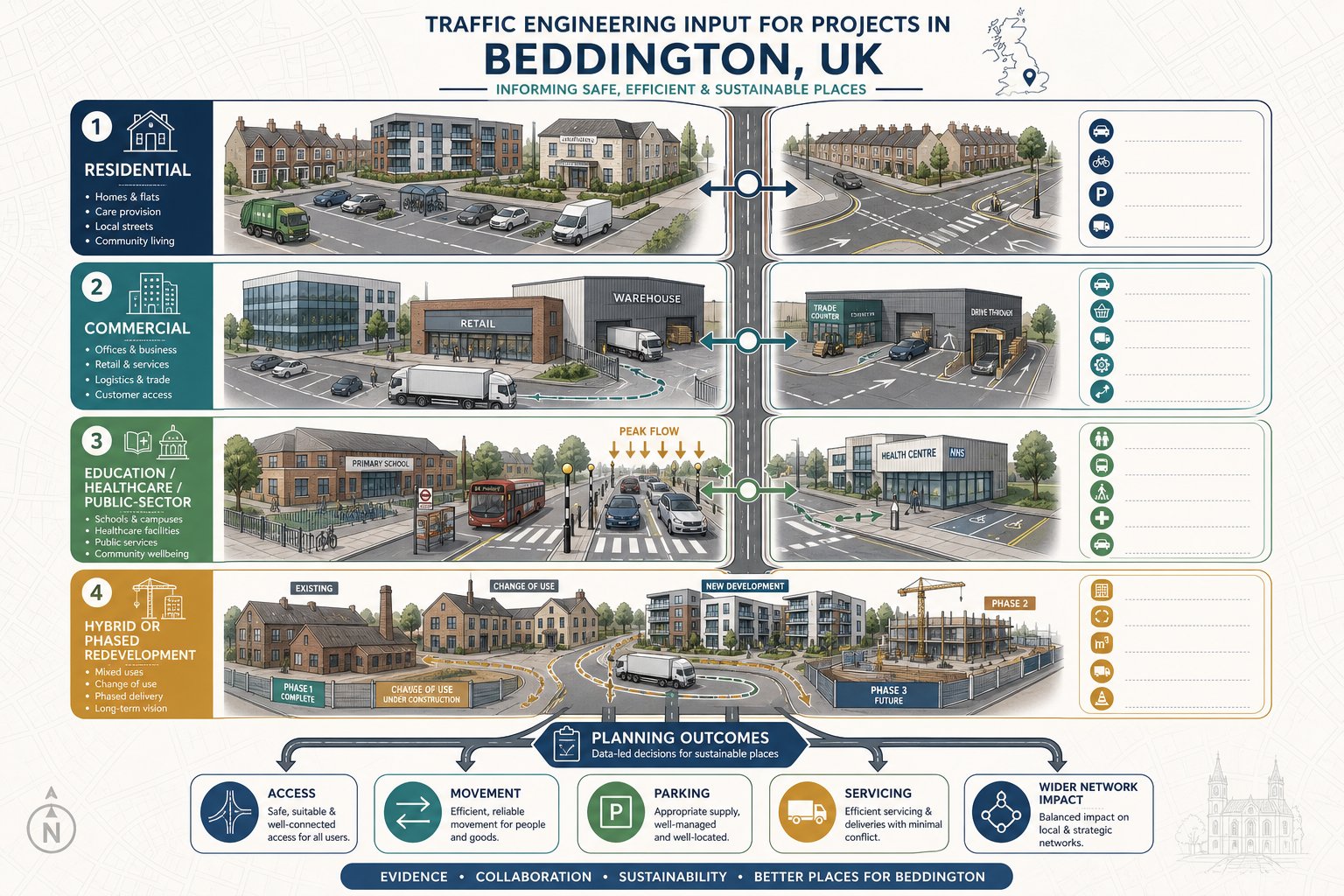
    Mixed-use developments are usually the most nuanced. They need an internal hierarchy of streets, service access that does not dominate public frontage, and a realistic integration with public transport and active travel. They can work beautifully, but only if the competing demands are organised rather than layered on top of one another.

    Servicing, Delivery Activity And Refuse Collection

    Servicing is where glossy plans are often exposed. A scheme may show ample parking and an attractive frontage, yet still fail because delivery vehicles have nowhere sensible to stop, turn or wait. Refuse collection can create the same problem, especially on tighter urban sites where the operational team inherits a layout designed mainly for planning visuals.

    Where possible, deliveries and refuse should be routed to side or rear service areas, away from the main customer frontage and primary pedestrian flows. Consolidated service courts usually work better than ad hoc bays scattered around the site. They reduce conflict, improve legibility and make screening, drainage and management easier.

    The key point is that service activity must be tested in the way it will actually occur, not how we wish it would occur. What vehicle attends? How often? At what time? Does it wait? Does it need to reverse? Can doors open without blocking circulation? For many schemes, a focused transport assessment for planning applications can pull those operational questions into the evidence base before they become objections.

    The Role Of Transport Assessments And Technical Evidence

    Transport planner reviewing a commercial site access and highway assessment plan.

    Transport Assessments and related technical notes do two jobs in commercial development highway design. First, they quantify likely movement and network impact. Second, they explain why the proposed layout, access strategy and mitigation are suitable for the specific site.

    A good assessment is not just a stack of forecast tables. It links land use, trip generation, distribution, access form, junction modelling, active travel provision, servicing strategy and policy context into one coherent story. If that chain breaks, for example, if trip assumptions do not match the operational plan, or if modelling tests a junction arrangement that differs from the submitted drawing, confidence drops quickly.

    The exact scope will vary by authority and development scale, but common components include baseline network review, collision data, committed development, parking analysis, junction capacity assessment, swept path checks and travel planning measures. In some cases, a shorter technical note is enough. In others, a full transport assessment for developments: scheme viability is essential.

    Technical evidence also becomes especially important where the design departs from a standard approach. Perhaps visibility is constrained by an existing urban frontage, or perhaps a shared access arrangement is proposed where a stand-alone access might otherwise be expected. Those solutions can still be acceptable, but the burden is on us to show why.

    Done well, the technical pack reduces debate by answering the obvious questions before they are formally asked. Done badly, it creates new questions the authority did not have to begin with, which is a painful way to spend a planning programme.

    Design Standards, Local Authority Expectations And Adoptability

    Standards matter, but commercial development highway design is rarely about applying one document mechanically. In the UK, most projects sit within a framework of national guidance, local highway design guidance, visibility and geometry standards, drainage requirements, safety considerations and authority-specific preferences. The challenge is knowing which standards govern which element, and where local interpretation is likely to be decisive.

    For planning purposes, highway authorities will usually want to see that visibility, access form, pedestrian provision, cycle facilities, gradients, levels, drainage and servicing have all been considered against relevant standards. Where works may be offered for adoption, the scrutiny becomes more detailed. Construction thickness, materials, street lighting, kerb lines, drainage outfalls, structures, utilities coordination and long-term maintenance all start to matter in a different way.

    That is why adoptability should never be treated as a post-permission technical tidy-up. If the off-site works or estate roads are intended to be adopted, the concept design should already reflect that objective. Otherwise, teams can end up redesigning geometry, levels and drainage after committee resolution, not ideal.

    Local authority expectations also vary. Some place strong emphasis on active travel links and public realm quality: others focus heavily on corridor performance, gatekeeping thresholds for assessment, or the detail needed for Section 278 and Section 38 discussions. We find that schemes move more smoothly when the design team understands those local habits early and prepares drawings and evidence accordingly.

    In short: standards provide the baseline, but local authority practice often shapes the route to approval and delivery.

    Common Highway Design Issues That Delay Planning Approval

    Most planning delays in this area are not caused by exotic engineering problems. They usually come from ordinary issues that were either missed, underestimated or left too late.

    The first is inadequate evidence on traffic impact. If trip generation is weakly justified, distribution assumptions are vague, or junction modelling does not reflect the submitted layout, the authority has little reason to feel comfortable. The second is substandard visibility or access geometry, especially where boundaries, third-party land or level changes make the proposed solution hard to deliver.

    Another frequent issue is too many access points, or accesses in the wrong place. Multiple junctions close together can undermine corridor function, create turning conflicts and reduce frontage quality. Parking is another classic source of trouble: too much in the wrong place, too little for operational need, or disabled and servicing spaces that only work in plan view.

    Then there is the undercooked treatment of pedestrians, cyclists and public transport. Authorities are increasingly alert to tokenistic provision, a painted route that leads nowhere, a crossing point detached from desire lines, or cycle parking hidden behind service activity. Those weaknesses can stall an application just as effectively as a poor bellmouth.

    And occasionally the delay is more basic still: the works shown on the drawings simply are not deliverable within the red line or under a realistic legal agreement. That is where experienced input in commercial development highway design really earns its place, because deliverability is the detail that turns a technically plausible scheme into a real one.

    A Step-By-Step Approach To Commercial Development Highway Design

    The most reliable route through commercial development highway design is structured, early and evidence-led. We do not need every detail on day one, but we do need the right decisions in the right order.

    First, define the land use quantum and the broad access strategy. That means understanding what the site wants to be, what vehicles it will attract, whether existing frontage can support access, and what the highway authority is likely to accept. Early liaison here is invaluable.

    Second, prepare the technical baseline and scope the assessment. That may include surveys, traffic counts, collision review, access appraisals and a framework travel plan. For many projects, this is where a concise traffic impact assessment strategy helps identify whether the constraint is capacity, safety, servicing or policy.
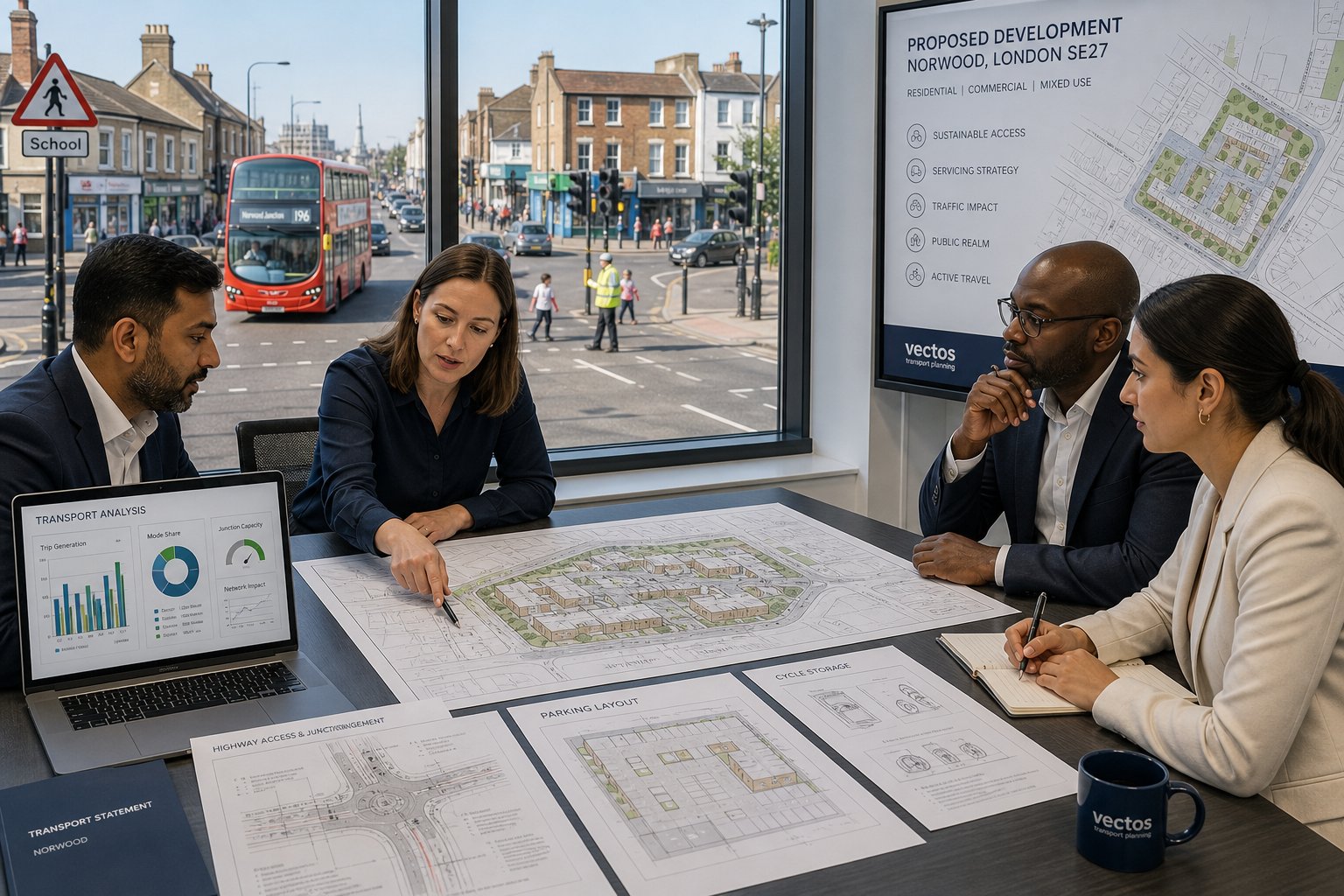
    Third, develop the access junction and internal circulation together. They should never be designed as separate exercises. If the bellmouth works but the service yard does not, the scheme does not work.

    Fourth, test capacity, safety and operational practicality. That includes modelling where needed, swept paths, visibility checks, pedestrian and cycle movement review, and the practical delivery of refuse and servicing.

    Fifth, move from concept to implementable drawings. If the proposal needs off-site works, land checks, drainage coordination and adoptability discussions should be underway before determination, not afterwards.

    Finally, secure the necessary agreements, conditions and implementation path. Planning approval is only the midpoint. The real objective is a scheme that can be built, operated and, where relevant, adopted without unpleasant surprises.

    Conclusion

    Commercial development highway design works best when we treat it as part of development strategy, not a late technical appendix. Access, frontage, servicing and internal circulation all shape whether a commercial proposal is safe, efficient, marketable and capable of securing planning approval.

    The strongest schemes usually share the same traits: they address access feasibility early, protect the function of the surrounding road network, provide realistic servicing, and back every design choice with proportionate technical evidence. They also recognise something that planning teams learn the hard way, a layout is only as good as its deliverability.

    In 2026, that blend of planning awareness, transport evidence and buildable highway design is what separates smooth permissions from long-running negotiations. If we get those fundamentals right at the start, we give the project a far better chance of moving from concept to consent, and from consent to a working commercial site.

    Frequently Asked Questions about Commercial Development Highway Design

    What does commercial development highway design include beyond just drawing an access point?

    Commercial development highway design encompasses access junctions, right-turn lanes, signals, footways, cycle links, parking, loading areas, pedestrian routes, drainage, lighting, signage, and visibility splays to ensure safe and efficient integration with the surrounding road network.

    Why is early involvement of highway design critical in the commercial planning process?

    Early highway design input identifies access feasibility, aligns site capacity and mix with network realities, minimises redesigns, reduces planning delays, and ensures proposals meet highway authority expectations for safety and adoptability.

    How do vehicle access and internal circulation impact commercial site functionality?

    A site should have few, well-spaced access points with separate routes for customers and service vehicles, appropriate turning radii for HGVs, and internal layouts allowing forward movement to maintain safety and operational efficiency.
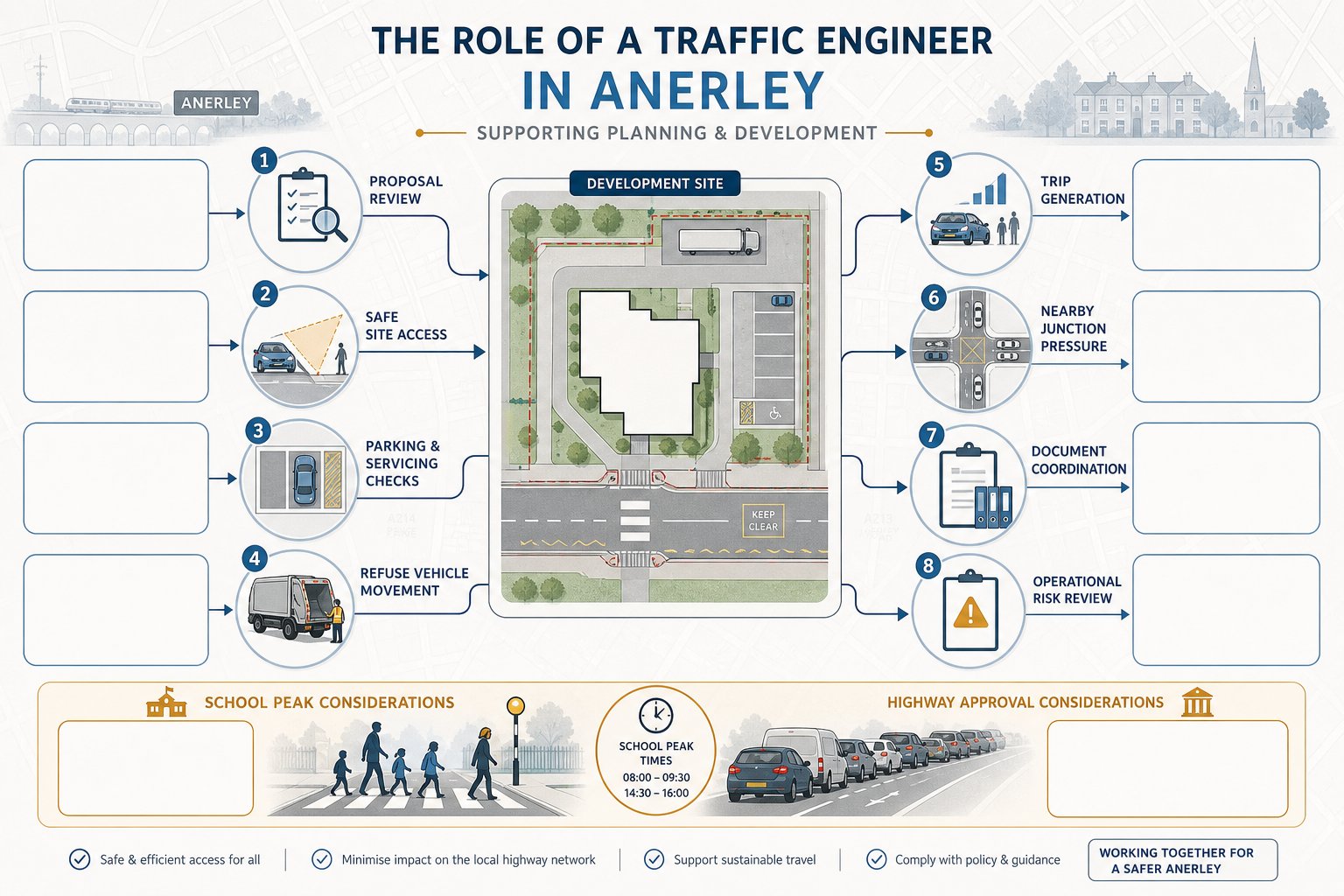
    What role do transport assessments play in commercial development highway design?

    Transport assessments quantify trip generation, assess junction capacity, test access options, and provide technical evidence linking land use with road network impact to support planning approval of highway designs.

    How does the type of commercial development influence highway design requirements?

    Retail sites need prominent access and pedestrian links; industrial/logistics demand larger radii and service yards; mixed-use developments require multimodal access and internal street hierarchies, each shaping design priorities accordingly.
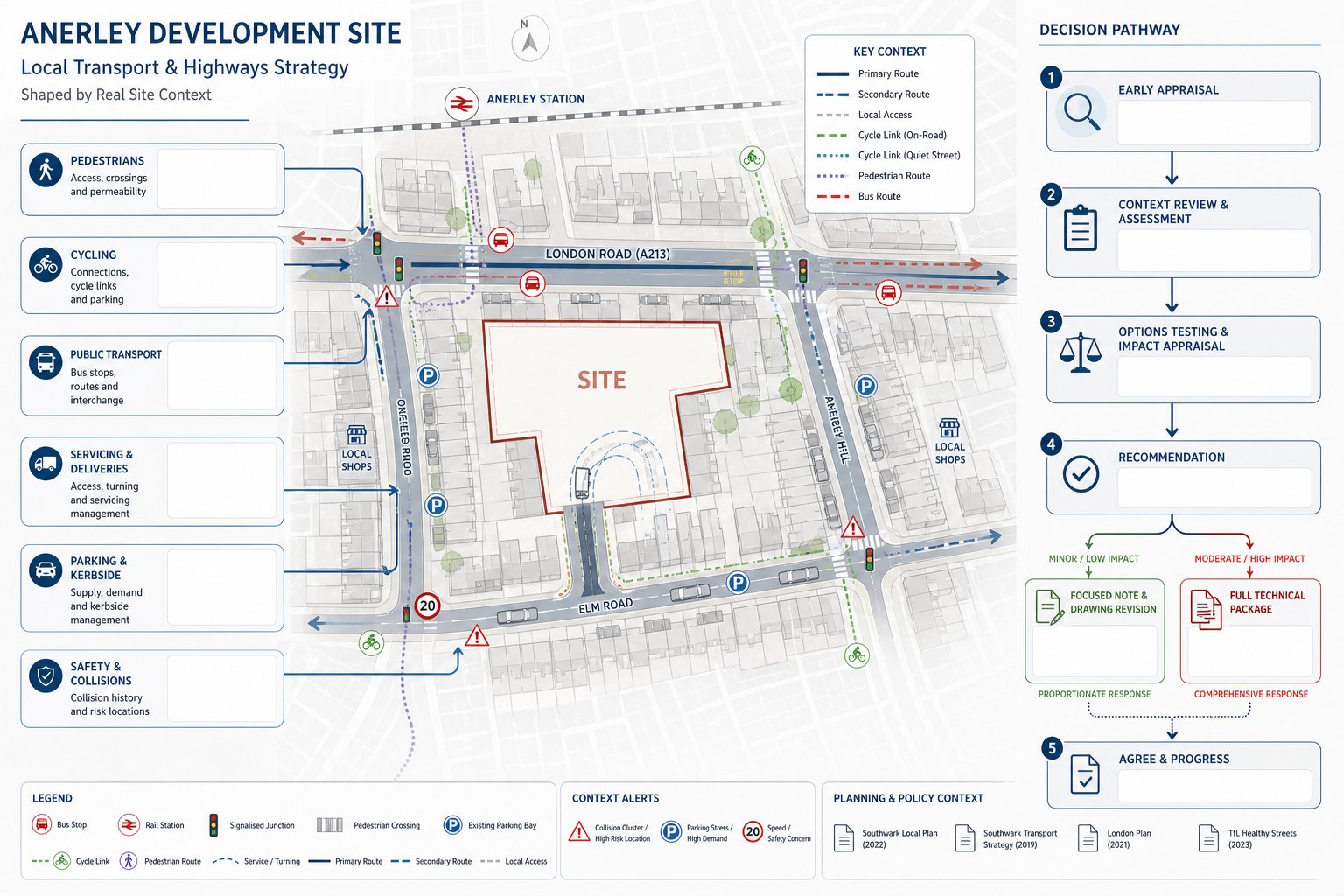
    What are common highway design issues causing planning delays, and how can they be avoided?

    Delays often stem from poor traffic impact evidence, substandard visibility, too many or badly located accesses, insufficient pedestrian/cyclist provision, and undeliverable works. Early, evidence-led design liaising with authorities helps prevent these.
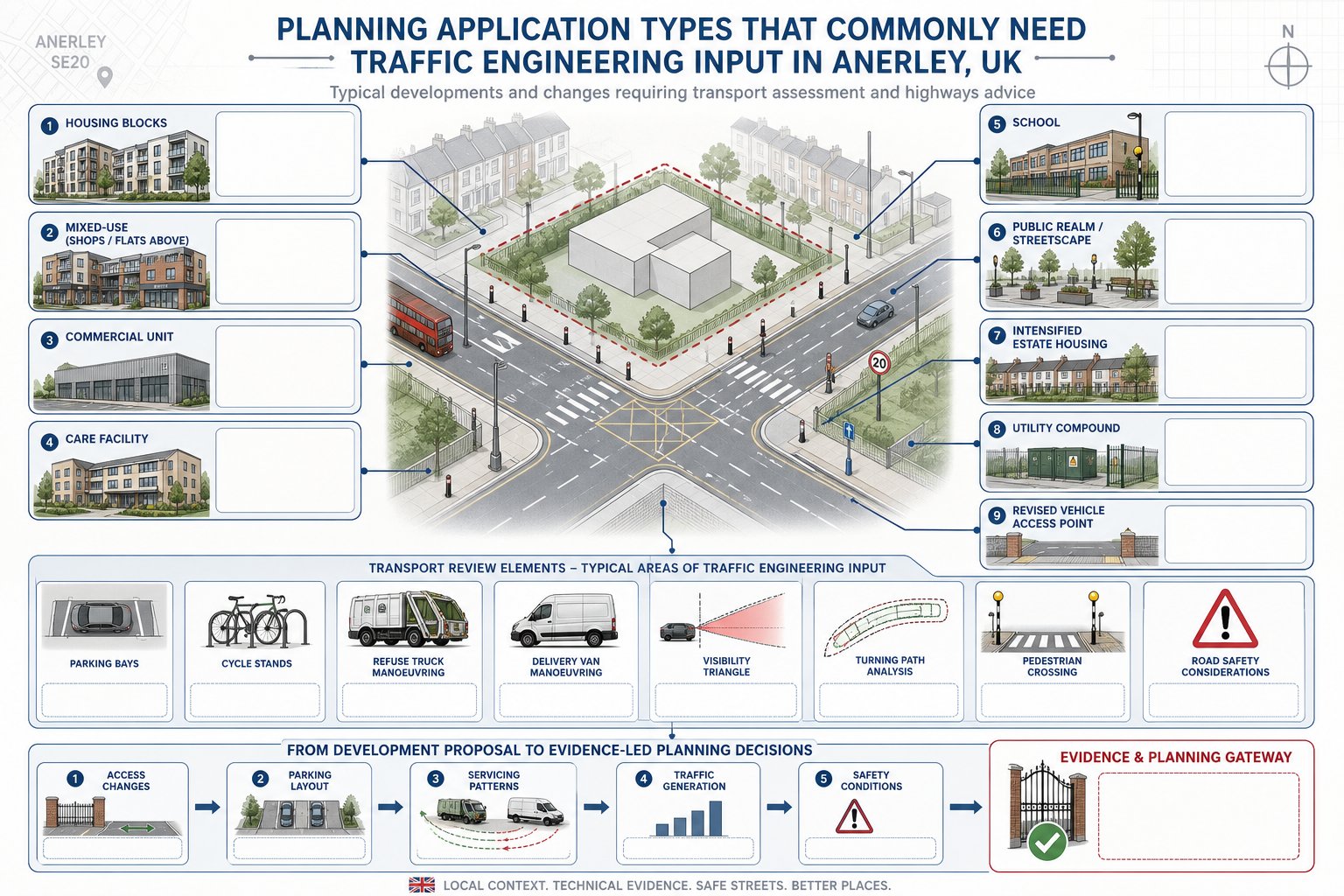
  • Environmental Impact Assessment for Transport: A Practical Guide for Planning Applications in 2026

    Environmental Impact Assessment for Transport: A Practical Guide for Planning Applications in 2026

    A transport scheme can look straightforward on a layout plan and still become the reason a planning application stalls for months. Often, the problem is not whether development should happen, but whether its environmental effects have been identified early enough, tested properly, and explained in a way a decision-maker can rely on.

    That is where environmental impact assessment transport work becomes critical. In practice, Environmental Impact Assessment (EIA) is the framework that helps us identify likely significant effects, compare options, embed mitigation into design, and present robust evidence for planning and consenting. For architects, planners, lawyers, surveyors, developers, builders and local authorities, it is not a side exercise. It is often the structure that holds the whole planning case together.

    In the UK, transport-related EIA sits at the intersection of planning law, engineering judgement, environmental science and consultation. That makes it technical, yes, but it also makes it highly practical. We need to know when EIA is required, how it connects with Transport Assessments and Travel Plans, what topics are likely to drive risk, and how to prepare evidence that can stand up to scrutiny.

    This guide sets out the essentials for 2026 in a clear, planning-focused way. We will look at the legal context, the process, the common pitfalls and the habits that usually separate a smooth application from an expensive rewrite.

    What Environmental Impact Assessment Means in a Transport Planning Context

    Transport environmental impact assessment infographic with route, effects, mitigation, and UK context.
    Transport environmental impact assessment process showing significant effects and design decisions.

    Environmental Impact Assessment, in a transport planning context, is a systematic process for identifying, predicting and evaluating the likely significant environmental effects of a scheme before consent is granted. That definition matters because EIA is not simply an environmental chapter added near submission. It is supposed to influence route choice, access design, construction strategy, mitigation and, sometimes, whether a proposal should proceed in its current form at all.

    For transport projects, the key word is significant. Not every increase in traffic, noise or visual change triggers EIA-level concern. The exercise is about understanding whether effects, by virtue of scale, location, sensitivity or duration, may be significant in planning terms. A minor access change in a low-sensitivity setting is very different from a widened corridor near homes, designated habitats or constrained air quality locations.

    We also need to separate EIA from routine planning support. A transport planning team may produce junction modelling, access reviews or parking analysis for many applications. EIA goes broader. It asks how traffic changes affect air quality, how a new alignment may fragment habitat, how construction noise could affect receptors, and what residual effects remain after mitigation.

    That broader lens is why transport evidence often feeds into multiple EIA chapters. A traffic forecast may underpin air quality, noise and carbon analysis, not just highway capacity. In practice, strong coordination between environmental specialists and the transport team is what stops inconsistencies creeping into the submission.

    When Transport Projects Require Environmental Impact Assessment

    UK transport project EIA screening flowchart with major schemes and sensitive locations.
    UK transport project flowchart showing when environmental impact assessment may be required.

    In the UK, whether a transport project requires EIA depends primarily on the type of development, its scale, its location and the likelihood of significant environmental effects. Some schemes fall into categories where EIA is effectively mandatory. Others require a case-by-case judgement through screening.

    At the clearest end of the spectrum are major road schemes such as motorways, trunk roads, express roads and substantial new or widened routes. These are the kinds of projects typically captured by Annex I-style categories under the EIA framework, where significant effects are assumed because of scale and nature.

    More commonly in day-to-day planning, we deal with Annex II-type development. Here, EIA is not automatic. Instead, the competent authority considers thresholds, site context and the sensitivity of receptors. A transport-related scheme may hence require EIA because it sits close to a Special Area of Conservation, passes through a flood-sensitive corridor, materially alters traffic at constrained urban receptors, or creates cumulative impacts alongside other committed development.

    Screening is where many project teams either save time or lose it. If the screening request is thin, vague or disconnected from actual design information, the authority may take a cautious view. If it is well-evidenced, proportionate and honest about potential effects, the route forward is usually clearer. For development-led schemes, related work such as a transport assessment for the wider application often helps frame that judgement, but it does not replace EIA screening.

    Key Legal And Planning Framework in the UK

    UK transport environmental impact assessment legal process from screening to decision.
    UK transport EIA legal framework showing routes, review stages, and decision points.

    The UK legal framework for EIA is rooted in the EIA Directive, including the 2014/52/EU amendments, and implemented through domestic regulations across planning and sector-specific consenting regimes. In simple terms, the legal duty is not just to produce a report: it is to ensure environmental information is gathered, consulted on and taken into account before a decision is made.

    For town and country planning, EIA requirements are embedded in planning regulations applying to England, Scotland, Wales and Northern Ireland, with differences in drafting but similar principles. Transport projects may also be consented under separate highways or infrastructure procedures, and those routes have their own EIA regulations. Scottish road schemes, for instance, operate under sector-specific legislation tied to the Roads (Scotland) Act framework.

    For practitioners, three legal themes matter most.

    First, screening and scoping need to be defensible. Authorities and applicants both need a transparent record of why topics were included, excluded or scoped down.

    Second, reasonable alternatives matter. If route options, access strategies or design refinements were considered, the Environmental Statement should explain that clearly.

    Third, significance judgements must be intelligible. A court is rarely interested in whether a model was aesthetically tidy: it is interested in whether the reasoning was lawful, evidence-based and understandable.

    This is where planning law and technical transport advice meet. A traffic impact assessment might answer one part of the planning case, but EIA has a wider legal function: it informs the decision-maker about environmental consequences before consent is issued.

    How Environmental Impact Assessment Relates to Transport Assessments and Travel Plans

    Infographic comparing transport assessment, travel plan, and environmental impact assessment.
    Infographic comparing transport assessment, travel plan, and environmental impact assessment links.

    This is one of the most common areas of confusion in planning applications. A Transport Assessment (TA), a Travel Plan (TP) and an Environmental Impact Assessment are related, but they do different jobs.

    A TA focuses on the transport consequences of development: trip generation, distribution, highway capacity, junction performance, sustainable access, road safety and, in many cases, servicing and parking. A TP then sets out measures to influence travel behaviour, reduce reliance on single-occupancy car trips and support walking, cycling, public transport and smarter travel choices.

    EIA is broader. It uses transport evidence as an input, but it is concerned with environmental receptors and significant effects. So the TA may forecast traffic changes on the network: the EIA air quality chapter will use that data to assess pollutant concentrations, and the noise chapter may use it to estimate changes in operational sound levels. The TP, meanwhile, may form part of the mitigation package by reducing vehicle demand or shifting travel patterns.

    In practice, the best submissions align these documents from the start. The trip rates in the TA should match the assumptions in the environmental assessments. The mitigation proposed in the TP should support the effects reported in the Environmental Statement. And the narrative across all documents should be consistent.

    For development-led projects, a focused Residential Development Transport strategy may sit alongside EIA work, especially where local authority thresholds are triggered. But one document cannot simply stand in for the other: each has its own purpose, audience and evidential role.

    The Main Environmental Effects Considered for Transport Development

    Infographic showing key environmental effects of UK transport development.
    Transport environmental impact assessment infographic showing key effects and trade-offs in the UK.

    Transport development affects far more than movement. Even relatively modest schemes can alter exposure, accessibility, character and ecological conditions across a surprisingly wide area. The point of EIA is to test those effects systematically rather than react to them late.

    Some effects are direct and easy to picture, such as extra vehicle movements at a junction or vegetation loss along a corridor. Others are indirect or cumulative: a redistribution of traffic that increases noise on one street while easing it on another, or a combination of several committed schemes that changes overall air quality and community experience.

    The receptors considered will vary by project, but transport EIAs typically focus on traffic and emissions, construction and operational noise, greenhouse gas emissions, townscape and landscape effects, ecology, water environment, flood risk, community severance, amenity and human health. Importantly, significance is not judged in a vacuum. We need to understand receptor sensitivity, duration, reversibility, policy context and whether mitigation is built into the design.

    What often makes transport schemes challenging is that one design move can improve one topic while worsening another. A noise barrier may reduce operational sound at properties but affect visual amenity. A new route may relieve congestion in a town centre but introduce impacts to landscape or habitat elsewhere. Good EIA makes those trade-offs visible.

    Traffic, Air Quality, Noise, And Climate Effects

    Traffic is usually the analytical backbone of transport EIA because it influences several environmental topics at once. Changes in flow, composition, speed and congestion can alter local air pollutant concentrations, operational noise levels, road safety conditions and greenhouse gas emissions.

    Air quality assessment commonly focuses on nitrogen dioxide and particulate matter, especially where receptors sit close to heavily trafficked roads or within existing constrained urban areas. Construction dust and emissions may also matter, particularly for phased projects or sites near homes, schools or healthcare facilities. The key is not merely to show traffic growth, but to test whether the change is material enough to affect exposure in a meaningful way.

    Noise and vibration are similarly context-specific. A small increase in traffic on an already busy road may be barely perceptible. The same increase on a previously quiet route can be far more noticeable. Construction effects often become a major concern because they are immediate, disruptive and highly visible to local communities.

    Climate effects now carry much more weight than they did a decade ago. We are expected to address both greenhouse gas emissions and resilience. That means considering embodied and operational carbon, but also whether the scheme can function under hotter summers, intense rainfall and flooding stress. In many cases, vision led transport approaches help us avoid locking in patterns of movement that undermine long-term climate objectives.

    Landscape, Ecology, Water, And Community Effects

    Landscape and visual effects are sometimes underestimated in transport planning because teams focus heavily on capacity and movement. Yet a road alignment, bridge, retaining structure, lighting column or earthwork can alter the perceived character of a place very quickly. Effects may include visual intrusion, loss of enclosure, change in tranquillity and harm to valued landscape settings.

    Ecology can be even more sensitive. Transport schemes may cause habitat loss, fragmentation, disturbance, mortality risk and hydrological change. Linear infrastructure in particular can sever ecological corridors. Since biodiversity net gain and habitat condition are now central planning considerations, ecological input needs to be integrated from the start rather than bolted on after alignment decisions are made.

    Water effects usually cover runoff quality, flood risk, drainage capacity, effects on watercourses and, where relevant, hydromorphology. A layout that appears efficient in highway terms may create drainage problems or increase pollutant risk if not designed carefully.

    Then there is the human side. Community effects can include severance, changes in access to local services, loss of amenity, safety concerns and differential impacts on more vulnerable groups. These issues often come into sharp focus during public consultation transport work, where residents explain impacts that may not be obvious from desktop mapping alone. Sometimes the biggest planning objection is not traffic growth itself, but what that growth means for everyday life on a street.

    The Environmental Impact Assessment Process Step by Step

    The formal process is well known, but the real value lies in how early and how intelligently we apply it. A transport EIA should not be treated as a linear box-ticking exercise. In reality, projects loop back. Screening shapes scoping: scoping reveals new survey needs: baseline data changes the design: mitigation alters the impact assessment: consultation prompts refinement again.

    Still, there is a practical sequence that most successful schemes follow. We start by establishing whether EIA is required. We then define the scope, collect baseline information, assess likely effects, design mitigation, report the findings and support consultation, determination and monitoring. The difference between a robust submission and a fragile one is usually not the headline methodology. It is whether the process has been integrated with design evolution and planning strategy throughout.

    Screening, Scoping, And Baseline Data Collection

    Screening is the gateway question: is EIA required? For transport schemes, that means checking the relevant regulatory schedule, thresholds and selection criteria, then applying professional judgement to the characteristics of the proposal and its setting. Sensitive locations, cumulative development and complex traffic effects can all push a scheme toward EIA even where scale alone does not.

    Once screening points toward EIA, scoping becomes crucial. This is where we agree the likely significant topics, study areas, assumptions, consultees and methods. Good scoping saves months. Bad scoping stores up pain for later, especially if a topic has to be re-opened after consultation because the study area was too narrow or baseline assumptions were weak.

    Baseline data collection then gives the assessment its factual footing. For transport-led projects, that often includes traffic counts, queue observations, collision data, walking and cycling audits, public transport context, air quality monitoring, noise surveys, ecological surveys, flood information, landscape appraisal and community receptor mapping. Timing matters. Seasonal ecological surveys cannot be magicked into existence in November because a submission date suddenly moved.

    We have found that early coordination between design, environmental specialists and those preparing the core environmental impact assessment transport evidence usually reduces later disagreement over assumptions, study extents and data quality.

    Impact Assessment, Mitigation, And Environmental Reporting

    Impact assessment turns baseline information and design details into a reasoned judgement about likely significant effects. For transport projects, that usually means forecasting construction and operational scenarios, modelling changes where appropriate, evaluating receptor sensitivity and then assigning significance with clear criteria.

    Mitigation should follow the classic hierarchy: avoid, reduce, then remedy or compensate. In transport terms, avoidance may mean changing a route alignment, moving an access point or dropping a problematic construction compound. Reduction could involve speed management, low-noise surfacing, planting, drainage treatment, timing controls or demand-management measures embedded in the Travel Plan. Compensation may include habitat creation or off-site measures where residual effects cannot be fully removed.

    The Environmental Statement, or Environmental Report where the process requires that terminology, needs to explain all of this in a structured and readable way. Methods, assumptions, limitations, alternatives, mitigation and residual effects should be transparent. The non-technical summary matters more than some teams think: many planning committee members and local residents will start there, and if it is evasive or impenetrable, confidence drops fast.

    At this stage, consistency is everything. The drawings, the TA, the construction management assumptions and the environmental chapters all need to say the same thing. If the transport chapter assumes one access arrangement and the landscape chapter illustrates another, people notice. And once they notice, they tend to doubt everything else too.

    Common Challenges in Transport Environmental Impact Assessment

    Transport EIA rarely falls over because teams do not know the textbook stages. It usually falters because reality is messier than the textbook.

    One major challenge is modelling uncertainty. Traffic assignment, future year assumptions, background growth, committed development, mode share changes and policy interventions all introduce moving parts. If those assumptions are not transparent, the environmental conclusions built on them become vulnerable.

    Cumulative and in-combination effects are another headache. A single scheme might seem manageable, but add nearby housing, employment growth, highway upgrades and public realm changes, and the total effect can be quite different. Corridor-scale schemes are especially difficult because impacts can shift geographically rather than disappear.

    Climate change adds a double layer of complexity. We need to assess emissions from the project while also designing for resilience to heat, flood and extreme weather. Biodiversity net gain can create similar tension when transport land requirements compete with ecological enhancement space.

    Then there is programme pressure. Design changes late in the process can invalidate survey assumptions, alter study areas and require re-running models. That is one reason clients often need concise, locally aware technical input early: experienced teams providing traffic impact assessment developers advice tend to spot authority-specific risks before they become submission-stage problems.

    Best Practice for Preparing Robust Planning Evidence

    Robust planning evidence is rarely about producing the thickest document. It is about producing evidence that is proportionate, internally consistent, policy-aware and easy for a reviewer to follow.

    The first best-practice principle is early integration. EIA works best when it informs option selection and design, not when it audits decisions that have already hardened. If an access strategy creates avoidable effects, it is much cheaper to revise it at concept stage than defend it after environmental objections land.

    Second, engagement matters. Statutory consultees, local planning officers, highway authorities and communities often identify practical issues that desktop work misses. Not every concern will change the scheme, but ignoring them usually weakens the planning case.

    Third, use the right tools and explain them plainly. GIS, remote sensing, traffic models, air dispersion tools and noise calculations are valuable, but they need transparent assumptions and sensible interpretation. A black-box model is not persuasive simply because it is complex.

    Fourth, be explicit about significance criteria, uncertainty and alternatives. Decision-makers do not expect perfection: they expect honesty and professional judgement.

    Finally, plan for monitoring and adaptive management. Post-consent travel monitoring, construction controls and ecological follow-up can validate assumptions and support compliance. For consultancy teams, that practical mindset is often where trusted advice stands out, especially when paired with quick, planning-focused reporting shaped around local thresholds and authority expectations.

    Conclusion

    Environmental Impact Assessment for transport is, at heart, a decision-making tool. It helps us understand what a scheme may do to people, places and environmental systems before those effects are locked in. For planning applications in 2026, that means more than producing a compliant report. It means joining up transport evidence, environmental analysis, legal requirements and design choices from the outset.

    For architects, planners, lawyers, surveyors, developers, builders and councils, the practical lesson is simple: start early, align your assumptions, and treat EIA as part of project development rather than a late-stage add-on. The strongest applications are usually the ones where screening is clear, scoping is disciplined, modelling is transparent and mitigation is built into the scheme itself.

    Done properly, environmental impact assessment transport work reduces planning risk, improves the quality of proposals and gives decision-makers confidence that the likely significant effects have been understood honestly. And in a planning system that rarely rewards avoidable ambiguity, that confidence is worth a great deal.

    Environmental Impact Assessment Transport – Frequently Asked Questions

    What is environmental impact assessment transport and why is it important?

    Environmental impact assessment transport is a systematic process to identify, predict and evaluate significant environmental effects of transport projects. It ensures environmental impacts are considered early, guiding design choices and planning decisions to reduce risks and improve project outcomes.

    When does a transport project require an environmental impact assessment in the UK?

    In the UK, EIA is required for major schemes like motorways and trunk roads (Annex I) where effects are significant. Smaller projects may need EIA depending on size, location, and receptor sensitivity (Annex II), assessed case-by-case through a screening process.

    How does environmental impact assessment relate to transport assessments and travel plans?

    Transport Assessments focus on traffic and network effects, Travel Plans target behaviour changes to reduce car use, while environmental impact assessment transport uses these inputs to evaluate wider environmental factors like air quality, noise, ecology and climate effects.

    What are the main environmental effects considered in transport EIAs?

    Transport EIAs assess traffic impacts on air quality, noise, and greenhouse gas emissions, as well as landscape and visual effects, ecological impacts, water quality and flood risk, plus community health, safety, and amenity considerations.

    What best practices ensure robust environmental impact assessment transport submissions?

    Strong submissions integrate EIA early with design, engage stakeholders extensively including through public consultation transport, use transparent methods and models, clearly explain significance and alternatives, and plan for post-consent monitoring and adaptive management.

    How can transport environmental impact assessments address climate change concerns?

    EIAs consider both greenhouse gas emissions and resilience to climate effects like heat and flooding. They promote design choices that reduce carbon footprint and avoid locking in unsustainable travel patterns, supporting long-term climate objectives through vision led transport planning.